



IFNAR
Interferon-α/β receptor; Interferon-alpha/beta receptor
The interferon-α/β receptor (IFNAR) is composed of two subunits, IFNAR1 and IFNAR2, encoding transmembrane polypeptides. Type-I IFNs, interferon α (IFN-α) and interferon β (IFN-β), act through a shared receptor complex, IFNAR. Binding of type-I IFN to IFNAR1 will robustly activate Janus activated kinase-signal transducer and activator of transcription (JAK-STAT) signaling pathway. Aberrant activation of the type-I IFN response results in a spectrum of disorders called interferonopathies.
Type-I IFN response occurs when IFN-α/β binds to their receptor complex, IFNAR. The ligand-receptor complex is phosphorylated, presumably by pre-associated Janus activated kinases (JAKs) namely tyrosine kinase 2 (TYK2) on IFNAR1 and JAK1 on IFNAR2. The phosphorylated receptors are docking sites for signal transducers and activators of transcription (STAT) factors that dimerise and translocate to the nucleus. STATs 1, 2, 3, 4, and 5 are activated by type-I IFNs in many cell types. Other kinases (e.g., mitogen-activated protein kinases) and transcription factors (e.g., nuclear factor-κB) can also be activated in response to type-I IFNs. Multiple pathways and IFN-regulated genes are activated by IFNs, many of which remain unknown.
All Product Categories
-
IFNAR Inhibitors
(129)
View all products
-
IFNAR Agonists
(11)
View all products
-
IFNAR Antagonists
(6)
View all products
-
IFNAR Activators
(85)
View all products
-
IFNAR Modulators
(4)
View all products
-
IFNAR Inducers
(23)
View all products
-
IFNAR Degrader
(1)
View all products
-
IFNAR Control
(1)
View all products
-
IFNAR Ligand
(1)
View all products
-
IFN-α/β Receptor Proteins
(16)
View all products
-
IFN-alpha/beta R2 Proteins
(6)
View all products
-
IFNAR Related Products (334)
Related Products (334)

-
Recombinant Proteins (16)
-
Antibodies (14)
-
Frenlosirsen sodium
 0 ImagesCat. No.: HY-177632ACAS No.: 2304711-82-6Synonyms: ION-935918 sodium; ION251 sodiumFrenlosirsen sodium (ION-935918 sodium; ION251 sodium) is an antisense oligonucleotide and also an IRF4 inhibitor. Frenlosirsen sodium inhibits the survival of malignant plasma cells, reduces the burden of myeloma progenitor cells and prevents disease recurrence. Frenlosirsen sodium is applicable to myeloma-related research.
-
UM-259
 0 ImagesCat. No.: HY-178049UM-259 is a STING inhibitor, with an EC50 of 1.50 μM in THP1-Dual cells expressing wild-type STING. UM-259 blocks STING oligomerization and inhibits diABZI-induced phosphorylation of TBK1 and IRF3, thereby suppressing the transcription of IFNβ and IL6 and reducing IFNβ secretion. UM-259 can be used for the study of STING-dependent inflammatory and neurological diseases.
-
QX006N
 0 ImagesCat. No.: HY-P991251Purity: 99.9%QX006N is a humanized monoclonal antibody inhibitor targeting human interferon α/β receptor 1 (IFNAR1). QX006N is promising for research of systemic lupus erythematosus (SLE) and other IFNAR1-related autoimmune diseases.
-
RDN2150
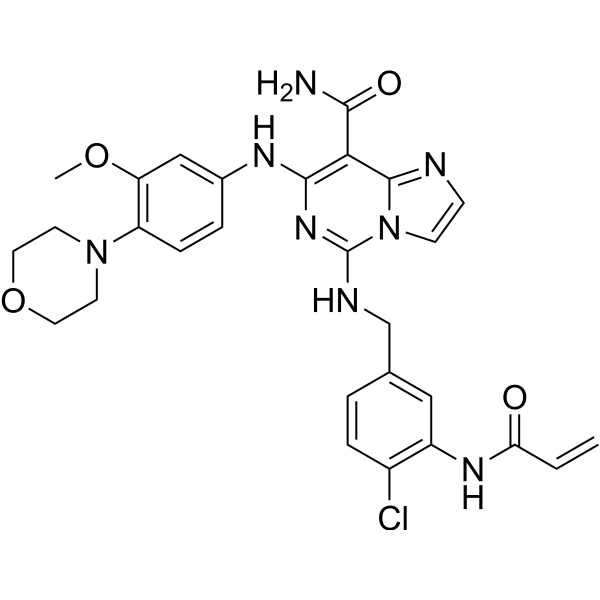 0 ImagesCat. No.: HY-155978CAS No.: 2839429-51-3RDN2150 is a ZAP-70 inhibitor with an IC50 of 14.6 nM, and it exhibits selectivity for Syk over other kinases. RDN2150 inhibits signal transduction and activation of T cells/CAR-T cells, reduces the phosphorylation level of Erk1/2, suppresses the induction of CD69 and IL-2, and downregulates phosphotyrosine signaling pathways including hnRNP sites in T cells. RDN2150 can be used for psoriasis-related research.
-
PTD-N5-1
 0 ImagesCat. No.: HY-P11003CAS No.: 2088834-68-6PTD-N5-1 is an IRF5 inhibitory peptide. PTD-N5-1 blocks the activation of IRF5. PTD-N5-1 inhibits β-glucan-induced IL-12 production in bone marrow-derived dendritic cells pre-stimulated with IFN-γ. PTD-N5-1 reduces the levels of IL-12 and IFN-γ in the kidneys of mice with Candida albicans infection. PTD-N5-1 is applicable to the research of Candida albicans infection.
-
Icotrokinra acetate
 0 ImagesCat. No.: HY-P10587APurity: 99.87%Synonyms: JNJ-77242113 acetate; JNJ-2113 acetate; PN-235 acetateIcotrokinra (JNJ-77242113) acetate is an orally available, selective antagonist of the IL-23 receptor. Icotrokinra acetate inhibits IL-23-induced STAT3 phosphorylation in peripheral blood mononuclear cells (IC50=5.6 pM) and inhibits IL-23-induced interferon IFN-γ production in NK cells with an IC50 of 18.4 pM. Icotrokinra acetate exhibits anti-inflammatory activity in a rat TNBS-induced colitis model. Icotrokinra acetate can be used in the study of psoriasis, psoriatic arthritis, and inflammatory bowel disease.
-
EM-163
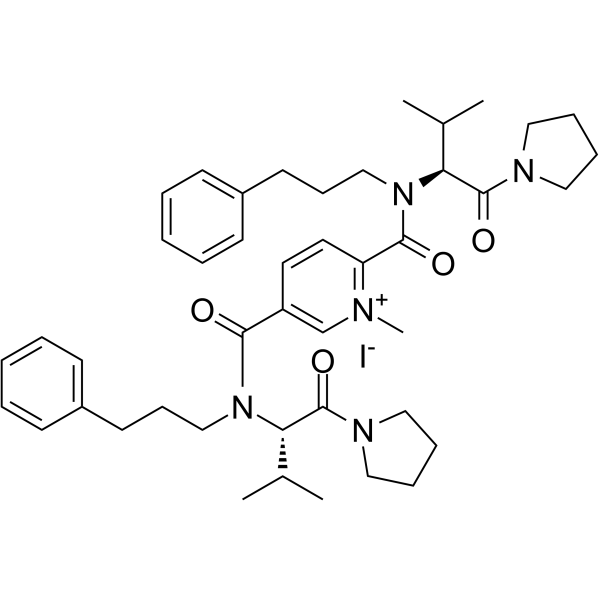 0 ImagesCat. No.: HY-163035CAS No.: 1206480-93-4EM-163 is a summative BB-Loop analog. EM-163 can alleviate inflammation and prevent death from toxic shock by targeting the TIR domain of MyD88. EM-163 can be used in the study of SEB poisoning (SEB: Staphylococcal enterotoxin B).
-
Solaprubart
 0 ImagesSynonyms: STAR-0310Solaprubart (STAR-0310) is a fully human IgG1 subtype monoclonal antibody targeting OX40 (CD134/TNFRSF4), with a Kd of 7.2 nM. By blocking the OX40/OX40L co-stimulatory signal, Solaprubart effectively inhibits cytokine release (IFN-γ, TNF-α, IL-5, IL-13) from activated effector T cells (Th1/Th2/Th17-associated). Solaprubart can be used in research related to moderate-to-severe atopic dermatitis.
-
IFN alpha-IFNAR-IN-1
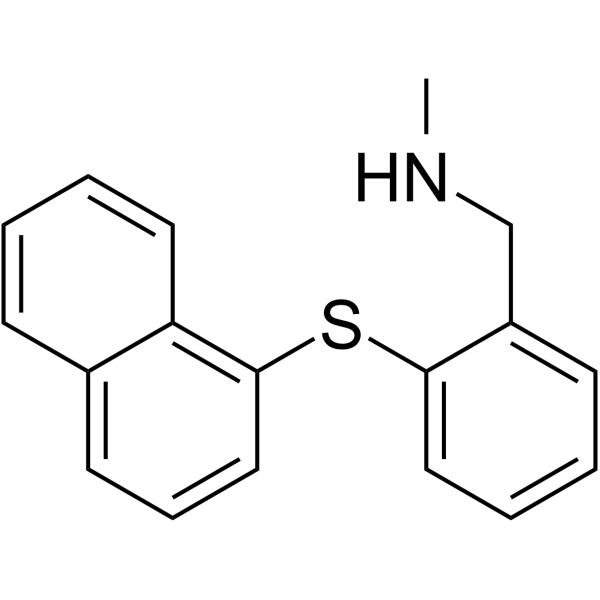 0 ImagesIFN alpha-IFNAR-IN-1 is a nonpeptidic, low-molecular-weight inhibitor of the interaction between IFN-α and IFNAR. IFN alpha-IFNAR-IN-1 inhibits modified Vaccinia virus ankara (MVA)-induced IFN-α responses in murine bone-marrow-derived, Flt3- L-differentiated pDC cultures (BM-pDCs) (IC50=2-8 μM).
-
BIHC
 0 ImagesBIHC is a TNF blocker with anti-inflammatory activity. BIHC can significantly inhibit the proliferation of hepatocellular carcinoma (HCC) cells and exhibits potent cytotoxicity against the HepG2 cell line, capable of inducing cell apoptosis , while demonstrating relatively low toxicity towards normal hepatocytes. Additionally, BIHC can be used for research on inflammatory bowel disease (IBD).
-
Deucravacitinib (hydrochloride)
 0 ImagesCat. No.: HY-117287ACAS No.: 1609392-28-0Synonyms: BMS-986165 (hydrochloride)Deucravacitinib (BMS-986165) hydrochloride is an orally active allosteric inhibitor of tyrosine kinase 2 (TYK2), with an IC50 of 0.2 nM and a Ki of 0.02 nM against the JH2 domain of TYK2, and it exhibits selectivity over other JAK subtypes and most of the kinome. Deucravacitinib hydrochloride blocks IL-23, IL-12, p-STAT1/3 and Type I IFN signaling, and inhibits Th17/Th1-mediated psoriasis inflammation. Deucravacitinib hydrochloride can be used in research related to moderate-to-severe plaque psoriasis, inflammatory bowel disease and systemic lupus erythematosus.
-
CPL302-253
 0 ImagesCat. No.: HY-182693CAS No.: 2019223-60-8CPL302-253 is a PI3Kδ inhibitor with an IC50 of 12.20 nM and a human Kd of 0.85 nM. CPL302-253 functionally regulates PI3Kδ activity, blocks the production of IFNγ, IL-33 and ROS in immune cells, and affects immune function. CPL302-253 blocks the progression of asthma-inducing inflammatory responses in a mouse model of asthma. CPL302-253 can be used for research related to asthma.
-
Omtriptolide sodium
 0 ImagesCat. No.: HY-16362CAS No.: 195883-09-1Synonyms: PG 490-88NaOmtriptolide sodium (PG490-88Na) is a derivative of Triptolide (HY-32735). Omtriptolide sodium exhibits significant immunosuppressive, anti-fibrotic and anti-inflammatory properties. The mechanism of action of Omtriptolide sodium is diverse, including inhibiting T cell activation and proliferation, inducing T cell apoptosis (apoptosis), blocking fibroblast maturation/proliferation, inhibiting TGF-β mRNA expression, and suppressing pro-inflammatory cytokines (such as IL-2, IFN-γ, TNF-α) by blocking transcription factors such as NF-κB. Omtriptolide sodium can be used for research on obstructive airway diseases, pulmonary fibrosis and graft-versus-host disease.
-
PO-322
 0 ImagesCat. No.: HY-187958CAS No.: 91837-56-8PO-322 is a selective SGK1 inhibitor with an IC50 of 54 nM. PO-322 reduces NDRG1 phosphorylation through inhibition of SGK1. PO-322 inhibits T cell proliferation and the production of IL-17, IFN-γ, and IL-6, accompanied by upregulated phosphorylation of p70S6K and STAT5. PO-322 exhibits immunosuppressive activity both in vitro and in vivo, and attenuates DNFB-induced delayed-type hypersensitivity and Imiquimod (HY-B0180)-induced psoriasis-like dermatitis. PO-322 is useful for research related to autoimmune diseases and psoriasis.
-
Eps8 peptide 327
 0 ImagesCat. No.: HY-P10994CAS No.: 1988684-26-9Synonyms: Eps8(327-335)Eps8 peptide 327 is an HLA-A*2402-restricted peptide antigen derived from Eps8 protein. Eps8 peptide 327 has potent antitumor activity with significant cytotoxicity. Eps8 peptide 327 effectively inhibits cancer cells proliferation, induces apoptosis and disrupts EGFR signal pathway by inhibiting downstream signals (such as IL-2, TNF-α and IFN-γ) expression and the Eps8/EGFR interaction. Eps8 peptide 327 significantly inhibits tumor growth in HT-29 xenograft mcie models.
-
PTD-N5-1 acetate
 0 ImagesCat. No.: HY-P11003APurity: 99.30%PTD-N5-1 acetate is an IRF5 inhibitory peptide. PTD-N5-1 acetate blocks the activation of IRF5. PTD-N5-1 acetate inhibits β-glucan-induced IL-12 production in bone marrow-derived dendritic cells pre-stimulated with IFN-γ. PTD-N5-1 acetate reduces the levels of IL-12 and IFN-γ in the kidneys of mice with Candida albicans infection. PTD-N5-1 acetate is applicable to the research of Candida albicans infection.
-
diABZI-i
 0 ImagesCat. No.: HY-175167diABZI-i is an orthogonal STING inhibitor. diABZI-i significantly inhibits cGAMP-induced IFNβ in PBMCs. diABZI-i also activates constitutive signaling of V155M SAVI and exerts potent agonistic effects in the STING V155M THP-1 cell model. diABZI-i can be used for research on monogenic autoinflammatory diseases such as SAVI.
-
PROTAC STING Degrader-2
 0 ImagesCat. No.: HY-158036CAS No.: 3023095-61-3PROTAC STING Degrader-2 is a STING PROTAC degrader with a DC50 of 0.53 μM. PROTAC STING Degrader-2 reduces the phosphorylation levels of TBK1 and IRF3. PROTAC STING Degrader-2 decreases the mRNA expression levels of IFN-β, CXCL10 and TNF-α, and blocks luciferase secretion. PROTAC STING Degrader-2 can be used in the research of autoimmune diseases.
-
Anti-Mouse IFN Alpha Antibody (TIF-3C5)
 0 ImagesCat. No.: HY-P991811Anti-Mouse IFN Alpha Antibody (TIF-3C5) reacts with the mouse IFNα. Anti-Mouse IFN Alpha Antibody (TIF-3C5) binds specifically to mouse IFNα species (IFN-α-A, IFN-α-1, IFN-α-4, IFN-α-5, IFN-α-11. and IFN-α-13) and does not bind murine murine IFNγ or IFNβ. Recommend Isotype Controls: Polyclonal Armenian hamster IgG, Isotype Control (HY-P990305).




