



IFNAR
Interferon-α/β receptor; Interferon-alpha/beta receptor
The interferon-α/β receptor (IFNAR) is composed of two subunits, IFNAR1 and IFNAR2, encoding transmembrane polypeptides. Type-I IFNs, interferon α (IFN-α) and interferon β (IFN-β), act through a shared receptor complex, IFNAR. Binding of type-I IFN to IFNAR1 will robustly activate Janus activated kinase-signal transducer and activator of transcription (JAK-STAT) signaling pathway. Aberrant activation of the type-I IFN response results in a spectrum of disorders called interferonopathies.
Type-I IFN response occurs when IFN-α/β binds to their receptor complex, IFNAR. The ligand-receptor complex is phosphorylated, presumably by pre-associated Janus activated kinases (JAKs) namely tyrosine kinase 2 (TYK2) on IFNAR1 and JAK1 on IFNAR2. The phosphorylated receptors are docking sites for signal transducers and activators of transcription (STAT) factors that dimerise and translocate to the nucleus. STATs 1, 2, 3, 4, and 5 are activated by type-I IFNs in many cell types. Other kinases (e.g., mitogen-activated protein kinases) and transcription factors (e.g., nuclear factor-κB) can also be activated in response to type-I IFNs. Multiple pathways and IFN-regulated genes are activated by IFNs, many of which remain unknown.
All Product Categories
-
IFNAR Inhibitors
(123)
View all products
-
IFNAR Agonists
(11)
View all products
-
IFNAR Antagonists
(6)
View all products
-
IFNAR Activators
(84)
View all products
-
IFNAR Modulators
(4)
View all products
-
IFNAR Inducers
(23)
View all products
-
IFNAR Degrader
(1)
View all products
-
IFNAR Control
(1)
View all products
-
IFNAR Ligand
(1)
View all products
-
IFN-α/β Receptor Proteins
(16)
View all products
-
IFN-alpha/beta R2 Proteins
(6)
View all products
-
IFNAR Related Products (325)
Related Products (325)

-
Recombinant Proteins (16)
-
Antibodies (14)
-
Cyclo(L-Phe-L-Pro) (Standard)
 0 ImagesCat. No.: HY-P1934ARCAS No.: 3705-26-8Gallic acid (hydrate) (Standard) is the analytical standard of Gallic acid (hydrate). This product is intended for research and analytical applications. Cyclo(L-Phe-L-Pro), isolated from Pseudomonas fluorescens and Pseudomonas alcaligenes cell-free culture supernatants is an antifungal cyclic dipeptide. Cyclo(L-Phe-L-Pro) inhibits IFN-β production by interfering with retinoic-acid-inducible gene-I (RIG-I) activation. Cyclo(L-Phe-L-Pro) exhibits free-radical scavenging activity with the IC50 of 24 µM in the DPPH assay.
-
Isopongaflavone
 0 ImagesCat. No.: HY-N9566CAS No.: 64125-33-3Isopongaflavone is an isoflavone that can be isolated from the seedpods of Tephrosia vogelii with anti-inflammatory effects. Isopongaflavone suppresses the secretion of IL-1β, IFN-γ, granulocyte macrophage-colony stimulating factor (GM-CSF) and TNF-α in LPS (HY-D1056)-stimulated peripheral blood mononuclear cells (PBMCs).
-
Anti-Influenza agent 12
 0 ImagesCat. No.: HY-189215CAS No.: 3087067-85-1Anti-Influenza agent 12 is an orally active inhibitor of influenza A virus infection. Anti-Influenza agent 12 inhibits RIG-I-mediated innate immune signaling and TLR3-mediated signaling pathways. Anti-Influenza agent 12 inhibits NF-κB phosphorylation and downregulates the expression levels of IRF3, ASC, iNOS, IL-4, IL-6, and IFN-α inflammatory genes. Anti-Influenza agent 12 inhibits viral nucleoprotein (NP) and matrix protein 2 (M2) mRNA transcription and protein synthesis. Anti-Influenza agent 12 inhibits virus-induced apoptosis, reduces ROS and NO production, and maintains mitochondrial membrane potential. Anti-Influenza agent 12 exhibits broad-spectrum activity against H1N1 and H3N2 subtypes, reduces viral load, and alleviates lung tissue damage. Anti-Influenza agent 12 can be used for research on influenza A virus infection.
-
Calcium propionate, United States Pharmacopeia (USP) Reference Standard
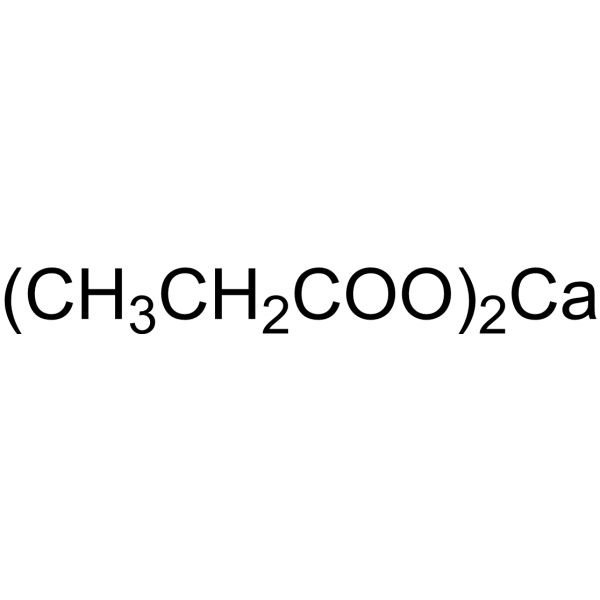 0 ImagesCalcium propionate, United States Pharmacopeia (USP) Reference Standard (Bioban-C (Pharmaceutical primary standard, USP)) is a calcium salt of Propionic acid with oral activity, which can be hydrolyzed into propionate and calcium ions. Calcium propionate, United States Pharmacopeia (USP) Reference Standard elevates intracellular ROS levels in tumor cells, depletes GSH, reduces mitochondrial membrane potential, and thereby induces tumor cell apoptosis. In mouse colitis models, Calcium propionate, United States Pharmacopeia (USP) Reference Standard modulates inflammatory factors such as IFN-γ, calprotectin, and Pglyrp3, ameliorating intestinal inflammation and metabolic disorders. In ruminants, Calcium propionate, United States Pharmacopeia (USP) Reference Standard serves as a gluconeogenic precursor, regulating rumen fermentation and microbial diversity; in high-fat diet rats, it alters gut microbiota composition and affects blood biochemical parameters. Calcium propionate, United States Pharmacopeia (USP) Reference Standard is commonly used as a food and feed additive, and is also used in research related to hypocalcemia, dyslipidemia, colitis, and lung cancer.
-
GNKG168 sodium scrambled negative control
 0 ImagesCat. No.: HY-177635BGNKG168 sodium scrambled negative control is the sequence scrambled negative control of GNKG168 sodium.
-
TLR7/8/9 antagonist-3
 0 ImagesCat. No.: HY-187531CAS No.: 2403782-38-5TLR7/8/9 antagonist-3 is an orally active antagonist of TLR7, TLR8 and TLR9, with human IC50 values of 0.008 μM, 0.006 μM and 0.072 μM, respectively. TLR7/8/9 antagonist-3 blocks agonist-induced activation of hTLR7, hTLR8, hTLR9, mTLR7 and mTLR9, and reduces serum IFNα and TNFα levels. TLR7/8/9 antagonist-3 can be used in the research of autoimmune diseases.
-
AN-2898
 0 ImagesCat. No.: HY-111167CAS No.: 906673-33-4AN-2898 is a selective PDE4 inhibitor with IC50 of 0.027 μM over other phosphodiesterase enzymes, such as PDE1A, PDE2A and PDE3A. AN-2898 also potently inhibits PDE4 subtypes (PDE4B1, PDE4A1A and PDE4D2). AN-2898 significantly inhibits the production of TNF-α, IL-2, IFN-γ, IL-5 and IL-10. AN-2898 can be used for mild to moderate atopic dermatitis (AD) and psoriasis research.
-
UM-242
 0 ImagesCat. No.: HY-178047UM-242 is a STING inhibitor, with an EC50 of 1.70 μM in THP1-Dual cells expressing wild-type STING. UM-242 blocks STING oligomerization and inhibits diABZI-induced phosphorylation of TBK1 and IRF3, thereby suppressing the transcription of IFNβ and IL6 and reducing IFNβ secretion. UM-242 can be used for the study of STING-dependent inflammatory and neurological diseases.
-
STING-IN-17
 0 ImagesCat. No.: HY-178951CAS No.: 3069635-58-8STING-IN-17 (compound 10a) is an orally active STING (human STING IC50 = 29 nM, mouse STING IC50 = 15 nM) inhibitor. STING-IN-17 can inhibit the phosphorylation of STING, TBK1 and IRF3. STING-IN-17 dose dependently inhibits the mRNA expression of IP10, IFNB1 and ISG56. STING-IN-17 can reduce ROS and inhibit the expression of cleaved-PARP/caspase-3. STING-IN-17 can improve kidney function. STING-IN-17 can be used for research on inflammatory conditions such as acute kidney injury.
-
Anti-CD1a Antibody (OKT-6)
 0 ImagesCat. No.: HY-P990869Anti-CD1a Antibody (OKT-6) is an anti-human CD1a IgG1 monoclonal antibody. Anti-CD1a Antibody (OKT-6) blocks T cell activation by blocking CD1a function. Anti-CD1a Antibody (OKT-6) can reduce the production of IFN-γ. Anti-CD1a Antibody (OKT-6) can be used for researches on cancer and inflammation such as leukemia. The recommend isotype control of Anti-CD1a Antibody (OKT-6): Mouse IgG1 kappa, Isotype Control (HY-P99977).
-
YE6144 free base
 0 ImagesCat. No.: HY-150095ACAS No.: 3065657-01-1YE6144 free base is a selective prototypical interferon regulatory factor 5 (IRF5) inhibitor. YE6144 free base suppresses the disease course and is especially effective in remission maintenance in a mouse model of systemic lupus erythematosus (SLE). YE6144 free base can be used for SLE research.
-
TAT-327
 0 ImagesCat. No.: HY-P10995TAT-327 is cell-penetrating peptide. TAT-327 selectively inserts into cancer cell membranes and shows potent antitumor activity. TAT-327 effectively inhibits cancer cells proliferation, induces apoptosis and disrupts EGFR signal pathway by inhibiting downstream signals (such as IL-2, TNF-α and IFN-γ) expression and the Eps8/EGFR interaction. TAT-327 significantly inhibits tumor growth in HT-29 xenograft mcie models.
-
ITA-5
 0 ImagesCat. No.: HY-178915CAS No.: 2374162-36-2
-
Lithocholic amide-C2-N(didecane)
 0 ImagesCat. No.: HY-178721CAS No.: 2768690-22-6Lithocholic amide-C2-N(didecane) (Compound LC10) is a Lithocholic acid (HY-B0172) analogue. Lithocholic amide-C2-N(didecane) can form lipid nanoparticles spontaneously in the aqueous milieu, permeate through the skin, penetrate the deeper dermal layers, and exert anti-inflammatory effects against psoriasis-like chronic skin inflammations. Lithocholic amide-C2-N(didecane) can inhibit abnormal proliferation of keratinocytes, downregulate the mRNA expression of the psoriasis-associated receptor EphA2 and reduce serum levels of multiple pro-inflammatory factors such as IL-1α, IL-1β, and IFN-γ by inhibiting activation of the Th17/Th2 inflammatory pathway.
-
PF-07245303
 0 ImagesCat. No.: HY-182335CAS No.: 2655556-75-3PF-07245303 is a ITK/TRK inhibitor. PF-07245303 reduces the production of inflammatory cytokines such as IL-4 and IFNγ, and inhibits the phosphorylation of PLCγ1. PF-07245303 inhibits nerve growth factor-induced basophil activation and the phosphorylation of TRKA. PF-07245303 reduces oxazolone-induced ear swelling in mouse ear tissues. PF-07245303 is applicable to research related to atopic dermatitis.
-
HPN601
 0 ImagesCat. No.: HY-P992370HPN601 is a monoclonal antibody targeting CD326/EPCAM, as well as a protease-activated EpCAM-targeted T cell engager. HPN601 binds to EPCAM, CD3e and albumin, and induces T cell-mediated tumor cell killing. HPN601 significantly reduces the release levels of IFN-γ, IL-2, IL-6, and IL-10. HPN601 can be used for relevant research on cancers such as breast cancer and gastric cancer.

-
STING Degrader-2
 0 ImagesCat. No.: HY-174136STING Degrader-2 is an orally active STING degrader that promotes proteasome-independent degradation of STING. STING Degrader-2 inhibits cGAMP-induced STING activation, suppresses STING oligomerization, and inhibits phosphorylation of STING and interferon regulatory factor 3 (IRF3). STING Degrader-2 reduces serum IFN-β and CXCL-10 levels in a cGAMP-induced autoimmune disease mouse model. STING Degrader-2 can be used for the research of autoimmune diseases.
-
Cirsilineol (Standard)
 0 ImagesCat. No.: HY-119347RCAS No.: 41365-32-6Cirsilineol (Standard) is the analytical standard of Cirsilineol. This product is intended for research and analytical applications. Cirsilineol, a natural flavone compound, selectively inhibits IFN-γ/STAT1/T-bet signaling in intestinal CD4+ T cells. Cirsilineol has potent immunosuppressive and anti-tumor properties. Cirsilineol significantly ameliorates trinitro-benzene sulfonic acid (TNBS)-induced T-cell-mediated experimental colitis in mice.
-
Cappariloside A
 0 ImagesCat. No.: HY-N17963CAS No.: 229483-41-4Cappariloside A is a larvicide that exhibits larvicidal activity against Aedes aegypti larvae and reduces larval glutathione-S-transferase activity. Cappariloside A also possesses antiviral activity, decreases the level of phosphorylated STAT1 in cells, inhibits the replication of influenza viruses H1N1, H3N2, PIV3 and ADV, and downregulates the expression of IL-6, IP-10, MIG, RANTES/CCL-5, IFN-β and IL-29. Cappariloside A suppresses the inflammatory response induced by mouse lung-adapted influenza virus strains. Cappariloside A can be used in studies related to larvicidal applications and influenza virus infection.




