



HPN601
HPN601 is a monoclonal antibody targeting CD326/EPCAM, as well as a protease-activated EpCAM-targeted T cell engager. HPN601 binds to EPCAM, CD3e and albumin, and induces T cell-mediated tumor cell killing. HPN601 significantly reduces the release levels of IFN-γ, IL-2, IL-6, and IL-10. HPN601 can be used for relevant research on cancers such as breast cancer and gastric cancer.
For research use only. We do not sell to patients.
-
Storage:
Please store the product under the recommended conditions in the Certificate of Analysis.


To place orders, for customer services and technical support, please contact: MedChemExpress USA
Tel: 609-228-6898 E-mail: [email protected] [email protected]


-
 Biological Activity
-
Chemical Information
- Protocols
- Purity & Documentation
- References
-
 Help & FAQs




Biological Activity
Description
Species Reactivity
Human
IC50 & Target
[1]|
IL-2 |
IL-6 |
IL-10 |
In Vivo
HPN601 demonstrates a tenfold improved therapeutic window compared to a constitutively active EpCAM-targeting T cell engager and significantly attenuates cytokine production including IFN-γ, IL-2, IL-6, and IL-10 in non-human primates[1].
MedChemExpress (MCE) has not independently confirmed the accuracy of these methods. They are for reference only.
Gene ID
Accession
Target
EpCAM/TROP1/CD326
Conjugated
Unconjugated
Reconsititution
The product can be reconstituted/diluted with sterile PBS or saline.
Format
-
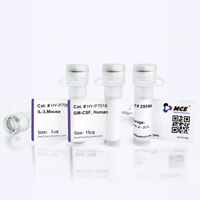
Product Image
Application
ELISA, FACS, Functional assay


Chemical Information
-
Formulation
Please refer to the lot-specific COA for specific buffer information.
-
Storage
Please store the product under the recommended conditions in the Certificate of Analysis.


Purity & Documentation
References

Calculators
Concentration (start) × Volume (start) = Concentration (final) × Volume (final)


HPN601 Related Classifications
HY-P992370 Related Classifications
 Powered by Bioz