



Microtubule/Tubulin
Microtubules are a component of the cytoskeleton, found throughout the cytoplasm. These tubular polymers of tubulin can grow as long as 50 micrometres, with an average length of 25 µm, and are highly dynamic. The outer diameter of a microtubule is about 24 nm while the inner diameter is about 12 nm. Microtubules are found in eukaryotic cells and are formed by the polymerization of a dimer of two globular proteins, alpha and beta tubulin. Tubulin is one of several members of a small family of globular proteins. The tubulin superfamily includes five distinct families, the alpha-, beta-, gamma-, delta-, and epsilon-tubulins and a sixth family which is present only in kinetoplastid protozoa. The most common members of the tubulin family are α-tubulin and β-tubulin, the proteins that make up microtubules. Microtubules are very important in a number of cellular processes. They are involved in maintaining the structure of the cell.
All Product Categories
-
Microtubule/Tubulin Inhibitors
(812)
View all products
-
Microtubule/Tubulin Agonists
(2)
View all products
-
Microtubule/Tubulin Antagonist
(1)
View all products
-
Microtubule/Tubulin Activators
(21)
View all products
-
Microtubule/Tubulin Modulators
(20)
View all products
-
Microtubule/Tubulin Inducers
(5)
View all products
-
Microtubule/Tubulin Degraders
(3)
View all products
-
Microtubule/Tubulin Controls
(19)
View all products
-
Microtubule/Tubulin Ligands
(5)
View all products
-
Microtubule/Tubulin Related Products (1003)
Related Products (1003)

-
Antibodies (69)
-
Docetaxel-d5
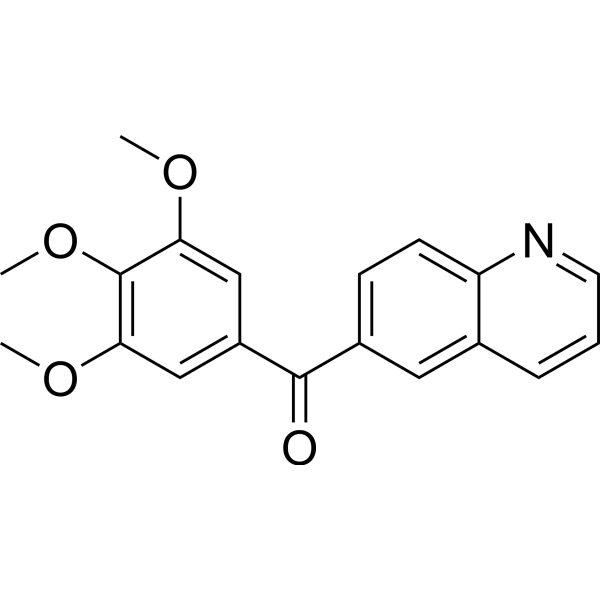
 0 ImagesCat. No.: HY-W653942Synonyms: RP-56976-d5
-
MC-VC-PAB-Tubulysin M
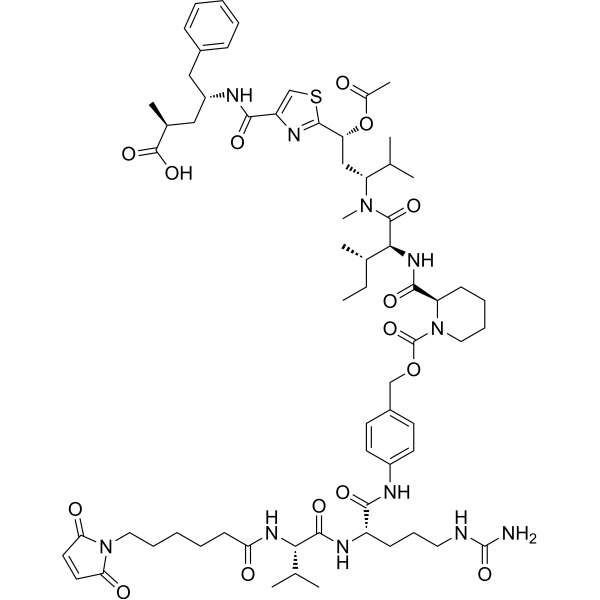 0 ImagesMC-vc-PAB-Tubulysin M is a Drug-Linker Conjugates for ADC, consisting of a microtubule polymerization inhibitor Tubulysin M (an ADC cytotoxin) (HY-N7053) and MC-vc-PAB (a cleavable ADC linker).
-
AVE-8063
 0 ImagesCat. No.: HY-117867CAS No.: 162705-07-9Synonyms: AC-7739 free baseAVE-8063 (AC-7739 free base) is an aminocombretastatin. AVE-8063 shows potent antitubulin activity and cytotoxicity. AVE-8063 can be used in the research of leukemia and breast cancer.
-
Flubendazole-d3
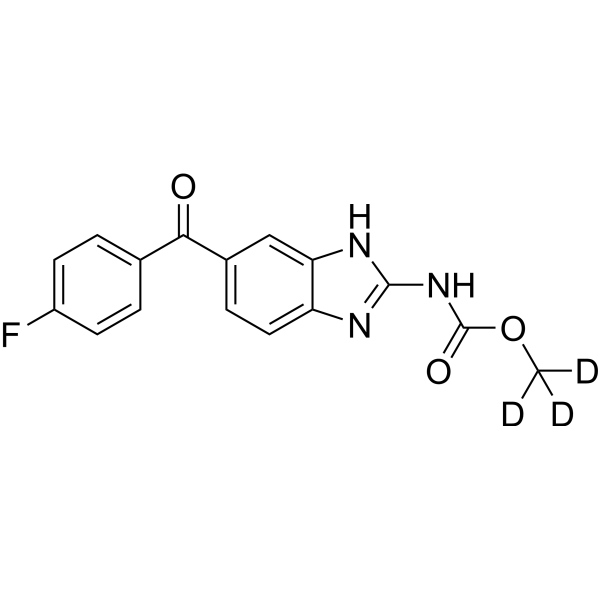 0 ImagesCat. No.: HY-B0294SCAS No.: 1173021-08-3Flubendazole-d3 is the deuterium labeled Flubendazole. Flubendazole is a safe and efficacious anthelmintic agent, which is widely used for anthelmintic to human, rodents and ruminants. Flubendazole exerts anticancer activities by mechanisms including inhibition of microtubule function. Flubendazole induces p53-mediated apoptosis and arrests G2/M cell cycle.
-
Tubulin inhibitor 24
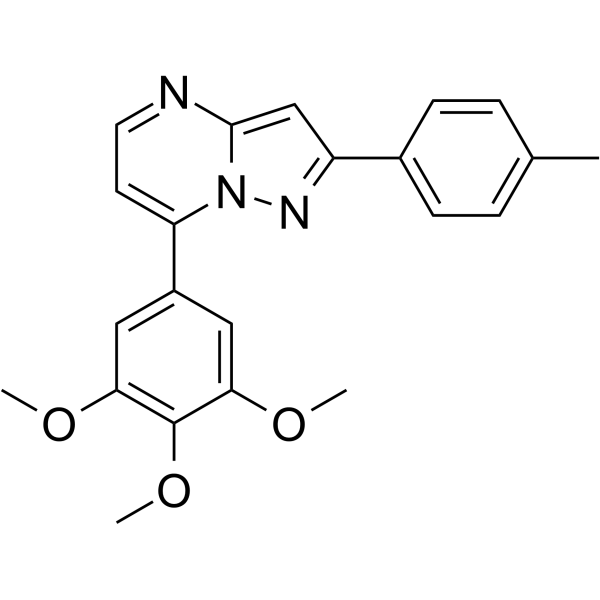 0 ImagesTubulin inhibitor 24 is a potent tubulin inhibitor. Tubulin inhibitor 24 inhibits tubulin polymerization. Tubulin inhibitor 24 induces cell cycle arrest at the G2/M phase in a concentration-dependent manner. Tubulin inhibitor 24 shows antitumor activity with no obvious toxicity.
-
Thiocolchicine-d3
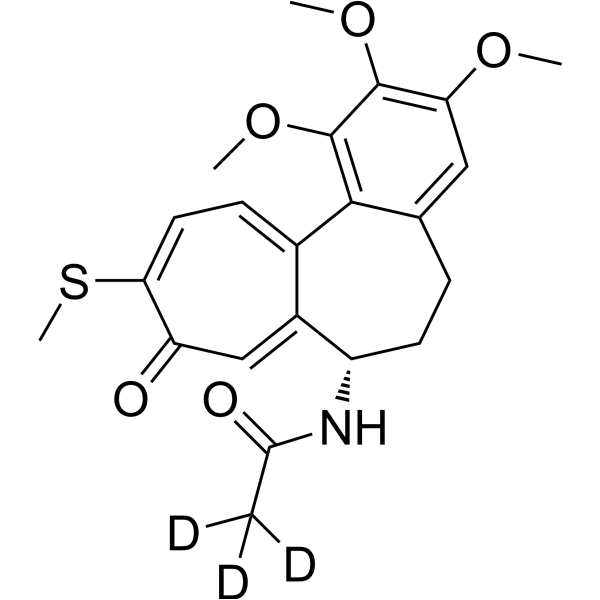 0 ImagesThiocolchicine-d3 is deuterium labeled Thiocolchicine. Thiocolchicine, a derivative modified in the C Ring of Colchicine (HY-16569) with enhanced biological properties. Thiocolchicine is a potent inhibitor of tubulin polymerization (IC50=2.5 μM) and competitively binds to tubulin with a Ki of 0.7 μM. Thiocolchicine induces cell apoptosis. Thiocolchicine can be used as an ADC cytotoxin in ADC technology.
-
Suprafenacine
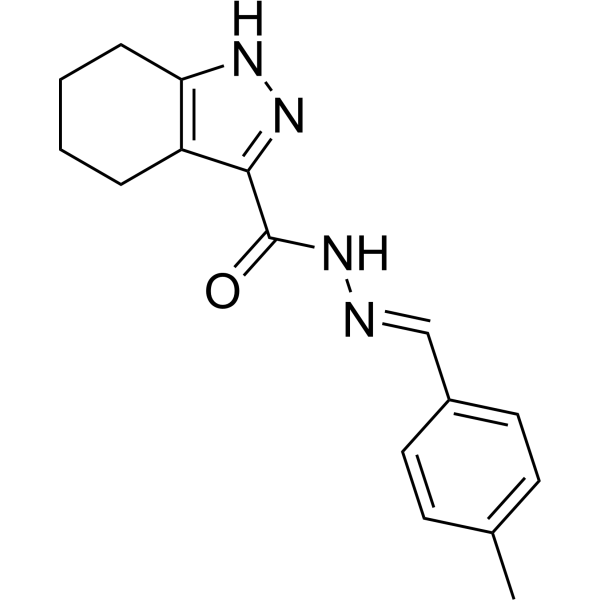 0 ImagesSynonyms: SRF
-
Microtubule-IN-13
 0 ImagesCat. No.: HY-178973Purity: 99.57%Microtubule-IN-13 (Compound FB2) is a microtubule inhibitor. Microtubule-IN-13 interferes with microtubule dynamics, leading to defects in the mitotic spindle and persistent mitotic arrest. Microtubule-IN-13 exhibits potent cytotoxicity against multiple cancer cell lines (IC50 = 0.3-2.7 μM). Microtubule-IN-13 can be used for cancer research.
-
Iso cephalomannine
 0 ImagesCat. No.: HY-Z9022CAS No.: 173101-54-7Iso cephalomannine is a tubulin-targeting cytotoxic agent. Iso cephalomannine induces cytotoxicity in breast cancer cells. Iso cephalomannine can be used in breast cancer-related research.
-
Tubulin inhibitor 11
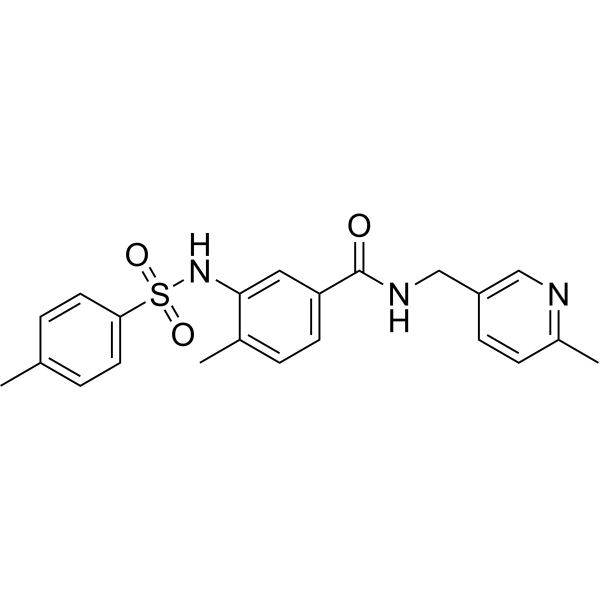 0 ImagesCat. No.: HY-152156CAS No.: 2366260-33-3Tubulin inhibitor 11 is a potent and orally active tubulin inhibitor. Tubulin inhibitor 11 targets the Colchicine binding site on tubulin, inhibits tubulin polymerization, promotes mitotic blockade and apoptosis.
-
Tubulin polymerization-IN-56
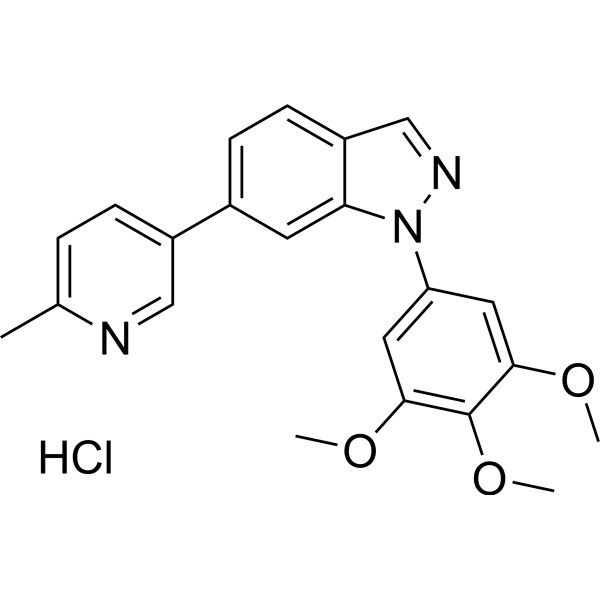 0 ImagesTubulin polymerization-IN-56 (compound 8l), an indazole derivative, is a potent tubulin polymerization inhibitor through interacting with the colchicine site, resulting in cell cycle arrest and cellular apoptosis. polymerization-IN-56 reduces cell migration and leads to more potent inhibition of tumor growth in vivo.
-
cis-Trismethoxy resveratrol
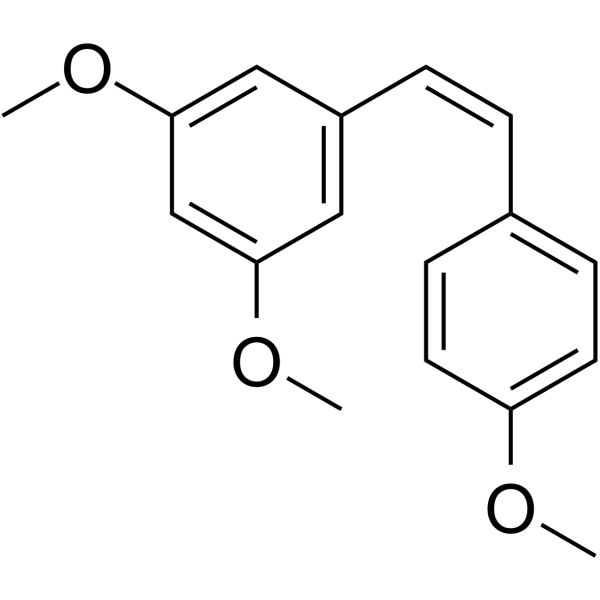 0 ImagesSynonyms: (Z)-3,5,4'-Trimethoxystilbenecis-Trismethoxy resveratrol ((Z)-3,5,4'-Trimethoxystilbene) is an anti-HCV agent and Tubulin inhibitor, with an IC50 of 4 μM against Tubulin. cis-Trismethoxy resveratrol induces G2/M phase cell cycle arrest, reduces DCLK1, decreases CDK1 levels, blocks phosphorylation of Akt Ser473, and induces the expression of p21Cip1/Waf1. cis-Trismethoxy resveratrol exhibits anti-tumor and hepatoprotective activities. cis-Trismethoxy resveratrol can be used in studies related to colon adenocarcinoma, hepatocellular carcinoma, hepatitis C, and liver injury.
-
Thiocolchicine
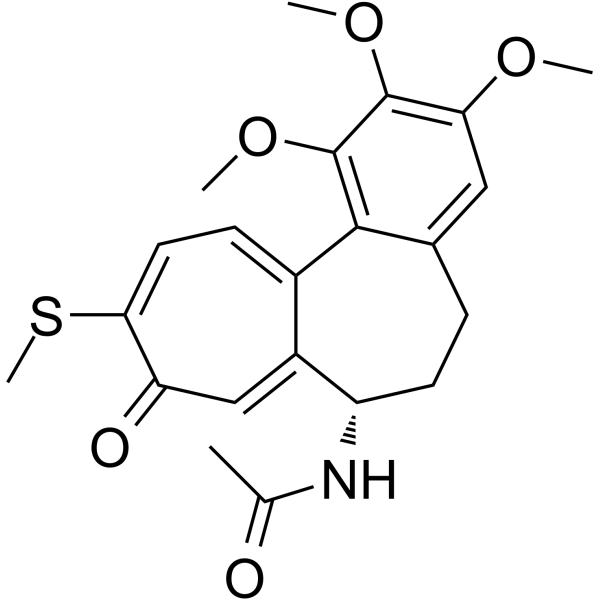 0 ImagesThiocolchicine, a derivative modified in the C Ring of Colchicine (HY-16569) with enhanced biological properties. Thiocolchicine is a potent inhibitor of tubulin polymerization (IC50=2.5 µM) and competitively binds to tubulin with a Ki of 0.7 µM. Thiocolchicine induces cell apoptosis. Thiocolchicine can be used as an ADC cytotoxin in ADC technology.
-
CHM-1
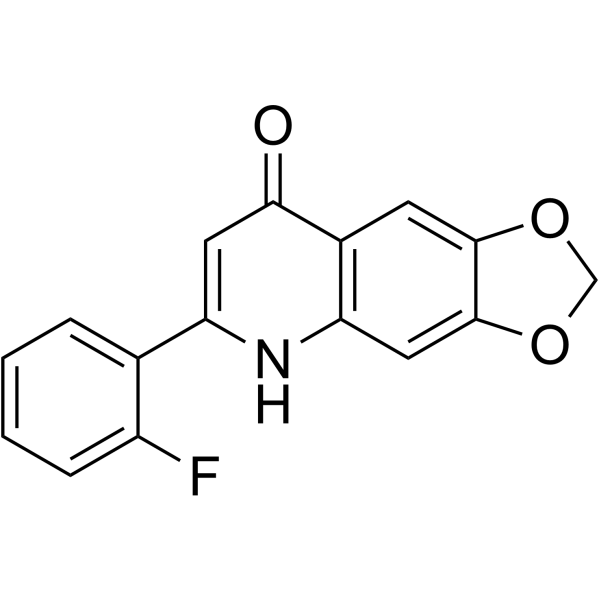 0 ImagesSynonyms: NSC656158CHM-1, a microtubule-destabilizing agent, inhibits tubulin polymerization. CHM-1 is a potent and selective antimitotic antitumor activity against human hepatocellular carcinoma. CHM-1 induces growth inhibition and apoptosis via G2-M phase arrest in human hepatocellular carcinoma cells by activation of Cdc2 kinase activity.




