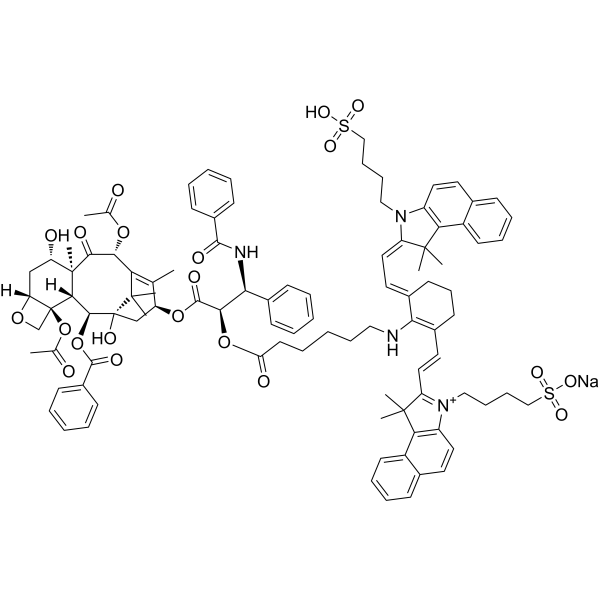
Microtubule/Tubulin
Microtubules are a component of the cytoskeleton, found throughout the cytoplasm. These tubular polymers of tubulin can grow as long as 50 micrometres, with an average length of 25 µm, and are highly dynamic. The outer diameter of a microtubule is about 24 nm while the inner diameter is about 12 nm. Microtubules are found in eukaryotic cells and are formed by the polymerization of a dimer of two globular proteins, alpha and beta tubulin. Tubulin is one of several members of a small family of globular proteins. The tubulin superfamily includes five distinct families, the alpha-, beta-, gamma-, delta-, and epsilon-tubulins and a sixth family which is present only in kinetoplastid protozoa. The most common members of the tubulin family are α-tubulin and β-tubulin, the proteins that make up microtubules. Microtubules are very important in a number of cellular processes. They are involved in maintaining the structure of the cell.
All Product Categories
-
Microtubule/Tubulin Inhibitors
(806)
View all products
-
Microtubule/Tubulin Agonists
(2)
View all products
-
Microtubule/Tubulin Activators
(19)
View all products
-
Microtubule/Tubulin Modulators
(19)
View all products
-
Microtubule/Tubulin Inducers
(5)
View all products
-
Microtubule/Tubulin Degraders
(3)
View all products
-
Microtubule/Tubulin Controls
(19)
View all products
-
Microtubule/Tubulin Ligands
(5)
View all products
-
Microtubule/Tubulin Related Products (990)
Related Products (990)

-
Antibodies (69)
-
Tubulin inhibitor 32
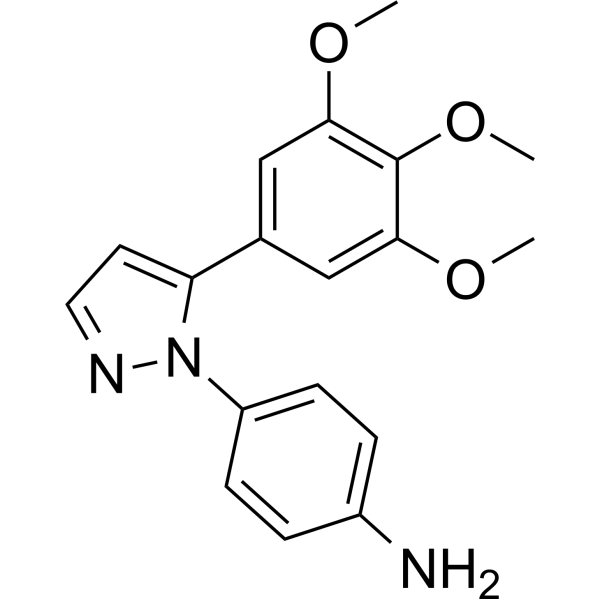 0 ImagesCat. No.: HY-149252CAS No.: 2923531-39-7Tubulin inhibitor 32 is a potent and orally active tubulin inhibitor. Tubulin inhibitor 32 shows anti-proliferative activity and inhibits microtubule polymerization. Tubulin inhibitor 32 induces Apoptosis and cell cycle arrest at G2/M phase. Tubulin inhibitor 32 shows anti-tumor activity.
-
Microtubule inhibitor 3
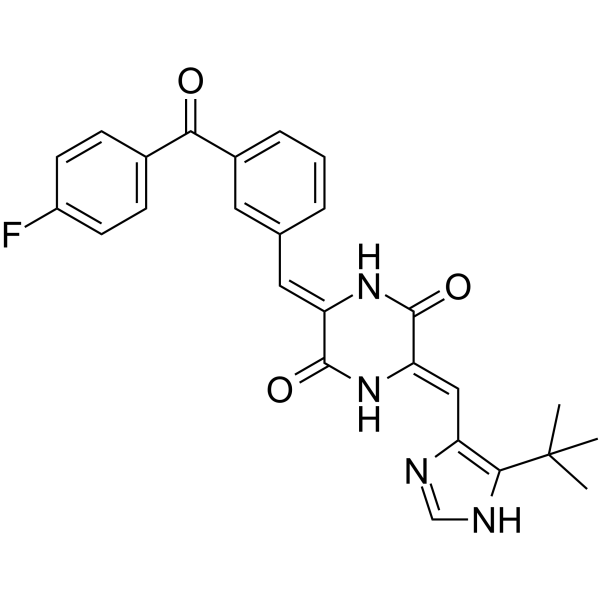 0 ImagesCat. No.: HY-147724CAS No.: 1236141-96-0Compounds 17O (ic50= 14.0 nm, NCI-H460) and 17p (ic50= 2.9 nm, NCI-H460) and furan groups showed effective cytotoxic activity against various human cancer cell lines at the nanomolar level.
-
Tubulin inhibitor 43
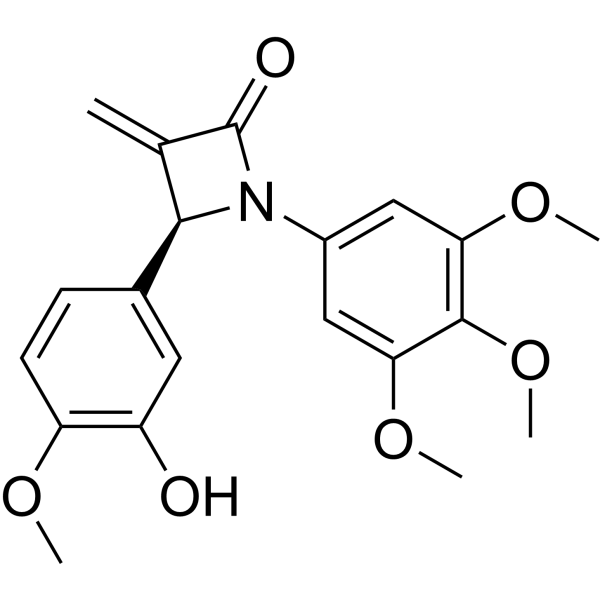 0 ImagesCat. No.: HY-160854CAS No.: 1541208-02-9
-
Neuroinflammatory-IN-3
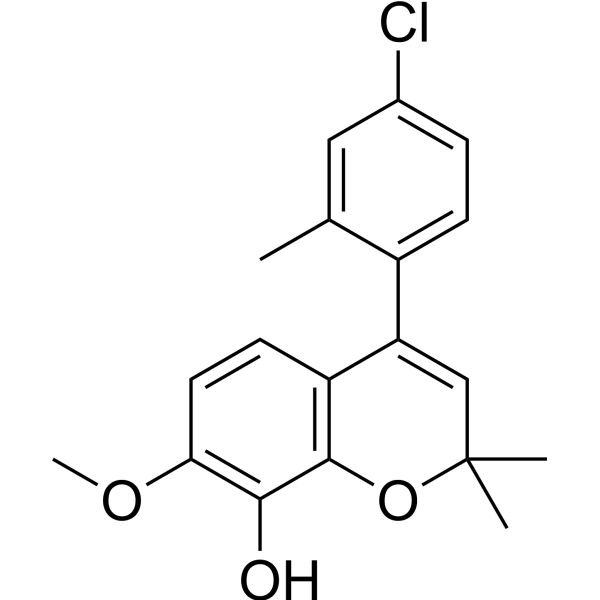 0 ImagesCat. No.: HY-152088CAS No.: 1202404-23-6Neuroinflammatory-IN-3, a tubulin inhibitor, is an anti-neuroinflammatory agent. Neuroinflammatory-IN-3 is a potent antitumor agent that functions by the inhibition of tubulin polymerization.
-
Tubulin polymerization-IN-8
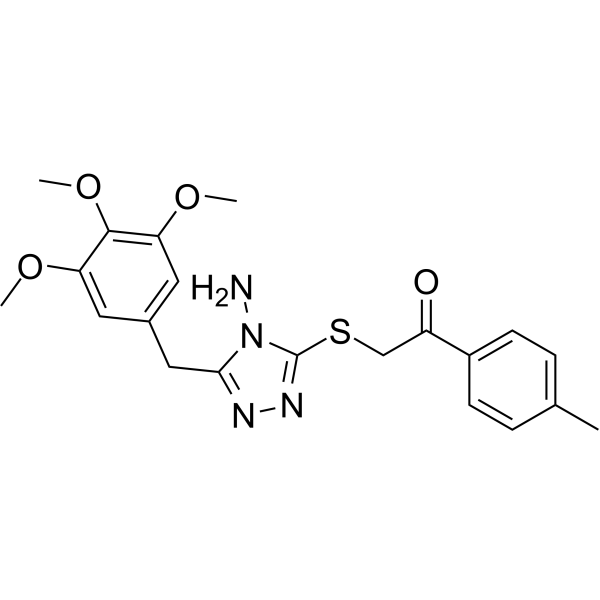 0 ImagesCat. No.: HY-143447CAS No.: 2768485-08-9Tubulin polymerization-IN-8 (compound IIc) is a potent inhibitor of tubulin polymerization. Tubulin polymerization-IN-8 concentration-dependently causes cell cycle arrest at the G2/M phase in HCT116 tumor cells, and displays a significant inhibition of tubulin polymerization with an IC50 value of 12.7 μM. Tubulin polymerization-IN-8 has the potential for the research of cancer diseases[ 1].
-
APD-94
 0 ImagesCat. No.: HY-172617CAS No.: 877810-03-2APD-94 is a dual inhibitor targeting tubulin and Bmi-1. APD-94 interfers tubulin normal polymerization. APD-94 suppresses the expression of Bmi-1. APD-94 causes cell cycle arrest at the G2/M phase in cancer cells and induces apoptosis, thus inhibiting cancer cell proliferation. APD-94 represses the growth of HT29 cell xenografts in NOD/SCID mice. APD-94 can be used for colorectal cancer study.
-
Tubulin polymerization-IN-20
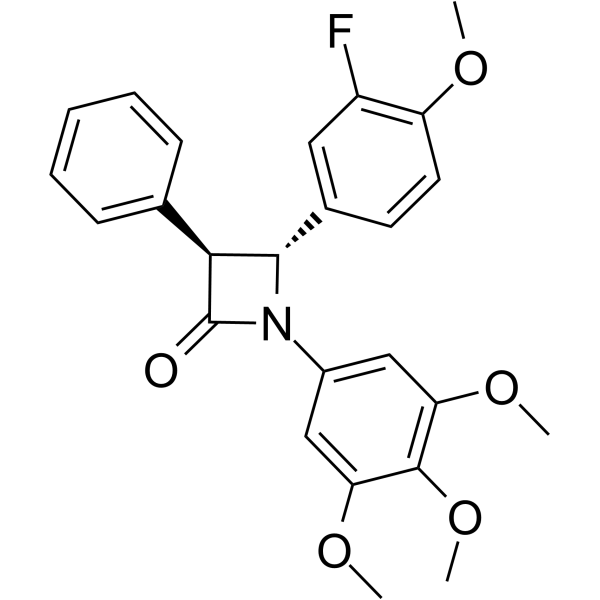 0 ImagesCat. No.: HY-146378CAS No.: 2410619-45-1Tubulin polymerization-IN-20 (compound 11) is a potent inhibitor of tubulin polymerization. Tubulin polymerization-IN-20 has the potential for the research of breast cancers and chemoresistant colon cancers.
-
Anticancer agent 270
 0 ImagesCat. No.: HY-173361Anticancer agent 270 (Compound 8e) is an inhibitor that acts on tubulin. Its IC50 value against MCF-7 breast cancer cells is 1.02 μM. Through a dual mechanism of action, namely inducing Apoptosis and destabilizing microtubules, it exerts significant anti-proliferative activity against breast cancer cells. Anticancer agent 270 can be applied to research in the field of cancer.
-
Tubulin polymerization-IN-22
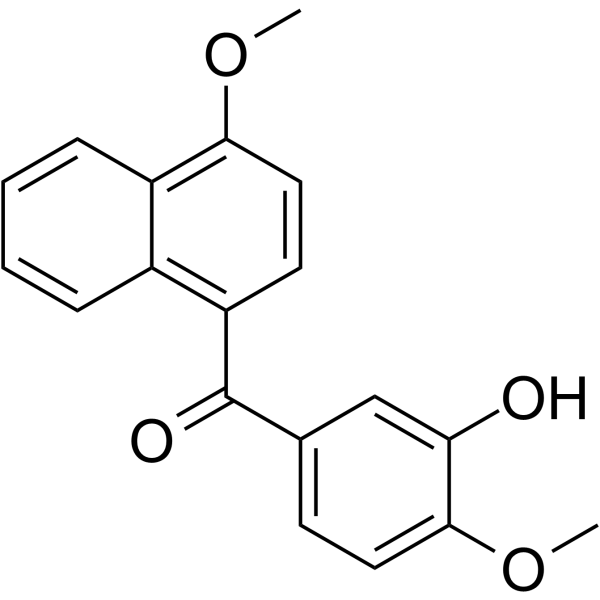 0 ImagesCat. No.: HY-147824CAS No.: 2493052-22-3Tubulin polymerization-IN-22 is a tubulin polymerization inhibitor with an IC50 of 8.1 μM. Tubulin polymerization-IN-22 arrests cell cycle at G2/M phase and induces apoptosis.

-
Tubulin polymerization-IN-59
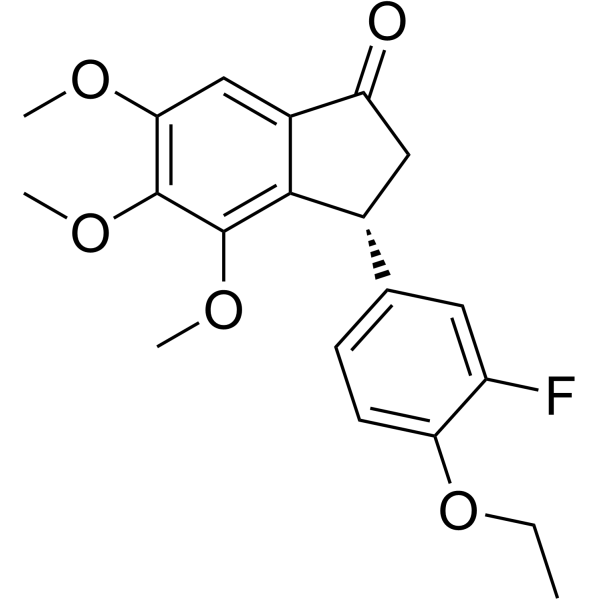 0 ImagesCat. No.: HY-157543Purity: 99.85%Tubulin polymerization-IN-59 is a tubulin polymerization inhibitor and colchicine binding site inhibitor (CBSI) (IC50 = 6.1 μM). Tubulin polymerization-IN-59 exerts potent antiproliferative activity against cancer cells, while showing lower cytotoxicity to normal cells. Tubulin polymerization-IN-59 arrests colorectal cancer HCT 116 cells in G2/M phase, induces cell apoptosis, and suppresses tumor cell colony formation and migration. Tubulin polymerization-IN-59 can be used for the study of colorectal cancer (CRC).
-
4'-Demethylepipodophyllotoxin (Standard)
 0 ImagesSynonyms: 4'-O-demethylepipodophyllotoxin (Standard); 4'-DMEP (Standard)4'-Demethylepipodophyllotoxin (Standard) is the analytical standard of 4'-Demethylepipodophyllotoxin. This product is intended for research and analytical applications. 4'-Demethylepipodophyllotoxin (4'-DMEP) is an intermediate compound that inhibits microtubule assembly.
-
Vinepidine sulfate
 0 ImagesCat. No.: HY-160992CAS No.: 83200-11-7Synonyms: LY-119863Vinepidine (LY-119863) sulfate is a derivative of vincristine (HY-N0488). Vinepidine sulfate has antitumor activity.
-
N-Deacetyl-N-formylcolchicine
 0 ImagesN-Deacetyl-N-formylcolchicine (N-Formyl-N-deacetylcolchicine, Compound 11) is a selective inhibitor targeting the colchicine-binding site of tubulin. N-Deacetyl-N-formylcolchicine shows antiproliferative activity against various cancer cell lines with IC50 values of 32.61-100.28 nM. N-Deacetyl-N-formylcolchicine inhibits microtubule polymerization to block cell division, induces cancer cell apoptosis and suppresses migration. N-Deacetyl-N-formylcolchicine is promising for research of cancers such as lung cancer and various solid tumors.
-
Trastuzumab-DM4
 0 ImagesCat. No.: HY-185718Trastuzumab-DM4 is an antibody-drug conjugate (ADC) formed by conjugating Trastuzumab (HY-P9907) with DM4 (sulfo-SPDB-DM4) (HY-101141) via a cleavable linker. DM4 is a tubulin inhibitor that suppresses cell division. Trastuzumab-DM4 significantly inhibits tumor growth in Trastuzumab-resistant HER2 xenograft tumor models. Trastuzumab-DM4 can be used for the research of HER2-positive breast cancer.
-
Anti-melanoma agent 3
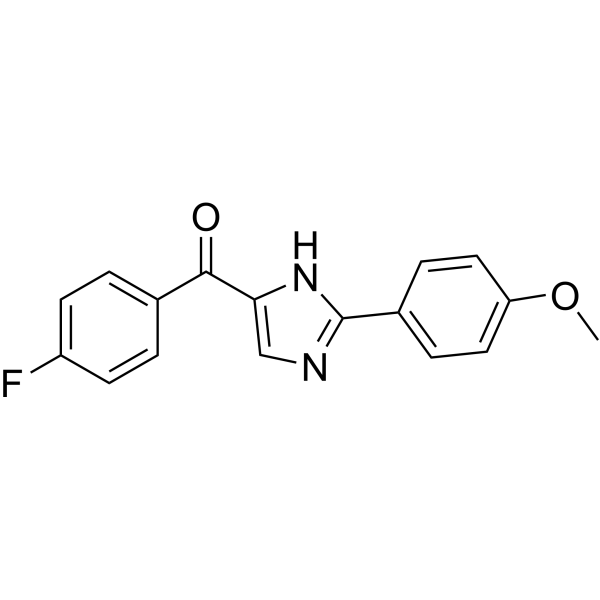 0 ImagesCat. No.: HY-119427CAS No.: 1253697-49-2Anti-melanoma agent 3 (compound 5cb) is a 2-aryl-4-benzoyl-imidazole (ABI) derivative and an inhibitor of melanoma xenogeneic tumors. Anti-melanoma agent 3 exerts anticancer activity by interacting with the colchicine binding site to inhibit tubulin polymerization.
-
Tubulin inhibitor 20
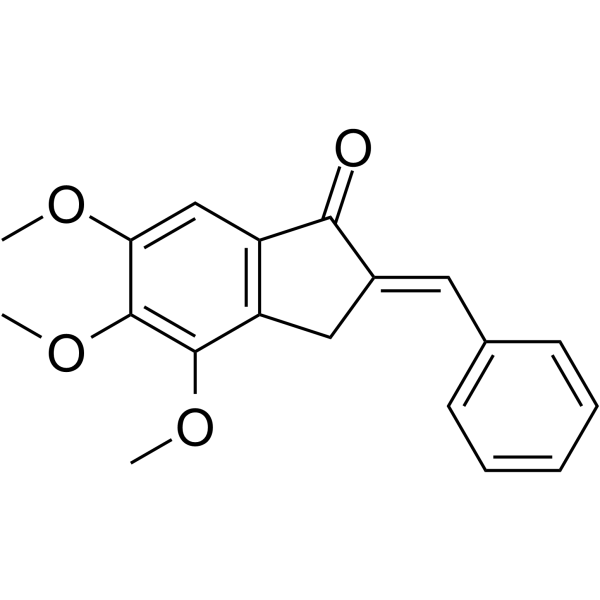 0 ImagesCat. No.: HY-115958CAS No.: 860356-56-5Tubulin inhibitor 20 (compound 1) is a potent inhibitor of tubulin. Tubulin inhibitor 20 has the potential for the research of cancer diseases.
-
Tubulin polymerization-IN-43
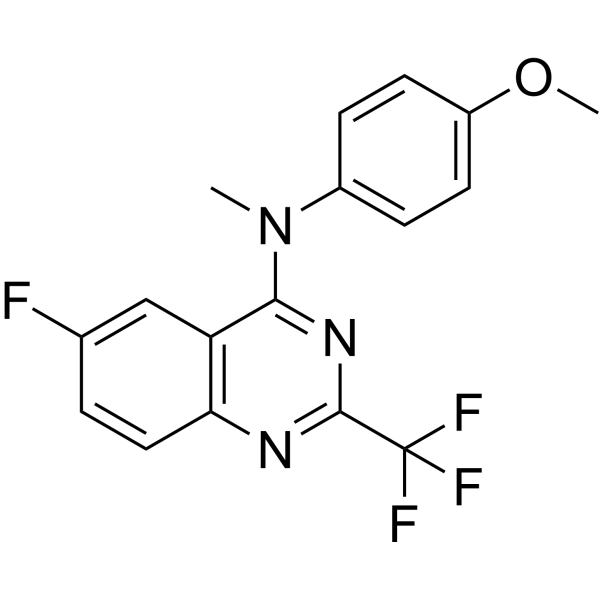 0 ImagesTubulin polymerization-IN-43 (compound 15h) is a tubulin polymerization inhibitor. Tubulin polymerization-IN-43 disrupts cellular microtubule networks by targeting the Colchicine (HY-16569) site, and promots cell cycle arrest of leukemia cells at G2/M phase and cell apoptosis, as well as inhibiting angiogenesis.
-
Cemadotin hydrochloride
 0 ImagesCat. No.: HY-13589ACAS No.: 172837-41-1Synonyms: LU103793 hydrochlorideCemadotin (LU103793) hydrochloride is a water-soluble synthetic analogue of Dolastatin 15 (HY-P1126) that inhibits cell proliferation in vitro and the growth of tumor xenografts in mice. Cemadotin hydrochloride blocks cells at mitosis, and exhibits Ki value of 1 μM for inhibiting tubulin. Cemadotin hydrochloride can be used to research anticancer.