1. Signaling Pathways
  2. NF-κB
  3. NF-κB

NF-κB

Nuclear factor-κB; Nuclear factor-kappaB

NF-κB (Nuclear factor kappa-light-chain-enhancer of activated B cells) is a protein complex that controls transcription of DNA. NF-κB is found in almost all animal cell types and is involved in cellular responses to stimuli such as stress, cytokines, free radicals, ultraviolet irradiation, oxidized LDL, and bacterial or viral antigens. NF-κB plays a key role in regulating the immune response to infection. Incorrect regulation of NF-κB has been linked to cancer, inflammatory, and autoimmune diseases, septic shock, viral infection, and improper immune development. NF-κB has also been implicated in processes of synaptic plasticity and memory. There are five proteins in the mammalian NF-κB family: NF-κB1, NF-κB2, RelA, RelB, c-Rel.

Cat. No. Product Name Effect Purity Chemical Structure
  • HY-N2192R
    Swertianolin (Standard)
    Inhibitor
    Swertianolin (Standard) is the analytical standard of Swertianolin (HY-N2192). This product is intended for research and analytical applications. Swertianolin is a xanthone glycoside. Swertianolin can be isolated from plants of the Gentianaceae family (e.g., Gentiana campestris and Swertia punicea). Swertianolin inhibits p38 phosphorylation and NF-κB activation, and reduces NO and ROS production. Swertianolin exhibits anti-Helicobacter pylori activity with an IC50 of 6.1 μM and a minimum bactericidal concentration of 91.7 μM. Swertianolin modulates immune function in sepsis. Swertianolin is useful in the research of diseases such as Alzheimer's disease, hepatitis B, Helicobacter pylori infection, and sepsis.
    Swertianolin (Standard)
  • HY-W014223R
    2,4′-Dihydroxybenzophenone (Standard)
    Inhibitor
    2,4′-Dihydroxybenzophenone (Standard) is the analytical standard of 2,4′-Dihydroxybenzophenone. This product is intended for research and analytical applications. 2,4′-Dihydroxybenzophenone (Ultraviolet absorber UV-0) occupies the hydrophobic pocket of MD2 and blocks the dimerization of TLR4. 2,4′-Dihydroxybenzophenone inhibits the LPS induced mtROS production, and LPS induced inflammatory response by downregulating pro-inflammatory mediators and decreasing the expression of MyD88, p-IRAK4, and NF-κB. 2,4′-Dihydroxybenzophenone is also a UV absorber.
    2,4′-Dihydroxybenzophenone (Standard)
  • HY-164480
    GTCpFE
    Inhibitor
    GTCpFE inhibits IKKα/β in the NF-κB pathway with anti-inflammatory activities and blocks p65 nuclear entry, which consists of Dimethyl fumarate (DMF) (HY-17363) linked to Aspirin (ASA) (HY-14654). GTCpFE exhibits selective anti-cancer stem-like cell (CSC) activity by reducing mammosphere growth and the CD44+ CD24- immunophenotype. GTCpFE inhibits breast cancer stem cells, an important NFκB- and PGE2-dependent phenotype in aggressive cancers.
    GTCpFE
  • HY-N15415
    Zaluzanin C
    Inhibitor
    Zaluzanin C is a sesquiterpene lactone and antifungal agent. Zaluzanin C is isolated from the leaves of Vernonia arborea. Zaluzanin C inhibits mtROS-mediated NF-κB activity, as well as LPS- and TNF-α-induced mtROS production. Zaluzanin C alleviates mtROS-mediated mitochondrial dysfunction, enhances Mitophagy, and increases the mRNA levels of fatty acid oxidation genes and mitochondrial biogenesis factors. Zaluzanin C inhibits the formation of advanced glycation end products and α-glucosidase activity. Zaluzanin C improves intracellular lipid accumulation. Zaluzanin C exhibits anti-inflammatory, antioxidant, antifungal, anticancer and pro-osteogenic activities. Zaluzanin C can be used in studies related to non-alcoholic fatty liver disease and obesity.
    Zaluzanin C
  • HY-N0648R
    Monotropein (Standard)
    Inhibitor
    Monotropein (Standard) is the analytical standard of Monotropein. This product is intended for research and analytical applications. Monotropein is an iridoid glycoside that can be isolated from the roots of Morinda officinalis. Monotropein inhibits the expression of inflammatory mediators in dextran sulfate sodium (DSS)-induced colitis mouse model. Monotropein exerts protective effects against IL-1β-induced apoptosis and catabolic responses on osteoarthritis chondrocytes. Monotropein has cartilage protective activity. Monotropein can alleviate Cisplatin (HY-17394)-induced acute kidney injury by inhibiting oxidative damage, inflammation and apoptosis through activation of Nrf2/HO-1 pathway and inhibition of NF-κB signaling. Monotropein can be studied in research for osteoarthritis, acute kidney injury and acute lung injury.
    Monotropein (Standard)
  • HY-109017R
    Vamorolone (Standard)
    Inhibitor
    Vamorolone (Standard) is the analytical standard of Vamorolone. This product is intended for research and analytical applications.
    Vamorolone (Standard)
  • HY-106449R
    Recoflavone (Standard)
    Inhibitor
    Recoflavone (Standard) is the analytical standard of Recoflavone (HY-106449). This product is intended for research and analytical applications. Recoflavone (DA-6034 (free acid)), a synthetic derivative of the flavonoid Eupatilin (HY-N0783), is orally active. Recoflavone can inhibit the NF-κB pathway and induce [Ca(2+)]i increase in epithelial cells. Recoflavone exhibits activities such as anti-inflammation, anti-tumor effects, protection of gastric and intestinal mucosa, and promotion of secretion in the ocular surface and salivary glands. Recoflavone can be used for the research of diseases such as dry eye, gastric injury, and intestinal injury.
    Recoflavone (Standard)
  • HY-N1508R
    Ecliptasaponin A (Standard)
    Inhibitor
    Ecliptasaponin A (Standard) is the analytical standard for Ecliptasaponin A (HY-N1508). Ecliptasaponin A is an orally active pentacyclic triterpenoid saponin. Ecliptasaponin A exerts anti-tumor activity by activating ASK1/JNK pathway, inducing apoptosis and autophagy in lung cancer cells. Ecliptasaponin A exerts anti-inflammatory/anti-fibrotic effects and protects the cardiovascular system by inhibiting the HMGB1/TLR4/NF-κB pathway, and the expression of COX-2 and MMP-9. Ecliptasaponin A can enhance SOD activity, reduce MDA levels, and alleviate oxidative stress damage. Ecliptasaponin A exerts chondroprotective effects by inhibiting the expression of MMP13 and regulating inflammatory factors. Ecliptasaponin A improves ovarian function and regulates sex hormones by upregulating the expression of ESR1 receptors.
    Ecliptasaponin A (Standard)
  • HY-180271
    Xanthine oxidase-IN-21
    Inhibitor
    Xanthine oxidase-IN-21, a Genipin (HY-17389) derivative, is an orally active mixed competitive xanthine oxidase (XOD) inhibitor with an IC50 of 0.68 μM. Xanthine oxidase-IN-21 reduces renal fibrosis by decreasing α-SMA expression and suppresses pro-inflammatory cytokines IL-1β, IL-6, and TNF-α through NF-κB pathway regulation. Xanthine oxidase-IN-21 also inhibits URAT1 and GLUT9 expression, promoting uric acid excretion and lowering serum uric acid levels. Xanthine oxidase-IN-21 shows significantly hepatorenal protection activity. Xanthine oxidase-IN-21 can be used for the research of hyperuricemia.
    Xanthine oxidase-IN-21
  • HY-N0346
    4-Methoxycinnamic acid ethyl ester
    Inhibitor 98.72%
    4-Methoxycinnamic acid ethyl ester (Ethyl p-methoxycinnamate) is an orally active natural compound found. 4-Methoxycinnamic acid ethyl ester exerts anti-inflammatory effects by inhibiting cyclooxygenase (COX-1 (IC50 = 1.12 μM) and COX-2 (IC50 = 0.83 μM)), NF-κB (IC50 = 88.7 μM) and cytokine production (TNF-α (IC50 = 96.84 μg/mL) and IL-1β (IC50 = 166.4 μg/mL)). 4-Methoxycinnamic acid ethyl ester inhibits tumor cell proliferation, migration and cancer metabolism and induces apoptosis.4-Methoxycinnamic acid ethyl ester inhibits VEGF expression, thereby inhibiting angiogenesis. 4-Methoxycinnamic acid ethyl ester has a significant inhibitory effect on dengue virus and Mycobacterium tuberculosis. 4-Methoxycinnamic acid ethyl ester has analgesic effects in rats.
    4-Methoxycinnamic acid ethyl ester
  • HY-N0852R
    Benzoylpaeoniflorin (Standard)
    Inhibitor
    Benzoylpaeoniflorin (Standard) is an analytical standard for Benzoylpaeoniflorin (HY-N0852). This product is intended for research and analytical applications. Benzoylpaeoniflorin is an orally active monoterpene glycoside compound. Benzoylpaeoniflorin exerts anti-inflammatory, anti-allergic, psoriasis-improving and sepsis-improving effects by inhibiting signaling pathways such as TNF/NF-κB and MAPK, as well as regulating immune homeostasis. Benzoylpaeoniflorin can be used in research related to immune, allergic and inflammatory diseases.
    Benzoylpaeoniflorin (Standard)
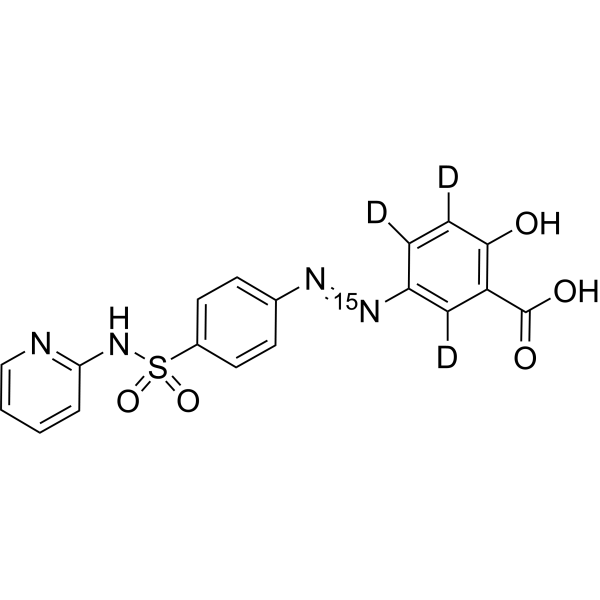
  • HY-14655S1
    Sulfasalazine-d3,15N
    Inhibitor
    Sulfasalazine-d3,15N is 15N and deuterated labeled Sulfasalazine (HY-14655). Sulfasalazine (NSC 667219) is an anti-rheumatic agent for the research of rheumatoid arthritis and ulcerative colitis. Sulfasalazine can suppress NF-κB activity. Sulfasalazine is a type 1 ferroptosis inducer.
    Sulfasalazine-d<sub>3</sub>,<sup>15</sup>N
  • HY-N0444R
    Rubiadin (Standard)
    Inhibitor
    Rubiadin (Standard) is the analytical standard of Rubiadin (HY-N0444). This product is intended for research and analytical applications. Rubiadin is an orally active free radical scavenger that inhibits the activation of the NF-κB pathway. Rubiadin inhibits osteoclast formation, bone resorption, lipid peroxidation, HBV DNA replication and cancer cell proliferation; reduces pro-inflammatory cytokine levels; induces cancer cell apoptosis; and possesses antifungal, antimalarial, antibacterial and anticonvulsant activities. Rubiadin can be used in the research of osteoporosis, acute inflammation, chronic inflammation, carbon tetrachloride-induced liver injury, Alzheimer's disease, breast cancer, iron overload disorders, hepatitis B virus infection, colon cancer, liver cancer, T-lymphocytic leukemia, cervical cancer, diabetic nephropathy, epileptic seizures, fungal infections, malaria and bacterial infections.
    Rubiadin (Standard)
  • HY-107818R
    4-Hydroxychalcone (Standard)
    Inhibitor
    4-Hydroxychalcone (Standard) is the analytical standard of 4-Hydroxychalcone. This product is intended for research and analytical applications. 4-Hydroxychalcone is a chalcone metabolite with anti-angiogenic and anti-inflammatory activities. 4-Hydroxychalcone suppresses angiogenesis by suppression of growth factor pathway with no signs of cytotoxicity. 4-Hydroxychalcone inhibits TNF-α induced NF-κB pathway activation and activates BMP signaling, reduces resistant hypertension (RH) by attenuating hyperaldosteronism and renal injury in mice.
    4-Hydroxychalcone (Standard)
  • HY-N2485R
    4'-Methoxyresveratrol (Standard)
    Inhibitor
    4'-Methoxyresveratrol (Standard) is the analytical standard of 4'-Methoxyresveratrol. This product is intended for research and analytical applications. 4'-Methoxyresveratrol (4'-O-Methylresveratrol) is a polyphenol derived from Dipterocarpaceae, with antiandrogenic, antifungal and anti-inflammatory activities. 4'-Methoxyresveratrol alleviates AGE-induced inflammation through suppressing RAGE-mediated MAPK/NF-κB signaling pathway and NLRP3 inflammasome activation.
    4'-Methoxyresveratrol (Standard)
  • HY-B0612AR
    Lercanidipine hydrochloride (Standard)
    Inhibitor
    Lercanidipine (hydrochloride) (Standard) is the analytical standard of Lercanidipine (hydrochloride). This product is intended for research and analytical applications. Lercanidipine is a third-generation, lipophilic, brain-penetrant, vascular-selective and orally active dihydropyridine-calcium channel blocker with a pIC50 of 7.74 (converts from μM). Lercanidipine has long lasting antihypertensive action as well as reno- and neuro-protective effect. Lercanidipine also shows anti-oxidant, anti-inflammatory and anti-apoptotic properties. Lercanidipine can be used in cardiovascular and neurological research.
    Lercanidipine hydrochloride (Standard)
  • HY-164524
    SBI-0640726
    Inhibitor
    SBI-0640726 is an eIF4G1 inhibitor with antiproliferative activity in melanoma. SBI-0640726 disrupts the eIF4F translation initiation complex by inhibiting AKT and NF-kB signaling pathways. SBI-0640726 inhibits the growth of NRAS and BRAF mutant melanoma in vitro.
    SBI-0640726
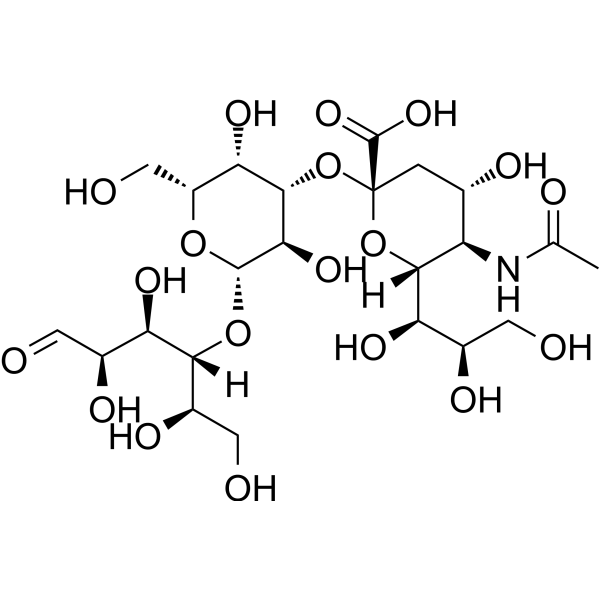
  • HY-108065
    3'-Sialyllactose
    Inhibitor
    3'-Sialyllactose (3'-SL) is a prebiotic, maintains immune homeostasis and exerts anti-inflammatory and anti-arthritic effects. 3'-Sialyllactose is an ordinary carbohydrate with the lowest toxicity rating, it can be used for the research of inflammation.
    3'-Sialyllactose
  • HY-B1179R
    Dipyrocetyl (Standard)
    Inhibitor
    Dipyrocetyl (Standard) is the analytical standard of Dipyrocetyl. This product is intended for research and analytical applications. Dipyrocetyl is a Salicylic Acid (HY-B0167) derivative, exhibiting analgesic and antipyretic activity. Dipyrocetyl can be used for inflammation diseases and pain.
    Dipyrocetyl (Standard)
  • HY-N0894R
    Octahydrocurcumin (Standard)
    Inhibitor
    Octahydrocurcumin (Hexahydrobisdemethoxycurcumin) is a hydrogenated derivative of curcumin and a metabolite of curcumin. Octahydrocurcumin is an orally active anticancer and anti-inflammatory agent, and is the final hydrogenated metabolite of Curcumin (HY-N0005) in vivo. Octahydrocurcumin exerts its anti-tumor and anti-inflammatory effects by inducing the mitochondrial apoptosis pathway and inhibiting the TAK1-NF-κB-COX-2 pathway, respectively.
    Octahydrocurcumin (Standard)
Cat. No. Product Name / Synonyms Application Reactivity

NF-κB transcription factors are critical regulators of immunity, stress responses, apoptosis and differentiation. In mammals, there are five members of the transcription factor NF-κB family: RELA (p65), RELB and c-REL, and the precursor proteins NF-κB1 (p105) and NF-κB2 (p100), which are processed into p50 and p52, respectively. NF-κB transcription factors bind as dimers to κB sites in promoters and enhancers of a variety of genes and induce or repress transcription. NF-κB activation occurs via two major signaling pathways: the canonical and the non-canonical NF-κB signaling pathways[1]


The canonical NF-κB pathway is triggered by signals from a large variety of immune receptors, such as TNFR, TLR, and IL-1R, which activate TAK1. TAK1 then activates IκB kinase (IKK) complex, composed of catalytic (IKKα and IKKβ) and regulatory (NEMO) subunits, via phosphorylation of IKKβ. Upon stimulation, the IKK complex, largely through IKKβ, phosphorylates members of the inhibitor of κB (IκB) family, such as IκBα and the IκB-like molecule p105, which sequester NF-κB members in the cytoplasm. IκBα associates with dimers of p50 and members of the REL family (RELA or c-REL), whereas p105 associates with p50 or REL (RELA or c-REL). Upon phosphorylation by IKK, IκBα and p105 are degradated in the proteasome, resulting in the nuclear translocation of canonical NF-κB family members, which bind to specific DNA elements, in the form of various dimeric complexes, including RELA-p50, c-REL-p50, and p50-p50. Atypical, IKK-independent pathways of NF-κB induction also provide mechanisms to integrate parallel signaling pathways to increase NF-κB activity, such as hypoxia, UV and genotoxic stress.


The non-canonical NF-κB pathway is induced by certain TNF superfamily members, such as CD40L, BAFF and lymphotoxin-β (LT-β), which stimulates the recruitment of TRAF2, TRAF3, cIAP1/2 to the receptor complex. Activated cIAP mediates K48 ubiquitylation and proteasomal degradation of TRAF3, resulting in stabilization and accumulation of the NFκB-inducing kinase (NIK). NIK phosphorylates and activates IKKα, which in turn phosphorylates p100, triggering p100 processing, and leading to the generation of p52 and the nuclear translocation of p52 and RELB[2][3].


Reference:

[1]. Oeckinghaus A, et al. The NF-kappaB family of transcription factors and its regulation.Cold Spring Harb Perspect Biol. 2009 Oct;1(4):a000034. 
[2]. Taniguchi K, et al. NF-κB, inflammation, immunity and cancer: coming of age. Nat Rev Immunol. 2018 May;18(5):309-324.
[3]. Perkins ND,et al. Integrating cell-signalling pathways with NF-kappaB and IKK function. Nat Rev Mol Cell Biol. 2007 Jan;8(1):49-62.

Your Search Returned No Results.

Sorry. There is currently no product that acts on isoform together.

Please try each isoform separately.