



Gentianaceae
-
- Gentiana scabra Bunge (11)
- Gentiana macrophylla Pall. (10)
- Swertia bimaculata (Sieb. et Zucc.) Hook. f. et Thoms. ex C. B. Clark (10)
- Swertia mussotii Franch. (5)
- Gentiana algida Pall. (2)
- Gentiana rigescens Franch. ex Hemsl. (2)
- Gentianella acuta (Michx.) Hulten (2)
- Swertia angustifolia Buch.-Ham. ex D. Don (2)
- Swertia kouitchensis Franch. (2)
- Anthocleista grandiflora Gilg (1)
- Gentiana asclepiadea L. (1)
- Gentiana crassicaulis Duthie ex Burkill (1)
- Gentiana gelida M.Bieb. (1)
- Gentiana lutea L. (1)
- Gentiana rhodantha Franch. ex Hemsl. (1)
- Gentiana tibetica King ex Hook. f. (1)
- Gentiana utriculosa L. (1)
- Gentianopsis barbata (Froel.) Ma (1)
- Halenia elliptica D. Don (1)
- Hoppea dichotoma Willd. (1)
- Lomatogonium rotatum (L.) Fr. ex Nyman (1)
- Schultesia guianensis (Aubl.) Malme (1)
- Swertia chirata (1)
- Swertia chirayita (Roxb.) H.Karst. (1)
- Swertia longifolia Boiss. (1)
-
Gentianaceae (64)

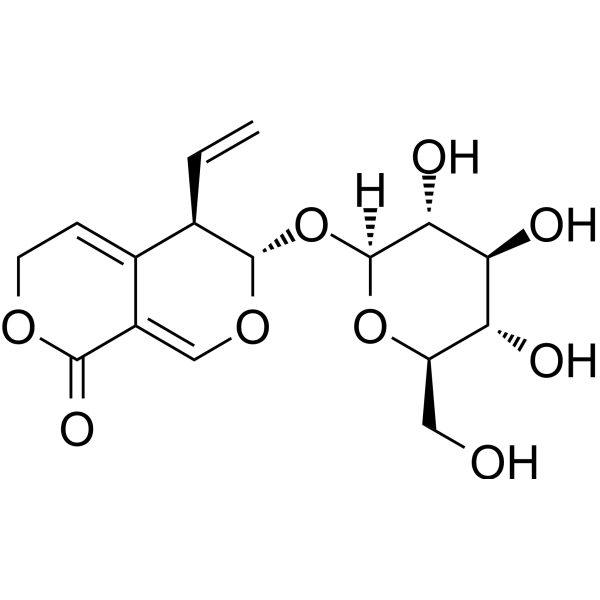
- Formula: C16H20O9
- Molecular Weight: 356.32
Gentiopicroside, a naturally occurring iridoid glycoside, inhibits P450 activity, with an IC50 and a Ki of 61 μM and 22.8 μM for CYP2A6; Gentiopicroside has anti-inflammatoryand antioxidative effects.
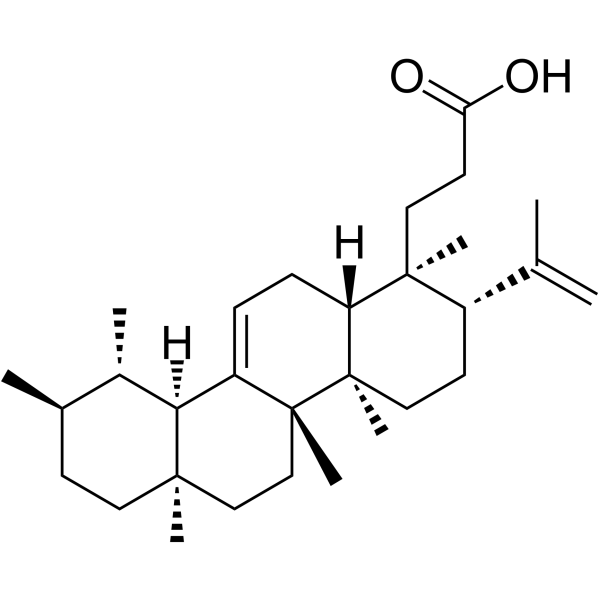
- Formula: C30H48O2
- Molecular Weight: 440.70
Roburic acid acts as an anti-inflammatory, anti-tumor and osteoclastogenesis inhibitor, with a Ki of 7.066 μM against human TNF, an IC50 of 9 μM against human COX-2, and an IC50 of 5 μM against ovine COX-1. Roburic acid reduces the production of inflammatory mediators such as NO and IL-6 in macrophages by inhibiting the NF-κB and MAPK (p38/JNK) pathways. By competitively inhibiting the TNF-TNF-R1 interaction, Roburic acid blocks the downstream NF-κB signaling pathway, thereby inducing cell cycle arrest and apoptosis in cancer cells. Roburic acid specifically inhibits osteoclastogenesis and bone resorption by suppressing the RANKL/TRAF6/NF-κB/NFATc1 axis. Roburic acid can be used in research related to osteolytic diseases such as osteoporosis, colorectal cancer and inflammatory diseases.
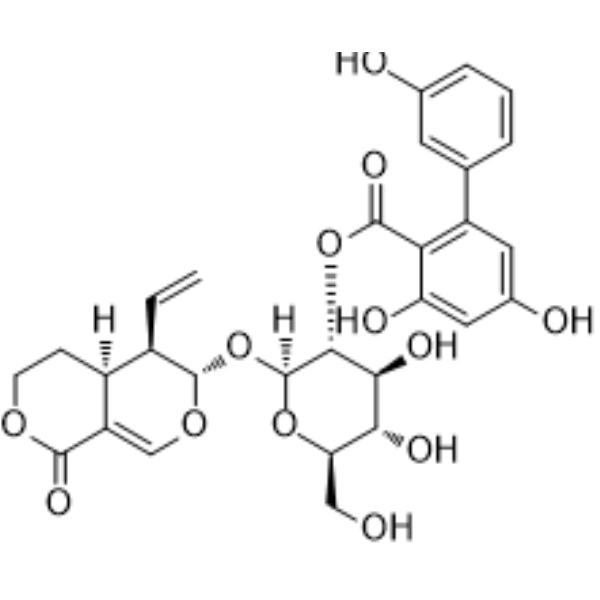
- Formula: C29H30O13
- Molecular Weight: 586.54
Amarogentin is a secoiridoid glycoside that is mainly extracted from Swertia and Gentiana roots. Amarogentin exhibits many biological effects, including anti-oxidative, anti-tumour, and anti-diabetic activities. Amarogentin exerts hepatoprotective and immunomodulatory effects. Amarogentin promotes apoptosis, arrests G2/M cell cycle and downregulates of PI3K/Akt/mTOR signalling pathways. Amarogentin exerts beneficial vasculo-metabolic effect by activating AMPK.
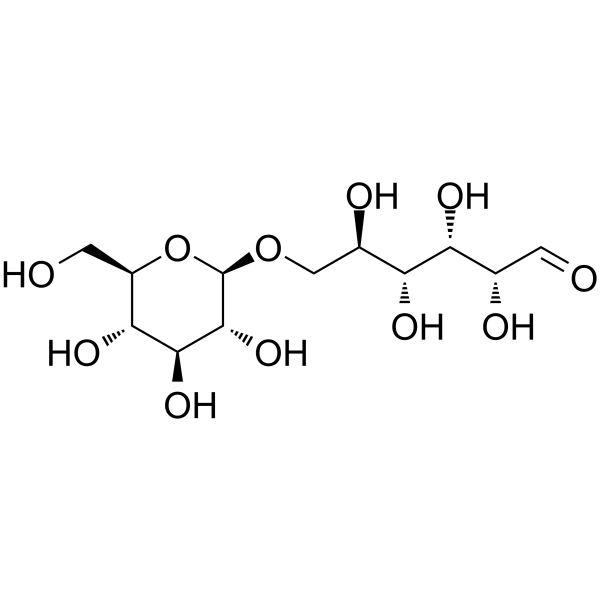
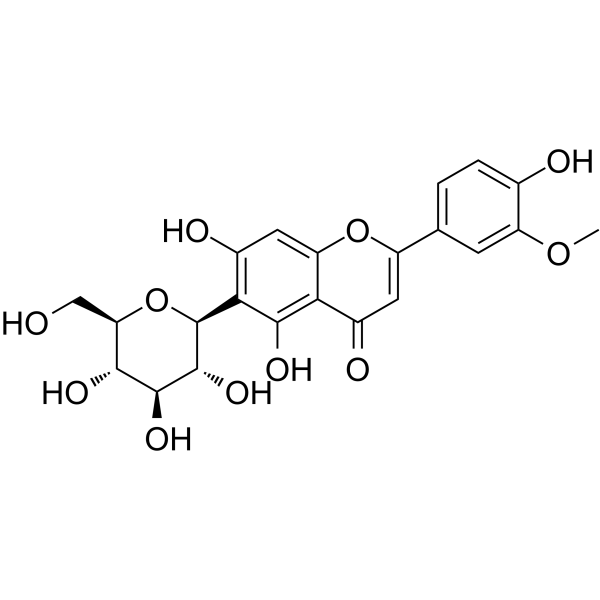
- Formula: C22H22O11
- Molecular Weight: 462.40
Isoscoparin is a flavonoid that could be isolated from EtOAc extract of Gentiana algida Pall. Isoscoparin possesses antioxidant activity.

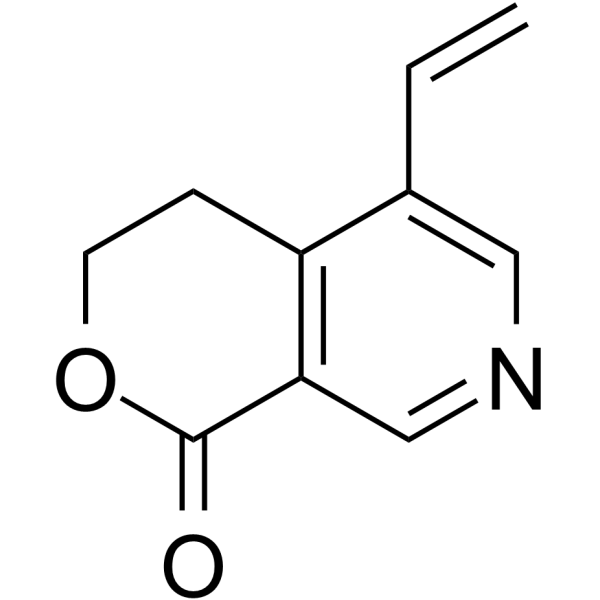
- Formula: C9H9NO2
- Molecular Weight: 163.18
Gentianidine is a pyranopyridine alkaloid discovered in plants of the Gentianaceae family (such as Schultesia guianensis, Gentiana olivieri, etc.).

- Formula: C15H12O6
- Molecular Weight: 288.25
Swerchirin is an orally active, plant-derived xanthone that acts as an inhibitor of the Raf/MEK/ERK signaling pathway. Swerchirin downregulates the expression of phosphorylated MEK and phosphorylated ERK, induces mitochondrial apoptosis and cell cycle arrest, regulates Bcl-2 family proteins, triggers cytochrome c release, activates caspases, and drives PARP cleavage. Swerchirin reduces blood glucose levels in rat models under fasting, fed, glucose-loaded conditions, and following treatment with Tolbutamide (HY-B0401). Swerchirin can be used in research related to ovarian cancer, liver injury, and diabetes.


- Formula: C14H10O5
- Molecular Weight: 258.23
Isogentisin is a cell protector. Isogentisin can shield human umbilical vein endothelial cells (HUVEC) from cell death caused by H202 and UV exposure. Isogentisin can also prevent endothelial damage triggered by smoking by activating cell repair functions to promote cell survival.
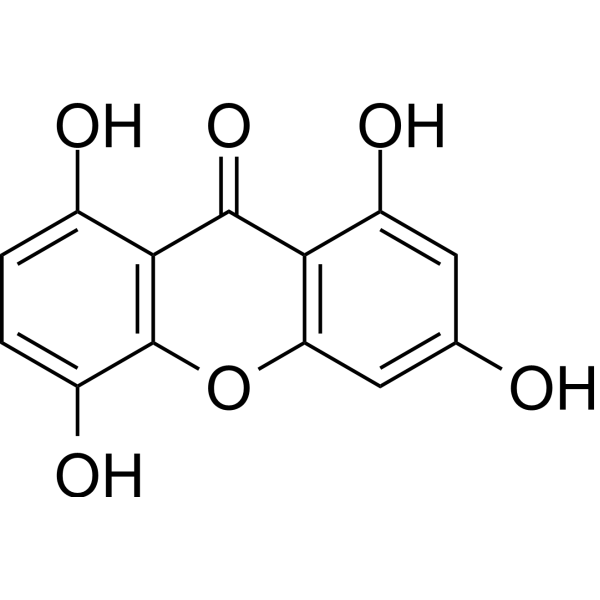
- Formula: C13H8O6
- Molecular Weight: 260.20
1,3,5,8-Tetrahydroxyxanthone (Desmethylbellidifolin) is a natural xanthone extracted from Swertia chirata. 1,3,5,8-Tetrahydroxyxanthone has antispasmodic effect and anti-inflammatory activity.
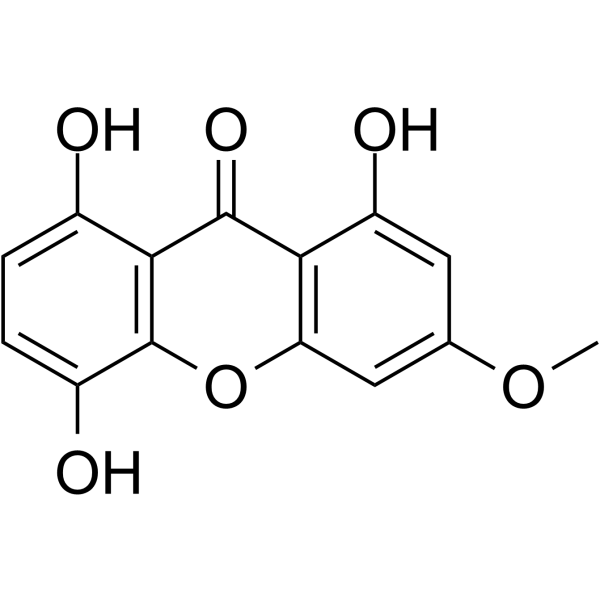
- Formula: C14H10O6
- Molecular Weight: 274.23
Bellidifolin is an orally active compound with antiproliferative, anti-inflammatory and antioxidant properties. Bellidifolin modulates key signaling pathways including STAT3, PI3K-Akt, mTOR and BRD4, and inhibits the viral protein R (Vpr). Bellidifolin induces cell cycle arrest and apoptosis, exerts significant antifibrotic effects, and protects the heart, liver and nervous system. Bellidifolin is applicable to the research of various diseases such as lung cancer, non-alcoholic fatty liver disease, myocardial hypertrophy and ischemic cranial nerve injury.
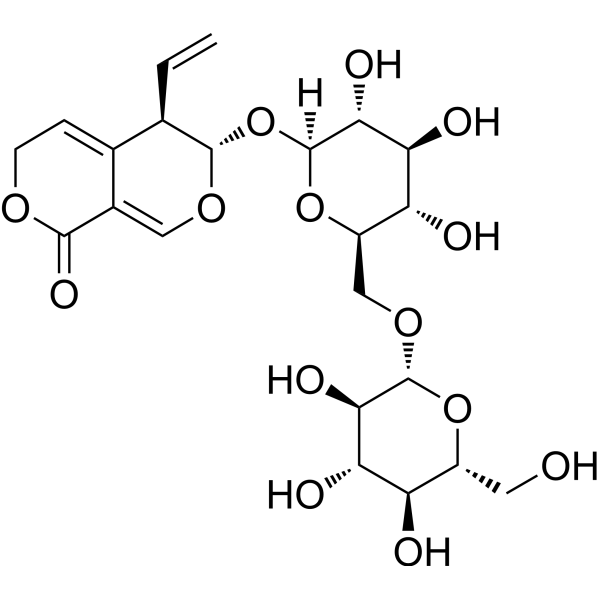
- Formula: C22H30O14
- Molecular Weight: 518.47
6'-O-beta-D-Glucosylgentiopicroside is a secoiridoid isolated from the roots of G. straminea. 6'-O-beta-D-Glucosylgentiopicroside strongly suppresses N-formyl-methionyl-leucyl-phenylalanine (fMLP)-induced superoxide generation.
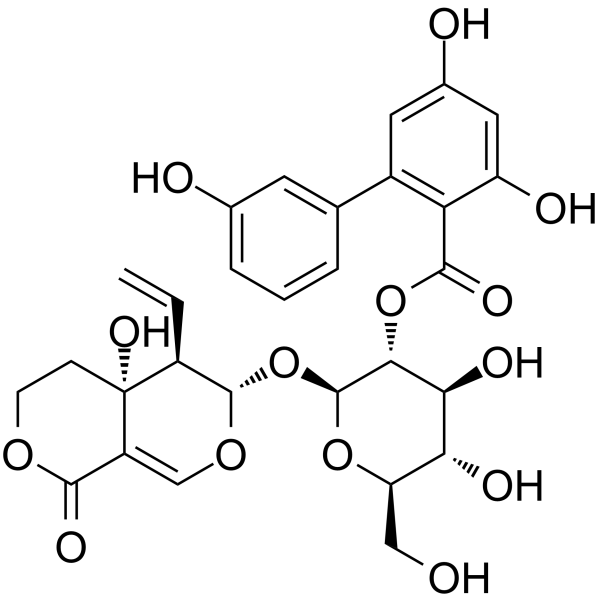
- Formula: C29H30O14
- Molecular Weight: 602.54
Amaroswerin is a bioactive secoiridoid glucoside from Swertia mussotii. Amaroswerin has anti-inflammatory, antidiabetic, antiviral, anticholinergic and immunomodulatory activities. Amaroswerin inhibits NO release with an IC50 value of 5.42 μg/mL in RAW264.7 cells.
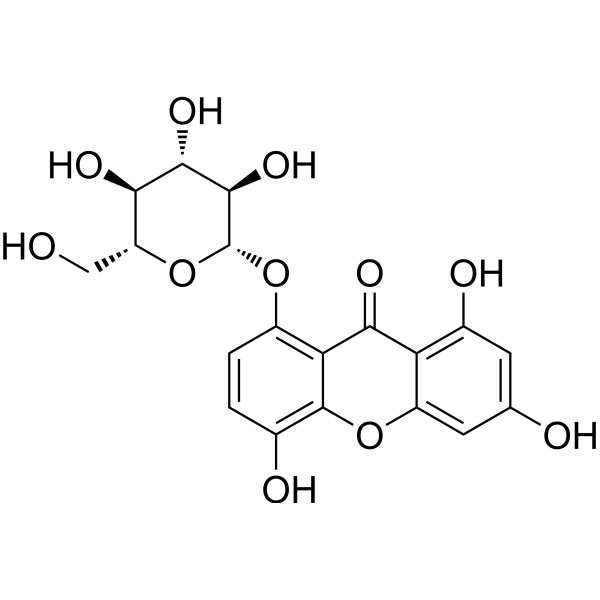
- Formula: C19H18O11
- Molecular Weight: 422.34
Norswertianolin acts as a CSE activator and is isolated from G. acuta. Norswertianolin may be a potential agent for cardiovascular diseases.
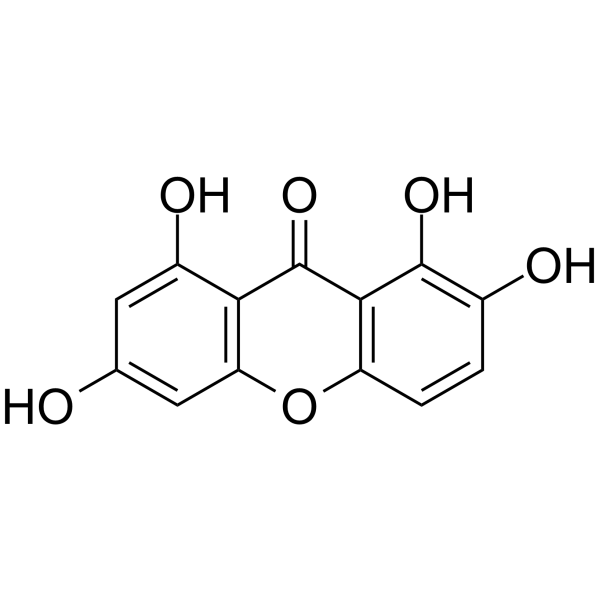
- Formula: C13H8O6
- Molecular Weight: 260.20
Norswertianin, a xanthone compound, serves as a powerful anti-glioma compound. Norswertianin induces GBM cells differentiation through oxidative stress and Akt/mTOR dependent autophagy.
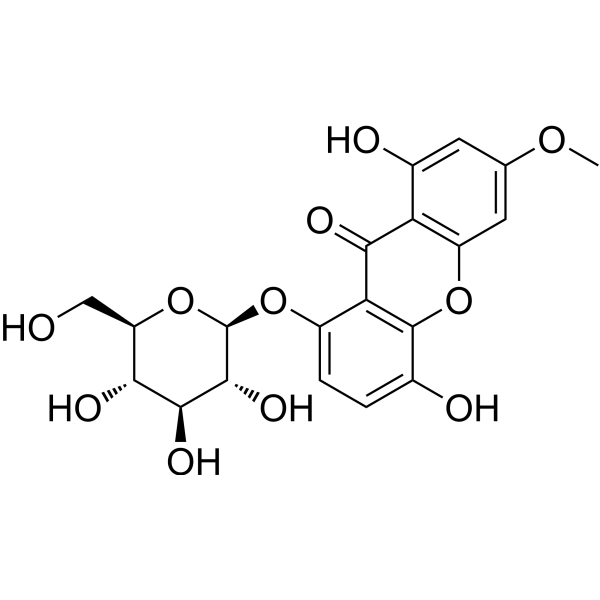
- Formula: C20H20O11
- Molecular Weight: 436.37
Swertianolin is a xanthone glycoside. Swertianolin can be isolated from plants of the Gentianaceae family (e.g., Gentiana campestris and Swertia punicea). Swertianolin inhibits p38 phosphorylation and NF-κB activation, and reduces NO and ROS production. Swertianolin exhibits anti-Helicobacter pylori activity with an IC50 of 6.1 μM and a minimum bactericidal concentration of 91.7 μM. Swertianolin modulates immune function in sepsis. Swertianolin is useful in the research of diseases such as Alzheimer's disease, hepatitis B, Helicobacter pylori infection, and sepsis.


- Formula: C23H28O10
- Molecular Weight: 464.46
Diffutin is a glucosyloxyflavan found in the roots of Hoppea dichotoma and Canscora diffusa. Diffutin produces adaptogenic, anti-stress, anti-anxiety effects. Diffutin can be used for the research of stress/anxiety.



