



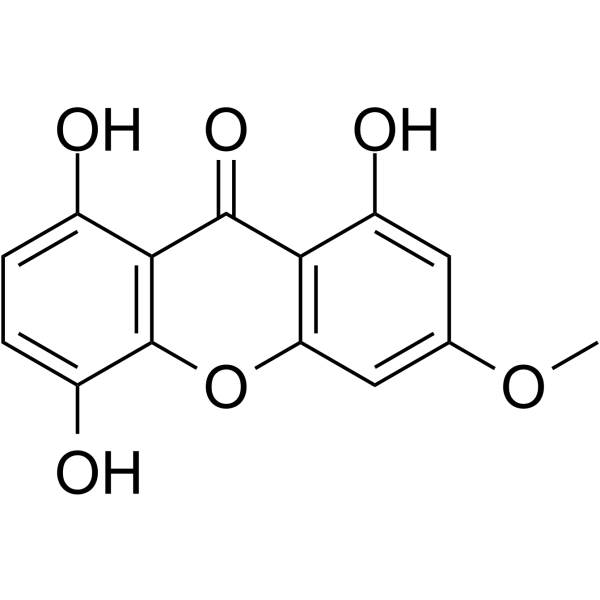
Bellidifolin
Based on 2 publication(s) in Google Scholar
Bellidifolin is an orally active compound with antiproliferative, anti-inflammatory and antioxidant properties. Bellidifolin modulates key signaling pathways including STAT3, PI3K-Akt, mTOR and BRD4, and inhibits the viral protein R (Vpr). Bellidifolin induces cell cycle arrest and apoptosis, exerts significant antifibrotic effects, and protects the heart, liver and nervous system. Bellidifolin is applicable to the research of various diseases such as lung cancer, non-alcoholic fatty liver disease, myocardial hypertrophy and ischemic cranial nerve injury.
For research use only. We do not sell to patients.
- Purity : 99.74%
- CAS No.: 2798-25-6
- Formula: C14H10O6
- Molecular Weight:274.23
-
Storage:
4°C, sealed storage, away from moisture and light
* In solvent : -80°C, 6 months; -20°C, 1 month (sealed storage, away from moisture and light)

To place orders, for customer services and technical support, please contact: MedChemExpress USA
Tel: 609-228-6898 E-mail: [email protected] [email protected]


-
 Biological Activity
-
Chemical Information
-
Solvent & Solubility
- Protocols
- Purity & Documentation
- References
-
 Help & FAQs


Publications Citing Use of MedChemExpress (MCE) Bellidifolin
More

Biological Activity
Description
IC50 & Target
|
STAT3 |
Cellular Effect
|
Cell Line

|
Type | Value | Description | References |
|---|---|---|---|---|
| C6 | IC50 |
>100 μM
Compound: 7
|
Antiproliferative activity against rat C6 cells assessed as cell number after 48 hrs by crystal violet assay
Antiproliferative activity against rat C6 cells assessed as cell number after 48 hrs by crystal violet assay
|
[PMID: 18406151] |
| U-251 | IC50 |
>100 μM
Compound: 7
|
Antiproliferative activity against human U251 cells assessed as cell number after 48 hrs by crystal violet assay
Antiproliferative activity against human U251 cells assessed as cell number after 48 hrs by crystal violet assay
|
[PMID: 18406151] |
In Vitro
Bellidifolin (25-100 μM; 72 h) potently inhibits the proliferation of human A549 lung adenocarcinoma cells in a concentration-dependent manner after 72 h, with significant inhibitory effects observed at concentrations of 50, 75, and 100 μM; however, it exerts no antiproliferative activity against normal human lung epithelial BEAS-2b cells following treatment at 25 to 100 μM for 72 h[1].
Bellidifolin (50-100 μM; 72 h) upregulates the levels of caspase-8 and caspase-3 in a dose-dependent manner, and downregulates the level of PARP1, in human A549 lung adenocarcinoma cells[1].
Bellidifolin (10-40 μM; pre-incubated for 4 h followed by 6 h of hypoxia treatment) concentration-dependently ameliorates hypoxia-induced morphological damage in PC12 cells, with the 40 μM concentration enabling near-complete recovery of cell morphology to the normal state[2].
Bellidifolin (with BRD4 overexpressed, pre-incubated for 0.5 h prior to 12 h of ISO stimulation, at an administration concentration of 30 μM) exerts anti-hypertrophic effects, restores cell viability, and inhibits ISO-stimulated Pol II phosphorylation in H9C2 cells in a BRD4-dependent manner[3].
Bellidifolin (administered following 0.5 h of pre-incubation, followed by ISO stimulation for 12 h, and conducted after Nox4 overexpression/knockdown and BRD4 overexpression) inhibits ISO-induced cardiomyocyte hypertrophy in H9C2 cells via a BRD4/Nox4-dependent pathway[3].
Bellidifolin (10 μM; 2 h pre-incubation) restores reduced anti-adipogenic protein levels in HepG2 cells, activates AMPK and inhibits mTOR phosphorylation, thereby reversing the BPF-induced upregulation of adipogenesis-related mRNAs and proteins, restoring the dysregulated AMPK-mTOR signaling axis, and suppressing the translocation of SREBP-1c from the cytoplasm to the nucleus[4].
Bellidifolin (12.5-50 μM; 24 h) reduces the expression levels of TGF-β1-induced α-SMA, Collagen I and Collagen III proteins, and inhibits TGF-β1-induced SOX9 expression and Smad3 phosphorylation in human cardiac fibroblasts[5].
Bellidifolin (20-80 μM; 12 h) alters the gene expression of H9c2 cells subjected to H2O2-induced injury, with its differentially expressed genes (DEGs) enriched in pathways including the PI3K-Akt signaling pathway[6].
MedChemExpress (MCE) has not independently confirmed the accuracy of these methods. They are for reference only.
-
Cell Line:human A549 lung adenocarcinoma cells, human normal lung epithelial BEAS-2b cells
-
Concentration:25 μM, 50 μM, 75 μM, 100 μM
-
Incubation Time:72 h
-
Result:Exhibited a time- and concentration-dependent inhibitory effect on proliferation in A549 cells, with significantly more evident growth inhibition at 50, 75, and 100 μM compared to 25 μM.
Caused no cytotoxic or antiproliferative effect in BEAS-2b cells at 25, 50, 75, and 100 μM.
-
Cell Line:pheochromocytoma (PC12) cells
-
Concentration:10-40 μM (pre-incubated)
-
Incubation Time:4 h (pre-incubation); 6 h (hypoxia exposure)
-
Result:Significantly increased PC12 cell viability to 70.28 ± 4.00% compared to hypoxia alone at 20 μM.
Restored cell viability to near-control levels (85.30 ± 2.45%), which was significantly elevated compared to hypoxia alone, at 40 μM.
-
Cell Line:TGF-β1-stimulated human cardiac fibroblasts (HCFs)
-
Concentration:12.5-50 μM (co-incubated with TGF-β1)
-
Incubation Time:24 h
-
Result:Significantly downregulated the TGF-β1-induced increases in α-SMA, Collagen I, and Collagen III protein expression.\nPrevented TGF-β1-induced elevations in SOX9 protein expression.
Reduced TGF-β1-induced Smad3 phosphorylation.
In Vivo
Bellidifolin (30 mg/kg/day; p.o.; daily; 21 consecutive days) ameliorates isoprenaline-induced cardiac hypertrophy in Kunming mice by inhibiting the BRD4/Nox4/ROS signalling pathway, significantly reducing cardiac hypertrophy markers, pathological changes, and restoring cardiac function[3].
Bellidifolin (100 mg/kg body weight; i.p.; once daily; 14 days) mitigates BPF-induced nonalcoholic fatty liver disease-like changes in male C57BL/6J mice by activating AMPK, inhibiting mTOR, and downregulating lipogenesis-associated proteins[4].
Bellidifolin (25-50 mg/kg; p.o.; daily; 21 days) ameliorates isoproterenol-induced myocardial fibrosis in Kunming mice by inhibiting SOX9 expression, which in turn reduces the expression of α-SMA, Collagen I, and Collagen III[5].
MedChemExpress (MCE) has not independently confirmed the accuracy of these methods. They are for reference only.
-
Animal Model:Kunming (male, 8-10 weeks old, 18-22 g, isoprenaline-induced cardiac hypertrophy)[3]
-
Dosage:30 mg/kg/day
-
Administration:p.o.; daily; 21 consecutive days
-
Result:Significantly reduced increases in ejection fraction (EF) and fractional shortening (FS).
Reversed increases in left ventricular diastolic anterior wall thickness (LVAWd) and left ventricular systolic anterior wall thickness (LVAWs).
Increased left ventricular end-systolic diameter (LVESD).
Reduced cardiomyocyte disarray, collagen deposition, and cardiomyocyte cross-sectional area.
Significantly decreased protein levels of ANP and BNP, and mRNA levels of ANP, BNP, and β-MHC.
Reduced isoprenaline-induced elevation of BRD4 protein and mRNA levels.
Decreased H3K122 acetylation and RNA Pol II phosphorylation.
Reduced Nox4 protein and mRNA levels, decreased intracellular ROS levels, and reduced mRNA levels of ADAM17 and TNF-α.
-
Animal Model:C57BL/6J (male, 5 to 6 weeks old, NAFLD induced by bisphenol F gavage)[4]
-
Dosage:100 mg/kg body weight
-
Administration:i.p.; once daily; 14 days
-
Result:Significantly reduced BPF-induced hepatic lipid deposition, as shown by decreased Oil Red O staining intensity.
Normalized BPF-increased liver triglyceride and total cholesterol levels.
Reversed BPF-induced upregulation of lipogenesis-associated proteins (ACC, FAS, SREBP-1c, C/EBPα, PPARγ, SCD1) in mouse liver.
Restored BPF-reduced AMPK phosphorylation and inhibited BPF-increased mTOR phosphorylation in mouse liver.
-
Animal Model:Kunming (male; isoproterenol-induced myocardial fibrosis model)[5]
-
Dosage:25 mg/kg; 50 mg/kg
-
Administration:p.o.; daily; 21 days
-
Result:Significantly improved ISO-induced histopathological myocardial changes, including reducing myocardial fiber disorganization, degeneration, necrosis, and inflammatory cell infiltration.
Significantly reduced ISO-induced collagen deposition in cardiac tissue.
Prevented ISO-induced elevations in the fibrosis-related proteins α-SMA, Collagen I, and Collagen III, as measured by Western blot and immunohistochemistry.
Significantly decreased ISO-induced increases in SOX9 protein expression in cardiac tissue.
Achieved statistically significant reductions relative to the ISO model group for all measured endpoints.
- Detection of Apoptosis
- TUNEL staining for apoptotic DNA fragmentation
- Flow cytometric DNA-content cell-cycle staining
- Annexin V plus membrane-impermeant dye apoptosis staining
- BrdU Incorporation Assay
- Apoptosis Solutions
- Protocol for Cell Cycle
- Research Protocol for Inflammation-related Diseases
- Research Protocol for Metabolic Diseases
- Cell Viability Determination by MTT Colorimetric Assay


Chemical Information
-
CAS No. 2798-25-6
-
Appearance Solid
-
Molecular Weight 274.23
-
Formula C14H10O6
-
Color Light yellow to yellow
-
SMILES
O=C1C2=C(OC3=C1C(O)=CC=C3O)C=C(OC)C=C2O
-
Structure Classification
-
Shipping
Room temperature in continental US; may vary elsewhere.
-
Storage
4°C, sealed storage, away from moisture and light
* In solvent : -80°C, 6 months; -20°C, 1 month (sealed storage, away from moisture and light)


Publications (2)
-
Journal Impact Factor
-
Most Recent
-
Nat Biomed Eng
DeepDrugDiscovery identifies blood-brain barrier permeable autophagy enhancers for Alzheimer's disease. [Abstract]2026 Apr 24. PMID: 42032039 -
Vet Microbiol
The Chinese medicine monomer Schisandrin C inhibits PRRSV infection by regulating the OGT-PI3K/AKT/mTOR signaling pathway. [Abstract]2026 May:316:110992. PMID: 41865607


Solvent & Solubility
In Vitro:
DMSO : 50 mg/mL (182.33 mM; ultrasonic and warming and heat to 60°C; Hygroscopic DMSO has a significant impact on the solubility of product, please use newly opened DMSO)
Please refer to the solubility information to select the appropriate solvent. Once prepared, please aliquot and store the solution to prevent product inactivation from repeated freeze-thaw cycles.
Storage method and period of stock solution: -80°C, 6 months; -20°C, 1 month (sealed storage, away from moisture and light). When stored at -80°C, please use it within 6 months. When stored at -20°C, please use it within 1 month.
Please refer to the solubility information to select the appropriate solvent. Once prepared, please aliquot and store the solution to prevent product inactivation from repeated freeze-thaw cycles.
Storage method and period of stock solution: -80°C, 6 months; -20°C, 1 month (sealed storage, away from moisture and light). When stored at -80°C, please use it within 6 months. When stored at -20°C, please use it within 1 month.
Concentration (start) × Volume (start) = Concentration (final) × Volume (final)


Purity & Documentation
-
Data Sheet (290 KB)
-
SDS (393 KB)
- English - EN (393 KB)
- Français - FR (393 KB)
- Deutsch - DE (393 KB)
- Norwegian - NO (393 KB)
- Español - ES (393 KB)
- Swedish - SV (393 KB)
- Italian - IT (393 KB)
- Korean - KR (393 KB)
- Portuguese - PT (393 KB)
-
Handling Instructions (2659 KB)
References
[2]. Yan L, et al. Bellidifolin Inhibits Proliferation of A549 Cells by Regulating STAT3/COX-2 Expression and Protein Activity. J Oncol. 2020 Nov 21;2020:1723791. [Content Brief]
[3]. Zhao ZY, et al. Protective effects of bellidifolin in hypoxia-induced in pheochromocytoma cells (PC12) and underlying mechanisms. J Toxicol Environ Health A. 2017;80(22):1187-1192. [Content Brief]
[4]. Zhou D, et al. Bellidifolin ameliorates isoprenaline-induced cardiac hypertrophy by the Nox4/ROS signalling pathway through inhibiting BRD4. Cell Death Discov. 2023;9(1):279. Published 2023 Aug 1. [Content Brief]
[5]. Xue J, et al. A novel bellidifolin intervention mitigates nonalcoholic fatty liver disease-like changes induced by bisphenol F. J Biomed Res. 2024;38(5):451-463. [Content Brief]
[6]. Yao TT, et al. Bellidifolin Inhibits SRY-Related High Mobility Group-Box Gene 9 to Block TGF-β Signalling Activation to Ameliorate Myocardial Fibrosis. Evid Based Complement Alternat Med. 2022 May 9;2022:6841276. [Content Brief]
[7]. Li S, et al. Bellidifolin from Gentianella acuta (Michx.) Hulten protects H9c2 cells from hydrogen peroxide-induced injury via the PI3K-Akt signal pathway. Toxicol Rep. 2022 Aug 17;9:1655-1665. [Content Brief]


Complete Stock Solution Preparation Table
Please refer to the solubility information to select the appropriate solvent. Once prepared, please aliquot and store the solution to prevent product inactivation from repeated freeze-thaw cycles.
Storage method and period of stock solution: -80°C, 6 months; -20°C, 1 month (sealed storage, away from moisture and light). When stored at -80°C, please use it within 6 months. When stored at -20°C, please use it within 1 month.
| Optional Solvent | Concentration Solvent Mass | 1 mg | 5 mg | 10 mg | 25 mg |
|---|---|---|---|---|---|
| DMSO | 1 mM | 3.6466 mL | 18.2329 mL | 36.4657 mL | 91.1643 mL |
| 5 mM | 0.7293 mL | 3.6466 mL | 7.2931 mL | 18.2329 mL | |
| 10 mM | 0.3647 mL | 1.8233 mL | 3.6466 mL | 9.1164 mL | |
| 15 mM | 0.2431 mL | 1.2155 mL | 2.4310 mL | 6.0776 mL | |
| 20 mM | 0.1823 mL | 0.9116 mL | 1.8233 mL | 4.5582 mL | |
| 25 mM | 0.1459 mL | 0.7293 mL | 1.4586 mL | 3.6466 mL | |
| 30 mM | 0.1216 mL | 0.6078 mL | 1.2155 mL | 3.0388 mL | |
| 40 mM | 0.0912 mL | 0.4558 mL | 0.9116 mL | 2.2791 mL | |
| 50 mM | 0.0729 mL | 0.3647 mL | 0.7293 mL | 1.8233 mL | |
| 60 mM | 0.0608 mL | 0.3039 mL | 0.6078 mL | 1.5194 mL | |
| 80 mM | 0.0456 mL | 0.2279 mL | 0.4558 mL | 1.1396 mL | |
| 100 mM | 0.0365 mL | 0.1823 mL | 0.3647 mL | 0.9116 mL |


Bellidifolin Related Classifications
HY-N2000 Related Classifications
 Powered by Bioz