1. シグナル伝達
  2. Apoptosis
  3. TNF Receptor

TNF Receptor

Tumor Necrosis Factor Receptor; TNFR

Tumor necrosis factor (TNF) is a major mediator of apoptosis as well as inflammation and immunity, and it has been implicated in the pathogenesis of a wide spectrum of human diseases, including sepsis, diabetes, cancer, osteoporosis, multiple sclerosis, rheumatoid arthritis, and inflammatory bowel diseases.

TNF-α is a 17-kDa protein consisting of 157 amino acids that is a homotrimer in solution. In humans, the gene is mapped to chromosome 6. Its bioactivity is mainly regulated by soluble TNF-α–binding receptors. TNF-α is mainly produced by activated macrophages, T lymphocytes, and natural killer cells. Lower expression is known for a variety of other cells, including fibroblasts, smooth muscle cells, and tumor cells. In cells, TNF-α is synthesized as pro-TNF (26 kDa), which is membrane-bound and is released upon cleavage of its pro domain by TNF-converting enzyme (TACE).

Many of the TNF-induced cellular responses are mediated by either one of the two TNF receptors, TNF-R1 and TNF-R2, both of which belong to the TNF receptor super-family. In response to TNF treatment, the transcription factor NF-κB and MAP kinases, including ERK, p38 and JNK, are activated in most types of cells and, in some cases, apoptosis or necrosis could also be induced. However, induction of apoptosis or necrosis is mainly achieved through TNFR1, which is also known as a death receptor. Activation of the NF-κB and MAPKs plays an important role in the induction of many cytokines and immune-regulatory proteins and is pivotal for many inflammatory responses.

製品番号 製品名 製品効果 純度 構造式
  • HY-P991407
    PF-05230905 Inhibitor
    PF-05230905 is a human monoclonal antibody (mAb) targeting TNFSF2/TNFa. PF-05230905 can be used in Rheumatoid arthritis research.
    PF-05230905
  • HY-105480
    SKF 104351 Inhibitor
    SKF 104351 is an orally active cytokine suppressive anti-inflammatory drug. SKF 104351 can inhibit TNF-α production.
    SKF 104351
  • HY-118646A
    NS-6740 hydrochloride Inhibitor
    NS-6740 hydrochloride is a partial agonist of α7 nicotinic acetylcholine receptor (α7 nAChR) with an IC50 of 3 nM. NS-6740 hydrochloride also acts as a potent modulator of the cholinergic anti-inflammatory pathway. NS-6740 hydrochloride alters the signaling pattern of α7 in an ion channel-independent manner, thereby reducing synaptic function. NS-6740 hydrochloride induces the desensitized state of α7 nAChR. NS-6740 hydrochloride generates robust nAChR-mediated currents. NS-6740 hydrochloride reduces LPS (HY-D1056)-induced TNF-α release from microglia. NS-6740 hydrochloride can be used in the research of neuroinflammation and neuropathic pain.
    NS-6740 hydrochloride
  • HY-160844
    CT-133 Inhibitor
    CT-133 is a selective and potent CRTH2 Receptor antagonist, with a Ki value of 2.2 nM. The Ki value for the DP1 receptor is greater than 3800 nM. CT-133 inhibits neutrophil migration induced by PGD2 (HY-101988). CT-133 significantly alleviates lung inflammation and improves lung function impairment in a mouse model of acute lung injury (ALI) induced by cigarette smoke. CT-133 effectively inhibits the excessive expression of pro-inflammatory cytokines (TNF-α, IL-1β, and IL-6) and chemokines (KC), and reverses the inhibition of the anti-inflammatory factor IL-10. CT-133 can be used for the study of ALI.
    CT-133
  • HY-134028
    Arucadiol Inhibitor
    Arucadiol is a rosane-type diterpenoid anti-inflammatory agent. 5 μM Arucadiol significantly inhibits LPS-induced TNF-α, IL-1β, and IL-8 production (inhibition rates of 39.8%, 44.4%, and 34.5%, respectively). Arucadiol exerts its anti-inflammatory activity by inhibiting the mRNA and protein expression of inflammatory cytokines and can be used in research on inflammation-related cardiovascular diseases such as atherosclerosis. Arucadiol can be naturally extracted from the roots of Salvia miltiorrhiza var. alba.
    Arucadiol
  • HY-155027
    DPP-4-IN-8 Inhibitor
    DPP-4-IN-8 (compound 27) is a potent and selective DPP4 (dipeptidyl peptidase 4) inhibitor, with a Ki of 0.96 μM. DPP-4-IN-8 blocks the dipeptidase activity of DPP4 in both Caco-2 and HepG-2 cells. DPP-4-IN-8 also dose-dependently suppresses the expression levels of the chemokines tumor necrosis factor-α (TNF-α), interleukin-6 (IL-6), and interleukin-1β (IL-1β).
    DPP-4-IN-8
  • HY-176554
    sEH-IN-21 Inhibitor
    sEH-IN-21 is an orally active sEH inhibitor with IC50s of 0.1 nM for hsEH and msEH. sEH-IN-21 potently inhibits NF-κB signaling pathways. sEH-IN-21 shows a strong anti-inflammatory activity, decreases the release of IL-6 and TNF-α and maintained the integrity of the intestinal barrier. sEH-IN-21 can be used for the study of inflammatory bowel disease (IBD).
    sEH-IN-21
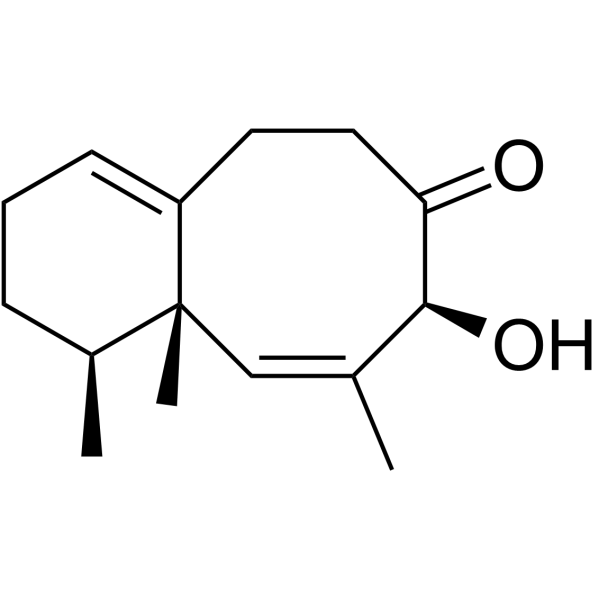
  • HY-N10448
    Sinulatumolin E Inhibitor
    Sinulatumolin E (compound 6), a terpenoid, displays significant TNF-α inhibitory activity with an IC50 of 3.6 μM. Sinulatumolin E (compound 6) exhibits anti-inflammatory activity.
    Sinulatumolin E
  • HY-178776
    DCLK1-IN-6 Inhibitor
    DCLK1-IN-6 (Compound 12n) is a Doublecortin-like kinase 1 (DCLK1) inhibitor with an IC50 of 58 nM. DCLK1-IN-6 significantly inhibits DCLK1 enzyme activity and its mediated inflammatory pathway. DCLK1-IN-6 has remarkable anti-inflammatory activity and significantly alleviates symptoms in acute lung injury (ALI) and sepsis mouse models. DCLK1-IN-6 can be used for acute inflammation diseases research.
    DCLK1-IN-6
  • HY-P992132
    Solaprubart Inhibitor
    Solaprubart is a humanized IgG1-κ monoclonal antibody targeting TNFSF4/OX40L. Solaprubart regulates immune homeostasis by blocking the OX40L-OX40 signaling pathway and can be used for the research of autoimmune diseases such as atopic dermatitis.
    Solaprubart
  • HY-P11093
    Papiliocin Inhibitor
    Papiliocin is a potent peptide antibiotic with both anti-inflammatory and antibacterial activities. Papiliocin is primarily active against Gram-negative bacteria. Papiliocin exhibits strong anti-inflammatory activity against cell, exerting its anti-inflammatory activity by inhibiting the production of NO and the secretion of TNF-α and MIP-2. Papiliocin participates in the innate defense response mechanism by inhibiting the Toll-like receptor pathway and NF-κB. Papiliocin induces apoptosis in fungal cells and increases the total level of intracellular ROS. Papiliocin acts as an effective antiseptic peptide in sepsis models. Papiliocin is useful in anti-inflammatory and antibacterial research.
    Papiliocin
  • HY-N19816
    7-O-Methyl glabranin Inhibitor
    7-O-Methyl glabranin is a flavonoid compound and also an inhibitor of LPS-induced TNF-α and IL-1β production. 7-O-Methyl glabranin can be used in the research of diseases such as inflammation.
    7-O-Methyl glabranin
  • HY-182777
    HDAC6-IN-80 Inhibitor
    HDAC6-IN-80 is an orally active, selective HDAC6 inhibitor with an IC50 of 8.5 nM. HDAC6-IN-80 inhibits lipopolysaccharide-induced microglial activation, reduces the levels of iNOS, COX-2, TNF-α and IL-6, and alleviates sensory hypersensitivity behaviors. HDAC6-IN-80 can be used for the research of inflammatory pain and chemotherapy-induced peripheral neuropathy.
    HDAC6-IN-80
  • HY-175833
    NF-κB-IN-20 Inhibitor
    NF-κB-IN-20 is an orally active NF-κB inhibitor. NF-κB-IN-20 directly binds to the Keap1 protein, activating the Keap1/Nrf2/HO-1 antioxidant pathway, and simultaneously inhibiting the NF-κB inflammatory pathway, thereby synergistically reducing oxidative stress and inflammatory responses. NF-κB-IN-20 M11 inhibits the expression of IL-6, IL-1β, and TNF-α, significantly reduces the level of ROS, and restores the mitochondrial membrane potential. NF-κB-IN-20 can be used for the study of acute lung injury (ALI).
    NF-κB-IN-20
  • HY-P99753
    Nerelimomab Inhibitor
    Nerelimomab (BAYX1351) is an anti-TNF-α antibody. Nerelimomab can be used for research of sepsis.
    Nerelimomab
  • HY-175007
    RIPK1-IN-32 Inhibitor
    RIPK1-IN-32 is a RIPK inhibitor with anti-inflammatory activity. RIPK1-IN-32 inhibits nitric oxide (NO) release with an IC50 of 3.26 μM. RIPK1-IN-32 significantly alleviates acute liver injury associated with sepsis through the RIPK1/NF-κB/MAPK pathway, therefore preventing the nuclear translocation of p65 and c-fos, which results in reduced expression of TNF-α and IL-6. RIPK1-IN-32 can be used for the study of acute liver injury and sepsis.
    RIPK1-IN-32
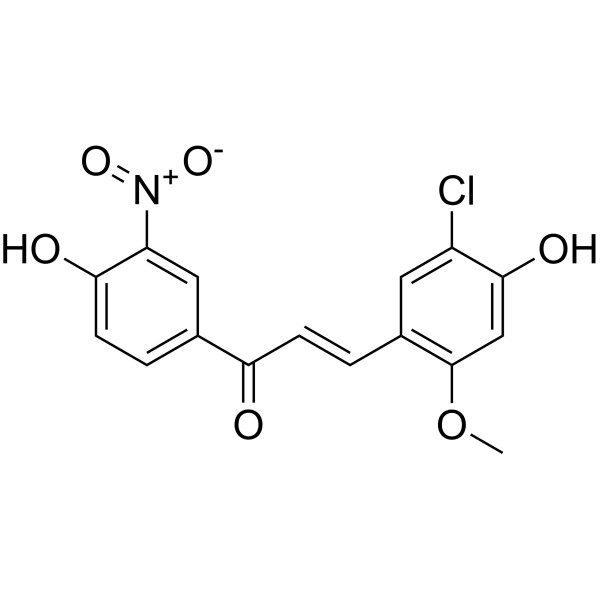
  • HY-147836
    Akt/NF-κB/JNK-IN-1 Inhibitor
    Akt/NF-κB/JNK-IN-1 (Compound 2i) is an inhibitor of Akt, NF-κB and JNK signaling pathways. Akt/NF-κB/JNK-IN-1 inhibits nitric oxide production with an IC50 of 3.15 μM. Akt/NF-κB/JNK-IN-1 shows anti-inflammatory activities.
    Akt/NF-κB/JNK-IN-1
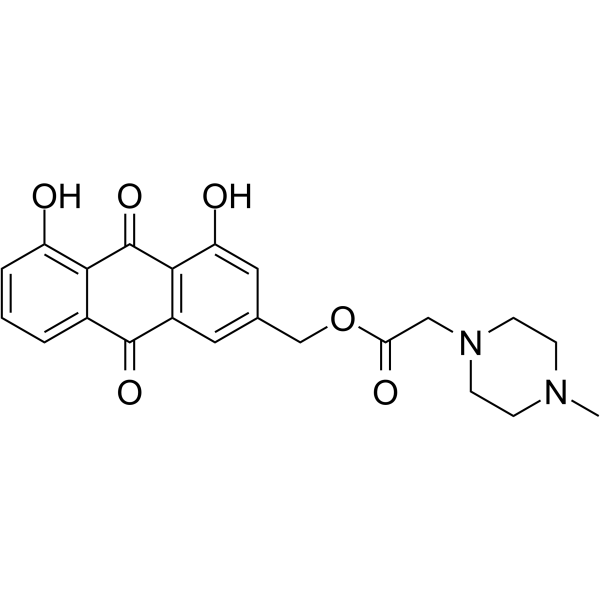
  • HY-W015490R
    1,4-Naphthoquinone (Standard) Inhibitor
    1,4-Naphthoquinone is an inhibitor with broad-spectrum inhibitory activity targeting DNA polymerase, NF-κB and monoamine oxidase (MAO-A/B), with antibacterial and anti-biofilm efficacy. 1,4-Naphthoquinone is a competitive inhibitor of MAO-B (Ki=1.4 μM) and a non-competitive inhibitor of MAO-A (Ki=7.7 μM). 1,4-Naphthoquinone inhibits DNA polymerase pol α, β, γ, δ, ε, λ with IC50 ranging from 5.57-128 μM. 1,4-Naphthoquinone inhibits tumor cell proliferation, induces apoptosis and necrosis, and has anti-angiogenic and anti-inflammatory activities by inducing oxidative stress, depleting glutathione (GSH), inhibiting DNA polymerase-mediated DNA synthesis and blocking NF-κB nuclear translocation. 1,4-Naphthoquinone can be used in anti-bacterial , anti-tumor and anti-inflammatory studies, including inhibition of melanoma and colon cancer cell growth and endothelial cell function, as well as LPS-induced inflammation models.
    1,4-Naphthoquinone (Standard)
  • HY-N15307
    Trigraecum Inhibitor
    Trigraecum is a flavonoid compound found in Dracaena steudneri and Dalbergia cochinchinensis, exhibiting anti-inflammatory activity. It can inhibit the LPS (HY-D1056)-induced production of IL-1β, IL-2, GM-CSF, and TNF-α in human peripheral blood mononuclear cells. Trigraecum holds promise for research on inflammatory diseases.
    Trigraecum
  • HY-N1965R
    Gaultherin (Standard) Inhibitor
    Gaultherin (Standard) is the analytical standard for Gaultherin (HY-N1965). Gaultherin is an orally active non-steroidal anti-inflammatory agent. Gaultherin selectively inhibits NF-κB, MAPK, COX-2 (IC50 = 0.35 mg/mL), LOX (IC50 = 0.56 mg/mL) and HYAL (IC50 = 28.58 μg/mL) to exert anti-inflammatory, antipyretic and analgesic effects. Gaultherin exhibits modest direct antioxidant capacity, greater in cell-based models. Gaultherin does not affect COX-1 so that avoids the common gastrointestinal side effects of Aspirin (HY-14654).
    Gaultherin (Standard)
製品番号 製品名 / Synonyms Species Source
製品番号 製品名 / Synonyms Application Reactivity

Following the binding of TNF to TNF receptors, TNFR1 binds to TRADD, which recruits RIPK1, TRAF2/5 and cIAP1/2 to form TNFR1 signaling complex I; TNFR2 binds to TRAF1/2 directly to recruit cIAP1/2. Both cIAP1 and cIAP2 are E3 ubiquitin ligases that add K63 linked polyubiquitin chains to RIPK1 and other components of the signaling complex. The ubiquitin ligase activity of the cIAPs is needed to recruit the LUBAC, which adds M1 linked linear polyubiquitin chains to RIPK1. K63 polyubiquitylated RIPK1 recruits TAB2, TAB3 and TAK1, which activate signaling mediated by JNK and p38, as well as the IκB kinase complex. The IKK complex then activates NF-κB signaling, which leads to the transcription of anti-apoptotic factors-such as FLIP and Bcl-XL-that promote cell survival. 


The formation of TNFR1 complex IIa and complex IIb depends on non-ubiquitylated RIPK1. For the formation of complex IIa, ubiquitylated RIPK1 in complex I is deubiquitylated by CYLD. This deubiquitylated RIPK1 dissociates from the membrane-bound complex and moves into the cytosol, where it interacts with TRADD, FADD, Pro-caspase 8 and FLIPL to form complex IIa. By contrast, complex IIb is formed when the RIPK1 in complex I is not ubiquitylated owing to conditions that have resulted in the depletion of cIAPs, which normally ubiquitylate RIPK1. This non-ubiquitylated RIPK1 dissociates from complex I, moves into the cytosol, and assembles with FADD, Pro-caspase 8, FLIPL and RIPK3 (but not TRADD) to form complex IIb. For either complex IIa or complex IIb to prevent necroptosis, both RIPK1 and RIPK3 must be inactivated by the cleavage activity of the Pro-caspase 8-FLIPL heterodimer or fully activated caspase 8. The Pro-caspase 8 homodimer generates active Caspase 8, which is released from complex IIa and complex IIb. This active Caspase 8 then carries out cleavage reactions to activate downstream executioner caspases and thus induce classical apoptosis. 


Formation of the complex IIc (necrosome) is initiated either by RIPK1 deubiquitylation mediated by CYLD or by RIPK1 non-ubiquitylation due to depletion of cIAPs, similar to complex IIa and complex IIb formation. RIPK1 recruits numerous RIPK3 molecules. They come together to form amyloid microfilaments called necrosomes. Activated RIPK3 phosphorylates and recruits MLKL, eventually leading to the formation of a supramolecular protein complex at the plasma membrane and necroptosis [1][2].


Reference:
[1]. Brenner D, et al. Regulation of tumour necrosis factor signalling: live or let die.Nat Rev Immunol. 2015 Jun;15(6):362-74. 
[2]. Conrad M, et al. Regulated necrosis: disease relevance and therapeutic opportunities.Nat Rev Drug Discov. 2016 May;15(5):348-66. 
 

Your Search Returned No Results.

Sorry. There is currently no product that acts on isoform together.

Please try each isoform separately.