



YAP
Yes-associated protein
YAP (Yes-associated protein) is a transcription co-activator in the Hippo tumor suppressor pathway and controls cell growth, tissue homeostasis and organ size. YAP is inhibited by the kinase Lats, which phosphorylates YAP to induce its cytoplasmic localization and proteasomal degradation. YAP induces gene expression by binding to the TEAD family transcription factors.
The function of YAP in human cancer is complex and could be cell-type-dependent. For instance, YAP could function as a tumor suppressor in some cell types, such as hematological cancers, by inducing apoptosis in response to DNA damage.
YAP Isoform Specific Products
All Product Categories
-
YAP Related Products (160)
Related Products (160)

-
Antibodies (8)
-
YAP Isoform Comparison


-
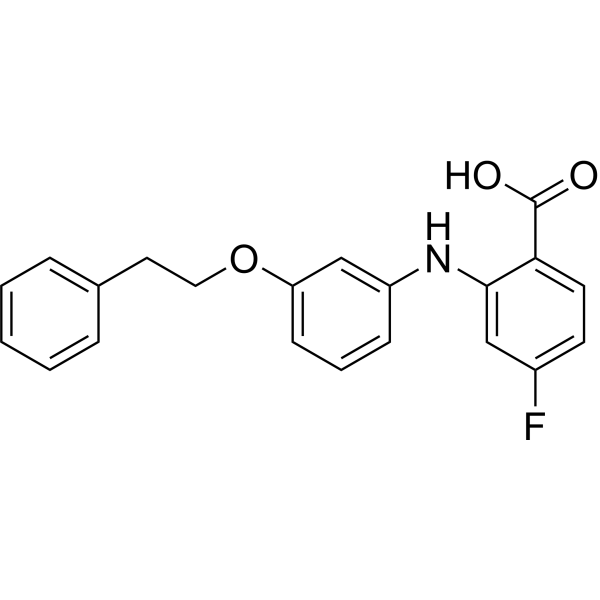
YAP/TEAD-IN-2
 0 ImagesCat. No.: HY-175357CAS No.: 2957895-40-6YAP/TEAD-IN-2 (Compound T-1) is a YAP/TEAD inhibitor. YAP/TEAD-IN-2 inhibits the luciferase activity driven by YAP/TEAD in 293T cells. YAP/TEAD-IN-2 exhibits strong anti-proliferative activity against human pleural mesothelioma NCI-H226 cells. YAP/TEAD-IN-2 can be used for the study of diseases associated with Hippo pathway dysregulation, particularly cancers.
-
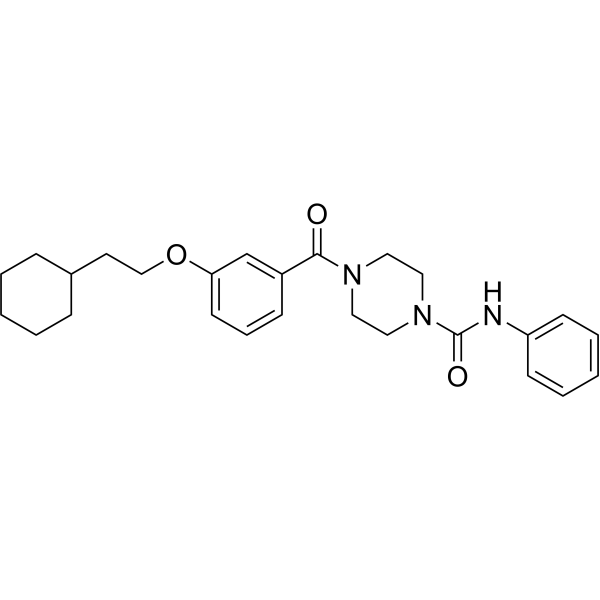
DDO-4033
 0 ImagesCat. No.: HY-175247Purity: 99.11%DDO-4033 is a SPOP inhibitor (IC50 = 16.9 μM, Kd = 15.1 μM). DDO-4033 impairs the malignant migration, invasion, and proliferation of clear cell renal cell carcinoma (ccRCC) cell lines. DDO-4033 disrupts SPOP recruitment to its substrate LATS1, inhibits its polyubiquitination and subsequent degradation, and upregulates LATS1 expression. DDO-4033 has promising antitumor activity and is promising for renal cell carcinoma research.
-
HDAC11-IN-1 TFA
 0 ImagesCat. No.: HY-173076APurity: 99.25%
-
YTP-17
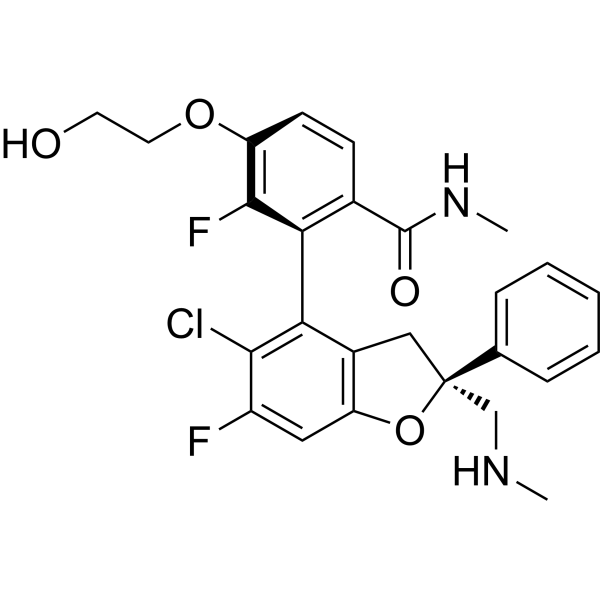 0 ImagesYTP-17 is an orally active YAP-TEAD protein-protein interaction inhibitor with an IC50 of 4 nM. YTP-17 shows anti-tumor efficacy.
-
MY-1576
 0 ImagesCat. No.: HY-170936Purity: 99.21%MY-1576 is a FAK inhibitor with an IC50 of 8 nM. MY-1576 can activate the Hippo pathway, thereby blocking the regulation of YAP/TAZ. MY-1576 also effectively inhibits tumor growth in the KYSE30 xenograft mouse model, demonstrating good safety, and effectively downregulates the autophosphorylation of FAK and the levels of YAP/TAZ in vivo.

-
OPN-9652
 0 ImagesOPN-9652 is a potent, orally active, and covalent TEAD inhibitor (MSTO-211H TEAD IC50 = 0.005 µM) targeting the central palmitate binding pocket of TEADs. OPN-9652 reduces TEAD-dependent reporter activity and expression of TEAD targets (CTGF and CYR61). OPN-9652 resensitizes drug-tolerant SOX10 KO cells to BRAFi + MAPKi. OPN-9652 delays the onset of tumor resistance to BRAFi + MEKi from minimal residual disease (MRD) in a BRAF mutant A375 xenograft mouse model. OPN-9652 can be used for melanoma research.
-
(R)-VT104
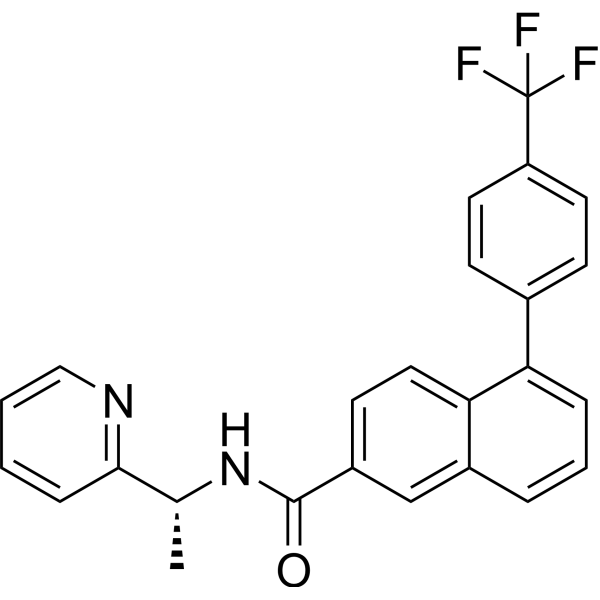 0 Images(R)-VT104 is the R-enantiomer of VT104. (R)-VT104 shows an IC50 value of 0.1-1 μΜ for firefly luciferase. VT104 is an orally active and pan-TEAD auto-palmitoylation inhibitor.
-
Super-TDU (1-31)
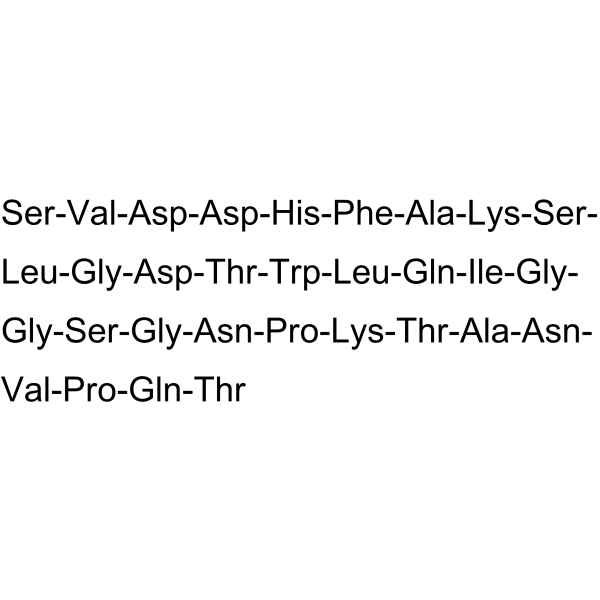 0 ImagesCat. No.: HY-P1728Super-TDU (1-31) is a peptide fragment of Super-TDU. Super-TDU (1-31) is an inhibitor of YAP-TEAD complex. Super-TDU shows potent anti-tumor activity and suppresses tumor growth in gastric cancer mouse model.
-
(R,S)-YAP-TEAD-IN-2
 0 ImagesCat. No.: HY-151525APurity: 98.26%(R,S)-YAP-TEAD-IN-2 is the racemic mixture of YAP-TEAD-IN-2 (HY-151525). YAP-TEAD-IN-2 (Compound 6) is a potent inhibitor of YAP-TEAD PPIs (protein-protein interaction) with an IC50 of 2.7 nM.
-
Super-TDU (1-31) TFA
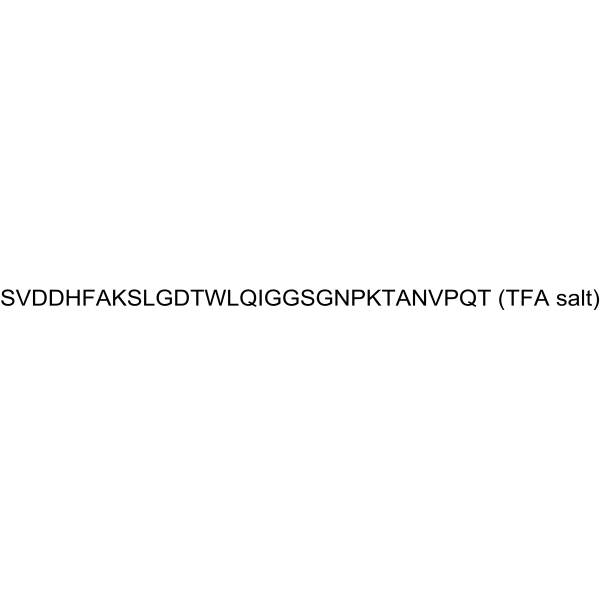 0 ImagesCat. No.: HY-P1728APurity: 99.27%Super-TDU (1-31) TFA is a peptide fragment of Super-TDU. Super-TDU (1-31) TFA is an inhibitor of YAP-TEAD complex. Super-TDU TFA shows potent anti-tumor activity and suppresses tumor growth in gastric cancer mouse model.
-
TAT-PDHPS1
 0 ImagesCat. No.: HY-P11219Purity: 98.35%TAT-PDHPS1 is a YAP inhibitor composed of the endogenous peptide PDHPS1 and the cell-penetrating peptide sequence TAT. PDHPS1 binds to protein phosphatase 2 phosphatase activator (PTPA), an essential activator of protein phosphatase 2A (PP2A), leading to increased YAP phosphorylation, which inactivates YAP and suppresses the expression of its downstream target genes. TAT-PDHPS1 is potentially useful in ovarian cancer research.
-
Hapalindole Q
 0 ImagesHapalindole Q (Compound (+)-1) is an autophagy (Autophagy) inhibitor targeting YAP1. Hapalindole Q binds to the Hippo pathway transcription factor YAP1 with a Kd of 9.13 μM and induces its degradation via the chaperone-mediated autophagy (CMA) pathway. This process inhibits Rab7-mediated fusion of autophagosomes and lysosomes, thereby reducing overall autophagy levels without affecting lysosomal function. Hapalindole Q holds promise for research in cancer (e.g., liver cancer, breast cancer, etc.).
-
AICAR phosphate (Standard)
 0 ImagesSynonyms: Acadesine phosphate (Standard); AICA Riboside phosphate (Standard)AICAR (phosphate) (Standard) is the analytical standard of AICAR (phosphate). This product is intended for research and analytical applications. AICAR phosphate (Acadesine phosphate) is an adenosine analog and a AMPK activator. AICAR phosphate regulates the glucose and lipid metabolism, and inhibits proinflammatory cytokines and iNOS production. AICAR phosphate is also an autophagy, YAP and mitophagy inhibitor.

-
TEAD ligand 1
 0 ImagesCat. No.: HY-158400CAS No.: 2971850-47-0TEAD ligand 1 is the ligand for target protein TEAD. TEAD ligand 1 is utilized for synthesis of PROTAC TEAD degrader-1 (HY-158342).




