



YAP/TAZ
YAP (Yes-associated protein) and TAZ (WWTR1, transcriptional co-activator with PDZ-binding motif) are the principal transcriptional co-activators downstream of the Hippo signaling pathway and mediate major transcriptional outputs that regulate cell proliferation, survival, differentiation, and tissue growth[1][2]. Mechanistically, Hippo pathway activation induces phosphorylation of YAP/TAZ through the MST1/2-LATS1/2 kinase cascade, resulting in their cytoplasmic retention and functional inhibition, whereas pathway inactivation promotes nuclear translocation of YAP/TAZ and activation of TEAD-dependent gene transcription[3][4][5]. By integrating mechanical cues, cell density signals, polarity inputs, extracellular matrix interactions, and soluble factors, YAP/TAZ function as central effectors that coordinate cell-fate decisions and tissue homeostasis[3][6][5]. In physiological systems, YAP/TAZ contribute to organ development, regeneration, wound repair, and stem-cell-associated processes through transcriptional programs controlling growth and differentiation[3][6][7]. Aberrant YAP/TAZ activation is strongly associated with tumorigenesis and cancer progression, where elevated YAP/TAZ-TEAD activity promotes proliferative and survival programs that support malignant transformation and tissue overgrowth[2][8][7]. Compared with related upstream Hippo pathway components, YAP and TAZ represent the major downstream transcriptional effectors and share substantial functional overlap, although TAZ is the paralogue of YAP and both proteins primarily exert their biological effects through interaction with TEAD transcription factors[1][4][9]. For experimental applications, pharmacological modulation of YAP/TAZ signaling, particularly disruption of YAP/TAZ-TEAD activity, has emerged as a widely used strategy for investigating Hippo pathway function in cancer and regenerative biology models[8][7].
References:
- [1]. Zhu J, et al. The transcription factor T-bet is induced by multiple pathways and prevents an endogenous Th2 cell program during Th1 cell responses. Immunity. 2012 Oct 19;37(4):660-73. [Content Brief]
- [2]. Fu M, et al. The Hippo signalling pathway and its implications in human health and diseases. Signal Transduct Target Ther. 2022 Nov 8;7(1):376. [Content Brief]
- [3]. Nita A, et al. Hippo pathway in cell-cell communication: emerging roles in development and regeneration. Inflamm Regen. 2024 Apr 2;44(1):18. [Content Brief]
- [4]. Santucci M, et al. The Hippo Pathway and YAP/TAZ-TEAD Protein-Protein Interaction as Targets for Regenerative Medicine and Cancer Treatment. J Med Chem. 2015 Jun 25;58(12):4857-73. [Content Brief]
- [5]. Long Q, et al. The phosphorylated trimeric SOSS1 complex and RNA polymerase II trigger liquid-liquid phase separation at double-strand breaks. Cell Rep. 2023 Dec 26;42(12):113489. [Content Brief]
- [6]. Rabezanahary H, et al. Live virus neutralizing antibodies against pre and post Omicron strains in food and retail workers in Québec, Canada. Heliyon. 2024 May 21;10(10):e31026. [Content Brief]
- [7]. Guerra PA, et al. A magnetic compass aids monarch butterfly migration. Nat Commun. 2014 Jun 24;5:4164. [Content Brief]
- [8]. Elsori D, et al. Targeting Hippo-YAP/TAZ signaling pathway: an updated review demonstrating the therapeutic potential of key plant derived anticancer compounds. Front Pharmacol. 2026 Jan 21;16:1743102. [Content Brief]
All Product Categories
-
YAP/TAZ Related Products (7)
Related Products (7)

-
GA-017
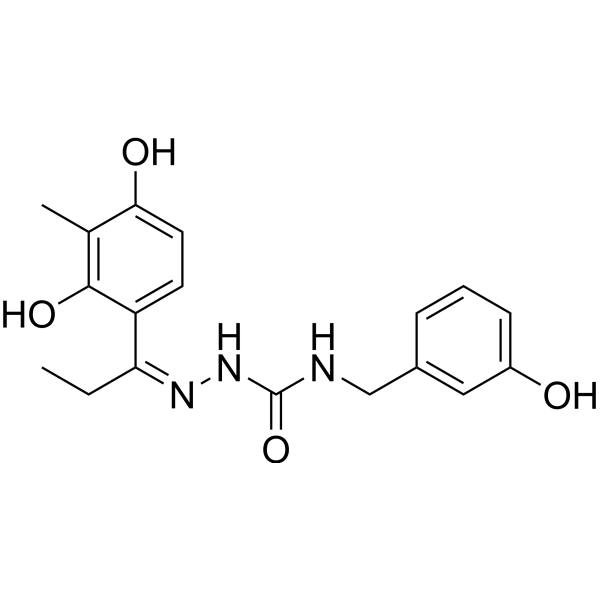 0 ImagesGA-017 is a potent and selective LATS1 and LATS2 (large tumor suppressor kinase 1/2) inhibitor, with IC50 values of 4.10 and 3.92 nM, respectively. GA-017 is an activator of cell proliferation. GA-017 promotes YAP/TAZ activation and nuclear translocation. GA-017 promotes cell growth under 3D culture conditions. GA-017 enhances the ex vivo formation of mouse intestinal organoids.
-
VT3989
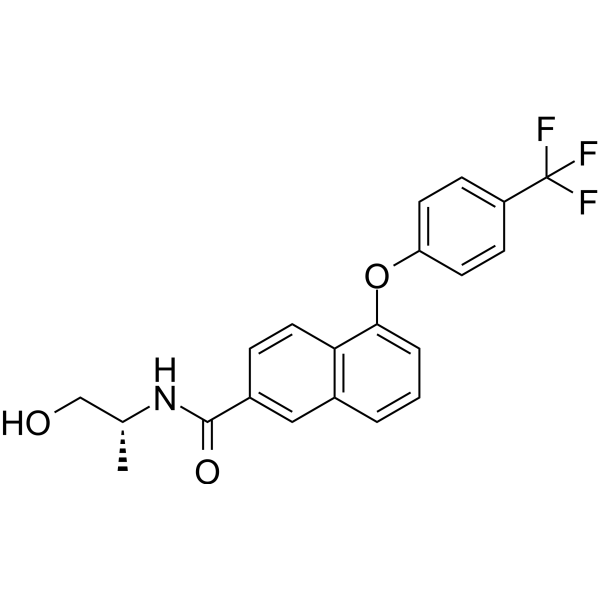 0 ImagesVT3989 is an orally active pan-TEAD autopalmitoylation inhibitor that modulates the Hippo signaling pathway. VT3989 directly binds to TEAD transcription factors to block their palmitoylation modification, thereby disrupting the formation of YAP/TAZ-TEAD complexes and inhibiting downstream oncogenic transcriptional activity. VT3989 effectively inhibits the growth of NF2-deficient schwannoma and meningioma cells and reverses the Schwann cell phenotype. In addition, VT3989 exerts a synergistic effect when combined with Osimtinib (HY-15772) in EGFR-mutant non-small cell lung cancer models, significantly delaying tumor recurrence and prolonging survival. VT3989 can be used for the research of epithelioid hemangioendothelioma, malignant pleural mesothelioma, type 2 neurofibromatosis and related advanced solid tumors.
-
Ki16425
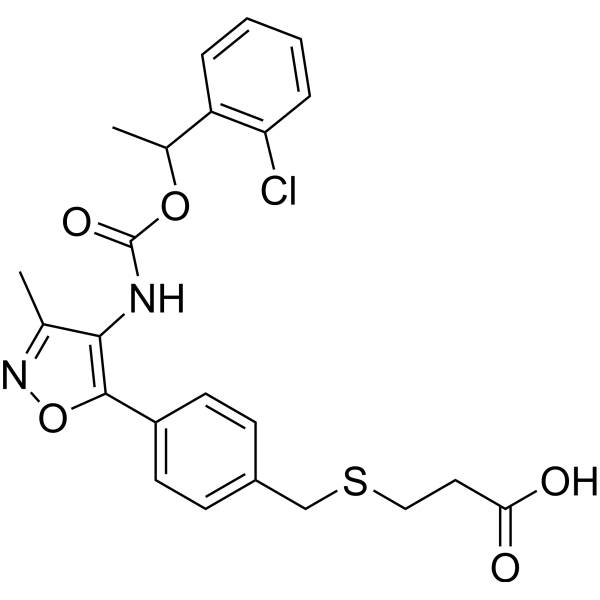 0 ImagesSynonyms: Debio 0719Ki16425 (Debio 0719) is a subtype-selective, competitive antagonist of the EDG-family receptors, LPA1 and LPA3 with Kis of 0.34 μM and 0.93 μM, respectively. Ki16425 (Debio 0719) reduces the LPA-induced activation of p42/p44 MAPK. Ki16425 can also inhibit LPA-induced dephosphorylation of Yes-associated protein (YAP)/TAZ in HEK293A cells.
-
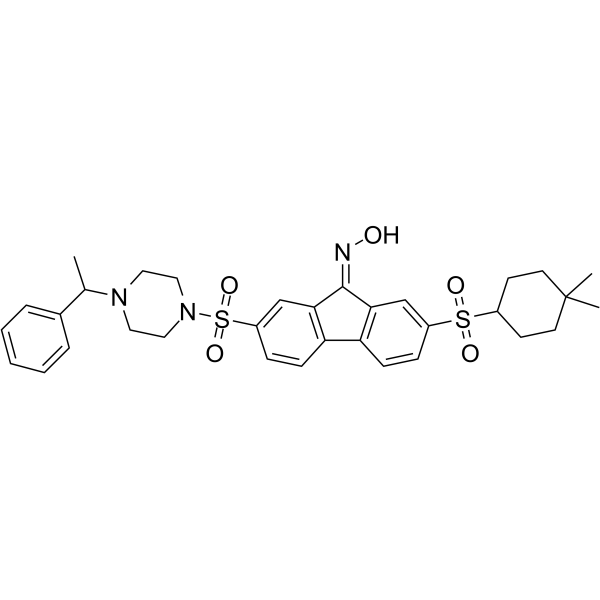
MY-1576
 0 ImagesCat. No.: HY-170936Purity: 99.21%MY-1576 is a FAK inhibitor with an IC50 of 8 nM. MY-1576 can activate the Hippo pathway, thereby blocking the regulation of YAP/TAZ. MY-1576 also effectively inhibits tumor growth in the KYSE30 xenograft mouse model, demonstrating good safety, and effectively downregulates the autophosphorylation of FAK and the levels of YAP/TAZ in vivo.




