



iGluR
Ionotropic glutamate receptors
iGluR (ionotropic glutamate receptor) is a ligand-gated ion channel that is activated by the neurotransmitter glutamate. iGluR are integral membrane proteins compose of four large subunits that form a central ion channel pore. Sequence similarity among all known glutamate receptor subunits, including the AMPA, kainate, NMDA, and δ receptors.
AMPA receptors are the main charge carriers during basal transmission, permitting influx of sodium ions to depolarise the postsynaptic membrane. NMDA receptors are blocked by magnesium ions and therefore only permit ion flux following prior depolarisation. This enables them to act as coincidence detectors for synaptic plasticity. Calcium influx through NMDA receptors leads to persistent modifications in the strength of synaptic transmission.
iGluR Isoform Specific Products
All Product Categories
-
iGluR Inhibitors
(131)
View all products
-
iGluR Agonists
(131)
View all products
-
iGluR Antagonists
(347)
View all products
-
iGluR Activators
(35)
View all products
-
iGluR Modulators
(94)
View all products
-
iGluR MDM2 Inhibitor
(1)
View all products
-
iGluR Controls
(5)
View all products
-
iGluR Ligands
(3)
View all products
-
iGluR Related Products (830)
Related Products (830)

-
Antibodies (11)
-
iGluR Isoform Comparison
-
Nooglutil
 0 ImagesCat. No.: HY-114576CAS No.: 112193-35-8Synonyms: Nooglutyl; ONK-10Nooglutil (Nooglutyl; ONK-10) is a positive modulator of AMPA-type glutamate receptors (AMPARs). Nooglutil also regulates dopamine D2 receptor function to exert anxiolytic effects. Nooglutil is promising for research of neurodegenerative disorders (e.g., Alzheimer’s disease).
-
N20C hydrochloride
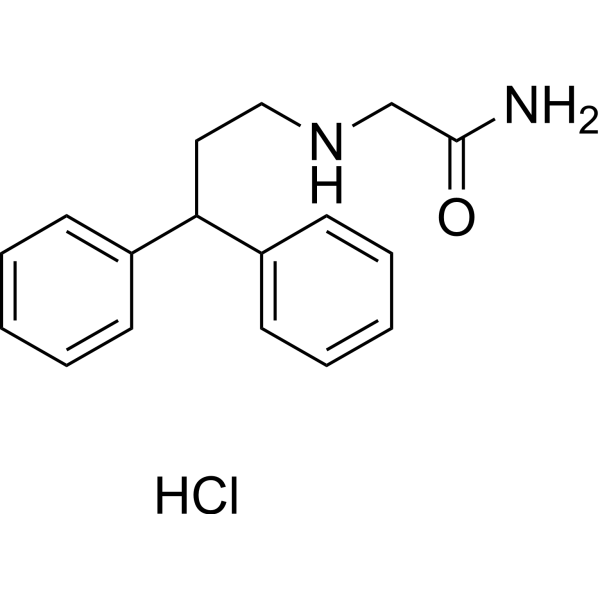 0 ImagesCat. No.: HY-107697CAS No.: 1177583-87-7N20C hydrochloride is a selective and noncompetitive open NMDA receptor open channel blocker, with micromolar affinity, fast on-off blockade kinetics, and strong voltage dependence. Neuroprotective activity.
-
CJ-036878
 0 ImagesCat. No.: HY-182628CAS No.: 951248-25-2CJ-036878 is a NMDAR NR2B subunit antagonist. CJ-036878 is applicable to research related to persistent inflammatory pain and neuropathic pain.
-
Irampanel hydrochloride
 0 ImagesCat. No.: HY-15083CAS No.: 206260-34-6Synonyms: BIIR-561-CLIrampanel hydrochloride (BIIR 561-CL) is an AMPA receptor and voltage-dependent sodium channel blocker. Irampanel hydrochloride inhibits Kainic acid (HY-N2309)-induced currents in rat cortical neurons.
-
(S)-ATPO
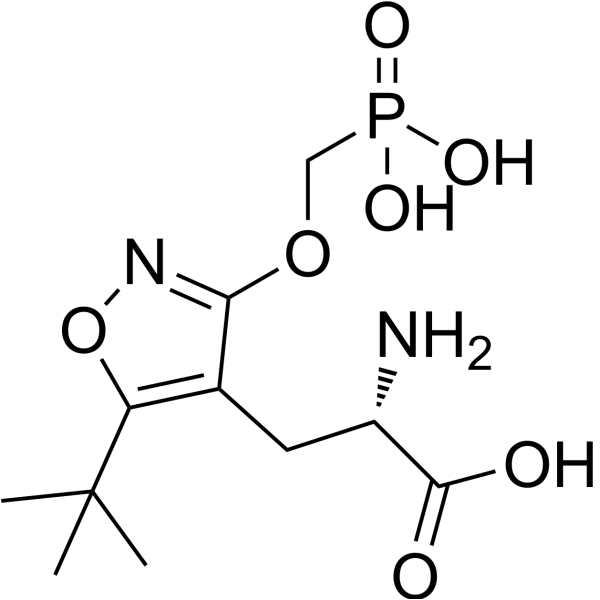 0 Images(S)-ATPO is the (S)-enantiomer of ATPO, which is a competitive antagonist at GluR1-4 (AMPA-preferring) receptors.
-
Isoxsuprine hydrochloride (Standard)
 0 ImagesIsoxsuprine hydrochloride (Standard) is the analytical standard of Isoxsuprine hydrochloride. This product is intended for research and analytical applications. Isoxsuprine hydrochloride is a beta-adrenergic receptor agonist with Kis of 13.65 μΜ and 3.48 μΜ for myometrial and placcntal beta-adrenergic receptor, respectively. Isoxsuprine hydrochloride is also a NMDA receptor antagonist.
-
NMDA receptor antagonist 10
 0 ImagesCat. No.: HY-183200CAS No.: 909259-28-5NMDA receptor antagonist 10 is a NMDA receptor antagonist with an IC50 of 28 μM. NMDA receptor antagonist 10 inhibits glycine action at the NMDA receptor glycine site. NMDA receptor antagonist 10 can be used for research on neurological diseases.
-
Alaproclate hydrochloride
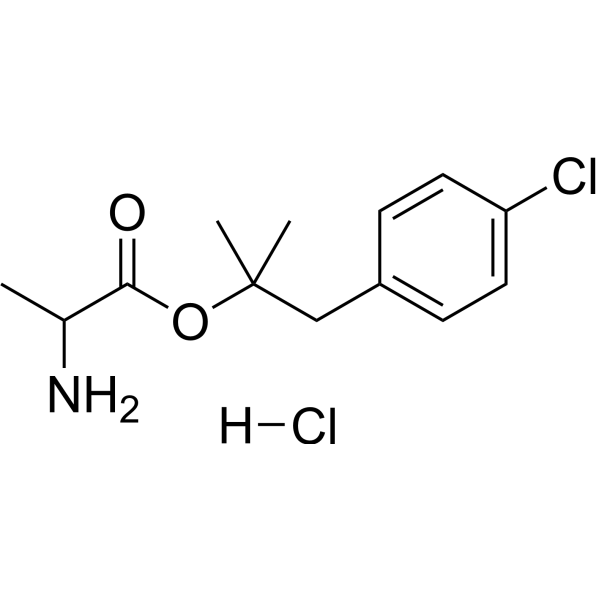 0 ImagesCat. No.: HY-133732CAS No.: 60719-83-7Synonyms: GEA 654 hydrochloride; A03 hydrochlorideAlaproclate (GEA 654) hydrochloride is a selective and orally active serotonin re-uptake inhibitor (SSRI). Alaproclate hydrochloride also acts as a potent, reversible and noncompetitive antagonist of the NMDA receptor coupled ion flow.
-
Pregn-5-en-3β-ol
 0 ImagesCat. No.: HY-W882667CAS No.: 2862-58-0Pregn-5-en-3β-ol, a steroid compound, when formulated as the biscarboxylic acid hemiesters along with androst-5-en-3β-ol, serves as a potent positive allosteric modulator of NMDA (N-methyl-D-aspartate) receptors, making it applicable for research into psychiatric disorders.
-
BDZ-P7
 0 ImagesCat. No.: HY-161665BDZ-P7 inhibits AMPA receptor GluA2, GluA1/2, GluA2/3, and GluA1 subunit with IC50s of 3.03 μM, 3.14 μM, 3.19 μM, 3.2 μM. BDZ-P7 has neuroprotective effect and reinstates locomotor abilities in a mouse model of Parkinson’s disease.
-
Tianeptine-d6 (hydrochloride)
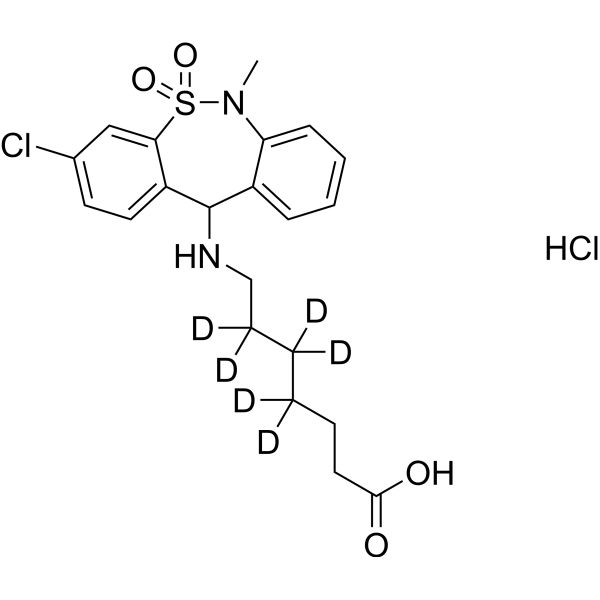 0 ImagesCat. No.: HY-144224STianeptine-d6 hydrochloride is the deuterium labeled Tianeptine hydrochloride. Tianeptine hydrochloride is an atypical antidepressant. Tianeptine hydrochloride is a moderate-intensity agonist of the μ-opioid receptor (MOR), and to a lesser extent, is an agonist of the δ-opioid receptor (DOR). Tianeptine hydrochloride is a glutamate modulator that can enhance AMPA receptor and antagonize NMDA receptor. Tianeptine hydrochloride increases sensitivity of the α1 adrenergic receptor, which only manifests in chronic treatment. Tianeptine hydrochloride exerts neuroprotective effects under stress/inflammation-induced conditions, exhibiting anti-inflammatory and antioxidant properties. Tianeptine hydrochloride inhibits MMP-9 by suppressing the PI3K/Akt-mediated NF-κB pathway. Tianeptine hydrochloride can be used to alleviate symptoms of depression and anxiety, but does not cause sedative effects.
-
Ensaculin
 0 ImagesCat. No.: HY-19225CAS No.: 209969-60-8Synonyms: KA-672 hydrochloride; Anseculin hydrochlorideEnsaculin is an NMDA receptor channel blocker. Ensaculin has neuroprotective effects in NMDA toxicity models and promotes neuronal growth in primary cultures of rat brain cells. Ensaculin has the potential to be developed as an anti-dementia drug that acts on various neurotransmitter systems.
-
Naftazone (Standard)
 0 ImagesCat. No.: HY-108011RCAS No.: 15687-37-3Naftazone (Standard) is the analytical standard of Naftazone. This product is intended for research and analytical applications. Naftazone is a naphthoquinone derivative, it can be used for the research of venous insufciency. Naftazone protects blood vessels, increases venous tonicity and capillary resistance, and improves lymphatic and venous circulation.
-
Toladryl (Standard)
 0 ImagesCat. No.: HY-138110RCAS No.: 19804-27-4Synonyms: 4-Methyldiphenhydramine (Standard)Toladryl (Standard) is the analytical standard of Toladryl. This product is intended for research and analytical applications. Toladryl is a derivative of Diphenhydramine (HY-B0303), capable of penetrating the blood-brain barrier and possessing oral activity, as well as antihistamine and anticholinergic activities. The anticholinergic activity of Toladryl is approximately one-tenth that of Diphenhydramine (HY-B0303), and its protective effect against lethal doses of histamine in guinea pigs is 2 to 4 times that of Diphenhydramine (HY-B0303). The side effects of Toladryl are fewer and milder than those of Diphenhydramine (HY-B0303), but at higher doses, it may cause central nervous system symptoms such as insomnia, agitation, and disorientation. Toladryl can be used for research in allergic diseases.
-
LY-395153
 0 ImagesCat. No.: HY-120020CAS No.: 211313-51-8LY-395153 is an AMPA receptor enhancer with the activity of binding to AMPA receptors. LY-395153 can bind to natural and recombinant AMPA receptors, and its binding is affected by AMPA receptor agonists and can be competitively or non-competitively inhibited by some compounds. It is a useful probe for marking unique regulatory sites of AMPA receptors.
-
NFI23
 0 ImagesCat. No.: HY-182068NFI23 is a blood-brain barrier-penetrant GluN2B-NMDAR inhibitor, with an IC50 of 1.31 μM and a Ki of 5.98 nM against GluN2B-NMDAR. NFI23 reduces NMDA-induced Ca2+ influx and ROS production, maintains mitochondrial membrane potential, inhibits neuronal apoptosis, and restores the expression of p-ERK1/2. NFI23 exerts neuroprotective effects against NMDA-induced cytotoxicity and in the rat middle cerebral artery occlusion (MCAO) model. NFI23 can be used for the research of ischemic stroke.
-
Bupivacaine hydrochloride monohydrate (Standard)
 0 ImagesCat. No.: HY-W415121RCAS No.: 73360-54-0Bupivacaine (hydrochloride monohydrate) (Standard) is the analytical standard of Bupivacaine (hydrochloride monohydrate). This product is intended for research and analytical applications. Bupivacaine hydrochloride monohydrate is a NMDA receptor inhibitor. Bupivacaine hydrochloride monohydrate can block sodium, L-calcium, and potassium channels. Bupivacaine hydrochloride monohydrate potently blocks SCN5A channels with the IC50 of 69.5 μM. Bupivacaine hydrochloride monohydrate can be used for the research of chronic pain.
-
BMT-108908
 0 ImagesCat. No.: HY-117467CAS No.: 1801151-15-4BMT-108908 is a negative allosteric modulator with selective activity on the NR2B subtype of the NMDA receptor. BMT-108908 has been shown to damage cognition in research, affecting cognitive functions in multiple areas. BMT-108908 failed to show a significant impact on the γ wave power of the EEG in the experiment, but it had a significant inhibitory and enhancement effect on the β wave and δ wave power.
-
AMPA receptor modulator-5
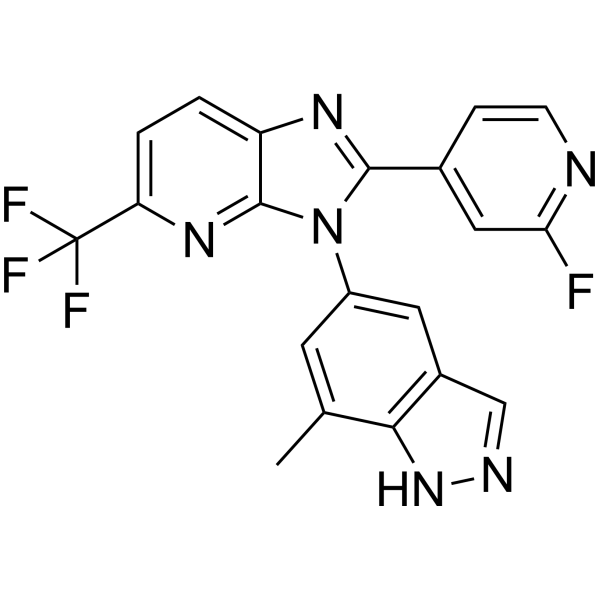 0 ImagesCat. No.: HY-154798CAS No.: 2034182-22-2AMPA receptor modulator-5 (Example 217) is an AMPA receptor modulator. AMPA receptor modulator-5 can be used for research of neurological disease.
-
NR2B-selective NMDA receptor antagonist 1
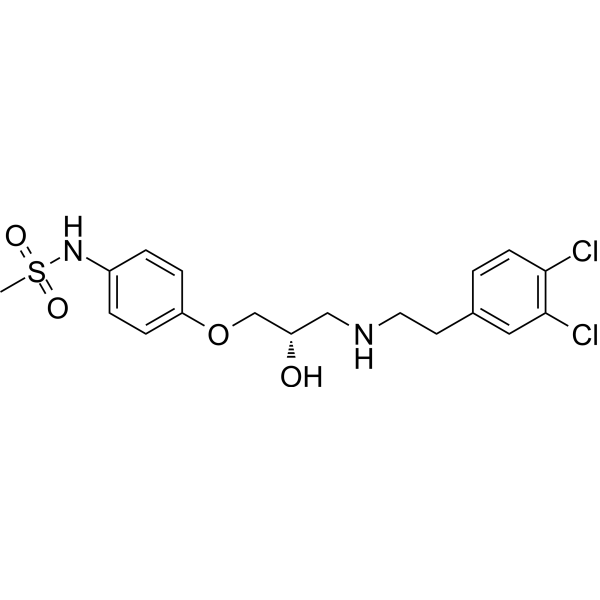 0 ImagesCat. No.: HY-126123CAS No.: 457897-92-6NR2B-selective NMDA receptor antagonist 1 (compound 29) is a potent antagonist of NR1/NR2B receptors, with IC50s of 0.05 μM, 0.73 μM, 2.4 μM to NR1/NR2B NMDA receptor, hERG, α1-AdR, respectivity. NR2B-selective NMDA receptor antagonist 1 exhibites efficient permeability across the blood–brain barrier.




