



pep2-SVKI

Based on 1 Customer Validation
pep2-SVKI is a selective peptide inhibitor. pep2-SVKI inhibits the binding of AMPA-type glutamate receptor (GluA2) (C-terminal PDZ site) to glutamate receptor interacting protein (GRIP), AMPA receptor binding protein (ABP), and C-kinase interacting protein (PICK1). pep2-SVKI increases the amplitude of AMPA receptor-mediated currents and blocks long-term depression (LTD). pep2-SVKI can be used to study neurological diseases.
Nur für Forschungszwecke. Wir verkaufen nicht an Patienten.
- Reinheit : 99.78%
- CAS. Nr.: 328944-75-8
- Formel: C60H93N13O18
- Molecular Weight:1284.46
-
Speicherung:
Sealed storage, away from moisture.
Powder -80°C, 2 years , -20°C, 1 year* In solvent : -80°C, 6 months; -20°C, 1 month (sealed storage, away from moisture)


To place orders, for customer services and technical support, please contact: MedChemExpress USA
Tel: 609-228-6898 E-mail: [email protected] [email protected]


-
 Biologische Aktivität
-
Chemical Information
-
Lösungsmittel & Löslichkeit
- Reinheit & Dokumentation
- Verweise
-
 Help & FAQs


-

HY-P1059
Pep2-AVKIGluR2/PICK1 Inhibitor -
HY-101165
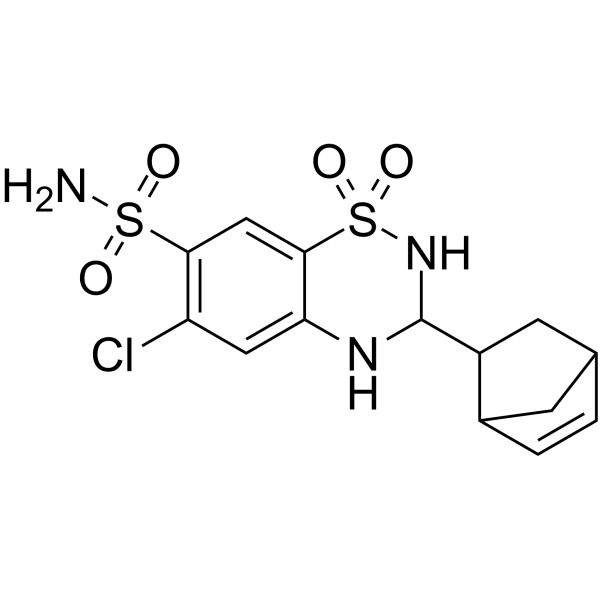
CyclothiazideAMPA Receptors PAM -
HY-15068A
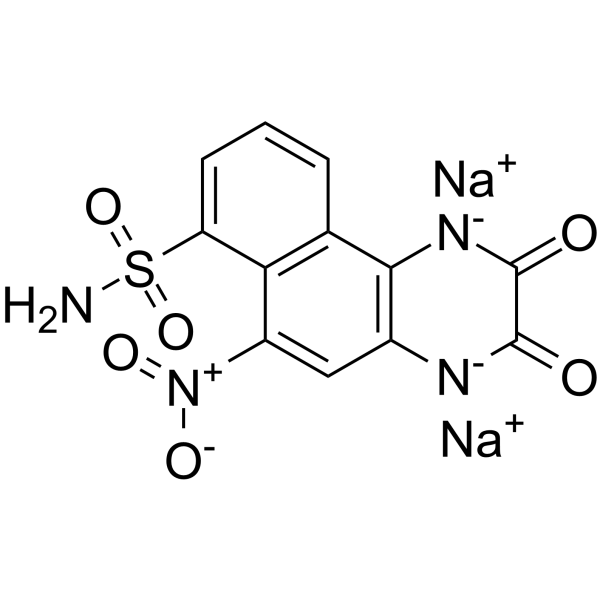
NBQX disodiumAMPA Receptor Antagonist -
HY-100815A
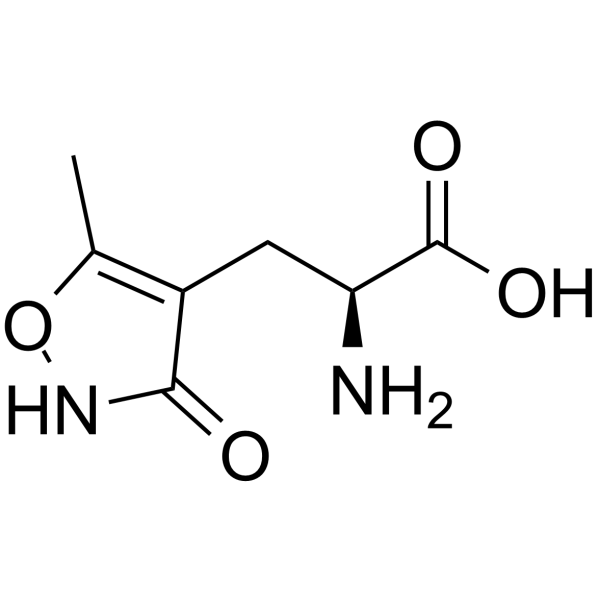
(S)-AMPAAMPA Receptor Agonist -
HY-15066A
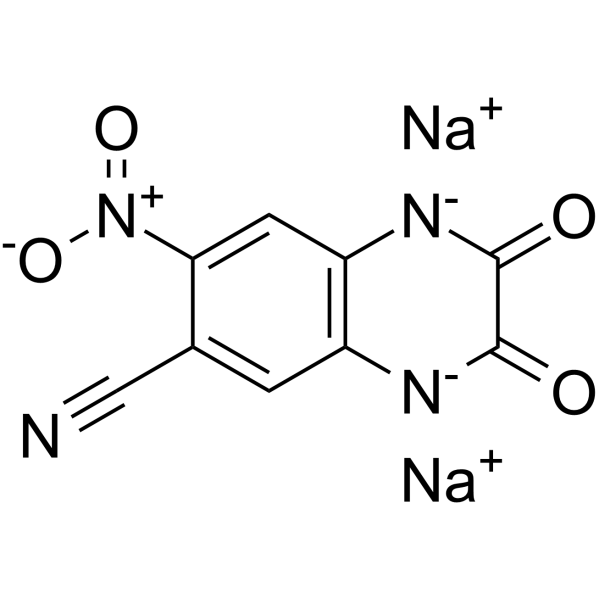
CNQX disodiumiGluR Antagonist -
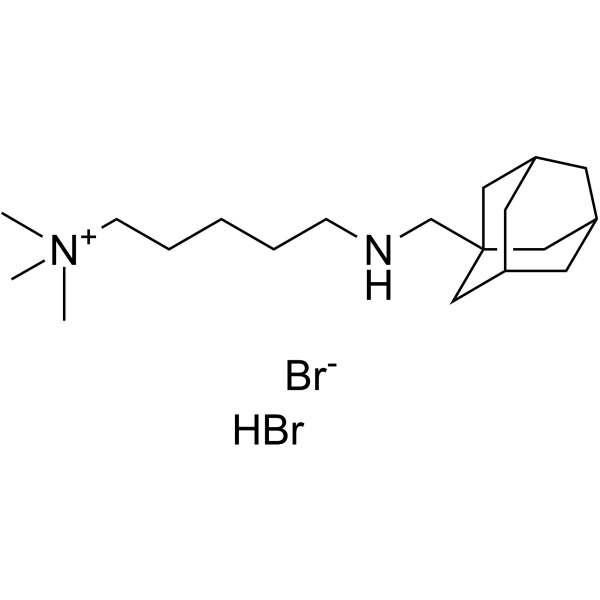
HY-103230
IEM-1460 -
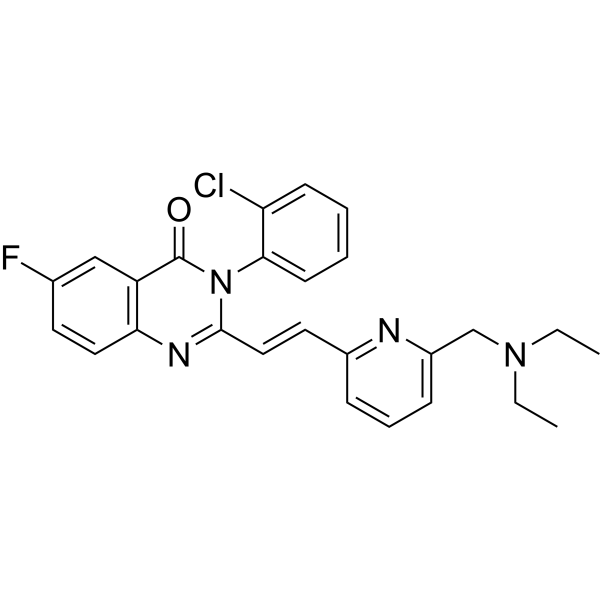
HY-18663
CP-465022AMPA Receptor Antagonist -
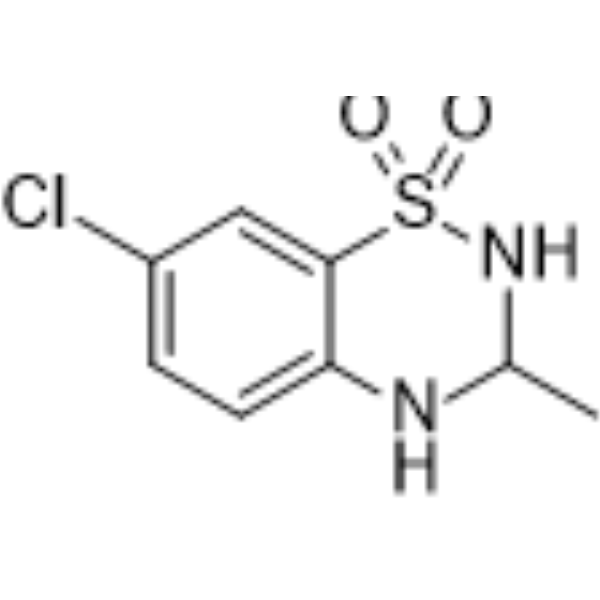
HY-101528
IDRA 21AMPA Modulator -
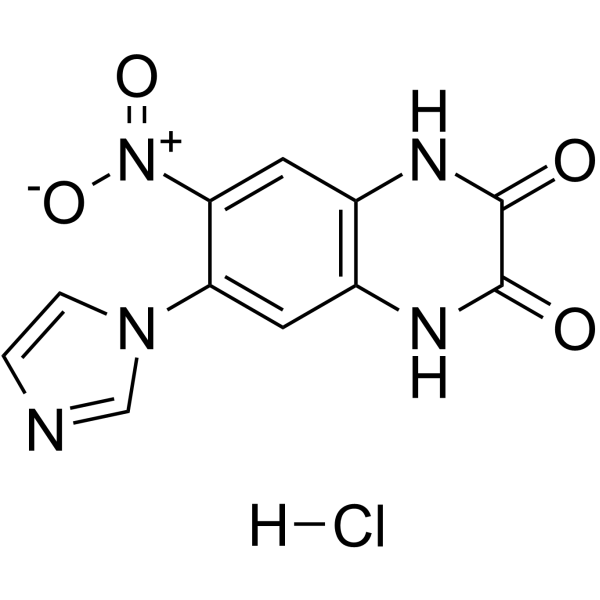
HY-15071
YM90KAMPA Receptor Antagonist -
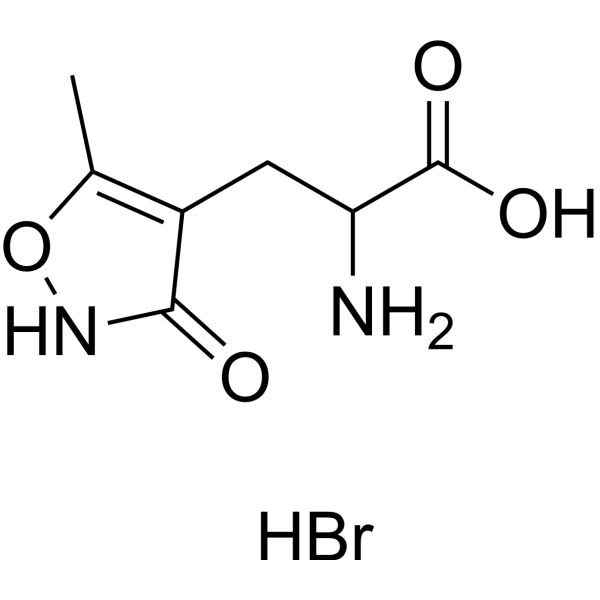
HY-100815C
(RS)-AMPA hydrobromideL-glutamic Acid Agonist -
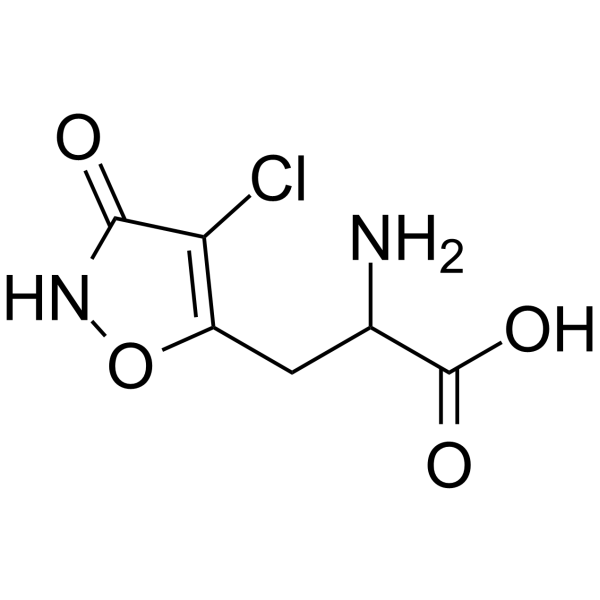
HY-103229
Cl-HIBOGluR1/2/AMPA Receptor Agonist -
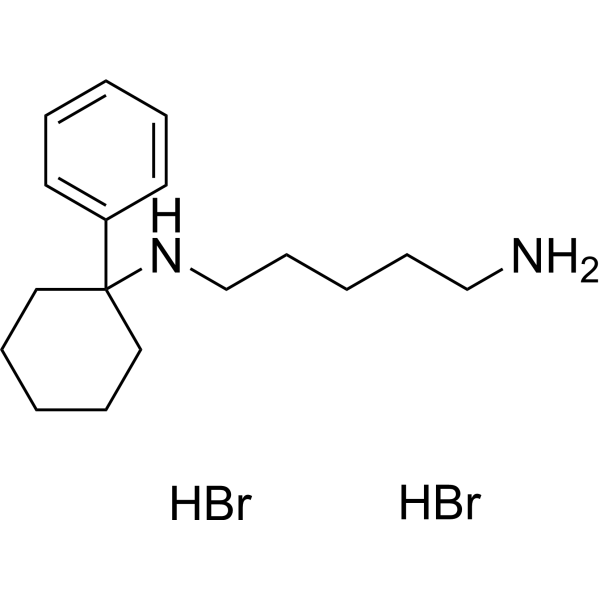
HY-103232
IEM-1925 bromideGlutamate Receptor Antagonist
Alle iGluR Isoform-spezifische Produkte anzeigen
More

Biologische Aktivität
Beschreibung
In Vitro
pep2-SVKI (1 mM) reduces (Miniature Excitatory Postsynaptic Current) mEPSC amplitude at both −60 mV and +40 mV in the synaptic membrane of stellate cells[1].
pep2-SVKI (100 μM) causes an increase in AMPAR-mediated (Excitatory Postsynaptic Current) EPSCs in hippocampal CA1 Neurons[2].
pep2-SVKI (100 μM) prevents the expression of LTD in a (Protein Kinase C) PKC-Dependent Manner in hippocampal CA1 Neurons[2].
pep2-SVKI increases tritium release induced by exposure to 100 μM AMPA in hippocampal synaptosomes prelabeled with (radiolabeled norepinephrine) [3H]NA and potentiates the AMPA-evoked release of [3H]NA in rat hippocampal synaptosomes[3].
pep2-SVKI causes increase in the number of AMPARs exposed on the membrane in rat hippocampal synaptosomes[3].
pep2-SVKI abolishes the sensitivity to Cyclothiazide (HY-101165) of the AMPA receptors controlling [3H]NA release[3].
MedChemExpress (MCE) has not independently confirmed the accuracy of these methods. They are for reference only.


Chemical Information
-
CAS. Nr. 328944-75-8
-
Appearance Solid
-
Molecular Weight 1284.46
-
Formel C60H93N13O18
-
Color White to off-white
-
Sequence
Tyr-Asn-Val-Tyr-Gly-Ile-Glu-Ser-Val-Lys-Ile
-
Sequence Shortening
YNVYGIESVKI
-
Versand
Room temperature in continental US; may vary elsewhere.
-
Speicherung
Sealed storage, away from moisture
Powder -80°C 2 years -20°C 1 year * In solvent : -80°C, 6 months; -20°C, 1 month (sealed storage, away from moisture)


Lösungsmittel & Löslichkeit
In Vitro:
DMSO : 50 mg/mL (38.93 mM; Need ultrasonic; Hygroscopic DMSO has a significant impact on the solubility of product, please use newly opened DMSO)
Please refer to the solubility information to select the appropriate solvent. Once prepared, please aliquot and store the solution to prevent product inactivation from repeated freeze-thaw cycles.
Storage method and period of stock solution: -80°C, 6 months; -20°C, 1 month (sealed storage, away from moisture). When stored at -80°C, please use it within 6 months. When stored at -20°C, please use it within 1 month.
Please refer to the solubility information to select the appropriate solvent. Once prepared, please aliquot and store the solution to prevent product inactivation from repeated freeze-thaw cycles.
Storage method and period of stock solution: -80°C, 6 months; -20°C, 1 month (sealed storage, away from moisture). When stored at -80°C, please use it within 6 months. When stored at -20°C, please use it within 1 month.
Konzentration (Stammlösung) × Volumen (Stammlösung) = Konzentration (Ziellösung) × Volumen (Ziellösung)
In Vivo:
Select the appropriate dissolution method based on your experimental animal and administration route.
- For the following dissolution methods, please ensure to first prepare a clear stock solution using an In Vitro approach and then sequentially add co-solvents:
- To ensure reliable experimental results, the clarified stock solution can be appropriately stored based on storage conditions. As for the working solution for In Vivo experiments, it is recommended to prepare freshly and use it on the same day.
- The percentages shown for the solvents indicate their volumetric ratio in the final prepared solution. If precipitation or phase separation occurs during preparation, heat and/or sonication can be used to aid dissolution.
Add each solvent one by one: 10% DMSO 40% PEG300 5% Tween-80 45% Saline
Solubility: 2.5 mg/mL (1.95 mM); Clear solution; Need ultrasonic
This protocol yields a clear solution of 2.5 mg/mL.
Taking 1 mL working solution as an example, add 100 μL DMSO stock solution (25.0 mg/mL) to 400 μL PEG300, and mix evenly; then add 50 μL Tween-80 and mix evenly; then add 450 μL Saline to adjust the volume to 1 mL.
Preparation of Saline: Dissolve 0.9 g sodium chloride in ddH₂O and dilute to 100 mL to obtain a clear Saline solution.
Add each solvent one by one: 10% DMSO 90% (20% SBE-β-CD in Saline)
Solubility: 2.5 mg/mL (1.95 mM); Suspended solution; Need ultrasonic
This protocol yields a suspended solution of 2.5 mg/mL. Suspended solution can be used for oral and intraperitoneal injection.
Taking 1 mL working solution as an example, add 100 μL DMSO stock solution (25.0 mg/mL) to 900 μL 20% SBE-β-CD in Saline, and mix evenly.
Preparation of 20% SBE-β-CD in Saline (4°C, storage for one week): 2 g SBE-β-CD powder is dissolved in 10 mL Saline, completely dissolve until clear.
In Vivo Dissolution Calculator
Please enter the basic information of animal experiments:
-
-
-
-
Recommended: Prepare an additional quantity of animals to account for potential losses during experiments.
Please enter your animal formula composition:
-
%DMSO +
Recommended: Keep the proportion of DMSO in working solution below 2% if your animal is weak.
-
%+
-
+%Tween-80 + +
-
%Saline +
The co-solvents required include: DMSO, . All of co-solvents are available by MedChemExpress (MCE). , Tween 80. All of co-solvents are available by MedChemExpress (MCE).
Working solution concentration: 0.22 mg/mL
Method for preparing stock solution: mg drug dissolved in μL DMSO. Stock solution concentration: mg/mL. * In solvent : -80°C, 6 months; -20°C, 1 month (sealed storage, away from moisture)
1. Take μL DMSO stock solution;
2. Add μL .
μL , mix evenly;
3. Then add μL Tween 80, mix evenly;
4. Then add μL
Please ensure that the stock solution in the first step is dissolved to a clear state, and add co-solvents in sequence. You can use ultrasonic heating (ultrasonic cleaner, recommended frequency 20-40 kHz), vortexing, etc. to assist dissolution.


Reinheit & Dokumentation
-
Data Sheet (272 KB)
-
SDS (254 KB)
- English - EN (254 KB)
- Français - FR (254 KB)
- Deutsch - DE (254 KB)
- Norwegian - NO (254 KB)
- Español - ES (254 KB)
- Swedish - SV (254 KB)
- Italian - IT (254 KB)
- Korean - KR (254 KB)
- Portuguese - PT (254 KB)
-
Handling Instructions (2659 KB)
Verweise
[1]. Liu SJ, et al. Subunit interaction with PICK and GRIP controls Ca2+ permeability of AMPARs at cerebellar synapses. Nat Neurosci. 2005 Jun;8(6):768-75. [Content Brief]
[2]. Daw MI, et al. PDZ proteins interacting with C-terminal GluR2/3 are involved in a PKC-dependent regulation of AMPA receptors at hippocampal synapses. Neuron. 2000 Dec;28(3):873-86. [Content Brief]
[3]. Pittaluga A, et al. Trafficking of presynaptic AMPA receptors mediating neurotransmitter release: neuronal selectivity and relationships with sensitivity to cyclothiazide. Neuropharmacology. 2006 Mar;50(3):286-96. [Content Brief]


Complete Stock Solution Preparation Table
Please refer to the solubility information to select the appropriate solvent. Once prepared, please aliquot and store the solution to prevent product inactivation from repeated freeze-thaw cycles.
Storage method and period of stock solution: -80°C, 6 months; -20°C, 1 month (sealed storage, away from moisture). When stored at -80°C, please use it within 6 months. When stored at -20°C, please use it within 1 month.
| Optional Solvent | Concentration Solvent Mass | 1 mg | 5 mg | 10 mg | 25 mg |
|---|---|---|---|---|---|
| DMSO | 1 mM | 0.7785 mL | 3.8927 mL | 7.7854 mL | 19.4634 mL |
| 5 mM | 0.1557 mL | 0.7785 mL | 1.5571 mL | 3.8927 mL | |
| 10 mM | 0.0779 mL | 0.3893 mL | 0.7785 mL | 1.9463 mL | |
| 15 mM | 0.0519 mL | 0.2595 mL | 0.5190 mL | 1.2976 mL | |
| 20 mM | 0.0389 mL | 0.1946 mL | 0.3893 mL | 0.9732 mL | |
| 25 mM | 0.0311 mL | 0.1557 mL | 0.3114 mL | 0.7785 mL | |
| 30 mM | 0.0260 mL | 0.1298 mL | 0.2595 mL | 0.6488 mL |


pep2-SVKI Related Classifications
HY-P1056 Related Classifications
 Powered by Bioz