



mAChR
Muscarinic acetylcholine receptor
mAChRs (muscarinic acetylcholine receptors) are acetylcholine receptors that form G protein-receptor complexes in the cell membranes of certainneurons and other cells. They play several roles, including acting as the main end-receptor stimulated by acetylcholine released from postganglionic fibersin the parasympathetic nervous system. mAChRs are named as such because they are more sensitive to muscarine than to nicotine. Their counterparts are nicotinic acetylcholine receptors (nAChRs), receptor ion channels that are also important in the autonomic nervous system. Many drugs and other substances (for example pilocarpineand scopolamine) manipulate these two distinct receptors by acting as selective agonists or antagonists. Acetylcholine (ACh) is a neurotransmitter found extensively in the brain and the autonomic ganglia.
mAChR Isoform Specific Products
All Product Categories
-
mAChR Inhibitors
(115)
View all products
-
mAChR Agonists
(147)
View all products
-
mAChR Antagonists
(320)
View all products
-
mAChR Activators
(20)
View all products
-
mAChR Modulators
(48)
View all products
-
mAChR Inducer
(1)
View all products
-
mAChR Controls
(9)
View all products
-
mAChR Ligands
(10)
View all products
-
mAChR Related Products (722)
Related Products (722)

-
Antibodies (2)
-
mAChR Isoform Comparison
-
Muscarine iodide
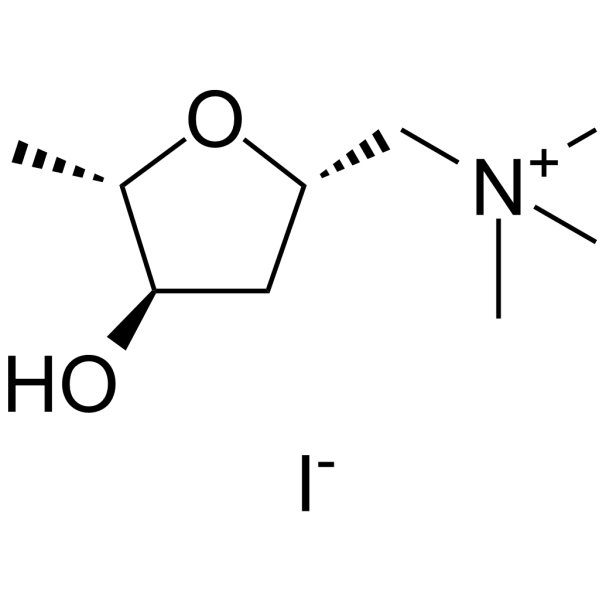 0 ImagesSynonyms: (+)-Muscarine iodideMuscarine ((+)-Muscarine) iodide is a toxin that can stimulate the parasympathetic nervous system. Muscarine iodide is a prototype muscarinic acetylcholine receptor agonist.
-
LY593093
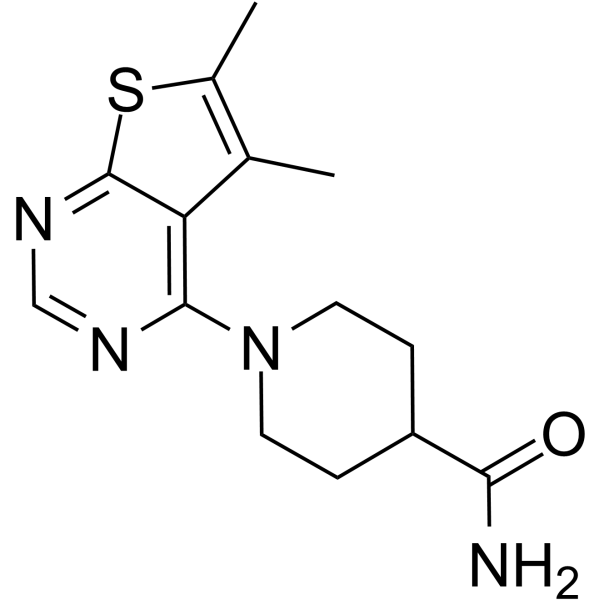
 0 ImagesLY593093 is a selective, orally active, and brain-penetrant muscarinic M1 receptor agonist with an EC50 of 22.8 nM. LY593093 can be utilized in Alzheimer’s disease research.
-
Phytolaccagenin
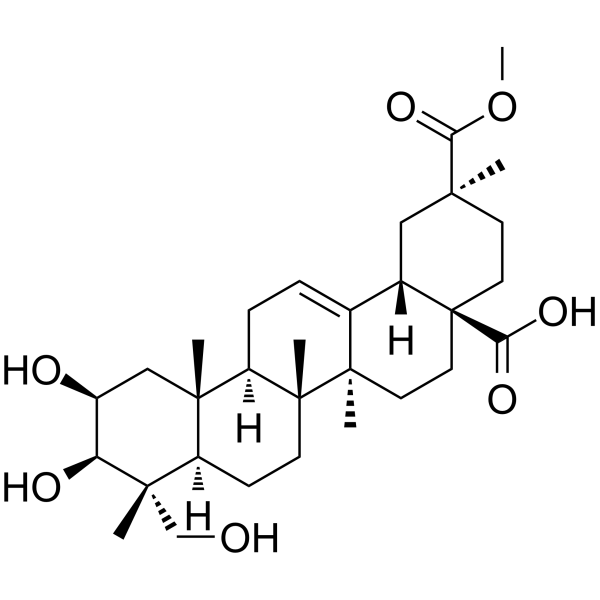 0 ImagesPhytolaccagenin is a triterpenoid saponin aglycone, Antifungal agent, vasodilator, antihypertensive agent, and anti-inflammatory agent. Phytolaccagenin activates vascular and cardiac Muscarinic receptors, blocks cardiac β-adrenergic receptors, and inhibits voltage-dependent calcium channels in blood vessels. Phytolaccagenin inhibits the growth of Candida albicans and Cryptococcus neoformans. Phytolaccagenin induces vasodilation, produces negative inotropic and negative chronotropic effects, reduces mean arterial pressure, and inhibits LPS-induced inflammation. Phytolaccagenin exhibits enhanced antihypertensive effects in high salt-induced hypertensive rats. Phytolaccagenin can be used in the research of candidiasis, cryptococcosis, hypertension, and inflammation-related diseases.
-
Dexetimide
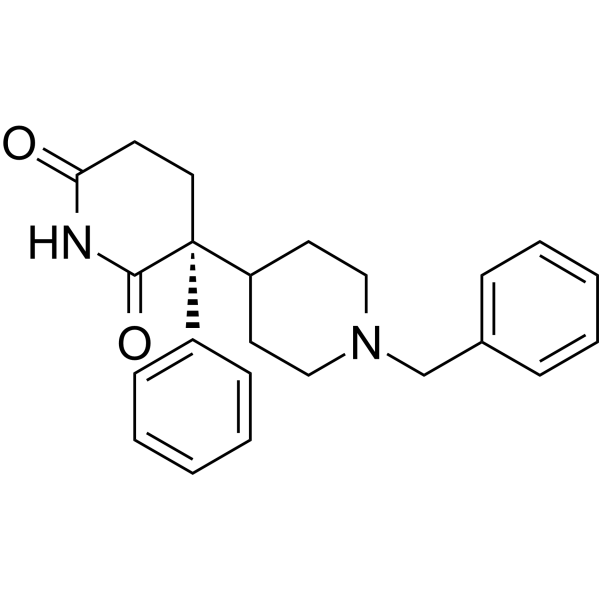 0 ImagesSynonyms: (+)-Benzetimide; (S)-(+)-Dexetimide; DexbenzetimideDexetimide ((+)-Benzetimide; (S)-(+)-Dexetimide; Dexbenzetimide) is a piperidine anticholinergic and a high-affinity muscarinic receptor antagonist. Dexetimide can be used in studies of parkinson's disease.
-
Clozapine hydrochloride
 0 ImagesSynonyms: HF 1854 hydrochlorideClozapine hydrochloride (HF 1854 hydrochloride) is an antipsychotic used for the research of schizophrenia. Clozapine hydrochloride has high affinity for a number of neuroreceptors. Clozapine hydrochloride is a potent antagonist of dopamine D2 with a Ki of 75 nM. Clozapine hydrochloride inhibits the muscarinic M1 receptor and serotonin 5HT2A receptor with Kis of 9.5 nM and 4 nM, respectively. Clozapine hydrochloride is also a potent and selective agonist at the muscarinic M4 receptor (EC50=11 nM).
-
Cevimeline
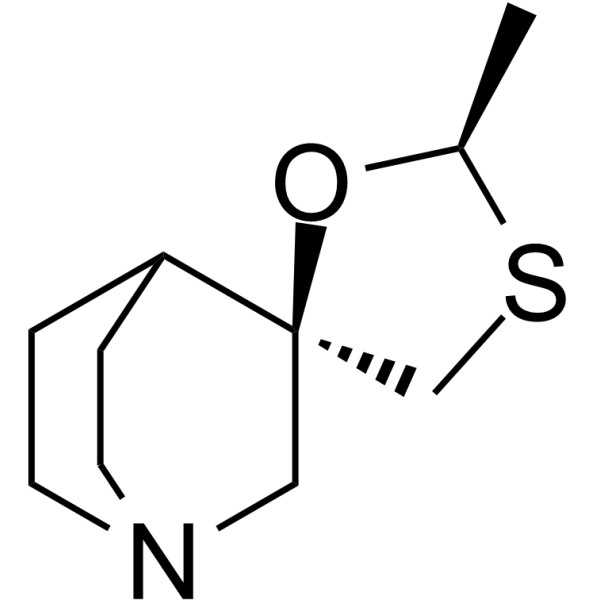 0 ImagesSynonyms: AF102BCevimeline (AF-102B) is a quinuclidine derivative of acetylcholine and a selective and orally active muscarinic M1 and M3 receptor agonist. Cevimeline stimulates secretion by the salivary glands and can be used as a sialogogue for xerostomia. Cevimeline can cross the blood-brain barrier (BBB).
-
Olanzapine-d3
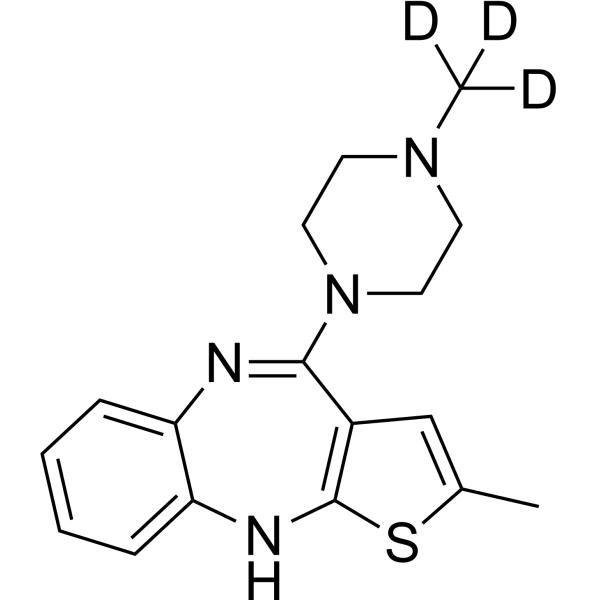 0 ImagesSynonyms: LY170053-d3Olanzapine-d3 (LY170053-d3) is the deuterium labeled Olanzapine. Olanzapine is a selective, orally active monoaminergic antagonist with high affinity binding to serotonin H1, 5HT2A/2C, 5HT3, 5HT6 (Ki=7, 4, 11, 57, and 5 nM, respectively), dopamine D1-4 (Ki=11 to 31 nM), muscarinic M1-5 (Ki=1.9-25 nM), and adrenergic α1 receptors (Ki=19 nM). Olanzapine is an atypical antipsychotic.
-
Amitriptyline-d6 hydrochloride
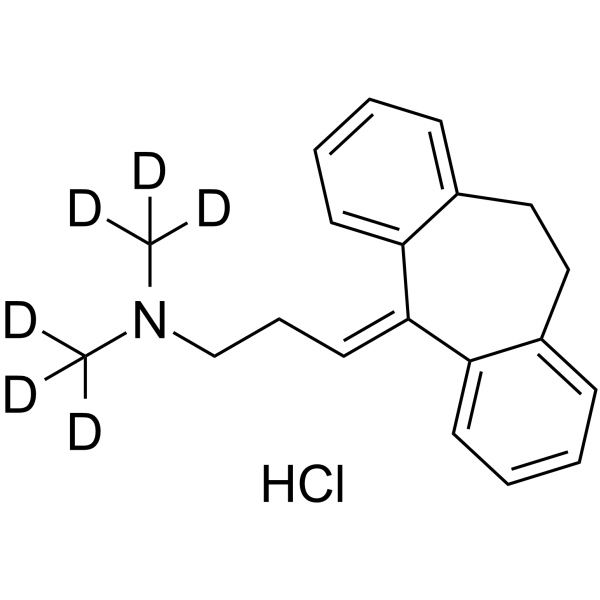 0 ImagesAmitriptyline-d6 hydrochloride is the deuterium labeled Amitriptyline hydrochloride (HY-B0527A). Amitriptyline hydrochloride is an orally active tricyclic antidepressant (TCA). Amitriptyline hydrochloride mainly exerts its antidepressant effect by blocking SERT (Ki = 3.45 nM) and NET (Ki = 13.3 nM), thereby increasing the concentrations of 5-hydroxytryptamine (5-HT) and norepinephrine (NE) in the synaptic cleft. Amitriptyline hydrochloride is also an agonist at α2A and TrkA/TrkB receptors, thereby exerting analgesic and neurotrophic activities (inhibiting cell apoptosis). Amitriptyline hydrochloride can reduce inflammation, angiogenesis and fibrosis. Amitriptyline hydrochloride binds to DAT (with Ki = 2.58 μM). Amitriptyline hydrochloride has high affinity for a series of receptors and can antagonize muscarinic cholinergic receptors (M1/M2/M3/M4/M5 receptors) (Ki = 11-24 nM), H1 receptors (Ki = 0.5-1.1 nM), adrenergic α1 receptors (Ki = 4.4 nM), etc., resulting in a series of side effects. Amitriptyline hydrochloride can block sodium channels and hERG potassium channel (IC50 = 4.78 μM) and it has cardiotoxicity.
-
Zamifenacin fumarate
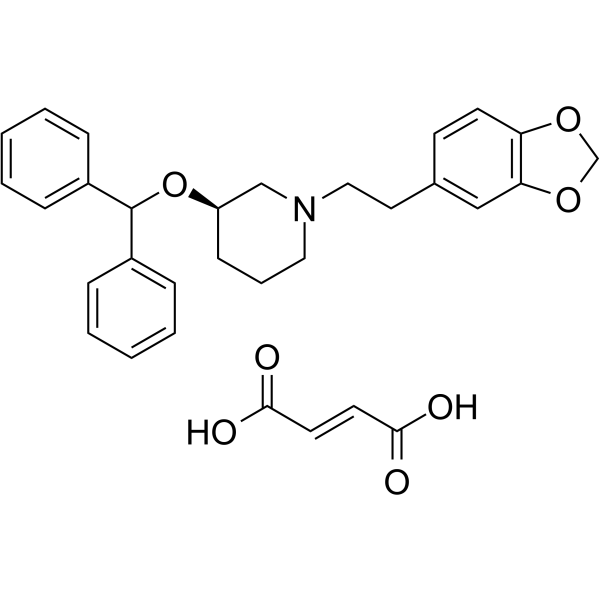 0 ImagesSynonyms: UK-76654 fumarateZamifenacin fumarate (UK-76654 fumarate) is a potent gut-selective muscarinic M3 receptor antagonist. Zamifenacin significantly reduces colonic motility in irritable bowel syndrome.
-
Olanzapine (Standard)
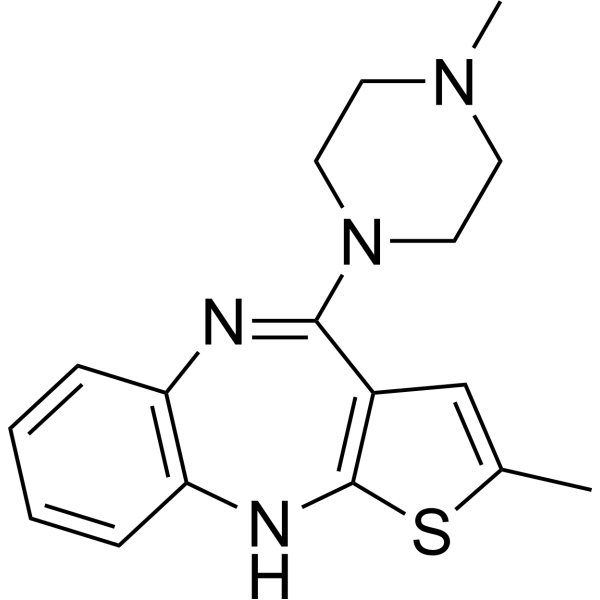 0 ImagesSynonyms: LY170053 (Standard)Olanzapine (Standard) is the analytical standard of Olanzapine. This product is intended for research and analytical applications. Olanzapine (LY170053) is a selective, orally active monoaminergic antagonist with high affinity binding to serotonin H1, 5HT2A/2C, 5HT3, 5HT6 (Ki=7, 4, 11, 57, and 5 nM, respectively), dopamine D1-4 (Ki=11 to 31 nM), muscarinic M1-5 (Ki=1.9-25 nM), and adrenergic α1 receptor (Ki=19 nM). Olanzapine is an atypical antipsychotic.
-
PAD-PF2
 0 ImagesCat. No.: HY-176710Purity: 99.94%PAD-PF2 is a PAD family inhibitor, as well as a κ-opioid receptor agonist (EC50 = 7.55 μM) and an M1 muscarinic acetylcholine receptor antagonist (IC50 = 12.3 μM). The IC50 values of PAD-PF2 against PAD1, PAD2, PAD3 and PAD4 are 109 nM, 27.9 nM, 106 nM and 20.1 nM, respectively. PAD-PF2 binds to the common allosteric pocket of PAD1-4, and its inhibitory effects on PAD2 and PAD4 are Ca2+-dependent. PAD-PF2 inhibits protein citrullination in neutrophils. PAD-PF2 is applicable to research related to rheumatoid arthritis, neurodegenerative diseases and cancer.
-
LY 2033298
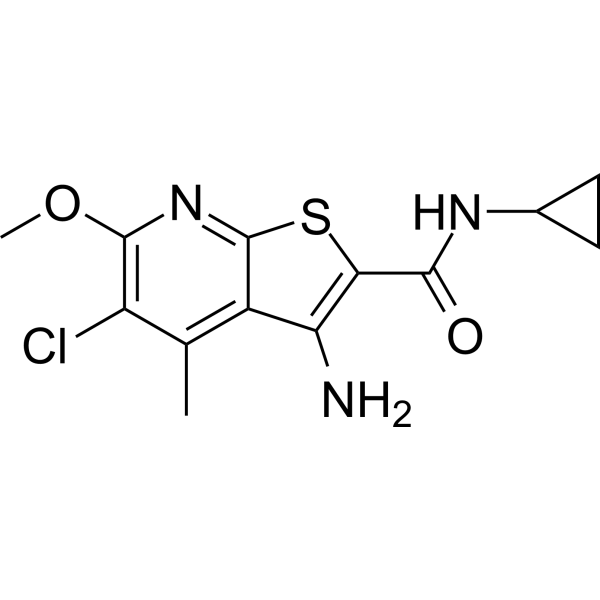 0 ImagesLY 2033298 is a selective positive allosteric modulator of the muscarinic M4 receptor. LY 2033298 can be used in the study of psychiatric disorders.
-
Tridihexethyl chloride
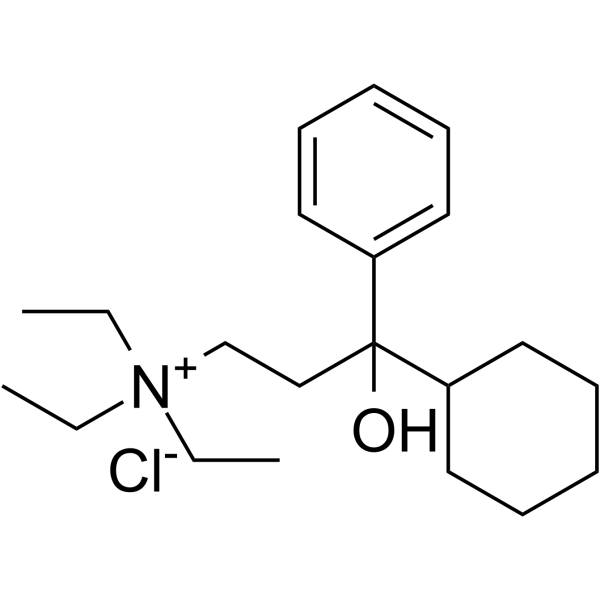 0 ImagesTridihexethyl (Pathilon) chloride is an orally active anticholinergic agent and mAChR antagonist, shows activities of antimuscarinic and anticholinergic. Tridihexethyl chloride shows pronounced antispasmodic and antisecretory effects on the gastrointestinal tract. Tridihexethyl chloride can be used in studies of peptic ulcer disease and acquired nystagmus .
-
Atropine methyl nitrate
 0 ImagesSynonyms: Methylatropine nitrateAtropine methyl bromide (Methylatropine nitrate), an antagonist of muscarinic acetylcholine receptors (mAChR), is a quaternary ammonium salt of atropine and a mydriatic for dilation of the pupil during ophthalmic examination. It is introduced for relieving pyloric spasm in infants for its highly polar nature. It penetrates less readily into the central nervous system than atropine.
-
Betovumeline hydrochloride
 0 ImagesBetovumeline hydrochloride is the agonist for muscarinic receptor and can be used for researchs of neurological disorders.
-
Zamifenacin
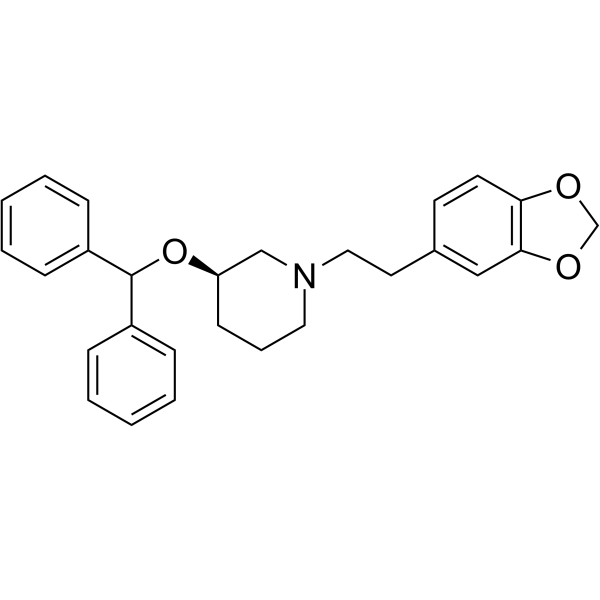 0 ImagesSynonyms: UK-76654Zamifenacin (UK-76654) is a potent gut-selective muscarinic M3 receptor antagonist. Zamifenacin significantly reduces colonic motility in irritable bowel syndrome.




