



Benztropine
Based on 5 publication(s) in Google Scholar
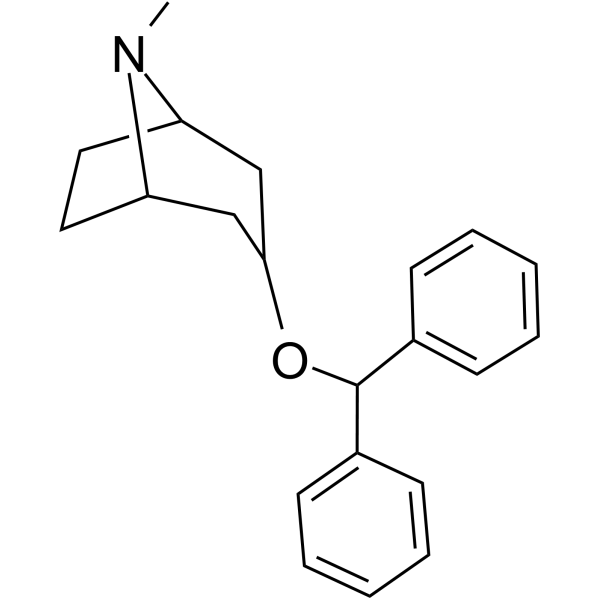
Benztropine (Benzatropine; Benzotropine) is an orally active and BBB-permeable centrally acting anticholinergic agent that can be used for Parkinson's disease research. Benztropine is an anti-histamine agent and a dopamine re-uptake inhibitor. Benztropine is also a human D2 dopamine receptor allosteric antagonist. Benztropine mesylate also has anti-CSCs (cancer stem cells) effects.
For research use only. We do not sell to patients.
- Purity : 98.12%
- CAS No.: 86-13-5
- Formula: C21H25NO
- Molecular Weight:307.43
-
Storage:Pure form -20°C, 3 years , 4°C, 2 years ; In solvent -80°C, 6 months , -20°C, 1 month

To place orders, for customer services and technical support, please contact: MedChemExpress USA
Tel: 609-228-6898 E-mail: [email protected] [email protected]


-
 Biological Activity
-
Chemical Information
-
Solvent & Solubility
- Protocols
- Purity & Documentation
- References
-
 Help & FAQs


Publications Citing Use of MedChemExpress (MCE) Benztropine
More Customer Validation & Images

-
WB
All Dopamine Receptor Isoforms
MoreAll Histamine Receptor Isoforms
More

Biological Activity
Description
IC50 & Target
|
D2 Receptor |
In Vitro
Benztropine (0.1-10 μM; 72 h) inhibits the growth of MDA-MB-231 cells with an IC50 value about 5 μM. In MDA-MB-231 cells and 4T1-luc2 cells, Benztropine reduces the size as well as the number of mammospheres significantly in a dose-dependent manne[1].
Benztropine inhibits functions of cancer stem cells (CSCs) via the acetylcholine receptors, dopamine transporters/receptors, and/or histamine receptors[1].
Benztropine induces the differentiation of oligodendrocytes through M1 and M3 muscarinic receptors and enhanced remyelination[1].
MedChemExpress (MCE) has not independently confirmed the accuracy of these methods. They are for reference only. Further protocols information, click here.
-
Cell Line:MDA-MB-231
-
Concentration:0, 0.1, 0.625, 1.25, 2.5, 5, 10 μM
-
Incubation Time:72 hours
-
Result:Inhibited cells growth of MDA-MB-231 with an IC50 value about 5.0 μM.
-
Cell Line:MDA-MB-231
-
Concentration:0, 1, 2, 5 μM
-
Incubation Time:4-6 days
-
Result:Suppressed mammosphere formation and self-renewal capacities of BCSCs in a dose-dependent manner in vitro.
In Vivo
MedChemExpress (MCE) has not independently confirmed the accuracy of these methods. They are for reference only.
-
Animal Model:Balb/c mice bearing 4T1 breast tumors[1]
-
Dosage:1.5 mg/kg
-
Administration:Injection; 3 weeks
-
Result:Reduced the tumor size and weight significantly without body weight changing.
Clinical Trial
| NCT Number | Sponsor | Condition | Start Date |
Phase

|
|---|---|---|---|---|
| NCT01329991 | Plexxikon| | 2011-05 | PHASE1 |


Chemical Information
-
CAS No. 86-13-5
-
Appearance Oil
-
Molecular Weight 307.43
-
Formula C21H25NO
-
Color Colorless to light yellow
-
SMILES
CN1[C@H]2CC(OC(C3=CC=CC=C3)C4=CC=CC=C4)C[C@@H]1CC2
-
Synonyms
Benzatropine; Benzotropine
-
Shipping
Room temperature in continental US; may vary elsewhere.
-
Storage
Pure form -20°C 3 years 4°C 2 years In solvent -80°C 6 months -20°C 1 month


Publications (5)
-
Journal Impact Factor
-
Most Recent
-
Nature
2024 Aug;632(8025):686-694. PMID: 39112701 -
J Clin Invest
2022 Feb 15;132(4):e150101. PMID: 34964720 -
Front Cell Neurosci
Differential Regulation of Adhesion and Phagocytosis of Resting and Activated Microglia by Dopamine. [Abstract]2018 Sep 11:12:309. PMID: 30254570
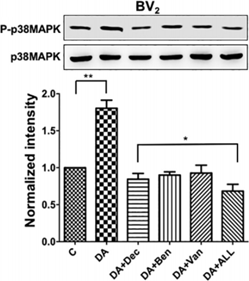
Benztropine purchased from MedChemExpress. Usage Cited in: Front Cell Neurosci. 2018 Sep 11:12:309. [Abstract]
p38MAPK activation by dopamine (DA) can be inhibited by selective DAT blockers (Benztropine and Vanoxerine; 2 μM each) and PMAT blocker (Decynium; 2 μM). Combination of DAT and PMAT blockers further inhibits the activation of p38MAPK.
-
Viruses
Screening and Identification of Lujo Virus Inhibitors Using a Recombinant Reporter Virus Platform. [Abstract]2021 Jun 28;13(7):1255. PMID: 34203149 -
PLoS Negl Trop Dis
Identification of anti-flaviviral drugs with mosquitocidal and anti-Zika virus activity in Aedes aegypti. [Abstract]2019 Aug 20;13(8):e0007681. PMID: 31430351


Solvent & Solubility
In Vitro:
DMSO : 100 mg/mL (325.28 mM; Need ultrasonic; Hygroscopic DMSO has a significant impact on the solubility of product, please use newly opened DMSO)
Please refer to the solubility information to select the appropriate solvent. Once prepared, please aliquot and store the solution to prevent product inactivation from repeated freeze-thaw cycles.
Storage method and period of stock solution: -80°C, 6 months; -20°C, 1 month. When stored at -80°C, please use it within 6 months. When stored at -20°C, please use it within 1 month.
Please refer to the solubility information to select the appropriate solvent. Once prepared, please aliquot and store the solution to prevent product inactivation from repeated freeze-thaw cycles.
Storage method and period of stock solution: -80°C, 6 months; -20°C, 1 month. When stored at -80°C, please use it within 6 months. When stored at -20°C, please use it within 1 month.
Concentration (start) × Volume (start) = Concentration (final) × Volume (final)
In Vivo:
Select the appropriate dissolution method based on your experimental animal and administration route.
- For the following dissolution methods, please ensure to first prepare a clear stock solution using an In Vitro approach and then sequentially add co-solvents:
- To ensure reliable experimental results, the clarified stock solution can be appropriately stored based on storage conditions. As for the working solution for In Vivo experiments, it is recommended to prepare freshly and use it on the same day.
- The percentages shown for the solvents indicate their volumetric ratio in the final prepared solution. If precipitation or phase separation occurs during preparation, heat and/or sonication can be used to aid dissolution.
Add each solvent one by one: 10% DMSO 40% PEG300 5% Tween-80 45% Saline
Solubility: ≥ 2.5 mg/mL (8.13 mM); Clear solution
This protocol yields a clear solution of ≥ 2.5 mg/mL (saturation unknown).
Taking 1 mL working solution as an example, add 100 μL DMSO stock solution (25.0 mg/mL) to 400 μL PEG300, and mix evenly; then add 50 μL Tween-80 and mix evenly; then add 450 μL Saline to adjust the volume to 1 mL.
Preparation of Saline: Dissolve 0.9 g sodium chloride in ddH₂O and dilute to 100 mL to obtain a clear Saline solution.
Add each solvent one by one: 10% DMSO 90% (20% SBE-β-CD in Saline)
Solubility: ≥ 2.5 mg/mL (8.13 mM); Clear solution
This protocol yields a clear solution of ≥ 2.5 mg/mL (saturation unknown).
Taking 1 mL working solution as an example, add 100 μL DMSO stock solution (25.0 mg/mL) to 900 μL 20% SBE-β-CD in Saline, and mix evenly.
Preparation of 20% SBE-β-CD in Saline (4°C, storage for one week): 2 g SBE-β-CD powder is dissolved in 10 mL Saline, completely dissolve until clear.
In Vivo Dissolution Calculator
Please enter the basic information of animal experiments:
-
-
-
-
Recommended: Prepare an additional quantity of animals to account for potential losses during experiments.
Please enter your animal formula composition:
-
%DMSO +
Recommended: Keep the proportion of DMSO in working solution below 2% if your animal is weak.
-
%+
-
+%Tween-80 + +
-
%Saline +
The co-solvents required include: DMSO, . All of co-solvents are available by MedChemExpress (MCE). , Tween 80. All of co-solvents are available by MedChemExpress (MCE).
Working solution concentration: 0.22 mg/mL
Method for preparing stock solution: mg drug dissolved in μL DMSO. Stock solution concentration: mg/mL.
1. Take μL DMSO stock solution;
2. Add μL .
μL , mix evenly;
3. Then add μL Tween 80, mix evenly;
4. Then add μL
Please ensure that the stock solution in the first step is dissolved to a clear state, and add co-solvents in sequence. You can use ultrasonic heating (ultrasonic cleaner, recommended frequency 20-40 kHz), vortexing, etc. to assist dissolution.

Protocols
-
Human pluripotent stem cell midbrain dopaminergic neuron differentiation
Human pluripotent stem cells are directed toward midbrain dopaminergic neurons by first inducing a neural floor-plate-like progenitor state, then patterning cells with ventralizing SHH signaling and midbrain/WNT-FGF cues, and finally maturing progenitors into neurons expressing dopaminergic markers such as TH, NURR1/NR4A2, PITX3, DAT/SLC6A3, VMAT2/SLC18A2, GIRK2/KCNJ6, FOXA2, LMX1A, and EN1. The main readouts are loss of pluripotency, acquisition of FOXA2+/LMX1A+ midbrain floor-plate progenitors, emergence of βIII-tubulin+/MAP2+ neurons, and production of TH+ dopaminergic neurons with molecular, dopamine-release, and electrophysiological features of midbrain dopaminergic identity.


Purity & Documentation
-
Data Sheet (282 KB)
-
SDS (251 KB)
- English - EN (251 KB)
- Français - FR (251 KB)
- Deutsch - DE (251 KB)
- Norwegian - NO (251 KB)
- Español - ES (251 KB)
- Swedish - SV (251 KB)
- Italian - IT (251 KB)
- Korean - KR (251 KB)
- Portuguese - PT (251 KB)
-
Handling Instructions (2659 KB)
References
[1]. Jihong Cui, et al. New use of an old drug: inhibition of breast cancer stem cells by benztropine mesylate. Oncotarget. 2017 Jan 3;8(1):1007-1022. [Content Brief]
[2]. Santosh S Kulkarni, et al. Comparative structure-activity relationships of benztropine analogues at the dopamine transporter and histamine H(1) receptors. Bioorg Med Chem. 2006 Jun 1;14(11):3625-34. [Content Brief]


Complete Stock Solution Preparation Table
Please refer to the solubility information to select the appropriate solvent. Once prepared, please aliquot and store the solution to prevent product inactivation from repeated freeze-thaw cycles.
Storage method and period of stock solution: -80°C, 6 months; -20°C, 1 month. When stored at -80°C, please use it within 6 months. When stored at -20°C, please use it within 1 month.
| Optional Solvent | Concentration Solvent Mass | 1 mg | 5 mg | 10 mg | 25 mg |
|---|---|---|---|---|---|
| DMSO | 1 mM | 3.2528 mL | 16.2639 mL | 32.5277 mL | 81.3193 mL |
| 5 mM | 0.6506 mL | 3.2528 mL | 6.5055 mL | 16.2639 mL | |
| 10 mM | 0.3253 mL | 1.6264 mL | 3.2528 mL | 8.1319 mL | |
| 15 mM | 0.2169 mL | 1.0843 mL | 2.1685 mL | 5.4213 mL | |
| 20 mM | 0.1626 mL | 0.8132 mL | 1.6264 mL | 4.0660 mL | |
| 25 mM | 0.1301 mL | 0.6506 mL | 1.3011 mL | 3.2528 mL | |
| 30 mM | 0.1084 mL | 0.5421 mL | 1.0843 mL | 2.7106 mL | |
| 40 mM | 0.0813 mL | 0.4066 mL | 0.8132 mL | 2.0330 mL | |
| 50 mM | 0.0651 mL | 0.3253 mL | 0.6506 mL | 1.6264 mL | |
| 60 mM | 0.0542 mL | 0.2711 mL | 0.5421 mL | 1.3553 mL | |
| 80 mM | 0.0407 mL | 0.2033 mL | 0.4066 mL | 1.0165 mL | |
| 100 mM | 0.0325 mL | 0.1626 mL | 0.3253 mL | 0.8132 mL |


Benztropine Related Classifications
HY-B0520 Related Classifications
 Powered by Bioz