



Chronic Myelogenous Leukemia
-
Chronic Myelogenous Leukemia (38)

- 1
- 2
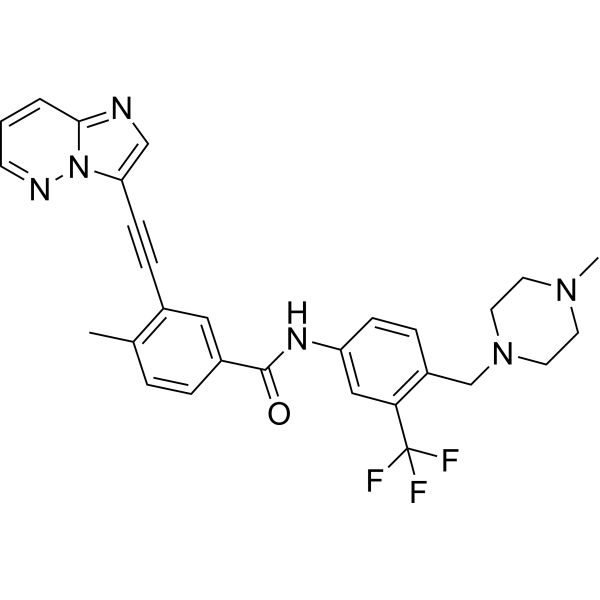
- Formula: C29H27F3N6O
- Molecular Weight: 532.56
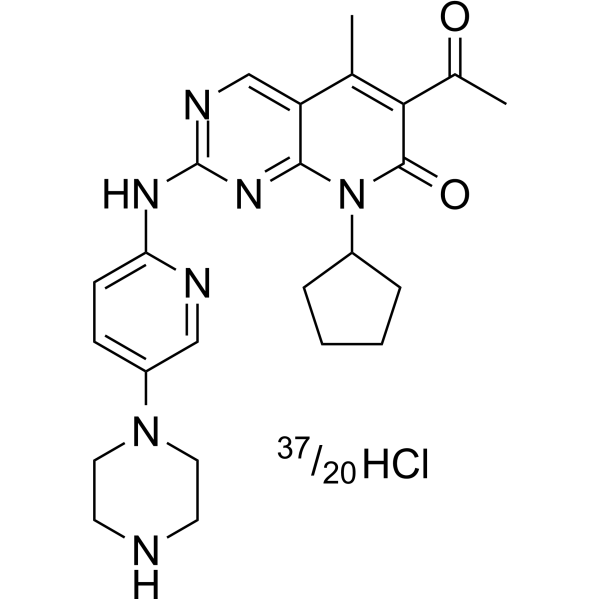
- Formula: C24H30ClN7O2
- Molecular Weight: 514.99
Palbociclib (PD 0332991) hydrochloride is an orally active selective CDK4 and CDK6 inhibitor with IC50 values of 11 and 16 nM, respectively. Palbociclib hydrochloride has potent anti-proliferative activity and induces cell cycle arrest in cancer cells. Palbociclib hydrochloride can be used in the research of HR-positive and HER2-negative breast cancer and hepatocellular carcinoma.
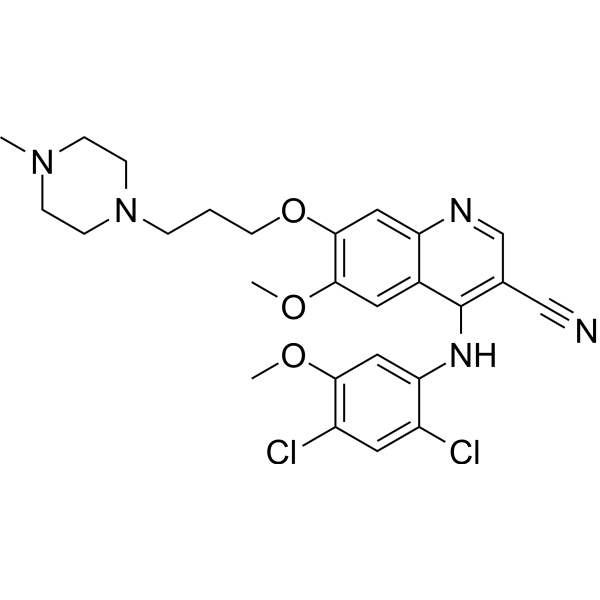
- Formula: C26H29Cl2N5O3
- Molecular Weight: 530.45
Bosutinib is an orally active Src/Abl tyrosine kinase inhibitor with IC50 of 1.2 nM and 1 nM, respectively.
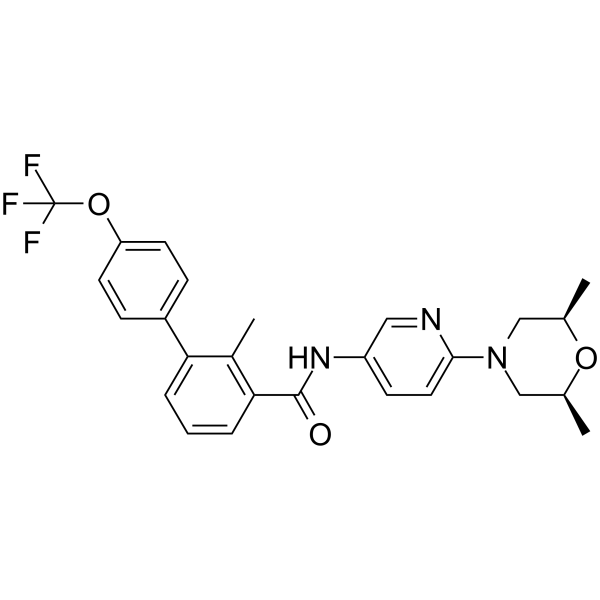
- Formula: C26H26F3N3O3
- Molecular Weight: 485.50
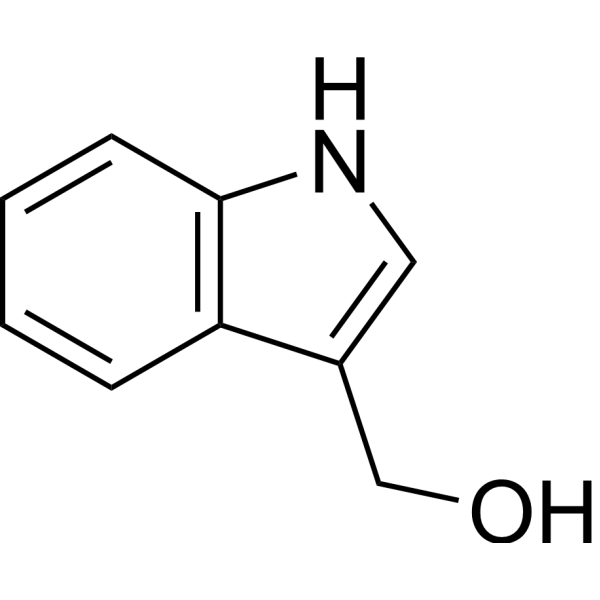
- Formula: C9H9NO
- Molecular Weight: 147.18
Indole-3-carbinol (I3C) inhibits NF-κB activity and also is an Aryl hydrocarbon receptor (AhR) agonist, and an inhibitor of WWP1 (WW domain-containing ubiquitin E3 ligase 1).
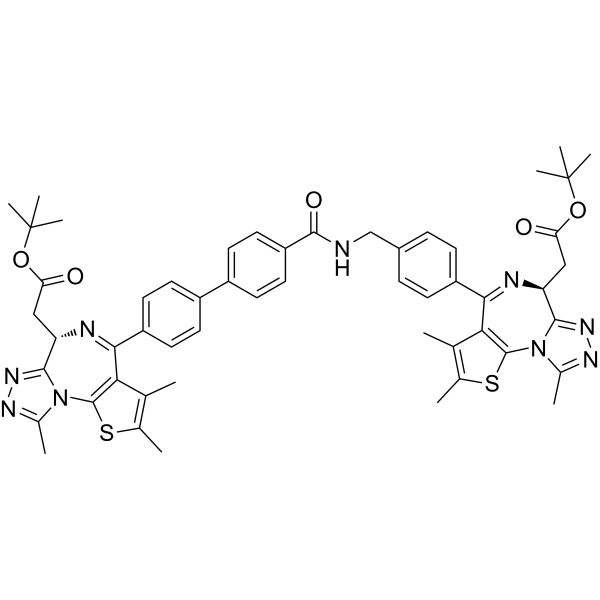
- Formula: C54H57N9O5S2
- Molecular Weight: 976.22
IBG3 is a bivalent molecular glue degrader targeting BRD2 and BRD4, with DC50 values of 8.6 pM and 6.7 pM, respectively. IBG3 exhibits selectivity for BRD2 and BRD4 over BRD3. By recruiting the DCAF16 E3 ligase and binding in cis to the tandem bromodomains of BRD2 and BRD4, IBG3 enhances BRD-DCAF16 binding affinity and promotes ubiquitination and proteasomal degradation, without degrading isolated bromodomains. Although IBG3 lacks degradation selectivity between PSMA-positive and PSMA-negative prostate cancer cells and demonstrates lower in vivo antitumor potency compared to the PSMA-targeting conjugate IBG-P3, it serves as a useful tool for prostate cancer research.
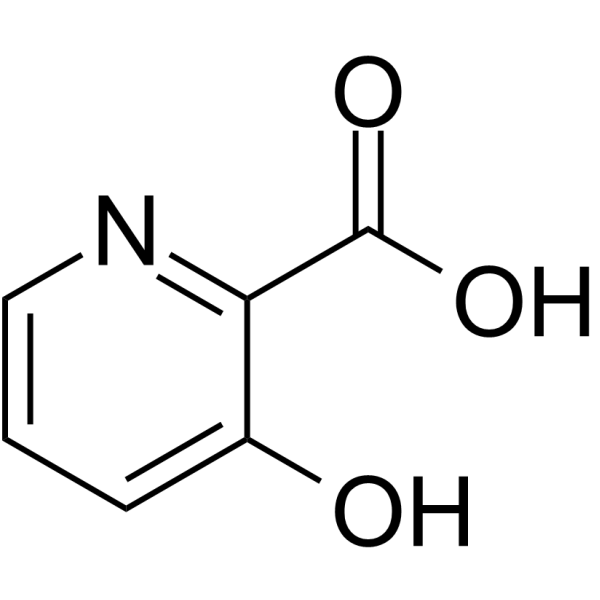
- Formula: C6H5NO3
- Molecular Weight: 139.11
3-Hydroxypicolinic acid is a heterocyclic carboxylic acid ligand and cytotoxin, with a MIC90 of >25 μg/mL against Mycobacterium tuberculosis H37Rv. 3-Hydroxypicolinic acid inhibits the growth of cancer cells and normal fibroblasts. 3-Hydroxypicolinic acid is applicable to research related to chronic myeloid leukemia, human lung adenocarcinoma, and tuberculosis.
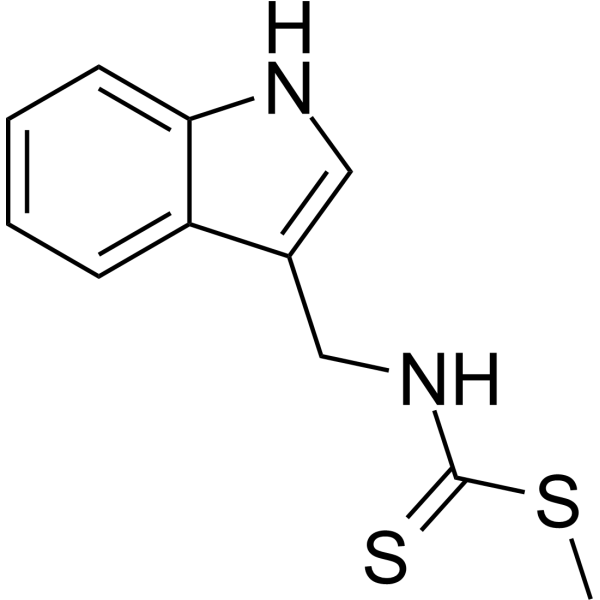
- Formula: C11H12N2S2
- Molecular Weight: 236.37
Brassinin is an indole derivative found in cruciferous plants. Brassinin acts as an IDO inhibitor (Ki = 97.7 μM). Brassinin inhibits angiogenesis and induces apoptosis, autophagy, paraptosis, ROS production, and ER stress. Brassinin selectively stimulates lysosomal degradation of Tie2 and promotes lysosomal and proteasomal degradation of FGFR1 in endothelial cells, downregulating AKT and ERK phosphorylation. Brassinin inhibits endothelial cell proliferation, migration, tube formation, spheroid sprouting, and angiogenesis. Brassinin inhibits PI3K/Akt/mTOR/S6K1 signaling, upregulates p21 and p27, and induces G1 phase cell cycle arrest through RB hypophosphorylation. Brassinin inhibits tyrosinase catalytic activity, reduces tyrosinase mRNA, and inhibits MITF nuclear translocation. Brassinin is used for research on triple-negative breast cancer, chronic myeloid leukemia, colon cancer, glioma, atherosclerosis, and skin cancer.
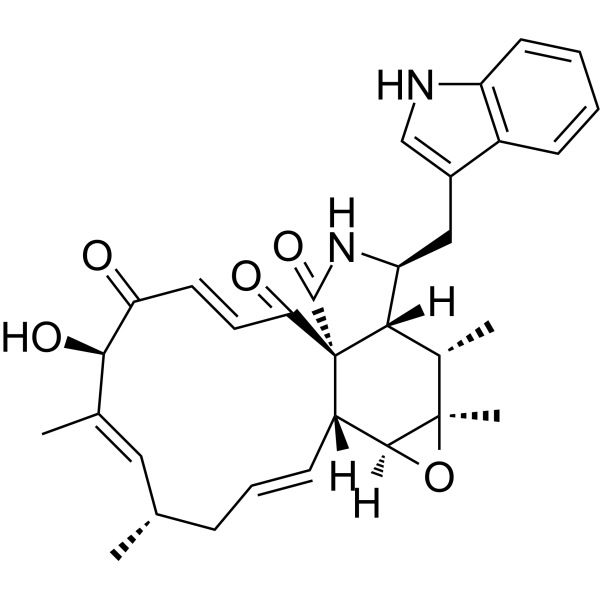
- Formula: C32H36N2O5
- Molecular Weight: 528.64
Chaetoglobosin A is a secondary metabolite and nematicide. Chaetoglobosin A is produced by Penicillium aquamarinium. Chaetoglobosin A targets Filamentous actin in cells, thereby inducing cell cycle arrest, and inhibiting membrane ruffle formation and cell migration. Chaetoglobosin A preferentially induces Apoptosis in chronic lymphocytic leukemia cells. Chaetoglobosin A induces dose- and time-dependent death in J2 larvae of the southern root-knot nematode (Meloidogyne incognita). Chaetoglobosin A can be used in studies related to root-knot nematode disease and chronic lymphocytic leukemia.
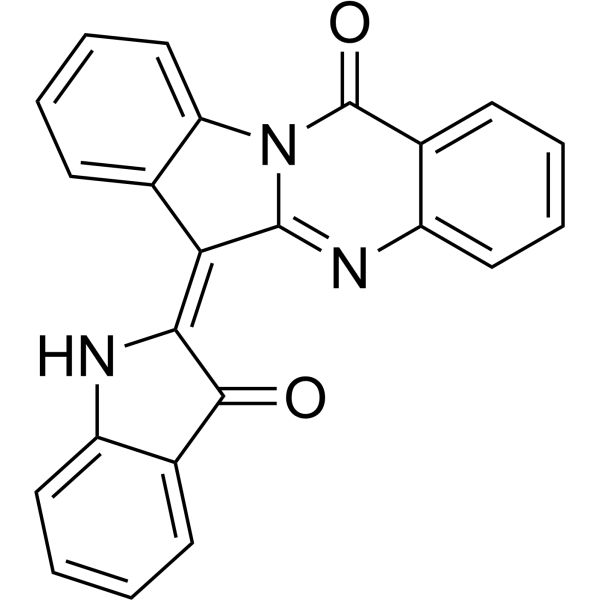
- Formula: C23H13N3O2
- Molecular Weight: 363.37
Qingdainone is a quinazoline alkaloid and also a TMPRSS2 inhibitor. Qingdainone can be isolated from Strobilanthes cusia. Qingdainone exhibits anti-tumor and anti-inflammatory activities. Qingdainone can be used in studies related to chronic myeloid leukemia.

- Formula: C16H10N2O2
- Molecular Weight: 262.26
(Z)-Indirubin (Standard) is the analytical standard of (Z)-Indirubin (HY-N0117A). (Z)-Indirubin is an isomer of Indirubin (HY-N0117). Indirubin is a bisindole alkaloid with significant anticancer activity against chronic myeloid leukemia.
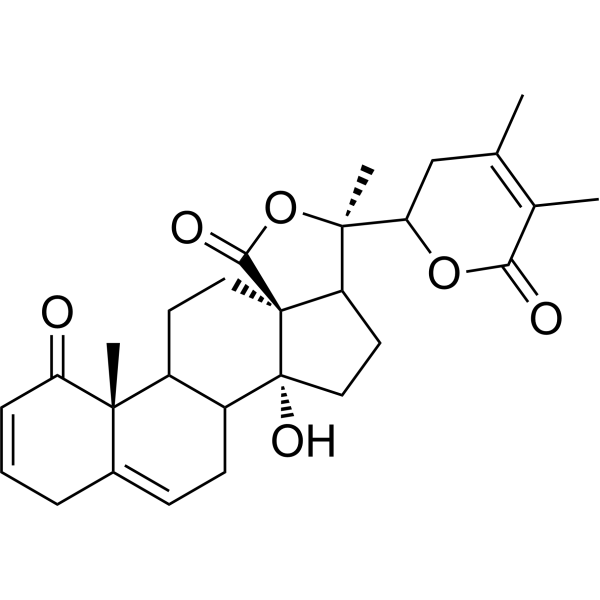
- Formula: C28H34O6
- Molecular Weight: 466.57
Withaphysalin A is a withanolide compound with anti-inflammatory and antioxidant activities. Withaphysalin A inhibits LPS (HY-D1056)-induced nuclear translocation of NF-κB p65, as well as phosphorylation of STAT3, ERK, JNK and p38 MAPK. Withaphysalin A upregulates the expression of HO-1. Withaphysalin A inhibits LPS-induced production of NO, PGE2, IL-1β, IL-6 and TNF-α. Withaphysalin A downregulates LPS-induced expression of iNOS and COX-2. Withaphysalin A interacts with B-cell activating factor protein (BAFF) to exert inhibitory effects. Withaphysalin A exhibits ELOVL6 inhibitory activity. Withaphysalin A can be used in the research of inflammatory diseases, nephrotic syndrome and chronic myeloid leukemia.

- Formula: C36H42N4O15
- Molecular Weight: 770.74
Cytarabine-daunorubicin (CPX 351) is a Liposomal formulation prepared from Cytarabine (HY-13605) and Daunorubicin (HY-13062A) at a fixed synergistic molar ratio of 5:1. Cytarabine-daunorubicin improves secondary acute myeloid leukemia. Cytarabine-daunorubicin can be used in research related to secondary acute myeloid leukemia, high-risk myelodysplastic syndrome, and chronic myelomonocytic leukemia.

- Formula: C21H22N6O
- Molecular Weight: 374.45
SGX393 (SGX70393) is a Bcr-Abl kinase inhibitor. SGX393 binds to the active conformation of the kinase domains of both wild-type and T315I mutant Bcr-Abl, thereby inhibiting kinase activity. SGX393 exhibits antiproliferative effects in cells expressing wild-type or T315I mutant Bcr-Abl, and suppresses T315I-driven tumor growth. SGX393 can be used for the research of chronic myeloid leukemia.
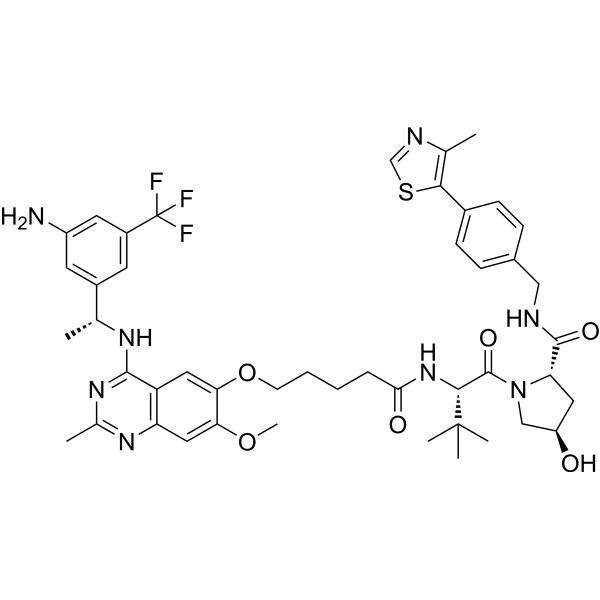
- Formula: C46H55F3N8O6S
- Molecular Weight: 905.04
PROTAC SOS1 degrader-6 is a selective SOS1 PROTAC degrader with a DC50 of 43-130 nM. PROTAC SOS1 degrader-6 induces ubiquitination and degradation of SOS1 via the ubiquitin-proteasome system by recruiting the E3 ligase VHL. PROTAC SOS1 degrader-6 reduces the levels of phosphorylated MEK and ERK. PROTAC SOS1 degrader-6 exerts antiproliferative effects in KRAS-driven cancer cells. PROTAC SOS1 degrader-6 can be used in research related to KRASG12C-mutant cancers and chronic myeloid leukemia.

- Formula: C33H36F3N7O6
- Molecular Weight: 683.68
BCR-ABL degrader 1 is a hydrophobic tag degrader with GNF‑2 (HY-11007) as the ligand and Boc2His (HY-185595) as the hydrophobic tag. BCR-ABL degrader 1 mediates the degradation of BCR‑ABL with a DC50 of 19.9 μM. BCR-ABL degrader 1 induces the degradation of BCR-ABL fusion protein via the ubiquitin-proteasome pathway, a process involving Hsp70 and Hsp90. BCR-ABL degrader 1 downregulates p‑STAT5 and p‑SHP2, the downstream signaling molecules of BCR‑ABL. BCR-ABL degrader 1 can be used in the research of chronic myeloid leukemia.

- Formula: C18H19ClN2O11S
- Molecular Weight: 506.87
Furosemide AG (Furosemide acyl-β-D-glucuronide) is an acyl-β-D-glucuronide metabolite of Furosemide (HY-B0135). Furosemide AG can be used in the research of neutropenia and thrombocytopenia.

- Formula: C20H14D4ClF2N5O3
- Molecular Weight: 453.86

- Formula: C10H7NNa2O7S2
- Molecular Weight: 363.27
ANDS (1-Amino-8-naphthol-2,4-disulfonic acid) is an orally active inhibitor of CaMKP (IC50 = 6.4 μM; Ki = 3.6 μM) and CaMKP‑N (IC50 = 6.6 μM). ANDS binds unacetylated p53 and restores p53 activity by disrupting ANP32B-p53 interaction. ANDS inhibits chronic myeloid leukemia (CML) cell proliferation, impairs leukemic stem cells (LSC) function and prolongs survival in CML mouse model while sparing normal progenitor cells. ANDS can be used to study the eradication of LSCs and the overcoming of tyrosine kinase inhibitor (TKI) resistance in CML. ANDS can be used to study breast cancer.

- Formula: C35H43Cl3N9O2P
- Molecular Weight: 759.11
EGFR-IN-213 is a selective inhibitor of EGFRL858R/T790M/C797S with a human IC50 of 0.48 nM. EGFR-IN-213 acts as an antiproliferative agent, inducing apoptosis and cell cycle arrest, and inhibiting colony formation, cell migration, and tube formation. EGFR-IN-213 can be used for the research of non-small cell lung cancer, chronic myeloid leukemia, gastric cancer, prostate cancer.
- 1
- 2



