Search Result
Results for "
n-4-6-dichloro-1-3-benzothiazol-2-yl-n-methylglycine
" in MedChemExpress (MCE) Product Catalog:
-
- HY-101037
-
|
N-methylglycine; Sarcosin
|
Endogenous Metabolite
GlyT
|
Cancer
|
|
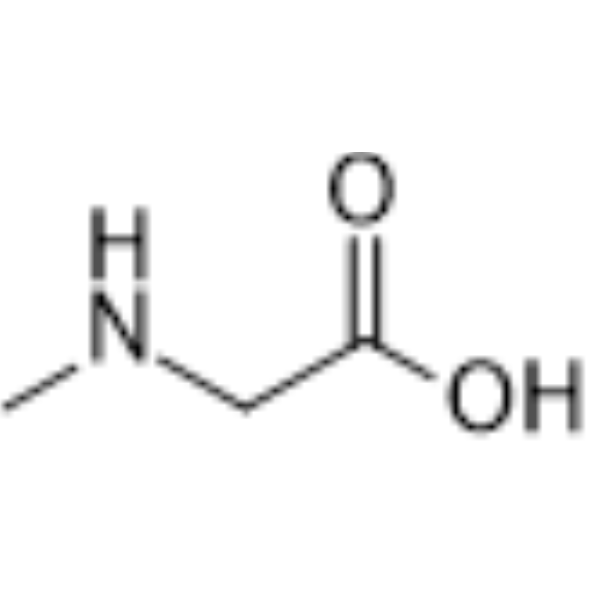
Sarcosine (N-Methylglycine), an endogenous amino acid, is a competitive glycine transporter type I (GlyT1) inhibitor and N-methyl-D-aspartate (NMDA) receptor co-agonist. Sarcosine increases the glycine concentration, resulting in an indirect potentiation of the NMDA receptor. Sarcosine is commonly used for the research of schizophrenia .
|
-
-
- HY-21623
-
|
|
Biochemical Assay Reagents
|
Others
|
|
Dichloro[1,1'-bis(diphenylphosphino)ferrocene]palladium(II) dichloromethane adduct is a common dichloromethane solvate of the palladium catalyst Pd(dppf)Cl2, a phosphine ligand palladium(II) complex, which can be used as a versatile precatalyst for various cross-coupling reactions. Dichloro[1,1'-bis(diphenylphosphino)ferrocene]palladium(II) dichloromethane adduct can stabilize reaction intermediates and lower the reaction activation energy in coupling reactions, and can be used in Suzuki-Miyaura coupling reaction studies .
|
-
![Dichloro[1,1'-bis(diphenylphosphino)ferrocene]palladium(II) dichloromethane adduct](//file.medchemexpress.com/product_pic/hy-21623.gif)
-
- HY-W001992
-
|
3-Nitro-2,6-dichloropyridine
|
Biochemical Assay Reagents
|
Neurological Disease
|
|
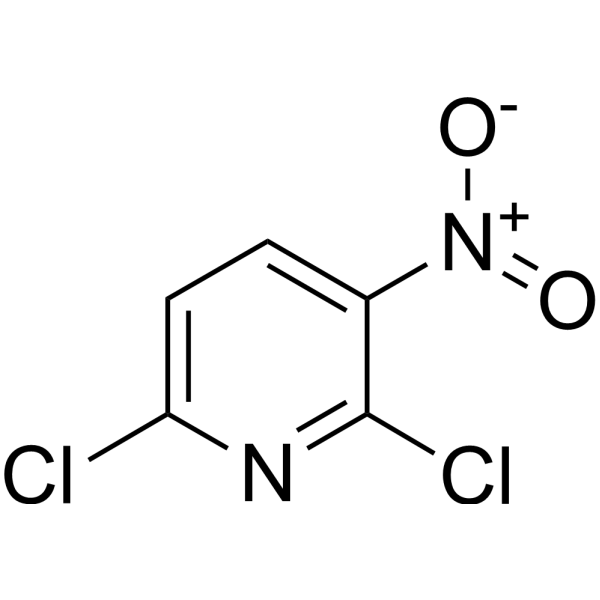
2,6-Dichloro-3-nitropyridine is a starting compound for the synthesis of a sulfide analog of Flupirtine (HY-17001A) with KV7.2/3 channel opening activity. 2,6-Dichloro-3-nitropyridine can be used in pain research .
|
-
-
- HY-W042016
-
-
-
- HY-101037S1
-
|
N-methylglycine-d3; Sarcosin-d3
|
Isotope-Labeled Compounds
Endogenous Metabolite
GlyT
|
Cancer
|
|
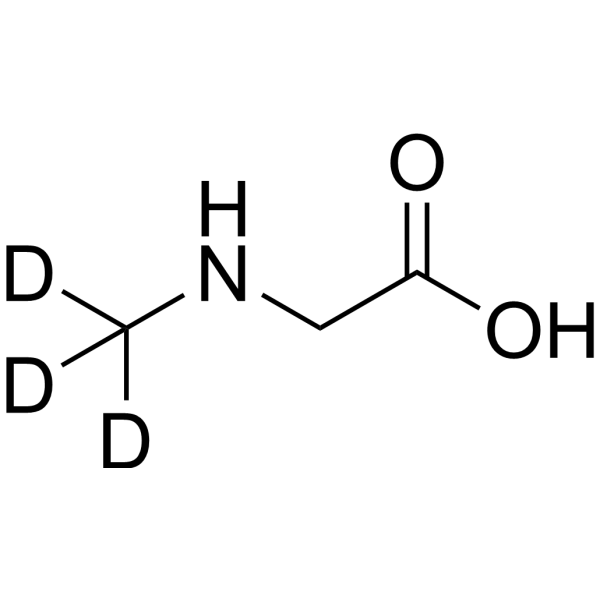
Sarcosine-d3 is the deuterium labeled Sarcosine. Sarcosine (N-Methylglycine), an endogenous amino acid, is a competitive glycine transporter type I (GlyT1) inhibitor and N-methyl-D-aspartate (NMDA) receptor co-agonist. Sarcosine increases the glycine concentration, resulting in an indirect potentiation of the NMDA receptor. Sarcosine is commonly used for the research of schizophrenia .
|
-
-
- HY-40350
-
|
|
Biochemical Assay Reagents
|
Others
|
|
2,4-Dichloro-7H-pyrrolo[2,3-d]pyrimidine is a biochemical reagent that can be used as a biological material or organic compound for life science related research.
|
-
![2,4-Dichloro-7H-pyrrolo[2,3-d]pyrimidine](//file.medchemexpress.com/product_pic/hy-40350.gif)
-
- HY-W017930
-
|
5,7-dichloro-[1,3]thiazolo[5,4-d]pyriMidine
|
Drug Intermediate
|
Others
|
|
5,7-Dichlorothiazolo[5,4-d]pyrimidine (5,7-dichloro-[1,3]thiazolo[5,4-d]pyriMidine) is a building block in the chemical synthesis.
|
-
![5,7-Dichlorothiazolo[5,4-d]pyrimidine](//file.medchemexpress.com/product_pic/hy-w017930.gif)
-
- HY-Y1109
-
|
Tetrachlorobis(mu-4-cymene)diruthenium(II)
|
Biochemical Assay Reagents
|
Cancer
|
|
Dichloro(p-cymene)ruthenium(II) dimer (Tetrachlorobis(mu-4-cymene)diruthenium(II)) is a ruthenium-based organometallic catalyst precursor, which is widely applied in the field of organic synthesis .
|
-

-
- HY-101037R
-
|
N-methylglycine (Standard); Sarcosin (Standard)
|
Reference Standards
Endogenous Metabolite
GlyT
|
Cancer
|
|
Sarcosine (Standard) is the analytical standard of Sarcosine. This product is intended for research and analytical applications. Sarcosine (N-Methylglycine), an endogenous amino acid, is a competitive glycine transporter type I (GlyT1) inhibitor and N-methyl-D-aspartate (NMDA) receptor co-agonist. Sarcosine increases the glycine concentration, resulting in an indirect potentiation of the NMDA receptor. Sarcosine is commonly used for the research of schizophrenia .
|
-

-
- HY-41945
-
|
|
Biochemical Assay Reagents
|
Others
|
|
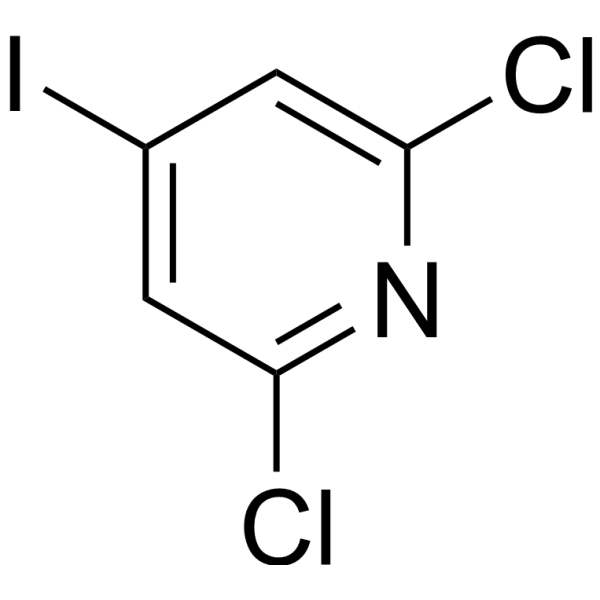
2,6-Dichloro-4-iodopyridine is a biochemical reagent that can be used as a biological material or organic compound for life science related research.
|
-
-
- HY-34054
-
|
|
Drug Intermediate
|
Others
|
|
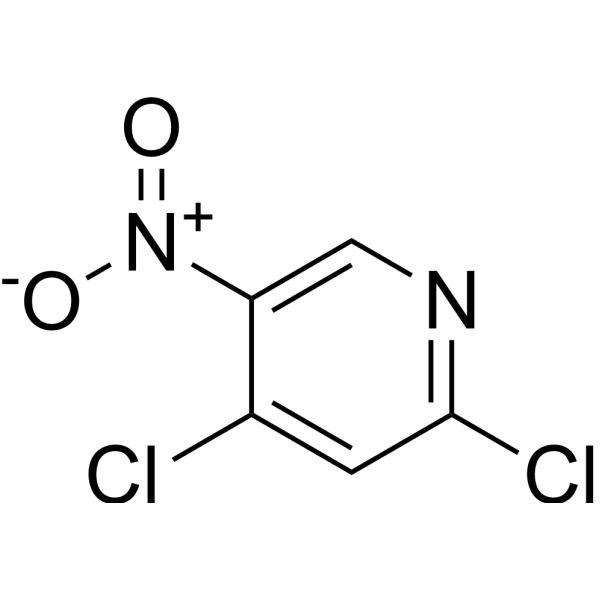
2,4-Dichloro-5-nitropyridine is a pyridine derivative, which can be used as a precursor to synthesize polyfluorinated pyrrolidine derivatives [3][4].
|
-
-
- HY-W003041
-
|
2,6-dichloropyridine-3-carbonitrile
|
Biochemical Assay Reagents
|
Others
|
|
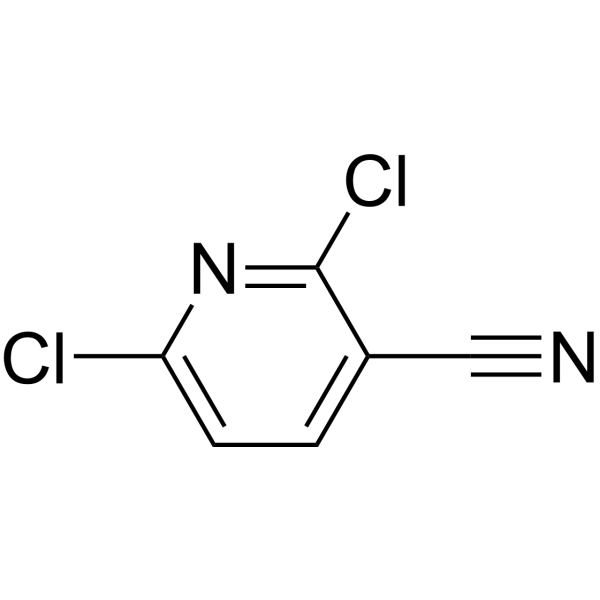
2,6-Dichloro-3-cyanopyridine is a biochemical reagent that can be used as a biological material or organic compound for life science related research.
|
-
-
- HY-W002136
-
|
|
Biochemical Assay Reagents
|
Others
|
|
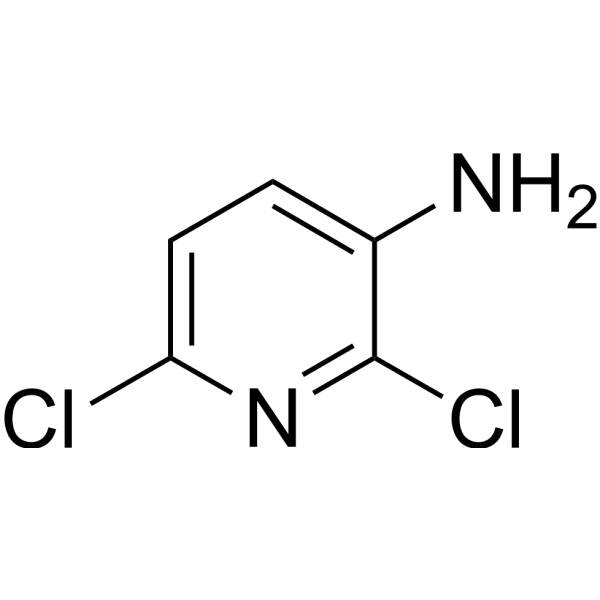
2,6-Dichloro-3-pyridinamine is a biochemical reagent that can be used as a biological material or organic compound for life science related research.
|
-
-
- HY-I0093
-
|
|
Drug Intermediate
|
Others
|
|
4,6-Dichloro-2-(propylthio)pyrimidin-5-amine is a drug intermediate for synthesis of various active compounds.
|
-

-
- HY-101037S
-
|
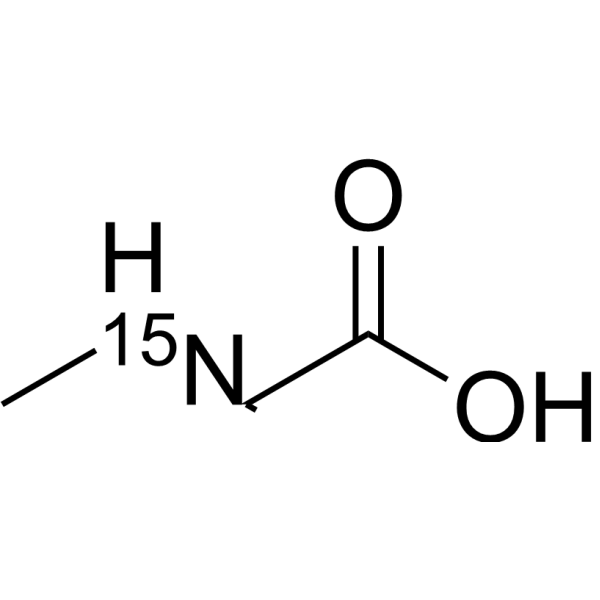
N-methylglycine-15N; Sarcosin-15N
|
Endogenous Metabolite
GlyT
|
Cancer
|
|
Sarcosine- 15N is the 15N-labeled Sarcosine. Sarcosine (N-Methylglycine), an endogenous amino acid, is a competitive glycine transporter type I (GlyT1) inhibitor and N-methyl-D-aspartate (NMDA) receptor co-agonist. Sarcosine increases the glycine concentration, resulting in an indirect potentiation of the NMDA receptor. Sarcosine is commonly used for the research of schizophrenia .
|
-
-
- HY-75473
-
|
|
Drug Intermediate
|
Others
|
|
(R)-tert-Butyl 4-(4-(6-amino-5-(1-(2,6-dichloro-3-fluorophenyl)ethoxy)pyridin-3-yl)-1H-pyrazol-1-yl)piperidine-1-carboxylate is a drug intermediate for synthesis of various active compounds.
|
-

-
- HY-41832
-
|
|
Biochemical Assay Reagents
Drug Intermediate
|
Cancer
|
|
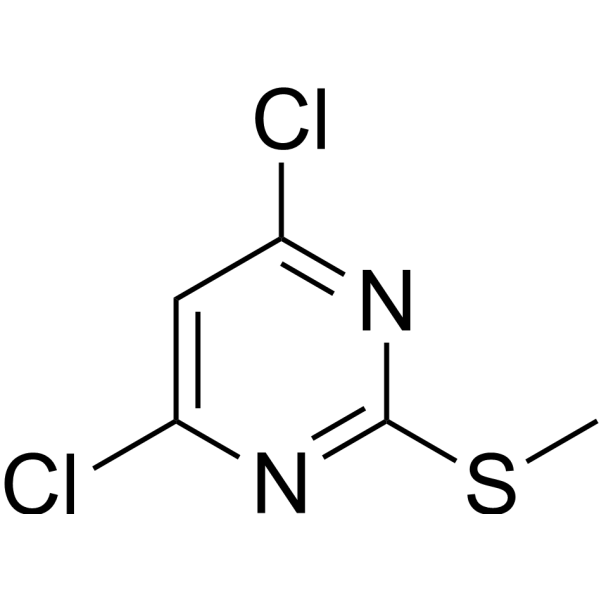
4,6-Dichloro-2-(methylthio)pyrimidine is an intermediate. 4,6-Dichloro-2-(methylthio)pyrimidine can be used to synthesize Kras modulators. 4,6-Dichloro-2-(methylthio)pyrimidine can be used in cancer research .
|
-
-
- HY-W087048S
-
-
-
- HY-W009597S
-
-
-
- HY-132710S
-
-
-
- HY-W008199
-
|
|
Biochemical Assay Reagents
|
Others
|
|
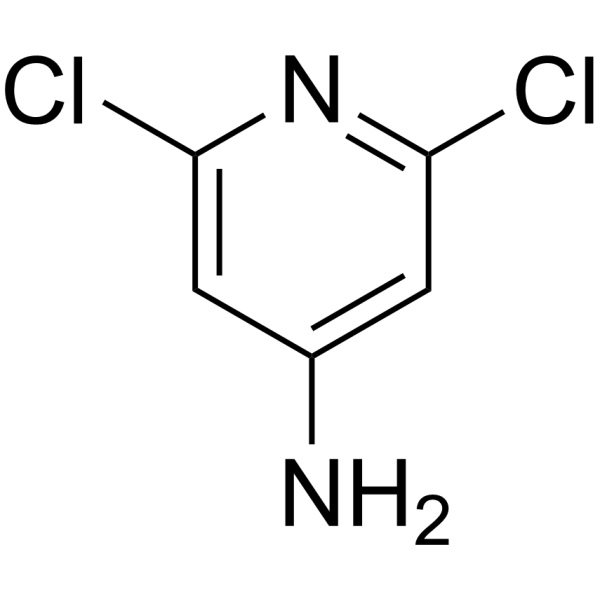
2,6-Dichloro-4-pyridinamine is a biochemical reagent that can be used as a biological material or organic compound for life science related research.
|
-
-
- HY-42318
-
|
|
Drug Intermediate
|
Others
|
|
(S)-4-(3-Bromophenyl)-6,8-dichloro-2-methyl-1,2,3,4-tetrahydroisoquinoline is a drug intermediate for synthesis of various active compounds.
|
-

-
- HY-W550484
-
|
|
Nucleoside Antimetabolite/Analog
|
Cancer
|
|
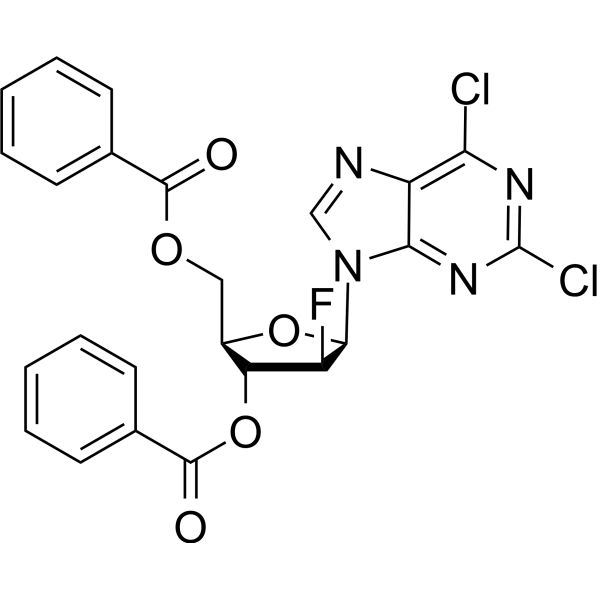
2,6-Dichloro-9-(3,5-di-O-benzoyl-2-deoxy-2-fluoro-D-arabinofuranosyl)-9H-purine arabinoriboside is a purine nucleoside analog. Purine nucleoside analogs have broad antitumor activity targeting indolent lymphoid malignancies. Anticancer mechanisms in this process rely on inhibition of DNA synthesis, induction of apoptosis, etc .
|
-
-
- HY-W004583
-
|
2,9-dichloro-1,10-phenthroline
|
MOFs
|
Others
|
|
2,9-Dichloro-1,10-phenanthroline (2,9-Dichloro-1,10-phenthroline) is a metal-organic framework (MOF).
|
-

-
- HY-W011581
-
|
|
Drug Intermediate
|
Infection
Cancer
|
|
6,9-Dichloro-2-methoxyacridine is an aromatic heterocyclic compound. 6,9-Dichloro-2-methoxyacridine is a precursor of ACS03, which exhibits antileishmanial and antitumor activities .
|
-

-
- HY-W016149
-
|
dichloro-1,2-dithiacyclopentenone
|
Environmental Pollutants
Bacterial
|
Infection
|
|
4,5-Dichloro-3H-1,2-dithiol-3-one (Dichloro-1,2-dithiacyclopentenone) is an E. coli FabH inhibitor (IC50: 2.9 µM). 4,5-Dichloro-3H-1,2-dithiol-3-one can be used as a slimicide in the manufacture of food-contact paper and paperboard .
|
-

-
- HY-W015427S
-
-
-
- HY-W414604
-
|
|
Biochemical Assay Reagents
|
Cancer
|
|
Dichloro(1,2-diaminocyclohexane)platinum(II) is a platinum (II) analog and the oxaliplatin parent complex. Dichloro(1,2-diaminocyclohexane)platinum(II) is a potent chemotherapeutic with a wide spectrum of anticancer activity, low toxicity, and lack of cross resistance in many cisplatin-resistant cancers .
|
-

-
- HY-W002688
-
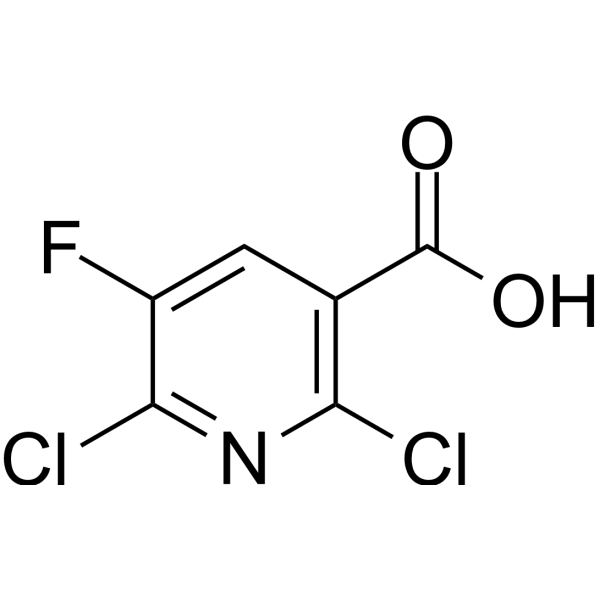
|
|
Biochemical Assay Reagents
|
Others
|
|
2,6-Dichloro-5-fluoropyridine-3-carboxylic acid is a biochemical reagent that can be used as a biological material or organic compound for life science related research. 2,6-Dichloro-5-fluoropyridine-3-carboxylic acid can be used in the synthesis of TAK-659 (HY-100867) .
|
-
-
- HY-D1042
-
|
|
Fluorescent Dye
|
Others
|
|
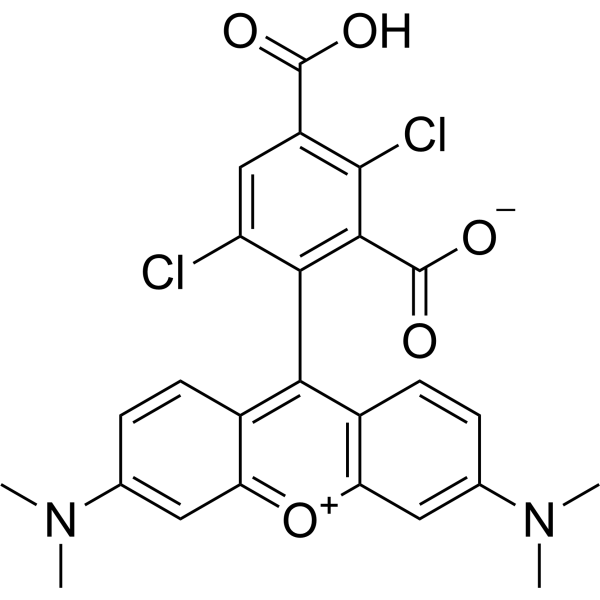
1,4-Dichloro 5-carboxytetramethylrhodamine is a fluorescence labeling agent (Ex=541 nm, Em=568 nm).
|
-
-
- HY-42593
-
|
|
Drug Intermediate
|
Others
|
|
(E)-4,6-dichloro-2-styrylpyrimidine is a drug intermediate for synthesis of various active compounds.
|
-

-
- HY-W015388
-
|
|
Biochemical Assay Reagents
|
Others
|
|
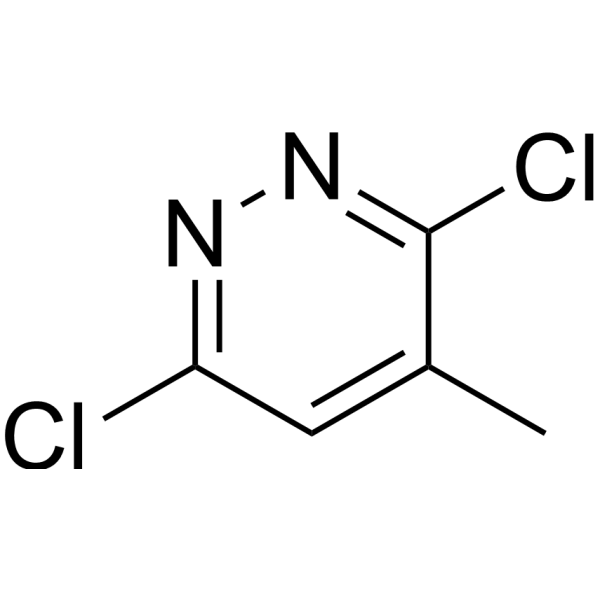
3,6-Dichloro-4-methylpyridazine is a biochemical reagent that can be used as a biological material or organic compound for life science related research.
|
-
-
- HY-W585831
-
|
BDCPP
|
Biochemical Assay Reagents
|
Others
|
|
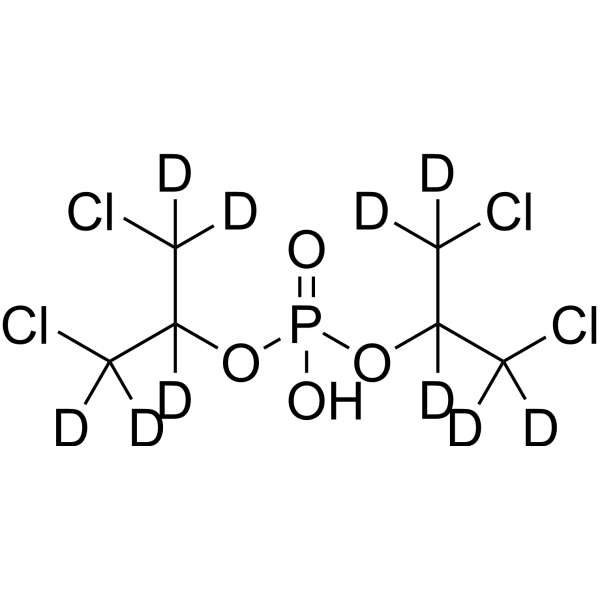
Bis(1,3-dichloro-2-propyl) phosphate (BDCPP) is a metabolite of the flame retardant TDCPP (HY-108712) and has endocrine disrupting properties. Bis(1,3-dichloro-2-propyl) phosphate can be used in environmental monitoring, toxicology, and exposure assessment studies .
|
-

-
- HY-W154117
-
|
|
Drug Metabolite
|
Others
|
|
2,2-Dichloro-1,1-ethanediol is a metabolite of the insecticides Dichlorvos (HY-B1312) and Trichlorphon, is mutagenic in the Salmonella/microsome test.
|
-

-
- HY-W748519
-
|
N-methylglycine-13C3; Sarcosin-13C3
|
Isotope-Labeled Compounds
GlyT
Endogenous Metabolite
|
Cancer
|
|
Sarcosine- 13C3 (N-Methylglycine- 13C3; Sarcosin- 13C3) is the 13C-labeled Sarcosine (HY-101037). Sarcosine (N-Methylglycine), an endogenous amino acid, is a competitive glycine transporter type I (GlyT1) inhibitor and N-methyl-D-aspartate (NMDA) receptor co-agonist. Sarcosine increases the glycine concentration, resulting in an indirect potentiation of the NMDA receptor. Sarcosine is commonly used for the research of schizophrenia .
|
-

-
- HY-34531
-
-

-
- HY-129852
-
-

-
- HY-W017401S
-
|
BIT-13C6
|
Isotope-Labeled Compounds
Bacterial
|
Others
|
|
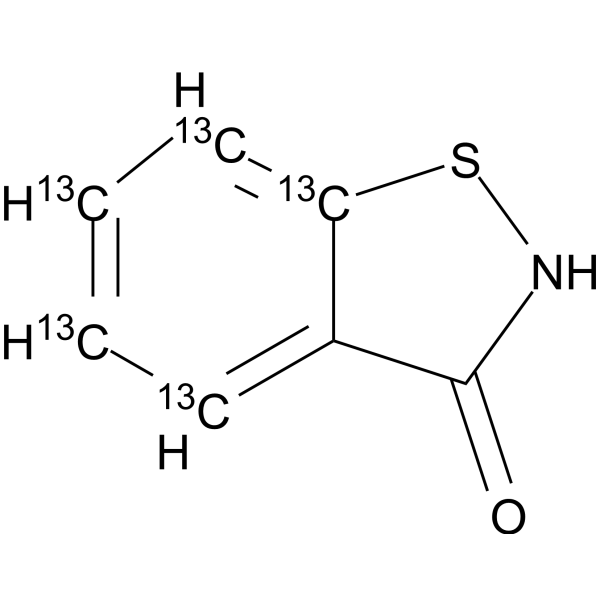
Benzisothiazolinone-13C5 (1,2-Benzothiazol-3-one-13C5) is a 13C-labeled Benzisothiazolinone. Benzisothiazolinone is widely used as an antiseptic and antibacterial agent .
|
-
-
- HY-W556802
-
|
|
Biochemical Assay Reagents
|
Others
|
|
Dichloro(1,2-diaminocyclohexane)platinum(II) is a platinum (II) analog and the oxaliplatin parent complex. Dichloro(1,2-diaminocyclohexane)platinum(II) is a potent chemotherapeutic with a wide spectrum of anticancer activity, low toxicity, and lack of cross resistance in many cisplatin-resistant cancers .
|
-

-
- HY-B1874S
-
-
-
- HY-125033S1
-
-
-
- HY-W009972
-
|
|
Biochemical Assay Reagents
|
Others
|
|
(1,3-Benzothiazol-2-yl)acetic acid (Compound 22) is an organic compound. (1,3-Benzothiazol-2-yl)acetic acid can be used as a biomarker or molecular probe .
|
-

-
- HY-172117
-
|
|
PROTAC Linkers
|
Cancer
|
|
Boc-methylglycine-C2-bromine is a PROTAC linker.Boc-methylglycine-C2-bromine can be used to synthesize PROTAC molecules like PROTAC SMARCA2 degrader-24 (HY-169275) .
|
-

-
- HY-W033132
-
-

-
- HY-W754982
-
|
N-Cyclohexylbenzothiazole-2-amine-13C6
|
Isotope-Labeled Compounds
|
Others
|
|
N-Cyclohexyl-1,3-benzothiazol-2-amine- 13C6 (N-Cyclohexylbenzothiazole-2-amine- 13C6) is the 13C-labeled N-Cyclohexyl-1,3-benzothiazol-2-amine (HY-W200757).
|
-

-
- HY-150992S
-
-
-
- HY-150988S
-
-
-
- HY-W718472S
-
-

-
- HY-W016149R
-
|
dichloro-1,2-dithiacyclopentenone (Standard)
|
Reference Standards
Bacterial
|
Infection
|
|
4,5-Dichloro-3H-1,2-dithiol-3-one (Dichloro-1,2-dithiacyclopentenone) is an E. coli FabH inhibitor (IC50: 2.9 µM). 4,5-Dichloro-3H-1,2-dithiol-3-one can be used as a slimicide in the manufacture of food-contact paper and paperboard .
|
-

-
- HY-W455884
-
|
|
Biochemical Assay Reagents
|
Others
|
|
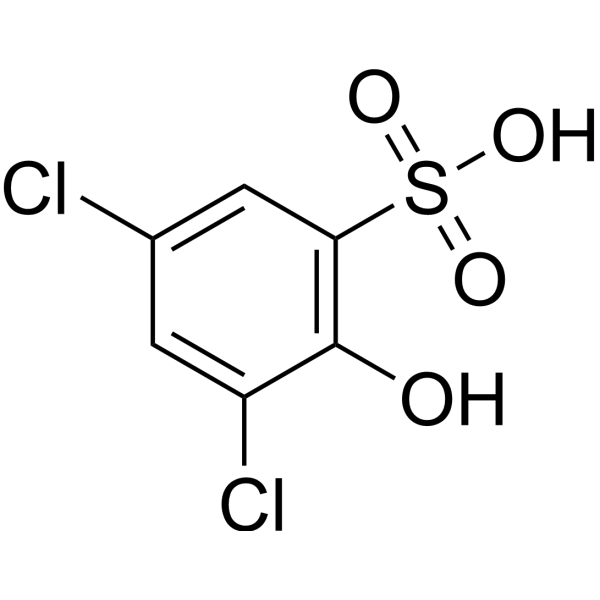
3,5-Dichloro-2-hydroxybenzenesulfonic acid is used in conjunction with Ampyrone (HY-B1398) (4-AAP) and hydrogen peroxide (H2O2) for chromogenic quantification of peroxidase in coupled enzymatic reactions. 3,5-Dichloro-2-hydroxybenzenesulfonic acid is used to measure hydrogen peroxide production in conjunction with peroxidase .
|
-
- HY-D1043
-
|
|
Fluorescent Dye
|
Others
|
|
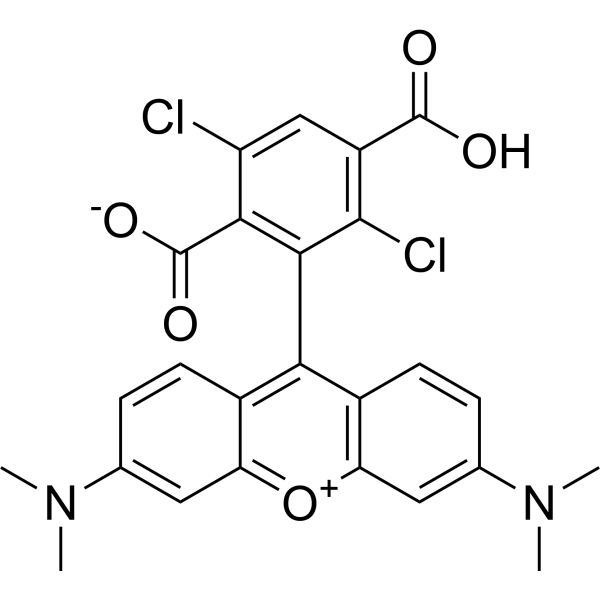
1,4-Dichloro 6-carboxytetramethylrhodamine is a fluorescence labeling agent (Ex=541 nm, Em=568 nm).
|
-
- HY-W104549S
-
-
- HY-W740355
-
-

- HY-150985S
-
-
- HY-141771S
-
-
- HY-W747216
-
|
Pyrimidine, 2,4-dichloro-5-methyl-15N2,13C
|
Isotope-Labeled Compounds
|
Others
|
|
2,4-Dichloro-5-methylpyrimidine- 15N2, 13C (Pyrimidine, 2,4-dichloro-5-methyl- 15N2, 13C) is the 13C- and 15N-labeled 2,4-Dichloro-5-methylpyrimidine (HY-W002132).
|
-

- HY-W722015
-
|
|
Isotope-Labeled Compounds
|
Others
|
|
1-(2,3-Dichloro-4-methoxyphenyl)-1-butanone-d7 is the deuterium labeled 1-(2,3-Dichloro-4-methoxyphenyl)butan-1-one (HY-W716896).
|
-

- HY-113969
-
|
|
Endogenous Metabolite
|
Neurological Disease
|
|
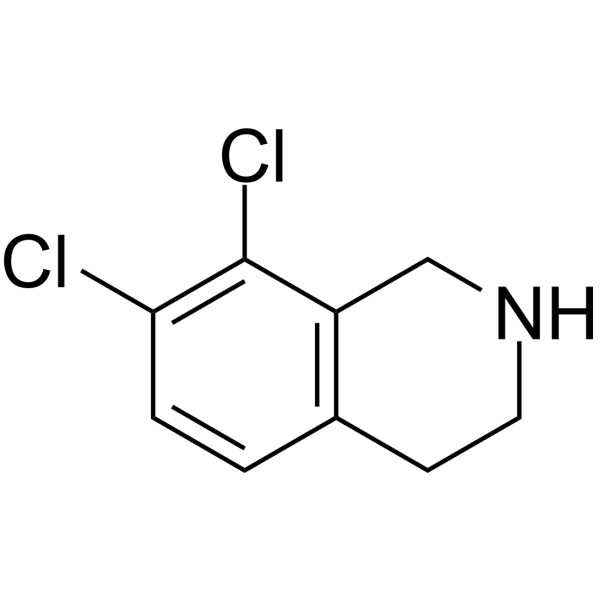
7,8-Dichloro-1,2,3,4-tetrahydroisoquinoline (compound 11), a tetrahydroisoquinoline (THIQ) derivative, is a selective phenylethanolamine N-methyltransferase (PNMT) inhibitor with a Ki value of 0.3 μM. 7,8-Dichloro-1,2,3,4-tetrahydroisoquinoline can be used in research on psychiatric disorders related to Alzheimer's disease and Parkinson's disease .
|
-
- HY-CE01478
-
|
5,6-dichloro-7,7,7-trifluoro-4-thia-5-heptenoyl coenzyme A
|
Biochemical Assay Reagents
|
Metabolic Disease
|
|
5,6-Dichloro-7,7,7-trifluoro-4-thia-5-heptenoyl-CoA (5,6-Dichloro-7,7,7-trifluoro-4-thia-5-heptenoyl coenzyme A) is a coenzyme A derivative .
|
-

- HY-21598S
-
-

- HY-W049335
-
-

- HY-D0072
-
|
1-(4,6-dichloro-1,3,5-triazin-2-yl)pyrene
|
Fluorescent Dye
|
Others
|
|
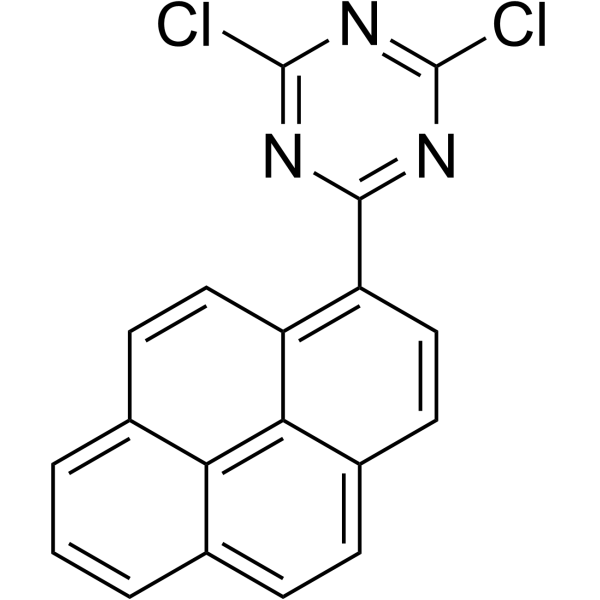
1-(Dichloro-1,3,5-triazinyl)-pyrene (1-(4,6-Dichloro-1,3,5-triazin-2-yl)pyrene) is a multifunctional dye. Dyes are important tools in biological experiments. They can help researchers observe and analyze cell structures, track biomolecules, evaluate cell functions, distinguish cell types, detect biomolecules, study tissue pathology and monitor microorganisms. Their applications range from basic scientific research to clinical A wide range of diagnostics. Dyes are also widely used in traditional fields such as textile dyeing, as well as in emerging fields such as functional textile processing, food pigments and dye-sensitized solar cells.
|
-
- HY-45842S
-
|
|
Isotope-Labeled Compounds
|
Others
|
|
4,6-Dichloro-N-methylpyridazine-3-carboxamide-d3 is the deuterium labeled 4,6-Dichloro-N-methylpyridazine-3-carboxamide (HY-45842).
|
-

- HY-131847
-
|
2,6-dichloro-9-(2’,3’,5’-tri-O-acetyl-β-D-ribofuranosyl)purine
|
Nucleoside Antimetabolite/Analog
|
Cancer
|
|
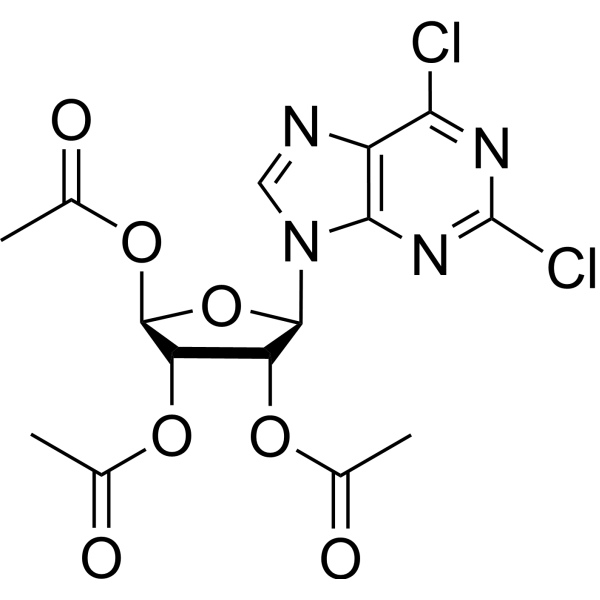
2,6-Dichloro-2',3',5'-triacetyl-purine riboside is a purine nucleoside analog. Purine nucleoside analogs have broad antitumor activity targeting indolent lymphoid malignancies. Anticancer mechanisms in this process rely on inhibition of DNA synthesis, induction of apoptosis, etc .
|
-
- HY-N12079
-
|
|
Biochemical Assay Reagents
|
Cancer
|
|
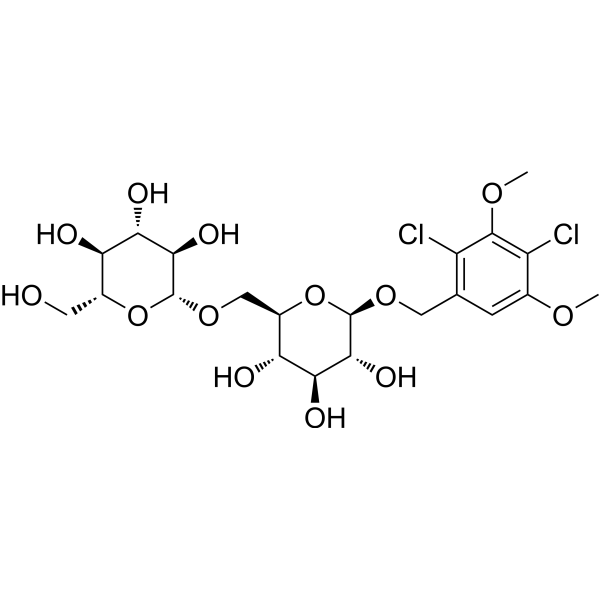
(2,4-Dichloro-3,5-dimethoxyphenyl) methyl 6-O-β-D-glucopyranosyl-β-D-glucopyranoside is an anticancer agent that inhibits the proliferation of lung cancer A549 cells (IC50=29 μΜ). (2,4-Dichloro-3,5-dimethoxyphenyl) methyl 6-O-β-D-glucopyranosyl-β-D-glucopyranoside can be obtained from Lilium regale and can be used in cancer research .
|
-
- HY-W715180S
-
-

- HY-B1883S
-
|
|
Isotope-Labeled Compounds
|
Others
|
|
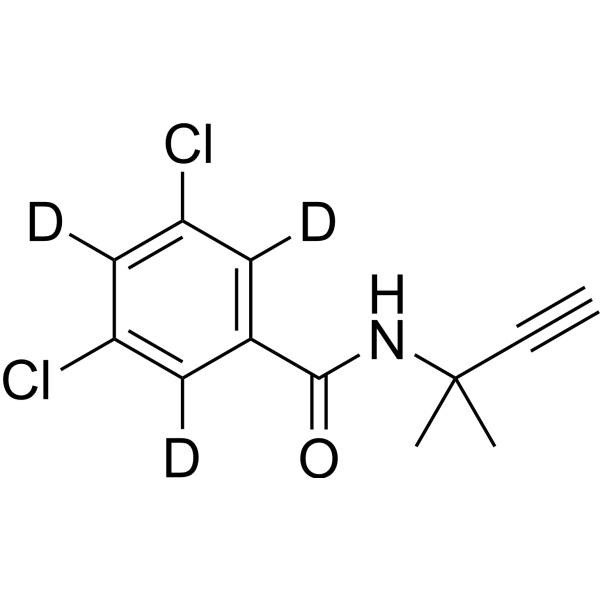
3,5-Dichloro-N-(2-methylbut-3-yn-2-yl)benzamide-d3 is the deuterium labeled 3,5-Dichloro-N-(2-methylbut-3-yn-2-yl)benzamide . 3,5-Dichloro-N-(2-methylbut-3-yn-2-yl)benzamide-d3 is a click chemistry reagent, it contains an Alkyne group and can undergo copper-catalyzed azide-alkyne cycloaddition (CuAAc) with molecules containing Azide groups.
|
-
- HY-W544504
-
|
|
Nucleoside Antimetabolite/Analog
|
Cancer
|
|
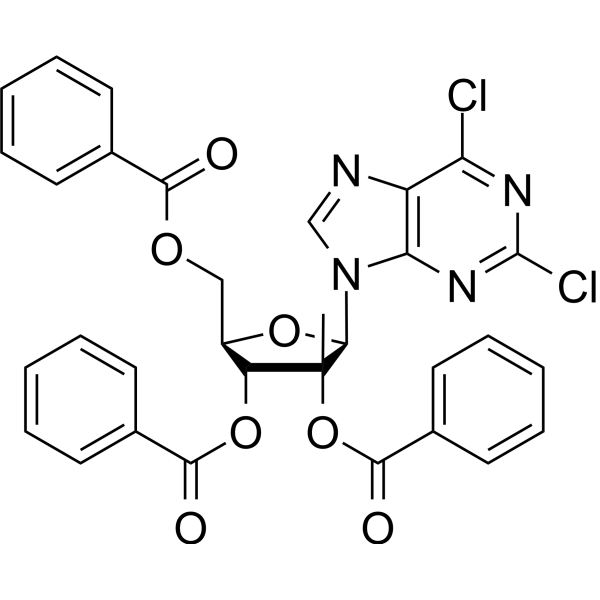
2,6-Dichloro-9-(2-c-methyl-2,3,5-tri-O-benzoyl-beta-D-ribofuranosyl)purine dibenzoate is a purine nucleoside analog. Purine nucleoside analogs have broad antitumor activity targeting indolent lymphoid malignancies. Anticancer mechanisms in this process rely on inhibition of DNA synthesis, induction of apoptosis, etc .
|
-
- HY-W753345
-
|
2,6-dichloro-N-phenylaniline-13C6
|
Isotope-Labeled Compounds
Bacterial
|
Cancer
|
|
2,6-Dichlorodiphenylamine- 13C6 (2,6-Dichloro-N-phenylaniline- 13C6) is the 13C-labeled 2,6-Dichlorodiphenylamine (HY-W012126). 2,6-Dichlorodiphenylamine is an analogue of Diclofenac Sodium (HY-15037) and has anti-Candida albicans activity. Diclofenac Sodium is a potent and nonselective anti-inflammatory agent, acts as a?COX?inhibitor, with?IC50s of 4 and 1.3 nM for human COX-1 and COX-2 in CHO cells.
|
-

- HY-W040305
-
|
|
Environmental Pollutants
Fungal
Mitochondrial Metabolism
Herbicide
|
Infection
|
|
2,6-Dichloro-4-nitroaniline is an orally active Herbicide, Fungicide and uncoupler. 2,6-Dichloro-4-nitroaniline uncouples oxidative phosphorylation and inhibits electron transport. 2,6-Dichloro-4-nitroaniline induces biphenyl hydroxylase activity in rat liver. 2,6-Dichloro-4-nitroaniline increases the relative liver weight of rats via hepatomegaly without altering their body weight .
|
-

- HY-W725182
-
|
3,4-dichloro-α-PiHP
|
Drug Derivative
|
Neurological Disease
|
|
3,4-Dichloro-α-pyrrolidinoisohexanophenone (3,4-Dichloro-α-PiHP) hydrochloride is an analogue of a psychoactive substance.
|
-

- HY-166962S
-
-

- HY-34589R
-
|
|
Reference Standards
|
|
|
3,5-Dichloro-4-pyridinamine (Standard) is the analytical standard of 3,5-Dichloro-4-pyridinamine. This product is intended for research and analytical applications.
|
-

- HY-W399827
-
-

- HY-W197123
-
-

- HY-W040762R
-
|
|
Reference Standards
|
|
|
2,4-Dichloro-1-(chloromethyl)benzene (Standard) is the analytical standard of 2,4-Dichloro-1-(chloromethyl)benzene. This product is intended for research and analytical applications.
|
-

- HY-W047339
-
-

- HY-W014531S
-
-

- HY-W270587
-
|
|
MOFs
|
Others
|
|
2,2'-Dichloro-4,4'-bipyridine is a metal-organic framework (MOF).
|
-

- HY-W586965
-
|
|
MOFs
|
Others
|
|
4,8-Dichloro-2,6-naphthalenedicarboxylic acid is a metal-organic framework (MOF).
|
-

- HY-W611126
-
|
|
Biochemical Assay Reagents
|
Others
|
|
1,3-Dichloro-2-isothiocyanatobenzene is a kind of biological materials or organic compounds that are widely used in life science research.
|
-

- HY-W748327
-
-

- HY-23805S
-
-

- HY-Y1816
-
-

- HY-30162R
-
|
4,6-dichloro-5-(2-Methoxyphenoxy)-2,2'-bipyrimidinyl (Standard)
|
Reference Standards
|
|
|
4,6-Dichloro-5-(2-methoxyphenoxy)-2,2'-bipyrimidine (Standard) is the analytical standard of 4,6-Dichloro-5-(2-methoxyphenoxy)-2,2'-bipyrimidine. This product is intended for research and analytical applications.
|
-

- HY-W747791
-
|
s-Triazine, 2-amino-4,6-dichloro-13C3; 2-Amino-4,6-dichloro-s-triazine-13C3
|
Isotope-Labeled Compounds
|
Others
|
|
4,6-Dichloro-1,3,5-triazin-2-amine- 13C3 (s-Triazine, 2-amino-4,6-dichloro- 13C3) is the 13C-labeled 4,6-Dichloro-1,3,5-triazin-2-amine (HY-W008081).
|
-

- HY-W584477
-
-

- HY-24340
-
|
|
Drug Intermediate
|
Others
|
|
1,3-Dichloro-5-iodo-2-methoxybenzene is a drug intermediate for synthesis of various active compounds.
|
-

- HY-W679111
-
-

- HY-W722016
-
|
|
Isotope-Labeled Compounds
|
Others
|
|
1-(2,3-Dichloro-4-hydroxyphenyl)butan-1-one-d7 is the deuterium labeled 1-(2,3-Dichloro-4-hydroxyphenyl)butan-1-one (HY-W716899).
|
-

- HY-W152813S
-
-

- HY-W856181
-
|
|
MOFs
|
Others
|
|
4,4'-Dichloro-[1,1'-biphenyl]-2,2'-dicarboxylic acid is a metal-organic framework (MOF).
|
-
![4,4'-Dichloro-[1,1'-biphenyl]-2,2'-dicarboxylic acid](//file.medchemexpress.com/product_pic/hy-w856181.gif)
- HY-W705817
-
|
|
Isotope-Labeled Compounds
|
Others
|
|
4,5-Dichloro-2-(methyl-d3)isothiazol-3(2H)-one is the deuterium labeled 4,5-Dichloro-2-methylisothiazol-3(2H)-one (HY-W705816).
|
-

- HY-W552229S
-
-

- HY-166935S
-
-

- HY-W795255
-
|
|
MOFs
|
Others
|
|
1,6-Bis(4,5-dichloro-1h-imidazol-1-yl)hexane is a metal-organic framework (MOF).
|
-

- HY-75470R
-
|
|
Reference Standards
|
|
|
(R)-5-bromo-3-(1-(2,6-dichloro-3-fluorophenyl)ethoxy)pyridin-2-amine (Standard) is the analytical standard of (R)-5-bromo-3-(1-(2,6-dichloro-3-fluorophenyl)ethoxy)pyridin-2-amine. This product is intended for research and analytical applications.
|
-

- HY-W414840R
-
|
[SP-4-2-(1R-trans)]-(1,2-Cyclohexanediamine-N,N') dichlorideplatinum(II) (Standard)
|
Reference Standards
|
|
|
Platinum, dichloro(1,2-cyclohexanediamine-n,n')-, [sp-4-2-(1r-trans)]- (Standard) is the analytical standard of Platinum, dichloro(1,2-cyclohexanediamine-n,n')-, [sp-4-2-(1r-trans)]-. This product is intended for research and analytical applications.
|
-
![Platinum, dichloro(1,2-cyclohexanediamine-n,n')-, [sp-4-2-(1r-trans)]- (Standard)](//file.medchemexpress.com/product_pic/hy-w414840r.gif)
- HY-I0371R
-
|
|
Reference Standards
|
|
|
(S)-4,5-dichloro-N-((2-oxo-3-(4-(3-oxomorpholino)phenyl)oxazolidin-5-yl)methyl)thiophene-2-carboxamide (Standard) is the analytical standard of (S)-4,5-dichloro-N-((2-oxo-3-(4-(3-oxomorpholino)phenyl)oxazolidin-5-yl)methyl)thiophene-2-carboxamide. This product is intended for research and analytical applications.
|
-

- HY-75468R
-
|
|
Reference Standards
|
|
|
(R)-3-(1-(2,6-dichloro-3-fluorophenyl)ethoxy)-2-nitropyridine (Standard) is the analytical standard of (R)-3-(1-(2,6-dichloro-3-fluorophenyl)ethoxy)-2-nitropyridine. This product is intended for research and analytical applications.
|
-

-
- HY-D1042
-
|
|
蛍光色素
|
|
1,4-Dichloro 5-carboxytetramethylrhodamine is a fluorescence labeling agent (Ex=541 nm, Em=568 nm).
|
-
- HY-D1043
-
|
|
蛍光色素
|
|
1,4-Dichloro 6-carboxytetramethylrhodamine is a fluorescence labeling agent (Ex=541 nm, Em=568 nm).
|
-
- HY-D0072
-
|
1-(4,6-dichloro-1,3,5-triazin-2-yl)pyrene
|
蛍光色素
|
|
1-(Dichloro-1,3,5-triazinyl)-pyrene (1-(4,6-Dichloro-1,3,5-triazin-2-yl)pyrene) is a multifunctional dye. Dyes are important tools in biological experiments. They can help researchers observe and analyze cell structures, track biomolecules, evaluate cell functions, distinguish cell types, detect biomolecules, study tissue pathology and monitor microorganisms. Their applications range from basic scientific research to clinical A wide range of diagnostics. Dyes are also widely used in traditional fields such as textile dyeing, as well as in emerging fields such as functional textile processing, food pigments and dye-sensitized solar cells.
|
-
- HY-21623
-
|
|
生化学アッセイ試薬
|
|
Dichloro[1,1'-bis(diphenylphosphino)ferrocene]palladium(II) dichloromethane adduct is a common dichloromethane solvate of the palladium catalyst Pd(dppf)Cl2, a phosphine ligand palladium(II) complex, which can be used as a versatile precatalyst for various cross-coupling reactions. Dichloro[1,1'-bis(diphenylphosphino)ferrocene]palladium(II) dichloromethane adduct can stabilize reaction intermediates and lower the reaction activation energy in coupling reactions, and can be used in Suzuki-Miyaura coupling reaction studies .
|
-
- HY-W001992
-
|
3-Nitro-2,6-dichloropyridine
|
生化学アッセイ試薬
|
|
2,6-Dichloro-3-nitropyridine is a starting compound for the synthesis of a sulfide analog of Flupirtine (HY-17001A) with KV7.2/3 channel opening activity. 2,6-Dichloro-3-nitropyridine can be used in pain research .
|
-
- HY-40350
-
|
|
生化学アッセイ試薬
|
|
2,4-Dichloro-7H-pyrrolo[2,3-d]pyrimidine is a biochemical reagent that can be used as a biological material or organic compound for life science related research.
|
-
- HY-41945
-
|
|
生化学アッセイ試薬
|
|
2,6-Dichloro-4-iodopyridine is a biochemical reagent that can be used as a biological material or organic compound for life science related research.
|
-
- HY-34054
-
|
|
生化学アッセイ試薬
|
|
2,4-Dichloro-5-nitropyridine is a pyridine derivative, which can be used as a precursor to synthesize polyfluorinated pyrrolidine derivatives [3][4].
|
-
- HY-W003041
-
|
2,6-dichloropyridine-3-carbonitrile
|
生化学アッセイ試薬
|
|
2,6-Dichloro-3-cyanopyridine is a biochemical reagent that can be used as a biological material or organic compound for life science related research.
|
-
- HY-W002136
-
|
|
生化学アッセイ試薬
|
|
2,6-Dichloro-3-pyridinamine is a biochemical reagent that can be used as a biological material or organic compound for life science related research.
|
-
- HY-41832
-
|
|
生化学アッセイ試薬
|
|
4,6-Dichloro-2-(methylthio)pyrimidine is an intermediate. 4,6-Dichloro-2-(methylthio)pyrimidine can be used to synthesize Kras modulators. 4,6-Dichloro-2-(methylthio)pyrimidine can be used in cancer research .
|
-
- HY-W008199
-
|
|
生化学アッセイ試薬
|
|
2,6-Dichloro-4-pyridinamine is a biochemical reagent that can be used as a biological material or organic compound for life science related research.
|
-
- HY-W016149
-
|
dichloro-1,2-dithiacyclopentenone
|
生化学アッセイ試薬
|
|
4,5-Dichloro-3H-1,2-dithiol-3-one (Dichloro-1,2-dithiacyclopentenone) is an E. coli FabH inhibitor (IC50: 2.9 µM). 4,5-Dichloro-3H-1,2-dithiol-3-one can be used as a slimicide in the manufacture of food-contact paper and paperboard .
|
-
- HY-W002688
-
|
|
生化学アッセイ試薬
|
|
2,6-Dichloro-5-fluoropyridine-3-carboxylic acid is a biochemical reagent that can be used as a biological material or organic compound for life science related research. 2,6-Dichloro-5-fluoropyridine-3-carboxylic acid can be used in the synthesis of TAK-659 (HY-100867) .
|
-
- HY-W015388
-
|
|
生化学アッセイ試薬
|
|
3,6-Dichloro-4-methylpyridazine is a biochemical reagent that can be used as a biological material or organic compound for life science related research.
|
-
- HY-34531
-
|
2-Methyl-4,6-dichloropyrimidine
|
生化学アッセイ試薬
|
|
4,6-Dichloro-2-methylpyrimidine (2-Methyl-4,6-dichloropyrimidine) is a chiral catalyst .
|
-
- HY-129852
-
|
|
生化学アッセイ試薬
|
|
5-(4,6-Dichloro-s-triazin-2-ylamino)fluorescein hydrochloride is a biochemical reagent.
|
-
- HY-W016149R
-
|
dichloro-1,2-dithiacyclopentenone (Standard)
|
生化学アッセイ試薬
|
|
4,5-Dichloro-3H-1,2-dithiol-3-one (Dichloro-1,2-dithiacyclopentenone) is an E. coli FabH inhibitor (IC50: 2.9 µM). 4,5-Dichloro-3H-1,2-dithiol-3-one can be used as a slimicide in the manufacture of food-contact paper and paperboard .
|
-
- HY-W399827
-
|
|
生化学アッセイ試薬
|
|
4,6-Dichloro-3-formylcoumarin is a biochemical reagent.
|
-
- HY-W611126
-
|
|
生化学アッセイ試薬
|
|
1,3-Dichloro-2-isothiocyanatobenzene is a kind of biological materials or organic compounds that are widely used in life science research.
|
| 製品番号 |
製品名 |
Category |
Target |
構造式 |
-
- HY-101037
-
-
-
- HY-101037R
-
-
-
- HY-113969
-
|
|
Alkaloids
Neurological Disease
Classification of Application Fields
Endogenous metabolite
Isoquinoline Alkaloids
Disease Research Fields
Source Classification
|
Endogenous Metabolite
|
|
7,8-Dichloro-1,2,3,4-tetrahydroisoquinoline (compound 11), a tetrahydroisoquinoline (THIQ) derivative, is a selective phenylethanolamine N-methyltransferase (PNMT) inhibitor with a Ki value of 0.3 μM. 7,8-Dichloro-1,2,3,4-tetrahydroisoquinoline can be used in research on psychiatric disorders related to Alzheimer's disease and Parkinson's disease .
|
-
-
- HY-N12079
-
-
-
- HY-101037S1
-
|
|
|
Sarcosine-d3 is the deuterium labeled Sarcosine. Sarcosine (N-Methylglycine), an endogenous amino acid, is a competitive glycine transporter type I (GlyT1) inhibitor and N-methyl-D-aspartate (NMDA) receptor co-agonist. Sarcosine increases the glycine concentration, resulting in an indirect potentiation of the NMDA receptor. Sarcosine is commonly used for the research of schizophrenia .
|
-
-
- HY-101037S
-
|
|
|
Sarcosine- 15N is the 15N-labeled Sarcosine. Sarcosine (N-Methylglycine), an endogenous amino acid, is a competitive glycine transporter type I (GlyT1) inhibitor and N-methyl-D-aspartate (NMDA) receptor co-agonist. Sarcosine increases the glycine concentration, resulting in an indirect potentiation of the NMDA receptor. Sarcosine is commonly used for the research of schizophrenia .
|
-
-
- HY-W087048S
-
|
|
|
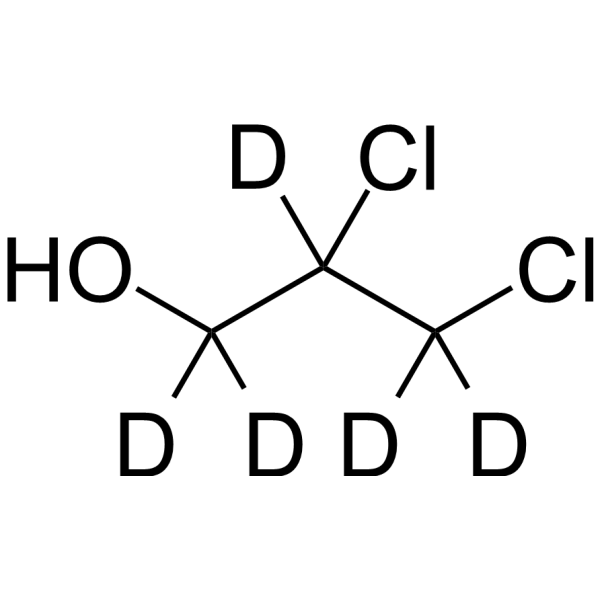
2,3-Dichloro-1-propanol-d5 is deuterium labeled 2,3-Dichloro-1-propanol .
|
-
-
- HY-W009597S
-
|
|
|
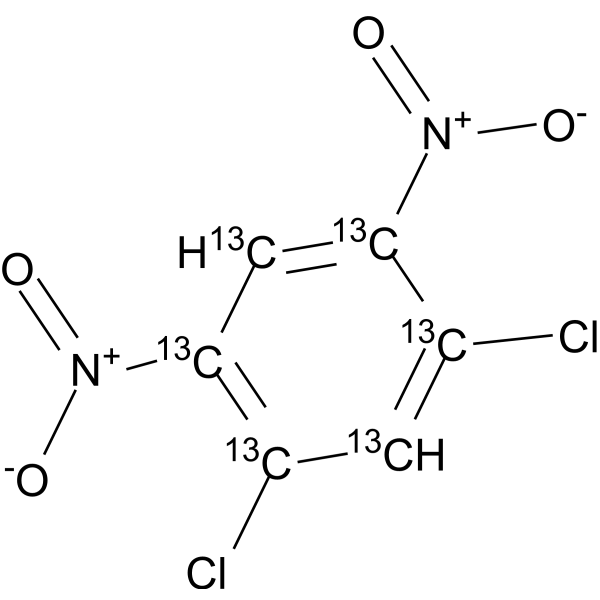
1,5-Dichloro-2,4-dinitrobenzene- 13C6 is the 13C labeled 1,5-Dichloro-2,4-dinitrobenzene .
|
-
-
- HY-132710S
-
1 Publications Verification
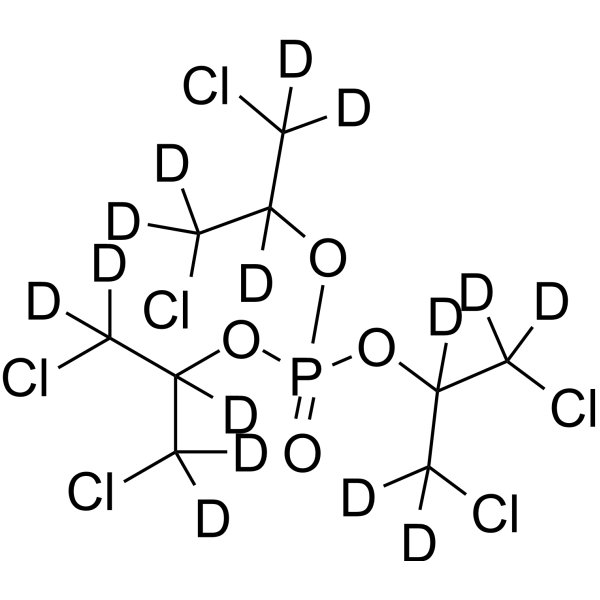
|
|
Tris(1,3-dichloro-2-propyl) Phosphate-d15 is the deuterium labeled Tris(1,3-dichloro-2-propyl) Phosphate .
|
-
-
- HY-W015427S
-
|
|
|
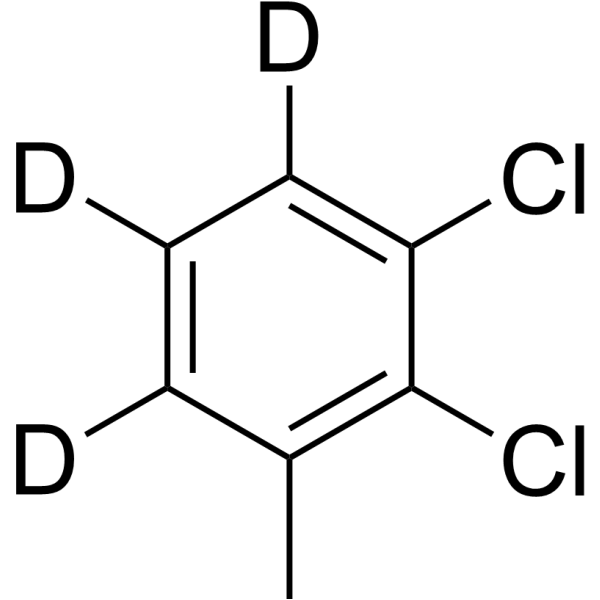
1,2-Dichloro-3-methylbenzene-d3 is the deuterium labeled 1,2-Dichloro-3-methylbenzene .
|
-
-
- HY-W748519
-
|
|
|
Sarcosine- 13C3 (N-Methylglycine- 13C3; Sarcosin- 13C3) is the 13C-labeled Sarcosine (HY-101037). Sarcosine (N-Methylglycine), an endogenous amino acid, is a competitive glycine transporter type I (GlyT1) inhibitor and N-methyl-D-aspartate (NMDA) receptor co-agonist. Sarcosine increases the glycine concentration, resulting in an indirect potentiation of the NMDA receptor. Sarcosine is commonly used for the research of schizophrenia .
|
-
-
- HY-W017401S
-
|
|
|
Benzisothiazolinone-13C5 (1,2-Benzothiazol-3-one-13C5) is a 13C-labeled Benzisothiazolinone. Benzisothiazolinone is widely used as an antiseptic and antibacterial agent .
|
-
-
- HY-B1874S
-
|
|
|
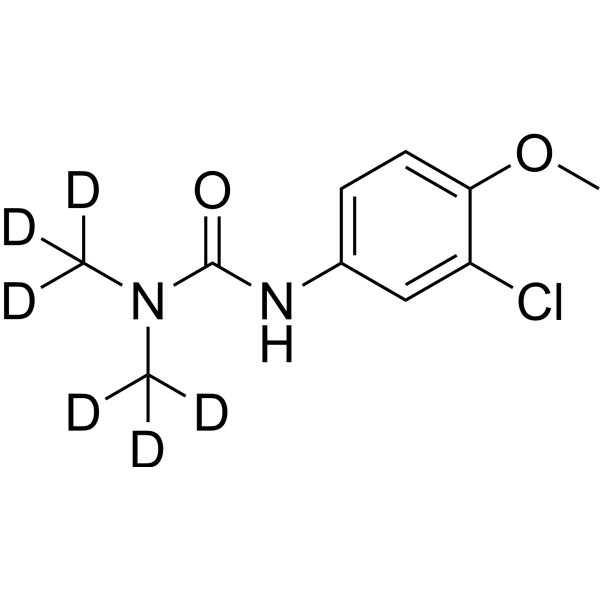
Metoxuron-d6 is the deuterium labeled Methyl 3,6-dichloro-2-methoxybenzoate .
|
-
-
- HY-125033S1
-
|
|
|
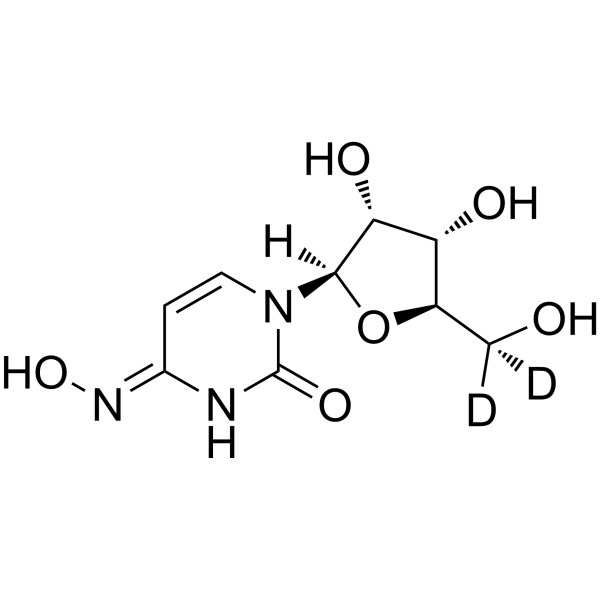
EIDD-1931-d2 is the deuterium labeled 3,6-Dichloro-2-methoxybenzoic acid .
|
-
-
- HY-W754982
-
|
|
|
N-Cyclohexyl-1,3-benzothiazol-2-amine- 13C6 (N-Cyclohexylbenzothiazole-2-amine- 13C6) is the 13C-labeled N-Cyclohexyl-1,3-benzothiazol-2-amine (HY-W200757).
|
-
-
- HY-150992S
-
|
|
|
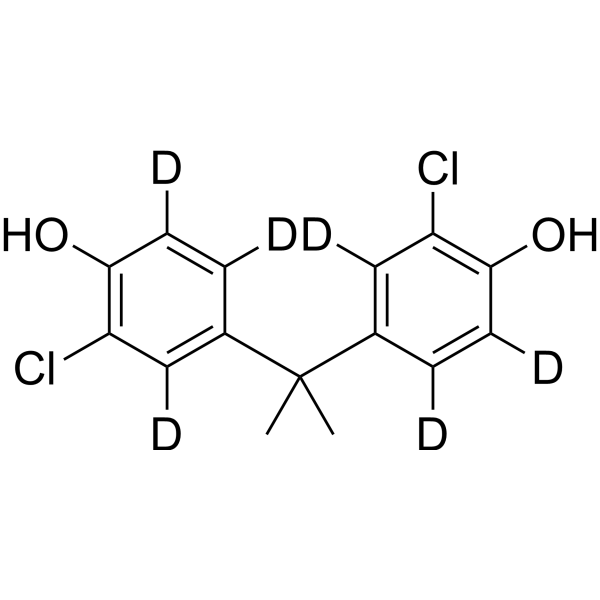
2,6-Dichloro bisphenol A-d12 is the deuterium labeled 2,6-Dichloro bisphenol A .
|
-
-
- HY-150988S
-
|
|
|
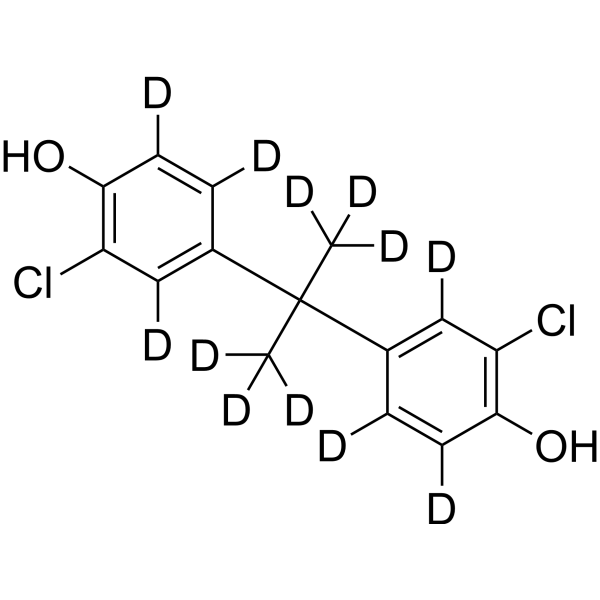
2,2'-Dichloro bisphenol A-d12 is the deuterium labeled 2,2'-Dichloro bisphenol A .
|
-
-
- HY-W718472S
-
|
|
|
3,3′-Dichloro biphenyl- 13C12 is 13C labeled 3,3'-Dichloro-1,1'-biphenyl .
|
-
-
- HY-W104549S
-
|
|
|
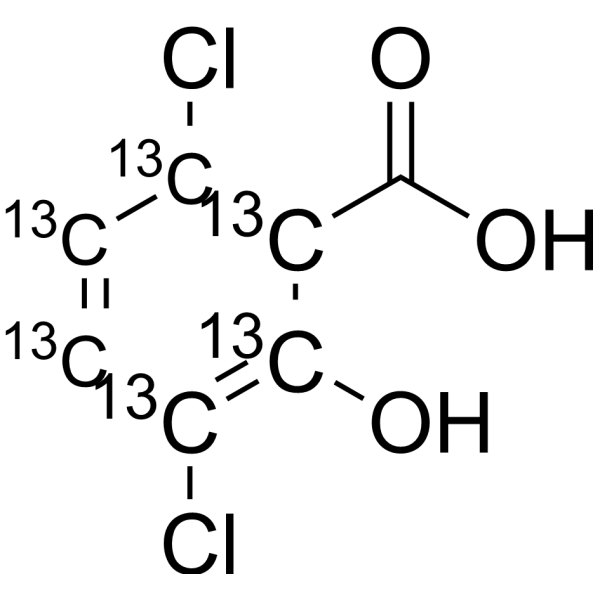
3,6-Dichloro-2-hydroxybenzoic acid- 13C6 is the 13C labeled 3,6-Dichloro-2-hydroxybenzoic acid .
|
-
-
- HY-W740355
-
|
|
|
4,5-Dichloro-6-pyridazone- 15N2 is the 15N-labeled 4,5-Dichloro-3(2H)-pyridazinone (HY-W002242).
|
-
-
- HY-150985S
-
|
|
|
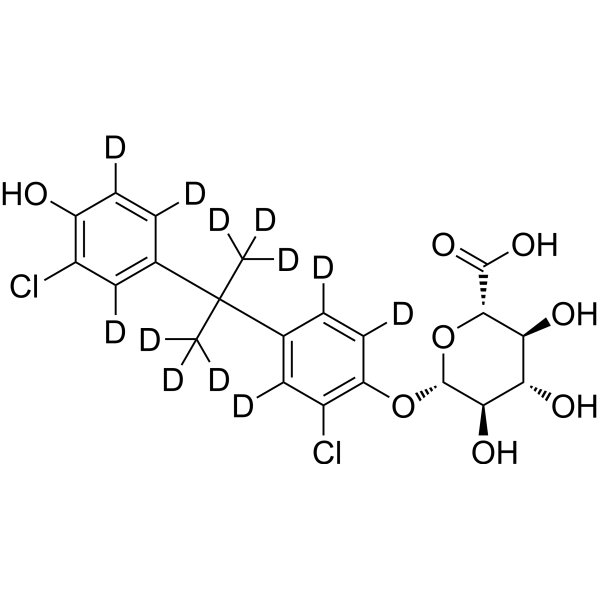
2,2'-Dichloro bisphenol a mono-D-glucuronide-d12 is the deuterium labeled 2,2'-Dichloro bisphenol a mono-D-glucuronide .
|
-
-
- HY-141771S
-
|
|
|
Bis(1,3-dichloro-2-propyl) phosphate-d10 is the deuterium labeled Bis(1,3-dichloro-2-propyl) phosphate .
|
-
-
- HY-W747216
-
|
|
|
2,4-Dichloro-5-methylpyrimidine- 15N2, 13C (Pyrimidine, 2,4-dichloro-5-methyl- 15N2, 13C) is the 13C- and 15N-labeled 2,4-Dichloro-5-methylpyrimidine (HY-W002132).
|
-
-
- HY-W722015
-
|
|
|
1-(2,3-Dichloro-4-methoxyphenyl)-1-butanone-d7 is the deuterium labeled 1-(2,3-Dichloro-4-methoxyphenyl)butan-1-one (HY-W716896).
|
-
-
- HY-21598S
-
|
|
|
2,4-Dichloro-6-phenyl-1,3,5-triazine-d7 is the deuterium labeled 2,4-Dichloro-6-phenyl-1,3,5-triazine (HY-21598).
|
-
-
- HY-45842S
-
|
|
|
4,6-Dichloro-N-methylpyridazine-3-carboxamide-d3 is the deuterium labeled 4,6-Dichloro-N-methylpyridazine-3-carboxamide (HY-45842).
|
-
-
- HY-W715180S
-
|
|
|
2,3-Dibromo-7,8-dichloro dibenzo-p-dioxin- 13C12 is 13C labeled 2,3-Dibromo-7,8-dichlorodibenzo[b,E][1,4]dioxine .
|
-
-
- HY-B1883S
-
|
|
|
3,5-Dichloro-N-(2-methylbut-3-yn-2-yl)benzamide-d3 is the deuterium labeled 3,5-Dichloro-N-(2-methylbut-3-yn-2-yl)benzamide . 3,5-Dichloro-N-(2-methylbut-3-yn-2-yl)benzamide-d3 is a click chemistry reagent, it contains an Alkyne group and can undergo copper-catalyzed azide-alkyne cycloaddition (CuAAc) with molecules containing Azide groups.
|
-
-
- HY-W753345
-
|
|
|
2,6-Dichlorodiphenylamine- 13C6 (2,6-Dichloro-N-phenylaniline- 13C6) is the 13C-labeled 2,6-Dichlorodiphenylamine (HY-W012126). 2,6-Dichlorodiphenylamine is an analogue of Diclofenac Sodium (HY-15037) and has anti-Candida albicans activity. Diclofenac Sodium is a potent and nonselective anti-inflammatory agent, acts as a?COX?inhibitor, with?IC50s of 4 and 1.3 nM for human COX-1 and COX-2 in CHO cells.
|
-
-
- HY-166962S
-
|
|
|
2,3-Dichloro dibenzofuran- 13C12 is 13C labeled 2,3-Dichloro dibenzofuran .
|
-
-
- HY-W014531S
-
|
|
|
2,6-Dichloro-4-nitrophenol-sup>13C6 is the 13C-labeled 2,6-Dichloro-4-nitrophenol.
|
-
-
- HY-W748327
-
|
|
|
2,5-Dichloro-1,1'-biphenyl- 13C12 is 13C labeled 2,5-Dichloro-1,1'-biphenyl .
|
-
-
- HY-23805S
-
|
|
|
3,6-Dichloro-9H-carbazole- 13C12 is 13C labeled 3,6-Dichloro-9H-carbazole .
|
-
-
- HY-W747791
-
|
|
|
4,6-Dichloro-1,3,5-triazin-2-amine- 13C3 (s-Triazine, 2-amino-4,6-dichloro- 13C3) is the 13C-labeled 4,6-Dichloro-1,3,5-triazin-2-amine (HY-W008081).
|
-
-
- HY-W584477
-
|
|
|
4,6-Dichloro-N-methylnicotinamide-d3 is the deuterium labeled 4,6-Dichloro-N-methylnicotinamide.
|
-
-
- HY-W722016
-
|
|
|
1-(2,3-Dichloro-4-hydroxyphenyl)butan-1-one-d7 is the deuterium labeled 1-(2,3-Dichloro-4-hydroxyphenyl)butan-1-one (HY-W716899).
|
-
-
- HY-W152813S
-
|
|
|
3',4'-Dichloro-4-biphenylol- 13C12 is 13C labeled 4-(3,4-Dichlorophenyl)phenol .
|
-
-
- HY-W705817
-
|
|
|
4,5-Dichloro-2-(methyl-d3)isothiazol-3(2H)-one is the deuterium labeled 4,5-Dichloro-2-methylisothiazol-3(2H)-one (HY-W705816).
|
-
-
- HY-W552229S
-
|
|
|
2,8-Dichloro dibenzo-p-dioxin- 13C12 is 13C labeled 2,8-Dichlorodibenzo[b,e][1,4]dioxine .
|
-
-
- HY-166935S
-
|
|
|
2,3-Dibromo-7,8-dichloro-dibenzofuran- 13C12 is 13C labeled 2,3-Dibromo-7,8-dichloro-dibenzofuran .
|
-
-
- HY-B1883S
-
|
|
|
Alkynes
|
|
3,5-Dichloro-N-(2-methylbut-3-yn-2-yl)benzamide-d3 is the deuterium labeled 3,5-Dichloro-N-(2-methylbut-3-yn-2-yl)benzamide . 3,5-Dichloro-N-(2-methylbut-3-yn-2-yl)benzamide-d3 is a click chemistry reagent, it contains an Alkyne group and can undergo copper-catalyzed azide-alkyne cycloaddition (CuAAc) with molecules containing Azide groups.
|
-
- HY-W550484
-
|
|
|
Nucleoside Analogs
|
|
2,6-Dichloro-9-(3,5-di-O-benzoyl-2-deoxy-2-fluoro-D-arabinofuranosyl)-9H-purine arabinoriboside is a purine nucleoside analog. Purine nucleoside analogs have broad antitumor activity targeting indolent lymphoid malignancies. Anticancer mechanisms in this process rely on inhibition of DNA synthesis, induction of apoptosis, etc .
|
-
- HY-W544504
-
|
|
|
Nucleoside Analogs
|
|
2,6-Dichloro-9-(2-c-methyl-2,3,5-tri-O-benzoyl-beta-D-ribofuranosyl)purine dibenzoate is a purine nucleoside analog. Purine nucleoside analogs have broad antitumor activity targeting indolent lymphoid malignancies. Anticancer mechanisms in this process rely on inhibition of DNA synthesis, induction of apoptosis, etc .
|
入力情報は安全に管理されます. ※ 必須入力項目.
Inquiry Information
- 製品名:
- 製品番号:
- 数量:
- MCE 日本正規代理店:





![Dichloro[1,1'-bis(diphenylphosphino)ferrocene]palladium(II) dichloromethane adduct](http://file.medchemexpress.com/product_pic/hy-21623.gif)
![2,4-Dichloro-7H-pyrrolo[2,3-d]pyrimidine](http://file.medchemexpress.com/product_pic/hy-40350.gif)
![5,7-Dichlorothiazolo[5,4-d]pyrimidine](http://file.medchemexpress.com/product_pic/hy-w017930.gif)


![4,4'-Dichloro-[1,1'-biphenyl]-2,2'-dicarboxylic acid](http://file.medchemexpress.com/product_pic/hy-w856181.gif)


![Platinum, dichloro(1,2-cyclohexanediamine-n,n')-, [sp-4-2-(1r-trans)]- (Standard)](http://file.medchemexpress.com/product_pic/hy-w414840r.gif)


