1. Search Result
Search Result
Results for "

Cryptosporidium

" in MedChemExpress (MCE) Product Catalog:

25

Inhibitors & Agonists

2

Biochemical Assay Reagents

4

Natural
Products

1

Isotope-Labeled Compounds

Cat. No. Product Name Target Research Areas Chemical Structure
  • HY-N6707
    Triacsin C
    5+ Cited Publications

    WS 1228A; FR 900190

    ACSL Family Parasite Infection Cardiovascular Disease
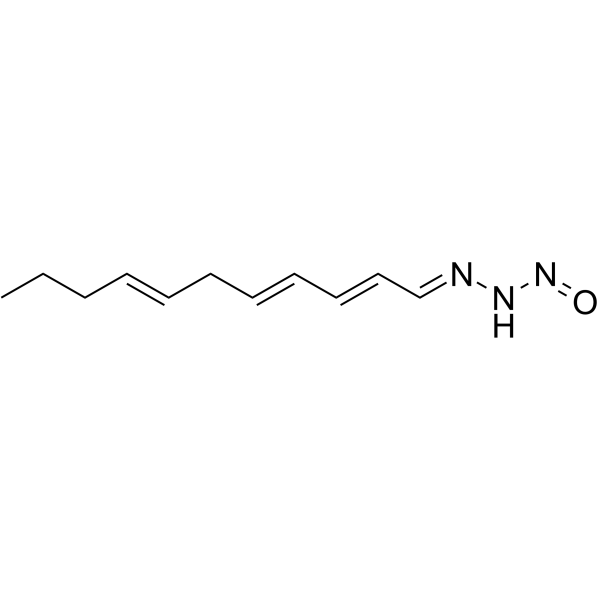
    Triacsin C (WS 1228A), is an orally active and intracellular long-chain acyl-CoA synthetases (ACSL) inhibitor, which can be isolated from Streptomyces aureofaciens. Triacsin C inhibits TAG accumulation into lipid droplets (LD) by suppressing ACSL activity . Triacsin C exhibits highly inhibitory effect against rotavirus replication .
    Triacsin C
  • HY-N3018

    6-O-α-D-Glucopyranosyl-D-glucose; D-Isomaltose

    Endogenous Metabolite Parasite Infection Metabolic Disease
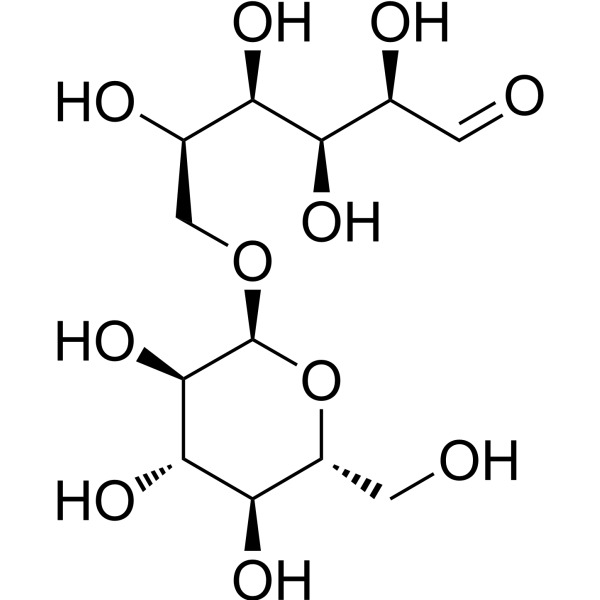
    Isomaltose (6-O-α-D-Glucopyranosyl-D-glucose) is a glucose disaccharide. Isomaltose induces G-CSF secretion via heat-induced oxidative polymerization of glucose groups into high-molecular-weight compounds. Isomaltose modulates cecal bacterial cluster structure in mice. Isomaltose exhibits low glycemic index, slow hydrolysis, and prebiotic properties. Isomaltose reduces in vivo Cryptosporidium parvum colonization in neonatal mice. Isomaltose can be used for the research of Cryptosporidium parvum infection .
    Isomaltose
  • HY-W011517

    2FA

    Parasite Infection
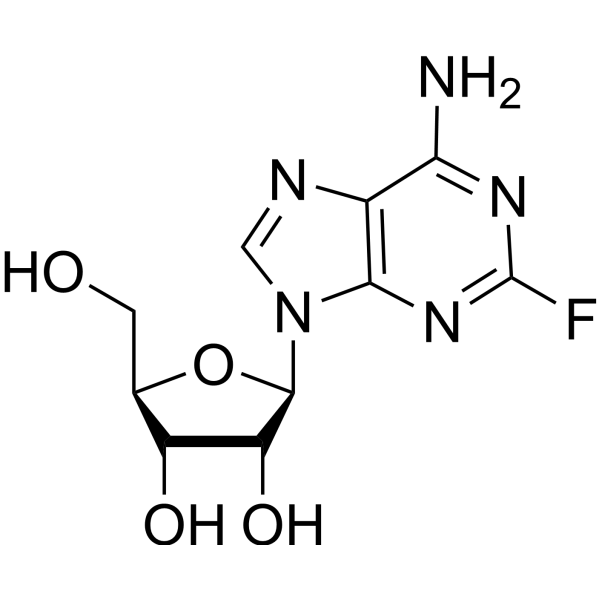
    2-Fluoroadenosine (2FA) is a nucleoside analogue. 2-Fluoroadenosine has antiparasite activity with EC50 value of 0.842 mM for Cryptosporidium parvum. 2-Fluoroadenosine has a highly specific structural basis for MtADK. 2-Fluoroadenosine is commonly used in the study of parasitic conditions .
    2-Fluoroadenosine
  • HY-B1212
    Broxyquinoline
    2 Publications Verification

    Dibromohydroxyquinoline; 5,7-Dibromo-8-hydroxyquinoline

    Parasite Influenza Virus Infection
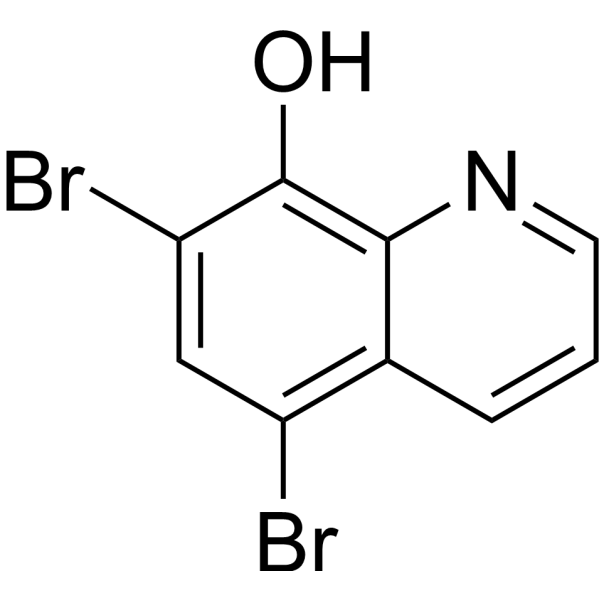
    Broxyquinoline (Dibromohydroxyquinoline) is an effective inhibitor of severe fever with thrombocytopenia syndrome virus (SFTSV) with an IC50 of 5.8 µM. Additionally, Broxyquinoline is an inhibitor of CpACBP1 with an IC50 of 64.9 μM. CpACBP1 is a fatty acyl-CoA binding protein of Cryptosporidium parvum, thus Broxyquinoline has the potential to inhibit parasite growth. Broxyquinoline shows promise for research in the field of infectious diseases .
    Broxyquinoline
  • HY-128337

    Parasite Infection
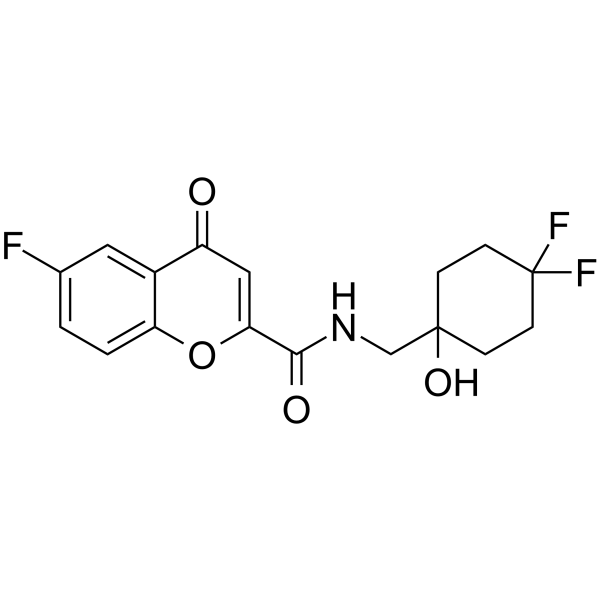
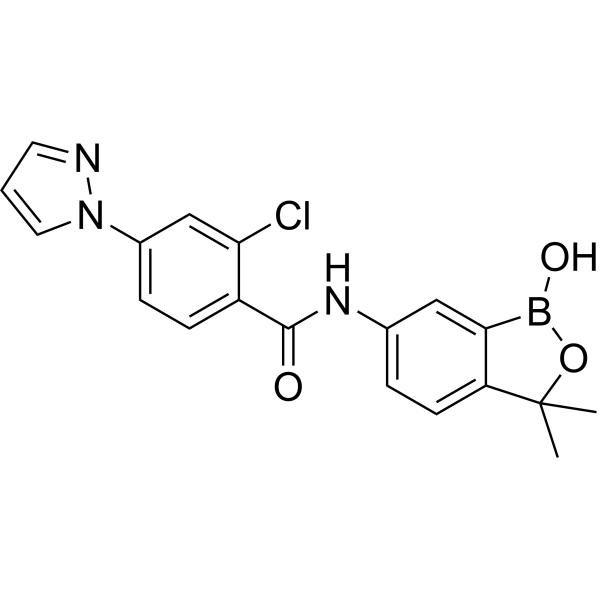
    AN7973 is the 6-carboxamide benzoxaborole, blocks intracellular parasite development and inhibits Cryptosporidium growth. AN7973 is orally active, possesses favorable safety, stability, and PK parameters, and is an exciting agent candidate for treating cryptosporidiosis.
    AN7973
  • HY-126130
    LysRs-IN-2
    1 Publications Verification

    Aminoacyl-tRNA Synthetase Infection
    LysRs-IN-2 is a lysyl-tRNA synthetase (KRS) inhibitor with IC50s of 0.015 μM and 0.13 μM for Plasmodium falciparum lysyl-tRNA synthetase (PfKRS) and Cryptosporidium parvum lysyl-tRNA synthetase (CpKRS), respectively .
    LysRs-IN-2
  • HY-156685

    PI4K Parasite Infection Metabolic Disease Cancer
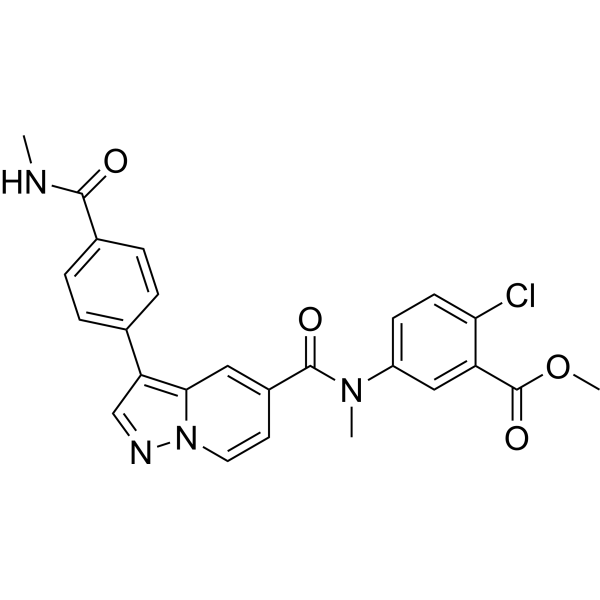
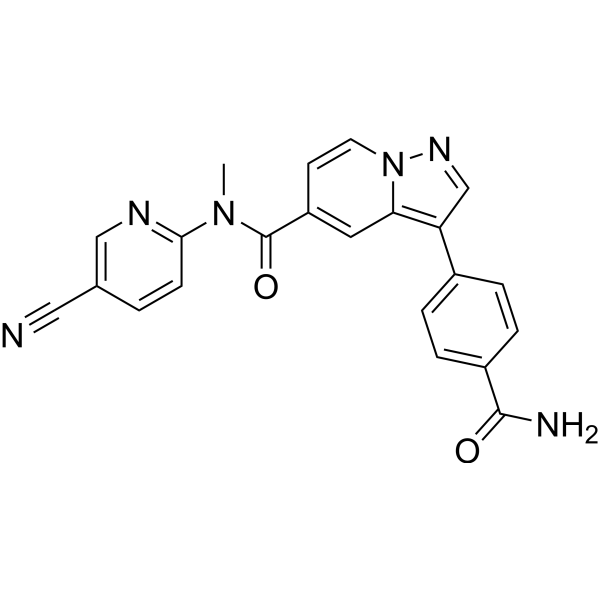
    EDI048 is an orally active, gut-restricted parasiticidal agent. EDI048 specifically binds to the ATP-binding site of Cryptosporidium phosphatidylinositol 4-kinase (CpPI (4) K), blocks parasite membrane biogenesis, arrests the pathogen at the schizont stage, and thus irreversibly clears the infection. EDI048 is rapidly converted to an inactive carboxylic acid metabolite via hepatic first-pass metabolism, with extremely low systemic exposure, good safety profile, and no cardiotoxicity, genotoxicity or off-target effects. EDI048 is used in studies of intestinal cryptosporidiosis in children .
    EDI048
  • HY-114866
    Eritadenine
    1 Publications Verification

    Lentinacin; D-Eritadenine; Lentysine

    Parasite Nucleoside Antimetabolite/Analog Infection
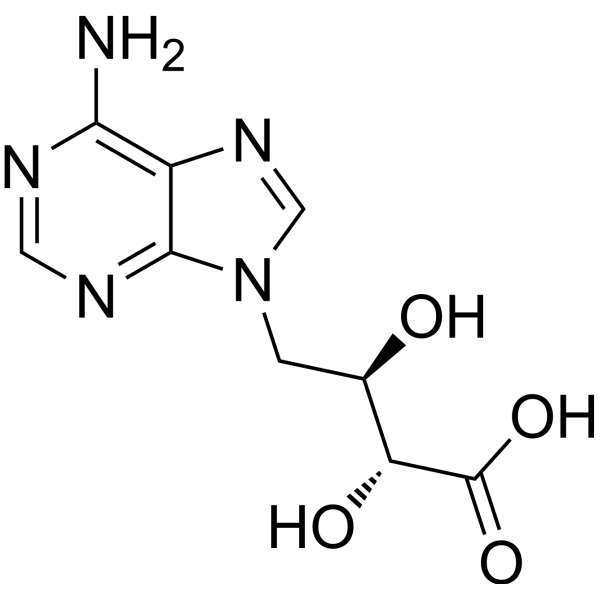
    Eritadenine (D-Eritadenine) is a potent AdoHcyase inhibitor, with an IC50 value of 7 nM. Eritadenine is also an acyclic sugar adenosine analogue. Eritadenine exhibits an inhibitory effect on the growth of Cryptosporidium parvum, with a MIC50 of 3 μM. Eritadenine can be used in the research of colorectal adenocarcinoma .
    Eritadenine
  • HY-B0956A

    Aminosidine

    Bacterial Parasite Endogenous Metabolite Infection
    Paromomycin (Aminosidine) is an orally active broad-spectrum aminoglycoside aminocyclitol. Paromomycin is produced by Streptomyces riomosus var. Paromomycinus. Paromomycin binding induces local conformational changes in the 16S rRNA A-site. Paromomycin exhibits inhibitory activity against C. parvum. Paromomycin can be used in research related to leishmaniasis, amoebiasis and cryptosporidiosis .
    Paromomycin
  • HY-103583

    PI4K Parasite Infection
    KDU731, an orally active C. parvum PI4K inhibitor with an IC50 value of 25 nM, blocks Cryptosporidium infection in vitro and in vivo . KDU731 is a promising agent candidate for the treatment of diarrhea caused by Cryptosporidium and meets a broad range of safety .
    KDU731
  • HY-128214

    IMPDH Parasite Infection
    IMPDH-IN-3 (Compound C67) is an inhibitor of C. parvum IMPDH (CpIMPDH) with an IC50 of 35 nM. IMPDH-IN-3 can be used in the research of anti-Cryptosporidium drugs .
    IMPDH-IN-3
  • HY-168569

    Aminoacyl-tRNA Synthetase Infection
    DDD489 is a potent and selective Cryptosporidium lysyl-tRNA synthetase (CpKRS) inhibitor with IC50 values of 0.85 uM.DDD489 shows anti-cryptosporidials activity in vitro and in vivo .
    DDD489
  • HY-136307S

    Isotope-Labeled Compounds Parasite Infection
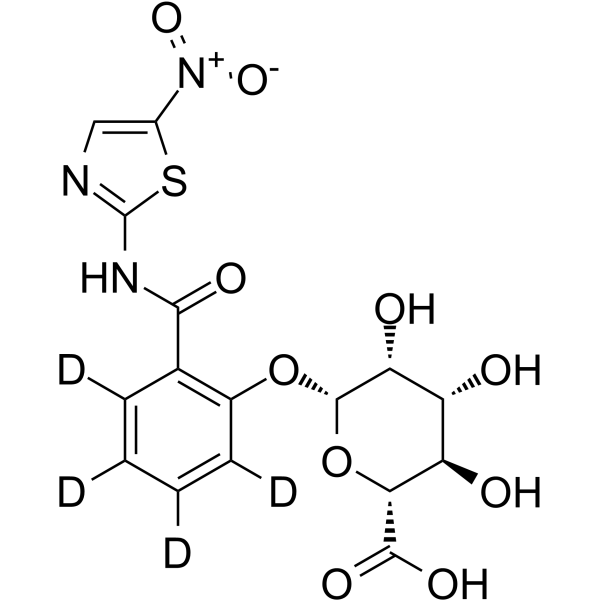
    Tizoxanide-d4 glucuronide is the deuterium labeled Tizoxanide glucuronide. Tizoxanide glucuronide is the metabolite of Nitazoxanide (HY-B0217) and is cell-permeable to inhibit asexual and sexual stages development of parasite C. parvum .
    Tizoxanide-d4 glucuronide
  • HY-165555

    Parasite Infection
    MMV665917 is an orally active piperazine derivative with anti-Cryptosporidium parvum activity with an EC90 of 15 μM. MMV665917 significantly reduces the parasite load in a porcine model infected with C. hominis, decreases ovarian excretion, alleviates diarrhea symptoms and reduces intestinal mucosal damage. MMV665917 can be used for research on Cryptosporidium parvum disease .
    MMV665917
  • HY-W011517R

    2FA (Standard)

    Reference Standards Parasite Infection
    2-Fluoroadenosine (2FA) is a nucleoside analogue. 2-Fluoroadenosine has antiparasite activity with EC50 value of 0.842 mM for Cryptosporidium parvum. 2-Fluoroadenosine has a highly specific structural basis for MtADK. 2-Fluoroadenosine is commonly used in the study of parasitic conditions .
    2-Fluoroadenosine (Standard)
  • HY-118421

    Parasite HDAC Infection
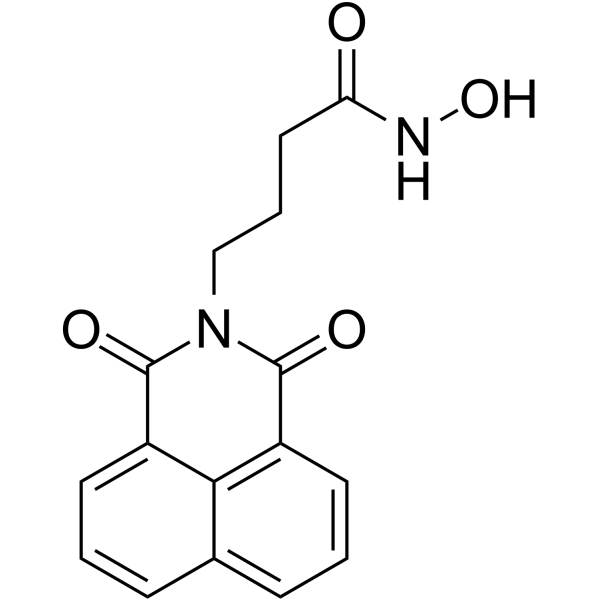
    Nullscript is a negative control for Scriptaid. Nullscript is a known inactive analog of Scriptaid . Scriptaid is a representative HDAC inhibitor . Nullscript inhibits Cryptosporidium (C. parvum) growth with the IC50 value of 2.1 μM .
    Nullscript
  • HY-120489

    Parasite Infection
    A110 is the inhibitor for Cryptosporidium parvum inosine monophosphate dehydrogenase (CpIMPDH). A110 inhibits CpIMPDH in Toxoplasma gondii with IC50 of 18 nM. A110 exhibits pro-parasitic efficacy and cause parasitemia .
    A110
  • HY-158776

    Parasite Infection
    SLU-10482 is an orally active anti-parasitic agent, that inhibits Cryptosporidium parvum with an IC50 of 0.0687 μM. SLU-10482 exhibits anti-infective efficacy in C. parvum infected mice with an AC50 of 0.0686 μM .
    SLU-10482
  • HY-162903

    Parasite Infection
    LN002 is an orally active anti-Cryptosporidium oxidase inhibitor for the study of cryptosporidiosis .
    LN002
  • HY-N3018R

    6-O-α-D-Glucopyranosyl-D-glucose (Standard); D-Isomaltose (Standard)

    Reference Standards Endogenous Metabolite Parasite Infection Metabolic Disease
    Isomaltose (Standard) is the analytical standard of Isomaltose (HY-N3018). This product is intended for research and analytical applications. Isomaltose induces G-CSF secretion via heat-induced oxidative polymerization of glucose groups into high-molecular-weight compounds. Isomaltose modulates cecal bacterial cluster structure in mice. Isomaltose exhibits low glycemic index, slow hydrolysis, and prebiotic properties. Isomaltose reduces in vivo Cryptosporidium parvum colonization in neonatal mice. Isomaltose can be used for the research of Cryptosporidium parvum infection .
    Isomaltose (Standard)
  • HY-170777

    Parasite Infection
    SLU-10906 (Compound 63) is an orally active and potent Cryptosporidium inhibitor. SLU-10906 is active against the parasite in a cell-based infection model (EC50= 0.19 μM) and non-cytotoxic. SLU-10906 is promising for research of cryptosporidiosis .
    SLU-10906
  • HY-W714201

    Herbicide Parasite Infection
    Nitralin is a dinitroaniline herbicide. Nitralin exhibits inhibitory activity against Cryptosporidium parvum, with a IC50 of 4.5 µM .
    Nitralin
  • HY-182684

    Bacterial Dihydrofolate reductase (DHFR) Infection
    MMV675968 is an inhibitor of Acinetobacter baumannii dihydrofolate reductase (AbDHFR) with an IC50 of 8.5 nM, and it exhibits selectivity against human DHFR. MMV675968 inhibits dihydrofolate reductase in Cryptosporidium, Plasmodium, and Escherichia coli, disrupting the thymidylate cycle and folate biosynthesis pathway. MMV675968 inhibits the growth of multiple A. baumannii strains, including clinical isolates and environmental isolates. MMV675968 is applicable to research related to A. baumannii infections .
    MMV675968
  • HY-103583R

    Reference Standards PI4K Parasite Infection
    KDU731 (Standard) is the analytical standard of KDU731 (HY-103583). This product is intended for research and analytical applications. KDU731, an orally active C. parvum PI4K inhibitor with an IC50 value of 25 nM, blocks Cryptosporidium infection in vitro and in vivo . KDU731 is a promising agent candidate for the treatment of diarrhea caused by Cryptosporidium and meets a broad range of safety .
    KDU731 (Standard)
  • HY-B2180

    Environmental Pollutants Bacterial Insecticide Infection
    Dichloroisocyanurate sodium is a synthetic organochlorine compound belonging to triazine derivatives, and is commonly used as a disinfectant and biocide. Dichloroisocyanurate sodium can release hypochlorous acid to inactivate waterborne bacteria, viruses, helminths and protozoa, and can act as a hypochlorous acid reservoir to provide sustained biocidal protection .
    Dichloroisocyanurate sodium

Inquiry Online

Your information is safe with us. * Required Fields.

Salutation


Country or Region *

Applicant Name *


Organization Name *

Department *


Email Address *


Product Name *

Cat. No.


Requested quantity *

Phone Number *


Remarks

Inquiry Online

Inquiry Information

Product Name:
Cat. No.:
Quantity:
MCE Japan Authorized Agent:

