1. Search Result
Search Result
Results for "

Cystic Fibrosis Transmembrane Conductance Regulator

" in MedChemExpress (MCE) Product Catalog:

34

Inhibitors & Agonists

4

Isotope-Labeled Compounds

1

Antibodies

Cat. No. Product Name Target Research Areas Chemical Structure
  • HY-15206
    Glibenclamide
    25+ Cited Publications

    Glyburide

    Potassium Channel Mitochondrial Metabolism Autophagy CFTR P-glycoprotein Metabolic Disease
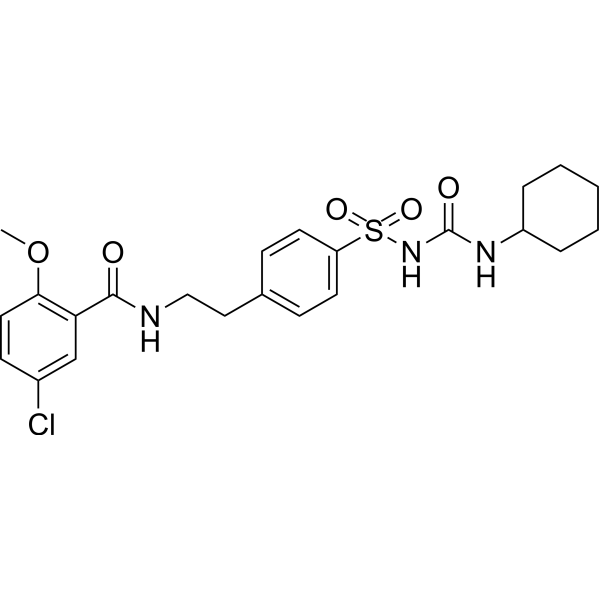
    Glibenclamide (Glyburide) is an orally active ATP-sensitive K + channel (KATP) inhibitor and can be used for the research of diabetes and obesity . Glibenclamide inhibits P-glycoprotein. Glibenclamide directly binds and blocks the SUR1 subunits of KATP and inhibits the cystic fibrosis transmembrane conductance regulator protein (CFTR) . Glibenclamide interferes with mitochondrial bioenergetics by inducing changes on membrane ion permeability . Glibenclamide can induce autophagy .
    Glibenclamide
  • HY-111772
    Elexacaftor
    Maximum Cited Publications
    48 Publications Verification

    VX-445

    CFTR Autophagy Inflammation/Immunology
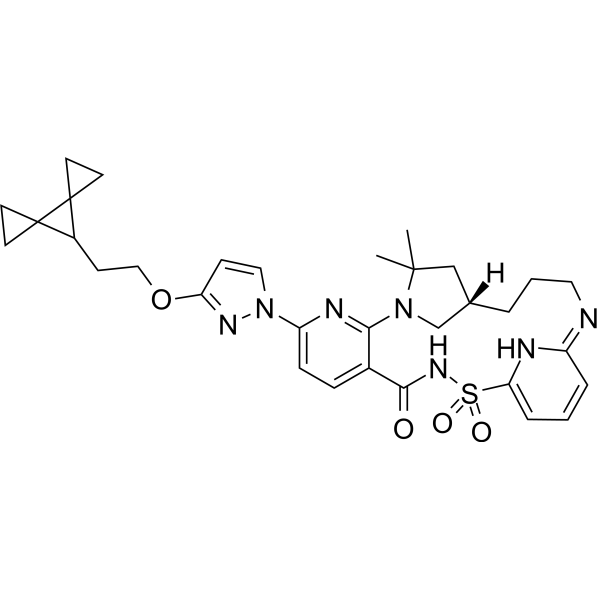
    Elexacaftor (VX-445, Compound 1) is a modulator of cystic fibrosis transmembrane conductance regulator (CFTR). Elexacaftor (VX-445, Compound 1) facilitates the processing and trafficking of CFTR to increase the amount of CFTR at the cell surface .
    Elexacaftor
  • HY-145603
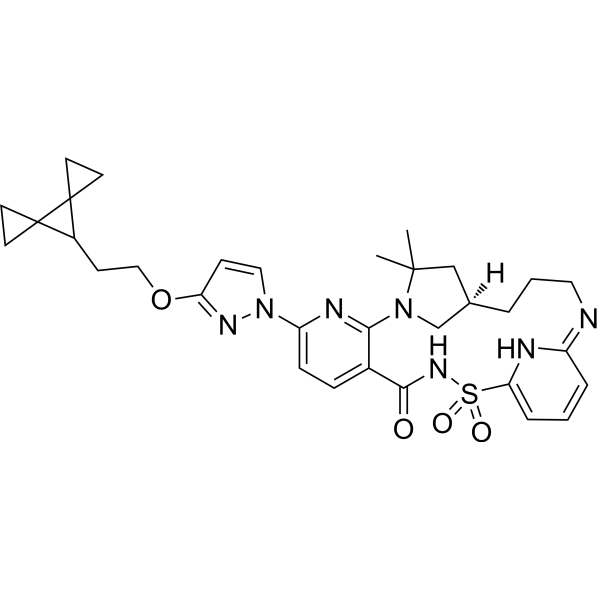
    Vanzacaftor
    4 Publications Verification

    VX-121

    CFTR Chloride Channel Neurological Disease
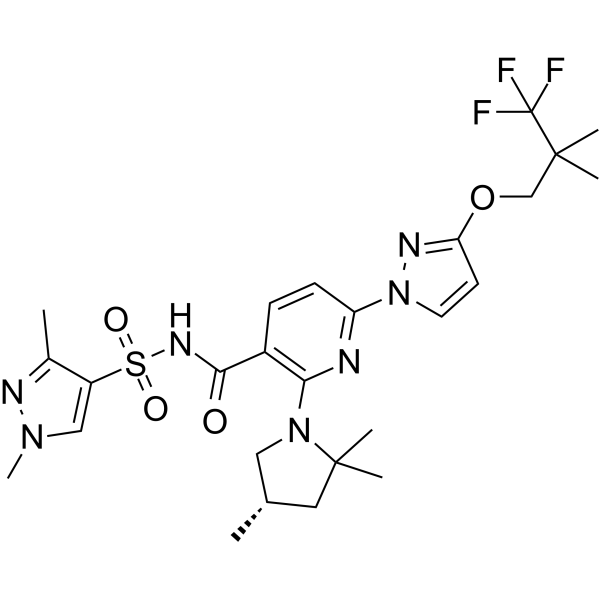
    Vanzacaftor (VX-121) is an orally active noval corrector of Cystic fibrosis transmembrane conductance regulator (CFTR). Vanzacaftor improves processing and trafficking of CFTR protein as well as increases chloride transport in triple combined with Tezacaftor (HY-15448) and Deutivacaftor. Vanzacaftor-Tezacaftor-Deutivacaftor is safe and well tolerated, improving lung function, respiratory symptoms, and CFTR function with cystic fibrosis, which is promising for research in the field of cystic fibrosis diseases .
    Vanzacaftor
  • HY-150090
    SRI-41315
    1 Publications Verification

    CFTR Inflammation/Immunology
    SRI-41315 induces a prolonged pause at stop codons and suppresses PTCs (premature termination codons) associated with cystic fibrosis in immortalized and primary human bronchial epithelial cells, restoring CFTR (cystic fibrosis transmembrane conductance regulator) expression and function. SRI-41315 suppresses PTCs by reducing the abundance of the termination factor eRF1. SRI-41315 also potentiates aminoglycoside-mediated readthrough, leading to synergistic increases in CFTR activity .
    SRI-41315
  • HY-145603A
    (R)-Vanzacaftor
    1 Publications Verification

    (R)-VX-121

    CFTR Inflammation/Immunology
    (R)-Vanzacaftor ((R)-VX-121) is a Cystic Fibrosis Transmembrane Conductance Regulator (CFTR) modulator with max activity of 30-60% and EC50 <1 μM in enteroid cells. (R)-Vanzacaftor can be used for the research of cystic fibrosis .
    (R)-Vanzacaftor
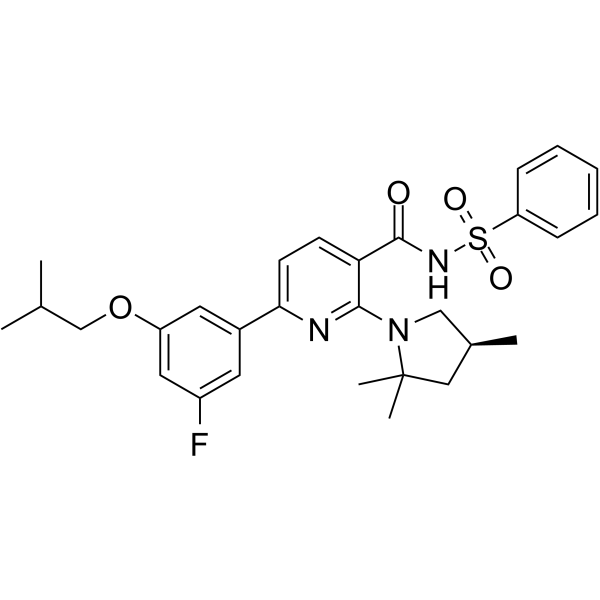
  • HY-111111
    Galicaftor
    1 Publications Verification

    ABBV-2222; GLPG-2222

    CFTR Inflammation/Immunology
    Galicaftor (ABBV-2222; GLPG-2222) is a potent and orally active cystic fibrosis transmembrane conductance regulator (CFTR) corrector. Galicaftor can be used for cystic fibrosis research .
    Galicaftor
  • HY-126394
    Bamocaftor
    1 Publications Verification

    VX-659

    CFTR Endocrinology
    Bamocaftor (VX-659) is a cystic fibrosis transmembrane conductance regulator (CFTR) corrector designed to restore F508del-CFTR protein function. Bamocaftor can be used combine with Tezacaftor (HY-15448) and Ivacaftor (HY-13017) in cystic fibrosis research .
    Bamocaftor
  • HY-111680
    Nesolicaftor
    2 Publications Verification

    PTI-428

    CFTR Autophagy Endocrinology
    Nesolicaftor (PTI-428) is a specific cystic fibrosis transmembrane conductance regulator (CFTR) amplifier .
    Nesolicaftor
  • HY-111772A

    (R)-VX-445

    Drug Isomer CFTR Inflammation/Immunology
    (R)-Elexacaftor ((R)-VX-445) is the enantiomer of Elexacaftor (HY-111772). Elexacaftor is an orally active CFTR modulator that targets nucleotide-binding domain 1. Elexacaftor stabilizes misfolded F508del-CFTR protein, enhances its trafficking to the plasma membrane, and significantly improves metabolic stability, thermal stability and ion conductivity. Elexacaftor not only restores chloride transport function in nasal epithelial cells and rescues multiple CFTR mutation subtypes, but also exerts multiplicative synergistic effects with Ivacaftor (HY-13017), and is often used in a triple combination therapy with Tezacaftor (HY-15448). Elexacaftor is widely used in basic and clinical translational research on cystic fibrosis .
    (R)-Elexacaftor
  • HY-15206S1

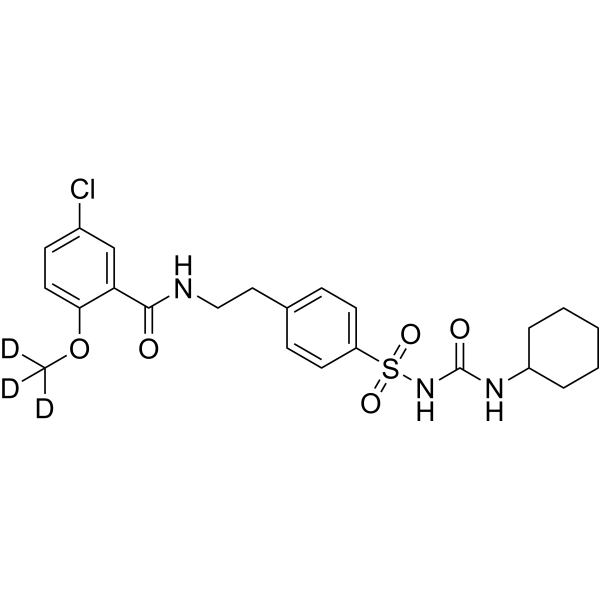
    Glyburide-d3

    Potassium Channel Mitochondrial Metabolism Autophagy CFTR P-glycoprotein Metabolic Disease
    Glyburide-d3 is the deuterium labeled Glibenclamide. Glibenclamide (Glyburide) is an orally active ATP-sensitive K+ channel (KATP) inhibitor and can be used for the research of diabetes and obesity[1]. Glibenclamide inhibits P-glycoprotein. Glibenclamide directly binds and blocks the SUR1 subunits of KATP and inhibits the cystic fibrosis transmembrane conductance regulator protein (CFTR)[3]. Glibenclamide interferes with mitochondrial bioenergetics by inducing changes on membrane ion permeability[4]. Glibenclamide can induce autophagy[5].
    Glyburide-d3
  • HY-112267

    VX-440

    CFTR Autophagy Inflammation/Immunology
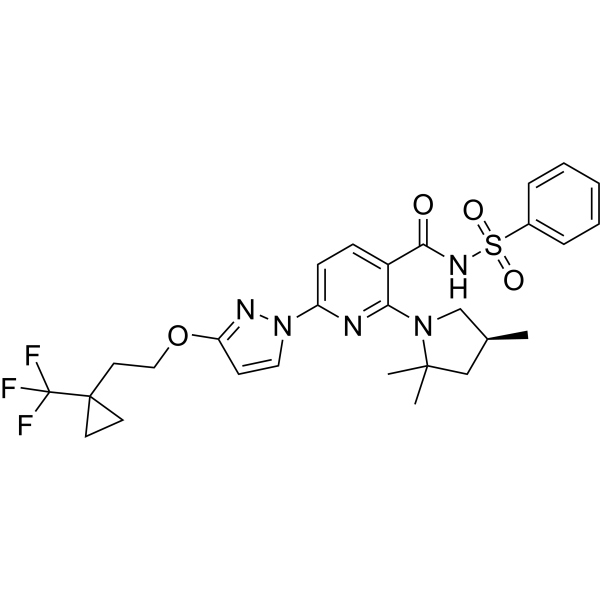
    Olacaftor (VX-440) is a cystic fibrosis transmembrane conductance regulator (CFTR) modulator extracted from patent US9782408.
    Olacaftor
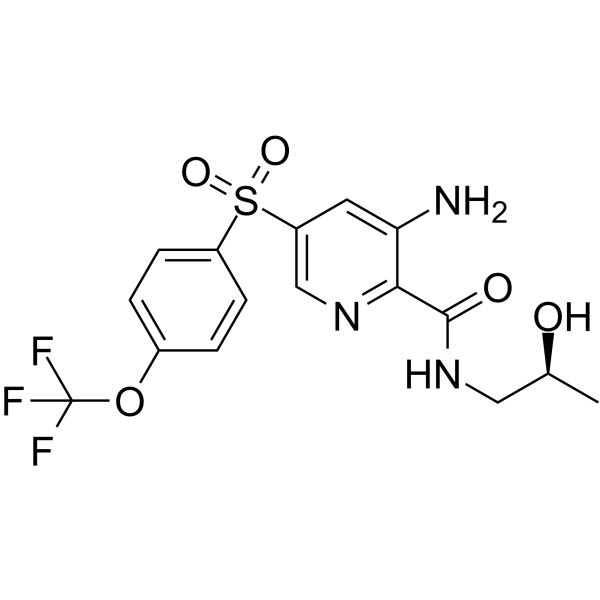
  • HY-119936

    CFTR Autophagy Inflammation/Immunology
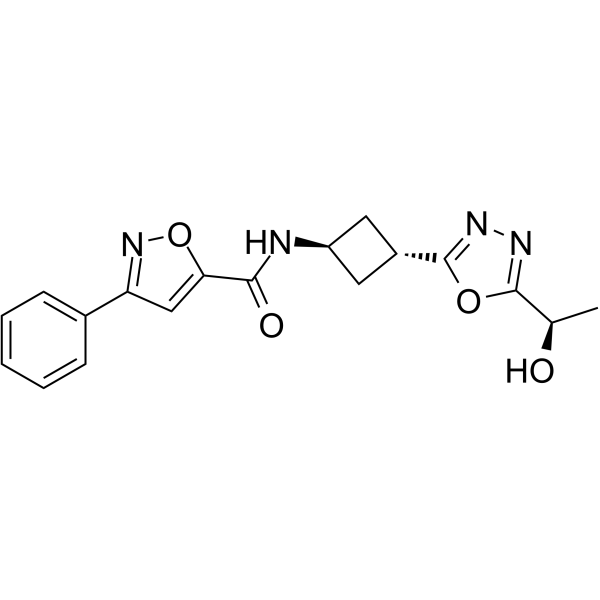
    GLPG2451 is a cystic fibrosis transmembrane conductance regulator (CFTR) potentiator, which effectively potentiates low temperature rescued F508del CFTR with an EC50 of 11.1 nM .
    GLPG2451
  • HY-19970
    KM11060
    2 Publications Verification

    CFTR Autophagy Endocrinology
    KM11060 is a corrector of the F508 deletion (F508del)-cystic fibrosis transmembrane conductance regulator (CFTR) trafficking defect. KM11060 can be used for the research of F508del-CFTR processing defect and development of cystic fibrosis research .
    KM11060
  • HY-158991

    CFTR Inflammation/Immunology
    I1421 is an activator of the cystic fibrosis transmembrane conductance regulator (CFTR) with an EC50 of 64 nM for WT CFTR currents. I1421 also allosterically activates multiple mutants causing cystic fibrosis (CF) with good in vivo potency, with an oral bioavailability of 60% in mice corresponding to a half-life of 75 min. I1421 synergizes with Elexacaftor (HY-111772) to enhance CFTR currents .
    I1421
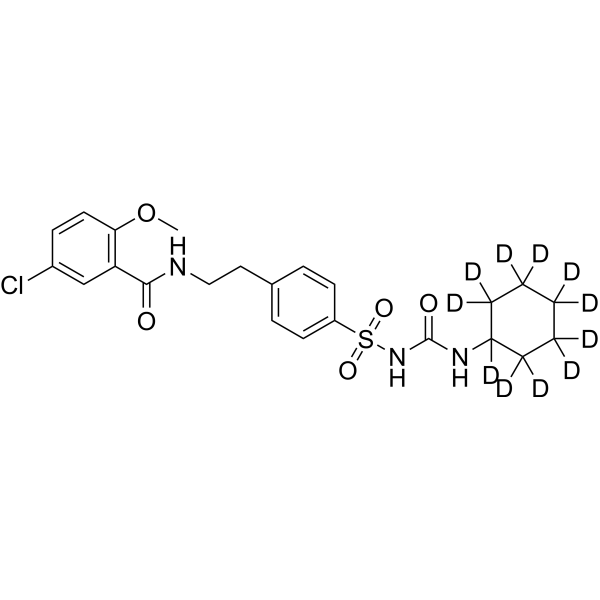
  • HY-15206S

    Isotope-Labeled Compounds Potassium Channel Mitochondrial Metabolism Autophagy CFTR P-glycoprotein Metabolic Disease
    Glyburide-d11 is the deuterium labeled Glibenclamide. Glibenclamide (Glyburide) is an orally active ATP-sensitive K+ channel (KATP) inhibitor and can be used for the research of diabetes and obesity . Glibenclamide inhibits P-glycoprotein. Glibenclamide directly binds and blocks the SUR1 subunits of KATP and inhibits the cystic fibrosis transmembrane conductance regulator protein (CFTR) . Glibenclamide interferes with mitochondrial bioenergetics by inducing changes on membrane ion permeability . Glibenclamide can induce autophagy .
    Glyburide-d11
  • HY-136939

    CFTR Metabolic Disease Inflammation/Immunology
    CFTR corrector 6 is a potent potentiator of Cystic Fibrosis Transmembrane conductance Regulator (CFTR). CFTR corrector 6 has the potential for cystic fibrosis (CF) and other CFTR associated disorders research .
    CFTR corrector 6
  • HY-135279

    CFTR Inflammation/Immunology
    CFTR corrector 4 (Compound 13), an active (R,R)-form enantiomer, is a highly potent and orally active cystic fibrosis transmembrane conductance regulator (CFTR) corrector. CFTR corrector 4 can increase CFTR levels at the cell surface and have the potential for treatment of cystic fibrosis .
    CFTR corrector 4
  • HY-117187

    CFTR Others
    Corr4A is a chemical corrector, which can be used for cystic fibrosis. Corr4A interacts directly with the cystic fibrosis transmembrane conductance regulator (CFTR) or affects indirectly its folding process. Corr4A increases the expression of CFTR ΔF508 on the cell surface, thereby improving its transport to the plasma membrane and increasing the stability of the rescued mutant protein .
    Corr4A
  • HY-145603S

    VX-121-d4

    Isotope-Labeled Compounds CFTR Chloride Channel Neurological Disease
    Vanzacaftor-d4 (VX-121-d4) is the deuterium labeled Vanzacaftor (HY-145603). Vanzacaftor is an orally active noval corrector of Cystic fibrosis transmembrane conductance regulator (CFTR). Vanzacaftor improves processing and trafficking of CFTR protein as well as increases chloride transport in triple combined with Tezacaftor (HY-15448) and Deutivacaftor. Vanzacaftor-Tezacaftor-Deutivacaftor is safe and well tolerated, improving lung function, respiratory symptoms, and CFTR function with cystic fibrosis, which is promising for research in the field of cystic fibrosis diseases .
    Vanzacaftor-d4
  • HY-112267A

    (R)-VX-440

    CFTR Others
    (R)-Olacaftor ((R)-VX-440) is a Cystic fibrosis transmembrane conductance regulator (CFTR) modulator. (R)-Olacaftor has good potential for the study of cystic fibrosis (CF) .
    (R)-Olacaftor
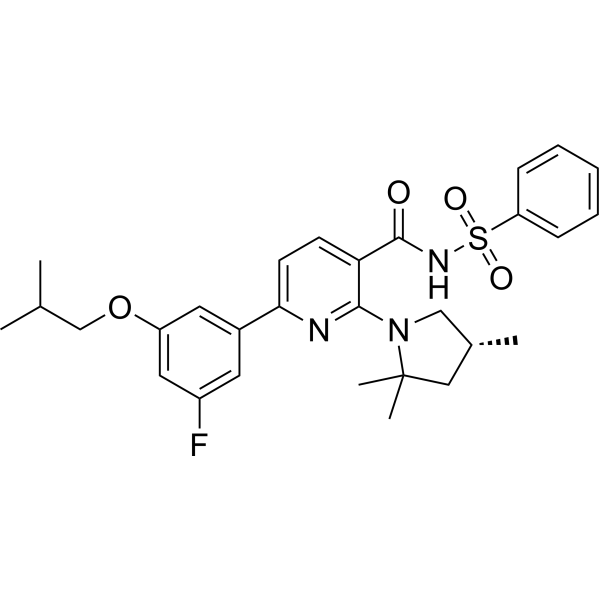
  • HY-164000

    CFTR Others
    CFTR corrector 15 (Compound 4172) is a corrector for cystic fibrosis transmembrane conductance regulator (CFTR), that repairs the F508del-CFTR folding defect when used with VX-809 (HY-13262). CFTR corrector 15 can be used in research of cystic fibrosis disease .
    CFTR corrector 15
  • HY-15206R

    Glyburide (Standard)

    Mitochondrial Metabolism Autophagy CFTR P-glycoprotein Potassium Channel Reference Standards Metabolic Disease
    Glibenclamide (Standard) is the analytical standard of Glibenclamide. This product is intended for research and analytical applications. Glibenclamide (Glyburide) is an orally active ATP-sensitive K + channel (KATP) inhibitor and can be used for the research of diabetes and obesity . Glibenclamide inhibits P-glycoprotein. Glibenclamide directly binds and blocks the SUR1 subunits of KATP and inhibits the cystic fibrosis transmembrane conductance regulator protein (CFTR) . Glibenclamide interferes with mitochondrial bioenergetics by inducing changes on membrane ion permeability . Glibenclamide can induce autophagy .
    Glibenclamide (Standard)
  • HY-133013

    CFTR Inflammation/Immunology
    GLPG-3221 is a potent, orally active corrector of CFTR (cystic fibrosis transmembrane conductance regulator), with an EC50 of 105 nM. GLPG-3221 can be uesd for the treatment of cystic fibrosis .
    GLPG-3221
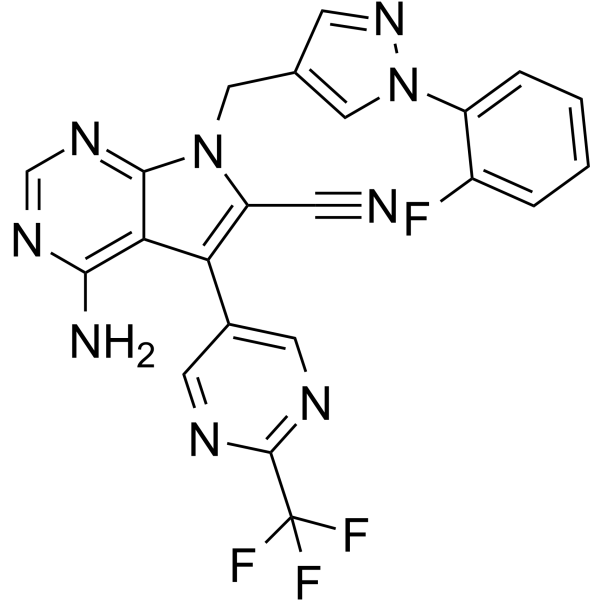
  • HY-169000

    CFTR Others
    CFTR corrector 16 (Compound 39) is a corrector for cystic fibrosis transmembrane conductance regulator (CFTR), that can be used in research of cystic fibrosis disease .
    CFTR corrector 16
  • HY-169536

    WAY-326769

    CFTR Inflammation/Immunology
    CFTR activator 2 (WAY-326769) is an activator of mutant cystic fibrosis transmembrane conductance regulator (mutant-CFTR) .
    CFTR activator 2
  • HY-147315

    CFTR Others
    CFTR corrector 9 (compound 42) is a cystic fibrosis transmembrane conductance regulator (CFTR) modulator. CFTR corrector 9 can be used for researching cystic fibrosis (CF) and other CFTR associated disorders .
    CFTR corrector 9
  • HY-126394B

    VX-659 potassium

    CFTR Endocrinology
    Bamocaftor potassium is a cystic fibrosis transmembrane conductance regulator (CFTR) corrector designed to restore F508del-CFTR protein function. Bamocaftor potassium can be used combine with Tezacaftor (HY-15448) and Ivacaftor (HY-13017) in cystic fibrosis research .
    Bamocaftor potassium
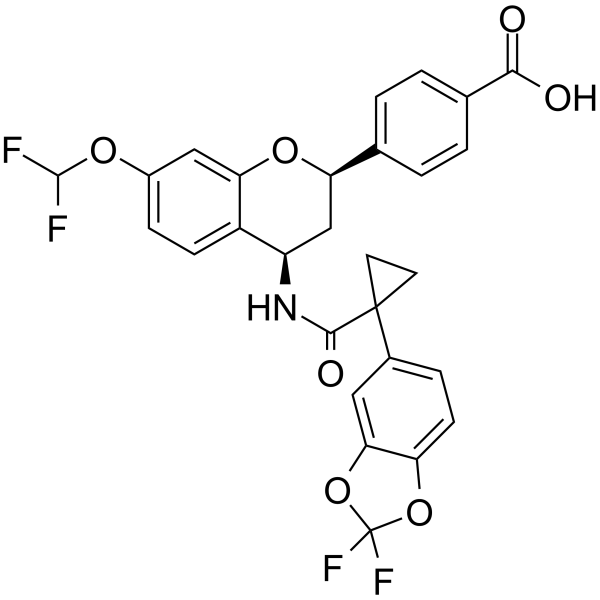
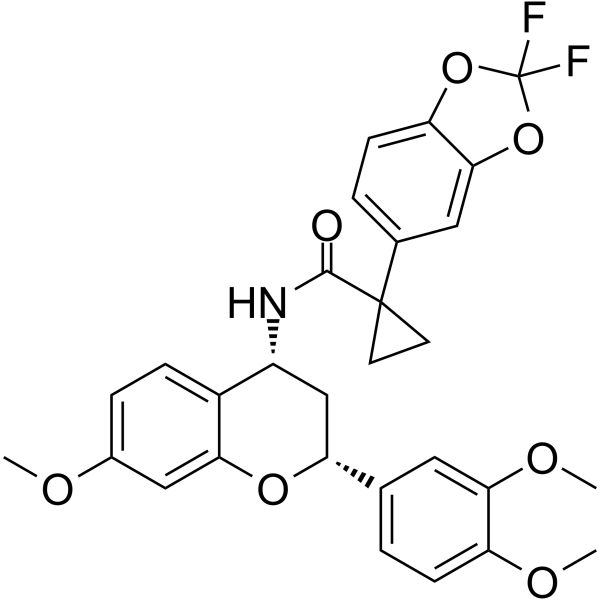
  • HY-172555

    CFTR Endocrinology
    CFTR corrector 18 (Compound I-99) is a cystic fibrosis transmembrane conductance regulator (CFTR) corrector. CFTR corrector 18 facilitates the processing and trafficking of CFTR, increasing the number of CFTR on the cell surface. CFTR corrector 18 is promising for research of cystic fibrosis (CF) .
    CFTR corrector 18
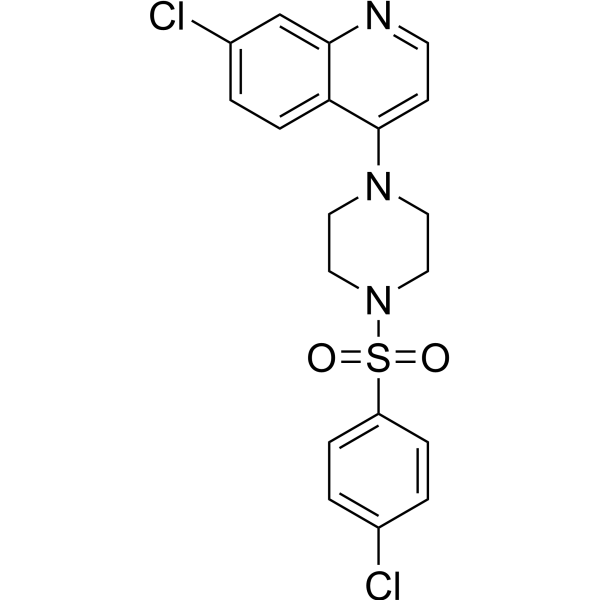
  • HY-161895

    CFTR Others
    CFTR corrector 14 (Compound SVQ26) is a class 3 corrector for cystic fibrosis transmembrane conductance regulator (CFTR), that promotes the CFTR activity (EC50 of 3.08 μM with presence of C1 class corrector VX-809). CFTR corrector 14 regulates the mutant-caused misfolding and impaired function of the CFTR protein. CFTR corrector 14 can be used in research about cystic fibrosis .
    CFTR corrector 14
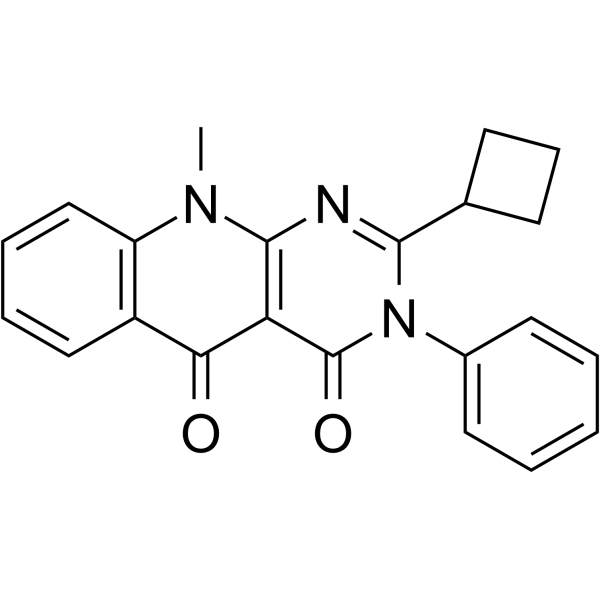
  • HY-161894

    CFTR Inflammation/Immunology
    CFTR corrector 13 (SVQ18) is a cystic fibrosis transmembrane conductance regulator (CFTR) corrector (EC50=3.14 μM). CFTR corrector 13 enhances the function of CFTR channels, especially when used in combination with Lumacaftor (HY-13262), it can produce a dose-dependent increase in CFTR function. CFTR corrector 13 can be used in the study of cystic fibrosis (CF) and other CFTR-related diseases .
    CFTR corrector 13
  • HY-111772R

    VX-445 (Standard)

    CFTR Autophagy Reference Standards Inflammation/Immunology
    Elexacaftor (Standard) is the analytical standard of Elexacaftor. This product is intended for research and analytical applications. Elexacaftor (VX-445, Compound 1) is a modulator of cystic fibrosis transmembrane conductance regulator (CFTR). Elexacaftor (VX-445, Compound 1) facilitates the processing and trafficking of CFTR to increase the amount of CFTR at the cell surface .
    Elexacaftor (Standard)
  • HY-15206S2

    Glyburide-13C6

    Isotope-Labeled Compounds Autophagy Mitochondrial Metabolism Potassium Channel CFTR P-glycoprotein Metabolic Disease
    Glibenclamide- 13C6 (Glyburide- 13C6) is 13C labeled Glibenclamide. Glibenclamide (Glyburide) is an orally active ATP-sensitive K + channel (KATP) inhibitor and can be used for the research of diabetes and obesity . Glibenclamide inhibits P-glycoprotein. Glibenclamide directly binds and blocks the SUR1 subunits of KATP and inhibits the cystic fibrosis transmembrane conductance regulator protein (CFTR) . Glibenclamide interferes with mitochondrial bioenergetics by inducing changes on membrane ion permeability . Glibenclamide can induce autophagy .
    Glibenclamide-13C6
  • HY-W403607

    4-Chlorobenzo[f]isoquinoline

    Chloride Channel Potassium Channel Inflammation/Immunology
    CBIQ (4-Chlorobenzo[f]isoquinoline) is a benzoisoquinoline compound. CBIQ can activate the cystic fibrosis transmembrane conductance regulator (CFTR) Cl- ion channels and the intermediate-conductance calcium-sensitive K+ channel (KCNN4) with Kd values of 0.1 and 3.9 μM. CBIQ can be used for the research related to cystic fibrosis .
    CBIQ
  • HY-128131

    Endogenous Metabolite Others
    UCCF-029 Free base is a potent activator of the cystic fibrosis transmembrane conductance regulator (CFTR) chloride channel. UCCF-029 Free base exhibits enhanced activity through benzannulation of the flavone A-ring at the 7,8-position. UCCF-029 Free base serves as a structural guide for the development of more effective flavonoid analogues. UCCF-029 Free base demonstrates improved potency compared to apigenin in activating wild-type CFTR. UCCF-029 Free base also exhibits potential for activating the mutant CFTR (G551D-CFTR) though not as robustly as apigenin.
    UCCF-029 free base

Inquiry Online

Your information is safe with us. * Required Fields.

Salutation


Country or Region *

Applicant Name *


Organization Name *

Department *


Email Address *


Product Name *

Cat. No.


Requested quantity *

Phone Number *


Remarks

Inquiry Online

Inquiry Information

Product Name:
Cat. No.:
Quantity:
MCE Japan Authorized Agent:

