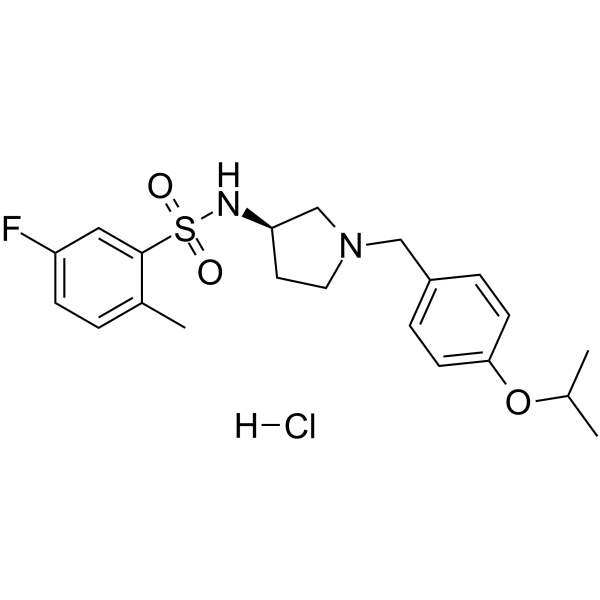
1. Search Result
Search Result
Pathways Recommended: Cell Cycle/DNA Damage
Results for "

E. coli DNA gyrase

" in MedChemExpress (MCE) Product Catalog:

29

Inhibitors & Agonists

2

Recombinant Proteins

3

Isotope-Labeled Compounds

Cat. No. Product Name Target Research Areas Chemical Structure
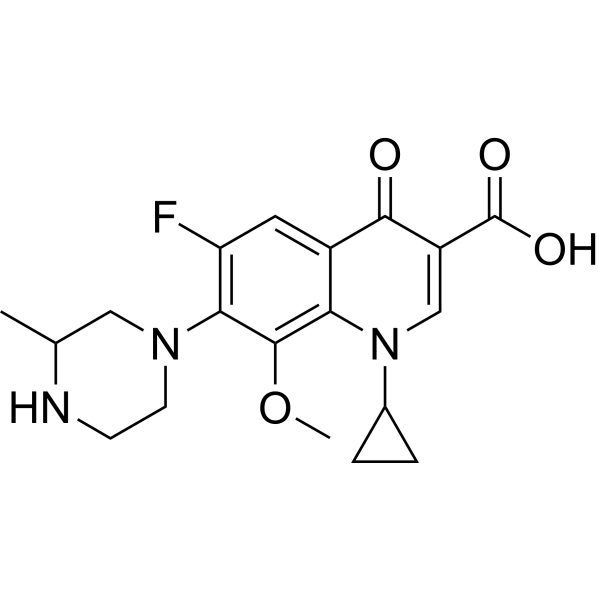
  • HY-10581
    Gatifloxacin
    4 Publications Verification

    AM-1155; BMS-206584; PD135432

    Bacterial Topoisomerase Antibiotic Infection Neurological Disease Cancer
    Gatifloxacin (AM-1155; BMS-206584; PD135432) is a potent fluoroquinolone antibiotic that can cross the blood-brain barrier, with broad-spectrum antibacterial activity. Gatifloxacin inhibits bacterial type II topoisomerases (IC50=13.8 μg/ml for S. aureus topoisomerase IV) and E. coli DNA gyrase (IC50=0.109 μg/ml) . Gatifloxacin can be used to treat bacterial conjunctivitis in vivo.
    Gatifloxacin
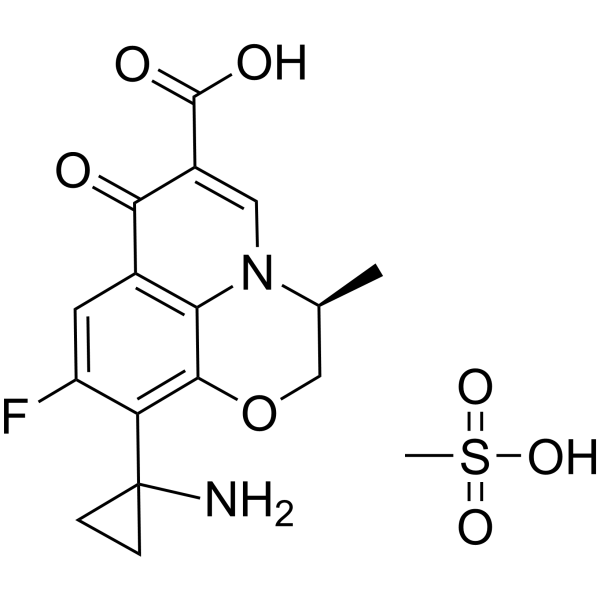
  • HY-B0724A
    Pazufloxacin mesylate
    1 Publications Verification

    T-3762; Pazufloxacin methanesulfonate; Pazufloxacin mesilate

    Bacterial DNA/RNA Synthesis Infection
    Pazufloxacin mesylate is an orally active fluoroquinolone antimicrobial agent. Pazufloxacin mesylate inhibits DNA gyrase with IC50 values of 0.88 μg/mL (E. coli) and 1.9 μg/mL (P. aeruginosa). Pazufloxacin mesylate exhibits broad-spectrum antimicrobial activity, with MIC90 values ranging from 0.025 to 100 μg/mL against Gram-positive and Gram-negative bacteria, non-fermenting bacteria, Legionella spp., and anaerobic bacteria. Pazufloxacin mesylate is indicated for research on systemic infections, lung infections, urinary tract infections, and Legionella pneumonia .
    Pazufloxacin mesylate
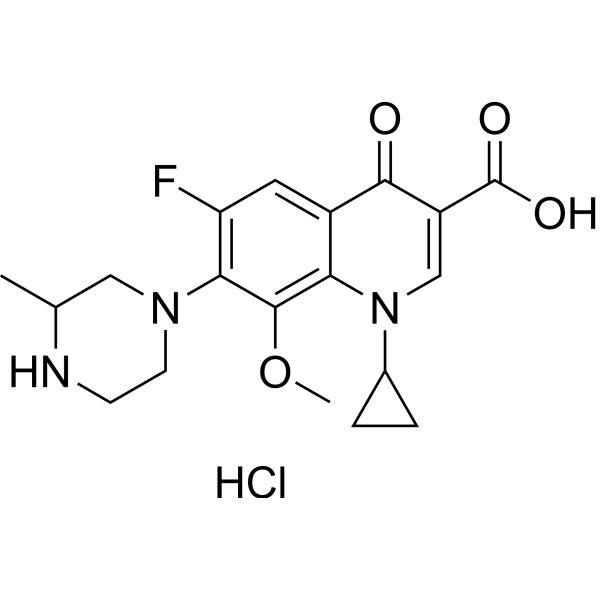
  • HY-10581A
    Gatifloxacin hydrochloride
    4 Publications Verification

    AM-1155 hydrochloride; BMS-206584 hydrochloride; PD135432 hydrochloride

    Bacterial Topoisomerase Antibiotic Infection
    Gatifloxacin hydrochloride (AM-1155; BMS-206584; PD135432) is a potent fluoroquinolone antibiotic with broad-spectrum antibacterial activity. Gatifloxacin hydrochloride inhibits bacterial type II topoisomerases (IC50=13.8 μg/ml for S. aureus topoisomerase IV) and E. coli DNA gyrase (IC50 = 0.109 μg/ml) . Gatifloxacin hydrochloride can be used to treat bacterial conjunctivitis in vivo.
    Gatifloxacin hydrochloride
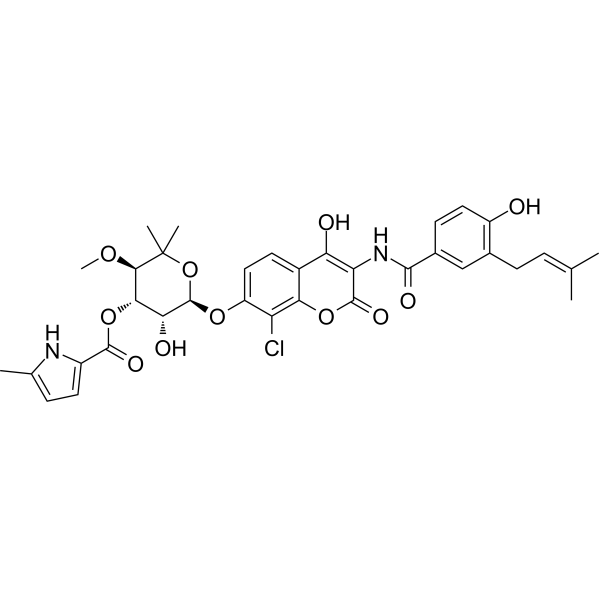
  • HY-123515

    Infection
    Clorobiocin is an antibacterial agent with an IC50 of 0.21 μM against the B subunit of E. coli DNA gyrase. Clorobiocin targets the mLaC protein of Gram-negative bacteria. Clorobiocin potently inhibits bacterial DNA replication. Clorobiocin can be used in studies on Gram-negative bacterial infections, such as Acinetobacter baumannii and E. coli infections .
    Clorobiocin
  • HY-B0724B

    T3761

    Bacterial DNA/RNA Synthesis Infection
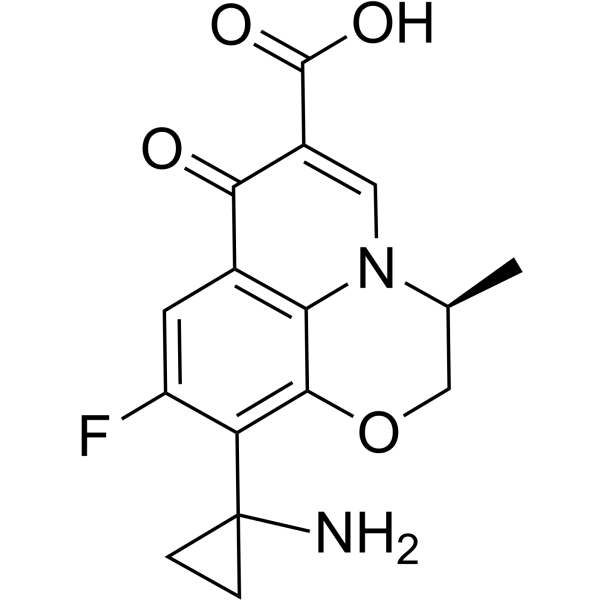
    Pazufloxacin is an orally active fluoroquinolone antimicrobial agent. Pazufloxacin inhibits DNA gyrase with IC50 values of 0.88 μg/mL (E. coli) and 1.9 μg/mL (P. aeruginosa). Pazufloxacin exhibits broad-spectrum antimicrobial activity, with MIC90 values ranging from 0.025 to 100 μg/mL against Gram-positive and Gram-negative bacteria, non-fermenting bacteria, Legionella spp., and anaerobic bacteria. Pazufloxacin is indicated for research on systemic infections, lung infections, urinary tract infections, and Legionella pneumonia .
    Pazufloxacin
  • HY-175539

    Bacterial Topoisomerase DNA/RNA Synthesis Infection
    DNA gyrase/Topo IV-IN-2 (Compound AK19) is an antibacterial agent with IC50 values of 0.783 μM and 7.136 μM against E. coli DNA gyrase and topoisomerase IV, respectively. DNA gyrase/Topo IV-IN-2 exhibits broad-spectrum antibacterial efficacy against both Gram-positive and Gram-negative pathogens. DNA gyrase/Topo IV-IN-2 can inhibit the biofilms of B. subtilis and MRSA, with an MIC of 1.9 μM against both B. subtilis and MRSA. DNA gyrase/Topo IV-IN-2 can be used in research related to anti-drug-resistant bacterial drugs .
    DNA gyrase/Topo IV-IN-2
  • HY-10581C

    AM-1155 sesquihydrate; BMS-206584 sesquihydrate; PD135432 sesquihydrate

    Bacterial Topoisomerase Antibiotic Infection Inflammation/Immunology
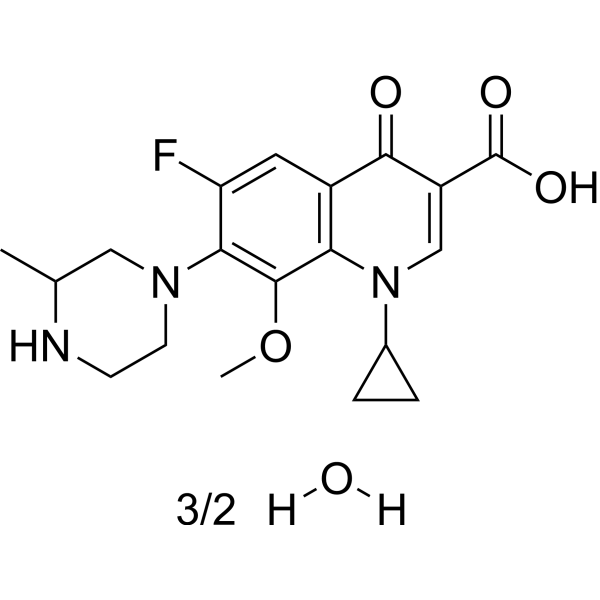
    Gatifloxacin sesquihydrate (AM-1155; BMS-206584; PD135432) is a potent fluoroquinolone antibiotic with broad-spectrum antibacterial activity. Gatifloxacin sesquihydrate inhibits bacterial type II topoisomerases (IC50=13.8 μg/ml for S. aureus topoisomerase IV) and E. coli DNA gyrase (IC50 = 0.109 μg/ml) . Gatifloxacin sesquihydrate can be used to treat bacterial conjunctivitis in vivo.
    Gatifloxacin sesquihydrate
  • HY-W264454

    Bacterial Infection
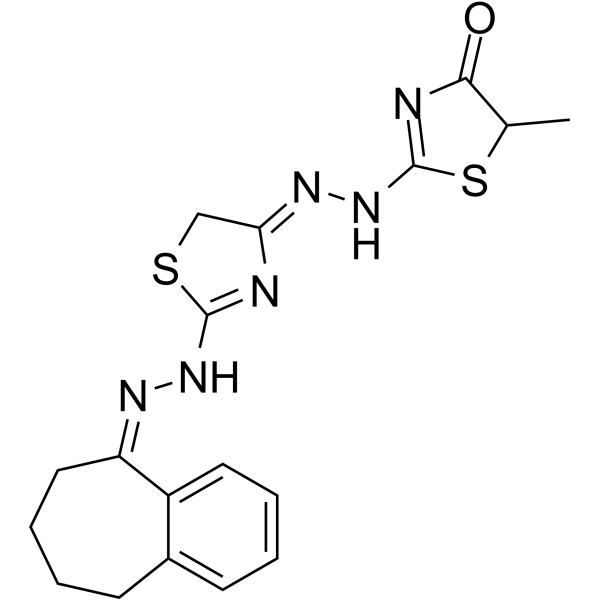
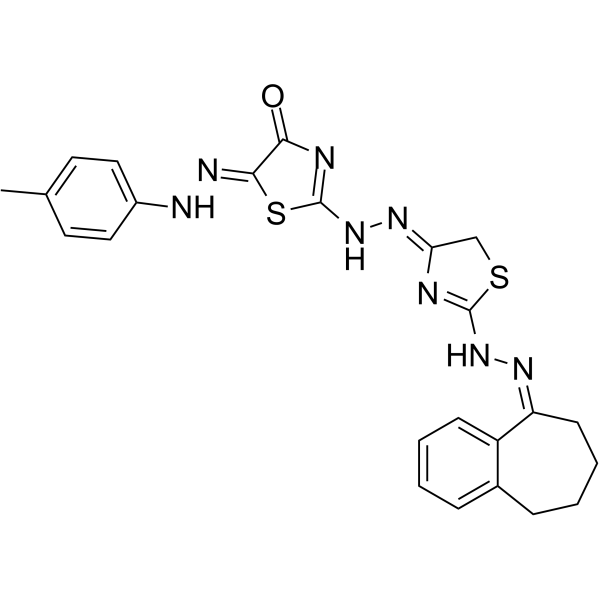
    Antibacterial agent 303 (compound 3) is an antibacterial agent exhibiting potent antibacterial activity against MDR strains, with MICs of 10 and 100 µg/mL against Pseudomonas aeruginosa MDR1 and Staphylococcus aureus MDR strains, respectively. Antibacterial agent 303 displays strong binding affinities to E. coli DNA gyrase and Candida albicans lanosterol 14α-demethylase. Antibacterial agent 303 can be used for drug-resistant infections research .
    Antibacterial agent 303
  • HY-B0724BS

    T3761-d4

    Isotope-Labeled Compounds Bacterial DNA/RNA Synthesis Infection
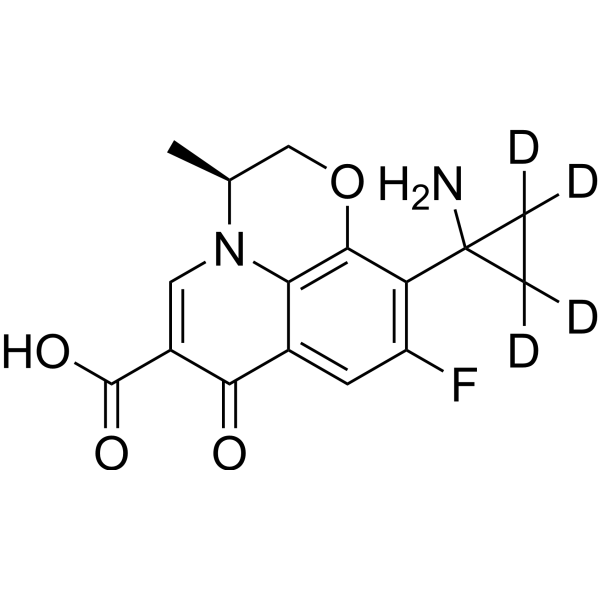
    Pazufloxacin-d4 is deuterium labeled Pazufloxacin (HY-B0724B). Pazufloxacin is an orally active fluoroquinolone antimicrobial agent. Pazufloxacin inhibits DNA gyrase with IC50 values of 0.88 μg/mL (E. coli) and 1.9 μg/mL (P. aeruginosa). Pazufloxacin exhibits broad-spectrum antimicrobial activity, with MIC90 values ranging from 0.025 to 100 μg/mL against Gram-positive and Gram-negative bacteria, non-fermenting bacteria, Legionella spp., and anaerobic bacteria. Pazufloxacin is indicated for research on systemic infections, lung infections, urinary tract infections, and Legionella pneumonia .
    Pazufloxacin-d4
  • HY-150044

    DNA/RNA Synthesis Topoisomerase Bacterial Infection
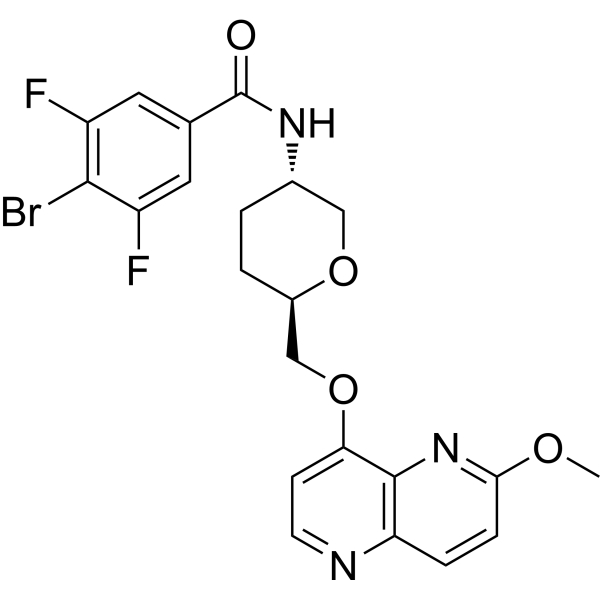
    Type II topoisomerase inhibitor 1 is a potent and selective E. coli DNA gyrase inhibitor (IC50: 1.7 nM), and forms hydrogen bonds with Asp73 residue. Type II topoisomerase inhibitor 1 inhibits topoisomerase IV activity (IC50: 0.98 μM). Type II topoisomerase inhibitor 1 can be used in the research of antibacterial area .
    Type II topoisomerase inhibitor 1
  • HY-147819

    Bacterial DNA/RNA Synthesis Infection
    DNA Gyrase-IN-3 (Compound 28) is a bacterial DNA gyrase B inhibitor with IC50s of 5.41-15.64 µM for E. coli DNA gyrase. Anti-tubercular and antibacterial activity .
    DNA Gyrase-IN-3
  • HY-168648

    Bacterial Fungal Dihydrofolate reductase (DHFR) Infection
    DNA Gyrase/DHFR-IN-1 is a dual inhibitor of bacterial DNA gyrase and DHFR, with IC50s of 182 μM and 3.90 μM for E. coli DNA gyrase and DHFR respectively. DNA Gyrase/DHFR-IN-1 has bactericidal and antifungal activity .
    DNA Gyrase/DHFR-IN-1
  • HY-147818

    Bacterial DNA/RNA Synthesis Infection
    DNA Gyrase-IN-2 (Compound 22a) is a bacterial DNA gyrase B inhibitor with IC50s of 3.29-10.49 and 4.41-5.61 µM for E. coli DNA gyrase and M. tuberculosis DNA gyrase. Anti-tubercular and antibacterial activity .
    DNA Gyrase-IN-2
  • HY-149271

    Bacterial DNA/RNA Synthesis Topoisomerase Infection
    Anti-MRSA agent 7 (Compound 12) is a potent antibacterial agent. Anti-MRSA agent 7 inhibits S. aureus DNA gyrase, E. coli DNA gyrase, S. aureus topo IV and E. coli topo IV with IC50s of 0.185, 0.365, 0.341 and 0.059 μM, respectively .
    Anti-MRSA agent 7
  • HY-161788

    DNA/RNA Synthesis Bacterial Infection
    DNA Gyrase-IN-11 (Compound 23Be) is an inhibitor for protein synthesis (IC50 is 0.74 μM) and DNA replication. DNA Gyrase-IN-11 inhibits DNA gyrase, that inhibits E. coli DNA supercoiling with IC50 of 11.9 μM. DNA Gyrase-IN-11 exhibits antibacterial efficacy, that inhibits Streptococcus pneumoniae, Streptococcus pyogenes, Haemophilus influenzae and Staphylococcus aureus, with MICs of 0.008-0.25 μg/mL .
    DNA Gyrase-IN-11
  • HY-155007

    Bacterial Infection
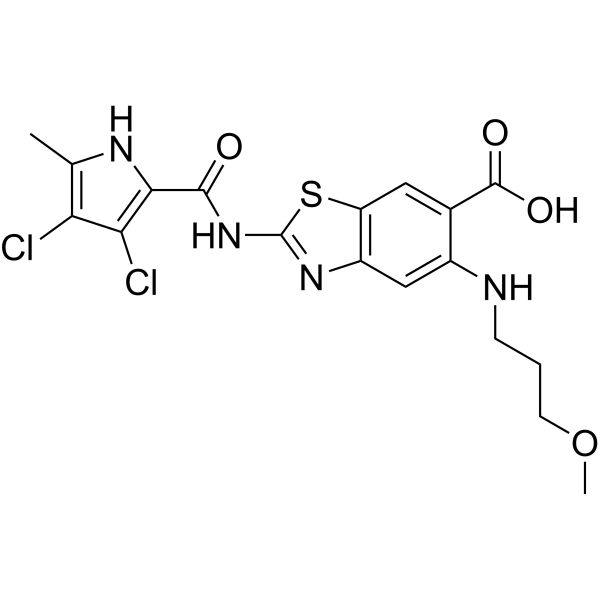
    DNA gyrase B-IN-2 (Compound E) is a 2-aminobenzothiazole-based DNA gyrase B inhibitor with promising activity against ESKAPE bacterial pathogens. DNA gyrase B-IN-2 showed low nanomolar inhibition of DNA gyrase (IC50 < 10 nM) and broad-spectrum antibacterial activity against pathogens belonging to the ESKAPE group, with the minimum inhibitory concentration < 0.03 μg/mL for most Gram-positive strains and 4–16 μg/mL against Gram-negative E. coli, Acinetobacter baumannii, Pseudomonas aeruginosa, and Klebsiella pneumoniae.DNA gyrase B-IN-2 can be used for the research of infection .
    DNA gyrase B-IN-2
  • HY-109785A

    Bacterial Infection
    (R)-Gyramide A hydrochloride is a bacterial DNA gyrase inhibitor that disrupts supercoiling activity with an IC50 value of 3.3 µM. (R)-Gyramide A hydrochloride demonstrates antibacterial activity against E. coli, P. aeruginosa, and S. enterica (MICs of 10-80 µM). (R)-Gyramide A hydrochloride does not affect the closely related enzyme topoisomerase IV.
    (R)-Gyramide A hydrochloride
  • HY-10581B

    AM-1155 mesylate; BMS-206584 mesylate; PD135432 mesylate

    Bacterial Topoisomerase Antibiotic Infection
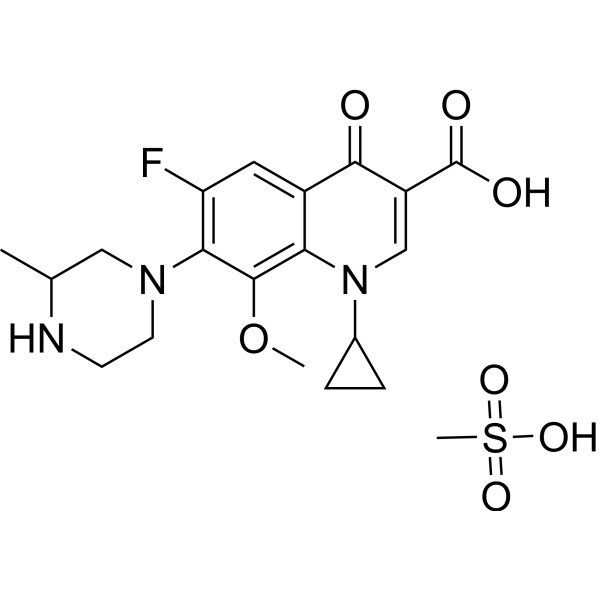
    Gatifloxacin mesylate (AM-1155; BMS-206584; PD135432) is a potent fluoroquinolone antibiotic with broad-spectrum antibacterial activity. Gatifloxacin mesylate inhibits bacterial type II topoisomerases (IC50=13.8 μg/ml for S. aureus topoisomerase IV) and E. coli DNA gyrase (IC50 = 0.109 μg/ml) . Gatifloxacin mesylate can be used to treat bacterial conjunctivitis in vivo.
    Gatifloxacin mesylate
  • HY-10581AS

    AM-1155-d3 hydrochloride; BMS-206584-d3 hydrochloride; PD135432-d3 hydrochloride

    Isotope-Labeled Compounds Bacterial Topoisomerase Antibiotic Infection
    Gatifloxacin-d3 (hydrochloride) is the deuterium labeled Gatifloxacin (hydrochloride). Gatifloxacin hydrochloride (AM-1155; BMS-206584; PD135432) is a potent fluoroquinolone antibiotic with broad-spectrum antibacterial activity. Gatifloxacin hydrochloride inhibits bacterial type II topoisomerases (IC50=13.8 μg/ml for S. aureus topoisomerase IV) and E. coli DNA gyrase (IC50 = 0.109 μg/ml). Gatifloxacin hydrochloride can be used to treat bacterial conjunctivitis in vivo.
    Gatifloxacin-d3 hydrochloride
  • HY-10581AR

    AM-1155 hydrochloride (Standard); BMS-206584 hydrochloride (Standard); PD135432 hydrochloride (Standard)

    Reference Standards Bacterial Topoisomerase Antibiotic Infection
    Gatifloxacin (hydrochloride) (Standard) is the analytical standard of Gatifloxacin (hydrochloride). This product is intended for research and analytical applications. Gatifloxacin hydrochloride (AM-1155; BMS-206584; PD135432) is a potent fluoroquinolone antibiotic with broad-spectrum antibacterial activity. Gatifloxacin hydrochloride inhibits bacterial type II topoisomerases (IC50=13.8 μg/ml for S. aureus topoisomerase IV) and E. coli DNA gyrase (IC50 = 0.109 μg/ml)[1]. Gatifloxacin hydrochloride can be used to treat bacterial conjunctivitis in vivo.
    Gatifloxacin hydrochloride (Standard)
  • HY-W700069

    AM-1155-d4; BMS-206584-d4; PD135432-d4

    Isotope-Labeled Compounds Antibiotic Bacterial Topoisomerase Infection
    Gatifloxacin-d4 (AM-1155-d4) is the deuterium labeled Gatifloxacin (HY-10581). Gatifloxacin (AM-1155; BMS-206584; PD135432) is a potent fluoroquinolone antibiotic with broad-spectrum antibacterial activity. Gatifloxacin inhibits bacterial type II topoisomerases (IC50 = 13.8 μg/mL for S. aureus topoisomerase IV) and E.coli DNA gyrase (IC50 = 0.109 μg/mL) . Gatifloxacin can be used for the study of bacterial conjunctivitis in vivo.
    Gatifloxacin-d4
  • HY-10581R

    AM-1155 (Standard); BMS-206584 (Standard); PD135432 (Standard)

    Reference Standards Bacterial Topoisomerase Antibiotic Infection
    Gatifloxacin (Standard) is the analytical standard of Gatifloxacin. This product is intended for research and analytical applications. Gatifloxacin (AM-1155; BMS-206584; PD135432) is a potent fluoroquinolone antibiotic with broad-spectrum antibacterial activity. Gatifloxacin inhibits bacterial type II topoisomerases (IC50=13.8 μg/ml for S. aureus topoisomerase IV) and E. coli DNA gyrase (IC50=0.109 μg/ml) . Gatifloxacin can be used to treat bacterial conjunctivitis in vivo.
    Gatifloxacin (Standard)
  • HY-10581CR

    AM-1155 sesquihydrate (Standard); BMS-206584 sesquihydrate (Standard); PD135432 sesquihydrate (Standard)

    Reference Standards Bacterial Topoisomerase Antibiotic Infection Inflammation/Immunology
    Gatifloxacin (sesquihydrate) (Standard) is the analytical standard of Gatifloxacin (sesquihydrate). This product is intended for research and analytical applications. Gatifloxacin sesquihydrate (AM-1155; BMS-206584; PD135432) is a potent fluoroquinolone antibiotic with broad-spectrum antibacterial activity. Gatifloxacin sesquihydrate inhibits bacterial type II topoisomerases (IC50=13.8 μg/ml for S. aureus topoisomerase IV) and E. coli DNA gyrase (IC50 = 0.109 μg/ml) . Gatifloxacin sesquihydrate can be used to treat bacterial conjunctivitis?in vivo.
    Gatifloxacin sesquihydrate (Standard)
  • HY-174326

    Bacterial Infection
    Antibacterial agent 282 (Compound CP7), a seleno-Ciprofloxacin (HY-B0356) derivative, is an Antibacterial agent. Antibacterial agent 282 has significant antibacterial activity against gram-positive bacterium and gram-negative bacterium with MICs of 0.1-1.56 and 0.1-3.13 μg/mL, respectively (MBCs of 0.2-1.56 and 0.39-12.5 μg/mL). Antibacterial agent 282 potently disrupts and prevents biofilms formation of P. aeruginosa. Antibacterial agent 282 shows significant inhibitory activity towards the DNA gyrase from E. coli .
    Antibacterial agent 282
  • HY-B0724AR

    T-3762 (Standard); Pazufloxacin methanesulfonate (Standard); Pazufloxacin mesilate (Standard)

    Reference Standards Bacterial DNA/RNA Synthesis Infection
    Pazufloxacin (mesylate) (Standard) is the analytical standard of Pazufloxacin mesylate (HY-B0724A). This product is intended for research and analytical applications. Pazufloxacin mesylate is an orally active fluoroquinolone antimicrobial agent. Pazufloxacin mesylate inhibits DNA gyrase with IC50 values of 0.88 μg/mL (E. coli) and 1.9 μg/mL (P. aeruginosa). Pazufloxacin mesylate exhibits broad-spectrum antimicrobial activity, with MIC90 values ranging from 0.025 to 100 μg/mL against Gram-positive and Gram-negative bacteria, non-fermenting bacteria, Legionella spp., and anaerobic bacteria. Pazufloxacin mesylate is indicated for research on systemic infections, lung infections, urinary tract infections, and Legionella pneumonia .
    Pazufloxacin mesylate (Standard)
  • HY-126258

    Bacterial DNA/RNA Synthesis Infection
    IMP-1700 is a potent DNA damage potentiator and antibacterial agent. IMP-1700 inhibits the bacterial SOS response to DNA damage. IMP-1700 potently sensitizes MRSA to Ciprofloxacin (HY-B0356) with an EC50 of 5.9 nM. IMP-1700 inhibits the growth of E. coli K-12 BW25113, S. aureus SH1000 and MRSA USA300 JE2 .
    IMP-1700
  • HY-183700

    DNA/RNA Synthesis Topoisomerase Bacterial Infection
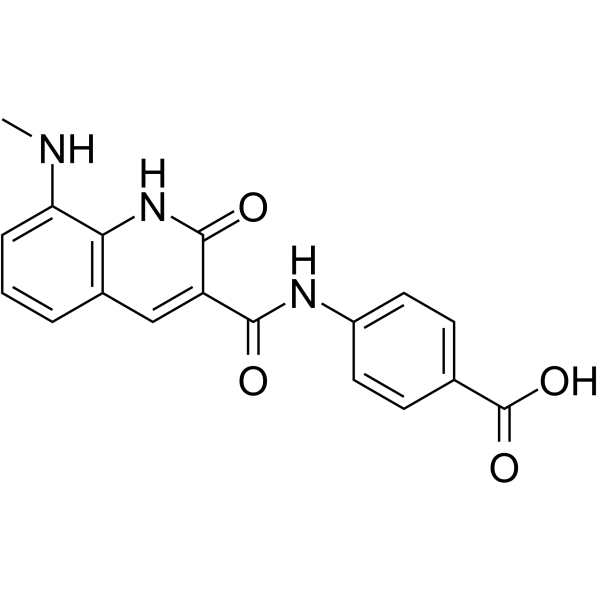
    DNA gyrase/Topo IV-IN-3 is an inhibitor of Escherichia coli DNA gyrase and Topoisomerase IV, with IC50 values of 1.75 μM and 3.47 μM, respectively. DNA gyrase/Topo IV-IN-3 acts as a biofilm inhibitor and exhibits antibacterial activity against both Gram-negative and Gram-positive bacteria. DNA gyrase/Topo IV-IN-3 can be used in studies related to bacterial infections .
    DNA gyrase/Topo IV-IN-3
  • HY-181107

    Bacterial DNA/RNA Synthesis Cytochrome P450 Infection
    DNA Gyrase/ribosomes-IN-1 is a bacterial ribosome and DNA gyrase inhibitor, with IC50 values of 1.11 μM and 3.31 μM, respectively. DNA Gyrase/ribosomes-IN-1 also inhibits CYP3A4, with an IC50 of 18.5 μM, and exhibits stability in mouse plasma and liver microsomes. DNA Gyrase/ribosomes-IN-1 inhibits bacterial protein synthesis by interacting with ribosomal RNA and associated sites. DNA Gyrase/ribosomes-IN-1 suppresses bacterial DNA replication by interacting with the gyrase complex. DNA Gyrase/ribosomes-IN-1 restores activity against macrolide-resistant, erm-mediated Gram-positive pathogens and enhances activity against Gram-negative bacteria such as Haemophilus influenzae and Moraxella catarrhalis. DNA Gyrase/ribosomes-IN-1 can be used in research on community-acquired bacterial pneumonia .
    DNA Gyrase/ribosomes-IN-1
  • HY-182936

    Bacterial DNA/RNA Synthesis Infection
    Antibacterial agent 338 (Compound 65) is an antibacterial agent and GyrB inhibitor, with an IC50 of 12.60 nM against GyrB from E. coli. Antibacterial agent 338 binds to the ATP-binding domain of E. coli GyrB, thereby inhibiting the ATPase activity of GyrB. Antibacterial agent 338 exhibits broad-spectrum antibacterial activity against multidrug-resistant Gram-negative bacteria. Antibacterial agent 338 reduces bacterial load in a neutropenic mouse thigh infection model. Antibacterial agent 338 can be used for the research of Acinetobacter baumannii infection .
    Antibacterial agent 338

Inquiry Online

Your information is safe with us. * Required Fields.

Salutation


Country or Region *

Applicant Name *


Organization Name *

Department *


Email Address *


Product Name *

Cat. No.


Requested quantity *

Phone Number *


Remarks

Inquiry Online

Inquiry Information

Product Name:
Cat. No.:
Quantity:
MCE Japan Authorized Agent:

