
1. Search Result
Search Result
Results for "

LTB4 antagonist

" in MedChemExpress (MCE) Product Catalog:

39

Inhibitors & Agonists

1

Natural
Products

1

Isotope-Labeled Compounds

Cat. No. Product Name Target Research Areas Chemical Structure
  • HY-15744
    LY255283
    3 Publications Verification

    Leukotriene Receptor Inflammation/Immunology Cancer
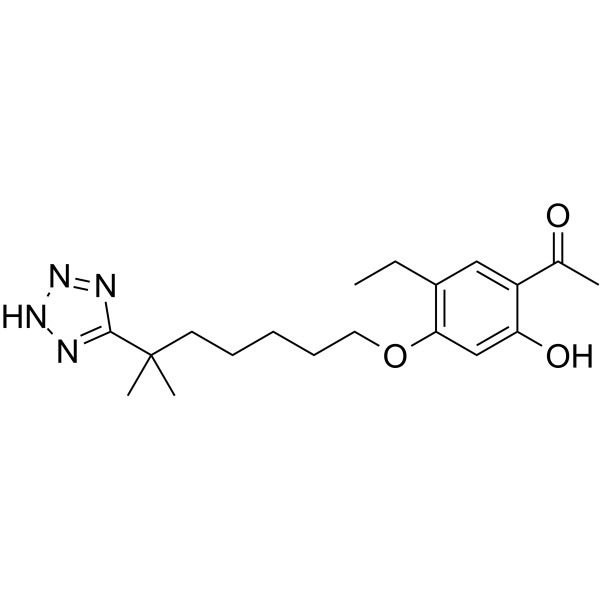
    LY255283 is a LTB4 receptor (BLT2) antagonist, with an IC50 of ~100 nM for [ 3H]LTB4 binding to guinea pig lung membranes .
    LY255283
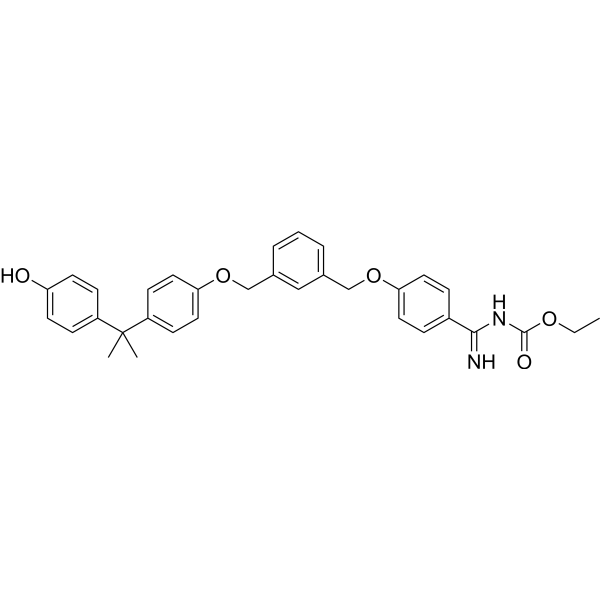
  • HY-13628
    Etalocib
    2 Publications Verification

    LY293111; VML 295

    Leukotriene Receptor Apoptosis Inflammation/Immunology Cancer
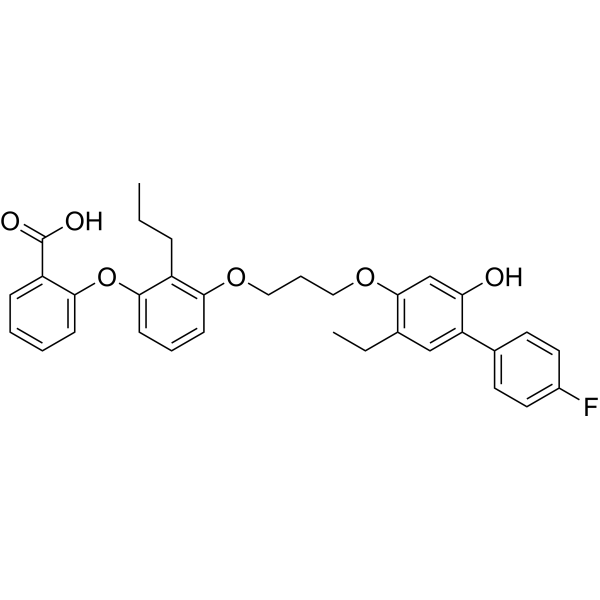
    Etalocib (LY293111), an orally active leukotriene B4 receptor antagonist, inhibits the binding of [ 3H]LTB4, with a Ki of 25 nM. Etalocib (LY293111) prevents LTB4-induced calcium mobilization with an lC50 of 20 nM. Etalocib (LY293111) induces apoptosis .
    Etalocib
  • HY-19304

    BIIL 284

    Leukotriene Receptor Inflammation/Immunology
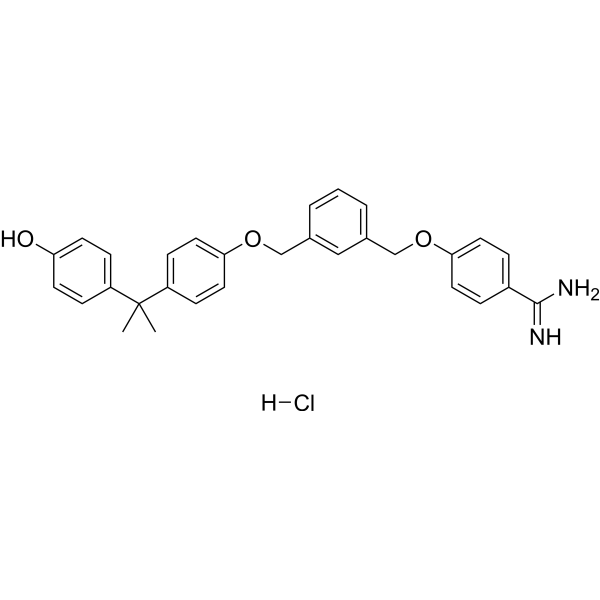
    Amelubant (BIIL 284) is a potent, oral and long acting LTB4 receptor antagonist, negligibly binds to LTB4 receptor, with Kis of 221 nM and 230 nM in vital cells and membranes. Amelubant (BIIL 284) is a proagent of active metabolites BIIL 260 and BIIL 315. Anti-inflammatory activity .
    Amelubant
  • HY-103360
    J-113863
    3 Publications Verification

    CCR Inflammation/Immunology
    J-113863 is a potent and selective CCR1 antagonist with IC50 values of 0.9 nM and 5.8 nM for human and mouse CCR1 receptors, respectively. J-113863 is also a potent antagonist of the human CCR3 (IC50 of 0.58 nM) , but a weak antagonist of the mouse CCR3 (IC50 of 460 nM). J-113863 is inactive against CCR2, CCR4 and CCR5, as well as the LTB4 or TNF-α receptors. Anti-inflammatory effect .
    J-113863
  • HY-114641A
    BIIL-260 hydrochloride
    1 Publications Verification

    Leukotriene Receptor Inflammation/Immunology
    BIIL-260 hydrochloride is a potent and long-acting orally active leukotriene B(4) receptor LTB4 antagonist, with anti-inflammatory activity. BIIL-260 hydrochloride interacts with the LTB4 receptor in a saturable, reversible, and competitive manner, has high affinity to the LTB4 receptor on isolated human neutrophil cell membranes with Ki values of 1.7 nM .
    BIIL-260 hydrochloride
  • HY-108396

    Ethyl γ-linolenate

    Leukotriene Receptor Inflammation/Immunology
    γ-Linolenic acid ethyl ester (Ethyl γ-linolenate) is a leukotriene B4 receptor 4 (LTB4) antagonist .
    γ-Linolenic acid ethyl ester
  • HY-149084

    Leukotriene Receptor Inflammation/Immunology
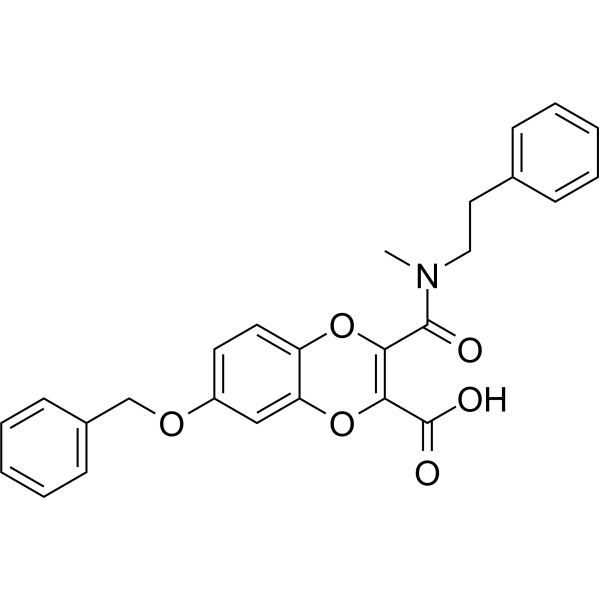
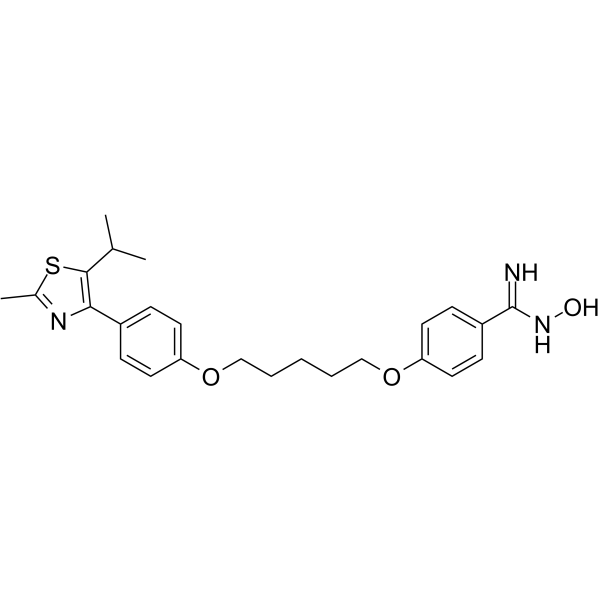
    LTB4 antagonist 3 (compound 24e) is a leukotriene B4 (LTB4) antagonist with an IC50 value of 477 nM. LTB4 antagonist 3 has anti-inflammatory activity .
    LTB4 antagonist 3
  • HY-112742

    Leukotriene Receptor Inflammation/Immunology
    CP-195543 is a potent, selective and orally active leukotriene B4 (LTB4) receptor antagonist with IC50s of 6.8, 37.0 nM for human neutrophils and murine spleen membranes, respectively. CP-195543 blocks CD11b up-regulation. CP-195543 inhibits LTB4-mediated neutrophil infiltration .
    CP-195543
  • HY-149083

    Leukotriene Receptor Inflammation/Immunology
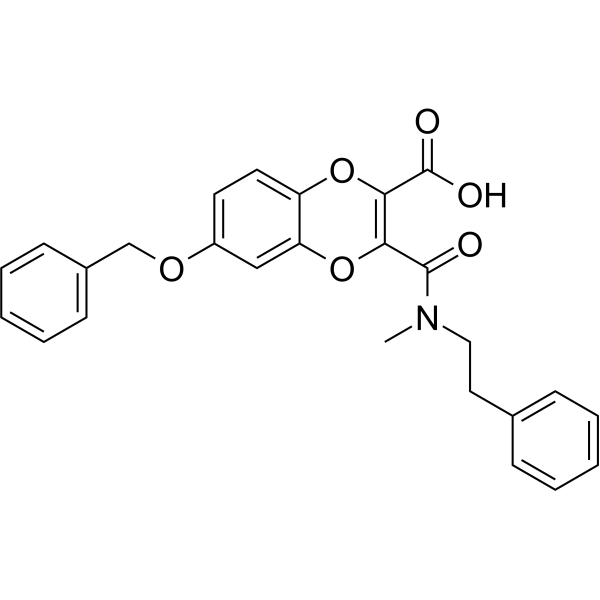
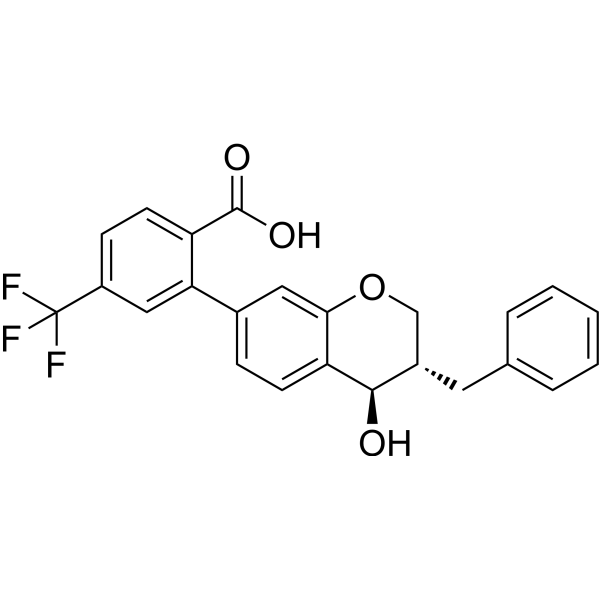
    LTB4 antagonist 2, a carboxamide-acid compound, is an antagonist of leukotriene B4 (LTB4) with potentially anti-inflammatory activity. LTB4 antagonist 2 shows good affinity for the LTB4 receptor with IC50 of 439 nM .
    LTB4 antagonist 2
  • HY-149082

    Leukotriene Receptor Inflammation/Immunology
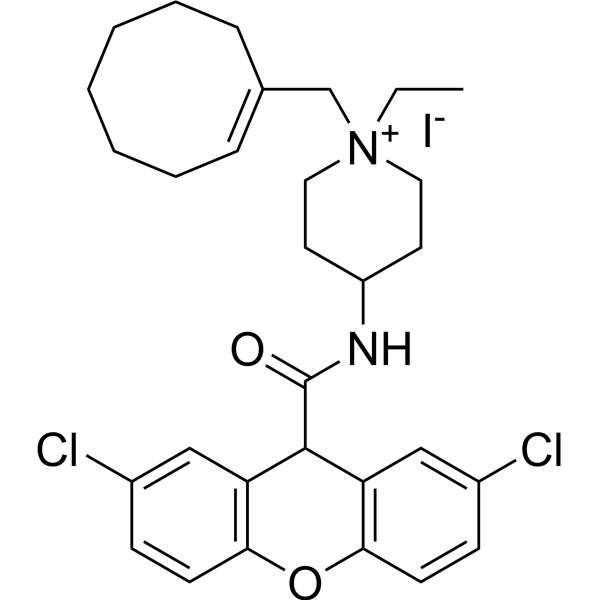
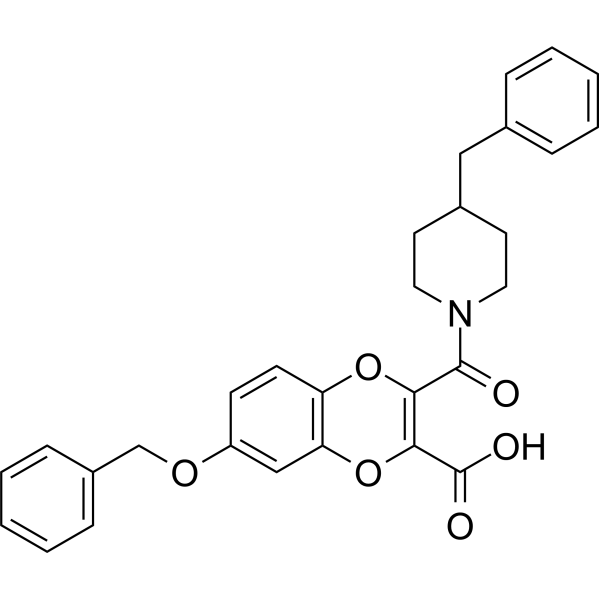
    LTB4 antagonist 1, a carboxamide-acid compound, is a potent Leukotriene B4 (LTB4) antagonist with an IC50 of 288 nM. LTB4 antagonist 1 has significant anti-inflammatory properties .
    LTB4 antagonist 1
  • HY-N4267

    Calcium Channel Platelet-activating Factor Receptor (PAFR) UGT Leukotriene Receptor TNF Receptor PGE synthase Interleukin Related Cardiovascular Disease Infection Inflammation/Immunology
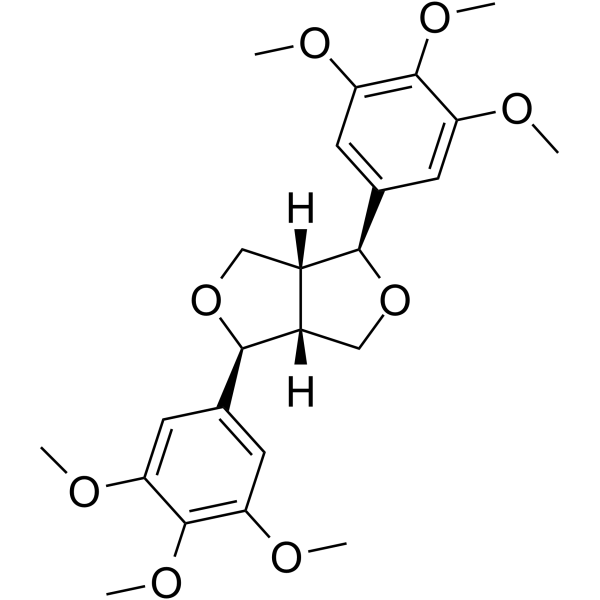
    Yangambin is a PAF receptor antagonist and UGT1A1/UGT1A3 inhibitor, with an IC50 of 29.7 μM and a Ki of 17.1 μM against human UGT1A1, and an IC50 of 56.5 μM and a Ki of 66.8 μM against human UGT1A3. Yangambin blocks PAF-mediated responses, inhibits LTB4-mediated neutrophil infiltration, and suppresses inflammatory events and anaphylactic contraction. Yangambin acts as a central nervous system inhibitor to reduce spontaneous activity, and also exhibits analgesic, anticonvulsant, antileishmanial, vasodilatory and hypotensive effects. Yangambin blocks voltage-gated Ca 2+ channels, reduces the production of NO, TNF-α, IL-6 and PGE2 in cells, increases the production of IL-10, and exerts a protective effect against cardiovascular injury. Yangambin can be used in research related to allergies, cutaneous leishmaniasis, central nervous system diseases and cardiovascular diseases .
    Yangambin
  • HY-124100

    Drug Derivative Others
    LTB4 antagonist 4 is an active compound.
    LTB4 antagonist 4
  • HY-112741
    SB-209247
    1 Publications Verification

    Leukotriene Receptor Inflammation/Immunology
    SB-209247 is a selective, high affinity and orally active leukotriene B4 (LTB4) receptor antagonist with a Ki of 0.78 nM. SB-209247 blocks LTB4-induced Ca 2+ mobilization with an IC50 of 6.6 nM. SB-209247 shows a potent anti-inflammatory activity .
    SB-209247
  • HY-155300

    Leukotriene Receptor Inflammation/Immunology
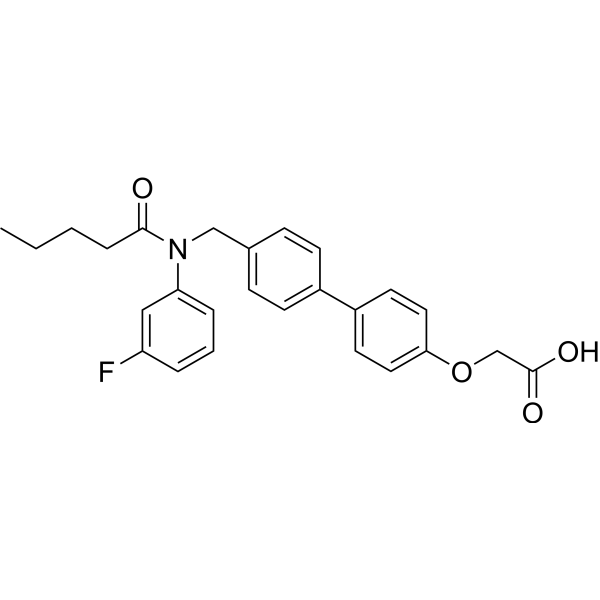
    BLT2 antagonist-1 (compound 15b) is a selective BLT2 antagonist that inhibits the chemotaxis of CHO-BLT2 cells with an IC50 of 224 nM. BLT2 antagonist-1 does not inhibits the chemotaxis of CHO-BLT1 cells. BLT2 antagonist-1 also inhibits the binding of LTB4 and BLT2 with a Ki value of 132 nM. BLT2 antagonist-1 can be used for the research of the inflammatory airway diseases such as asthma and chronic obstructive pulmonary disease .
    BLT2 antagonist-1
  • HY-100173

    Leukotriene Receptor Inflammation/Immunology
    DW-1350 is a LTB4 receptor antagonist.
    DW-1350
  • HY-112740

    Leukotriene Receptor Inflammation/Immunology
    SC-53228 is an orally active human leukotriene B4 receptor (LTB4 receptor) antagonist. SC-53228 exerts its anti-inflammatory effect by specifically blocking the LTB4 receptor and inhibiting neutrophil infiltration. SC-53228 has demonstrated significant efficacy and good safety in various inflammatory models. SC-53228 can be used for a variety of inflammatory diseases, such as psoriasis and ulcerative colitis .
    SC-53228
  • HY-117896

    Leukotriene Receptor Inflammation/Immunology
    SC-50605 and SC-51146 are second-generation leukotriene B4 (LTB4) receptor antagonists that effectively inhibit LTB4-induced chemotaxis in guinea pigs. SC-50605 targets the LTB4 receptor and has the potential to inhibit inflammatory diseases such as asthma, rheumatoid arthritis, and skin diseases. .
    SC-50605
  • HY-123014

    Leukotriene Receptor Cancer
    (Rac)-SC-45694 is a racemate of SC-45694. SC-45694 has full LTB4 agonist activity for neutrophil chemotaxis and has antagonist activity against LTB4-induced neutrophil degranulation .
    (Rac)-SC-45694
  • HY-139112

    Leukotriene Receptor Inflammation/Immunology
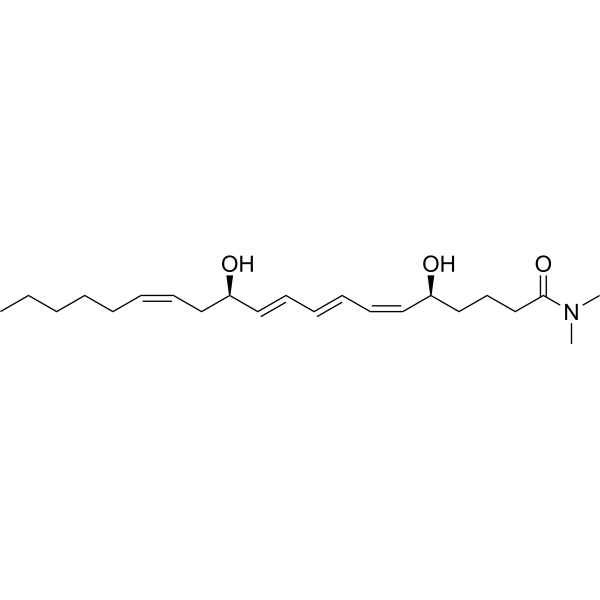
    Leukotriene B4 dimethyl amide, an immunomodulator, stimulates contraction of isolated guinea pig lung entities. Leukotriene B4 (LTB(4)) also stimulates human neutrophil migration, and LTB(4) antagonists may have anti-inflammatory activity in inflammatory pathophysiology .
    Leukotriene B4 dimethyl amide
  • HY-114641

    Leukotriene Receptor Inflammation/Immunology
    BIIL-260 is a potent and long-acting orally active leukotriene B(4) receptor LTB4 antagonist, with anti-inflammatory activity. BIIL-260 interacts with the LTB4 receptor in a saturable, reversible, and competitive manner, has high affinity to the LTB4 receptor on isolated human neutrophil cell membranes with the Ki value of 1.7 nM .
    BIIL-260
  • HY-122536

    Leukotriene Receptor Calcium Channel Endogenous Metabolite Inflammation/Immunology
    Ricinelaidic acid, a 12-hydroxy fatty acid,is a leukotriene B4 (LTB4) receptor antagonist with the Ki of 2 μM in porcine neutrophil membranes. Ricinelaidic acid inhibits chemotaxis and calcium flux induced by LTB4 in isolated human neutrophils (IC50=10 and 7 μM, respectively). Ricinelaidic acid inhibits bronchoconstriction induced by LTB4 in rats .
    Ricinelaidic acid
  • HY-13628A

    LY293111 sodium; VML 295 sodium

    Leukotriene Receptor Apoptosis Inflammation/Immunology Cancer
    Etalocib (LY293111) sodium, an orally active leukotriene B4 receptor antagonist, inhibits the binding of [ 3H]LTB4, with a Ki of 25 nM. Etalocib sodium prevents LTB4-induced calcium mobilization with an lC50 of 20 nM. Etalocib sodium induces apoptosis .
    Etalocib sodium
  • HY-131651

    LTB4 ethanolamide

    Endogenous Metabolite Leukotriene Receptor Cancer
    Leukotriene B4 ethanolamide (LTB4 ethanolamide) is an antagonist and a partial agonist for Leukotriene B4 (LTB4) receptor 1 (BLTR1). Leukotriene B4 ethanolamide ameliorates the tumor progression, which is only asscociated with inflammation .
    Leukotriene B4 ethanolamide
  • HY-U00263

    Leukotriene Receptor Inflammation/Immunology
    LY210073 is a Leukotriene B4 (LTB4) receptor antagonist with an IC50 of 6.2 nM.
    LY210073
  • HY-106929B

    CGS 25019C hydrochloride

    Leukotriene Receptor Inflammation/Immunology
    Moxilubant (CGS 25019C) hydrochloride is an orally active BLT1 antagonist. Moxilubant hydrochloride inhibits LTB4 signaling with a potency of 2-4 nM. Moxilubant hydrochloride blocks LTB4-induced neutrophil functions. Moxilubant hydrochloride inhibits ear edema and neutrophil infiltration in mice. Moxilubant hydrochloride can be used in research related to chronic obstructive pulmonary disease .
    Moxilubant hydrochloride
  • HY-106929
    Moxilubant
    1 Publications Verification

    CGS 25019C free base

    Leukotriene Receptor Inflammation/Immunology
    Moxilubant (CGS 25019C free base) is an orally active BLT1 antagonist. Moxilubant inhibits LTB4 signaling with a potency of 2-4 nM. Moxilubant blocks LTB4-induced neutrophil functions. Moxilubant inhibits ear edema and neutrophil infiltration in mice. Moxilubant can be used in research related to chronic obstructive pulmonary disease .
    Moxilubant
  • HY-13628R

    LY293111 (Standard); VML 295 (Standard)

    Leukotriene Receptor Apoptosis Reference Standards Inflammation/Immunology Cancer
    Etalocib (Standard) is the analytical standard of Etalocib. This product is intended for research and analytical applications. Etalocib (LY293111), an orally active leukotriene B4 receptor antagonist, inhibits the binding of [3H]LTB4, with a Ki of 25 nM. Etalocib (LY293111) prevents LTB4-induced calcium mobilization with an lC50 of 20 nM. Etalocib (LY293111) induces apoptosis .
    Etalocib (Standard)
  • HY-117557

    Leukotriene Receptor Inflammation/Immunology
    LY306669 is a potent and selective leukotriene B4 (LTB4) receptor antagonist that can be used for the research of lung injury .
    LY306669
  • HY-115390

    Leukotriene Receptor Cardiovascular Disease Inflammation/Immunology
    14,15-Dehydro Leukotriene B4 (Compound 4) is a LTB4 receptor antagonist. 14,15-Dehydro Leukotriene B4 also has a higher binding affinity for BLT1 with a Ki value of 27 nM and BLT2 with a Ki value of 473 nM. 14,15-Dehydro Leukotriene B4 inhibits LTB4-induced release of lysozymes from rat polymorphonuclear leukoctyes with an IC50 value of 1 µM .
    14,15-Dehydro Leukotriene B4
  • HY-19198

    Leukotriene Receptor Inflammation/Immunology
    SB-201993 is a selective leukotriene B₄ (LTB4) receptor antagonist with a Ki=7.6 nM for LTB4 receptors on human inflammatory cells. SB-201993 inhibits calcium mobilization in inflammatory cells and 5-lipoxygenase activity, exerting anti-inflammatory effects. SB-201993 is promising for research of inflammatory diseases (e.g., dermatitis, arthritis) .
    SB-201993
  • HY-117706

    Leukotriene Receptor Inflammation/Immunology
    LY 292728 is a potent leukotriene B4 (LTB4) receptor antagonist. LY 292728 binds to human neutrophils with a Ki of 0.47 nM and binds to guinea pig lung membranes with a Ki of 0.04 nM .
    LY 292728
  • HY-117854

    Leukotriene Receptor Inflammation/Immunology
    SB 201146 is an LTB4 receptor antagonist with a potency range of 10 pM to 1 μM that plays a critical role in asthma-associated airway inflammation. Studies have focused on its effects on eosinophil survival, a hallmark of asthma pathology. Studies have shown that eosinophil-derived cysteinyl leukotrienes, including LTC4 and LTD4, as well as factors such as GM-CSF and fibronectin promote eosinophil survival. SB 201146 effectively reversed mast cell- and lymphocyte-induced eosinophil survival, highlighting its potential therapeutic role in disrupting the autocrine cysteinyl leukotriene pathway that maintains eosinophil viability. This antagonist also highlights the importance of LTB4 as a paracrine mediator that influences eosinophil survival in inflammatory settings such as asthma .
    SB 201146
  • HY-W744842

    Ethyl γ-linolenate-d5

    Isotope-Labeled Compounds Leukotriene Receptor Inflammation/Immunology
    γ-Linolenic acid ethyl ester-d5 (Ethyl γ-linolenate-d5) is the deuterium labeled γ-Linolenic acid ethyl ester (HY-108396). γ-Linolenic acid ethyl ester (Ethyl γ-linolenate) is a leukotriene B4 receptor 4 (LTB4) antagonist .
    γ-Linolenic acid ethyl ester-d5
  • HY-123014A

    Leukotriene Receptor Inflammation/Immunology
    SC-45694 (lithium) is an analog of LTB4. SC-45694 (lithium) exhibits an agonist activity against LTB4 for chemotaxis and an antagonist activity against LTB4-induced degranulation. SC-45694 (lithium) stimulates neutrophil chemotaxis .
    SC-45694 lithium
  • HY-121621

    Endogenous Metabolite Inflammation/Immunology
    RO5101576 is a potent LTB4 receptor antagonist with activity to inhibit LTB4-induced calcium mobilization and chemotaxis of human neutrophils. RO5101576 significantly attenuated LTB4-induced pulmonary eosinophilia in guinea pigs. RO5101576 inhibited allergen- and ozone-induced pulmonary neutrophilia in nonhuman primates with efficacy comparable to that of budesonide. RO5101576 had no effect on LPS-induced neutrophilia in guinea pigs and cigarette smoke-induced neutrophilia in mice and rats. RO5101576 performed well in toxicology studies and was well tolerated .
    RO5101576
  • HY-106929R

    CGS 25019C free base (Standard)

    Leukotriene Receptor Reference Standards Inflammation/Immunology
    Moxilubant (CGS 25019C free base) Standard is the analytical standard of Moxilubant (HY-106929). This product is intended for research and analytical applications. Moxilubant (CGS 25019C free base) is an orally active BLT1 antagonist. Moxilubant inhibits LTB4 signaling with a potency of 2-4 nM. Moxilubant blocks LTB4-induced neutrophil functions. Moxilubant inhibits ear edema and neutrophil infiltration in mice. Moxilubant can be used in research related to chronic obstructive pulmonary disease .
    Moxilubant (Standard)
  • HY-180411

    Leukotriene Receptor Inflammation/Immunology
    SM-15178 is a potent, orally active and selective leukotriene B4 (LTB4) receptor antagonist with an IC50 of 0.30 μM. SM-15178 attenuates LTB4 (HY-107608)-induced neutrophil accumulation in mouse skin and bronchoconstriction in guinea pigs. SM-15178 emonstrates significant anti-inflammatory efficacy across multiple animal models of inflammation. SM-15178 can be used for the research of chronic inflammatory diseases such as inflammatory bowel disease, psoriasis, and asthma .
    SM-15178
  • HY-108396R

    Ethyl γ-linolenate (Standard)

    Reference Standards Leukotriene Receptor Inflammation/Immunology
    γ-Linolenic acid ethyl ester (Standard) is the analytical standard of γ-Linolenic acid ethyl ester (HY-108396). This product is intended for research and analytical applications. γ-Linolenic acid ethyl ester (Ethyl γ-linolenate) is a leukotriene B4 receptor 4 (LTB4) antagonist .
    γ-Linolenic acid ethyl ester (Standard)
  • HY-103360R

    Reference Standards CCR Inflammation/Immunology
    J-113863 (Standard) is the analytical standard of J-113863 (HY-103360). This product is intended for research and analytical applications. J-113863 is a potent and selective CCR1 antagonist with IC50 values of 0.9 nM and 5.8 nM for human and mouse CCR1 receptors, respectively. J-113863 is also a potent antagonist of the human CCR3 (IC50 of 0.58 nM) , but a weak antagonist of the mouse CCR3 (IC50 of 460 nM). J-113863 is inactive against CCR2, CCR4 and CCR5, as well as the LTB4 or TNF-α receptors. Anti-inflammatory effect .
    J-113863 (Standard)

Inquiry Online

Your information is safe with us. * Required Fields.

Salutation


Country or Region *

Applicant Name *


Organization Name *

Department *


Email Address *


Product Name *

Cat. No.


Requested quantity *

Phone Number *


Remarks

Inquiry Online

Inquiry Information

Product Name:
Cat. No.:
Quantity:
MCE Japan Authorized Agent:

