

1. Search Result
Search Result
Results for "

Lipopeptide inhibitors

" in MedChemExpress (MCE) Product Catalog:

27

Inhibitors & Agonists

15

Peptides

13

Natural
Products

Targets Recommended:
Cat. No. Product Name Target Research Areas Chemical Structure
  • HY-P3465
    Bulevirtide
    Maximum Cited Publications
    7 Publications Verification

    Myrcludex B

    HBV Infection
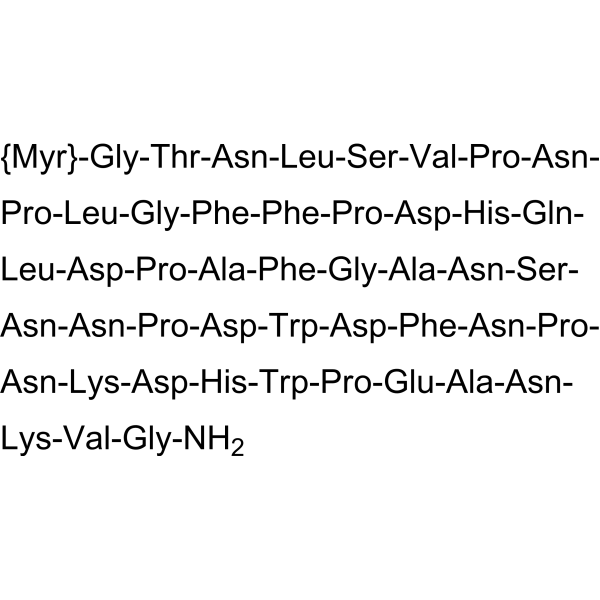
    Bulevirtide (Myrcludex B) is a NTCP inhibitor, a linear lipopeptide of 47 amino acids. Bulevirtide inhibits HBV and HDV entry into liver cells, blocks HBV infection in hepatocytes, and participates in HBV transcriptional suppression. Bulevirtide can be used in HDV infection and compensated cirrhosis research .
    Bulevirtide
  • HY-P3884

    Bacterial Antibiotic Infection
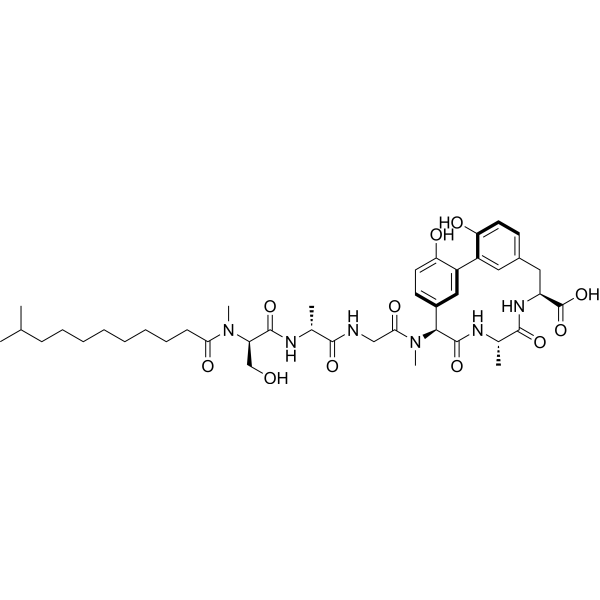
    Arylomycin A2, an antibiotic (Antibiotic), is a lipopeptide type I signal peptidase (SPase I) inhibitor. Arylomycin A2 has antibacterial effects .
    Arylomycin A2
  • HY-P2233

    Bacterial Antibiotic Infection
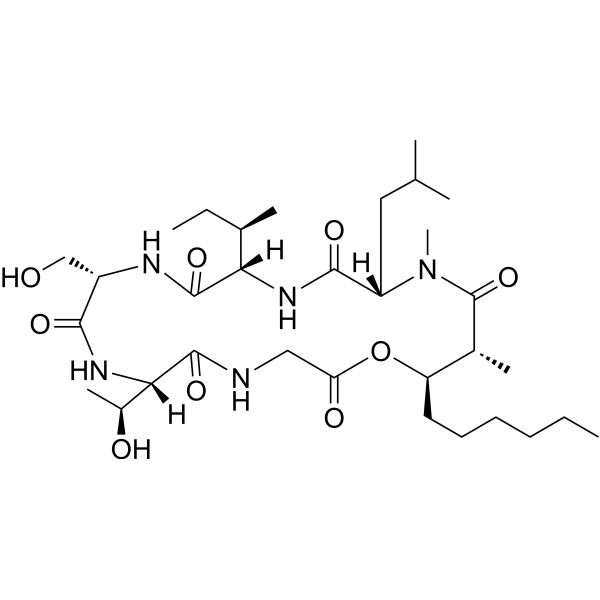
    Globomycin is a lipopeptide antibiotic and a signal peptidase II (LspA) inhibitor. Globomycin inhibits processing of the prolipoprotein by binding irreversibly to the peptidase. Globomycin has toxic for the mollicute Spiroplasma melliferum with a MIC in the range 6.25-12.5 μM .
    Globomycin
  • HY-P3496
    Pep19-2.5
    1 Publications Verification

    Pyroptosis Inflammation/Immunology
    Pep19-2.5 is an synthetic and antitoxin peptide, blocks the intracellular endotoxin signaling cascade. Pep19-2.5 inhibits signaling of lipopeptides (LP) and lipopolysaccharides (LPS) mediated by transmembrane and cytosolic pattern recognition receptors (PRRs). The signaling cascades lead to inflammation and cell pyroptosis .
    Pep19-2.5
  • HY-P3078

    Bacterial Antibiotic Infection
    Amphomycin is a lipopeptide antibiotic that inhibits peptidoglycan synthesis and blocks cell wall development. Amphomycin exhibits potent antibacterial activities against methicillin-resistant S. aureus (MRSA), vancomycin-resistant enterococci (VRE), penicillin-gentamicin-erythromycin-resistant S. pneumonia, and linezolid-quinupristin-dalfopristin-resistant enterococci .
    Amphomycin
  • HY-P10447

    Fengycin IX; SNA-60-367-3

    Phospholipase Fungal Infection
    Plipastatin A1 (Fengycin IX; SNA-60-367-3) is a lipopeptide with phospholipase A2 inhibitory activity. Plipastatin A1 inhibits conidial germination of Botrytis cinerea in vitro and reduces the incidence of gray mold on tomato leaves. Plipastatin A1 is applicable to research related to gray mold [1][2].
    Plipastatin A1
  • HY-163001
    Microcolin H
    1 Publications Verification

    Autophagy p62 Atg8/LC3 Cancer
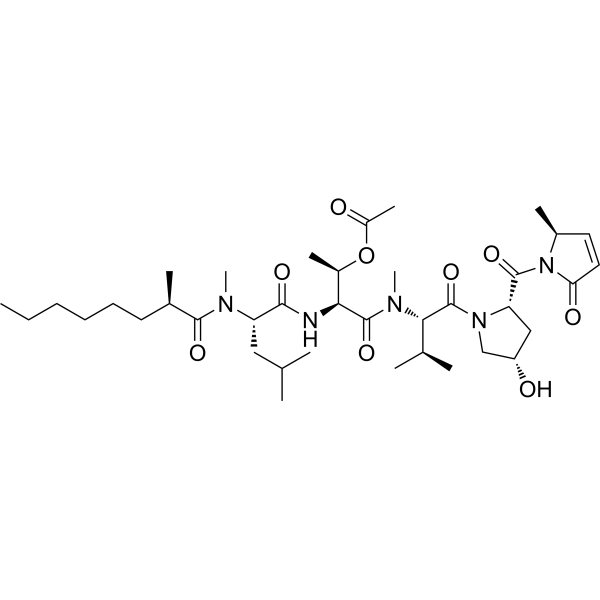
    Microcolin H is a marine lipopeptide and phosphatidylinositol transfer protein ligand that targets PITPα/β. Microcolin H increases the conversion of LC3I to LC3II and reduces p62 levels in cancer cells, leading to autophagy cell death (Autophagy). Microcolin H effectively inhibits tumor development and has anti-proliferative activity in nude mouse subcutaneous tumor models .
    Microcolin H
  • HY-125723

    SL 7810; A-30912 A

    Endogenous Metabolite Fungal Antibiotic Infection
    Echinocandin B (SL 7810) is a lipopeptide antifungal antibiotic. Echinocandin B is produced by Aspergillus nidulans. Echinocandin B inhibits β-1,3-glucan activity, thereby blocking the biosynthesis of fungal cell walls. Echinocandin B exhibits activity against a variety of Aspergillus species .
    Echinocandin B
  • HY-P11334

    Aminopeptidase Phosphatase Angiotensin-converting Enzyme (ACE) DNA/RNA Synthesis Cancer
    Cyanostatin B, a cyanobacterial lipopeptide, is a leucine aminopeptidase M (LAP) inhibitor (IC50 = 12 ng/mL). Cyanostatin B is a weak inhibitor of protein phosphatase (PP2A) and also exhibits weak inhibitory activity against angiotensin-converting enzyme (ACE), with an IC50 value of 130 μg/mL. Cyanostatin B demonstrates both cytotoxic and genotoxic effects on human hepatocytes, although non-toxic to Artemia salina. Cyanostatin B inhibits the proliferation of HepG2 cells, induces DNA single-strand breaks, and causes genomic instability. .
    Cyanostatin B
  • HY-113560

    Antibiotic Fungal Phospholipase Infection
    Plipastatin B1 is a lipopeptide antibiotic, an inhibitor of phospholipase A2 (PLA2), which has antifungal activity .
    Plipastatin B1
  • HY-179013

    Virus Protease Flavivirus Dengue Virus Infection
    NS2B/NS3-IN-9 (Compound 73) is a broad-spectrum, non-competitive anti-Orthoflavivirus lipopeptide inhibitor targeting the NS2B-NS3 protease. NS2B/NS3-IN-9 exhibits IC50 values for Dengue virus DENV2 NS2B-NS3, West Nile virus WNV NS2B-NS3, and Zika virus ZIKV NS2B-NS3 of 2.4, 7.2, and 1.9 μM, respectively. NS2B/NS3-IN-9 also exhibits antiviral activity at the cellular level against DENV2, WNV, and ZIKV, with EC50 values of 4.1, 4.9, and 5.0 μM, respectively. NS2B/NS3-IN-9 has no significant toxicity to cells. NS2B/NS3-IN-9 can be used for the study of anti-Orthoflavivirus .
    NS2B/NS3-IN-9
  • HY-N16657

    LI-F 04b

    Bacterial Infection
    Fusaricidin B (LI-F 04b) is one of the components of a lipopeptide biosurfactant extracted from the marine bacterium Paenibacillus polymyxa. Fusaricidin B can significantly inhibit the formation of multiple single species biofilms, including Gram positive and Gram negative bacteria. Fusaricidin B also has inhibitory effects on complex biofilms and can effectively destroy mature biofilms that have already formed. Fusaricidin B can be used for research on bacterial infections .
    Fusaricidin B
  • HY-P10785

    Bacterial Antibiotic Infection
    Iturin A-2 is a cyclic lipopeptide discovered in B. subtilis and exhibits inhibitory activity against the plant pathogenic fungus P. expansum (MIC = 8 µg/disk). Iturin A-2 is cytotoxic to MCF-7 and BT474 breast cancer cells, as well as HeLa cervical cancer cells, with IC50 values of 66.81, 95.04, and 77.5 µg/mL, respectively. In greenhouse studies, Iturin A-2 at concentrations of 100 and 300 mg/kg Iturin A-2 reduces the lesion area of southern corn leaf blight caused by B. maydis, and in field studies, concentrations of 300 and 500 mg/kg Iturin A-2 reduce the incidence of the disease. Iturin A-2 (12.5 µg/mL) inhibits cell division, but not nuclear division, in isolated fertilized starfish eggs .
    Iturin A-2
  • HY-N14464

    Antibiotic Bacterial Infection
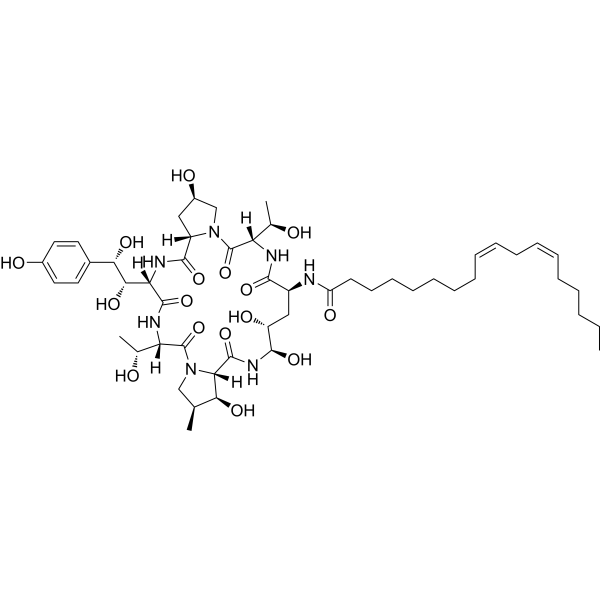
    Pneumocandin A1 is a lipopeptide antibiotic. Pneumocandin A1 has a strong anti-Candida effect. Pneumocandin A1 has the effect of inhibiting the synthesis of 1,3 early-glucan in vitro, with an IC50 of 0.07-0.5 μg/mL .
    Pneumocandin A1
  • HY-N5190

    Antibiotic Bacterial Infection
    Enamidonin is a lipopeptide antibiotic. Enamidonin inhibits EGF-dependent [ 3H] thymidine involvement in Balb/MK cells (IC50 is 10 μg/mL), and it can restore the deformed SRCTS-NRK form to the normal flat form (ED50 is 10 μg/mL). No antimicrobial activity .
    Enamidonin
  • HY-N14466

    Antibiotic Bacterial Infection
    Pneumocandin A3 is a lipopeptide antibiotic. Pneumocandin A3 has a strong anti-Candida effect. Pneumocandin A3 has the effect of inhibiting the synthesis of 1,3 early-glucan in vitro, with an IC50 of 0.07-0.5 μg/mL .
    Pneumocandin A3
  • HY-N14467

    Antibiotic Bacterial Infection
    Pneumocandin A4 is a lipopeptide antibiotic. Pneumocandin A4 has a strong anti-Candida effect. Pneumocandin A4 has the effect of inhibiting the synthesis of 1,3 early-glucan in vitro, with an IC50 of 0.07-0.5 μg/mL .
    Pneumocandin A4
  • HY-N14468

    Antibiotic Bacterial Infection
    Pneumocandin B2 is a lipopeptide antibiotic. Pneumocandin B2 has a strong anti-Candida effect. Pneumocandin B2 has the effect of inhibiting the synthesis of 1,3 early-glucan in vitro, with an IC50 of 0.07-0.5 μg/mL .
    Pneumocandin B2
  • HY-N14465

    Antibiotic Bacterial Infection
    Pneumocandin A2 is a lipopeptide antibiotic. Pneumocandin A2 has a strong anti-Candida effect. Pneumocandin A2 has the effect of inhibiting the synthesis of 1,3 early-glucan in vitro, with an IC50 of 0.07-0.5 μg/mL .
    Pneumocandin A2
  • HY-N14351

    SARS-CoV Bacterial Antibiotic Infection
    Ferrocin A is a lipopeptide compound that targets the SARS-CoV-2 RNA-dependent RNA polymerase (nsp12). Ferrocin A can stably bind to nsp12, and as an iron-chelating peptide, it reduces the concentration of free iron in the environment via complexation, thereby inhibiting bacterial growth by repressing the acquisition of essential metal cations. As an iron-chelating antiviral molecule, Ferrocin A may be used in studies related to COVID-19 and bacterial infections .
    Ferrocin A
  • HY-N15117

    Antibiotic Bacterial Infection
    Polymyxin P1 is a lipopeptide antibiotic belonging to the Polymyxin family, and it is a secondary metabolite produced by the rhizosphere bacterium Paenibacillus polymyxa M-1. Polymyxin P1 binds to bacterial outer membrane lipopolysaccharides, permeabilizes cell membranes, and induces dense protrusions on the cell surface of phytopathogenic Erwinia strains. Polymyxin P1 inhibits the growth of phytopathogenic Erwinia amylovora and E. carotovora. Polymyxin P1 can be used for the research of fire blight and soft rot .
    Polymyxin P1
  • HY-P11783

    Fungal Infection
    Surfactin C2 is a lipopeptide produced by Bacillus subtilis A18 with antifungal activity. Surfactin C2 acts against Heterobasidion annosum and Heterobasidion parviporum. Surfactin C2 exerts its activity mainly through membrane‑active effects to disrupt fungal cell structures and inhibit mycelial growth. Surfactin C2 can be used for the research of butt rot and root rot of conifers .
    Surfactin C2
  • HY-125723B

    SL 7810 (purity>65%); A-30912 A (purity>65%)

    Antibiotic Fungal Endogenous Metabolite Infection
    Echinocandin B (purity>65%) (SL 7810 (purity>65%)) is a lipopeptide antifungal antibiotic. Echinocandin B (purity>65%) is produced by Aspergillus nidulans. Echinocandin B (purity>65%) inhibits β-1,3-glucan activity, thereby blocking the biosynthesis of fungal cell walls. Echinocandin B (purity>65%) exhibits activity against a variety of Aspergillus species .
    Echinocandin B (purity>65%)
  • HY-125723A

    SL 7810 (purity>85%); A-30912 A (purity>85%)

    Antibiotic Fungal Endogenous Metabolite Infection
    Echinocandin B (purity>85%) (SL 7810 (purity>85%)) is a lipopeptide antifungal antibiotic. Echinocandin B (purity>85%) is produced by Aspergillus nidulans. Echinocandin B (purity>85%) inhibits β-1,3-glucan activity, thereby blocking the biosynthesis of fungal cell walls. Echinocandin B (purity>85%) exhibits activity against a variety of Aspergillus species .
    Echinocandin B (purity>85%)
  • HY-N15117A

    Antibiotic Bacterial Infection
    Polymyxin P1 TFA is a lipopeptide antibiotic belonging to the Polymyxin family, and it is a secondary metabolite produced by the rhizosphere bacterium Paenibacillus polymyxa M-1. Polymyxin P1 TFA binds to bacterial outer membrane lipopolysaccharides, permeabilizes cell membranes, and induces dense protrusions on the cell surface of phytopathogenic Erwinia strains. Polymyxin P1 TFA inhibits the growth of phytopathogenic Erwinia amylovora and E. carotovora. Polymyxin P1 TFA can be used for the research of fire blight and soft rot .
    Polymyxin P1 TFA
  • HY-P11582

    Bacterial Infection
    CyLip-20 is a cyclic lipopeptide antimicrobial peptide that targets Gram-positive and Gram-negative bacteria. CyLip-20 exhibits low hemolytic activity and mild in vivo toxicity. CyLip-20 disrupts the integrity of bacterial outer membrane, inner membrane and cytoplasmic membrane by binding to bacterial lipopolysaccharide (LPS), triggering membrane permeabilization, depolarization and leakage of intracellular contents, and inhibits bacterial biofilm formation. In animal models, CyLip-20 reduces the bacterial load in skin wounds of mice infected with MRSA, promotes wound healing, decreases the levels of inflammatory cytokines and reduces inflammatory cell infiltration. CyLip-20 can be used in research related to MRSA skin wound infections .
    CyLip-20
  • HY-P11471

    Bacterial Reactive Oxygen Species (ROS) Infection
    (K(C10)GGGRrRPC)2 (Compound (C-C10)C-C) is a dimeric lipopeptide and antibacterial agent. (K(C10)GGGRrRPC)2 enhances the accumulation of ROS, inhibits the bacterial respiratory chain dehydrogenase activity. (K(C10)GGGRrRPC)2 exhibits significant inhibition of bacterial biofilm formation. (K(C10)GGGRrRPC)2 exhibits antimicrobial activity against Acinetobacter baumannii AB1901, A. baumannii AB1902, Pseudomonas aeruginosa 25349, Staphylococcus aureus 11011, with MICs of 4 μM, 8 μM, 4 μM, and 8 μM, respectively. (K(C10)GGGRrRPC)2 shows antimicrobial efficacy against E. coli ATCC 25922 .
    (K(C10)GGGRrRPC)2

Inquiry Online

Your information is safe with us. * Required Fields.

Salutation


Country or Region *

Applicant Name *


Organization Name *

Department *


Email Address *


Product Name *

Cat. No.


Requested quantity *

Phone Number *


Remarks

Inquiry Online

Inquiry Information

Product Name:
Cat. No.:
Quantity:
MCE Japan Authorized Agent:

