



Bulevirtide
Based on 8 publication(s) in Google Scholar
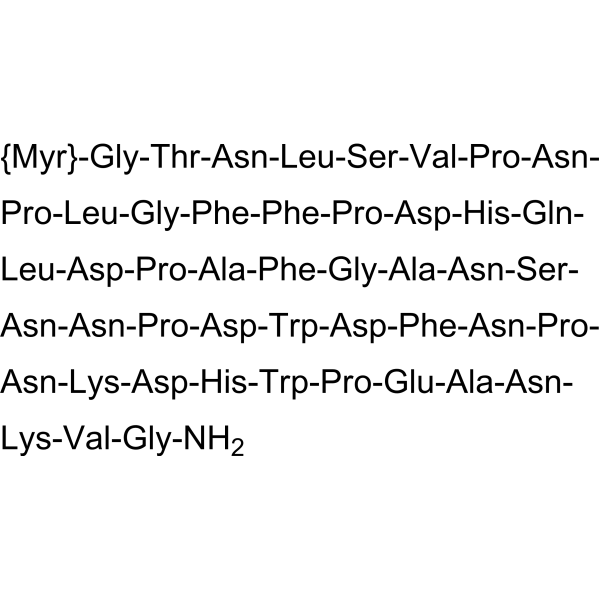
Bulevirtide (Myrcludex B) is a NTCP inhibitor, a linear lipopeptide of 47 amino acids. Bulevirtide inhibits HBV and HDV entry into liver cells, blocks HBV infection in hepatocytes, and participates in HBV transcriptional suppression. Bulevirtide can be used in HDV infection and compensated cirrhosis research.
Nur für Forschungszwecke. Wir verkaufen nicht an Patienten.
- Reinheit : 99.70%
- CAS. Nr.: 2012558-47-1
- Formel: C248H355N65O72
- Molecular Weight:5398.86
-
Speicherung:
Sealed storage, away from moisture and light, under nitrogen.
Powder -80°C, 2 years , -20°C, 1 year* In solvent : -80°C, 6 months; -20°C, 1 month (sealed storage, away from moisture and light, under nitrogen)

To place orders, for customer services and technical support, please contact: MedChemExpress USA
Tel: 609-228-6898 E-mail: [email protected] [email protected]


-
 Biologische Aktivität
-
Chemical Information
-
Lösungsmittel & Löslichkeit
- Protokoll
- Reinheit & Dokumentation
- Verweise
-
 Help & FAQs


-
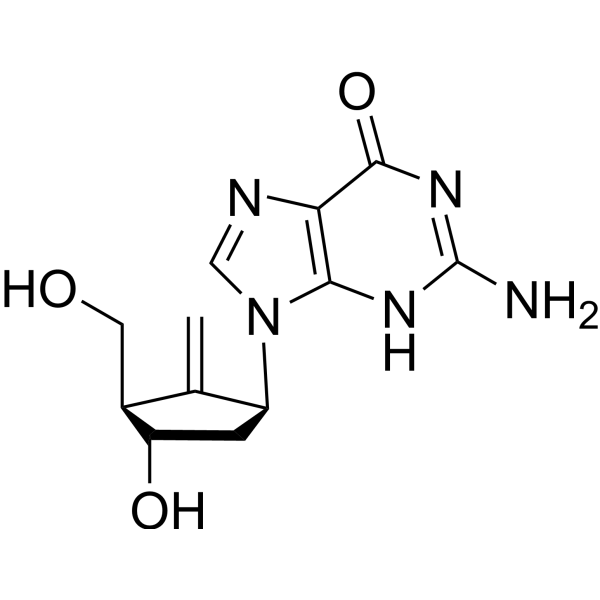
HY-13623
EntecavirHBV Inhibitor -
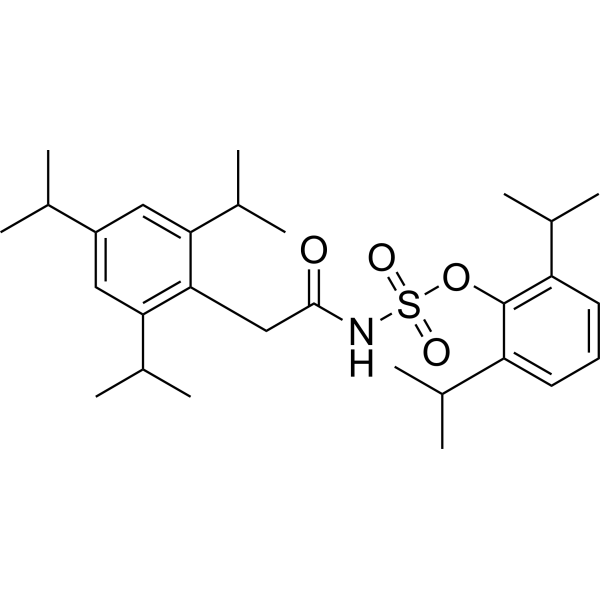
HY-13215
AvasimibeACAT/SOAT Inhibitor -
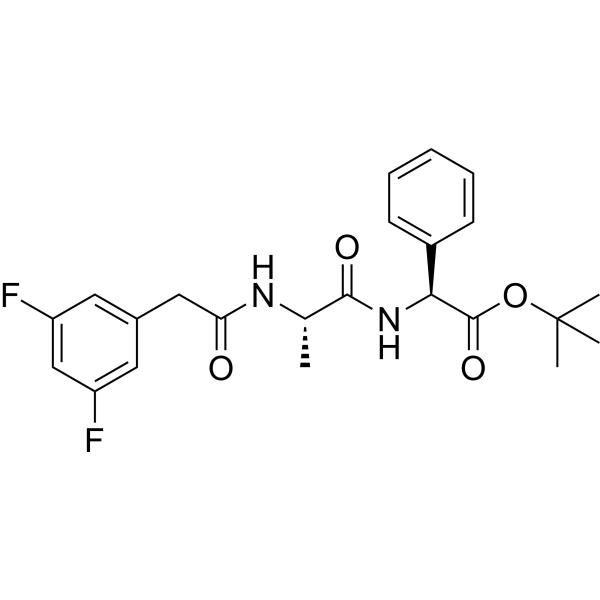
HY-13027
DAPTγ-secretase Inhibitor -
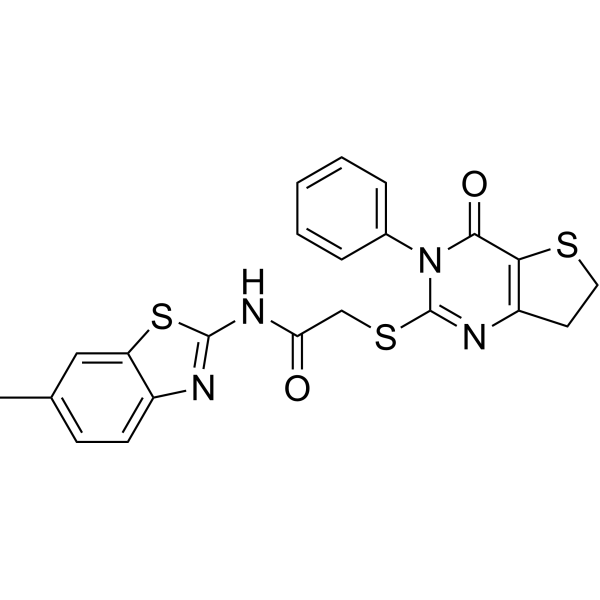
HY-13912
IWP-2Wnt Production Inhibitor -
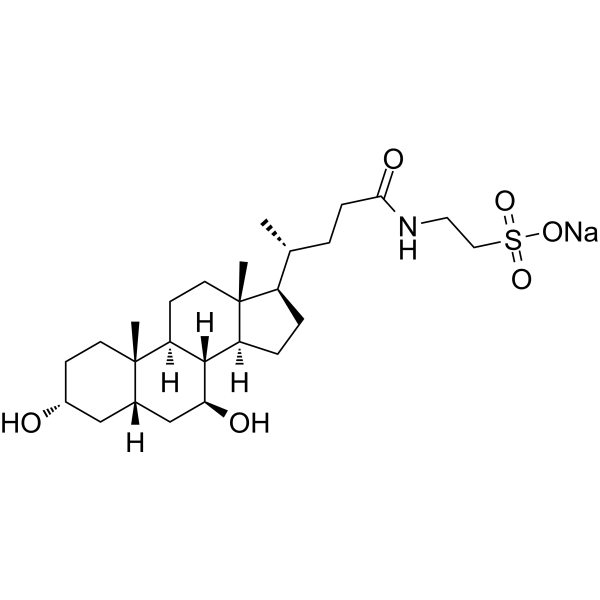
HY-19696A
Tauroursodeoxycholate sodiumEndoplasmic Reticulum Stress Inhibitor -
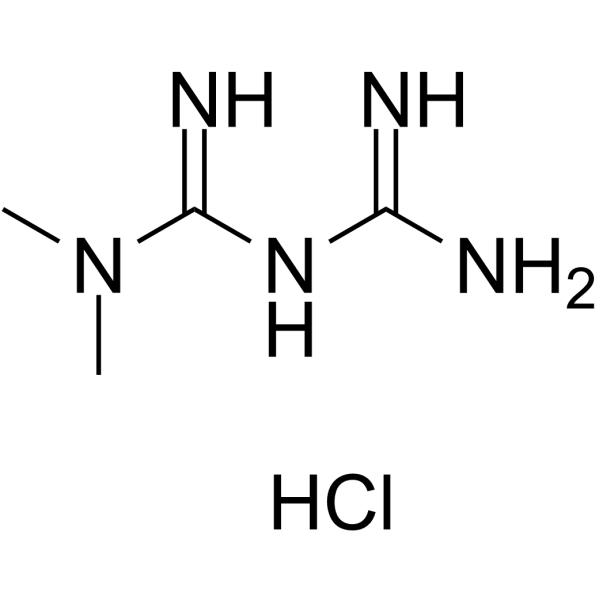
HY-17471A
Metformin hydrochlorideAntihyperglycemic Agent -
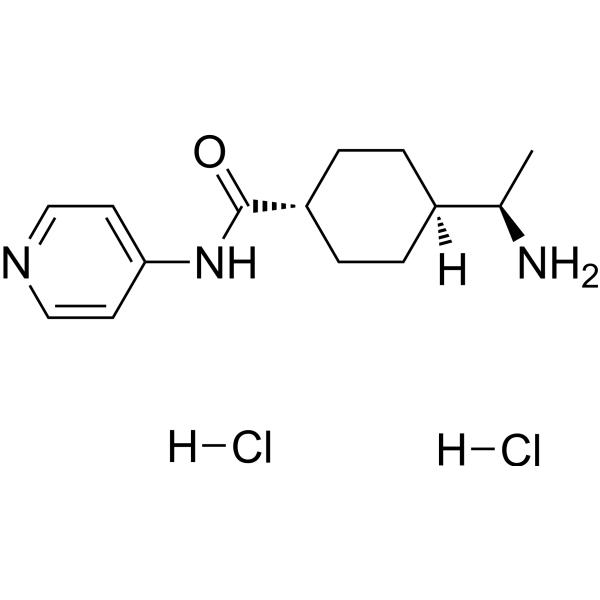
HY-10583
Y-27632 dihydrochlorideROCK Inhibitor -
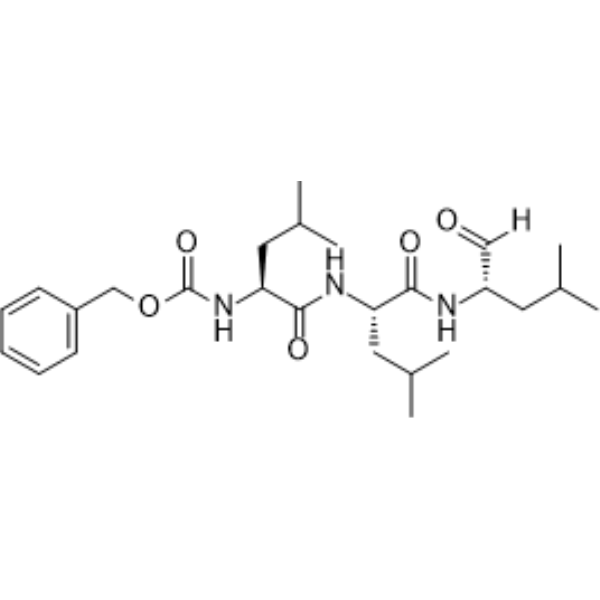
HY-13259
MG-132Proteasome Inhibitor -
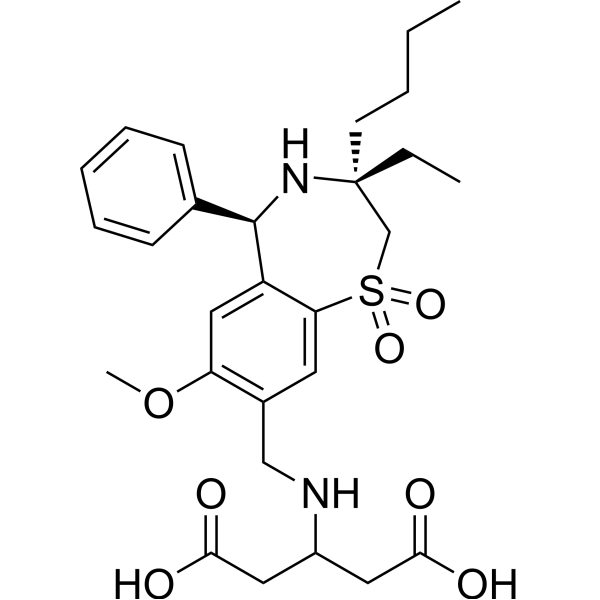
HY-16643
LinerixibatASBT Inhibitor -

HY-P990015
TobevibartAnti-HBV Antibody -
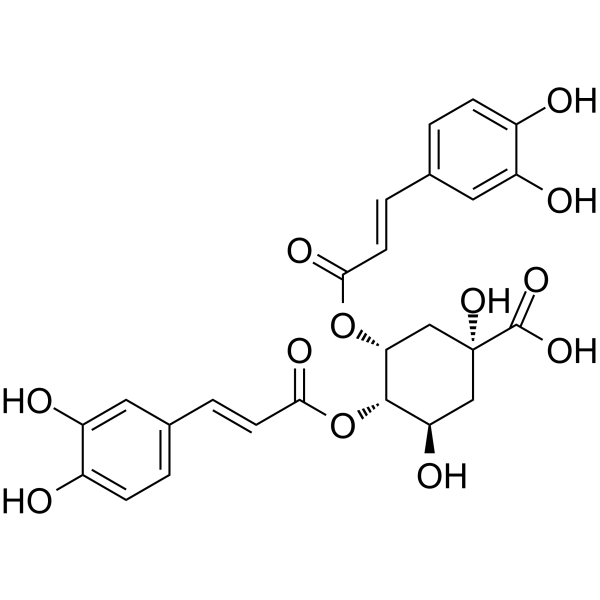
HY-N0058
4,5-Dicaffeoylquinic acidAntioxidant -
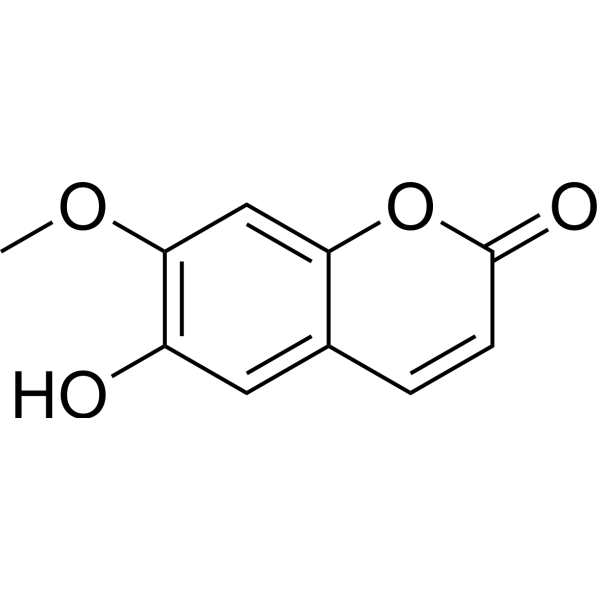
HY-N1365
IsoscopoletinHBV Inhibitor
Publications Citing Use of MedChemExpress (MCE) Bulevirtide
More- J Adv Res. 2026 Mar 12:S2090-1232(26)00239-0. [Abstract]
- Adv Healthc Mater. 2025 Mar;14(7):e2404981. [Abstract]
- EMBO Rep. 2025 Sep 15. [Abstract]
- Biomolecules. 2024 Sep 24;14(10):1201. [Abstract]
- PLoS Pathog. 2025 Aug 4;21(8):e1013390. [Abstract]
- Virol Sin. 2024 Aug;39(4):655-666. [Abstract]
- J Virol. 2026 May 19;100(5):e0026726. [Abstract]
- Microbiol Spectr. 2026 Apr 7;14(4):e0263825. [Abstract]
 Customer Validation & Images

-
Others
-
RT-PCR
-
Others
-
WB
-
Others


Biologische Aktivität
Beschreibung
In Vitro
Bulevirtide (200 nM, 24 h) inihibits NTCP through non-covalent binding in a time- and dose-dependent manner, transfer to a newly synthesized NTCP molecule[3].
Bulevirtide (Huh7-NTCP cells, 2 μM, 9 days) exhibits potential antiviral activity as replication inhibitor, which blocks upregulation of NTCP mediated-HBV replication in Huh7-NTCP cells [5].
MedChemExpress (MCE) has not independently confirmed the accuracy of these methods. They are for reference only.
In Vivo
Bulevirtide (2 μg/g/d, s.c. for 3 weeks) blocks HBV cell entry in uPA/SCID mice through addressing the hepatocyte component rather than affecting virion productivity within the infected hepatocyte or the half-life of these cells[4].
Bulevirtide (5 μg,s.c., twice a day for 4 days) blocks upregulation of NTCP mediated-HBV replication in C57BL/6 mice as a replication inhibitor[5].
MedChemExpress (MCE) has not independently confirmed the accuracy of these methods. They are for reference only.
-
Animal Model:HBV infected uPA/SCID mice[3]
-
Dosage:2 μg/g
-
Administration:subcutaneous injection, for everyday
-
Result:Blocked the viremia and and HBsAg concentrations.
Maintained the cell death rate and proliferated hepatocytes amount.
Clinical Trial
| NCT Number | Sponsor | Condition | Start Date |
Phase

|
|---|---|---|---|---|
| NCT01329991 | Plexxikon| | 2011-05 | PHASE1 |


Chemical Information
-
CAS. Nr. 2012558-47-1
-
Appearance Solid
-
Molecular Weight 5398.86
-
Formel C248H355N65O72
-
Color White to off-white
-
Synonyms
Myrcludex B
-
Sequence
{Myr}-Gly-Thr-Asn-Leu-Ser-Val-Pro-Asn-Pro-Leu-Gly-Phe-Phe-Pro-Asp-His-Gln-Leu-Asp-Pro-Ala-Phe-Gly-Ala-Asn-Ser-Asn-Asn-Pro-Asp-Trp-Asp-Phe-Asn-Pro-Asn-Lys-Asp-His-Trp-Pro-Glu-Ala-Asn-Lys-Val-Gly-NH2
-
Sequence Shortening
{Myr}-GTNLSVPNPLGFFPDHQLDPAFGANSNNPDWDFNPNKDHWPEANKVG-NH2
-
Versand
Room temperature in continental US; may vary elsewhere.
-
Speicherung
Sealed storage, away from moisture and light, under nitrogen
Powder -80°C 2 years -20°C 1 year * In solvent : -80°C, 6 months; -20°C, 1 month (sealed storage, away from moisture and light, under nitrogen)


Publications (8)
-
Journal Impact Factor
-
Most Recent
-
J Adv Res
Conjugated bile acids facilitate cholangiocyte senescence to promote cholestatic liver diseases via STING signaling. [Abstract]2026 Mar 12:S2090-1232(26)00239-0. PMID: 41831676 -
Adv Healthc Mater
Selective In Situ Analysis of Hepatogenic Exosomal microRNAs via Virus-Mimicking Multifunctional Magnetic Vesicles. [Abstract]2025 Mar;14(7):e2404981. PMID: 39865844 -
EMBO Rep
CDC42 supports HBV entry by NTCP translocation to the plasma membrane and macropinocytosis. [Abstract]2025 Sep 15. PMID: 40954218
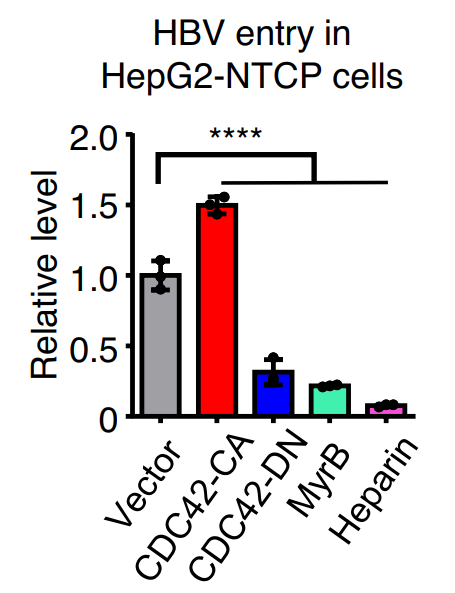
Bulevirtide purchased from MedChemExpress. Usage Cited in: EMBO Rep. 2025 Sep 15. [Abstract]
Quantification of internalized HBV DNA in HepG2-NTCP vector, CDC42-CA, CDC42-DN cells and HepG2-NTCP cells treated with 200 nM Myrcludex B (Bulevirtide) at 8 hpi by qPCR.
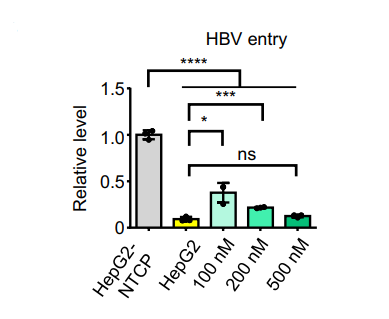
Bulevirtide purchased from MedChemExpress. Usage Cited in: EMBO Rep. 2025 Sep 15. [Abstract]
HepG2-NTCP cells were infected with HBV in the presence of increasing concentrations of Myrcludex B (Bulevirtide). HepG2 cells were used as negative control for infection.
-
Biomolecules
Hepatitis B Virus X Protein Induces Reactive Oxygen Species Generation via Activation of p53 in Human Hepatoma Cells. [Abstract]2024 Sep 24;14(10):1201. PMID: 39456134
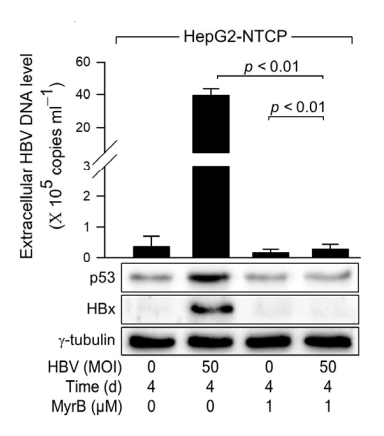
Bulevirtide purchased from MedChemExpress. Usage Cited in: Biomolecules. 2024 Sep 24;14(10):1201. [Abstract]
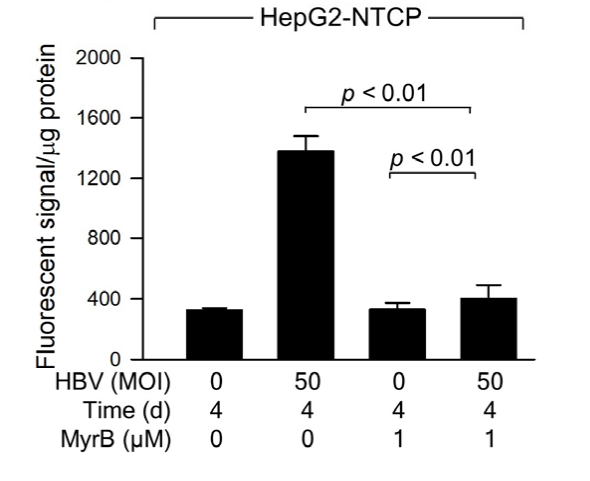
HepG2-NTCP cells were infected with HBV for 4 days in the presence and absence of myrcludex-B (Bulevirtide), and the levels of extracellular HBV DNA, along with intracellular protein levels, were measured.
Bulevirtide purchased from MedChemExpress. Usage Cited in: Biomolecules. 2024 Sep 24;14(10):1201. [Abstract]
HepG2-NTCP cells were infected with HBV for 4 days with or without myrcludex-B (Bulevirtide), and intracellular ROS levels were measured.
-
PLoS Pathog
2025 Aug 4;21(8):e1013390. PMID: 40758741 -
Virol Sin
Detection of HBV DNA integration in plasma cell-free DNA of different HBV diseases utilizing DNA capture strategy. [Abstract]2024 Aug;39(4):655-666. PMID: 38852920 -
J Virol
2026 May 19;100(5):e0026726. PMID: 42059628 -
Microbiol Spectr
A visible assay for evaluating the inhibitory activity of drug and antibody against HBV infection. [Abstract]2026 Apr 7;14(4):e0263825. PMID: 41810956
Bulevirtide purchased from MedChemExpress. Usage Cited in: Microbiol Spectr. 2026 Apr 7;14(4):e0263825. [Abstract]
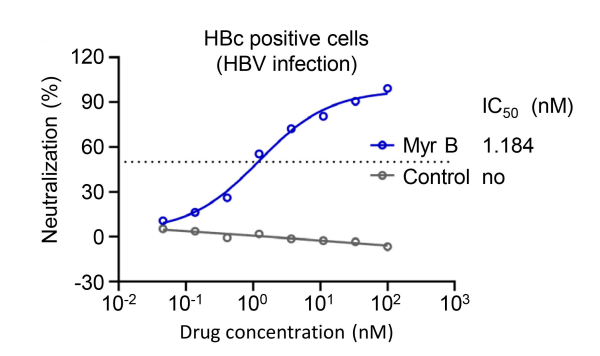
The inhibitory effect of Myrcludex B (Bulevirtide) on HBV infection was evaluated using an immunospot assay. HepG2-NTCP cells were incubated with Myrcludex B at 37°C for 1 hour, and then infected with 300 HBV gec/cell.


Lösungsmittel & Löslichkeit
In Vitro:
H2O : 83.33 mg/mL (15.43 mM; ultrasonic and adjust pH to 8 with NH3·H2O)
DMSO : 50 mg/mL (9.26 mM; Need ultrasonic; Hygroscopic DMSO has a significant impact on the solubility of product, please use newly opened DMSO)
Please refer to the solubility information to select the appropriate solvent. Once prepared, please aliquot and store the solution to prevent product inactivation from repeated freeze-thaw cycles.
Storage method and period of stock solution: -80°C, 6 months; -20°C, 1 month (sealed storage, away from moisture and light, under nitrogen). When stored at -80°C, please use it within 6 months. When stored at -20°C, please use it within 1 month.
* Note: If you choose water as the stock solution, please dilute it to the working solution, then filter and sterilize it with a 0.22 μm filter before use.
Please refer to the solubility information to select the appropriate solvent. Once prepared, please aliquot and store the solution to prevent product inactivation from repeated freeze-thaw cycles.
Storage method and period of stock solution: -80°C, 6 months; -20°C, 1 month (sealed storage, away from moisture and light, under nitrogen). When stored at -80°C, please use it within 6 months. When stored at -20°C, please use it within 1 month.
* Note: If you choose water as the stock solution, please dilute it to the working solution, then filter and sterilize it with a 0.22 μm filter before use.
Konzentration (Stammlösung) × Volumen (Stammlösung) = Konzentration (Ziellösung) × Volumen (Ziellösung)
In Vivo:
Select the appropriate dissolution method based on your experimental animal and administration route.
- For the following dissolution methods, please ensure to first prepare a clear stock solution using an In Vitro approach and then sequentially add co-solvents:
- To ensure reliable experimental results, the clarified stock solution can be appropriately stored based on storage conditions. As for the working solution for In Vivo experiments, it is recommended to prepare freshly and use it on the same day.
- The percentages shown for the solvents indicate their volumetric ratio in the final prepared solution. If precipitation or phase separation occurs during preparation, heat and/or sonication can be used to aid dissolution.
Add each solvent one by one: 10% DMSO 90% (20% SBE-β-CD in Saline)
Solubility: 2.5 mg/mL (0.46 mM); Suspended solution; Need ultrasonic
This protocol yields a suspended solution of 2.5 mg/mL. Suspended solution can be used for oral and intraperitoneal injection.
Taking 1 mL working solution as an example, add 100 μL DMSO stock solution (25.0 mg/mL) to 900 μL 20% SBE-β-CD in Saline, and mix evenly.
Preparation of 20% SBE-β-CD in Saline (4°C, storage for one week): 2 g SBE-β-CD powder is dissolved in 10 mL Saline, completely dissolve until clear.
In Vivo Dissolution Calculator
Please enter the basic information of animal experiments:
-
-
-
-
Recommended: Prepare an additional quantity of animals to account for potential losses during experiments.
Working solution concentration: 0.22 mg/mL
This product has good water solubility, please refer to the measured solubility data in water/PBS/Saline for details.


Reinheit & Dokumentation
-
Data Sheet (297 KB)
-
SDS (254 KB)
- English - EN (254 KB)
- Français - FR (254 KB)
- Deutsch - DE (254 KB)
- Norwegian - NO (254 KB)
- Español - ES (254 KB)
- Swedish - SV (254 KB)
- Italian - IT (254 KB)
- Korean - KR (254 KB)
- Portuguese - PT (254 KB)
-
Handling Instructions (2659 KB)
Verweise
[1]. Masetti C, et al. Bulevirtide for treatment of patients with HDV infection and compensated cirrhosis: A (huge?) step in the right direction. Liver Int. 2021 Jul;41(7):1441-1442. [Content Brief]
[2]. Cheng D, et al. Clinical effects of NTCP-inhibitor myrcludex B. J Viral Hepat. 2021 Jun;28(6):852-858. [Content Brief]
[3]. Donkers JM, et al., Mechanistic insights into the inhibition of NTCP by myrcludex B. JHEP Rep. 2019 Aug 1;1(4):278-285. [Content Brief]
[4]. Volz T, et al., The entry inhibitor Myrcludex-B efficiently blocks intrahepatic virus spreading in humanized mice previously infected with hepatitis B virus. J Hepatol. 2013 May;58(5):861-7. [Content Brief]
[5]. Zhao K, et al., Upregulation of HBV transcription by sodium taurocholate cotransporting polypeptide at the postentry step is inhibited by the entry inhibitor Myrcludex B. Emerg Microbes Infect. 2018 Nov 21;7(1):186. [Content Brief]


Complete Stock Solution Preparation Table
Please refer to the solubility information to select the appropriate solvent. Once prepared, please aliquot and store the solution to prevent product inactivation from repeated freeze-thaw cycles.
Storage method and period of stock solution: -80°C, 6 months; -20°C, 1 month (sealed storage, away from moisture and light, under nitrogen). When stored at -80°C, please use it within 6 months. When stored at -20°C, please use it within 1 month.
| Optional Solvent | Concentration Solvent Mass | 1 mg | 5 mg | 10 mg | 25 mg |
|---|---|---|---|---|---|
| DMSO / H2O | 1 mM | 0.1852 mL | 0.9261 mL | 1.8522 mL | 4.6306 mL |
| 5 mM | 0.0370 mL | 0.1852 mL | 0.3704 mL | 0.9261 mL | |
| H2O | 10 mM | 0.0185 mL | 0.0926 mL | 0.1852 mL | 0.4631 mL |
| 15 mM | 0.0123 mL | 0.0617 mL | 0.1235 mL | 0.3087 mL |
* Note: If you choose water as the stock solution, please dilute it to the working solution, then filter and sterilize it with a 0.22 μm filter before use.


Bulevirtide Related Classifications
HY-P3465 Related Classifications
 Powered by Bioz