

1. Search Result
Search Result
Results for "

Oxaliplatin

" in MedChemExpress (MCE) Product Catalog:

31

Inhibitors & Agonists

1

Biochemical Assay Reagents

4

Inhibitory Antibodies

1

Natural
Products

1

Isotope-Labeled Compounds

Cat. No. Product Name Target Research Areas Chemical Structure
  • HY-17371
    Oxaliplatin
    Maximum Cited Publications
    216 Publications Verification

    DNA/RNA Synthesis Apoptosis Inflammation/Immunology Cancer
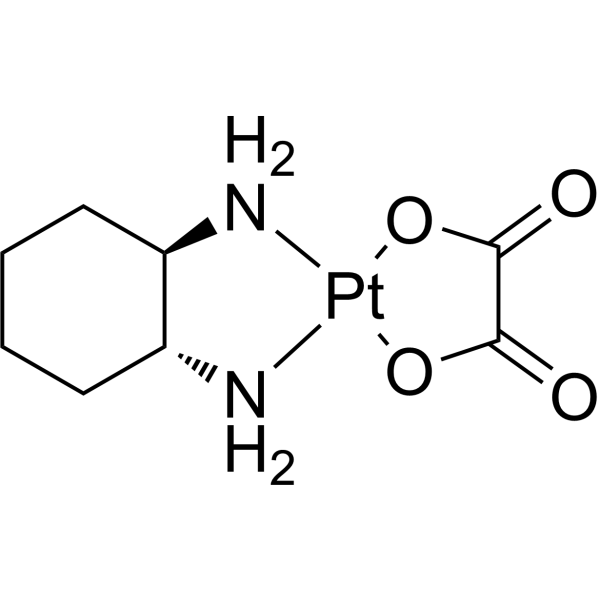
    Oxaliplatin is a DNA synthesis inhibitor. Oxaliplatin causes DNA crosslinking damage, prevents DNA replication and transcription and induces apoptosis. Oxaliplatin can be used for cancer research .
    Oxaliplatin
  • HY-17409
    Nystatin
    50+ Cited Publications

    Fungal Antibiotic Apoptosis Bacterial Infection Cancer
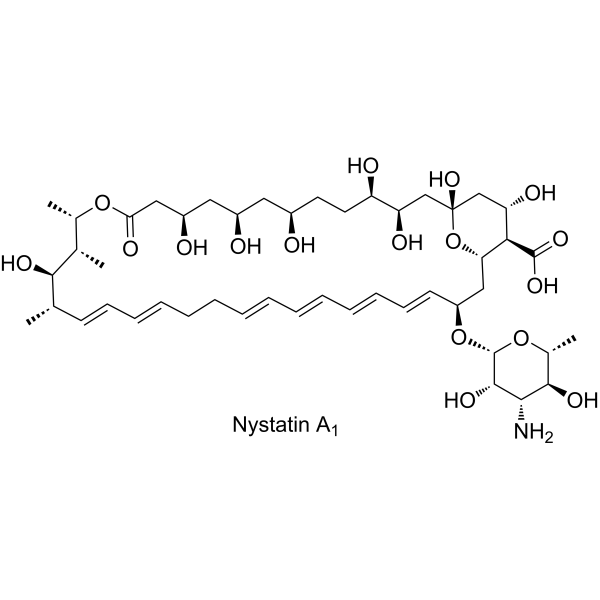
    Nystatin is an orally active polyene antifungal antibiotic effective against yeast and mycoplasma. Nystatin increases the permeability of plasma membranes to small monovalent ions, including chloridion . Nystatin is a cholesterol-sequestering agent , partially prevents Oxaliplatin-induced lipid raft aggregation, DR4 and DR5 clustering, and thereby reduces apoptosis .
    Nystatin
  • HY-P99241
    Ponsegromab
    1 Publications Verification

    PF 06946860

    TGF-beta/Smad Cancer
    Ponsegromab is a Growth differentiation factor 15 (GDF15) inhibitor with human, cynomolgus monkey, and mouse target IC50 values of 0.123 nM, 0.053 nM, and 0.102 nM, respectively . Ponsegromab acts as a chemosensitizer, increases intracellular reactive oxygen species, reduces glutathione levels . Ponsegromab can be used for the research of oxaliplatin-resistant colorectal cancer .
    Ponsegromab
  • HY-17371R

    Reference Standards DNA/RNA Synthesis Apoptosis Cancer
    Oxaliplatin (Standard) is the analytical standard of Oxaliplatin. This product is intended for research and analytical applications. Oxaliplatin is a DNA synthesis inhibitor. Oxaliplatin causes DNA crosslinking damage, prevents DNA replication and transcription and induces apoptosis. Oxaliplatin can be used for cancer research .
    Oxaliplatin (Standard)
  • HY-160421

    Apoptosis Inflammation/Immunology Cancer
    TREM2-IN-1 (OPA) is a TREM2 inhibitor derived from oxaliplatin and artesunate. TREM2-IN-1 can relieves immunosuppressive tumor microenvironment and enhancing chemical anticancer efficiency. TREM2-IN-1 deters the tumor growth in mice models bearing MC38 colorectal tumor by reducing the number of CD206 + and CX3CR1 + immunosuppressive macrophages. TREM2-IN-1 also promotes the expansion and infiltration of immunostimulatory dendritic, cytotoxic T and natural killer cells .
    TREM2-IN-1
  • HY-P9991

    TST001

    Gap Junction Protein Cancer
    Osemitamab is an IgG1 antibody targeting to human claudin-18.2. Osemitamab consists of human-Mus musculus monoclonal TST001 γ1-chain, disulfide with human-Mus musculus monoclonal TST001 κ-chain, dimer (ACI). Osemitamab in combination with Capecitabine (HY-B0016) and Oxaliplatin (HY-17371), can be used for G/GEJ cancer study .
    Osemitamab
  • HY-18099
    S1RA
    3 Publications Verification

    E-52862

    Sigma Receptor 5-HT Receptor Neurological Disease
    S1RA (E-52862) is a highly selective σ1 receptor (σ1R) antagonist with Kis of 17 nM and 23.5 nM for human σ1R and guinea pig σ1R, respectively. S1RA has Moderate antagonistic activity for human 5-HT2B receptor (Ki= 328 nM). S1RA has antinociceptive effects in neuropathic pain models. S1RA prevents mechanical and cold hypersensitivity in Oxaliplatin (HY-17371)-treated mice .
    S1RA
  • HY-P991444

    NTPDase ATP Synthase Inflammation/Immunology Cancer
    IPH5201 is a selective CD39 inhibitor and a humanized IgG1 monoclonal antibody. IPH5201 selectively binds to and inhibits the enzymatic activity of both membrane-bound and soluble CD39, blocking ATP hydrolysis. IPH5201 enhances the phenotypic maturation and activation of dendritic cells and macrophages. IPH5201 potentiates the anti-tumor effect of Oxaliplatin (HY-17371). IPH5201 shows preliminary evidence of disease stabilization in advanced solid tumor models when used as a single agent or in combination with Durvalumab (HY-P9919). IPH5201 can be used for the research of advanced solid tumors .
    IPH5201
  • HY-W096169D

    Biochemical Assay Reagents Drug Intermediate Cancer
    Platinum is a metallic element, and its complexes act as orally active anticancer agents. Platinum-based complexes used for tumors include Cisplatin (HY-17394), Carboplatin (HY-17393), and Oxaliplatin (HY-17371) .
    Platinum
  • HY-163828

    Apoptosis Phosphatase c-Myc GSK-3 ERK Reactive Oxygen Species (ROS) Cancer
    PPA24 is a PP2A activator with a KD of 8.465 μM for PP2ACα. PPA24 induces cancer cell death via apoptosis. PP2ACα induces ROS generation and decreases the level of c-Myc expression. PPA24 can be used to study colorectal cancer (CRC), Folinic acid (HY-17556), 5-Fluorouracil (HY-90006), and Oxaliplatin (HY-17371) (FOLFOX)-resistant CRC, and melanoma cancer .
    PPA24
  • HY-17371A

    DNA/RNA Synthesis Apoptosis Cancer
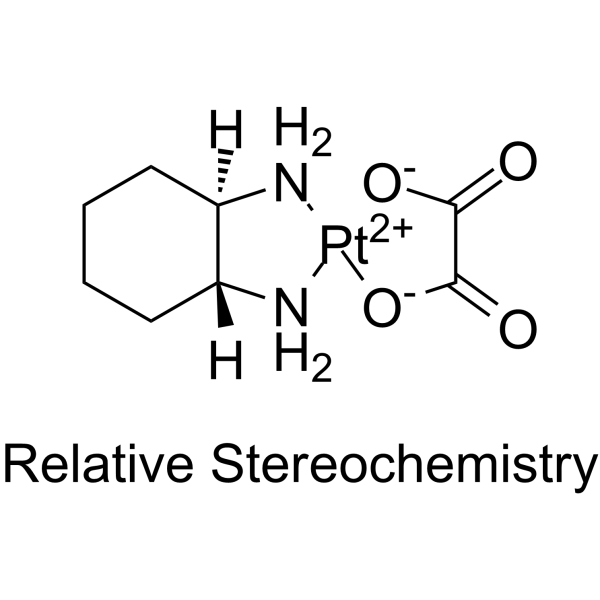
    (rel)-Oxaliplatin is a DNA synthesis inhibitor. (rel)-Oxaliplatin causes DNA crosslinking damage, prevents DNA replication and transcription and induces apoptosis. (rel)-Oxaliplatin can be used for cancer research .
    (rel)-Oxaliplatin
  • HY-124056

    CXCR Cancer
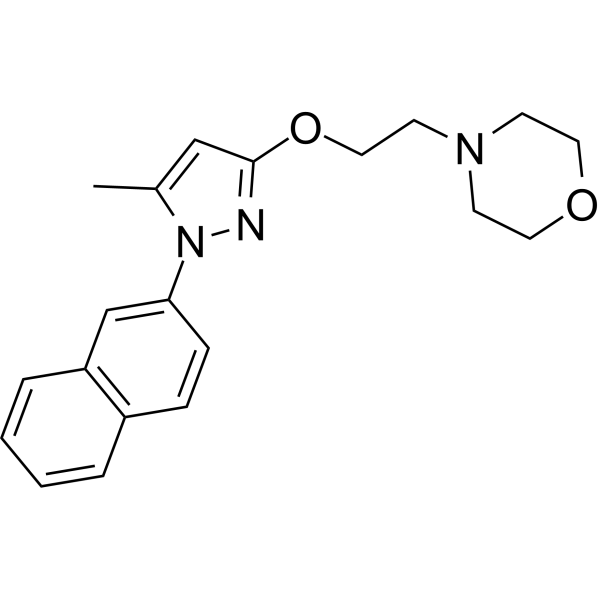
    AZ10397767 is an orally active, selective CXCR2 receptor antagonist with an IC50 of 1 nM. AZ10397767 attenuates the Oxaliplatin (HY-17371)-induced NF-κB transcriptional activity and potentiates Oxaliplatin-induced apoptosis in androgen-independent prostate cancer (AIPC) cells. AZ10397767 significantly inhibits neutrophil recruitment into tumors which then adversely affects tumor growth in vitro and in vivo .
    AZ10397767
  • HY-105253

    PARP Neurological Disease
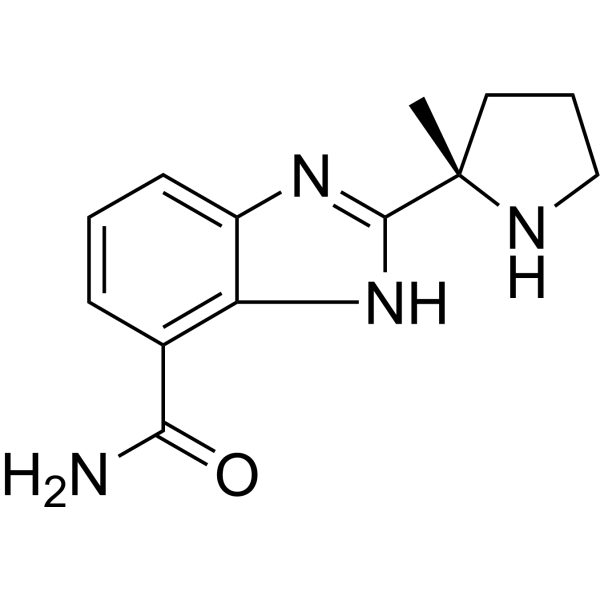
    PARP-2/1-IN-2 (Compound 4a), the enantiomer of Veliparib (HY-10129), is a potent PARP inhibitor with Kis of 2 and 5 nM against PARP-2 and PARP-1, respectively. PARP-2/1-IN-2 has an EC50 of 3 nM in a cell based assay of PARP activity .
    PARP-2/1-IN-2
  • HY-17371S

    Isotope-Labeled Compounds Apoptosis DNA/RNA Synthesis Cancer
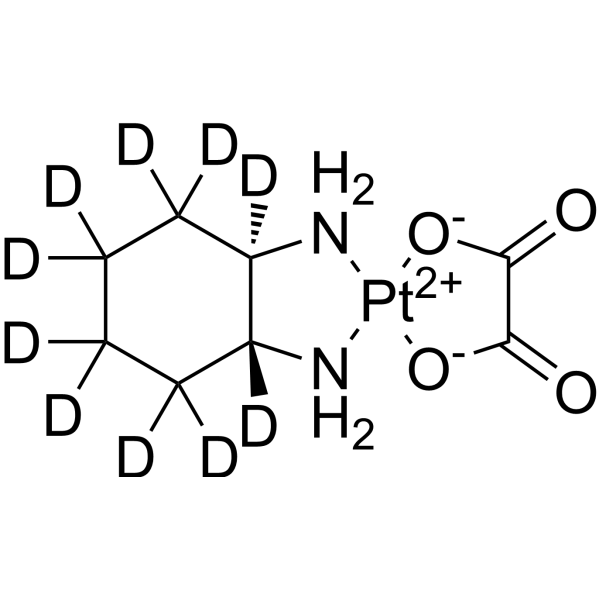
    Oxaliplatin-d10 is a deuterium labeled Oxaliplatin (HY-17371). Oxaliplatin is a DNA synthesis inhibitor. Oxaliplatin causes DNA crosslinking damage, prevents DNA replication and transcription and induces apoptosis. Oxaliplatin can be used for cancer research .
    Oxaliplatin-d10
  • HY-177483

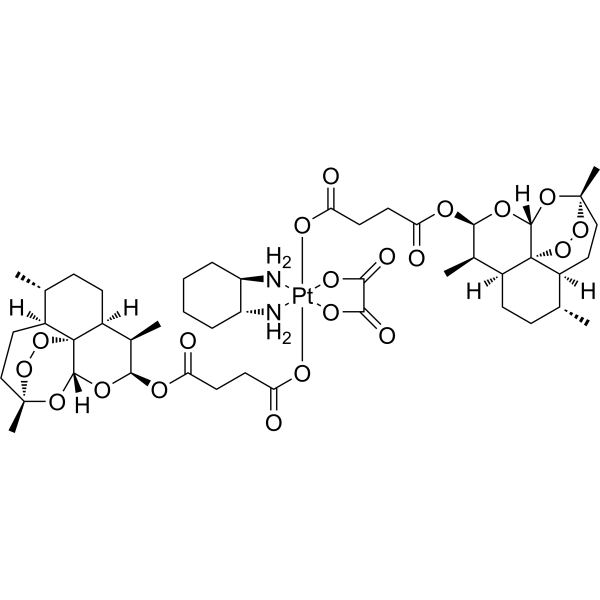
    Oxaliplatin-artesunate

    Ferroptosis Mitochondrial Metabolism Glutathione Peroxidase Transferrin Receptor MMP Dihydroorotate Dehydrogenase Cancer
    OART (Oxaliplatin-artesunate) is a ferroptosis inducer. OART significantly inhibits tumor cell proliferation. OART induces cytoplasmic and mitochondrial LPO to promote tumor ferroptosis, via destroying glutathione-mediated ferroptosis defense system and enhancing iron-dependent Fenton reaction. OART enhances tumor immunogenicity, transforming tumor environment from immunosuppressive to immunosensitive. OART has strong tumor regression in tumor-bearing mouse models. OART can be used for cancer immunotherapy research .
    OART
  • HY-W778423

    Dihydroxy Oxaliplatin-Pt(IV)

    Drug Intermediate Cancer
    [Pt(DACH)(OH)2(ox)] is a Pt(IV) derivative of Oxaliplatin (HY-17371) with two axial hydroxido ligands, used as a precursor for synthesizing Pt(IV)-HDAC inhibitor prodrugs. [Pt(DACH)(OH)2(ox)] exerts cytotoxic activity against human cancer cells and accumulates in cancer cells for nuclear internalization and nuclear DNA platination. [Pt(DACH)(OH)2(ox)] can be used for the research of lung carcinoma, breast carcinoma, pancreatic carcinoma, colon carcinoma .
    [Pt(DACH)(OH)2(ox)]
  • HY-W414604

    Biochemical Assay Reagents Cancer
    Dichloro(1,2-diaminocyclohexane)platinum(II) is a platinum (II) analog and the oxaliplatin parent complex. Dichloro(1,2-diaminocyclohexane)platinum(II) is a potent chemotherapeutic with a wide spectrum of anticancer activity, low toxicity, and lack of cross resistance in many cisplatin-resistant cancers .
    Dichloro(1,2-diaminocyclohexane)platinum(II)
  • HY-W556802

    Biochemical Assay Reagents Others
    Dichloro(1,2-diaminocyclohexane)platinum(II) is a platinum (II) analog and the oxaliplatin parent complex. Dichloro(1,2-diaminocyclohexane)platinum(II) is a potent chemotherapeutic with a wide spectrum of anticancer activity, low toxicity, and lack of cross resistance in many cisplatin-resistant cancers .
    5-Oxodecanoic acid
  • HY-161682

    GPR84 Neurological Disease
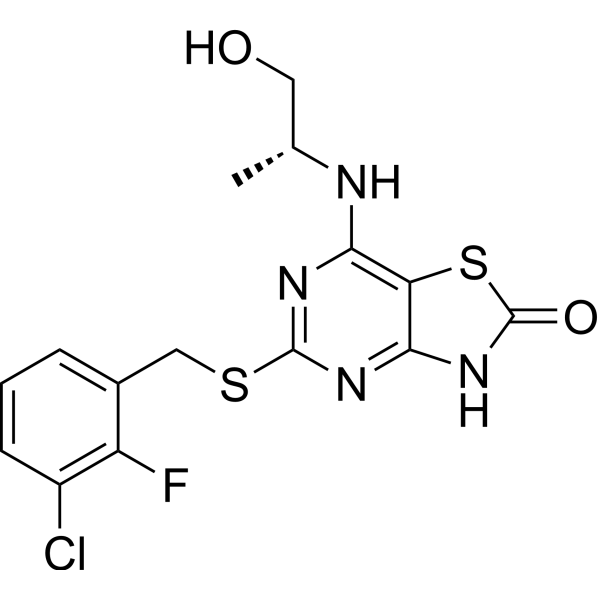
    GPR84 antagonist 9 (compound 320) is an orally active GPR84 antagonist with the IC50 of 0.012 μM. GPR84 antagonist 9 can be used for study of inflammatory-driven pain diseases .
    GPR84 antagonist 9
  • HY-163383

    L-EOP

    Bacterial Infection
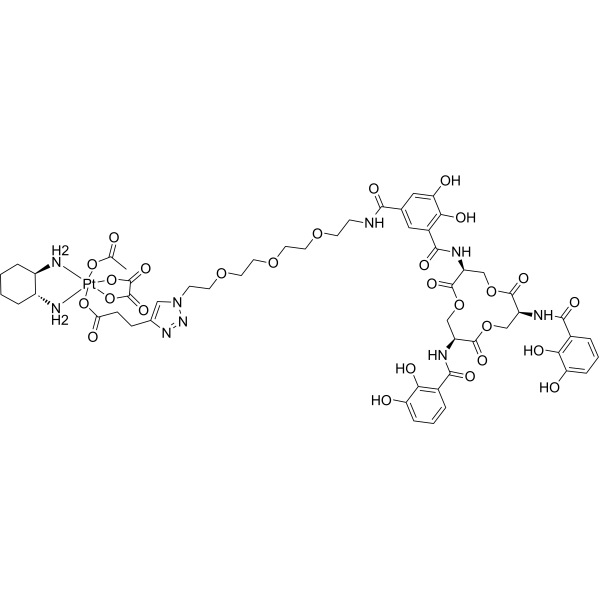
    L-Ent-oxPt IV (L-EOP) is a Oxaliplatin (HY-17371)-based siderophore-platinum conjugate. L-Ent-oxPt IV exhibits selectivity towards Escherichia coli and antibacterial activity through DNA damage .
    L-Ent-oxPt(IV)
  • HY-186157

    Drug Intermediate Others
    (R,R)-Ester-amine-C16-oxaliplatin-ester-propionic acid (compound 5) is a pharmaceutical intermediate that can be used for the synthesis of the Furoxans-Oxaliplatin (HY-17371) conjugate .
    (R,R)-Ester-amine-C16-oxaliplatin-ester-propionic acid
  • HY-108238

    PARP Cancer
    BSI-401 is an orally active PARP-1 inhibitor. BSI-401 alone and in synergism with Oxaliplatin (HY-17371) inhibits pancreatic cancer .
    BSI-401
  • HY-P9991A

    Gap Junction Protein Cancer
    Osemitamab (FUT8-KO) is an anti-claudin-18.2 monoclonal antibody expressed by CHO cells with the fucosyltransferase 8 gene (FUT8) knocked out. Fucose deficiency enhances the ADCC effect of the antibody. Osemitamab in combination with Capecitabine (HY-B0016) and Oxaliplatin (HY-17371), can be used for G/GEJ cancer study .
    Osemitamab (FUT8-KO)
  • HY-170444

    Histamine Receptor mAChR Neurological Disease
    ADS1017 is the antagonist for histamine receptor and muscarinic receptor, that exhibits good affinities to hH3R, hH4R, hM2R and hM4R with pKi of 6.8, 5.5, 7.4 and 7.2. ADS1017 exhibits analgesic and anti-allodynic efficacy in mice Capsaicin (HY-10448)-or Oxaliplatin (HY-17371)-induced pain models .
    ADS1017
  • HY-164468

    Bcl-2 Family Apoptosis Autophagy Cancer
    Ch282-5 is an orally active inhibitor targeting the Bcl-2 protein, inducing mitochondria-dependent apoptosis (Apoptosis) by disrupting mitophagy and the mTOR pathway. Ch282-5 exhibits antiproliferative activity against colorectal cancer cells both in vitro and in vivo, and it also inhibits metastasis. Additionally, Ch282-5 enhances Oxaliplatin (HY-17371)-induced autophagy (Autophagy) by downregulating the Mcl-1 protein and increasing platelet count, alleviating adverse effects of Navitoclax (HY-10087) .
    Ch282-5
  • HY-181998

    Interleukin Related Neurological Disease Inflammation/Immunology
    CN016 is a neuroprotective agent. CN016 inhibits the elevation of pro-inflammatory cytokines G-CSF, GM-CSF and IL-6 induced by Oxaliplatin (HY-17371). CN016 suppresses Paclitaxel (HY-B0015)-induced inflammatory responses and immune cell infiltration into sensory neurons. CN016 protects neurons from Paclitaxel (HY-B0015)-induced neurotoxic damage. CN016 protects mice against Oxaliplatin-induced peripheral neuropathy .
    CN016
  • HY-186158

    Drug Intermediate Cancer
    HOOC-OXA-COOH is an anionic prodrug of Oxaliplatin (HY-17371). HOOC-OXA-COOH can be loaded onto nanomotors via electrostatic interaction, and undergoes cascade activation by H2S and endogenous glutathione in the tumor microenvironment to release cytotoxic Pt 2+. HOOC-OXA-COOH can be used in the research of colon cancer .
    HOOC-OXA-COOH
  • HY-165571

    Carboxypeptidase Neurological Disease
    E2072 is a selective, orally active competitive inhibitor of glutamate carboxypeptidase II (GCPII) with a Ki of 10 nM. E2072 alleviates established thermal hyperalgesia in a rat model of chronic constriction injury. E2072 prevents oxaliplatin-induced reductions in nerve conduction velocity and amplitude in mice. E2072 is applicable to research related to neuropathic pain and neuropathy .
    E2072
  • HY-148302

    PARP Cancer
    LT-626 is a potent PARP inhibitor with an IC50 of 1.60 nM. LT-626 inhibits cellular PAR synthesis with an EC50 of 17.9 nM and shows enhanced cytotoxicity in colorectal cancer cells harboring MRE11 mutations. LT-626 exhibits synergistic effects with Cisplatin (HY-17394), Oxaliplatin (HY-17371), and SN-38 (HY-13704) in colorectal cancer cells. LT-626 can be used for colorectal research .
    LT-626
  • HY-180400

    nAChR Calcium Channel Neurological Disease
    PAM-2 is a potent, orally active, CNS-penetrant selective α7 nAChR positive allosteric modulator (human α7 nAChR EC50: 39 μM, rat α7 nAChR EC50: 12 μM) with anti-nociceptive and anti-inflammatory activity. PAM-2 exhibits selectivity over α9α10 nAChR (IC50 = 174 μM) and CaV2.2 channel (IC50 = 89 μM). PAM-2 decreases Streptozotocin (STZ) (HY-13753)- and Oxaliplatin (HY-17371)-inducned nuroparhic pain in mice by α7 nAChR potentiation. PAM-2 can be used for the research of neuropathic pain .
    PAM-2
  • HY-179034

    Carbonic Anhydrase c-Met/HGFR Apoptosis Cancer
    CAIX/XII-IN-16 (Compound 5d) is a selective inhibitor of CA IX/XII and c-Met. CAIX/XII-IN-16‘s Ki values for hCA IX, hCA XII and CA I are 10.6, 31.8 and 2361 nM respectively, and its IC50 value for c-Met is 0.49 μM. CAIX/XII-IN-16 exhibits significantly enhanced cytotoxicity against colon cancer cells under hypoxic conditions. CAIX/XII-IN-16 causes cell cycle arrest and induces apoptosis (apoptosis). CAIX/XII-IN-16 significantly enhances the efficacy of Oxaliplatin (HY-17371) and 5-Fluorouracil (HY-90006). CAIX/XII-IN-16 can be used for studies on chemotherapy resistance related to hypoxia .
    CAIX/XII-IN-16

Inquiry Online

Your information is safe with us. * Required Fields.

Salutation


Country or Region *

Applicant Name *


Organization Name *

Department *


Email Address *


Product Name *

Cat. No.


Requested quantity *

Phone Number *


Remarks

Inquiry Online

Inquiry Information

Product Name:
Cat. No.:
Quantity:
MCE Japan Authorized Agent: