1. Search Result
Search Result
Pathways Recommended: Vitamin D Related/Nuclear Receptor
Isoforms Recommended: Prostaglandin D Synthase
Results for "

Prostaglandin D synthase

" in MedChemExpress (MCE) Product Catalog:

22

Inhibitors & Agonists

5

Recombinant Proteins

4

Isotope-Labeled Compounds

2

Antibodies

Cat. No. Product Name Target Research Areas Chemical Structure
  • HY-13988
    AT-56
    1 Publications Verification

    PGE synthase Inflammation/Immunology
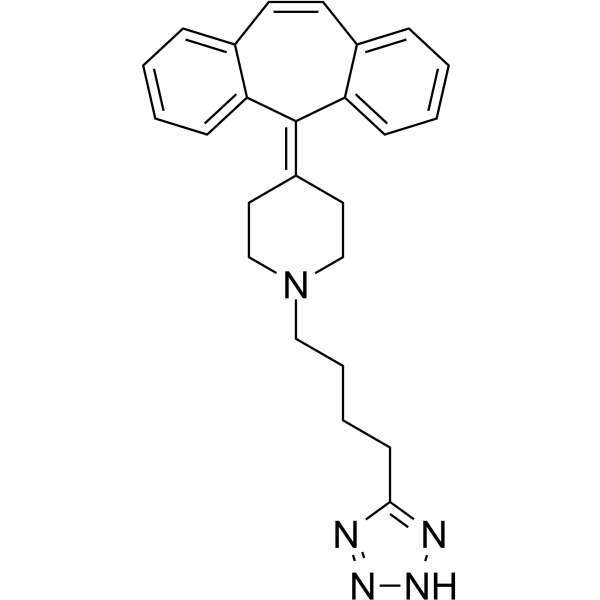
    AT-56 is a potent, selective and orally active inhibitor of lipocalin-type prostaglandin D synthase (L-PGDS), with an IC50 of 95 μM and Ki of 75 μM. AT-56 could selectively suppress the drowsiness or pain reaction mediated by L-PGDS-catalyzed PGD2 .
    AT-56
  • HY-10439

    PGE synthase Inflammation/Immunology
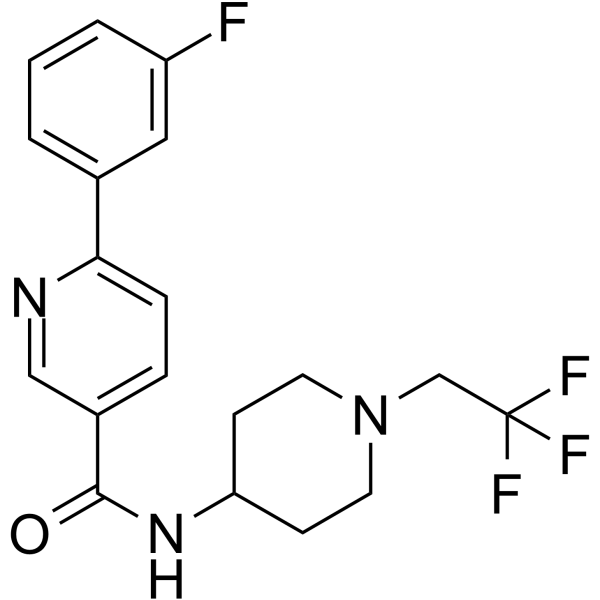
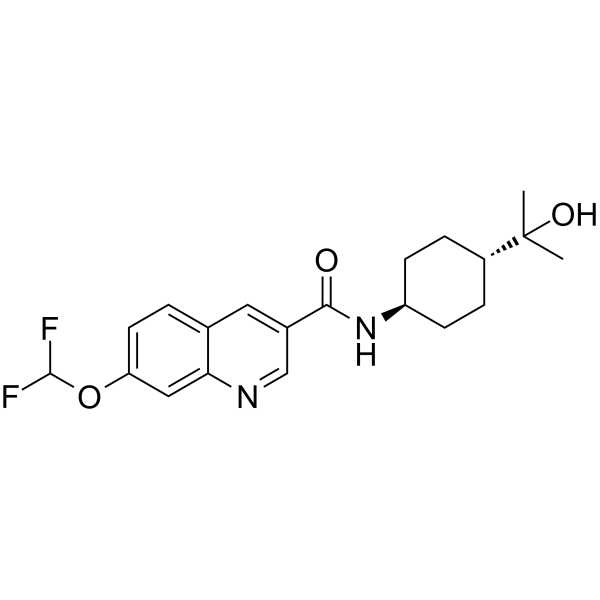
    HPGDS inhibitor 1 is a potent, selective and orally active Hematopoietic Prostaglandin D Synthase (HPGDS) inhibitor with an IC50s of 0.6 nM and 32 nM in enzyme and cellular assays, respectively. HPGDS inhibitor 1 does not inhibit human L-PGDS, mPGES, COX-1, COX-2, or 5-LOX .
    HPGDS inhibitor 1
  • HY-108259

    PGE synthase Inflammation/Immunology
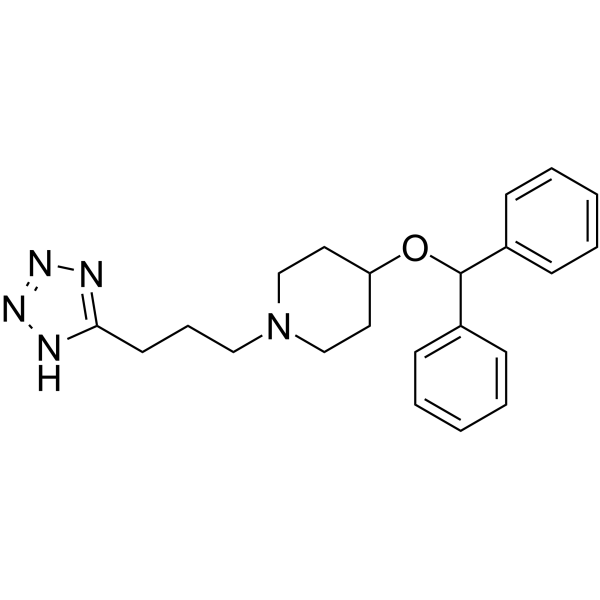
    HQL-79, a potent, selective and orally active human hematopoietic prostaglandin D synthase (H-PGDS) inhibitor, highly selectively inhibits the synthesis of PGD2, and acts as an anti-allergic agent, with a Kd of 0.8 μM and an IC50 of 6 μM. Shows no obvious effect on COX-1, COX-2, m-PGES, or L-PGDS .
    HQL-79
  • HY-109134

    TAS-205 free base

    Prostaglandin Receptor Metabolic Disease Inflammation/Immunology
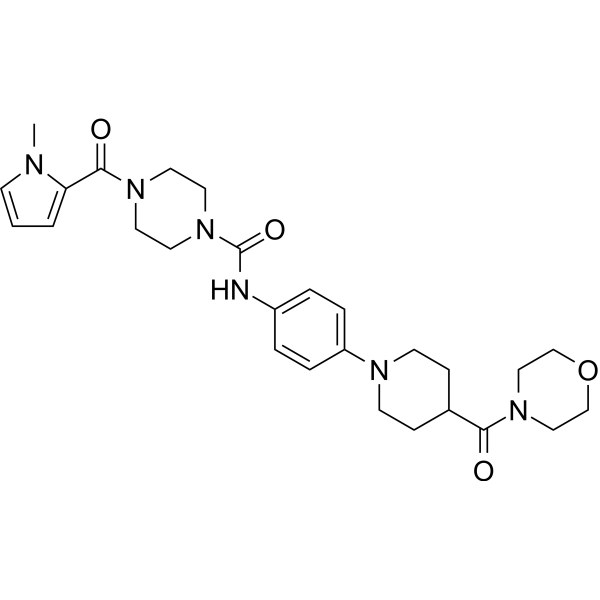
    Pizuglanstat (Compound 3; TAS-205 free base) is an orally active prostaglandin D synthase inhibitor with an IC50 of 76 nM for human hematopoietic prostaglandin D synthase. Pizuglanstat inhibits the synthesis of PGD2. Pizuglanstat improves experimental allergic rhinitis. Pizuglanstat can be used in the study of muscle regenerative diseases such as muscular dystrophy .
    Pizuglanstat
  • HY-B0230S

    COX Inflammation/Immunology
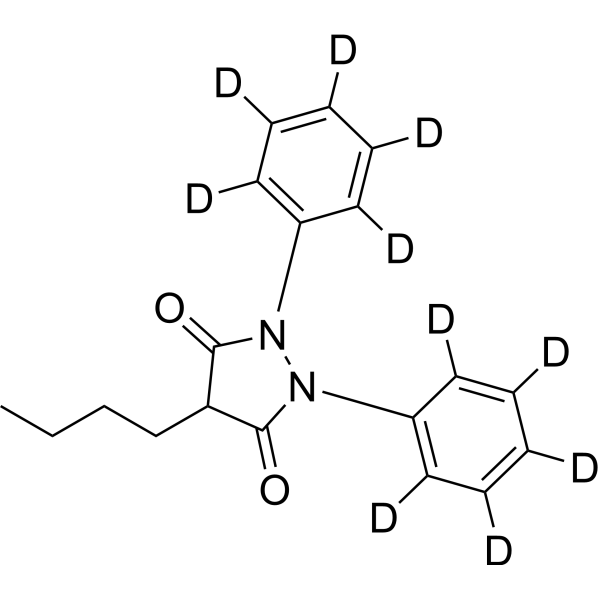
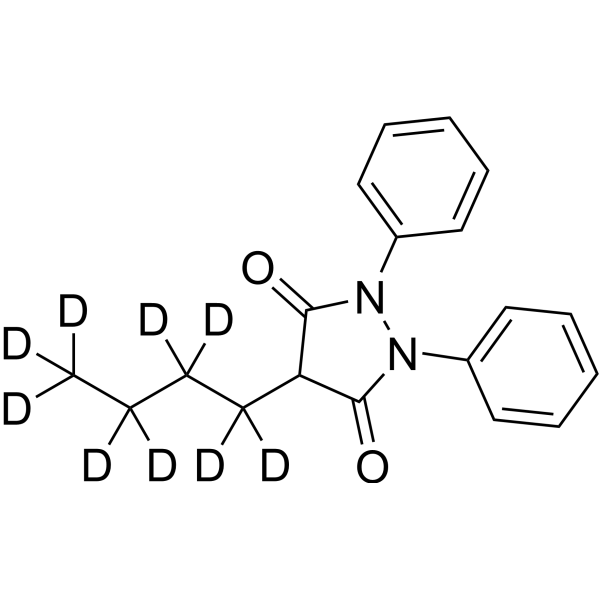
    Phenylbutazone(diphenyl-d10) is the deuterium labeled Phenylbutazone. Phenylbutazone is an efficient reducing cofactor for the peroxidase activity of prostaglandin H synthase (PHS). Phenylbutazone, a hepatotoxin, is a nonsteroidal anti-inflammatory agent (NSAID). Phenylbutazone induces muscle blind-like protein 1 (MBNL1) expression and has the potential for ankylosing spondylitis research .
    Phenylbutazone(diphenyl-d10)
  • HY-13988R

    PGE synthase Reference Standards Inflammation/Immunology
    AT-56 (Standard) is the analytical standard of AT-56. This product is intended for research and analytical applications. AT-56 is a potent, selective and orally active inhibitor of lipocalin-type prostaglandin D synthase (L-PGDS), with an IC50 of 95 μM and Ki of 75 μM. AT-56 could selectively suppress the drowsiness or pain reaction mediated by L-PGDS-catalyzed PGD2 .
    AT-56 (Standard)
  • HY-126134

    PGE synthase Inflammation/Immunology
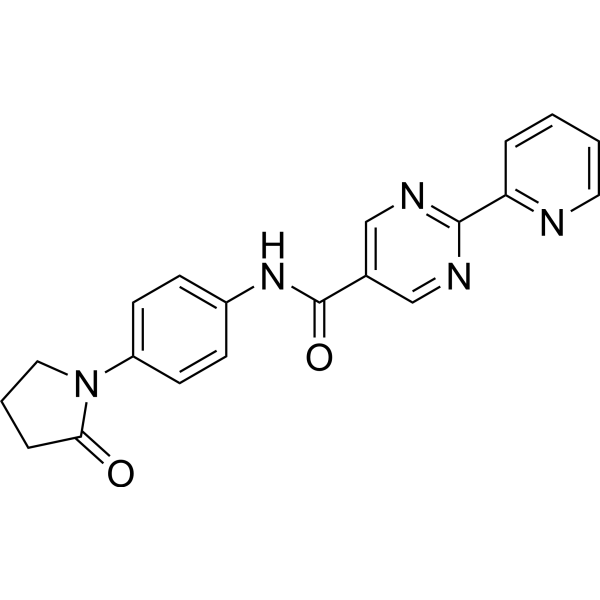
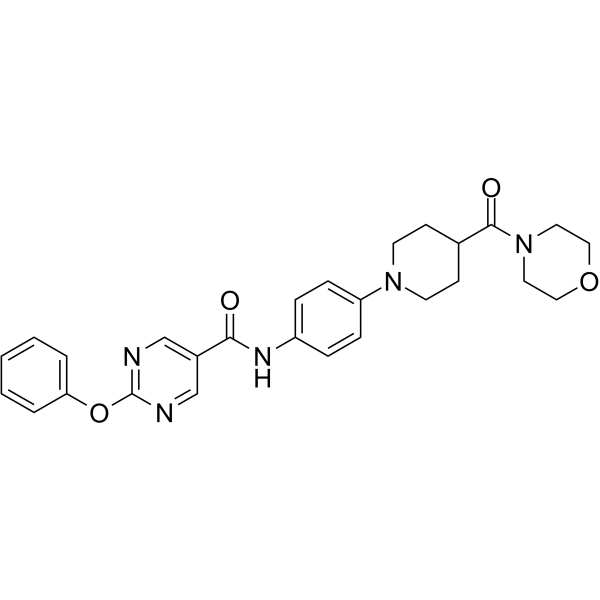
    HPGDS inhibitor 2 is a highly potent and selective hematopoietic prostaglandin D synthase (H-PGDS) inhibitor with an IC50 of 9.9 nM .
    HPGDS inhibitor 2
  • HY-139972

    Molecular Glues Prostaglandin Receptor Cardiovascular Disease
    PROTAC(H-PGDS)-7 is a Hematopoietic prostaglandin D synthase (H-PGDS) molecular glue degrader, with a DC50 of 17.3 pM .
    PROTAC(H-PGDS)-7
  • HY-110167

    PGE synthase Ligands for Target Protein for PROTAC Cancer
    TFC-007, a selective hematopoietic prostaglandin D synthase (H-PGDS) inhibitor, show high inhibitory activity against H-PGDS enzyme (IC50 value of 83 nM). TFC-007 can be used for composing H-PGDS degradation inducer PROTAC(H-PGDS)-1 (TFC-007 binds to H-PGDS, and Pomalidomide binds to cereblon) .
    TFC 007
  • HY-E70559

    PGE synthase Cardiovascular Disease Cancer
    Prostaglandin D synthase is a biomarker for meningioma cells and coronary artery disease. Lipocalin-type Prostaglandin D synthase (L-PGDS) is present in the atherosclerotic plaque of the human coronary artery and can be detectable in human serum .
    Prostaglandin D synthase
  • HY-109134A

    TAS-205

    Prostaglandin Receptor Metabolic Disease Inflammation/Immunology
    Pizuglanstat hydrate (Compound 3; TAS-205) is an orally active prostaglandin D synthase inhibitor with an IC50 of 76 nM for human hematopoietic prostaglandin D synthase. Pizuglanstat hydrate inhibits the synthesis of PGD2. Pizuglanstat hydrate improves experimental allergic rhinitis. Pizuglanstat hydrate can be used in the study of muscle regenerative diseases such as muscular dystrophy .
    Pizuglanstat hydrate
  • HY-139171

    PGE synthase Inflammation/Immunology
    F092 is an inhibitor of hematopoietic prostaglandin D synthase (H-PGDS) with a KD value of 0.14 nM. F092 can be used in the study of allergic and inflammatory responses .
    F092
  • HY-178505

    PGE synthase Inflammation/Immunology Cancer
    mPGES1-IN-10 (Compound 7d) is a potent microsomal prostaglandin E2 synthase-1 (mPGES-1) inhibitor with an IC50 value of 1.0 μM. mPGES1-IN-10 is promising for research of chronic inflammation-related diseases and malignancies such as colorectal cancer .
    mPGES1-IN-10
  • HY-100864

    PGE synthase Inflammation/Immunology
    mPGES1-IN-3 (Compound 17d) is a potent and selective microsomal prostaglandin E2 synthase-1 (mPGES-1) inhibitor, which exhibits excellent mPGES-1 enzyme (IC50: 8 nM), cell (A549 IC50: 16.24 nM) and human whole blood potency (IC50: 249.9 nM) .
    mPGES1-IN-3
  • HY-146662

    PGE synthase Inflammation/Immunology
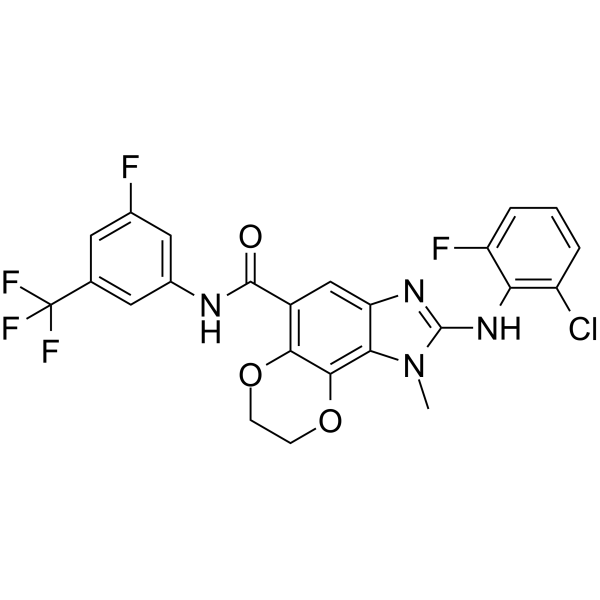
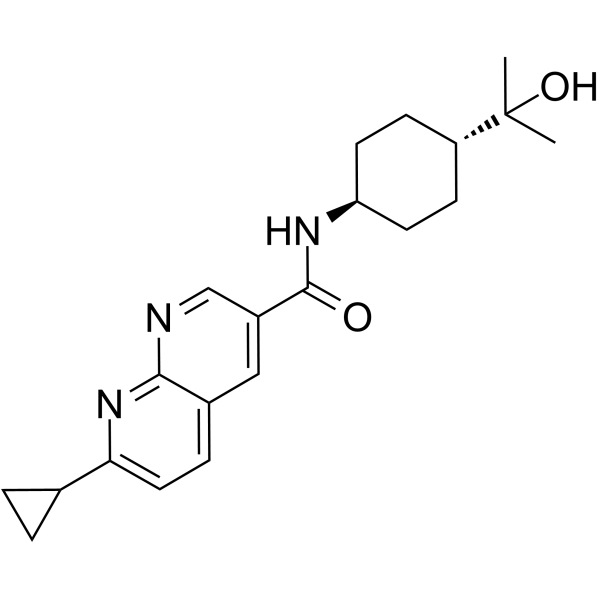
    HPGDS inhibitor 3 is an orally active and highly potent peripherally restricted hematopoietic prostaglandin D synthase (H-PGDS) inhibitor with IC50 value of 9.4 nM and EC50 of 42 nM, respectively. HPGDS inhibitor 3 exhibits good selectivity, good pharmacokinetic parameters in mouse, rat, and dog, and no CNS toxicity. HPGDS inhibitor 3 has anti-inflammatory activity .
    HPGDS inhibitor 3
  • HY-157577

    PROTACs Prostaglandin Receptor Cardiovascular Disease
    PROTAC(H-PGDS)-8 is a Hematopoietic prostaglandin D synthase (H-PGDS) PROTAC degrader, with a IC50 of 0.14 μM .
    PROTAC(H-PGDS)-8
  • HY-W740777

    Isotope-Labeled Compounds Drug Metabolite Others
    4-Hydroxyphenylbutazone-d9 is the deuterium labeled 4-Hydroxyphenylbutazone (HY-139199). 4-Hydroxyphenylbutazone is a metabolite of Phenylbutazone. Phenylbutazone, a nonsteroidal anti-inflammatory agent (NSAID), is an efficient reducing cofactor for the peroxidase activity of prostaglandin H synthase (PHS) .
    4-Hydroxyphenylbutazone-d9
  • HY-B0230S1

    Isotope-Labeled Compounds COX Inflammation/Immunology
    Phenylbutazone-d9 is the deuterium labeled Phenylbutazone. Phenylbutazone is an efficient reducing cofactor for the peroxidase activity of prostaglandin H synthase (PHS). Phenylbutazone, a hepatotoxin, is a nonsteroidal anti-inflammatory agent (NSAID). Phenylbutazone induces muscle blind-like protein 1 (MBNL1) expression and has the potential for ankylosing spondylitis research .
    Phenylbutazone-d9
  • HY-W778179

    LRCL 3794-13C,d3

    Isotope-Labeled Compounds COX Cytochrome P450 Lipoxygenase PGE synthase Inflammation/Immunology
    Benoxaprofen- 13C, d3 is the 13C-labeled Benoxaprofen (HY-13568). Benoxaprofen (LRCL 3794) is a nonsteroidal anti-inflammatory agent that blocks the biosynthesis of inflammatory mediators such as leukotrienes and prostaglandins by inhibiting 5-LOX, PGH2 synthase and cytochrome P-450. Benoxaprofen exhibits significant toxicity: it not only alters cellular redox status, uncouples oxidative phosphorylation and disrupts calcium ion homeostasis, but also causes liver injury through the formation of covalent adducts between its active metabolites and hepatic proteins. Benoxaprofen shows strong phototoxicity under ultraviolet irradiation, and induces erythrocyte lysis, mast cell degranulation and histamine release. Benoxaprofen is widely used in studies of urticaria and related phototoxic mechanisms .
    Benoxaprofen-13C,d3
  • HY-116449

    Prostaglandin Receptor Inflammation/Immunology
    2-Benzoylthiophene is an inhibitor of human hematopoietic prostaglandin D2 synthase (H-PGDS) with an IC50 value of 11.4 μM. 2-Benzoylthiophene can be used in the research of inflammatory diseases .
    2-Benzoylthiophene
  • HY-10439R

    Reference Standards PGE synthase Inflammation/Immunology
    HPGDS inhibitor 1 (Standard) is the analytical standard of HPGDS inhibitor 1 (HY-10439). This product is intended for research and analytical applications. HPGDS inhibitor 1 is a potent, selective and orally active Hematopoietic Prostaglandin D Synthase (HPGDS) inhibitor with an IC50s of 0.6 nM and 32 nM in enzyme and cellular assays, respectively. HPGDS inhibitor 1 does not inhibit human L-PGDS, mPGES, COX-1, COX-2, or 5-LOX .
    HPGDS inhibitor 1 (Standard)
  • HY-108259R

    Reference Standards PGE synthase Inflammation/Immunology
    HQL-79 (Standard) is the analytical standard of HQL-79 (HY-108259). This product is intended for research and analytical applications. HQL-79, a potent, selective and orally active human hematopoietic prostaglandin D synthase (H-PGDS) inhibitor, highly selectively inhibits the synthesis of PGD2, and acts as an anti-allergic agent, with a Kd of 0.8 μM and an IC50 of 6 μM. Shows no obvious effect on COX-1, COX-2, m-PGES, or L-PGDS .
    HQL-79 (Standard)

Inquiry Online

Your information is safe with us. * Required Fields.

Salutation


Country or Region *

Applicant Name *


Organization Name *

Department *


Email Address *


Product Name *

Cat. No.


Requested quantity *

Phone Number *


Remarks

Inquiry Online

Inquiry Information

Product Name:
Cat. No.:
Quantity:
MCE Japan Authorized Agent:

