Search Result
Results for "
Pseudomonas fluorescens
" in MedChemExpress (MCE) Product Catalog:
-
- HY-P1934A
-
|
|
Fungal
Bacterial
IFNAR
Reactive Oxygen Species (ROS)
|
Infection
Inflammation/Immunology
Cancer
|
|
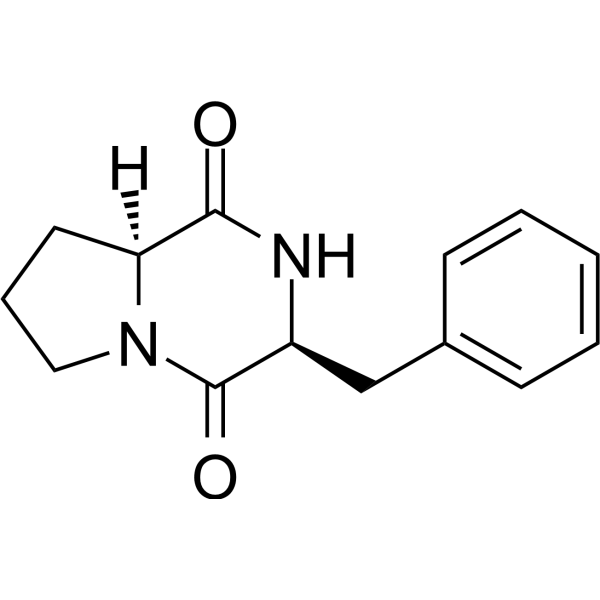
Cyclo(L-Phe-L-Pro), isolated from Pseudomonas fluorescens and Pseudomonas alcaligenes cell-free culture supernatants is an antifungal cyclic dipeptide . Cyclo(L-Phe-L-Pro) inhibits IFN-β production by interfering with retinoic-acid-inducible gene-I (RIG-I) activation . Cyclo(L-Phe-L-Pro) exhibits free-radical scavenging activity with the IC50 of 24 µM in the DPPH assay .
|
-
-
- HY-Y1422I
-
|
|
Environmental Pollutants
Biochemical Assay Reagents
Lipase
|
Others
|
Lipase, Pseudomonas fluorescens (Immobilized) is an immobilized biocatalyst derived from Pseudomonas fluorescens. Lipase, Pseudomonas fluorescens (Immobilized) efficiently catalyzes the hydrolysis, esterification and transesterification of triacylglycerols in solvent-free systems, and is particularly suitable for biodiesel production from soybean oil and selective modification of oils rich in EPA and DHA. Lipase, Pseudomonas fluorescens (Immobilized) exhibits optimal activity at pH 8.5 and 45°C, and retains residual activity after repeated cycles of use. Lipase, Pseudomonas fluorescens (Immobilized) is activated by Ca 2+, but inhibited by Co 2+, Ni 2+, Fe 3+, Fe 2+ and EDTA .
|
-
-
- HY-W094710
-
|
Sodium hydrogen diacetate
|
Environmental Pollutants
Bacterial
|
Infection
|
|
Sodium diacetate (Sodium hydrogen diacetate) is a multifunctional biochemical reagent with antibacterial (bacteria) and antifungal (fungi) activities. Sodium diacetate exerts its antimicrobial effect mainly by effectively penetrating the cell walls of microorganisms and interfering with enzyme interactions. Sodium diacetate inhibits the growth and survival of fungi such as Botrytis cinerea, as well as bacteria such as Listeria and Escherichia coli. Sodium diacetate inhibits the growth of endothelial cells. Sodium diacetate can be used in the synthesis of food preservatives, flavoring agents and pH control additives .
|
-
-
- HY-119171
-
|
|
KMO
|
Neurological Disease
Inflammation/Immunology
|
|
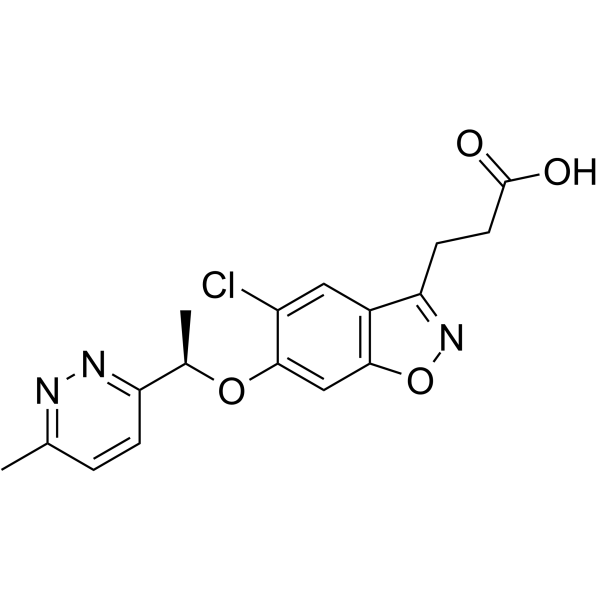
GSK 366 is a type II kynurenine-3-monooxygenase (KMO) inhibitor with IC50 values of 2.3 nM and 0.7 nM for human KMO and P. fluorescens-KMO (Pf-KMO). GSK 366 binds to KMO’s substrate site, prevents productive NADPH association, substrate binding, and FAD hydroperoxy species formation. GSK 366 does not stimulate hydrogen peroxide (H2O2) production and reduces H2O2 levels. GSK 366 can be used for the researches of inflammation and neurological disease, such as acute pancreatitis multiple organ dysfunction syndrome and Alzheimer’s disease .
|
-
-
- HY-N7068
-
|
BRL-4910A calcium hydrate; Pseudomonic acid calcium hydrate
|
Bacterial
Antibiotic
|
Infection
Inflammation/Immunology
|
|
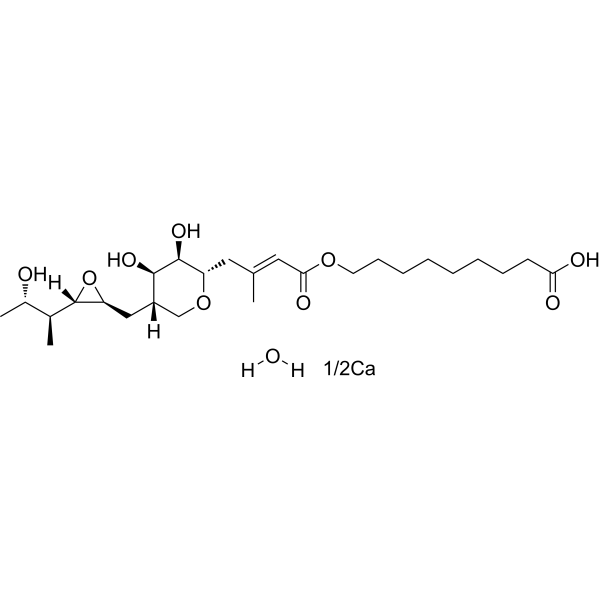
Mupirocin (BRL-4910A, Pseudomonic acid) calcium hydrate is an orally active antibiotic isolated from Pseudomonas fluorescens. Mupirocin calcium hydrate apparently exerts its antimicrobial activity by reversibly inhibiting isoleucyl-transfer RNA, thereby inhibiting bacterial protein and RNA synthesis .
|
-
-
- HY-W049970
-
|
|
Environmental Pollutants
Bacterial
|
Infection
|
|
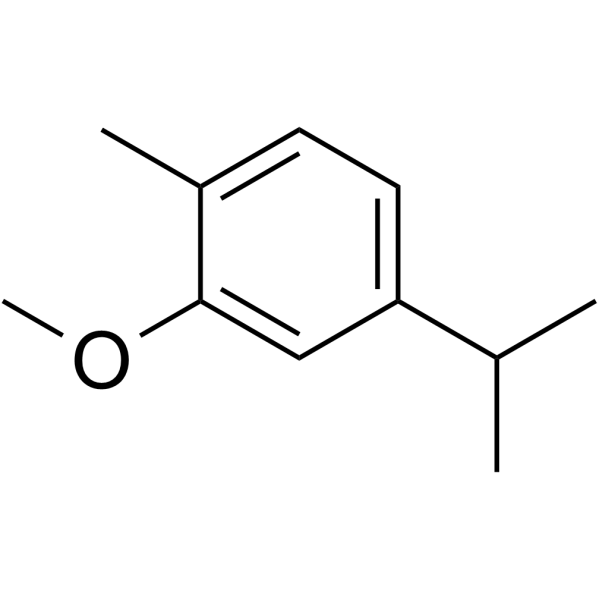
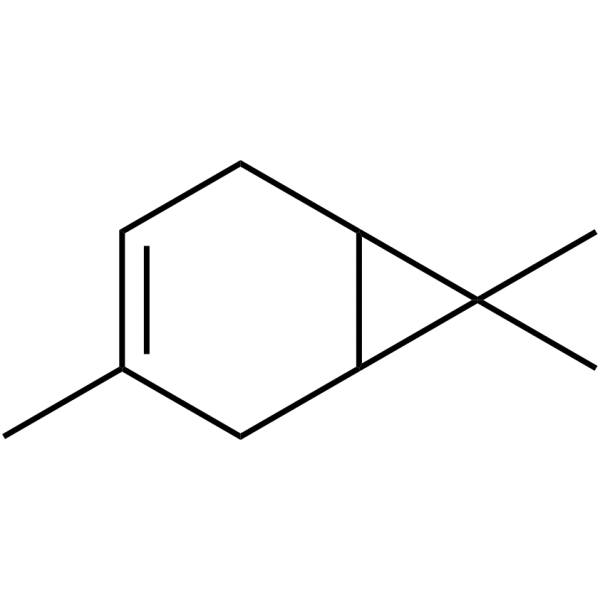
Carvacrol methyl ether is a carvacrol derivative isolated from plant essential oils. Carvacrol methyl ether essentially lost its antibacterial activity, exhibiting only a weak inhibitory effect on Saccharomyces cerevisiae at the highest tested concentration of 3 g/L .
|
-
-
- HY-D0705
-
|
Hydrogen 4-aminoazobenzene-3,4'-disulphonate sodium salt
|
Fluorescent Dye
|
Others
|
|
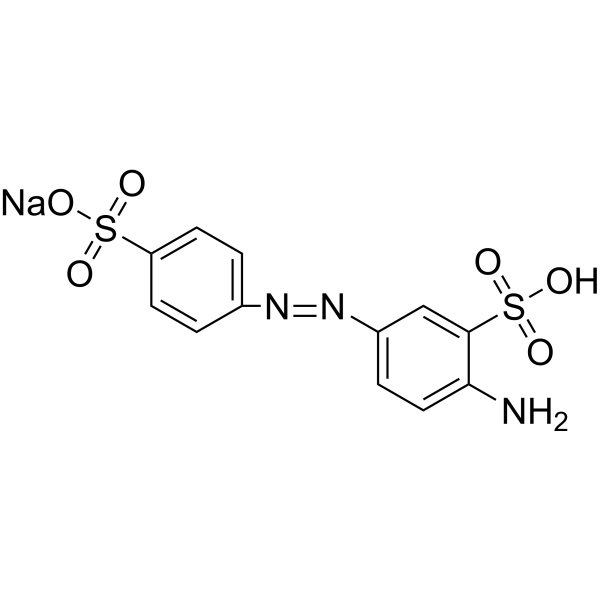
Acid Yellow 9 monosodium salt is an azo dye, degraded by Pseudomonas fluorescens as sole source of carbon, nitrogen and energy for the bacterium .
|
-
-
- HY-125923
-
|
|
Bacterial
|
Infection
Endocrinology
|
|
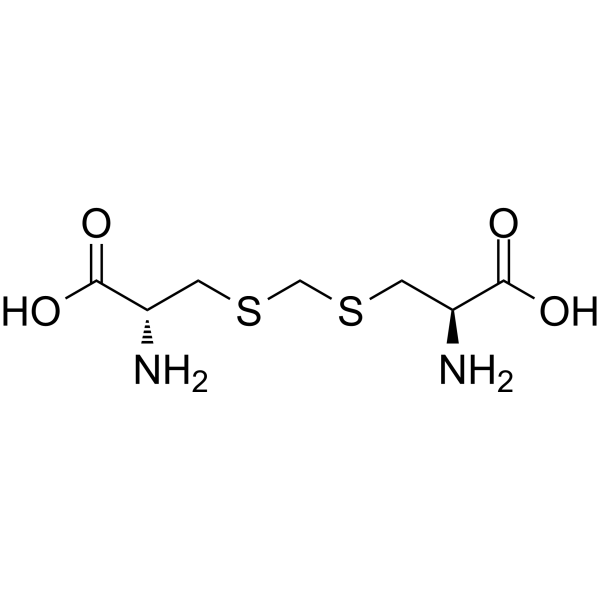
Djenkolic acid is a sulfur-containing amino acid. Djenkolic acid can be isolated from the djenkol beans of the Southeast Asian plant Archidendron jiringa. Djenkolic acid de-inhibits the SO4 2- uptake system in Pseudomonas fluorescens. Djenkolic acid causes supersaturation of the urinary system with djenkolic acid crystals, leading to urinary tract obstruction and acute kidney injury .
|
-
-
- HY-W001996
-
|
|
Endogenous Metabolite
Drug Intermediate
Bacterial
|
Infection
|
|
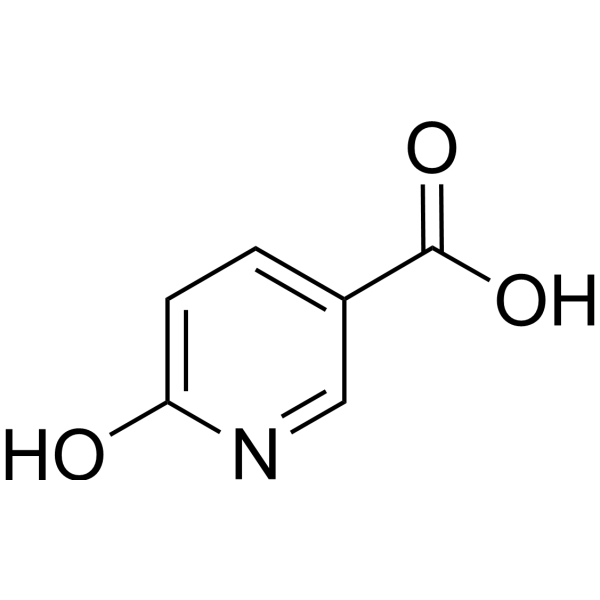
6-Hydroxynicotinic acid is an intermediate in the oxidation of Nicotinic acid (HY-B0143) by Pseudomonas fluorescens and metabolite. 6-Hydroxynicotinic acid can be isolated from root exudates of Cucumis melo. 6-Hydroxynicotinic acid disrupts the Auxin signaling pathway. 6-Hydroxynicotinic acid inhibits haustoria precursor formation in Phlipanche aegyptiaca .
|
-
-
- HY-118448
-
|
|
Antibiotic
Bacterial
Fungal
Parasite
|
Infection
|
|
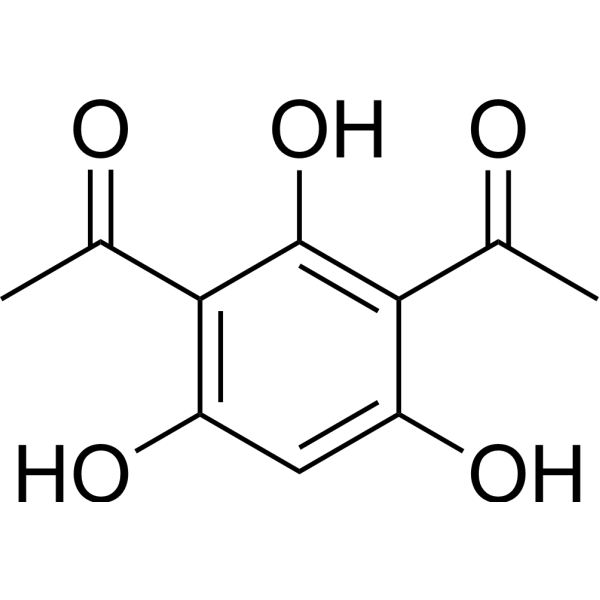
2,4-Diacetylphloroglucinol is a polyketide antibiotic produced by Pseudomonas fluorescens. 2,4-Diacetylphloroglucinol exhibits broad-spectrum toxicity against various organisms such as bacteria, fungi, oomycetes, and nematodes. 2,4-Diacetylphloroglucinol can also inhibit plant pathogens and affect the root development of tomato seedlings .
|
-
-
- HY-W001996R
-
|
|
Reference Standards
Endogenous Metabolite
Drug Intermediate
Bacterial
|
Infection
|
|
6-Hydroxynicotinic acid (Standard) is the analytical standard of 6-Hydroxynicotinic acid (HY-W001996). This product is intended for research and analytical applications. 6-Hydroxynicotinic acid is an intermediate in the oxidation of Nicotinic acid (HY-B0143) by Pseudomonas fluorescens and metabolite. 6-Hydroxynicotinic acid can be isolated from root exudates of Cucumis melo. 6-Hydroxynicotinic acid disrupts the Auxin signaling pathway. 6-Hydroxynicotinic acid inhibits haustoria precursor formation in Phlipanche aegyptiaca .
|
-
-
- HY-128384
-
|
|
Bacterial
|
Infection
|
|
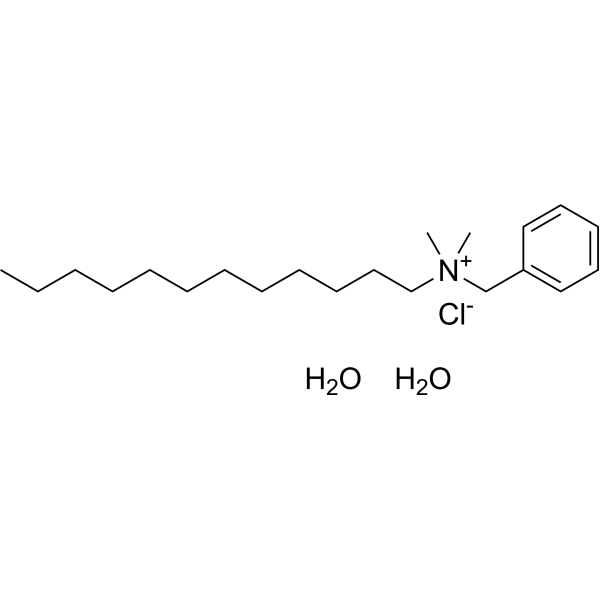
Benzyldodecyldimethylammonium chloride dihydrate is a quaternary ammonium compound (QAC) and can be used as a biocide to target antibiotic-resistant bacteria, such as methicillin-resistant Staphylococcus aureus (MRSA), multidrug-resistant (MDR) P. aeruginosa et. al. Benzyldodecyldimethylammonium chloride dihydrate, an antimicrobial agent, bacteriostatic or bactericidal properties depending on the concentration.
|
-
-
- HY-118448R
-
|
|
Reference Standards
Antibiotic
Bacterial
Fungal
Parasite
|
Infection
|
|
2,4-Diacetylphloroglucinol (Standard) is the analytical standard of 2,4-Diacetylphloroglucinol (HY-118448). This product is intended for research and analytical applications. 2,4-Diacetylphloroglucinol is a polyketide antibiotic produced by Pseudomonas fluorescens. 2,4-Diacetylphloroglucinol exhibits broad-spectrum toxicity against various organisms such as bacteria, fungi, oomycetes, and nematodes. 2,4-Diacetylphloroglucinol can also inhibit plant pathogens and affect the root development of tomato seedlings .
|
-
-
- HY-E70412A
-
|
|
Endogenous Metabolite
|
Metabolic Disease
|
Galactose 1-dehydrogenase, pseudomonas fluorescens is a dehydrogenase expressed in Pseudomonas fluorescens. Galactose 1-dehydrogenase, pseudomonas fluorescens catalyzes the oxidation of L-arabinose and D-galactose using NADP +/NAD + as a cofactor. Galactose 1-dehydrogenase, pseudomonas fluorescens can be used in diagnostic tests to measure total galactose content and can also act as a biocatalyst for producing galacturonic acid salts .
|
-
-
- HY-144728
-
|
|
Bacterial
|
Infection
|
|
MraY-IN-1 (compound 12a) is a potent MraY inhibitor with an IC50 value of 140 μM. MraY-IN-1 has antimicrobial activity against Escherichia coli K12, Bacillus subtilis W23 and Pseudomonas fluorescens Pf-5 with MIC50s of 7 µg/mL, 12 µg/mL and 46 µg/mL, respectively. MraY-IN-1 can be used for researching anti-bacteria .
|
-
-
- HY-E70891
-
|
|
Endogenous Metabolite
|
Metabolic Disease
|
|
β-Galactose Dehydrogenase S, Pseudomonas fluorescens (EC 1.1.1.48) belongs to the oxidoreductase family and is an oxidoreductase that acts on the CH-OH group as a donor and uses NAD+ or NADP+ as an acceptor. β-Galactose Dehydrogenase S, Pseudomonas fluorescens, is involved in galactose metabolism. The enzyme's two substrates are D-galactose and NAD+, while its three products are D-galactonide-1,4-lactone, NADH, and H+.
|
-
-
- HY-118265
-
|
|
Endogenous Metabolite
|
Others
|
|
N-Acetylglutaminylglutamine amide is a dipeptide previously reported only in osmotically stressed Rhizobium meliloti and Pseudomonas fluorescens .
|
-
-
- HY-126869
-
|
|
Bacterial
Parasite
|
Infection
|
|
Pseudomonic acid D is a microbial inhibitor. Pseudomonic acid D potently inhibits mycoplasmas and bacterial pathogens. Pseudomonic acid D can be produced by fermentation with Pseudomonas fluorescens .
|
-
-
- HY-B0958A
-
|
BRL-4910A calcium; Pseudomonic acid calcium
|
Antibiotic
Bacterial
|
Infection
|
|
Mupirocin (BRL-4910A, Pseudomonic acid) calcium is an orally active antibiotic isolated from Pseudomonas fluorescens. Mupirocin calcium apparently exerts its antimicrobial activity by reversibly inhibiting isoleucyl-transfer RNA, thereby inhibiting bacterial protein and RNA synthesis .
|
-
-
- HY-N14354
-
|
|
Antibiotic
Bacterial
|
Infection
|
|
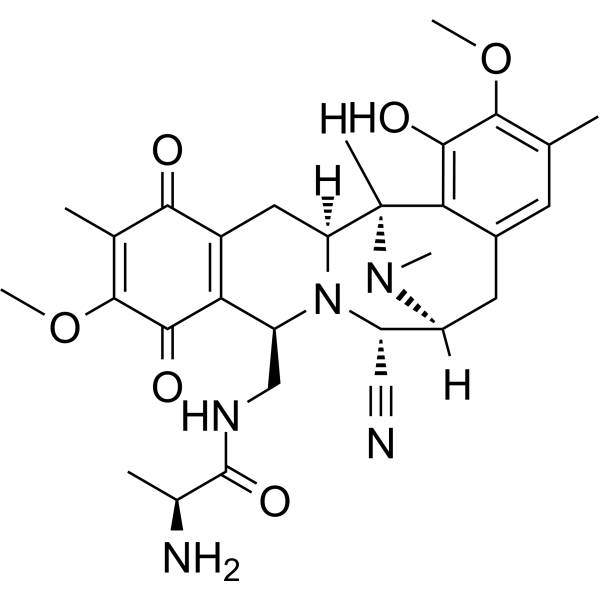
Ferrocin B is an iron-containing cyclic decapeptide antibiotic found in the bacterium Pseudomonas fluorescens YK-310, exhibiting strong antibacterial activity primarily against Gram-negative bacteria, with particularly potent inhibitory effects on Pseudomonas aeruginosa. In a mouse infection model, Ferrocin B shows a half effective dose (ED50) of 0.593 mg/kg against P. aeruginosa. Ferrocin B holds potential for research in the field of anti-infective therapies .
|
-
-
- HY-P1934AR
-
|
|
Reference Standards
Fungal
Bacterial
IFNAR
Reactive Oxygen Species (ROS)
|
Infection
Inflammation/Immunology
Cancer
|
|
Gallic acid (hydrate) (Standard) is the analytical standard of Gallic acid (hydrate). This product is intended for research and analytical applications. Cyclo(L-Phe-L-Pro), isolated from Pseudomonas fluorescens and Pseudomonas alcaligenes cell-free culture supernatants is an antifungal cyclic dipeptide . Cyclo(L-Phe-L-Pro) inhibits IFN-β production by interfering with retinoic-acid-inducible gene-I (RIG-I) activation . Cyclo(L-Phe-L-Pro) exhibits free-radical scavenging activity with the IC50 of 24 µM in the DPPH assay .
|
-
-
- HY-N7068R
-
|
BRL-4910A calcium hydrate (Standard); Pseudomonic acid calcium hydrate (Standard)
|
Reference Standards
Bacterial
Antibiotic
|
Infection
Inflammation/Immunology
|
|
Mupirocin (calcium hydrate) (Standard) is the analytical standard of Mupirocin (calcium hydrate). This product is intended for research and analytical applications. Mupirocin (BRL-4910A, Pseudomonic acid) calcium hydrate is an orally active antibiotic isolated from Pseudomonas fluorescens. Mupirocin calcium hydrate apparently exerts its antimicrobial activity by reversibly inhibiting isoleucyl-transfer RNA, thereby inhibiting bacterial protein and RNA synthesis .
|
-
-
- HY-125923R
-
|
|
Reference Standards
Bacterial
|
Infection
Endocrinology
|
|
Djenkolic acid (Standard) is the analytical standard of Djenkolic acid (HY-125923). This product is intended for research and analytical applications. Djenkolic acid is a sulfur-containing amino acid. Djenkolic acid can be isolated from the djenkol beans of the Southeast Asian plant Archidendron jiringa. Djenkolic acid de-inhibits the SO4 2- uptake system in Pseudomonas fluorescens. Djenkolic acid causes supersaturation of the urinary system with djenkolic acid crystals, leading to urinary tract obstruction and acute kidney injury .
|
-
-
- HY-N2789
-
|
|
Bacterial
Fungal
|
Infection
|
|
(9Z)-9,17-Octadecadiene-12,14-diyne-1,11,16-triol is a nature product that could be isolated from the ethyl acetate extract of Cassonia barteri (Araliaceae) leaves. (9Z)-9,17-Octadecadiene-12,14-diyne-1,11,16-triol has antibacterial activity against Bacillus subtilis and Pseudomonas fluorescens, antifungal activity against Cladosporium cucumerinum, moiluscicidal activity against Biomphalaria glabrata . (9Z)-9,17-Octadecadiene-12,14-diyne-1,11,16-triol is a click chemistry reagent, it contains an Alkyne group and can undergo copper-catalyzed azide-alkyne cycloaddition (CuAAc) with molecules containing Azide groups.
|
-
-
- HY-E70125N
-
-
-
- HY-182496
-
|
|
Antibiotic
Bacterial
|
Infection
|
|
Kanchanamycin A is a 36-membered polyol macrolide antibiotic found in Streptomyces olivaceus Tü 4018, with high activity against Pseudomonas fluorescens, weak activity against Gram-positive bacteria and filamentous fungi, and no activity against yeasts. Kanchanamycin A inhibits growth of Pseudomonas fluorescens, Botrytis cinerea, Mucor miehei, Penicillium notatum, and Staphylococcus aureus. Kanchanamycin A is commonly used in the study of bacterial infections .
|
-
-
- HY-N14428
-
|
|
Bacterial
|
Infection
|
|
Fosfocytocin is found in the strain of Pseudomonas fluorescens PK-52. Fosfocytocin has very weak antibacterial activity .
|
-
-
- HY-181939
-
|
|
Bacterial
|
Infection
|
|
Antibacterial agent 329 (Compound 9c) is an antibacterial agent. Antibacterial agent 329 inhibits the activity of MraY. Antibacterial agent 329 exhibits antibacterial activity against Escherichia coli K12 and Bacillus subtilis W23 with a MIC of 16 μg/mL, but shows no activity against Pseudomonas fluorescens Pf-5. Antibacterial agent 329 exerts antibacterial activity against Acinetobacter baumannii 19606, Staphylococcus aureus MRSA USA300 JE2, Enterobacter cloacae 19434, Klebsiella pneumoniae 700603 and Enterococcus faecium 19434, with MIC values of 8, 8, 16-32, 16-32 and 16 μg/mL, respectively, while it shows no activity against Pseudomonas aeruginosa NCTC 13437 .
|
-
-
- HY-P1938S1
-
|
|
Isotope-Labeled Compounds
|
Others
|
|
Cyclo(Pro-Val)-d4 is the deuterium labeled Cyclo(Pro-Val) (HY-N11615). Cyclo(Pro-Val) can be isolated from Pseudomonas fluorescens GcM5-1A and has cytotoxicity .
|
-
-
- HY-180459
-
|
|
Bacterial
|
Infection
|
|
FabH-IN-3 (Compound 12) is an inhibitor of FabH. FabH-IN-3 exhibits MIC against Bacillus subtilis, Escherichia coli, Pseudomonas fluorescens, and Staphylococcus aureus are all 50 μg/mL. FabH-IN-3 can be used for research on Gram-negative bacterial infections .
|
-
-
- HY-W718262
-
|
(Rac)-CGP 52547
|
Antibiotic
Fungal
Bacterial
|
Infection
Cancer
|
|
Dihydroaeruginoic acid ((Rac)-CGP 52547), an antifungal antibiotic, is a thiazoline iron chelator. Dihydroaeruginoic acid is the condensation product of salicylate and one cysteine residue. Dihydroaeruginoic acid chelates Fe(III), inhibits DNA replication via ribonucleotide reductase, induces G1/S cell cycle block, reduces leukemia cell clonogenic viability. Dihydroaeruginoic acid inhibits phytopathogenic fungi and bacteria, suppresses Candida albicans development, and inhibits Agrobacterium tumefaciens biofilm formation via extracellular iron sequestration. Dihydroaeruginoic acid can be used for the research of phytopathogenic fungal and bacterial infections, and leukemia .
|
-
-
- HY-W714201
-
|
|
Herbicide
Parasite
|
Infection
|
|
Nitralin is a dinitroaniline herbicide. Nitralin exhibits inhibitory activity against Cryptosporidium parvum, with a IC50 of 4.5 µM .
|
-
-
- HY-D0705
-
|
Hydrogen 4-aminoazobenzene-3,4'-disulphonate sodium salt
|
蛍光色素
|
|
Acid Yellow 9 monosodium salt is an azo dye, degraded by Pseudomonas fluorescens as sole source of carbon, nitrogen and energy for the bacterium .
|
-
- HY-P1934A
-
|
|
Fungal
Bacterial
IFNAR
Reactive Oxygen Species (ROS)
|
Infection
Inflammation/Immunology
Cancer
|
|
Cyclo(L-Phe-L-Pro), isolated from Pseudomonas fluorescens and Pseudomonas alcaligenes cell-free culture supernatants is an antifungal cyclic dipeptide . Cyclo(L-Phe-L-Pro) inhibits IFN-β production by interfering with retinoic-acid-inducible gene-I (RIG-I) activation . Cyclo(L-Phe-L-Pro) exhibits free-radical scavenging activity with the IC50 of 24 µM in the DPPH assay .
|
-
- HY-N11615
-
|
|
ペプチド
|
Others
|
|
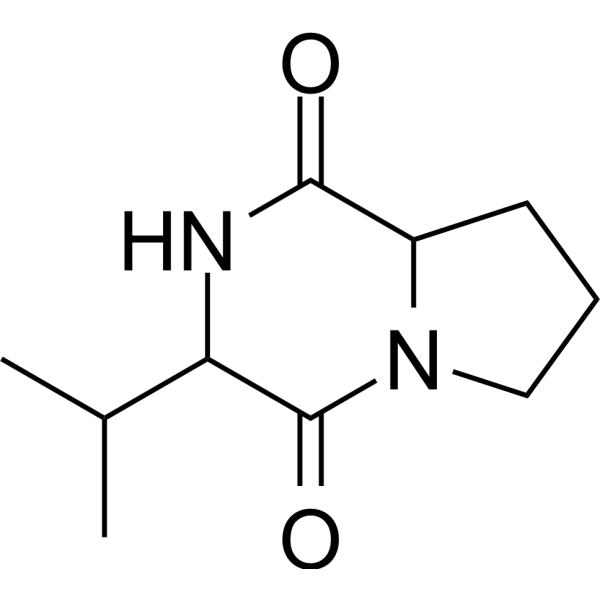
Cyclo(Pro-Val) can be isolated from Pseudomonas fluorescens GcM5-1A and has cytotoxicity .
|
-
- HY-P1934AR
-
|
|
Reference Standards
Fungal
Bacterial
IFNAR
Reactive Oxygen Species (ROS)
|
Infection
Inflammation/Immunology
Cancer
|
|
Gallic acid (hydrate) (Standard) is the analytical standard of Gallic acid (hydrate). This product is intended for research and analytical applications. Cyclo(L-Phe-L-Pro), isolated from Pseudomonas fluorescens and Pseudomonas alcaligenes cell-free culture supernatants is an antifungal cyclic dipeptide . Cyclo(L-Phe-L-Pro) inhibits IFN-β production by interfering with retinoic-acid-inducible gene-I (RIG-I) activation . Cyclo(L-Phe-L-Pro) exhibits free-radical scavenging activity with the IC50 of 24 µM in the DPPH assay .
|
| 製品番号 |
製品名 |
Category |
Target |
構造式 |
-
- HY-P1934A
-
-
-
- HY-N7068
-
-
-
- HY-W049970
-
-
-
- HY-125923
-
-
-
- HY-W001996
-
-
-
- HY-118448
-
|
|
Microorganisms
Source Classification
|
Antibiotic
Bacterial
Fungal
Parasite
|
|
2,4-Diacetylphloroglucinol is a polyketide antibiotic produced by Pseudomonas fluorescens. 2,4-Diacetylphloroglucinol exhibits broad-spectrum toxicity against various organisms such as bacteria, fungi, oomycetes, and nematodes. 2,4-Diacetylphloroglucinol can also inhibit plant pathogens and affect the root development of tomato seedlings .
|
-
-
- HY-N11615
-
-
-
- HY-W001996R
-
-
-
- HY-118448R
-
|
|
Microorganisms
Source Classification
|
Reference Standards
Antibiotic
Bacterial
Fungal
Parasite
|
|
2,4-Diacetylphloroglucinol (Standard) is the analytical standard of 2,4-Diacetylphloroglucinol (HY-118448). This product is intended for research and analytical applications. 2,4-Diacetylphloroglucinol is a polyketide antibiotic produced by Pseudomonas fluorescens. 2,4-Diacetylphloroglucinol exhibits broad-spectrum toxicity against various organisms such as bacteria, fungi, oomycetes, and nematodes. 2,4-Diacetylphloroglucinol can also inhibit plant pathogens and affect the root development of tomato seedlings .
|
-
-
- HY-126869
-
-
-
- HY-N14354
-
|
|
天然物
Microorganisms
Source Classification
|
Antibiotic
Bacterial
|
|
Ferrocin B is an iron-containing cyclic decapeptide antibiotic found in the bacterium Pseudomonas fluorescens YK-310, exhibiting strong antibacterial activity primarily against Gram-negative bacteria, with particularly potent inhibitory effects on Pseudomonas aeruginosa. In a mouse infection model, Ferrocin B shows a half effective dose (ED50) of 0.593 mg/kg against P. aeruginosa. Ferrocin B holds potential for research in the field of anti-infective therapies .
|
-
-
- HY-P1934AR
-
|
|
天然物
Microorganisms
Source Classification
|
Reference Standards
Fungal
Bacterial
IFNAR
Reactive Oxygen Species (ROS)
|
|
Gallic acid (hydrate) (Standard) is the analytical standard of Gallic acid (hydrate). This product is intended for research and analytical applications. Cyclo(L-Phe-L-Pro), isolated from Pseudomonas fluorescens and Pseudomonas alcaligenes cell-free culture supernatants is an antifungal cyclic dipeptide . Cyclo(L-Phe-L-Pro) inhibits IFN-β production by interfering with retinoic-acid-inducible gene-I (RIG-I) activation . Cyclo(L-Phe-L-Pro) exhibits free-radical scavenging activity with the IC50 of 24 µM in the DPPH assay .
|
-
-
- HY-N7068R
-
-
-
- HY-125923R
-
|
|
other families
Amino acids
Plants
Archidendron jiringa
Source Classification
|
Reference Standards
Bacterial
|
|
Djenkolic acid (Standard) is the analytical standard of Djenkolic acid (HY-125923). This product is intended for research and analytical applications. Djenkolic acid is a sulfur-containing amino acid. Djenkolic acid can be isolated from the djenkol beans of the Southeast Asian plant Archidendron jiringa. Djenkolic acid de-inhibits the SO4 2- uptake system in Pseudomonas fluorescens. Djenkolic acid causes supersaturation of the urinary system with djenkolic acid crystals, leading to urinary tract obstruction and acute kidney injury .
|
-
-
- HY-N2789
-
|
|
天然物
Cynara scolymus L.
Plants
Umbelliferae
Source Classification
|
Bacterial
Fungal
|
|
(9Z)-9,17-Octadecadiene-12,14-diyne-1,11,16-triol is a nature product that could be isolated from the ethyl acetate extract of Cassonia barteri (Araliaceae) leaves. (9Z)-9,17-Octadecadiene-12,14-diyne-1,11,16-triol has antibacterial activity against Bacillus subtilis and Pseudomonas fluorescens, antifungal activity against Cladosporium cucumerinum, moiluscicidal activity against Biomphalaria glabrata . (9Z)-9,17-Octadecadiene-12,14-diyne-1,11,16-triol is a click chemistry reagent, it contains an Alkyne group and can undergo copper-catalyzed azide-alkyne cycloaddition (CuAAc) with molecules containing Azide groups.
|
-
-
- HY-182496
-
|
|
Structural Classification
Microorganisms
Ketones, Aldehydes, Acids
Source Classification
|
Antibiotic
Bacterial
|
|
Kanchanamycin A is a 36-membered polyol macrolide antibiotic found in Streptomyces olivaceus Tü 4018, with high activity against Pseudomonas fluorescens, weak activity against Gram-positive bacteria and filamentous fungi, and no activity against yeasts. Kanchanamycin A inhibits growth of Pseudomonas fluorescens, Botrytis cinerea, Mucor miehei, Penicillium notatum, and Staphylococcus aureus. Kanchanamycin A is commonly used in the study of bacterial infections .
|
-
-
- HY-N14428
-
-
-
- HY-P1938S1
-
|
|
|
Cyclo(Pro-Val)-d4 is the deuterium labeled Cyclo(Pro-Val) (HY-N11615). Cyclo(Pro-Val) can be isolated from Pseudomonas fluorescens GcM5-1A and has cytotoxicity .
|
-
入力情報は安全に管理されます. ※ 必須入力項目.
Inquiry Information
- 製品名:
- 製品番号:
- 数量:
- MCE 日本正規代理店:

