



Mupirocin calcium hydrate
Based on 1 publication(s) in Google Scholar
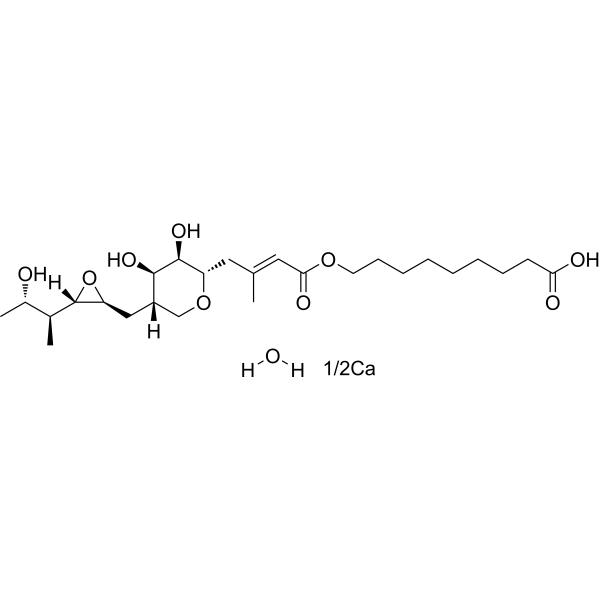
Mupirocin (BRL-4910A, Pseudomonic acid) calcium hydrate is an orally active antibiotic isolated from Pseudomonas fluorescens. Mupirocin calcium hydrate apparently exerts its antimicrobial activity by reversibly inhibiting isoleucyl-transfer RNA, thereby inhibiting bacterial protein and RNA synthesis.
商品は「研究用試薬」です。人や動物の医療用・臨床診断用・食品用の製品ではありません。
研究用途以外に使用した場合、当社は一切の責任を負いかねます。
- 純度 : 96.04%
- CAS 番号: 115074-43-6
- 分子式: C26H46O10
- 分子量:538.68
-
保管条件:
4°C, sealed storage, away from moisture and light
* In solvent : -80°C, 6 months; -20°C, 1 month (sealed storage, away from moisture and light)

To place orders, for customer services and technical support, please contact: MedChemExpress USA
Tel: 609-228-6898 E-mail: [email protected] [email protected]


-
 生物活性
生物活性
-
化学情報
-
溶剤 & 溶解度
- プロトコル
- 純度とドキュメンテーション
- 参考文献
-
 Help & FAQs


-

HY-N7068R
Mupirocin calcium hydrate (Standard)Antibacterial Agent -
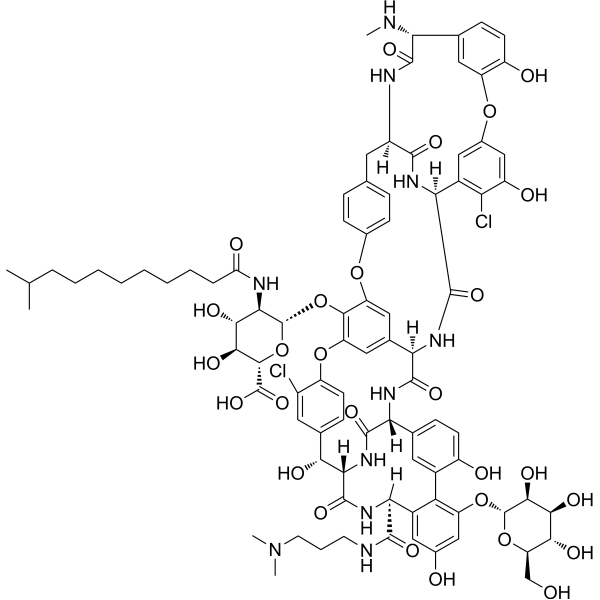
HY-17586A
DalbavancinLipoglycopeptide Antibiotic -
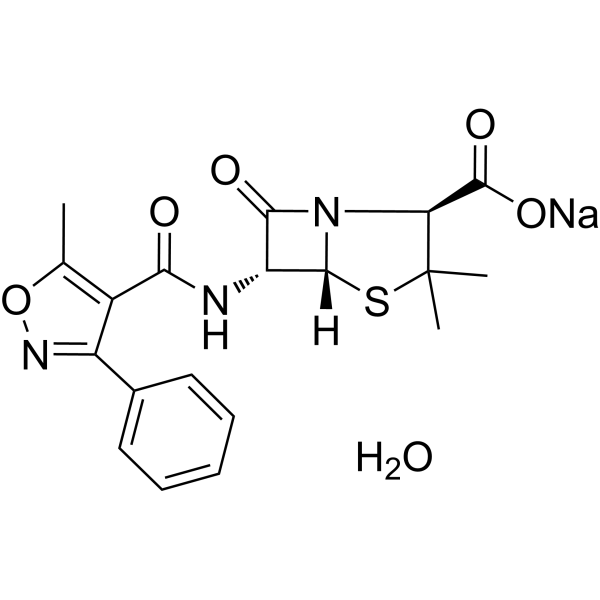
HY-B0465
Oxacillin sodium monohydrateBacterial Inhibitor -
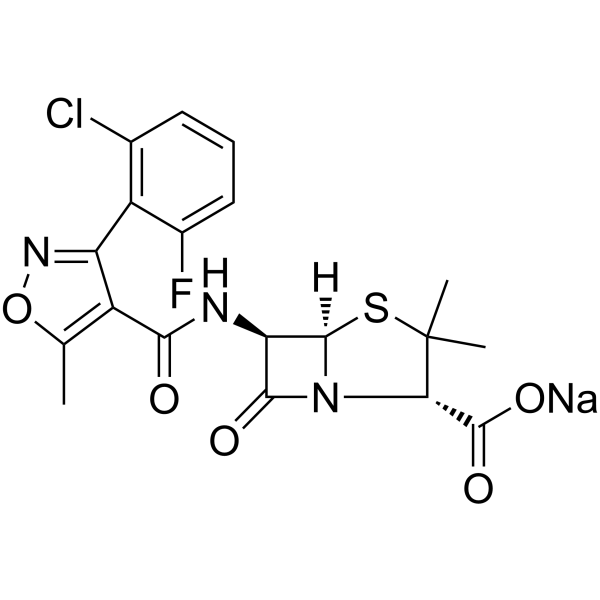
HY-A0246A
Flucloxacillin sodiumAntibacterial Agent -

HY-B0465R
Oxacillin sodium monohydrate (Standard)Bacterial Inhibitor -
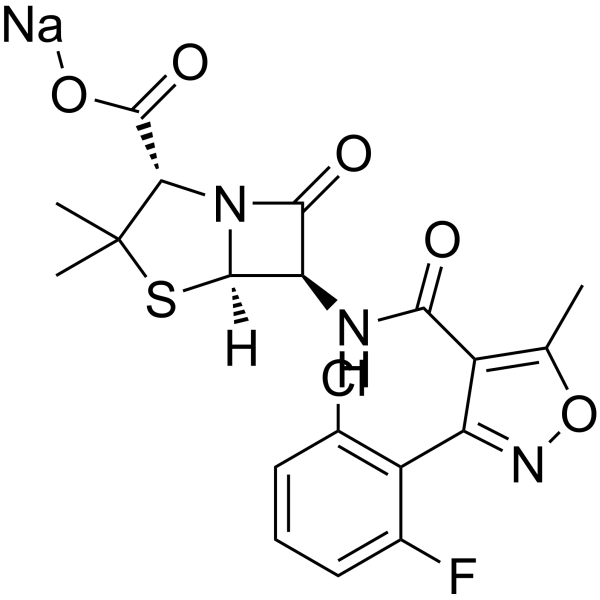
HY-A0246AR
Flucloxacillin sodium (Standard)Antibacterial Agent
MedChemExpress(MCE)の使用を引用している文献 Mupirocin calcium hydrate
MoreAntibiotic アイソフォーム固有の製品をすべて表示
More

生物活性
製品説明
体外実験
Mupirocin (BRL-4910A, Pseudomonic acid) calcium hydrate (0-100 μM; 48 h) shows antibacterial effect against staphylococci, streptococci and certain gram-negative bacteria, with MIC values range from 0.06-0.25 μg/mL (MIC50 =0.12 μg/mL, MIC90 =0.25 μg/mL)[1].
Mupirocin calcium hydrate is highly bound (95% bound) to human serum protein, thus results in activity inhibition in the presence of human serum[1].
Mupirocin calcium hydrate apparently exerts its antimicrobial activity by reversibly inhibiting isoleucyl-transfer RNA, thereby inhibiting bacterial protein and RNA synthesis[2].
Mupirocin calcium hydrate (2% ointment) reduces pro-inflammatory cytokines IL-1β and IL-17 level, decreases tumor necrosis factor-alpha (TNF-α) expression, and increases the leavel of vascular endothelial growth factor (VEGF)[4].
Mupirocin calcium hydrate inhibits MS (S. epidermidis ATCC 12228), MR (S. epidermidis (Se56-99)), and VIR (S. epidermidis (Se43-98)) with MICs of 0.25, 1.26, 1.59 mg/L[5].
Note: MIC, the minimum inhibition concentration.
MedChemExpress (MCE) has not independently confirmed the accuracy of these methods. They are for reference only. Further protocols information, click here.
-
Cell Line:Staphylococcus aureus
-
Concentration:0-100 μM/mL
-
Incubation Time:24, 48 hours
-
Result:Resulted in a 90 to 99% reduction at 24 h, with MIC values ranged from 0.12-1.0 μM/mL and MBC values ranged from 4.0-32 μM/mL at 48 h.
体内実験
Mupirocin (BRL-4910A, Pseudomonic acid) calcium is well absorbed after oral and parenteral administration but serum antibiotic concentrations were short-lived as a result of extensive degradation to the antibacterially inactive metabolite, monic acid A[1].
Mupirocin calcium (2% ointment; external administration; twice daily; 3-6 d) decreases the total bacterial loads in the skin lesions with either topical treatment[3].
Mupirocin calcium (2% ointment; external administration; 4 d) alleviates MRSA-infected pressure ulcers in mice[4].
Mupirocin calcium (100 mg/mL; s.c.; 7 d) exerts prevention efficacy against vascular prosthetic graft infection due to Staphylococcus epidermidis[5].
MedChemExpress (MCE) has not independently confirmed the accuracy of these methods. They are for reference only.
-
Animal Model:MRSA skin infection model in mice (10-12 weeks old)[3]
-
Dosage:2% ointment
-
Administration:External administration; twice daily; 3-6 days
-
Result:Reduced the total bacterial loads in the skin lesions, and decreased by 2.0, 5.1 log10 CFU on day 3 and 6, respectively.
-
Animal Model:Diabetic pressure ulcer mouse model (33.2-39.2 g)[4]
-
Dosage:2% ointment
-
Administration:External administration; 4 days
-
Result:Resulted less superficial mats of bacterial colonies, and improved histopathology evaluation.
-
Animal Model:Adult male Wistar rats (weight 275-325 g)[5]
-
Dosage:Impregnated with 100 μg of mupirocin/mL; segments:1.5 cm *1 cm2
-
Administration:Subcutaneous implantation; 7 days
-
Result:Resulted in preventing S. epidermidis infection of the graft in a rat model with spontaneously bound to collagen-sealed Dacron grafts.


化学情報
-
CAS 番号 115074-43-6
-
性状 Solid
-
分子量 538.68
-
分子式 C26H46O10
-
Color White to off-white
-
SMILES
C[C@H](O)[C@H](C)[C@@]1([H])[C@H](C[C@@]2([H])CO[C@@H](C/C(C)=C/C(OCCCCCCCCC(O)=O)=O)[C@H](O)[C@@H]2O)O1.[H]O[H].[1/2Ca]
-
別名
BRL-4910A Calcium hydrate; Pseudomonic acid Calcium hydrate; ムピロシンカルシウム水和物
-
Structure Classification
-
Initial Source
Pseudomonas fluorescens
-
輸送条件
Room temperature in continental US; may vary elsewhere.
-
保管条件
4°C, sealed storage, away from moisture and light
* In solvent : -80°C, 6 months; -20°C, 1 month (sealed storage, away from moisture and light)


Publications (1)
-
Journal Impact Factor
-
Most Recent
-
Microbiol Spectr
Antimicrobial efficacy of Bifidobacterium longum FB1-4 cell-free supernatant against MRSA: insights into mechanisms and food matrix application. [Abstract]2026 Apr 7;14(4):e0099125. PMID: 41769981


溶剤 & 溶解度
体外:
DMSO : 100 mg/mL (185.64 mM; Need ultrasonic; Hygroscopic DMSO has a significant impact on the solubility of product, please use newly opened DMSO)
Please refer to the solubility information to select the appropriate solvent. Once prepared, please aliquot and store the solution to prevent product inactivation from repeated freeze-thaw cycles.
Storage method and period of stock solution: -80°C, 6 months; -20°C, 1 month (sealed storage, away from moisture and light). When stored at -80°C, please use it within 6 months. When stored at -20°C, please use it within 1 month.
Please refer to the solubility information to select the appropriate solvent. Once prepared, please aliquot and store the solution to prevent product inactivation from repeated freeze-thaw cycles.
Storage method and period of stock solution: -80°C, 6 months; -20°C, 1 month (sealed storage, away from moisture and light). When stored at -80°C, please use it within 6 months. When stored at -20°C, please use it within 1 month.
濃度 (開始) × 体積 (開始) = 濃度 (終了) × 体積 (終了)
体内:
Select the appropriate dissolution method based on your experimental animal and administration route.
- For the following dissolution methods, please ensure to first prepare a clear stock solution using an In Vitro approach and then sequentially add co-solvents:
- To ensure reliable experimental results, the clarified stock solution can be appropriately stored based on storage conditions. As for the working solution for In Vivo experiments, it is recommended to prepare freshly and use it on the same day.
- The percentages shown for the solvents indicate their volumetric ratio in the final prepared solution. If precipitation or phase separation occurs during preparation, heat and/or sonication can be used to aid dissolution.
Add each solvent one by one: 10% DMSO 40% PEG300 5% Tween-80 45% Saline
Solubility: ≥ 1.25 mg/mL (2.32 mM); Clear solution
This protocol yields a clear solution of ≥ 1.25 mg/mL (saturation unknown).
Taking 1 mL working solution as an example, add 100 μL DMSO stock solution (12.5 mg/mL) to 400 μL PEG300, and mix evenly; then add 50 μL Tween-80 and mix evenly; then add 450 μL Saline to adjust the volume to 1 mL.
Preparation of Saline: Dissolve 0.9 g sodium chloride in ddH₂O and dilute to 100 mL to obtain a clear Saline solution.
Add each solvent one by one: 10% DMSO 90% (20% SBE-β-CD in Saline)
Solubility: ≥ 1.25 mg/mL (2.32 mM); Clear solution
This protocol yields a clear solution of ≥ 1.25 mg/mL (saturation unknown).
Taking 1 mL working solution as an example, add 100 μL DMSO stock solution (12.5 mg/mL) to 900 μL 20% SBE-β-CD in Saline, and mix evenly.
Preparation of 20% SBE-β-CD in Saline (4°C, storage for one week): 2 g SBE-β-CD powder is dissolved in 10 mL Saline, completely dissolve until clear.
In Vivo Dissolution Calculator
Please enter the basic information of animal experiments:
-
-
-
-
Recommended: Prepare an additional quantity of animals to account for potential losses during experiments.
Please enter your animal formula composition:
-
%DMSO +
Recommended: Keep the proportion of DMSO in working solution below 2% if your animal is weak.
-
%+
-
+%Tween-80 + +
-
%Saline +
The co-solvents required include: DMSO, . All of co-solvents are available by MedChemExpress (MCE). , Tween 80. All of co-solvents are available by MedChemExpress (MCE).
Working solution concentration: 0.22 mg/mL
Method for preparing stock solution: mg drug dissolved in μL DMSO. Stock solution concentration: mg/mL. * In solvent : -80°C, 6 months; -20°C, 1 month (sealed storage, away from moisture and light)
1. Take μL DMSO stock solution;
2. Add μL .
μL , mix evenly;
3. Then add μL Tween 80, mix evenly;
4. Then add μL
Please ensure that the stock solution in the first step is dissolved to a clear state, and add co-solvents in sequence. You can use ultrasonic heating (ultrasonic cleaner, recommended frequency 20-40 kHz), vortexing, etc. to assist dissolution.

プロトコル
-
Research Protocol for Infectious Diseases
Infectious-disease experiments test how pathogens interact with host barriers, innate immune receptors, inflammatory signaling, pathogen replication, and tissue injury; pattern-recognition receptors such as TLRs, RIG-I-like receptors, NOD-like receptors, and inflammasomes detect microbial molecules and activate NF-κB, interferon, and cytokine responses. The central hypothesis is that infection severity reflects the balance between pathogen burden and host response: protective inflammation restricts pathogen growth, whereas excessive or mislocalized inflammation contributes to tissue damage and disease phenotype. Unresolved questions include which host pathways are protective versus pathogenic, why some infection models fail to translate to human disease, and which combined readouts best predict clinically relevant infection outcomes.


純度とドキュメンテーション
-
データシート (277 KB)
-
SDS (254 KB)
- English - EN (254 KB)
- Français - FR (254 KB)
- Deutsch - DE (254 KB)
- Norwegian - NO (254 KB)
- Español - ES (254 KB)
- Swedish - SV (254 KB)
- Italian - IT (254 KB)
- Korean - KR (254 KB)
- Portuguese - PT (254 KB)
-
取扱説明書 (2659 KB)
参考文献
[1]. Sutherland R, et al. Antibacterial activity of mupirocin (pseudomonic acid), a new antibiotic for topical use. Antimicrob Agents Chemother. 1985 Apr;27(4):495-8. [Content Brief]
[2]. Parenti MA, et al. Mupirocin: a topical antibiotic with a unique structure and mechanism of action. Clin Pharm. 1987 Oct;6(10):761-70. [Content Brief]
[3]. Vingsbo Lundberg C, et al. Efficacy of topical and systemic antibiotic treatment of meticillin-resistant Staphylococcus aureus in a murine superficial skin wound infection model. Int J Antimicrob Agents. 2013 Sep. 42(3):272-5. [Content Brief]
[4]. Mohammad H, Abutaleb NS, Dieterly AM, Lyle LT, Seleem MN. Investigating auranofin for the treatment of infected diabetic pressure ulcers in mice and dermal toxicity in pigs. Sci Rep. 2021 May 25;11(1):10935. [Content Brief]
[5]. Giacometti A, et al. Mupirocin prophylaxis against methicillin-susceptible, methicillin-resistant, or vancomycin-intermediate Staphylococcus epidermidis vascular-graft infection. Antimicrob Agents Chemother. 2000 Oct. 44(10):2842-4. [Content Brief]


Complete Stock Solution Preparation Table
Please refer to the solubility information to select the appropriate solvent. Once prepared, please aliquot and store the solution to prevent product inactivation from repeated freeze-thaw cycles.
Storage method and period of stock solution: -80°C, 6 months; -20°C, 1 month (sealed storage, away from moisture and light). When stored at -80°C, please use it within 6 months. When stored at -20°C, please use it within 1 month.
| Optional Solvent | Concentration Solvent Mass | 1 mg | 5 mg | 10 mg | 25 mg |
|---|---|---|---|---|---|
| DMSO | 1 mM | 1.8564 mL | 9.2819 mL | 18.5639 mL | 46.4097 mL |
| 5 mM | 0.3713 mL | 1.8564 mL | 3.7128 mL | 9.2819 mL | |
| 10 mM | 0.1856 mL | 0.9282 mL | 1.8564 mL | 4.6410 mL | |
| 15 mM | 0.1238 mL | 0.6188 mL | 1.2376 mL | 3.0940 mL | |
| 20 mM | 0.0928 mL | 0.4641 mL | 0.9282 mL | 2.3205 mL | |
| 25 mM | 0.0743 mL | 0.3713 mL | 0.7426 mL | 1.8564 mL | |
| 30 mM | 0.0619 mL | 0.3094 mL | 0.6188 mL | 1.5470 mL | |
| 40 mM | 0.0464 mL | 0.2320 mL | 0.4641 mL | 1.1602 mL | |
| 50 mM | 0.0371 mL | 0.1856 mL | 0.3713 mL | 0.9282 mL | |
| 60 mM | 0.0309 mL | 0.1547 mL | 0.3094 mL | 0.7735 mL | |
| 80 mM | 0.0232 mL | 0.1160 mL | 0.2320 mL | 0.5801 mL | |
| 100 mM | 0.0186 mL | 0.0928 mL | 0.1856 mL | 0.4641 mL |


Mupirocin calcium hydrate 関連分類
HY-N7068 関連分類
 Powered by Bioz