





From 11:00 pm to 12:00 pm EST ( 8:00 pm to 9:00 pm PST ) on January 6th, the website will be under maintenance. We are sorry for the inconvenience. Please arrange your schedule properly.
Patisiran sodium is a double-stranded small interfering RNA that targets a sequence within the transthyretin (TTR) messenger RNA. Patisiran sodium specifically inhibits hepatic synthesis of mutant and wild-type TTR. Patisiran sodium can be used for the research of hereditary TTR amyloidosis .
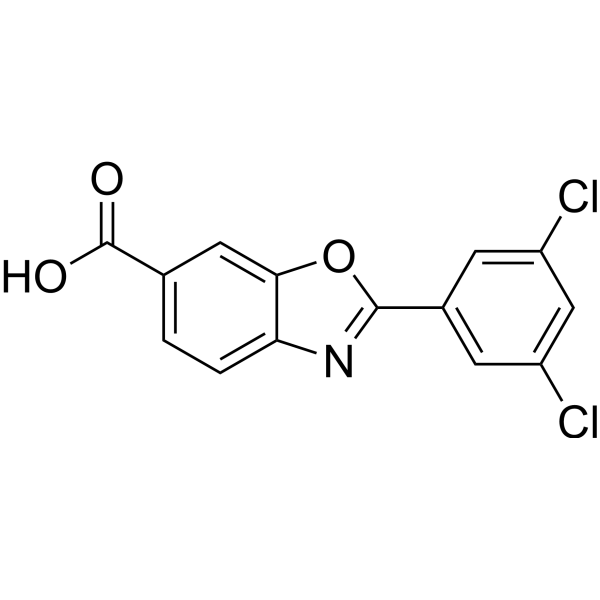
Tafamidis is a potent and selective transthyretin (TTR) stabilizer, shows comparable potency and efficacy to the mutumant homotetramers V30M-TTR, V122I-TTR and wild type WT-TTR, with EC50s of 2.7-3.2 μM. Tafamidis inhibits amyloidogenesis .
Vutrisiran (ALN-TTRsc02) is a liver-directed, investigational, small interfering ribonucleic acid (siRNA) agent. Vutrisiran can be used for transthyretin (TTR)-mediated amyloidosis research .
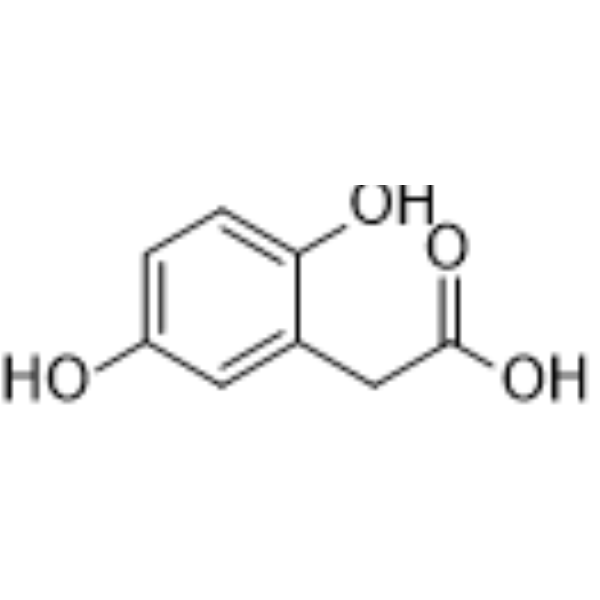
Homogentisic acid is an orally active, blood-brain barrier-permeable amyloidogenic compound that functions as both an amyloid component and a pigment precursor. Accumulation of homogentisic acid downregulates tight junction proteins (such as claudin-5, occludin, ZO-1) and impairs blood-brain barrier integrity. Homogentisic acid and its oxidation product benzoquinone acetic acid not only induce the aggregation and fibrosis of multiple proteins (such as Aβ1-42, α-synuclein, SAA, Transthyretin (TTR), atrial natriuretic peptide), but also trigger oxidative stress, damage to the Wnt/β-catenin pathway, and neurotoxicity, leading to ochronosis pigment deposition and synaptic dysfunction. At specific concentrations, homogentisic acid exerts no cytotoxicity or genotoxicity on human peripheral blood lymphocytes, and even counteracts the genotoxicity induced by Irinotecan (HY-16562). Homogentisic acid serves as an important tool molecule for investigating the mechanisms of diseases including ochronosis, secondary amyloidosis, Alzheimer's disease, and colorectal cancer .
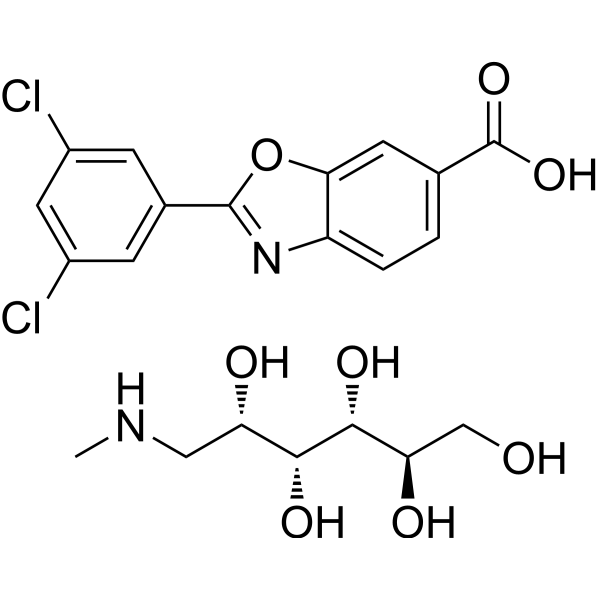
Tafamidis meglumine (Fx-1006A) is a potent and selective transthyretin (TTR) stabilizer, shows comparable potency and efficacy to the mutumant homotetramers V30M-TTR, V122I-TTR and wild type WT-TTR, with EC50s of 2.7-3.2 μM. Tafamidis meglumine inhibits amyloidogenesis .
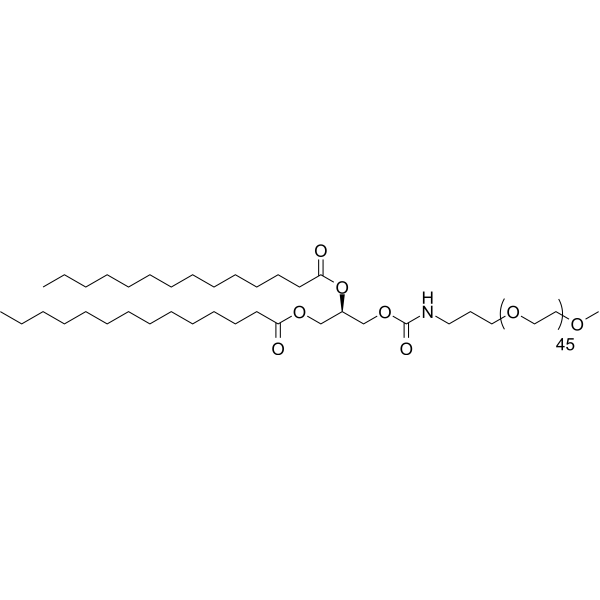
PEG2000-C-DMG, a pegylated lipid, can be used for the preparation of Onpattro. Onpattro, a hepatically directed investigational RNAi therapeutic agent, harnesses this process to reduce the production of mutant and wild-type transthyretin by targeting the 3′ untranslated region of transthyretin mRNA .
Inotersen (GSK-2998728; ISIS-420915) is a 2'-O-methoxyethyl-modified antisense oligonucleotide and transthyretin (TTR) inhibitor with low genotoxicity. Inotersen triggers RNase H1-mediated degradation by binding to TTR mRNA, thereby effectively reducing the production of both mutant and wild-type transthyretin in the liver. Inotersen significantly reduces amyloid fiber deposition, yet specific toxicities such as inflammation or tumors are observed at high doses in some animal models. Inotersen is used in studies of hereditary transthyretin amyloidosis and the associated polyneuropathy and cardiomyopathy .
Inotersen (ISIS-420915) sodium is a 2′-O-methoxyethyl-modified antisense oligonucleotide. Inotersen sodium inhibits the production of transthyretin (TTR) protein by targeting the TTR RNA transcript and reduces the levels of the TTR transcript. Inotersen sodium can be used for the research of hereditary TTR amyloidosis polyneuropathy .
Eplontersen is a triantennary N-acetyl galactosamine (GalNAc3-7a)-conjugated antisense oligonucleotide targeting transthyretin (TTR) mRNA to inhibit production of both variant and wild-type TTR protein. Misfolded TTR induces amyloid fibrils formation in the heart and peripheral nerves, leads to amyloid TTR (ATTR) amyloidosis diseases .
Cliramitug (NI-006; ALXN2220) is a monoclonal antibody that targets human transthyretin (TTR). Cliramitug binds to TTR and inhibits its amyloidogenic process, exerting amyloid formation-inhibiting activity. Cliramitug can be used in the research of transthyretin amyloidosis-related diseases, such as certain neurological and cardiovascular diseases .
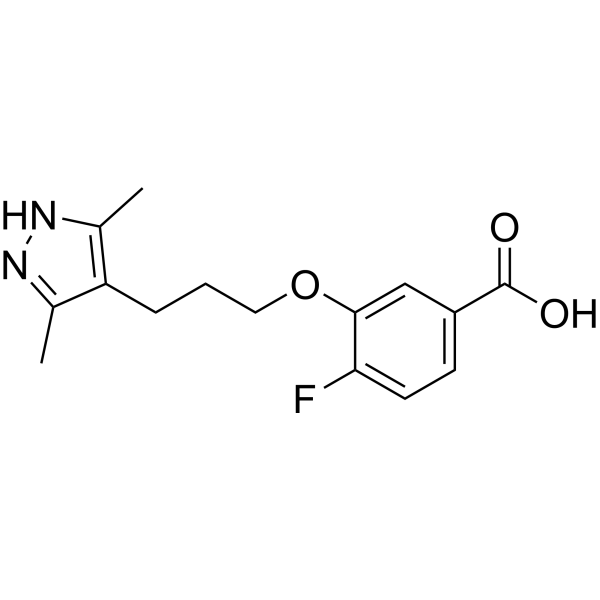
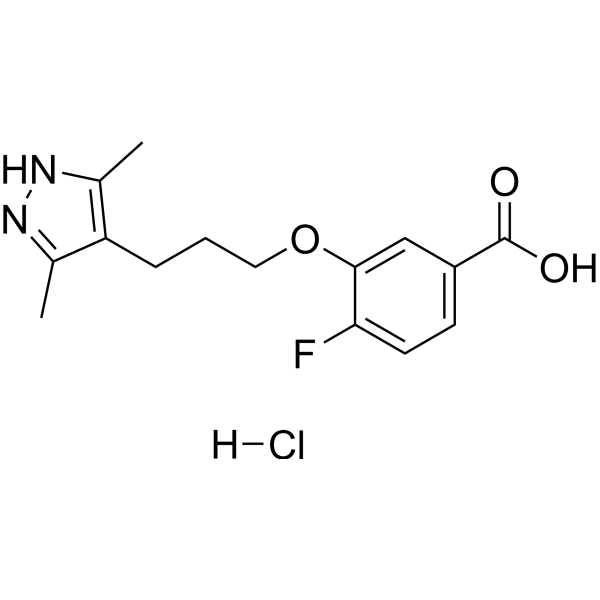
Acoramidis (AG10) hydrochloride is an orally active and selective kinetic stabilizer of WT and V122I-TTR (transthyretin). Acoramidis (AG10) hydrochloride is used in the study for transthyretin amyloidosis .
Acoramidis (AG10) is an orally active and selective kinetic stabilizer of WT and V122I-TTR (transthyretin). Acoramidis (AG10) is used in the study for transthyretin amyloidosis .
A 1120 is a high-affinity nonretinoid retinol-binding protein 4 (RBP4) antagonist with a Ki value of 8.3 nM. A 1120 disrupts the interaction between RBP4 and its binding partner transthyretin .
Vutrisiran sodium (ALN-TTRsc02 sodium) is a liver-directed small interfering RNA (siRNA). Vutrisiran sodium targets the mRNA of transthyretin (TTR), and is applicable to studies on transthyretin (TTR)-mediated amyloidosis .
Eplontersen sodium the sodium salt form of Eplontersen (HY-148089). Eplontersen sodium is a triantennary N-acetyl galactosamine (GalNAc3-7a)-conjugated antisense oligonucleotide targeting transthyretin (TTR) mRNA to inhibit production of both variant and wild-type TTR protein. Misfolded TTR induces amyloid fibrils formation in the heart and peripheral nerves, leads to amyloid TTR (ATTR) amyloidosis diseases .
Revusiran (ALN-TTRSC) sodium is an RNA interference agent targeting the mRNA of transthyretin(Transthyretin, TTR). Revusiran sodium mediates sequence-specific degradation of TTR mRNA through RNA interference, reduces the synthesis of TTR protein, binds to GalNAc ligands, and is taken up by hepatocytes via the asialoglycoprotein receptor. Revusiran sodium exhibits favorable nonclinical safety profiles. Revusiran sodium can be used in studies related to transthyretin-mediated amyloidosis .
GalNac-siRNA negative control (21nt) is the negative control form of GalNac-siRNA. GalNac-siRNA is an Asialoglycoprotein receptor (ASGPR)-targeted inhibitor conjugate. GalNac-siRNA is promising for research of hereditary transthyretin amyloidosis, acute hepatic porphyria, hemophilia and hypercholesterolemia .
AS-Patisiran sodium is an antisense strand of Patisiran. Patisiran is a double-stranded small interfering RNA that targets a sequence within the transthyretin (TTR) messenger RNA. Patisiran specifically inhibits hepatic synthesis of mutant and wild-type TTR. Patisiran can be used for the research of hereditary TTR amyloidosis .
Revusiran (ALN-TTRSC) is an RNA interference agent targeting the mRNA of transthyretin(Transthyretin, TTR). Revusiran mediates sequence-specific degradation of TTR mRNA through RNA interference, reduces the synthesis of TTR protein, binds to GalNAc ligands, and is taken up by hepatocytes via the asialoglycoprotein receptor. Revusiran exhibits favorable nonclinical safety profiles. Revusiran can be used in studies related to transthyretin-mediated amyloidosis .
ssPalmE-P4-C2 is a SS-cleavable and pH-sensitive lipid-like material (ssPalm) with a vitamin E‑scaffold. ssPalmE-P4-C2 improves gene knockdown activity against FVII with an ED50 of 0.5 mg/kg. ssPalmE-P4-C2 can be used to synthesize lipid nanoparticles (LNPs) for delivering siRNA to the hepatocyte. ssPalmE-P4-C2 can be used for the RNA therapies for dyslipidemia, hepatitis B/C infections and transthyretin amyloidosis research .
Tafamidis (Standard) is the analytical standard of Tafamidis. This product is intended for research and analytical applications. Tafamidis is a potent and selective transthyretin (TTR) stabilizer, shows comparable potency and efficacy to the mutumant homotetramers V30M-TTR, V122I-TTR and wild type WT-TTR, with EC50s of 2.7-3.2 μM. Tafamidis inhibits amyloidogenesis .
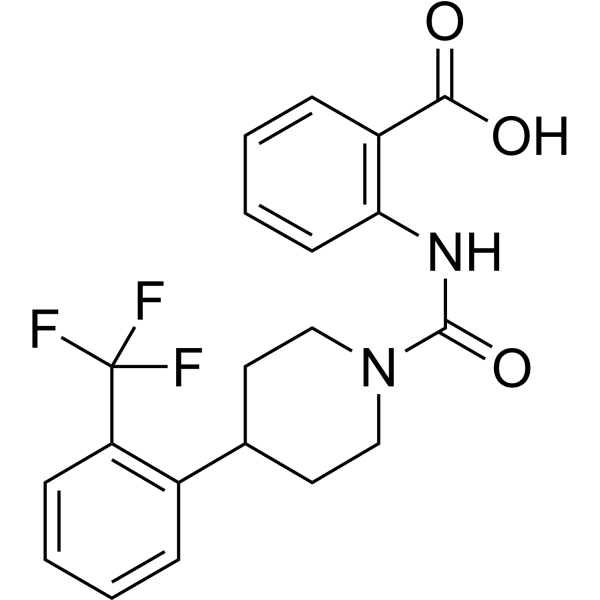
PITB is a selective and orally active transthyretin (TTR) aggregation inhibitor. PITB can be used for transthyretin amyloidosis (ATTR) disease research .
Transthyretin-IN-1 (Compound 1d) is a transthyretin (TTR) fibril formation inhibitor. Transthyretin-IN-1 can be used for Alzheimer’s disease research .
Transthyretin-IN-3 (compound 6) is a designed benzofuran analogue. Transthyretin-IN-3 selectively binds to plasma transthyretin (TTR) to inhibit Amyloid aggregation (IC50=5.0±0.2 μM). Transthyretin-IN-3 can bind to TTR's thyroxine binding site specifically by carrying chlorine substituents at specific locations in its structure. This binding can prevent TTR tetramers from dissociating into unstable monomers .
Transthyretin-IN-4 (Compound B26) is a bivalent inhibitor of transthyretin (TTR) amyloidosis (bIC50: 0.09 µM, pIC50: 1.4 µM). Transthyretin-IN-4 is used in the study of fatal heart failure with preserved ejection fraction (HFpEF) and fatal arrhythmias .
Tafamidis-d3 is deuterium labeled Tafamidis. Tafamidis is a potent and selective transthyretin (TTR) stabilizer, shows comparable potency and efficacy to the mutumant homotetramers V30M-TTR, V122I-TTR and wild type WT-TTR, with EC50s of 2.7-3.2 μM. Tafamidis inhibits amyloidogenesis .
Tafamidis meglumine (Standard) is the analytical standard of Tafamidis meglumine. This product is intended for research and analytical applications. Tafamidis meglumine (Fx-1006A) is a potent and selective transthyretin (TTR) stabilizer, shows comparable potency and efficacy to the mutumant homotetramers V30M-TTR, V122I-TTR and wild type WT-TTR, with EC50s of 2.7-3.2 μM. Tafamidis meglumine inhibits amyloidogenesis .
Transthyretin-IN-2 (Compound 36) is a transthyretin (TTR) amyloidsis inhibitor, with IC50 and pIC50 values of 1.31 μM and 5.88 μM. Transthyretin-IN-2 can be used for the research of TTR amyloidosis diseases .
Dichlorophenyl-ABA is an inhibitor of transthyretin (TTR) amyloid fibril formation, inhibiting aggregate formation in more than 80% in TTR L55P-expressing cells .
NI-301 is a human monoclonal antibody (mAb) targeting Transthyretin/TTR. NI-301 can be used in Cardiomyopathies and Familial amyloid neuropathy research .
TTR stabilizer L6 (L6) binds to the T4 binding pocket of transthyretin (TTR), which can prevent the dissociation of TTR to monomer. TTR stabilizer L6 is promising for research of familial amyloid polyneuropathy .
BPN-14136 is an orally effective retinol-binding protein 4 (RBP4) inhibitor. BPN-14136 inhibits the binding of retinol to RBP4 with an IC50 of 12.8 nM. BPN-14136 inhibits retinol-dependent RBP4-transthyretin interaction (IC50 = 43.6 nM) and reduces circulating plasma RBP4 levels in vivo. BPN-14136 decreases the formation of cytotoxic bisretinoids in retinal pigment epithelial cells. BPN-14136 can be used for the research of atrophic age-related macular degeneration and Stargardt disease .
Guanidino-G-Clamp-PNA is a highly efficient sequence-specific RNA binder and gene silencer. Guanidino-G-Clamp-PNA precisely targets such targets as miR-155 or transthyretin (TTR) mRNA through base pairing: the former regulates tumor-related signaling pathways by reducing microRNA activity, while the latter inhibits the translation of harmful proteins via steric hindrance. Guanidino-G-Clamp-PNA effectively stabilizes DNA/RNA duplexes, induces cancer cell apoptosis, and suppresses tumor growth. In addition, Guanidino-G-Clamp-PNA can be conjugated with targeting ligands to improve tissue-specific delivery and reduce in vivo adverse reactions, and it can also enhance the splicing regulation efficacy of other oligonucleotide platforms (such as PMO) when integrated into them. Guanidino-G-Clamp-PNA is applicable to the research of various diseases including diffuse large B-cell lymphoma and hereditary transthyretin-related amyloidosis .
Nexiguran is one component of Nexiguran ziclumeran and also an sgRNA targeting the human TTR gene. Nexiguran ziclumeran (NTLA-2001) is a CRISPR gene-editing therapy that targets hepatic TTR, and it can also be used for research on transthyretin amyloidosis .
A 1120 (Standard) is the analytical standard of A 1120 (HY-107633). This product is intended for research and analytical applications. A 1120 is a high-affinity nonretinoid retinol-binding protein 4 (RBP4) antagonist with a Ki value of 8.3 nM. A 1120 disrupts the interaction between RBP4 and its binding partner transthyretin .
PEG2000-C-DMG, a pegylated lipid, can be used for the preparation of Onpattro. Onpattro, a hepatically directed investigational RNAi therapeutic agent, harnesses this process to reduce the production of mutant and wild-type transthyretin by targeting the 3′ untranslated region of transthyretin mRNA .
Guanidino-G-Clamp-PNA is a highly efficient sequence-specific RNA binder and gene silencer. Guanidino-G-Clamp-PNA precisely targets such targets as miR-155 or transthyretin (TTR) mRNA through base pairing: the former regulates tumor-related signaling pathways by reducing microRNA activity, while the latter inhibits the translation of harmful proteins via steric hindrance. Guanidino-G-Clamp-PNA effectively stabilizes DNA/RNA duplexes, induces cancer cell apoptosis, and suppresses tumor growth. In addition, Guanidino-G-Clamp-PNA can be conjugated with targeting ligands to improve tissue-specific delivery and reduce in vivo adverse reactions, and it can also enhance the splicing regulation efficacy of other oligonucleotide platforms (such as PMO) when integrated into them. Guanidino-G-Clamp-PNA is applicable to the research of various diseases including diffuse large B-cell lymphoma and hereditary transthyretin-related amyloidosis .
Cliramitug (NI-006; ALXN2220) is a monoclonal antibody that targets human transthyretin (TTR). Cliramitug binds to TTR and inhibits its amyloidogenic process, exerting amyloid formation-inhibiting activity. Cliramitug can be used in the research of transthyretin amyloidosis-related diseases, such as certain neurological and cardiovascular diseases .
NI-301 is a human monoclonal antibody (mAb) targeting Transthyretin/TTR. NI-301 can be used in Cardiomyopathies and Familial amyloid neuropathy research .
Homogentisic acid is an orally active, blood-brain barrier-permeable amyloidogenic compound that functions as both an amyloid component and a pigment precursor. Accumulation of homogentisic acid downregulates tight junction proteins (such as claudin-5, occludin, ZO-1) and impairs blood-brain barrier integrity. Homogentisic acid and its oxidation product benzoquinone acetic acid not only induce the aggregation and fibrosis of multiple proteins (such as Aβ1-42, α-synuclein, SAA, Transthyretin (TTR), atrial natriuretic peptide), but also trigger oxidative stress, damage to the Wnt/β-catenin pathway, and neurotoxicity, leading to ochronosis pigment deposition and synaptic dysfunction. At specific concentrations, homogentisic acid exerts no cytotoxicity or genotoxicity on human peripheral blood lymphocytes, and even counteracts the genotoxicity induced by Irinotecan (HY-16562). Homogentisic acid serves as an important tool molecule for investigating the mechanisms of diseases including ochronosis, secondary amyloidosis, Alzheimer's disease, and colorectal cancer .
Transthyretin (TTR) is a thyroid hormone-binding protein that may be involved in transporting thyroxine from the blood to the brain. As a homotetramer, TTR forms a dimer of dimers with a ligand-regulated central channel. Transthyretin/TTR Protein, Cynomolgus (HEK293, His, Myc) is the recombinant cynomolgus-derived Transthyretin/TTR protein, expressed by HEK293 , with N-6*His, N-Myc labeled tag.
Transthyretin (TTR) belongs to the serum transporter family and is a plasma transporter of T4 and retinol. Transthyretin inhibits Aβ1-42 fibrillization and is a potential target for amyloidosis and Alzheimer's disease. Transthyretin mutations (such as V30M) can destabilize the tetramer and promote the formation of amyloid fibrils in monomers, causing hereditary amyloidosis transthyretin (ATTRv). Transthyretin/TTR Protein, Human (HEK293, His) is a recombinant transthyretin/TTR protein expressed in HEK293 with a C-6*His tag.
The transthyretin/TTR protein is a thyroid hormone binder that may transport thyroxine from the blood to the brain.It exists as a homotetramer forming a dimer of dimers with a ligand-regulated central channel suggested to play a role in thyroxine binding and transport.Transthyretin/TTR Protein, Mouse (HEK293, His) is the recombinant mouse-derived Transthyretin/TTR protein, expressed by HEK293 , with C-10*His labeled tag.
Transthyretin (TTR) belongs to the serum transporter family and is a plasma transporter of T4 and retinol. Transthyretin inhibits Aβ1-42 fibrillization and is a potential target for amyloidosis and Alzheimer's disease. Transthyretin mutations (such as V30M) can destabilize the tetramer and promote the formation of amyloid fibrils in monomers, causing hereditary amyloidosis transthyretin (ATTRv). Transthyretin/TTR Protein, Human (HEK293, Fc-Myc) is a recombinant transthyretin/TTR protein expressed in HEK293 with C-hFc and C-Myc tag.
Tafamidis-d3 is deuterium labeled Tafamidis. Tafamidis is a potent and selective transthyretin (TTR) stabilizer, shows comparable potency and efficacy to the mutumant homotetramers V30M-TTR, V122I-TTR and wild type WT-TTR, with EC50s of 2.7-3.2 μM. Tafamidis inhibits amyloidogenesis .
Patisiran sodium is a double-stranded small interfering RNA that targets a sequence within the transthyretin (TTR) messenger RNA. Patisiran sodium specifically inhibits hepatic synthesis of mutant and wild-type TTR. Patisiran sodium can be used for the research of hereditary TTR amyloidosis .
Vutrisiran (ALN-TTRsc02) is a liver-directed, investigational, small interfering ribonucleic acid (siRNA) agent. Vutrisiran can be used for transthyretin (TTR)-mediated amyloidosis research .
PEG2000-C-DMG, a pegylated lipid, can be used for the preparation of Onpattro. Onpattro, a hepatically directed investigational RNAi therapeutic agent, harnesses this process to reduce the production of mutant and wild-type transthyretin by targeting the 3′ untranslated region of transthyretin mRNA .
Inotersen (GSK-2998728; ISIS-420915) is a 2'-O-methoxyethyl-modified antisense oligonucleotide and transthyretin (TTR) inhibitor with low genotoxicity. Inotersen triggers RNase H1-mediated degradation by binding to TTR mRNA, thereby effectively reducing the production of both mutant and wild-type transthyretin in the liver. Inotersen significantly reduces amyloid fiber deposition, yet specific toxicities such as inflammation or tumors are observed at high doses in some animal models. Inotersen is used in studies of hereditary transthyretin amyloidosis and the associated polyneuropathy and cardiomyopathy .
Inotersen (ISIS-420915) sodium is a 2′-O-methoxyethyl-modified antisense oligonucleotide. Inotersen sodium inhibits the production of transthyretin (TTR) protein by targeting the TTR RNA transcript and reduces the levels of the TTR transcript. Inotersen sodium can be used for the research of hereditary TTR amyloidosis polyneuropathy .
Eplontersen is a triantennary N-acetyl galactosamine (GalNAc3-7a)-conjugated antisense oligonucleotide targeting transthyretin (TTR) mRNA to inhibit production of both variant and wild-type TTR protein. Misfolded TTR induces amyloid fibrils formation in the heart and peripheral nerves, leads to amyloid TTR (ATTR) amyloidosis diseases .
Vutrisiran sodium (ALN-TTRsc02 sodium) is a liver-directed small interfering RNA (siRNA). Vutrisiran sodium targets the mRNA of transthyretin (TTR), and is applicable to studies on transthyretin (TTR)-mediated amyloidosis .
Eplontersen sodium the sodium salt form of Eplontersen (HY-148089). Eplontersen sodium is a triantennary N-acetyl galactosamine (GalNAc3-7a)-conjugated antisense oligonucleotide targeting transthyretin (TTR) mRNA to inhibit production of both variant and wild-type TTR protein. Misfolded TTR induces amyloid fibrils formation in the heart and peripheral nerves, leads to amyloid TTR (ATTR) amyloidosis diseases .
Revusiran (ALN-TTRSC) sodium is an RNA interference agent targeting the mRNA of transthyretin(Transthyretin, TTR). Revusiran sodium mediates sequence-specific degradation of TTR mRNA through RNA interference, reduces the synthesis of TTR protein, binds to GalNAc ligands, and is taken up by hepatocytes via the asialoglycoprotein receptor. Revusiran sodium exhibits favorable nonclinical safety profiles. Revusiran sodium can be used in studies related to transthyretin-mediated amyloidosis .
GalNac-siRNA negative control (21nt) is the negative control form of GalNac-siRNA. GalNac-siRNA is an Asialoglycoprotein receptor (ASGPR)-targeted inhibitor conjugate. GalNac-siRNA is promising for research of hereditary transthyretin amyloidosis, acute hepatic porphyria, hemophilia and hypercholesterolemia .
AS-Patisiran sodium is an antisense strand of Patisiran. Patisiran is a double-stranded small interfering RNA that targets a sequence within the transthyretin (TTR) messenger RNA. Patisiran specifically inhibits hepatic synthesis of mutant and wild-type TTR. Patisiran can be used for the research of hereditary TTR amyloidosis .
Revusiran (ALN-TTRSC) is an RNA interference agent targeting the mRNA of transthyretin(Transthyretin, TTR). Revusiran mediates sequence-specific degradation of TTR mRNA through RNA interference, reduces the synthesis of TTR protein, binds to GalNAc ligands, and is taken up by hepatocytes via the asialoglycoprotein receptor. Revusiran exhibits favorable nonclinical safety profiles. Revusiran can be used in studies related to transthyretin-mediated amyloidosis .
ssPalmE-P4-C2 is a SS-cleavable and pH-sensitive lipid-like material (ssPalm) with a vitamin E‑scaffold. ssPalmE-P4-C2 improves gene knockdown activity against FVII with an ED50 of 0.5 mg/kg. ssPalmE-P4-C2 can be used to synthesize lipid nanoparticles (LNPs) for delivering siRNA to the hepatocyte. ssPalmE-P4-C2 can be used for the RNA therapies for dyslipidemia, hepatitis B/C infections and transthyretin amyloidosis research .
Inquiry Online
Your information is safe with us. * Required Fields.
Western blot analysis of extracts from THP-1(lane 2(20μg), Jurkat (lane 3(20μg) and NIH3T3(lane 4(20μg) using FOXO1A (HY-P80132) Rabbit mAb. Proteins were transferred
to a PVDF membrane and blocked with 5% non-fat milk in TBST for 2 hour at room temperature. The primary antibody (1/1000) and Loading control antibody (Beta Actin, HY-P80438, 1/10000) was
used in 5% non-fat milk in TBST at 4°C overnight. Goat Anti-Mouse/Rabbit IgG-HRP Secondary Antibody (1/10000) was used for 1 hour at room temperature.
Western blot analysis of extracts from THP-1(lane 2(20μg), Jurkat (lane 3(20μg) and NIH3T3(lane 4(20μg) using FOXO1A (HY-P80132) Rabbit mAb. Proteins were transferred
to a PVDF membrane and blocked with 5% non-fat milk in TBST for 2 hour at room temperature. The primary antibody (1/1000) and Loading control antibody (Beta Actin, HY-P80438, 1/10000) was
used in 5% non-fat milk in TBST at 4°C overnight. Goat Anti-Mouse/Rabbit IgG-HRP Secondary Antibody (1/10000) was used for 1 hour at room temperature.
Western blot analysis of extracts from THP-1(lane 2(20μg), Jurkat (lane 3(20μg) and NIH3T3(lane 4(20μg) using FOXO1A (HY-P80132) Rabbit mAb. Proteins were transferred
to a PVDF membrane and blocked with 5% non-fat milk in TBST for 2 hour at room temperature. The primary antibody (1/1000) and Loading control antibody (Beta Actin, HY-P80438, 1/10000) was
used in 5% non-fat milk in TBST at 4°C overnight. Goat Anti-Mouse/Rabbit IgG-HRP Secondary Antibody (1/10000) was used for 1 hour at room temperature.
Western blot analysis of extracts from THP-1(lane 2(20μg), Jurkat (lane 3(20μg) and NIH3T3(lane 4(20μg) using FOXO1A (HY-P80132) Rabbit mAb. Proteins were transferred
to a PVDF membrane and blocked with 5% non-fat milk in TBST for 2 hour at room temperature. The primary antibody (1/1000) and Loading control antibody (Beta Actin, HY-P80438, 1/10000) was
MedchemExpress Validation 03
Western blot analysis of extracts from THP-1(lane 2(20μg), Jurkat (lane 3(20μg) and NIH3T3(lane 4(20μg) using FOXO1A (HY-P80132) Rabbit mAb. Proteins were transferred
MedchemExpress Validation 04
Western blot analysis of extracts from THP-1(lane 2(20μg), Jurkat (lane 3(20μg) and NIH3T3(lane 4(20μg) using FOXO1A (HY-P80132) Rabbit mAb. Proteins were transferred
to a PVDF membrane and blocked with 5% non-fat milk in TBST for 2 hour at room temperature. The primary antibody (1/1000) and Loading control antibody (Beta Actin, HY-P80438, 1/10000) was
used in 5% non-fat milk in TBST at 4°C overnight. Goat Anti-Mouse/Rabbit IgG-HRP Secondary Antibody (1/10000) was used for 1 hour at room temperature.
MedchemExpress Validation
Western blot analysis of extracts from THP-1(lane 2(20μg), Jurkat (lane 3(20μg) and NIH3T3(lane 4(20μg) using FOXO1A (HY-P80132) Rabbit mAb. Proteins were transferred
to a PVDF membrane and blocked with 5% non-fat milk in TBST for 2 hour at room temperature. The primary antibody (1/1000) and Loading control antibody (Beta Actin, HY-P80438, 1/10000) was
used in 5% non-fat milk in TBST at 4°C overnight. Goat Anti-Mouse/Rabbit IgG-HRP Secondary Antibody (1/10000) was used for 1 hour at room temperature.
Western blot analysis of extracts from THP-1(lane 2(20μg), Jurkat (lane 3(20μg) and NIH3T3(lane 4(20μg) using FOXO1A (HY-P80132) Rabbit mAb. Proteins were transferred
to a PVDF membrane and blocked with 5% non-fat milk in TBST for 2 hour at room temperature. The primary antibody (1/1000) and Loading control antibody (Beta Actin, HY-P80438, 1/10000) was
used in 5% non-fat milk in TBST at 4°C overnight. Goat Anti-Mouse/Rabbit IgG-HRP Secondary Antibody (1/10000) was used for 1 hour at room temperature.
MedchemExpress Validation
Western blot analysis of extracts from THP-1(lane 2(20μg), Jurkat (lane 3(20μg) and NIH3T3(lane 4(20μg) using FOXO1A (HY-P80132) Rabbit mAb. Proteins were transferred
to a PVDF membrane and blocked with 5% non-fat milk in TBST for 2 hour at room temperature. The primary antibody (1/1000) and Loading control antibody (Beta Actin, HY-P80438, 1/10000) was
used in 5% non-fat milk in TBST at 4°C overnight. Goat Anti-Mouse/Rabbit IgG-HRP Secondary Antibody (1/10000) was used for 1 hour at room temperature.
MedchemExpress Validation
Western blot analysis of extracts from THP-1(lane 2(20μg), Jurkat (lane 3(20μg) and NIH3T3(lane 4(20μg) using FOXO1A (HY-P80132) Rabbit mAb. Proteins were transferred
to a PVDF membrane and blocked with 5% non-fat milk in TBST for 2 hour at room temperature. The primary antibody (1/1000) and Loading control antibody (Beta Actin, HY-P80438, 1/10000) was
used in 5% non-fat milk in TBST at 4°C overnight. Goat Anti-Mouse/Rabbit IgG-HRP Secondary Antibody (1/10000) was used for 1 hour at room temperature.
MedchemExpress Validation
Western blot analysis of extracts from THP-1(lane 2(20μg), Jurkat (lane 3(20μg) and NIH3T3(lane 4(20μg) using FOXO1A (HY-P80132) Rabbit mAb. Proteins were transferred
to a PVDF membrane and blocked with 5% non-fat milk in TBST for 2 hour at room temperature. The primary antibody (1/1000) and Loading control antibody (Beta Actin, HY-P80438, 1/10000) was
used in 5% non-fat milk in TBST at 4°C overnight. Goat Anti-Mouse/Rabbit IgG-HRP Secondary Antibody (1/10000) was used for 1 hour at room temperature.
MedchemExpress Validation
Western blot analysis of extracts from THP-1(lane 2(20μg), Jurkat (lane 3(20μg) and NIH3T3(lane 4(20μg) using FOXO1A (HY-P80132) Rabbit mAb. Proteins were transferred
to a PVDF membrane and blocked with 5% non-fat milk in TBST for 2 hour at room temperature. The primary antibody (1/1000) and Loading control antibody (Beta Actin, HY-P80438, 1/10000) was
used in 5% non-fat milk in TBST at 4°C overnight. Goat Anti-Mouse/Rabbit IgG-HRP Secondary Antibody (1/10000) was used for 1 hour at room temperature.
MedchemExpress Validation
Western blot analysis of extracts from THP-1(lane 2(20μg), Jurkat (lane 3(20μg) and NIH3T3(lane 4(20μg) using FOXO1A (HY-P80132) Rabbit mAb. Proteins were transferred
to a PVDF membrane and blocked with 5% non-fat milk in TBST for 2 hour at room temperature. The primary antibody (1/1000) and Loading control antibody (Beta Actin, HY-P80438, 1/10000) was
used in 5% non-fat milk in TBST at 4°C overnight. Goat Anti-Mouse/Rabbit IgG-HRP Secondary Antibody (1/10000) was used for 1 hour at room temperature.
MedchemExpress Validation
Western blot analysis of extracts from THP-1(lane 2(20μg), Jurkat (lane 3(20μg) and NIH3T3(lane 4(20μg) using FOXO1A (HY-P80132) Rabbit mAb. Proteins were transferred
to a PVDF membrane and blocked with 5% non-fat milk in TBST for 2 hour at room temperature. The primary antibody (1/1000) and Loading control antibody (Beta Actin, HY-P80438, 1/10000) was
used in 5% non-fat milk in TBST at 4°C overnight. Goat Anti-Mouse/Rabbit IgG-HRP Secondary Antibody (1/10000) was used for 1 hour at room temperature.
MedChemExpress values your privacy and your trust is important to us. We use cookies to enhance your website experience. Some cookies are necessary to run the website.
Privacy and Cookie Policy

