Search Result
Results for "
Triiodothyronine (T3)
" in MedChemExpress (MCE) Product Catalog:
5
Biochemical Assay Reagents
12
Isotope-Labeled Compounds
| Cat. No. |
Product Name |
Target |
Research Areas |
Chemical Structure |
-
- HY-A0070A
-
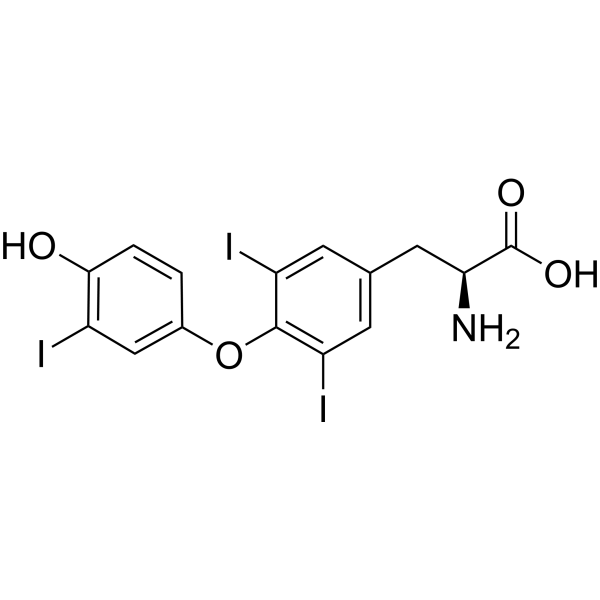
Liothyronine
Maximum Cited Publications
39 Publications Verification
Triiodothyronine; 3,3',5-Triiodo-L-thyronine; T3
|
Thyroid Hormone Receptor
Endogenous Metabolite
|
Endocrinology
Cancer
|
|
Liothyronine is an active form of thyroid hormone. Liothyronine binds to thyroid hormone receptors TRα and TRβ with Kis of 2.33 and 2.29 nM for hTRα and hTRβ, respectively. Liothyronine also binds to PVR and blocks the interaction of TIGIT/PVR .
|
-
-
- HY-A0070
-
|
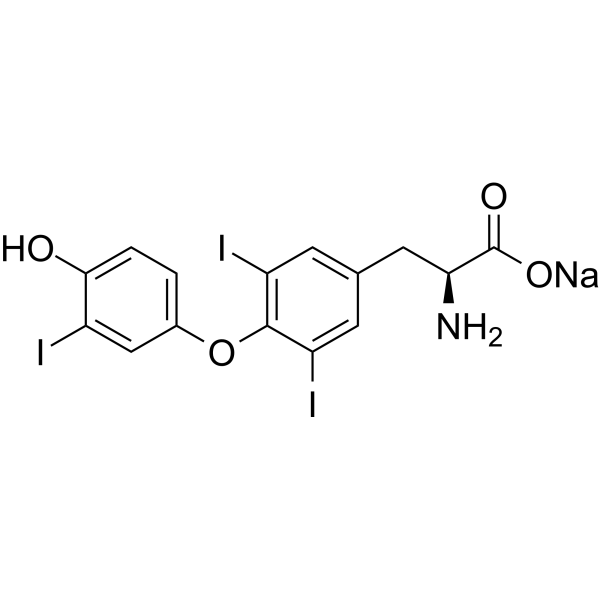
Triiodothyronine sodium; 3,3',5-Triiodo-L-thyronine sodium; T3 sodium
|
Thyroid Hormone Receptor
Endogenous Metabolite
|
Endocrinology
Cancer
|
|
Liothyronine sodium is an active form of thyroid hormone. Liothyronine sodium is a potent thyroid hormone receptors TRα and TRβ agonist with Kis of 2.33 nM for hTRα and hTRβ, respectively .
|
-
-
- HY-18341
-
-
-
- HY-107903
-
|
Thyroglobulin from bovine
|
Biochemical Assay Reagents
|
Cancer
|
|
Thyroglobulin is a 660 kDa, dimeric glycoprotein produced by the follicular cells of the thyroid and used entirely within the thyroid gland. Thyroglobulin acts as a substrate for the synthesis of the thyroid hormones thyroxine (T4) and triiodothyronine (T3), as well as the storage of the inactive forms of thyroid hormone and iodine within the follicular lumen of a thyroid follicle. Thyroglobulin activates Akt kinase activity in FRTL-5 thyroid cell .
|
-

-
- HY-18341B
-
-
-
- HY-D0896
-
ANS
1 Publications Verification
ANSA; 8-Anilino-1-naphthalenesulfonic acid
|
Bacterial
|
Infection
|
|
ANS (8-Anilino-1-naphthalenesulfonic acid) is a competitive inhibitor targeting thyroxine binding globulin (TBG) (Ki=2.09×10 6 M -1). ANS is used in radioimmunoassay by displacing bound triiodothyronine (T3) to improve detection sensitivity. ANS can block the protein binding site of T3 and release free T3 for antibody recognition. As a fluorescent probe, ANS can specifically bind to the hydrophobic region of proteins (such as membrane proteins) and monitor the dynamics of protein conformation through changes in fluorescent signals. It is widely used in biochemical research and antibacterial material development .
|
-

-
- HY-A0070B
-
|
Triiodothyronine sodium hydrate; 3,3',5-Triiodo-L-thyronine sodium hydrate; T3 sodium hydrate
|
Thyroid Hormone Receptor
Endogenous Metabolite
|
Endocrinology
Cancer
|
|
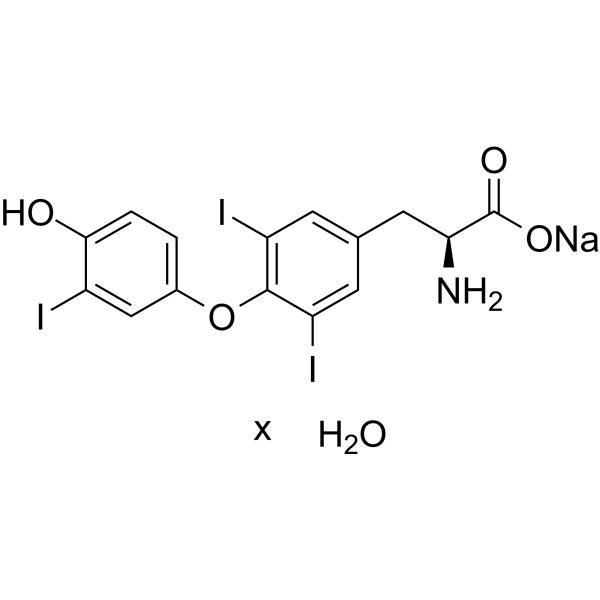
Liothyronine sodium hydrate is an active form of thyroid hormone. Liothyronine sodium hydrate is a potent thyroid hormone receptors TRα and TRβ agonist with Kis of 2.33 nM for hTRα and hTRβ, respectively .
|
-
-
- HY-B1234
-
|
Octyl methoxycinnamate
|
Environmental Pollutants
Estrogen Receptor/ERR
Androgen Receptor
Cytochrome P450
Thyroid Hormone Receptor
|
Metabolic Disease
Endocrinology
|
|
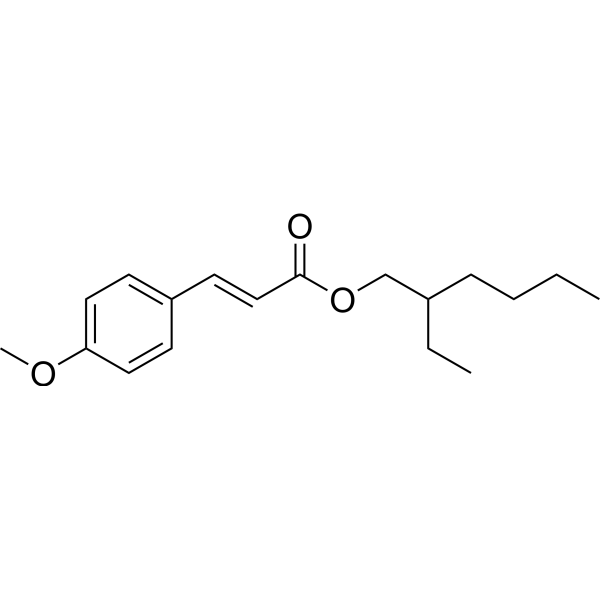
Octinoxate (Octyl methoxycinnamate) is a thyroid hormone receptor agonist, reducing the levels of triiodothyronine (T3) and thyroxine (T4) and transcription levels of genes related to type II deiodinase (deio2) in Japanese Medaka. Octinoxate is commonly used as a safe ultraviolet (UV) filter used in the aquatic environment. Octinoxate inhibits CYP1A1 and CYP1B1 to regulate hyaluronan (HA) (HY-B0633A) metabolism in a PI3K pathway-dependent manner in human keratinocytes. Octinoxate also exhibits an anti-estrogenic and anti-androgenic effect in vitro and in vivo .
|
-
-
- HY-W010696
-
|
3′,5′,3-Triiodothyronine
|
Thyroid Hormone Receptor
|
Cardiovascular Disease
|
|
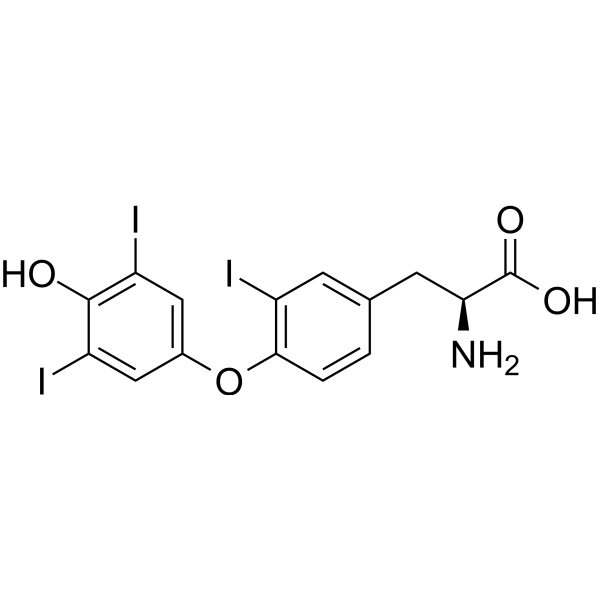
Reverse T3 is a thyroid hormone that can be generated by deiodination of the prohormone thyroxine . Reverse T3 inhibits the increase of sodium current generated by other thyroid hormone analogs in neonatal rat myocytes .
|
-
-
- HY-A0070AR
-
|
Triiodothyronine (Standard); 3,3',5-Triiodo-L-thyronine (Standard); T3 (Standard)
|
Thyroid Hormone Receptor
Endogenous Metabolite
Reference Standards
|
Endocrinology
Cancer
|
|
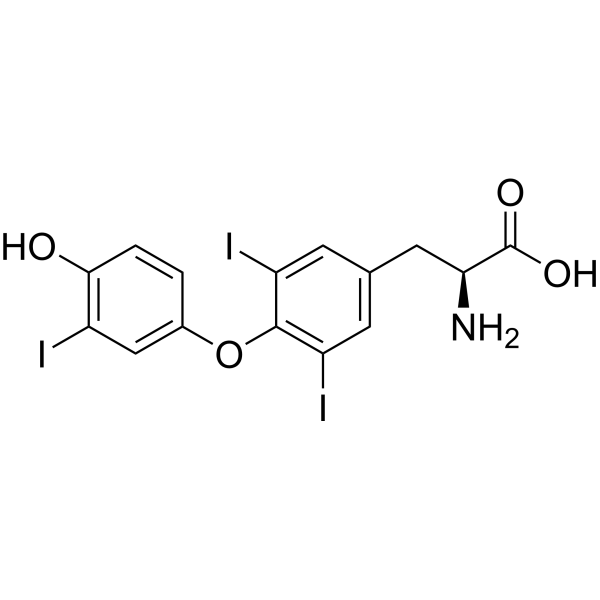
Liothyronine (Standard) is the analytical standard of Liothyronine. This product is intended for research and analytical applications. Liothyronine is an active form of thyroid hormone. Liothyronine is a potent thyroid hormone receptors TRα and TRβ agonist with Kis of 2.33 nM for hTRα and hTRβ, respectively .
|
-
-
- HY-A0070AG
-
|
Triiodothyronine; 3,3',5-Triiodo-L-thyronine; T3
|
Thyroid Hormone Receptor
|
Endocrinology
Cancer
|
|
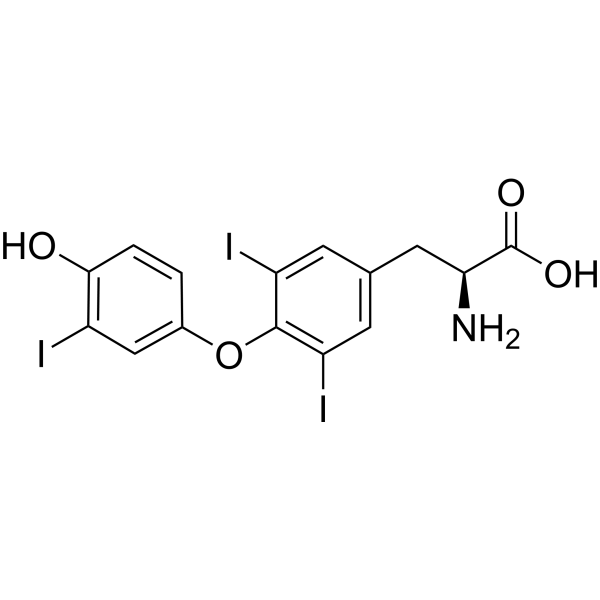
Liothyronine (Triiodothyronine) (GMP) is the Liothyronine (HY-A0070A) produced by using GMP guidelines. GMP small molecules work appropriately as an auxiliary reagent for cell therapy manufacture. Liothyronine is a potent thyroid hormone receptors TRα and TRβ agonist with Kis of 2.33 nM for hTRα and hTRβ, respectively .
|
-
-
- HY-18341A
-
-
-
- HY-126996
-
|
|
Drug Metabolite
Endogenous Metabolite
|
Metabolic Disease
|
|
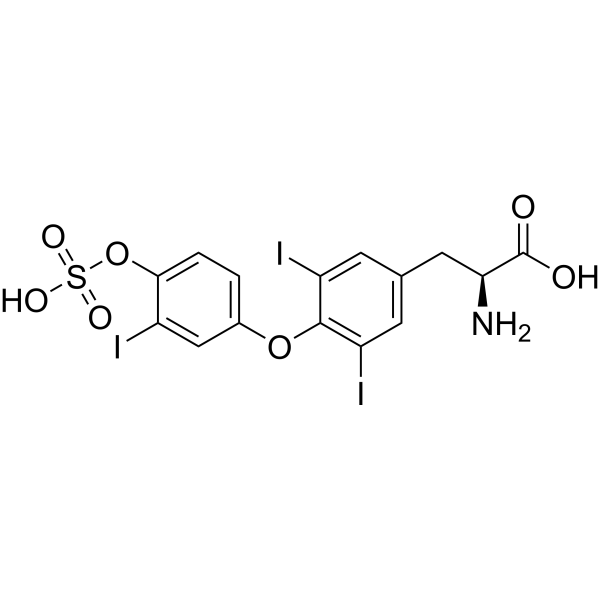
Triiodothyronine sulfate is the main metabolite of thyroid hormone triiodothyronine (T3). Triiodothyronine is an active form of thyroid hormone, which binds to β1 thyroid hormone receptor (TRβ1), and activates its activity .
|
-
-
- HY-18341R
-
|
Levothyroxine (Standard); T4 (Standard)
|
Reference Standards
Thyroid Hormone Receptor
Endogenous Metabolite
|
Endocrinology
Cancer
|
|
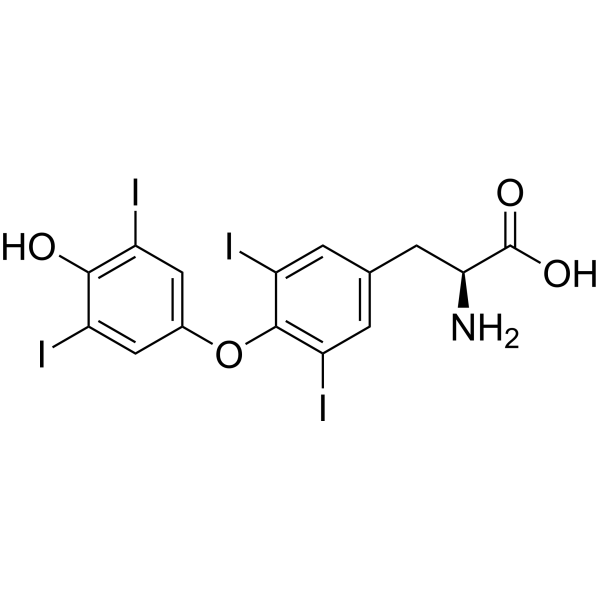
L-Thyroxine (Standard) is the analytical standard of L-Thyroxine. This product is intended for research and analytical applications. L-Thyroxine (Levothyroxine; T4) is a synthetic hormone for the research of hypothyroidism. DIO enzymes convert biologically active thyroid hormone (Triiodothyronine,T3) from L-Thyroxine (T4) .
|
-

-
- HY-A0069
-
|
|
Histamine Receptor
Cytochrome P450
|
Neurological Disease
Metabolic Disease
|
|
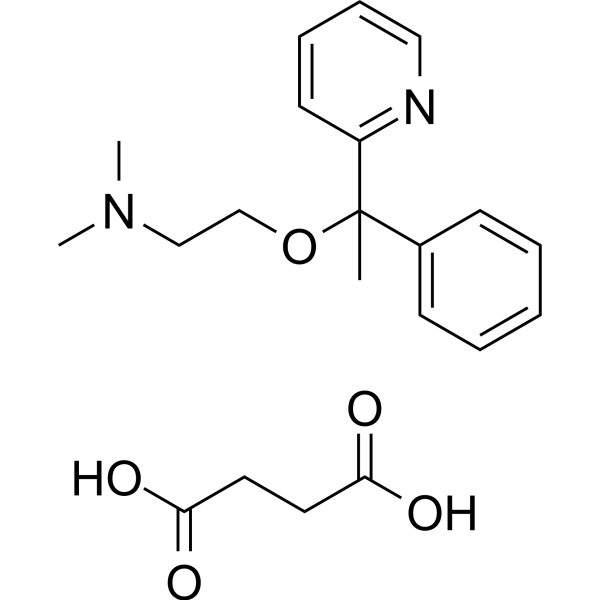
Doxylamine succinate is a first-generation antihistamine and acts as a histamine H1 receptor antagonist. Doxylamine succinate is orally active, possessing analgesic and hypnotic activities. Doxylamine succinate enhances the activities of CYP2B, CYP2A, CYP3A and thyroxine-glucuronosyltransferase via promoting substrate hydroxylation and thyroxine metabolic pathways. Doxylamine succinate decreases serum thyroxine (T4) level and elevates serum thyroid-stimulating hormone (TSH) level. Doxylamine succinate induces liver enlargement and increases the activities of hepatic microsomal cytochrome P450, cytochrome b5 and NADPH-cytochrome c reductase. Doxylamine succinate can be used for the research of nausea, allergy, insomnia .
|
-
-
- HY-18341S2
-
|
|
Thyroid Hormone Receptor
Endogenous Metabolite
|
Endocrinology
|
|
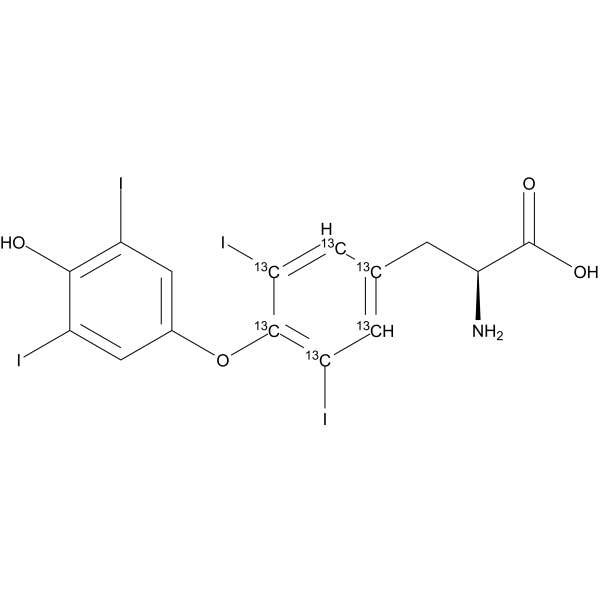
L-Thyroxine- 13C6 is the 13C labeled L-Thyroxine . L-Thyroxine (Levothyroxine;T4) is a synthetic hormone for the research of hypothyroidism. DIO enzymes convert biologically active thyroid hormone (Triiodothyronine,T3) from L-Thyroxine (T4) .
|
-
-
- HY-W010669
-
|
Sodium levothyroxine
|
Thyroid Hormone Receptor
|
Endocrinology
|
|
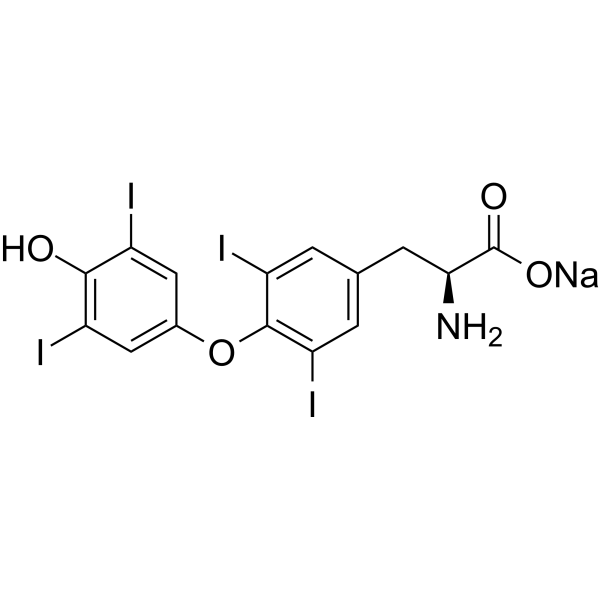
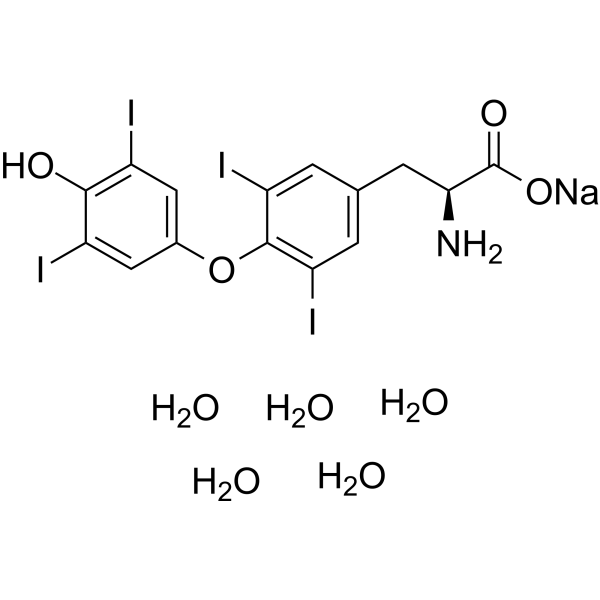
L-Thyroxine sodium xhydrate (Levothyroxine; T4) is a synthetic hormone in the treatment of hypothyroidism. DIO enzymes convert biologically active hormone (Triiodothyronine,T3) from L-Thyroxine (T4).
|
-

-
- HY-A0070R
-
|
Triiodothyronine sodium (Standard); 3,3',5-Triiodo-L-thyronine sodium (Standard); T3 sodium (Standard)
|
Reference Standards
Thyroid Hormone Receptor
Endogenous Metabolite
|
Endocrinology
Cancer
|
|
Liothyronine (sodium) (Standard) is the analytical standard of Liothyronine (sodium). This product is intended for research and analytical applications. Liothyronine sodium is an active form of thyroid hormone. Liothyronine sodium is a potent thyroid hormone receptors TRα and TRβ agonist with Kis of 2.33 nM for hTRα and hTRβ, respectively .
|
-

-
- HY-18341F
-
|
|
Thyroid Hormone Receptor
Endogenous Metabolite
|
Endocrinology
|
|
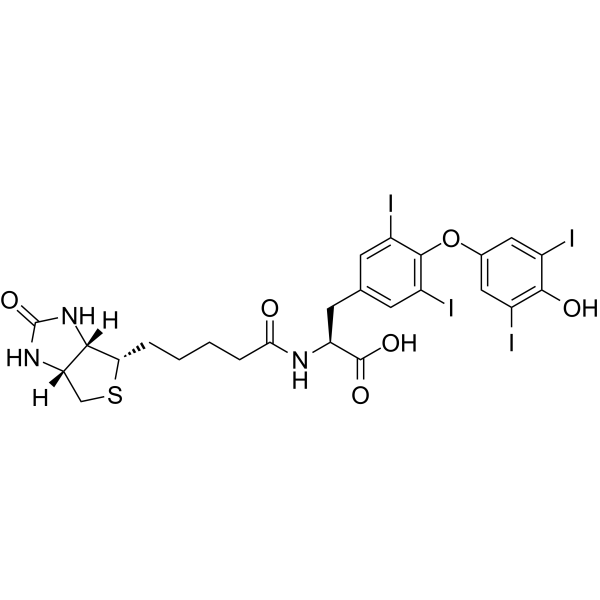
Biotin-(L-Thyroxine) is the biotinylated L-Thyroxine (HY-18341). L-Thyroxine is a synthetic hormone for the research of hypothyroidism. DIO enzymes convert biologically active thyroid hormone (Triiodothyronine,T3) from Biotin-(L-Thyroxine) (T4) .
|
-
-
- HY-127024A
-
|
|
Thyroid Hormone Receptor
|
Metabolic Disease
|
|
TR antagonist 2 (Compound 10a) is a competitive thyroid hormone receptors (TRα/β) antagonist (IC50=47 nM). TR antagonist 2 competes with triiodothyronine (T3) for binding to the ligand-binding domain of TR to block receptor-coactivator complex formation and inhibit target gene transcription, reducing thyroid hormone-mediated hypermetabolic effects. TR antagonist 2 is promising for research of hyperthyroidism (e.g., Graves' disease) and thyrotoxicosis .
|
-

-
- HY-141939S
-
|
Triiodothyronine-13C6; 3,3',5-Triiodo-L-thyronine-13C6; T3-13C6
|
Isotope-Labeled Compounds
|
Others
|
|
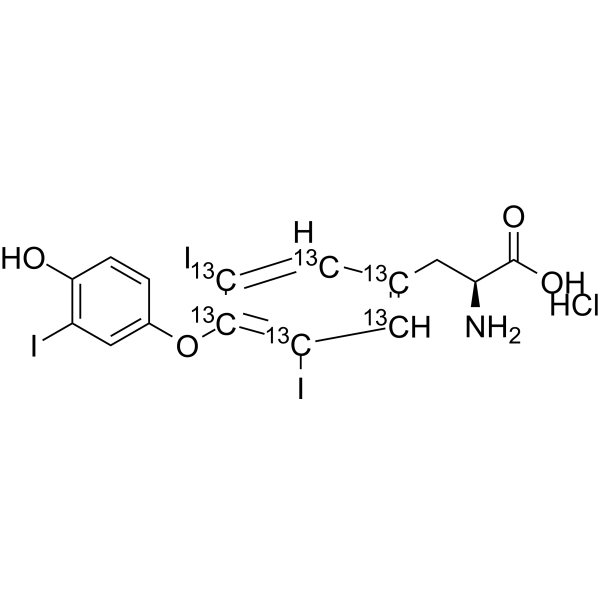
Triiodothyronine- 13C6 (hydrochloride) is the 13C labeled Triiodothyronine .
|
-
-
- HY-W010696R
-
|
3′,5′,3-Triiodothyronine (Standard)
|
Reference Standards
Thyroid Hormone Receptor
|
Cardiovascular Disease
|
|
Reverse T3 (Standard) is the analytical standard of Reverse T3. This product is intended for research and analytical applications. Reverse T3 is a thyroid hormone that can be generated by deiodination of the prohormone thyroxine . Reverse T3 inhibits the increase of sodium current generated by other thyroid hormone analogs in neonatal rat myocytes .
|
-

-
- HY-A0070C
-
|
Triiodothyronine hydrochloride; 3,3',5-Triiodo-L-thyronine hydrochloride; T3 hydrochloride
|
Thyroid Hormone Receptor
Endogenous Metabolite
|
Endocrinology
Cancer
|
|
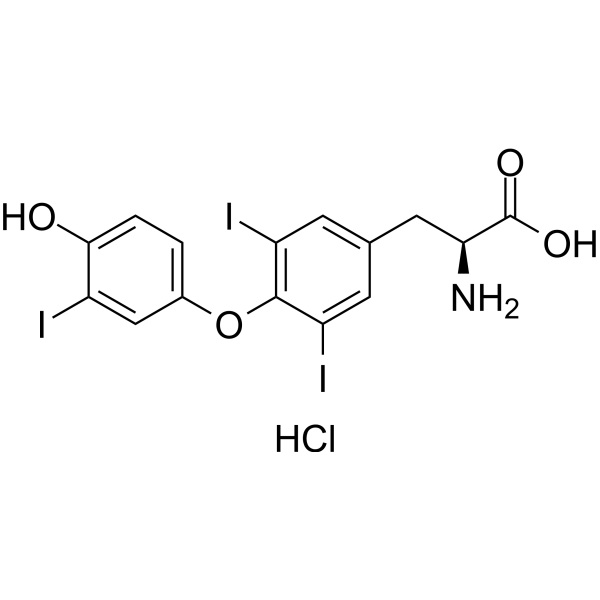
Liothyronine hydrochloride is an active form of thyroid hormone. Liothyronine hydrochloride is a potent thyroid hormone receptors TRα and TRβ agonist with Kis of 2.33 nM for hTRα and hTRβ, respectively .
|
-
-
- HY-A0070AS1
-
|
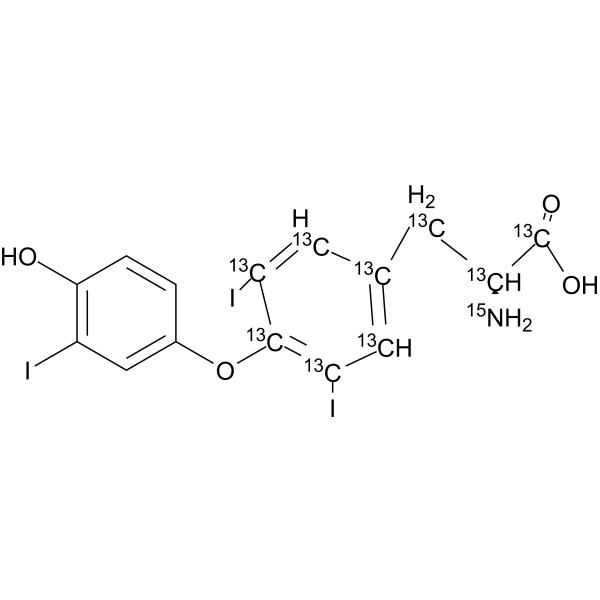
Triiodothyronine-13C9,15N; 3,3',5-Triiodo-L-thyronine-13C9,15N; T3-13C9,15N
|
Thyroid Hormone Receptor
Endogenous Metabolite
|
Cancer
|
|
Liothyronine- 13C9, 15N is the 13C and 15N labeled Liothyronine . Liothyronine is an active form of thyroid hormone. Liothyronine is a potent thyroid hormone receptors TRα and TRβ agonist with Kis of 2.33 nM for hTRα and hTRβ, respectively .
|
-
-
- HY-A0070AS3
-
-
-
- HY-A0070AS2
-
|
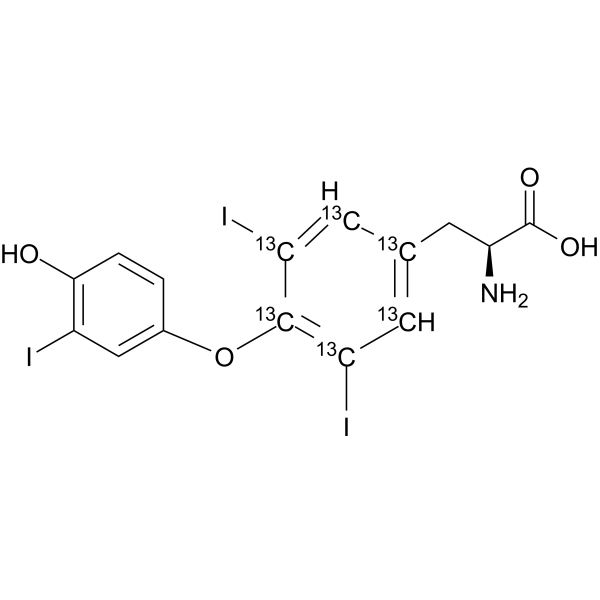
Triiodothyronine-13C6-1; 3,3',5-Triiodo-L-thyronine-13C6-1; T3-13C6-1
|
Thyroid Hormone Receptor
|
Endocrinology
Cancer
|
|
Liothyronine- 13C6-1 is a 13C-labeled Liothyronine. Liothyronine is a potent thyroid hormone receptors TRα and TRβ agonist with Kis of 2.33 nM for hTRα and hTRβ, respectively .
|
-
-
- HY-18341BR
-
|
Levothyroxine sodium (Standard); T4 sodium (Standard)
|
Reference Standards
Thyroid Hormone Receptor
Endogenous Metabolite
|
Endocrinology
Cancer
|
|
L-Thyroxine (sodium) (Standard) is the analytical standard of L-Thyroxine (sodium). This product is intended for research and analytical applications. L-Thyroxine sodium (Levothyroxine sodium) is a synthetic hormone for the research of hypothyroidism. DIO enzymes convert biologically active thyroid hormone (Triiodothyronine,T3) from L-Thyroxine (T4) .
|
-

-
- HY-18341S1
-
-
-
- HY-W010669R
-
|
Sodium levothyroxine (Standard)
|
Reference Standards
Thyroid Hormone Receptor
|
Endocrinology
|
|
L-Thyroxine sodium xhydrate (Standard) is the analytical standard of L-Thyroxine sodium xhydrate. This product is intended for research and analytical applications. L-Thyroxine sodium xhydrate (Levothyroxine; T4) is a synthetic hormone in the treatment of hypothyroidism. DIO enzymes convert biologically active hormone (Triiodothyronine,T3) from L-Thyroxine (T4).
|
-

-
- HY-18341S4
-
-
-
- HY-W010696AS
-
-
-
- HY-135956
-
-
-
- HY-A0070AS5
-
|
Triiodothyronine-d4; 3,3',5-Triiodo-L-thyronine-d4; T3-d4
|
Isotope-Labeled Compounds
Thyroid Hormone Receptor
Endogenous Metabolite
|
Endocrinology
Cancer
|
|
Liothyronine-d4 (Triiodothyronine-d4) is the deuterium labeled Liothyronine (HY-A0070A). Liothyronine is an active form of thyroid hormone. Liothyronine binds to thyroid hormone receptors TRα and TRβ with
vs of 2.33 and 2.29 nM for hTRα and hTRβ, respectively. Liothyronine also binds to PVR and blocks the interaction of TIGIT/PVR .
|
-

-
- HY-18341AR
-
|
Sodium levothyroxine pentahydrate (Standard)
|
Thyroid Hormone Receptor
Endogenous Metabolite
Reference Standards
|
Endocrinology
Cancer
|
|
L-Thyroxine (sodium salt pentahydrate) (Standard) is the analytical standard of L-Thyroxine (sodium salt pentahydrate). This product is intended for research and analytical applications. L-Thyroxine sodium salt pentahydrate (Levothyroxine; T4) is a synthetic hormone for the research of hypothyroidism. DIO enzymes convert biologically active thyroid hormone (Triiodothyronine,T3) from L-Thyroxine (T4) .
|
-

-
- HY-B1234S
-
|
|
Cytochrome P450
Thyroid Hormone Receptor
Androgen Receptor
Estrogen Receptor/ERR
Isotope-Labeled Compounds
|
Metabolic Disease
Endocrinology
|
|
Octinoxate-13C,d3 is the deuterium labeled Octinoxate (HY-W245806). Octinoxate (Octyl methoxycinnamate) is a thyroid hormone receptor agonist, reducing the levels of triiodothyronine (T3) and thyroxine (T4) and transcription levels of genes related to type II deiodinase (deio2) in Japanese Medaka. Octinoxate is commonly used as a safe ultraviolet (UV) filter used in the aquatic environment. Octinoxate inhibits CYP1A1 and CYP1B1 to regulate hyaluronan (HA) (HY-B0633A) metabolism in a PI3K pathway-dependent manner in human keratinocytes. Octinoxate also exhibits an anti-estrogenic and anti-androgenic effect in vitro and in vivo .
|
-

-
- HY-W713284
-
|
|
Isotope-Labeled Compounds
Cytochrome P450
Estrogen Receptor/ERR
Androgen Receptor
Thyroid Hormone Receptor
|
Endocrinology
|
|
2-Ethylhexyl (E)-3-(4-(methoxy-d3)phenyl)acrylate is the deuterium labeled Octinoxate (HY-B1234). Octinoxate (Octyl methoxycinnamate) is a thyroid hormone receptor agonist, reducing the levels of triiodothyronine (T3) and thyroxine (T4) and transcription levels of genes related to type II deiodinase (deio2) in Japanese Medaka. Octinoxate is commonly used as a safe ultraviolet (UV) filter used in the aquatic environment. Octinoxate inhibits CYP1A1 and CYP1B1 to regulate hyaluronan (HA) (HY-B0633A) metabolism in a PI3K pathway-dependent manner in human keratinocytes. Octinoxate also exhibits an anti-estrogenic and anti-androgenic effect in vitro and in vivo .
|
-

-
- HY-W779345
-
-

| Cat. No. |
Product Name |
Type |
-
- HY-D0896
-
ANS
1 Publications Verification
ANSA; 8-Anilino-1-naphthalenesulfonic acid
|
Fluorescent Dyes
|
|
ANS (8-Anilino-1-naphthalenesulfonic acid) is a competitive inhibitor targeting thyroxine binding globulin (TBG) (Ki=2.09×10 6 M -1). ANS is used in radioimmunoassay by displacing bound triiodothyronine (T3) to improve detection sensitivity. ANS can block the protein binding site of T3 and release free T3 for antibody recognition. As a fluorescent probe, ANS can specifically bind to the hydrophobic region of proteins (such as membrane proteins) and monitor the dynamics of protein conformation through changes in fluorescent signals. It is widely used in biochemical research and antibacterial material development .
|
-
- HY-A0070AG
-
|
Triiodothyronine; 3,3',5-Triiodo-L-thyronine; T3
|
Fluorescent Dyes
|
|
Liothyronine (Triiodothyronine) (GMP) is the Liothyronine (HY-A0070A) produced by using GMP guidelines. GMP small molecules work appropriately as an auxiliary reagent for cell therapy manufacture. Liothyronine is a potent thyroid hormone receptors TRα and TRβ agonist with Kis of 2.33 nM for hTRα and hTRβ, respectively .
|
-
- HY-18341F
-
|
|
Fluorescent Dyes
|
|
Biotin-(L-Thyroxine) is the biotinylated L-Thyroxine (HY-18341). L-Thyroxine is a synthetic hormone for the research of hypothyroidism. DIO enzymes convert biologically active thyroid hormone (Triiodothyronine,T3) from Biotin-(L-Thyroxine) (T4) .
|
| Cat. No. |
Product Name |
Type |
-
- HY-107903
-
|
Thyroglobulin from bovine
|
Biochemical Assay Reagents
|
|
Thyroglobulin is a 660 kDa, dimeric glycoprotein produced by the follicular cells of the thyroid and used entirely within the thyroid gland. Thyroglobulin acts as a substrate for the synthesis of the thyroid hormones thyroxine (T4) and triiodothyronine (T3), as well as the storage of the inactive forms of thyroid hormone and iodine within the follicular lumen of a thyroid follicle. Thyroglobulin activates Akt kinase activity in FRTL-5 thyroid cell .
|
-
- HY-D0896
-
ANS
1 Publications Verification
ANSA; 8-Anilino-1-naphthalenesulfonic acid
|
Biochemical Assay Reagents
|
|
ANS (8-Anilino-1-naphthalenesulfonic acid) is a competitive inhibitor targeting thyroxine binding globulin (TBG) (Ki=2.09×10 6 M -1). ANS is used in radioimmunoassay by displacing bound triiodothyronine (T3) to improve detection sensitivity. ANS can block the protein binding site of T3 and release free T3 for antibody recognition. As a fluorescent probe, ANS can specifically bind to the hydrophobic region of proteins (such as membrane proteins) and monitor the dynamics of protein conformation through changes in fluorescent signals. It is widely used in biochemical research and antibacterial material development .
|
-
- HY-A0070AG
-
|
Triiodothyronine; 3,3',5-Triiodo-L-thyronine; T3
|
Biochemical Assay Reagents
|
|
Liothyronine (Triiodothyronine) (GMP) is the Liothyronine (HY-A0070A) produced by using GMP guidelines. GMP small molecules work appropriately as an auxiliary reagent for cell therapy manufacture. Liothyronine is a potent thyroid hormone receptors TRα and TRβ agonist with Kis of 2.33 nM for hTRα and hTRβ, respectively .
|
-
- HY-W010669
-
|
Sodium levothyroxine
|
Biochemical Assay Reagents
|
|
L-Thyroxine sodium xhydrate (Levothyroxine; T4) is a synthetic hormone in the treatment of hypothyroidism. DIO enzymes convert biologically active hormone (Triiodothyronine,T3) from L-Thyroxine (T4).
|
-
- HY-W010669R
-
|
Sodium levothyroxine (Standard)
|
Biochemical Assay Reagents
|
|
L-Thyroxine sodium xhydrate (Standard) is the analytical standard of L-Thyroxine sodium xhydrate. This product is intended for research and analytical applications. L-Thyroxine sodium xhydrate (Levothyroxine; T4) is a synthetic hormone in the treatment of hypothyroidism. DIO enzymes convert biologically active hormone (Triiodothyronine,T3) from L-Thyroxine (T4).
|
| Cat. No. |
Product Name |
Target |
Research Area |
-
- HY-P11578
-
|
|
Peptides
|
Metabolic Disease
|
|
CKGGRAKDC (linear) is an adipose tissue homing peptide. CKGGRAKDC (linear) binds to vasculature-enriched prohibitin in adipose tissue to enable selective tissue targeting. CKGGRAKDC (linear) can be used to selective delivery of cargos to adipose tissues .
|
| Cat. No. |
Product Name |
Category |
Target |
Chemical Structure |
| Cat. No. |
Product Name |
Chemical Structure |
-
- HY-18341S2
-
|
|
|
L-Thyroxine- 13C6 is the 13C labeled L-Thyroxine . L-Thyroxine (Levothyroxine;T4) is a synthetic hormone for the research of hypothyroidism. DIO enzymes convert biologically active thyroid hormone (Triiodothyronine,T3) from L-Thyroxine (T4) .
|
-
-
- HY-141939S
-
|
|
|
Triiodothyronine- 13C6 (hydrochloride) is the 13C labeled Triiodothyronine .
|
-
-
- HY-A0070AS1
-
|
|
|
Liothyronine- 13C9, 15N is the 13C and 15N labeled Liothyronine . Liothyronine is an active form of thyroid hormone. Liothyronine is a potent thyroid hormone receptors TRα and TRβ agonist with Kis of 2.33 nM for hTRα and hTRβ, respectively .
|
-
-
- HY-A0070AS3
-
|
|
|
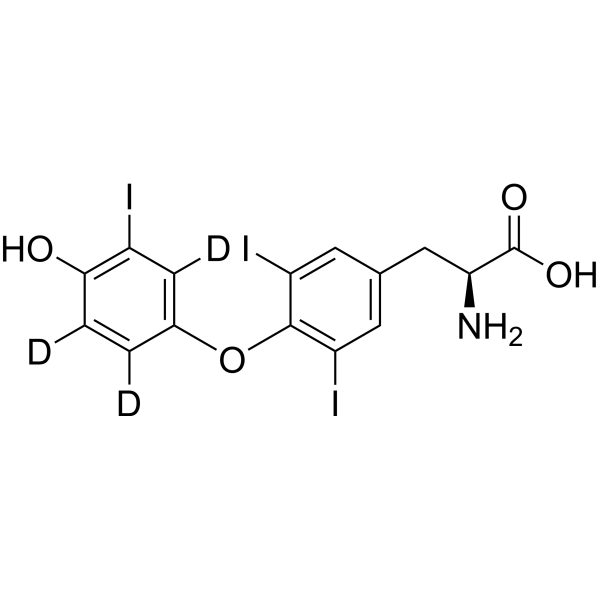
Liothyronine-d3 is deuterated labeled Liothyronine (HY-A0070A). Liothyronine is an active form of thyroid hormone. Liothyronine is a potent thyroid hormone receptors TRα and TRβ agonist with Kis of 2.33 nM for hTRα and hTRβ, respectively .
|
-
-
- HY-A0070AS2
-
|
|
|
Liothyronine- 13C6-1 is a 13C-labeled Liothyronine. Liothyronine is a potent thyroid hormone receptors TRα and TRβ agonist with Kis of 2.33 nM for hTRα and hTRβ, respectively .
|
-
-
- HY-18341S1
-
|
|
|
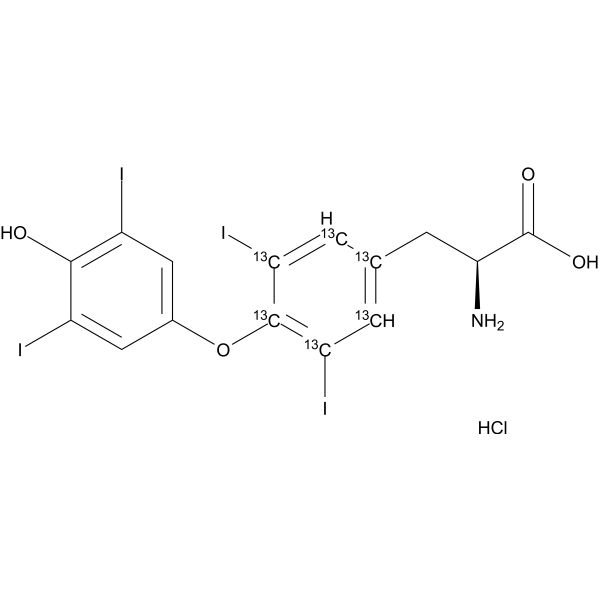
Thyroxine hydrochloride- 13C6 is the 13C-labeled L-Thyroxine. L-Thyroxine (Levothyroxine; T4) is a synthetic hormone for the research of hypothyroidism. DIO enzymes convert biologically active thyroid hormone (Triiodothyronine,T3) from L-Thyroxine (T4) .
|
-
-
- HY-18341S4
-
|
|
|
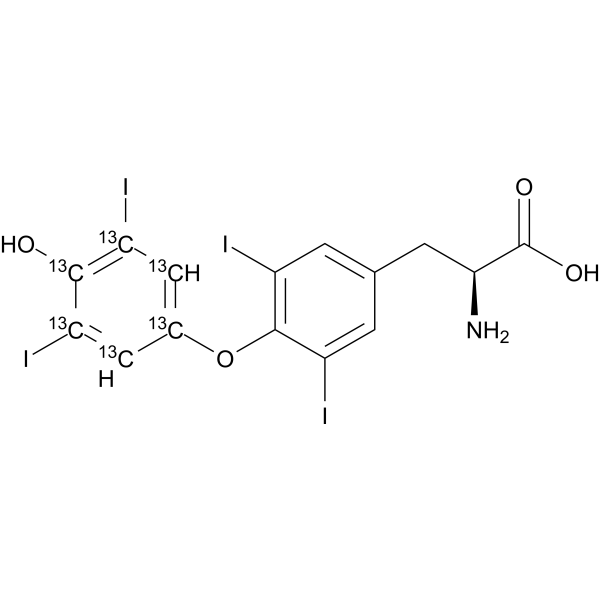
L-Thyroxine- 13C6-1 (Levothyroxine- 13C6-1; T4- 13C6-1) is a 13C labeled L-Thyroxine (HY-18341). L-Thyroxine (Levothyroxine; T4) is a synthetic hormone for the research of hypothyroidism. DIO enzymes convert biologically active thyroid hormone (Triiodothyronine,T3) from L-Thyroxine (T4) .
|
-
-
- HY-W010696AS
-
|
|
|
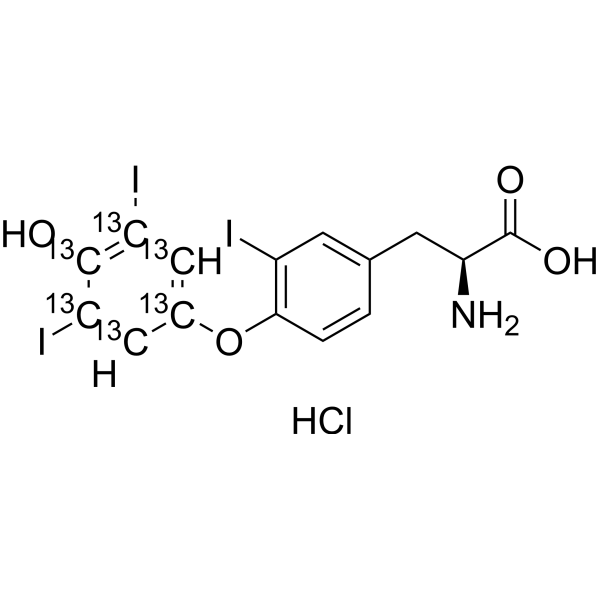
Reverse T3- 13C6 (hydrochloride) is the 13C labeled Reverse T3 .
|
-
-
- HY-A0070AS5
-
|
|
|
Liothyronine-d4 (Triiodothyronine-d4) is the deuterium labeled Liothyronine (HY-A0070A). Liothyronine is an active form of thyroid hormone. Liothyronine binds to thyroid hormone receptors TRα and TRβ with
vs of 2.33 and 2.29 nM for hTRα and hTRβ, respectively. Liothyronine also binds to PVR and blocks the interaction of TIGIT/PVR .
|
-
-
- HY-B1234S
-
|
|
|
Octinoxate-13C,d3 is the deuterium labeled Octinoxate (HY-W245806). Octinoxate (Octyl methoxycinnamate) is a thyroid hormone receptor agonist, reducing the levels of triiodothyronine (T3) and thyroxine (T4) and transcription levels of genes related to type II deiodinase (deio2) in Japanese Medaka. Octinoxate is commonly used as a safe ultraviolet (UV) filter used in the aquatic environment. Octinoxate inhibits CYP1A1 and CYP1B1 to regulate hyaluronan (HA) (HY-B0633A) metabolism in a PI3K pathway-dependent manner in human keratinocytes. Octinoxate also exhibits an anti-estrogenic and anti-androgenic effect in vitro and in vivo .
|
-
-
- HY-W713284
-
|
|
|
2-Ethylhexyl (E)-3-(4-(methoxy-d3)phenyl)acrylate is the deuterium labeled Octinoxate (HY-B1234). Octinoxate (Octyl methoxycinnamate) is a thyroid hormone receptor agonist, reducing the levels of triiodothyronine (T3) and thyroxine (T4) and transcription levels of genes related to type II deiodinase (deio2) in Japanese Medaka. Octinoxate is commonly used as a safe ultraviolet (UV) filter used in the aquatic environment. Octinoxate inhibits CYP1A1 and CYP1B1 to regulate hyaluronan (HA) (HY-B0633A) metabolism in a PI3K pathway-dependent manner in human keratinocytes. Octinoxate also exhibits an anti-estrogenic and anti-androgenic effect in vitro and in vivo .
|
-
-
- HY-W779345
-
|
|
|
3,3',5'-Triiodo-L-thyronine- 13C6 is 13C labeled 3,3',5'-Triiodo-L-thyronine .
|
-
| Cat. No. |
Product Name |
Target |
Research Areas |
Chemical Structure |
-
- HY-A0070AG
-
|
Triiodothyronine; 3,3',5-Triiodo-L-thyronine; T3
|
Thyroid Hormone Receptor
|
Endocrinology
Cancer
|
|
Liothyronine (Triiodothyronine) (GMP) is the Liothyronine (HY-A0070A) produced by using GMP guidelines. GMP small molecules work appropriately as an auxiliary reagent for cell therapy manufacture. Liothyronine is a potent thyroid hormone receptors TRα and TRβ agonist with Kis of 2.33 nM for hTRα and hTRβ, respectively .
|
-
Your information is safe with us. * Required Fields.
Inquiry Information
- Product Name:
- Cat. No.:
- Quantity:
- MCE Japan Authorized Agent:








