



Octinoxate

Based on 1 Customer Validation
Octinoxate (Octyl methoxycinnamate) is a thyroid hormone receptor agonist, reducing the levels of triiodothyronine (T3) and thyroxine (T4) and transcription levels of genes related to type II deiodinase (deio2) in Japanese Medaka. Octinoxate is commonly used as a safe ultraviolet (UV) filter used in the aquatic environment. Octinoxate inhibits CYP1A1 and CYP1B1 to regulate hyaluronan (HA) (HY-B0633A) metabolism in a PI3K pathway-dependent manner in human keratinocytes. Octinoxate also exhibits an anti-estrogenic and anti-androgenic effect in vitro and in vivo.
For research use only. We do not sell to patients.
- Purity : 99.84%
- CAS No.: 5466-77-3
- Formula: C18H26O3
- Molecular Weight:290.40
-
Storage:Pure form -20°C, 3 years , 4°C, 2 years ; In solvent -80°C, 6 months , -20°C, 1 month

To place orders, for customer services and technical support, please contact: MedChemExpress USA
Tel: 609-228-6898 E-mail: [email protected] [email protected]


-
 Biological Activity
-
Chemical Information
-
Solvent & Solubility
- Protocols
- Purity & Documentation
- References
-
 Help & FAQs


-
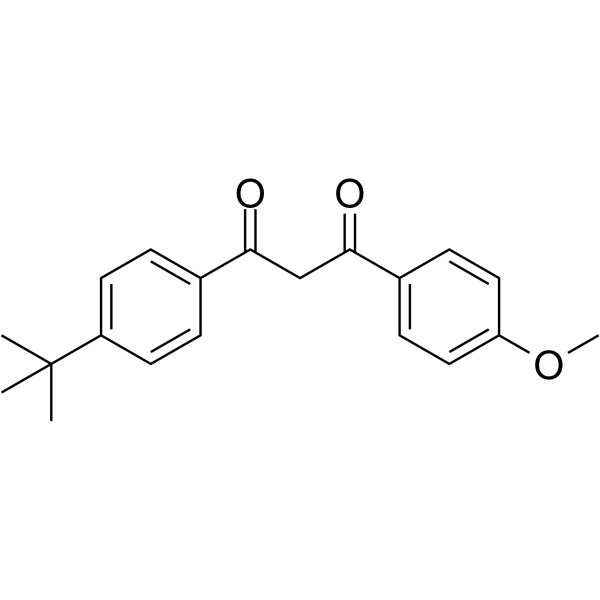
HY-B0316
AvobenzoneLong-Wave UVA Filter -
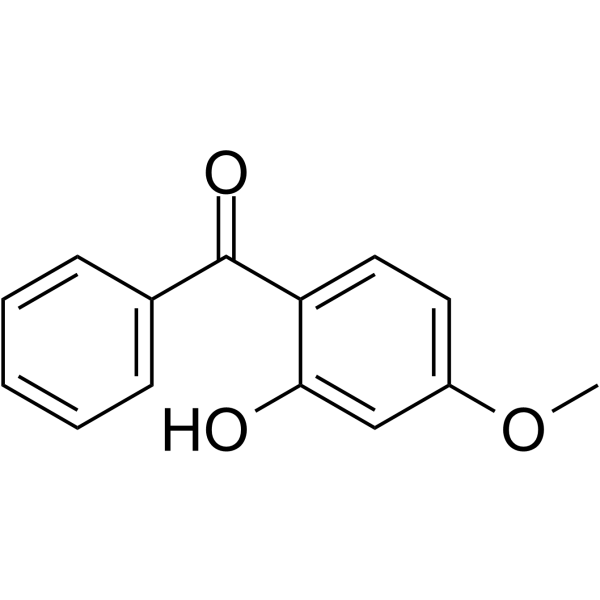
HY-A0067
OxybenzoneUltraviolet Light Filter -
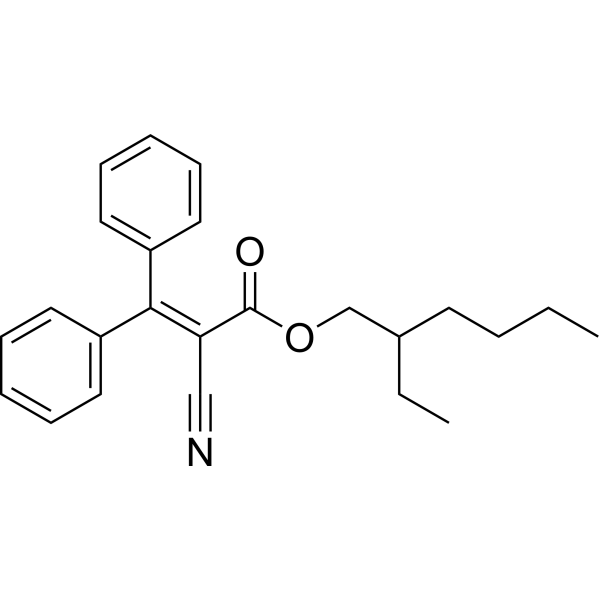
HY-A0087
OctocryleneOrganic Ultraviolet (UV) Filter -

HY-B1234R
Octinoxate (Standard)Ingredient of Sunscreens -
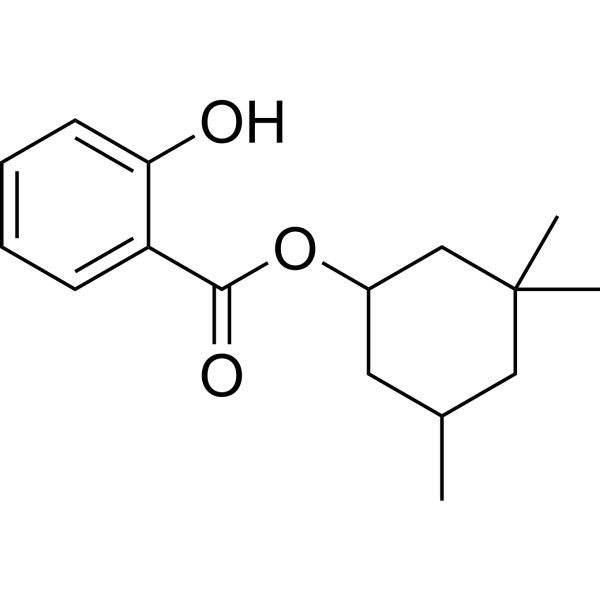
HY-B0928
HomosalateSun-Screening Agent -
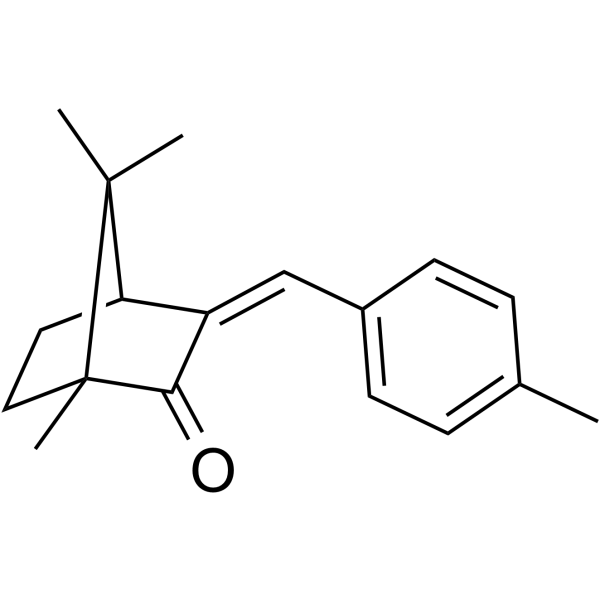
HY-17587
4-Methylbenzylidene camphorEstrogen-Like Drug -
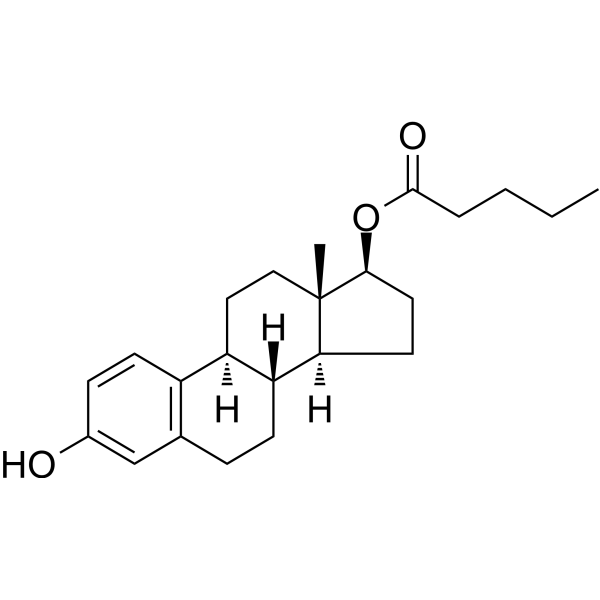
HY-B0672
Estradiol valerateEstrogen Receptor/ERR Agonist -

HY-B0316R
Avobenzone (Standard)Long-Wave UVA Filter -
HY-B0672R
Estradiol valerate (Standard)Reference Standard -
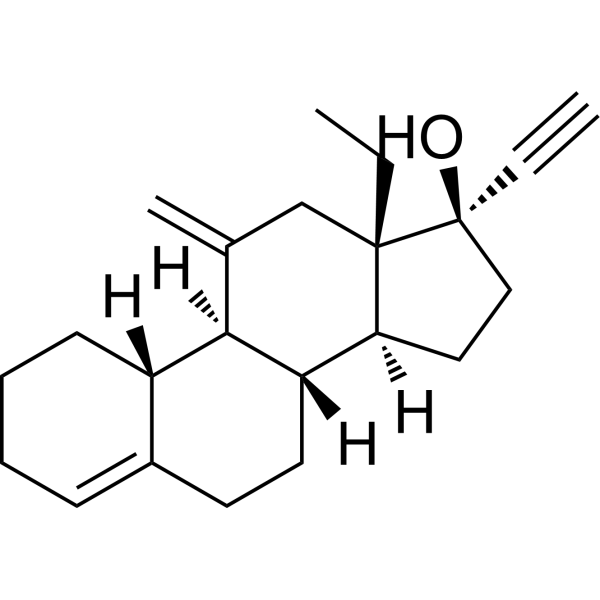
HY-12516
DesogestrelProgesterone Receptor Agonist -
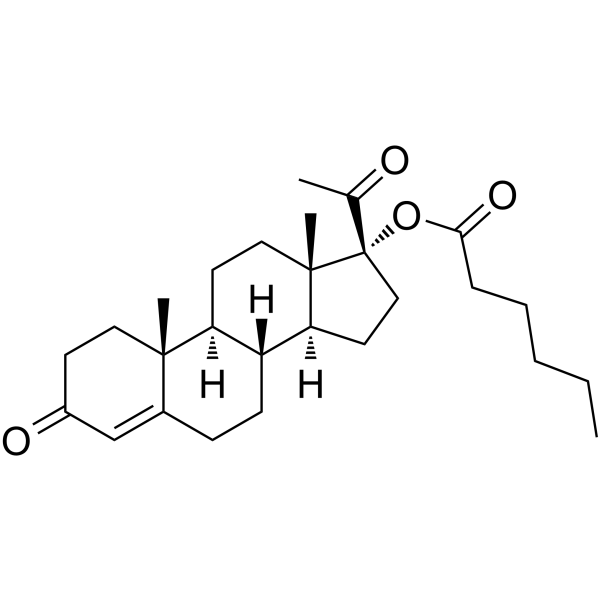
HY-B0742
Hydroxyprogesterone caproateProgesterone Receptor Ligand -

HY-109568
LynestrenolPXR Agonist


Biological Activity
Description
In Vitro
Octinoxate (10 μM, 6 h) potentiates the ability of 6-formylindolo[3,2-b]carbazole (FICZ (HY-12451)) (10 nM, 6 h) and ultraviolet radiation (UVR) to activate the Aryl hydrocarbon Receptor (AhR) by elevating CYP1A1 and CYP1B1 mRNA levels in H1L1.1c2 cells and HaCaT cells[3].
Octinoxate (10 μM, 24 h) decreases catalytic function of both CYP1A1 and CYP1B1 with IC50 values of 1.0 μM and 586 nM respectively, weaker than α-NF in H1L1.1c2 cells[3].
Octinoxate (30 μM or 50 μM, 24 h) significantly enhances the mRNA expression of the predominant hyaluronan (HA) metabolic enzyme HAS2 and HYAL1, but inhibits the mRNA expression of AQP3 in HaCaT keratinocytes[4].
Octinoxate acts as a thyroid hormone receptor agonist in HepG2 cells[5].
MedChemExpress (MCE) has not independently confirmed the accuracy of these methods. They are for reference only.
-
Cell Line:HaCaT cells
-
Concentration:10 μM
-
Incubation Time:6 h
-
Result:Potentiated the ability of FICZ (HY-12451) and UVR to elevate CYP1A1 and CYP1B1 transcript levels in HaCaT cells.
-
Cell Line:HaCaT keratinocytes
-
Concentration:30 μM
-
Incubation Time:24 h
-
Result:Increased the mRNA expression of HAS2 and HYAL1 in HaCaT keratinocytes.
In Vivo
Octinoxate (30 μM, 120 h) significantly decreases T3 and T4 concentrations in zebrafish larvae, upregulating transcriptions of trh, tshβ, tshr, tg, nis and deio2 genes and downregulating transcriptions of trαa, trβ and tpo genes[2].
MedChemExpress (MCE) has not independently confirmed the accuracy of these methods. They are for reference only.
-
Animal Model:Female rainbow trout (O. mykiss)[1]
-
Dosage:0, 6.9 μg/kg, 96.0 μg/kg and 395.6 μg/kg
-
Administration:fed with pellets, twice a day for 6 weeks
-
Result:Significantly downregulated dio2 gene expression in the highest dose group, downregulated pax8a expression in the medium and highest dose group, but not altered thrα and thrβ expression in the cranial kidney.


Chemical Information
-
CAS No. 5466-77-3
-
Appearance Liquid (Density: 1.009 g/cm3)
-
Molecular Weight 290.40
-
Formula C18H26O3
-
Color Light yellow to yellow
-
SMILES
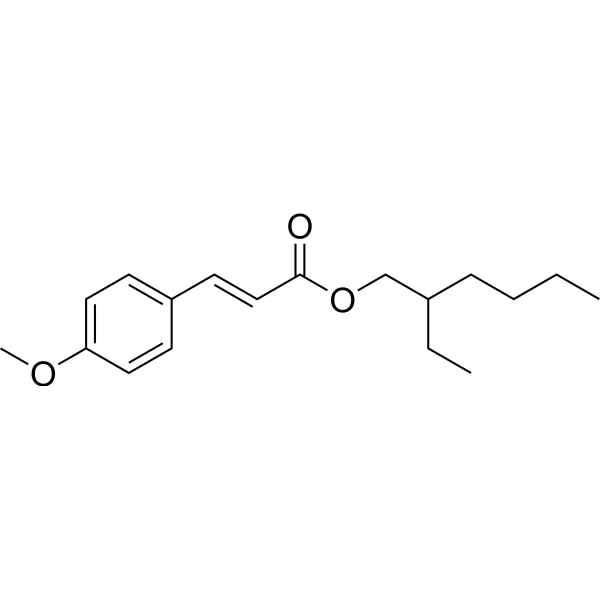
O=C(OCC(CC)CCCC)/C=C/C1=CC=C(OC)C=C1
-
Synonyms
Octyl methoxycinnamate
-
Structure Classification
-
Initial Source
-
Shipping
Room temperature in continental US; may vary elsewhere.
-
Storage
Pure form -20°C 3 years 4°C 2 years In solvent -80°C 6 months -20°C 1 month


Solvent & Solubility
In Vitro:
Ethanol : 140 mg/mL (482.09 mM; Need ultrasonic)
Please refer to the solubility information to select the appropriate solvent. Once prepared, please aliquot and store the solution to prevent product inactivation from repeated freeze-thaw cycles.
Storage method and period of stock solution: -80°C, 6 months; -20°C, 1 month. When stored at -80°C, please use it within 6 months. When stored at -20°C, please use it within 1 month.
Please refer to the solubility information to select the appropriate solvent. Once prepared, please aliquot and store the solution to prevent product inactivation from repeated freeze-thaw cycles.
Storage method and period of stock solution: -80°C, 6 months; -20°C, 1 month. When stored at -80°C, please use it within 6 months. When stored at -20°C, please use it within 1 month.
Concentration (start) × Volume (start) = Concentration (final) × Volume (final)
In Vivo:
Select the appropriate dissolution method based on your experimental animal and administration route.
- For the following dissolution methods, please ensure to first prepare a clear stock solution using an In Vitro approach and then sequentially add co-solvents:
- To ensure reliable experimental results, the clarified stock solution can be appropriately stored based on storage conditions. As for the working solution for In Vivo experiments, it is recommended to prepare freshly and use it on the same day.
- The percentages shown for the solvents indicate their volumetric ratio in the final prepared solution. If precipitation or phase separation occurs during preparation, heat and/or sonication can be used to aid dissolution.
Add each solvent one by one: 10% EtOH 40% PEG300 5% Tween-80 45% Saline
Solubility: 3.5 mg/mL (12.05 mM); Suspended solution; Need ultrasonic
This protocol yields a suspended solution of 3.5 mg/mL. Suspended solution can be used for oral and intraperitoneal injection.
Taking 1 mL working solution as an example, add 100 μL EtOH stock solution (35.0 mg/mL) to 400 μL PEG300, and mix evenly; then add 50 μL Tween-80 and mix evenly; then add 450 μL Saline to adjust the volume to 1 mL.
Preparation of Saline: Dissolve 0.9 g sodium chloride in ddH₂O and dilute to 100 mL to obtain a clear Saline solution.
Add each solvent one by one: 10% EtOH 90% (20% SBE-β-CD in Saline)
Solubility: 3.5 mg/mL (12.05 mM); Suspended solution; Need ultrasonic
This protocol yields a suspended solution of 3.5 mg/mL. Suspended solution can be used for oral and intraperitoneal injection.
Taking 1 mL working solution as an example, add 100 μL EtOH stock solution (35.0 mg/mL) to 900 μL 20% SBE-β-CD in Saline, and mix evenly.
Preparation of 20% SBE-β-CD in Saline (4°C, storage for one week): 2 g SBE-β-CD powder is dissolved in 10 mL Saline, completely dissolve until clear.
Add each solvent one by one: 10% EtOH 90% Corn Oil
Solubility: ≥ 3.5 mg/mL (12.05 mM); Clear solution
This protocol yields a clear solution of ≥ 3.5 mg/mL (saturation unknown). If the continuous dosing period exceeds half a month, please choose this protocol carefully.
Taking 1 mL working solution as an example, add 100 μL EtOH stock solution (35.0 mg/mL) to 900 μL Corn oil, and mix evenly.
In Vivo Dissolution Calculator
Please enter the basic information of animal experiments:
-
-
-
-
Recommended: Prepare an additional quantity of animals to account for potential losses during experiments.
Working solution concentration: 0.22 mg/mL


Purity & Documentation
-
Data Sheet (275 KB)
-
SDS (393 KB)
- English - EN (393 KB)
- Français - FR (393 KB)
- Deutsch - DE (393 KB)
- Norwegian - NO (393 KB)
- Español - ES (393 KB)
- Swedish - SV (393 KB)
- Italian - IT (393 KB)
- Korean - KR (393 KB)
- Portuguese - PT (393 KB)
-
Handling Instructions (2659 KB)
References
[1]. Cahova J, et al. Octinoxate as a potential thyroid hormone disruptor - A combination of in vivo and in vitro data. Sci Total Environ. 2023 Jan 15;856(Pt 1):159074. [Content Brief]
[2]. Ka Y, et al. Waterborne exposure to avobenzone and octinoxate induces thyroid endocrine disruption in wild-type and thrαa-/- zebrafish larvae[J]. Ecotoxicology. 2022 Aug;31(6):948-955. [Content Brief]
[3]. Phelan-Dickinson SJ, et al. The UVR Filter Octinoxate Modulates Aryl Hydrocarbon Receptor Signaling in Keratinocytes via Inhibition of CYP1A1 and CYP1B1[J]. Toxicol Sci. 2020 Sep 1;177(1):188-201. [Content Brief]
[4]. Chang KY, et al. Organic ultraviolet filters regulate hyaluronan metabolism in human epidermal keratinocytes through the phosphatidylinositol 3-kinase pathway[J]. Toxicol In Vitro. 2023 Feb;86:105511. [Content Brief]
[5]. Schmutzler C, et al. Endocrine disruptors and the thyroid gland--a combined in vitro and in vivo analysis of potential new biomarkers. Environ Health Perspect. 2007 Dec;115 Suppl 1(Suppl 1):77-83. [Content Brief]


Complete Stock Solution Preparation Table
Please refer to the solubility information to select the appropriate solvent. Once prepared, please aliquot and store the solution to prevent product inactivation from repeated freeze-thaw cycles.
Storage method and period of stock solution: -80°C, 6 months; -20°C, 1 month. When stored at -80°C, please use it within 6 months. When stored at -20°C, please use it within 1 month.
| Optional Solvent | Concentration Solvent Mass | 1 mg | 5 mg | 10 mg | 25 mg |
|---|---|---|---|---|---|
| Ethanol | 1 mM | 3.4435 mL | 17.2176 mL | 34.4353 mL | 86.0882 mL |
| 5 mM | 0.6887 mL | 3.4435 mL | 6.8871 mL | 17.2176 mL | |
| 10 mM | 0.3444 mL | 1.7218 mL | 3.4435 mL | 8.6088 mL | |
| 15 mM | 0.2296 mL | 1.1478 mL | 2.2957 mL | 5.7392 mL | |
| 20 mM | 0.1722 mL | 0.8609 mL | 1.7218 mL | 4.3044 mL | |
| 25 mM | 0.1377 mL | 0.6887 mL | 1.3774 mL | 3.4435 mL | |
| 30 mM | 0.1148 mL | 0.5739 mL | 1.1478 mL | 2.8696 mL | |
| 40 mM | 0.0861 mL | 0.4304 mL | 0.8609 mL | 2.1522 mL | |
| 50 mM | 0.0689 mL | 0.3444 mL | 0.6887 mL | 1.7218 mL | |
| 60 mM | 0.0574 mL | 0.2870 mL | 0.5739 mL | 1.4348 mL | |
| 80 mM | 0.0430 mL | 0.2152 mL | 0.4304 mL | 1.0761 mL | |
| 100 mM | 0.0344 mL | 0.1722 mL | 0.3444 mL | 0.8609 mL |


Octinoxate Related Classifications
HY-B1234 Related Classifications
 Powered by Bioz
Keywords