



Reverse T3
Based on 3 publication(s) in Google Scholar
Reverse T3 is a thyroid hormone that can be generated by deiodination of the prohormone thyroxine. Reverse T3 inhibits the increase of sodium current generated by other thyroid hormone analogs in neonatal rat myocytes.
Para uso exclusivo en investigación. No vendemos a pacientes.
- Pureza : 96.22%
- No. CAS: 5817-39-0
- Fòrmula: C15H12I3NO4
- Peso molecular:650.97
-
Almacenamiento:Powder -20°C, 3 years ; In solvent -80°C, 6 months , -20°C, 1 month

To place orders, for customer services and technical support, please contact: MedChemExpress USA
Tel: 609-228-6898 E-mail: [email protected] [email protected]


-
 Actividad biológica
-
Chemical Information
-
Solvente y solubilidad
- Protocolo
- Pureza y Documentación
- Referencias
-
 Help & FAQs


-
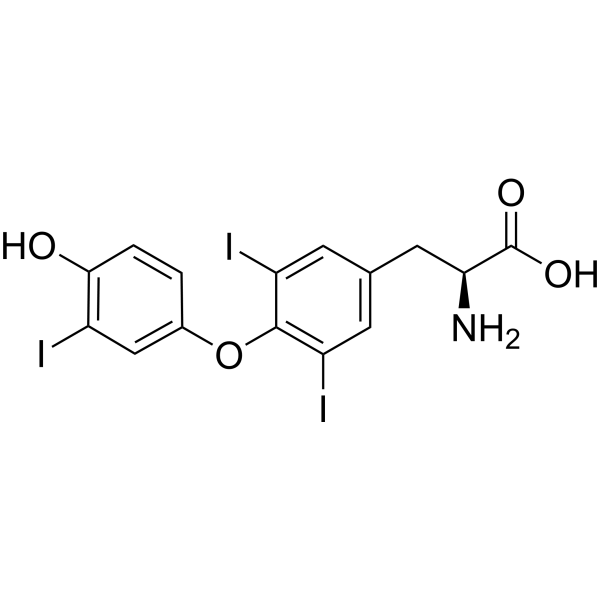
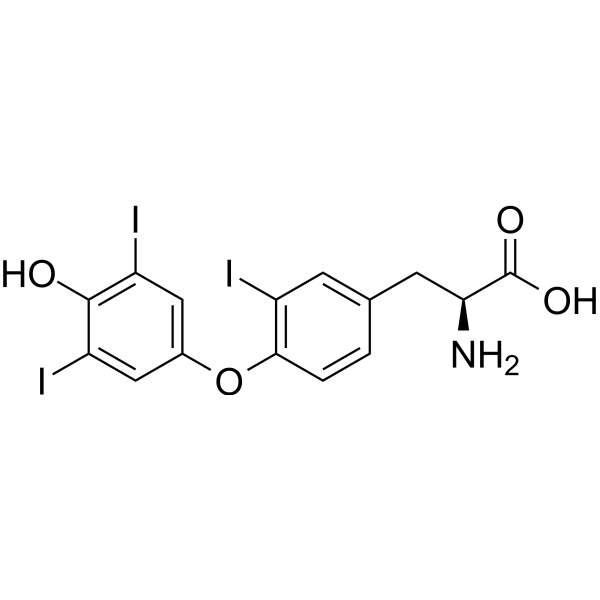
HY-A0070A
LiothyronineTIGIT/PVR Blocker -
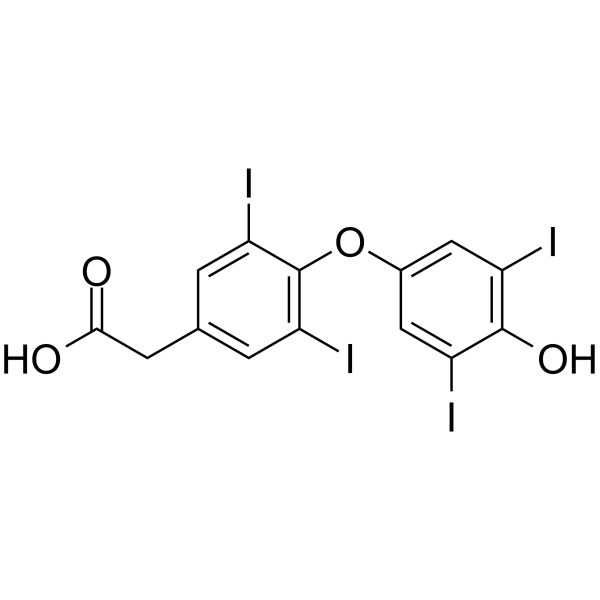
HY-W008859
Tetrac -
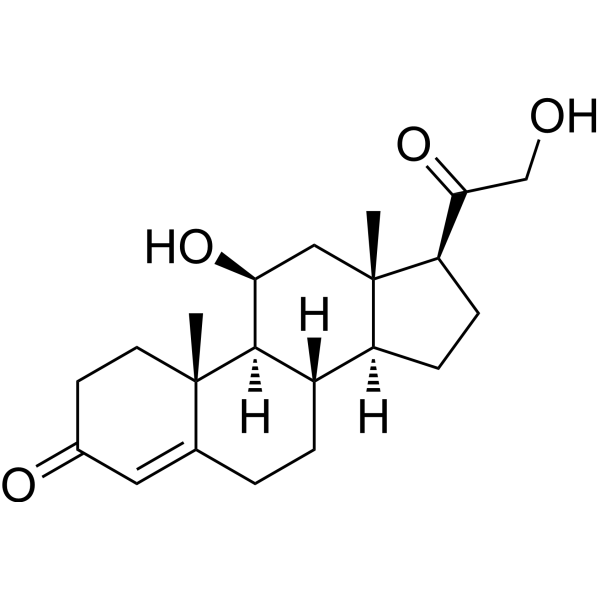
HY-B1618
CorticosteroneEndogenous Glucocorticoids -
HY-10162
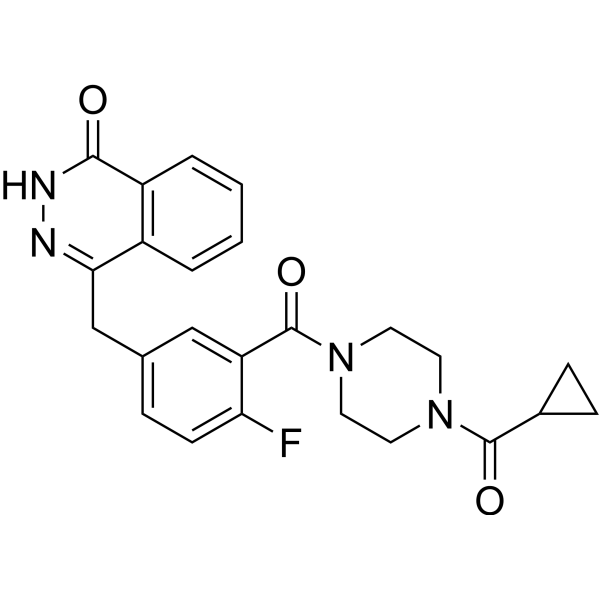
OlaparibPARP Inhibitor -
HY-13259
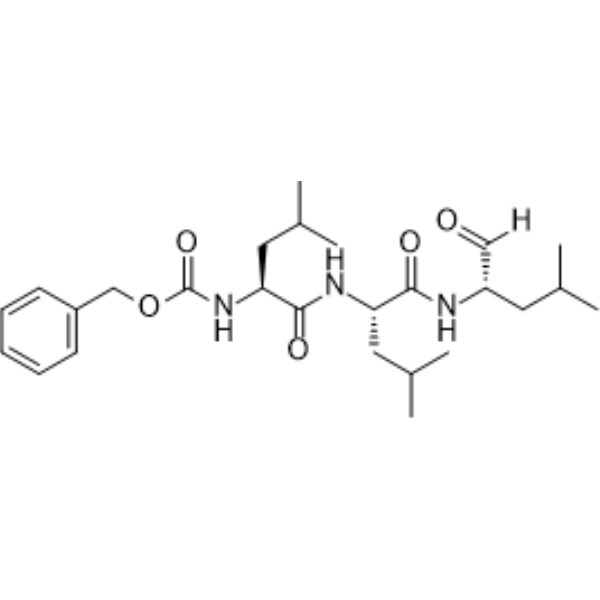
MG-132Proteasome Inhibitor -
HY-129974
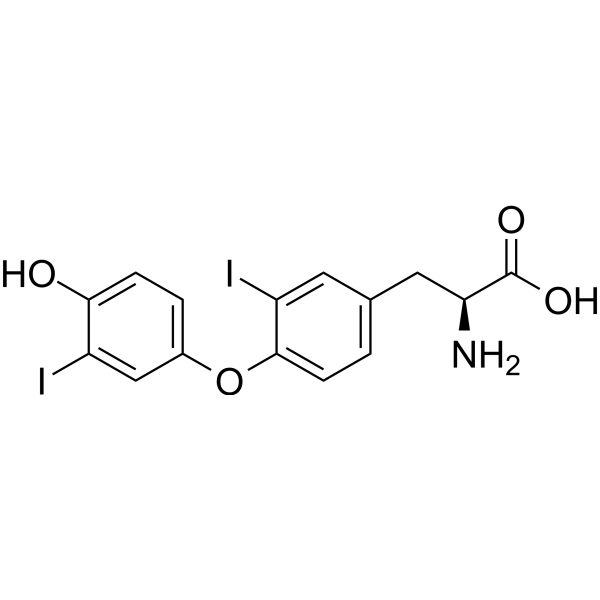
3,3'-Diiodo-L-thyronineCOX Activator -

HY-P0035
Insulin (human)Recombinant Human Insulin -
HY-141513
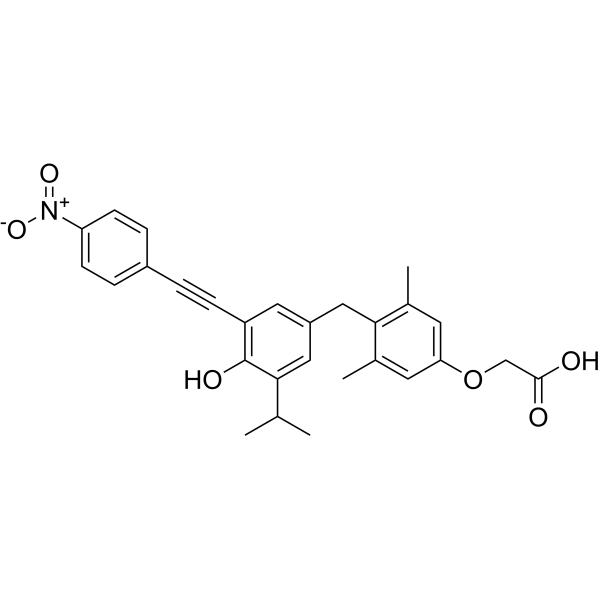
NH-3THR Antagonist -

HY-W010696R
Reverse T3 (Standard)Thyroid Hormone -
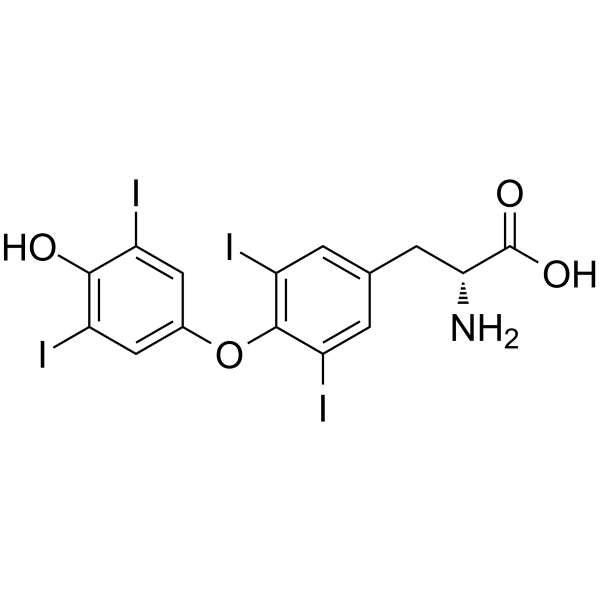
HY-A0152
D-ThyroxineThyroxine Isomer -
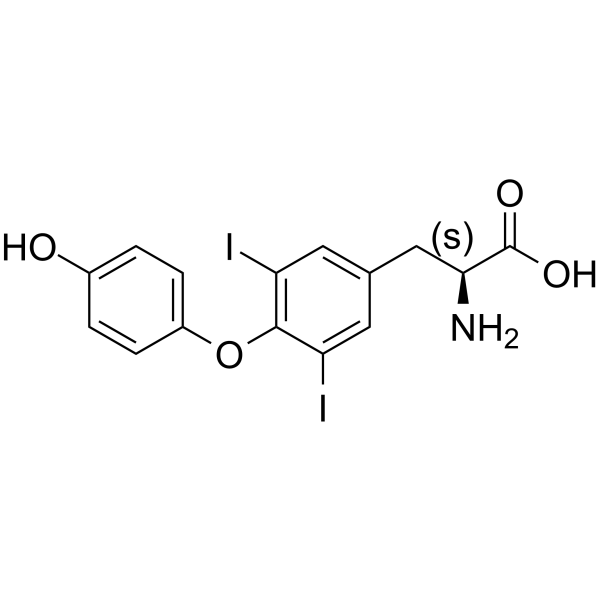
HY-114557
NSC 90469Thyroid Hormone Derivative -

HY-116325
3,5,3'-Triiodo-D-thyronineThyroid Hormone
Publications Citing Use of MedChemExpress (MCE) Reverse T3
More

Actividad biológica
Descripciòn
Cellular Effect
|
Cell Line

|
Type | Value | Description | References |
|---|---|---|---|---|
| HEK-293T | EC50 |
3.8 μM
Compound: rT3
|
Agonist activity at recombinant human pFA-CMV fused PPARgamma expressed in HEK293T cells transfected with pFR-luciferase plasmid and pRL-SV40 plasmid incubated for 14 to 16 hrs by dual glo luciferase reporter gene assay
Agonist activity at recombinant human pFA-CMV fused PPARgamma expressed in HEK293T cells transfected with pFR-luciferase plasmid and pRL-SV40 plasmid incubated for 14 to 16 hrs by dual glo luciferase reporter gene assay
|
[PMID: 32356658] |
In Vitro
Reverse T3 (0.1 μM, 72 h) promotes cell proliferation in islet β-cell lines (rRINm5F and hCM)[3].
Reverse T3 (0.1 μM) inhibits the apoptotic process in rRINm5F and hCM cells induced by Streptozocin (HY-13753) (15 mM for 2 h), S-Nitroso-N-Acetylpenicylamine (SNAP) (200 μM for 24 h), and H2O2 (50 μM, 30 min)[3].
MedChemExpress (MCE) has not independently confirmed the accuracy of these methods. They are for reference only.
In Vivo
MedChemExpress (MCE) has not independently confirmed the accuracy of these methods. They are for reference only.


Chemical Information
-
No. CAS 5817-39-0
-
Appearance Solid
-
Peso molecular 650.97
-
Fòrmula C15H12I3NO4
-
Color Off-white to yellow
-
SMILES
IC(C=C(C=C1)C[C@H](N)C(O)=O)=C1OC2=CC(I)=C(C(I)=C2)O
-
Synonyms
3′,5′,3-Triiodothyronine
-
Envío
Room temperature in continental US; may vary elsewhere.
-
Almacenamiento
Powder -20°C 3 years In solvent -80°C 6 months -20°C 1 month


Publications (3)
-
Journal Impact Factor
-
Most Recent
-
Environ Sci Technol
BDE-99 Disrupts the Photoreceptor Patterning of Zebrafish Larvae via Transcription Factor six7. [Abstract]2022 May 3;56(9):5673-5683. PMID: 35413178 -
Int J Endocrinol
CS27109, A Selective Thyroid Hormone Receptor- β Agonist Alleviates Metabolic-Associated Fatty Liver Disease in Murine Models. [Abstract]2023 Feb 14:2023:4950597. PMID: 36825196 -


Solvente y solubilidad
In Vitro:
DMSO : 20 mg/mL (30.72 mM; ultrasonic and warming and heat to 60°C; Hygroscopic DMSO has a significant impact on the solubility of product, please use newly opened DMSO)
Please refer to the solubility information to select the appropriate solvent. Once prepared, please aliquot and store the solution to prevent product inactivation from repeated freeze-thaw cycles.
Storage method and period of stock solution: -80°C, 6 months; -20°C, 1 month. When stored at -80°C, please use it within 6 months. When stored at -20°C, please use it within 1 month.
Please refer to the solubility information to select the appropriate solvent. Once prepared, please aliquot and store the solution to prevent product inactivation from repeated freeze-thaw cycles.
Storage method and period of stock solution: -80°C, 6 months; -20°C, 1 month. When stored at -80°C, please use it within 6 months. When stored at -20°C, please use it within 1 month.
Concentration (start) × Volume (start) = Concentration (final) × Volume (final)
In Vivo:
Select the appropriate dissolution method based on your experimental animal and administration route.
- For the following dissolution methods, please ensure to first prepare a clear stock solution using an In Vitro approach and then sequentially add co-solvents:
- To ensure reliable experimental results, the clarified stock solution can be appropriately stored based on storage conditions. As for the working solution for In Vivo experiments, it is recommended to prepare freshly and use it on the same day.
- The percentages shown for the solvents indicate their volumetric ratio in the final prepared solution. If precipitation or phase separation occurs during preparation, heat and/or sonication can be used to aid dissolution.
Add each solvent one by one: 10% DMSO 40% PEG300 5% Tween-80 45% Saline
Solubility: ≥ 2 mg/mL (3.07 mM); Clear solution
This protocol yields a clear solution of ≥ 2 mg/mL (saturation unknown).
Taking 1 mL working solution as an example, add 100 μL DMSO stock solution (20.0 mg/mL) to 400 μL PEG300, and mix evenly; then add 50 μL Tween-80 and mix evenly; then add 450 μL Saline to adjust the volume to 1 mL.
Preparation of Saline: Dissolve 0.9 g sodium chloride in ddH₂O and dilute to 100 mL to obtain a clear Saline solution.
Add each solvent one by one: 10% DMSO 90% (20% SBE-β-CD in Saline)
Solubility: ≥ 2 mg/mL (3.07 mM); Clear solution
This protocol yields a clear solution of ≥ 2 mg/mL (saturation unknown).
Taking 1 mL working solution as an example, add 100 μL DMSO stock solution (20.0 mg/mL) to 900 μL 20% SBE-β-CD in Saline, and mix evenly.
Preparation of 20% SBE-β-CD in Saline (4°C, storage for one week): 2 g SBE-β-CD powder is dissolved in 10 mL Saline, completely dissolve until clear.
In Vivo Dissolution Calculator
Please enter the basic information of animal experiments:
-
-
-
-
Recommended: Prepare an additional quantity of animals to account for potential losses during experiments.
Please enter your animal formula composition:
-
%DMSO +
Recommended: Keep the proportion of DMSO in working solution below 2% if your animal is weak.
-
%+
-
+%Tween-80 + +
-
%Saline +
The co-solvents required include: DMSO, . All of co-solvents are available by MedChemExpress (MCE). , Tween 80. All of co-solvents are available by MedChemExpress (MCE).
Working solution concentration: 0.22 mg/mL
Method for preparing stock solution: mg drug dissolved in μL DMSO. Stock solution concentration: mg/mL.
1. Take μL DMSO stock solution;
2. Add μL .
μL , mix evenly;
3. Then add μL Tween 80, mix evenly;
4. Then add μL
Please ensure that the stock solution in the first step is dissolved to a clear state, and add co-solvents in sequence. You can use ultrasonic heating (ultrasonic cleaner, recommended frequency 20-40 kHz), vortexing, etc. to assist dissolution.


Pureza y Documentación
-
Ficha de datos (273 KB)
-
SDS (396 KB)
- English - EN (396 KB)
- Français - FR (396 KB)
- Deutsch - DE (396 KB)
- Norwegian - NO (396 KB)
- Español - ES (396 KB)
- Swedish - SV (396 KB)
- Italian - IT (396 KB)
- Korean - KR (396 KB)
- Portuguese - PT (396 KB)
-
Instrucciones de manejo (2659 KB)
Referencias
[1]. Nicod P, et al. Radioimmunoassay for 3,3',5'-triiodo-L-thyronine in unextracted serum: method and clinical results. J Clin Endocrinol Metab. 1976 May;42(5):823-9. [Content Brief]
[2]. Rebolledo RA, et al. Anti-Apoptotic Effects of 3,3',5-Triiodo-L-Thyronine in the Liver of Brain-Dead Rats. PLoS One. 2015 Oct 5;10(10):e0138749. [Content Brief]
[3]. Verga Falzacappa C, et al. 3,5,3'-triiodothyronine (T3) is a survival factor for pancreatic beta-cells undergoing apoptosis. J Cell Physiol. 2006 Feb;206(2):309-21. [Content Brief]


Complete Stock Solution Preparation Table
Please refer to the solubility information to select the appropriate solvent. Once prepared, please aliquot and store the solution to prevent product inactivation from repeated freeze-thaw cycles.
Storage method and period of stock solution: -80°C, 6 months; -20°C, 1 month. When stored at -80°C, please use it within 6 months. When stored at -20°C, please use it within 1 month.
| Optional Solvent | Concentration Solvent Mass | 1 mg | 5 mg | 10 mg | 25 mg |
|---|---|---|---|---|---|
| DMSO | 1 mM | 1.5362 mL | 7.6808 mL | 15.3617 mL | 38.4042 mL |
| 5 mM | 0.3072 mL | 1.5362 mL | 3.0723 mL | 7.6808 mL | |
| 10 mM | 0.1536 mL | 0.7681 mL | 1.5362 mL | 3.8404 mL | |
| 15 mM | 0.1024 mL | 0.5121 mL | 1.0241 mL | 2.5603 mL | |
| 20 mM | 0.0768 mL | 0.3840 mL | 0.7681 mL | 1.9202 mL | |
| 25 mM | 0.0614 mL | 0.3072 mL | 0.6145 mL | 1.5362 mL | |
| 30 mM | 0.0512 mL | 0.2560 mL | 0.5121 mL | 1.2801 mL |


Reverse T3 Related Classifications
HY-W010696 Related Classifications
 Powered by Bioz