Search Result
Results for "
anti-fungal peptide
" in MedChemExpress (MCE) Product Catalog:
| Cat. No. |
상품명 |
Target |
연구분야 |
Chemical Structure |
-
- HY-P1975
-
|
Basifungin
|
Antibiotic
Fungal
Parasite
|
Infection
Inflammation/Immunology
|
|
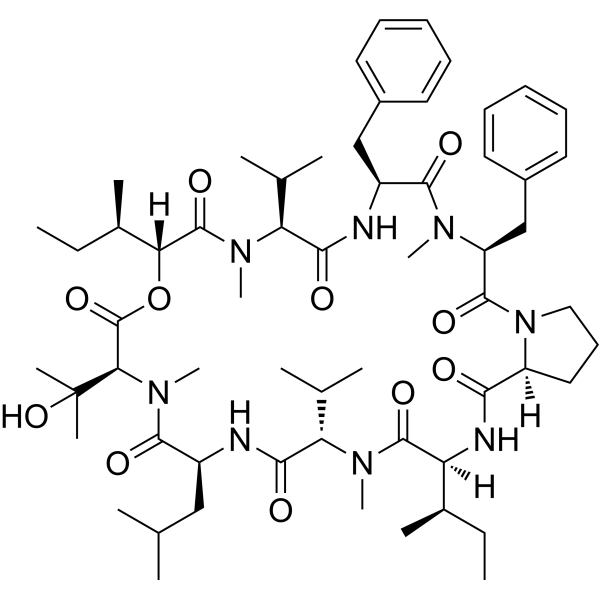
Aureobasidin A (Basifungin) is a cyclic peptide antibiotic with oral activity. Aureobasidin A is an inhibitor of inositol phosphorylated ceramide synthetase AUR1. Aureobasidin A has antifungal and antiparasitic activity .
|
-
-
- HY-P2322
-
-
-
- HY-19593
-
|
|
Fungal
|
Infection
|
|
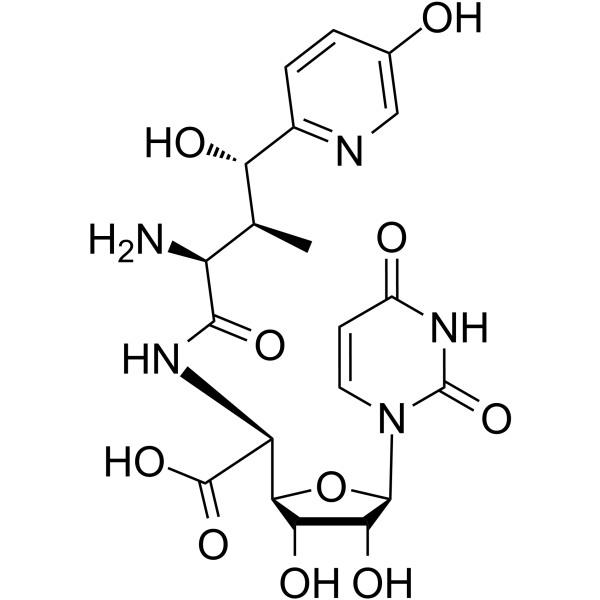
Nikkomycin Z is a nucleoside peptide and an orally active antifungal agent. Nikkomycin Z inhibits chitin synthesis by acting as a competitive analogue of the chitin synthase substrate UDP-N-acetylglucosamine. Nikkomycin Z has antifungal activity .
|
-
-
- HY-126810A
-
|
|
Fungal
|
Infection
|
|
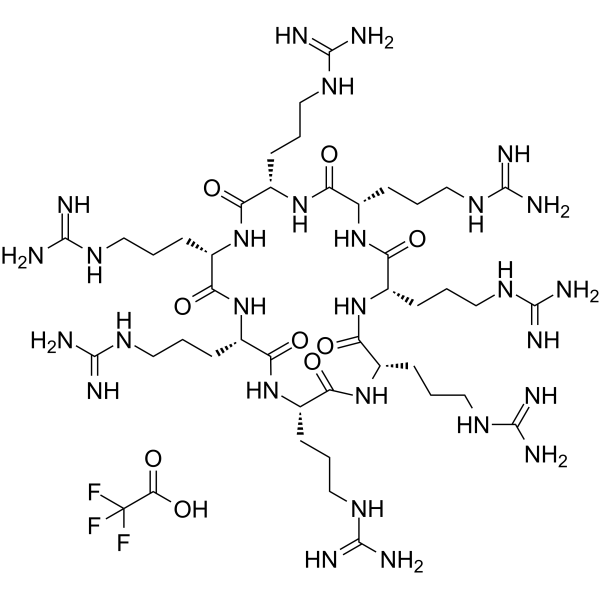
NP213 TFA is a rapidly acting, novel, first-in-class synthetic antimicrobial peptide (AMP), has anti-fungal activities. NP213 TFA targets the fungal cytoplasmic membrane and plays it role via membrane perturbation and disruption. NP213 TFA is effective and well-tolerated in resolving nail fungal infections .
|
-
-
- HY-129077
-
|
|
Drug Intermediate
|
Infection
|
|
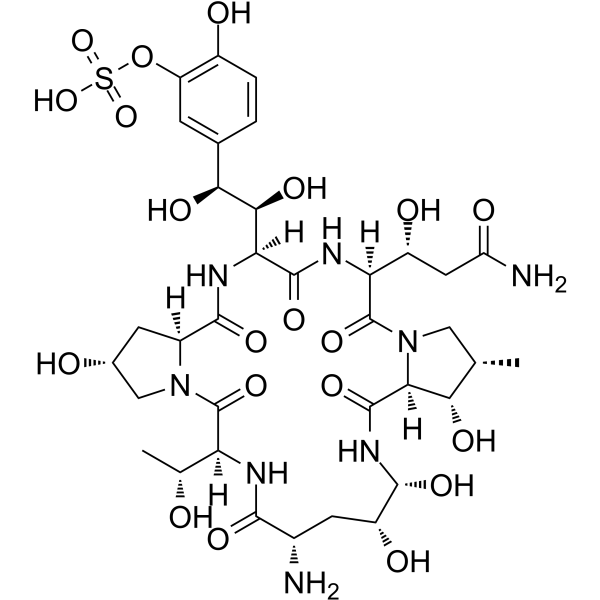
FR179642 is a key intermediate in the synthesis of the echinocandin antifungal Micafungin . FR179642 is the cyclic peptide nucleus of the echinocandin-like antifungal lipopeptide FR901379 .
|
-
-
- HY-P1629
-
|
|
Bacterial
Fungal
Antibiotic
|
Infection
|
|
Temporin A is a short alpha-helical antimicrobial peptide isolated from the skin of the frog Rana temporaria. Temporin A is effective against a broad spectrum of Gram-positive bacteria. Temporin A interacts directly with the cell membrane of the microorganism and it is non-toxic to erythrocytes at concentrations that are antimicrobial. Temporin A also has antifungal activities (against yeast-like Candida albicans) .
|
-

-
- HY-P4809
-
|
|
Bacterial
Fungal
|
Infection
Cancer
|
|
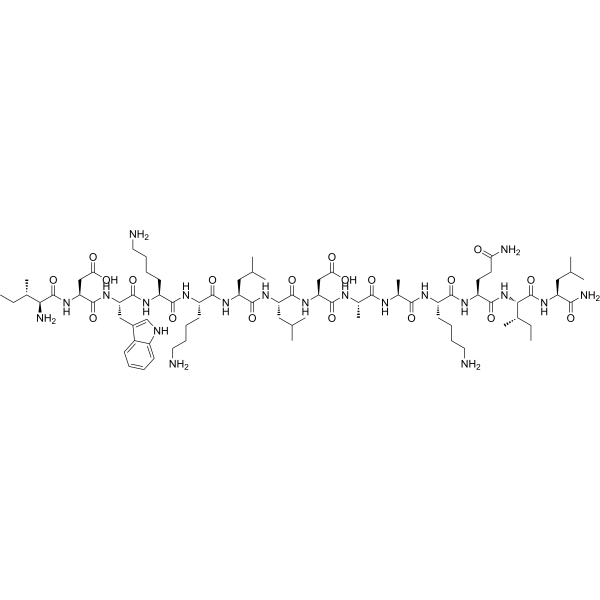
Polybia-MP1 is an antimicrobial peptide with antibacterial, antifungal and anticancer activities. Polybia-MP1 selectively targets cancer cells by interacting with PS and PE in the outer leaflet of cell membranes, and induces necrosis via pore formation. Polybia-MP1 exhibits antibacterial activity against Pseudomonas aeruginosa. Polybia-MP1 can be used in research related to bacterial infections, fungal infections and cancers .
|
-
-
- HY-126810
-
|
|
Fungal
|
Infection
|
|
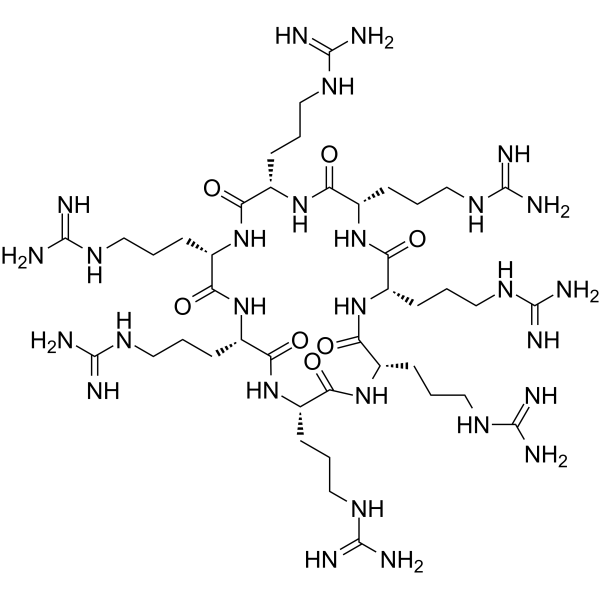
NP213 is a rapidly acting, novel, first-in-class synthetic antimicrobial peptide (AMP), has anti-fungal activities. NP213 targets the fungal cytoplasmic membrane and plays it role via membrane perturbation and disruption. NP213 is effective and well-tolerated in resolving nail fungal infections .
|
-
-
- HY-P5016A
-
|
|
Antibiotic
Fungal
Bacterial
|
Infection
Cancer
|
|
CRAMP-18 (mouse) acetate is an antibiotic peptide without hemolytic activity. CRAMP-18 (mouse) acetate has good inhibitory activity against Gram-negative bacteria, such as S. typhimurium and P. aeruginosa. CRAMP-18 (mouse) acetate has the potential to study antifungal, antibacterial and antitumor .
|
-

-
- HY-N12513
-
-
-
- HY-P2365
-
|
|
Fungal
|
Infection
|
|
Histatin-8 is a part of the Histatin-3 central sequence and is known as hemagglutination-inhibiting peptide. Histatin-8 is a potent anti-fungal peptide. Histatin-8 shows antimicrobial activity against yeast strains. Histatin-8 can be used for oral thrush research .
|
-

-
- HY-P11003
-
|
|
Toll-like Receptor (TLR)
|
Inflammation/Immunology
|
|
PTD-N5-1 (N5-1) is an IRF5 inhibitory peptide. PTD-N5-1 blocks β-glucan-induced IL-12 production in IFN-γ primed wild-type and Clec2d-difecient bone-marrow-derived dendritic cells (BMDCs). PTD-N5-1 regulates antifungal immunity through suppression of IRF5-mediated IL-12 production .
|
-

-
- HY-P5572
-
-
-
- HY-P3384
-
|
|
Fungal
|
Others
Inflammation/Immunology
|
|
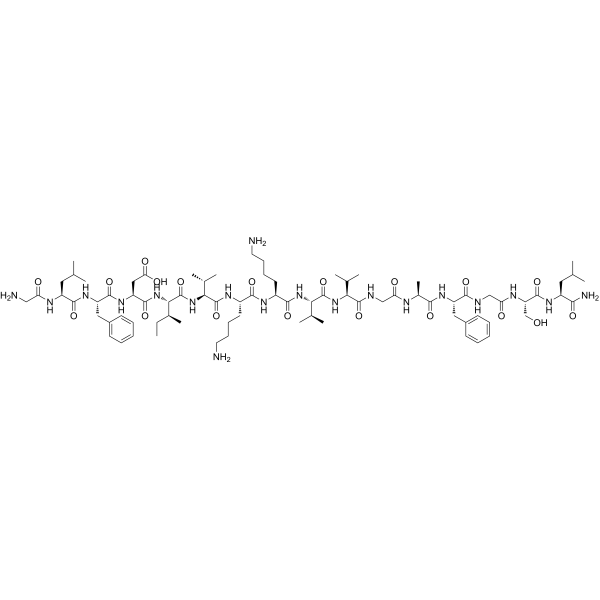
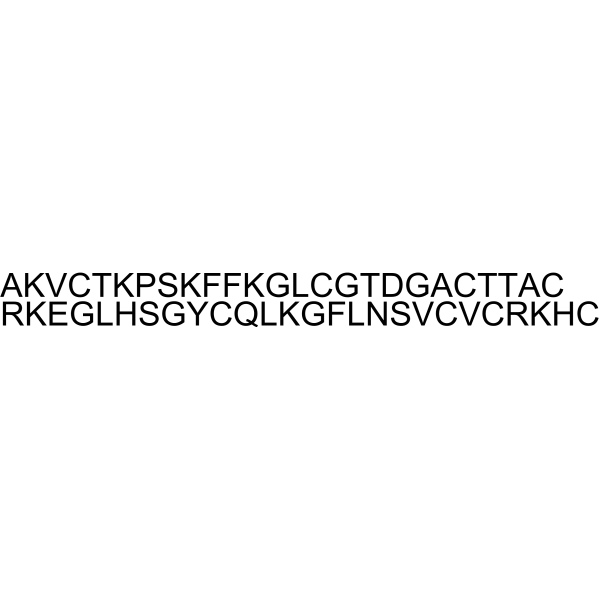
Pezadeftide is a potent antifungal peptide. Pezadeftide can enter fungal cells and cause a rapid mitochondrial response that results in hyperpolarization of the mitochondrial membrane .
|
-
-
- HY-P11031
-
|
|
Fungal
|
Infection
|
|
CotH3 peptide is a functional peptide unique to Mucorales that binds to the host GRP78 receptor and allows them to invade endothelial cells. CotH3 peptide–targeted monoclonal antibodies protect immunosuppressed mice from mucormycosis caused by R. delemar and other Mucorales. CotH3 peptide also synergizes with antifungal drugs to protect mice with diabetic ketoacidosis (DKA) from R. delemar infection .
|
-

-
- HY-P11116
-
-

-
- HY-P11158
-
|
|
Fungal
HIV
Reverse Transcriptase
|
Infection
Cancer
|
|
Gymnin is a defensin-like antifungal peptide. Gymnin has significant antifungal activities against phytopathogenic and mycotoxigenic fungi. Gymnin inhibits HIV-1 reverse transcriptase with an IC50 of 200 μM and the proliferation of tumor cells. Gymnin has a weak mitogenic activity toward murine splenocytes. Gymnin can be used for plant disease treatments research .
|
-

-
- HY-P3365
-
|
|
Bacterial
|
Inflammation/Immunology
Cancer
|
|
Cecropin D is an antimicrobial peptide with a MIC of 4.55 μg/mL. Cecropin D is effective against both Gram-negative and Gram-positive bacteria. Cecropin D has antiviral, antifungal, antitumor, and immunomodulatory .
|
-
-
- HY-P11176
-
|
|
Fungal
HIV
|
Infection
|
|
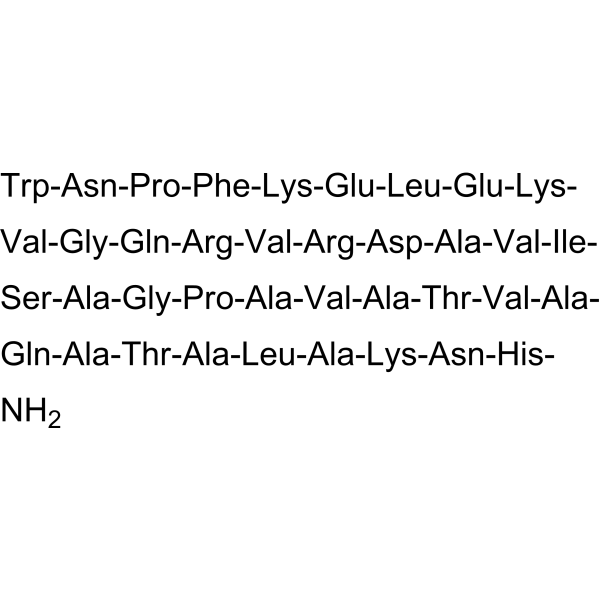
Coccinin is an antifungal peptide. Coccinin can be purified from the seeds of large scarlet runner beans. Coccinin inhibits HIV-1 reverse transcriptase. Coccinin shows antifungal activity against M. arachidicola, F. oxysporum, P. piricola, B. cinerea, C. comatus and R. solani, with IC50s of 75, 81, 89, 109, 122 and 134 μM, respectively .
|
-

-
- HY-P5702
-
|
|
Bacterial
Apoptosis
Fungal
|
Infection
|
|
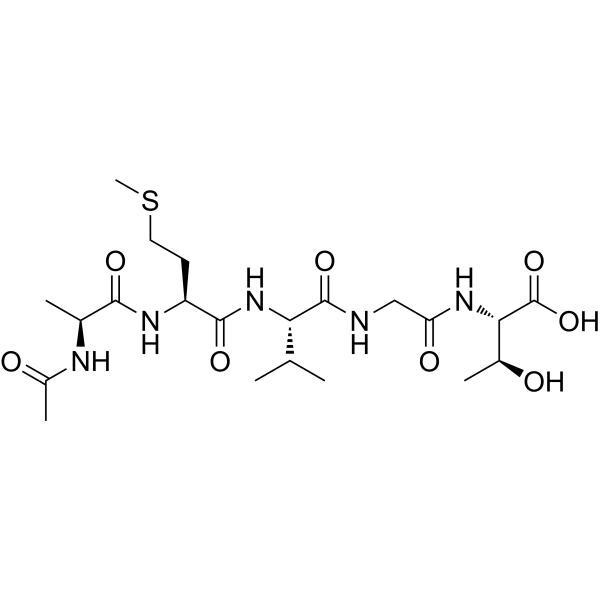
EP3 is an antimicrobial peptide. EP3 has antibacterial and antifungal activities. EP3 inhibits E. gallinarum, P. pyocyanea, A. baumanii, K. terrigena with a MIC value of 12.85 μg/mL. EP3 also shows antitumor activity against cancer cells, and induces cell apoptosis .
|
-
-
- HY-P1954
-
|
Piscidin-1 (22-42)
|
Bacterial
|
Infection
Cancer
|
|
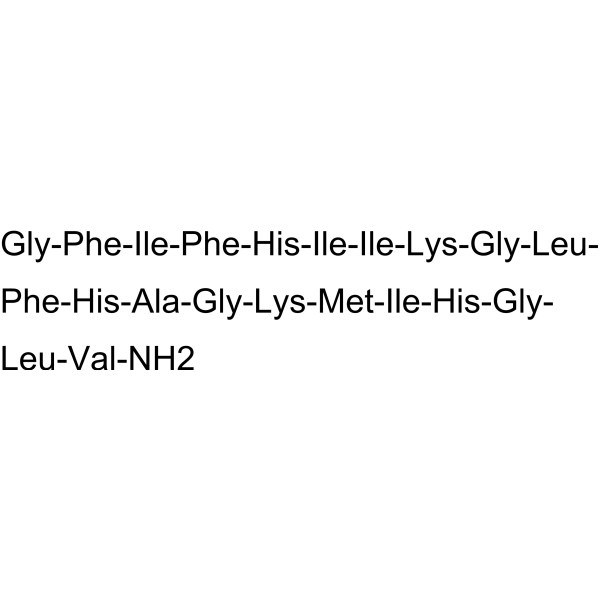
Epinecidin-1 (Piscidin-1 (22-42)) is a highly potent, multi-functional Antimicrobial Peptide (AMP) produced by Orange-spotted grouper (Epinephelus coioides). Epinecidin-1 has many functional usages including antibacterial, antifungal, antiviral, antiprotozoal, anticancer, immunomodulatory, and wound healing properties .
|
-
-
- HY-P4370
-
|
|
Bacterial
Fungal
|
Infection
|
|
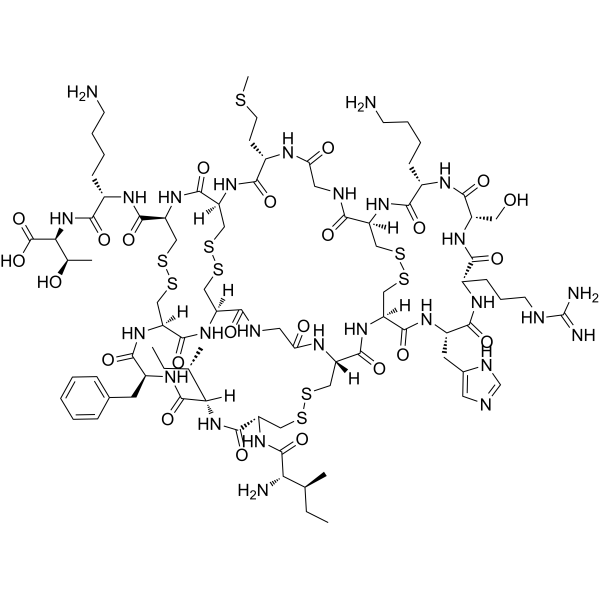
Hepcidin-20 (human) is a histidine-containing, cysteine-rich, β-sheet structured peptide. Hepcidin-20 (human) shows antifungal activity. Hepcidin-20 (human) inhibits biofilm formation and bacterial cell metabolism of polysaccharide intercellular adhesin (PIA)-positive and PIA-negative strains .
|
-
-
- HY-P5564
-
|
|
Fungal
|
Infection
|
|
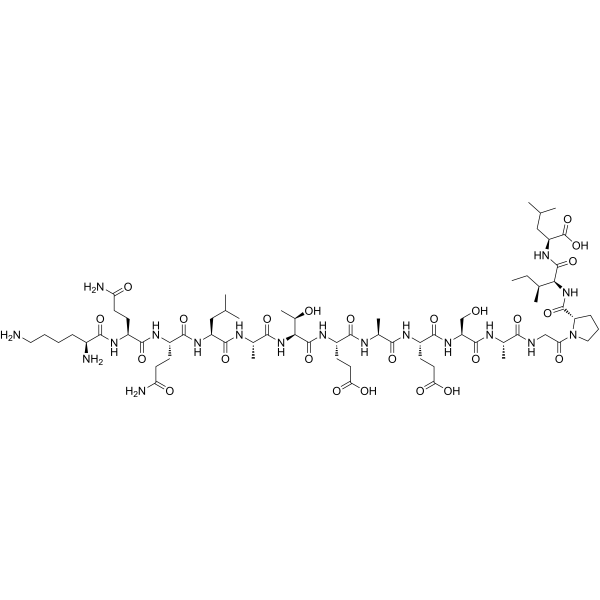
BTL peptide is an antifungal peptide. BTL peptide is active against B. maydis, A. brassicae, A. niger and C. personata .
|
-
-
- HY-N14799
-
-

-
- HY-P5569
-
|
|
Fungal
|
Infection
|
|
SP-B peptide is an antimicrobial peptide. SP-B peptide has antifungal activity against strains of Cryptococcus neoformans, Candida albicans and Aspergillus fumigatus
|
-

-
- HY-N14923
-
|
|
Fungal
|
Infection
|
|
Nikkomycin Lz is a nucleoside peptide antifungal compound isolated from genetically engineered Streptomyces tendae TU901. Nikkomycin Lz has antifungal activity against Candida albicans .
|
-

-
- HY-N14666
-
|
|
Fungal
HIV
Reverse Transcriptase
|
Infection
|
|
Agrocybin is an antifungal peptide that exerts antifungal activity against several fungal species but lacks inhibitory activity against bacteria. Agrocybin attenuates the activity of HIV-1 reverse transcriptase .
|
-

-
- HY-P5696
-
|
|
Bacterial
Parasite
Fungal
|
Infection
|
|
Xenopsin precursor fragment is an antimicrobial peptide, and has antibacterial/antifungal (10-500 μg/mL) and anti-protozoal (MIC: 2-20 μg/mL) activity .
|
-

-
- HY-P5639
-
|
|
Fungal
|
Infection
|
|
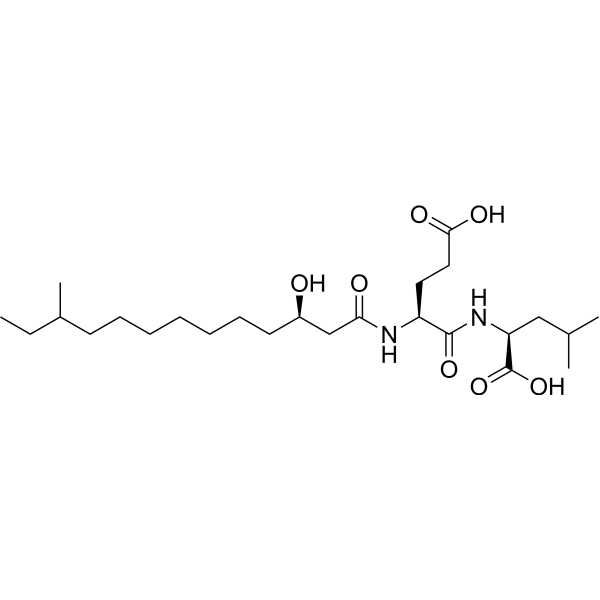
Gageotetrin A is an antimicrobial peptide derived from the marine bacterium Bacillus subtilis. Gageotetrin A has antifungal activity, but none toxic to numerous human cancer cells .
|
-
-
- HY-N14582
-
|
|
Antibiotic
Fungal
|
Infection
|
|
Glomosporin is a cyclic ester peptide antifungal antibiotic, and it has moderate anti-Aspergillus flavus (including Aspergillus Niger and Aspergillus Niger), yeast activity (MIC is 16 μg/mL) .
|
-

-
- HY-P5701
-
|
|
Bacterial
Fungal
|
Infection
|
|
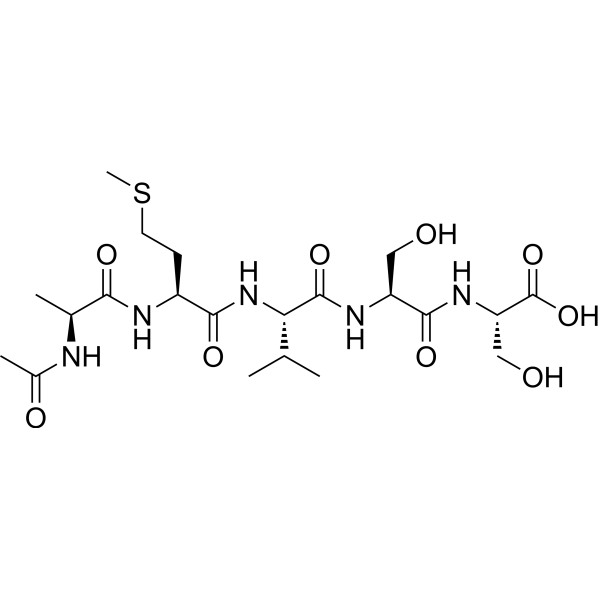
EP2 is an antimicrobial peptide. EP2 has antibacterial and antifungal activities. EP2 inhibits E. gallinarum, P. pyocyanea, A. baumanii, K. terrigena with a MIC value of 11.4 μg/mL .
|
-
-
- HY-P5071
-
|
|
Bacterial
|
Infection
|
|
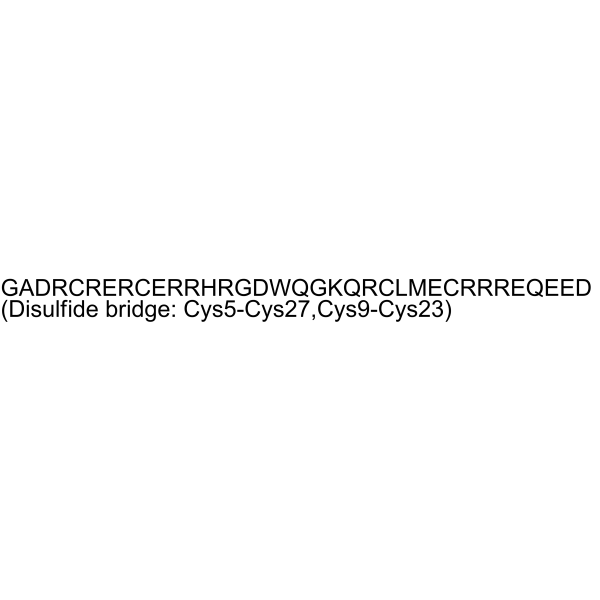
EcAMP3 is a hairpin-like peptide. EcAMP3 has antifungal and antibacterial activity. EcAMPs precursor family contains seven identical cysteine motifs: C1XXXC2(11–13)C3XXXC4 .
|
-
-
- HY-P5016
-
|
|
Antibiotic
Bacterial
Fungal
|
Infection
Cancer
|
|
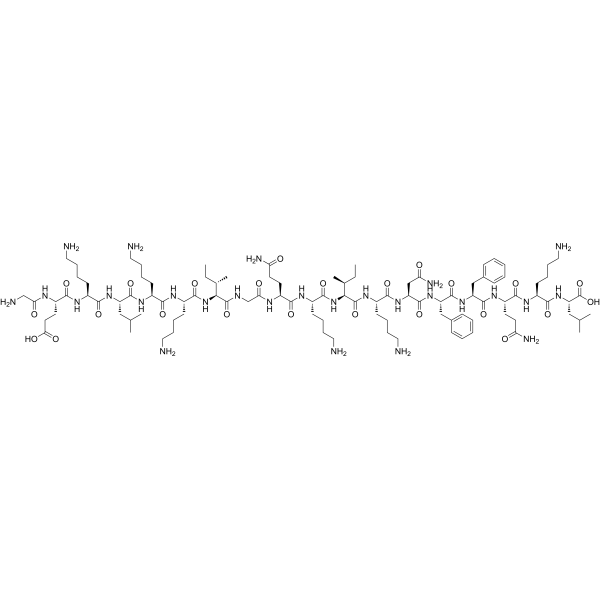
CRAMP-18 (mouse) is an antibiotic peptide without hemolytic activity. CRAMP-18 (mouse) has good inhibitory activity against Gram-negative bacteria, such as S. typhimurium and P. aeruginosa. CRAMP-18 (mouse) has the potential to study antifungal, antibacterial and antitumor .
|
-
-
- HY-P1954A
-
|
Piscidin-1 (22-42) TFA
|
Bacterial
|
Infection
Cancer
|
|
Epinecidin-1 (Piscidin-1 (22-42)) TFA is a highly potent, multi-functional Antimicrobial Peptide (AMP) produced by Orange-spotted grouper (Epinephelus coioides). Epinecidin-1 TFA has many functional usages including antibacterial, antifungal, antiviral, antiprotozoal, anticancer, immunomodulatory, and wound healing properties .
|
-

-
- HY-P5703
-
|
|
Bacterial
Apoptosis
Fungal
|
Infection
|
|
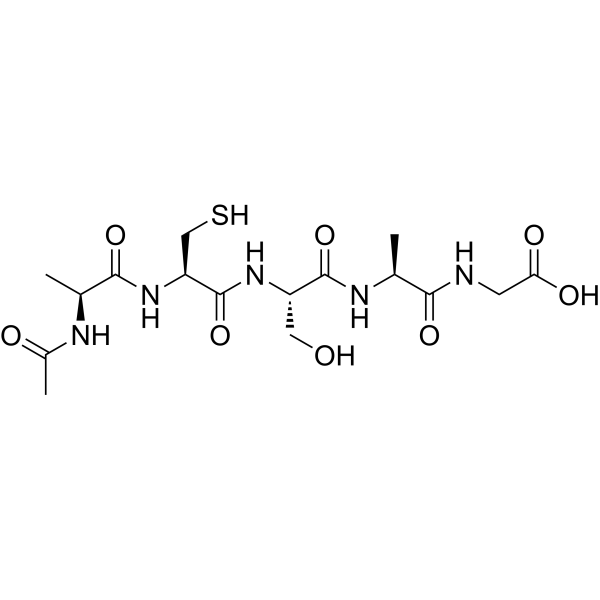
EP5-1 is an antimicrobial peptide. EP5-1 has antibacterial and antifungal activities. EP5-1 also shows antitumor activity against cancer cells, and induces cell apoptosis. EP5-1 has antiviral activity against pseudorabies virus (PRV) .
|
-
-
- HY-P10596
-
|
|
Bacterial
Fungal
|
Infection
Cancer
|
|
Lasioglossin-III is an antimicrobial peptide that can be isolated from the venom of wild bees. Lasioglossin-III has high antibacterial activity against Gram-positive and Gram-negative bacteria, antifungal activity and antitumor activity. Lasioglossin-III has certain cytotoxicity against three cancer cell lines (HeLa S3, CRC SW 480 and CCRF-CEM T) with IC50 values of 4, 18 and 5 μM, respectively .
|
-

-
- HY-P2098
-
|
|
Antibiotic
Bacterial
Fungal
|
Infection
|
|
Alamethicin F 50 is an antibiotic. Alamethicin F 50 is composed of membrane-active peptide, containing 75% Alamethicin F 50/5 and 10% Alamethicin F 50/7. Alamethicin F 50 is exhibits antifungal and antibacterial activity by disrupting the integrity of microbial cell membranes, resulting in leakage of cell contents and death of the microorganisms. Alamethicin F 50 is able to reduce the surface tension of water, which can be used as a surfactant or detergent .
|
-

-
- HY-P10329
-
|
|
Fungal
|
Infection
|
|
KK14(R) is an analog of the de novo synthetic peptide KK14, which exhibits antifungal activity against Fusarium culmorum, Penicillium expansum and Aspergillus niger , with MICs of 6.25, 12.5 and 12.5 μg/mL, respecitvely. KK14(R) exhibits good heat- and pH-stability. KK14(R) exhibits cytotoxicity against cells Caco-2 and RAW264.7 .
|
-

-
- HY-129077R
-
|
|
Reference Standards
Drug Intermediate
|
Infection
|
|
FR179642 (Standard) is the analytical standard of FR179642. This product is intended for research and analytical applications. FR179642 is a key intermediate in the synthesis of the echinocandin antifungal Micafungin[1]. FR179642 is the cyclic peptide nucleus of the echinocandin-like antifungal lipopeptide FR901379[2].
|
-

-
- HY-P11125
-
|
|
Bacterial
Fungal
|
Infection
|
|
Metchnikowin is a fruit fly antimicrobial peptide rich in proline, with dual antibacterial and antifungal activities. Metchnikowin can be independently regulated by TOLL and IMD pathways. Metchnikowin is often used in the research of infectious conditions .
|
-

-
- HY-183872
-
|
|
Fungal
N-myristoyltransferase
|
Infection
|
|
FTR1335 is an Antifungal agent as well as a selective, substrate peptide-competitive, and myristoyl-CoA non-competitive inhibitor of N-myristoyltransferase CaNmt, with an IC50 of 0.49 nM against Candida albicans CaNmt. FTR1335 exhibits fungicidal activity against Candida albicans and inhibits the growth of Candida tropicalis. FTR1335 can be used in research related to Candida albicans infections .
|
-

-
- HY-175699
-
|
|
Fungal
|
Infection
|
|
Antimicrobial agent-42 (Compound 6j) is an antimicrobial agent. Antimicrobial agent-42 interacts with key amino acids such as Lys59 and Ser170 within the ALS3 protein, crucial for the binding of host peptides. Antimicrobial agent-42 significantly inhibits Candida albicans biofilm formation and reduces planktonic cells aggregation and hyphal formation. Antimicrobial agent-42 has an antifungal activity, promising for fungal infections reseach .
|
-

| Cat. No. |
상품명 |
Target |
Research Area |
-
- HY-P1975
-
|
Basifungin
|
Antibiotic
Fungal
Parasite
|
Infection
Inflammation/Immunology
|
|
Aureobasidin A (Basifungin) is a cyclic peptide antibiotic with oral activity. Aureobasidin A is an inhibitor of inositol phosphorylated ceramide synthetase AUR1. Aureobasidin A has antifungal and antiparasitic activity .
|
-
- HY-P2322
-
-
- HY-126810A
-
|
|
Fungal
|
Infection
|
|
NP213 TFA is a rapidly acting, novel, first-in-class synthetic antimicrobial peptide (AMP), has anti-fungal activities. NP213 TFA targets the fungal cytoplasmic membrane and plays it role via membrane perturbation and disruption. NP213 TFA is effective and well-tolerated in resolving nail fungal infections .
|
-
- HY-129077
-
|
|
Drug Intermediate
|
Infection
|
|
FR179642 is a key intermediate in the synthesis of the echinocandin antifungal Micafungin . FR179642 is the cyclic peptide nucleus of the echinocandin-like antifungal lipopeptide FR901379 .
|
-
- HY-P1629
-
|
|
Bacterial
Fungal
Antibiotic
|
Infection
|
|
Temporin A is a short alpha-helical antimicrobial peptide isolated from the skin of the frog Rana temporaria. Temporin A is effective against a broad spectrum of Gram-positive bacteria. Temporin A interacts directly with the cell membrane of the microorganism and it is non-toxic to erythrocytes at concentrations that are antimicrobial. Temporin A also has antifungal activities (against yeast-like Candida albicans) .
|
-
- HY-P4809
-
|
|
Bacterial
Fungal
|
Infection
Cancer
|
|
Polybia-MP1 is an antimicrobial peptide with antibacterial, antifungal and anticancer activities. Polybia-MP1 selectively targets cancer cells by interacting with PS and PE in the outer leaflet of cell membranes, and induces necrosis via pore formation. Polybia-MP1 exhibits antibacterial activity against Pseudomonas aeruginosa. Polybia-MP1 can be used in research related to bacterial infections, fungal infections and cancers .
|
-
- HY-126810
-
|
|
Fungal
|
Infection
|
|
NP213 is a rapidly acting, novel, first-in-class synthetic antimicrobial peptide (AMP), has anti-fungal activities. NP213 targets the fungal cytoplasmic membrane and plays it role via membrane perturbation and disruption. NP213 is effective and well-tolerated in resolving nail fungal infections .
|
-
- HY-P5016A
-
|
|
Antibiotic
Fungal
Bacterial
|
Infection
Cancer
|
|
CRAMP-18 (mouse) acetate is an antibiotic peptide without hemolytic activity. CRAMP-18 (mouse) acetate has good inhibitory activity against Gram-negative bacteria, such as S. typhimurium and P. aeruginosa. CRAMP-18 (mouse) acetate has the potential to study antifungal, antibacterial and antitumor .
|
-
- HY-P2365
-
|
|
Fungal
|
Infection
|
|
Histatin-8 is a part of the Histatin-3 central sequence and is known as hemagglutination-inhibiting peptide. Histatin-8 is a potent anti-fungal peptide. Histatin-8 shows antimicrobial activity against yeast strains. Histatin-8 can be used for oral thrush research .
|
-
- HY-P11003
-
|
|
Toll-like Receptor (TLR)
|
Inflammation/Immunology
|
|
PTD-N5-1 (N5-1) is an IRF5 inhibitory peptide. PTD-N5-1 blocks β-glucan-induced IL-12 production in IFN-γ primed wild-type and Clec2d-difecient bone-marrow-derived dendritic cells (BMDCs). PTD-N5-1 regulates antifungal immunity through suppression of IRF5-mediated IL-12 production .
|
-
- HY-P5572
-
-
- HY-P3384
-
|
|
Fungal
|
Others
Inflammation/Immunology
|
|
Pezadeftide is a potent antifungal peptide. Pezadeftide can enter fungal cells and cause a rapid mitochondrial response that results in hyperpolarization of the mitochondrial membrane .
|
-
- HY-P11031
-
|
|
Fungal
|
Infection
|
|
CotH3 peptide is a functional peptide unique to Mucorales that binds to the host GRP78 receptor and allows them to invade endothelial cells. CotH3 peptide–targeted monoclonal antibodies protect immunosuppressed mice from mucormycosis caused by R. delemar and other Mucorales. CotH3 peptide also synergizes with antifungal drugs to protect mice with diabetic ketoacidosis (DKA) from R. delemar infection .
|
-
- HY-P11116
-
-
- HY-P11158
-
|
|
Fungal
HIV
Reverse Transcriptase
|
Infection
Cancer
|
|
Gymnin is a defensin-like antifungal peptide. Gymnin has significant antifungal activities against phytopathogenic and mycotoxigenic fungi. Gymnin inhibits HIV-1 reverse transcriptase with an IC50 of 200 μM and the proliferation of tumor cells. Gymnin has a weak mitogenic activity toward murine splenocytes. Gymnin can be used for plant disease treatments research .
|
-
- HY-P3365
-
|
|
Bacterial
|
Inflammation/Immunology
Cancer
|
|
Cecropin D is an antimicrobial peptide with a MIC of 4.55 μg/mL. Cecropin D is effective against both Gram-negative and Gram-positive bacteria. Cecropin D has antiviral, antifungal, antitumor, and immunomodulatory .
|
-
- HY-P11176
-
|
|
Fungal
HIV
|
Infection
|
|
Coccinin is an antifungal peptide. Coccinin can be purified from the seeds of large scarlet runner beans. Coccinin inhibits HIV-1 reverse transcriptase. Coccinin shows antifungal activity against M. arachidicola, F. oxysporum, P. piricola, B. cinerea, C. comatus and R. solani, with IC50s of 75, 81, 89, 109, 122 and 134 μM, respectively .
|
-
- HY-P5702
-
|
|
Bacterial
Apoptosis
Fungal
|
Infection
|
|
EP3 is an antimicrobial peptide. EP3 has antibacterial and antifungal activities. EP3 inhibits E. gallinarum, P. pyocyanea, A. baumanii, K. terrigena with a MIC value of 12.85 μg/mL. EP3 also shows antitumor activity against cancer cells, and induces cell apoptosis .
|
-
- HY-P1954
-
|
Piscidin-1 (22-42)
|
Bacterial
|
Infection
Cancer
|
|
Epinecidin-1 (Piscidin-1 (22-42)) is a highly potent, multi-functional Antimicrobial Peptide (AMP) produced by Orange-spotted grouper (Epinephelus coioides). Epinecidin-1 has many functional usages including antibacterial, antifungal, antiviral, antiprotozoal, anticancer, immunomodulatory, and wound healing properties .
|
-
- HY-P4370
-
|
|
Bacterial
Fungal
|
Infection
|
|
Hepcidin-20 (human) is a histidine-containing, cysteine-rich, β-sheet structured peptide. Hepcidin-20 (human) shows antifungal activity. Hepcidin-20 (human) inhibits biofilm formation and bacterial cell metabolism of polysaccharide intercellular adhesin (PIA)-positive and PIA-negative strains .
|
-
- HY-P5564
-
|
|
Fungal
|
Infection
|
|
BTL peptide is an antifungal peptide. BTL peptide is active against B. maydis, A. brassicae, A. niger and C. personata .
|
-
- HY-P5569
-
|
|
Fungal
|
Infection
|
|
SP-B peptide is an antimicrobial peptide. SP-B peptide has antifungal activity against strains of Cryptococcus neoformans, Candida albicans and Aspergillus fumigatus
|
-
- HY-P5696
-
|
|
Bacterial
Parasite
Fungal
|
Infection
|
|
Xenopsin precursor fragment is an antimicrobial peptide, and has antibacterial/antifungal (10-500 μg/mL) and anti-protozoal (MIC: 2-20 μg/mL) activity .
|
-
- HY-P5639
-
|
|
Fungal
|
Infection
|
|
Gageotetrin A is an antimicrobial peptide derived from the marine bacterium Bacillus subtilis. Gageotetrin A has antifungal activity, but none toxic to numerous human cancer cells .
|
-
- HY-P5701
-
|
|
Bacterial
Fungal
|
Infection
|
|
EP2 is an antimicrobial peptide. EP2 has antibacterial and antifungal activities. EP2 inhibits E. gallinarum, P. pyocyanea, A. baumanii, K. terrigena with a MIC value of 11.4 μg/mL .
|
-
- HY-P5071
-
|
|
Bacterial
|
Infection
|
|
EcAMP3 is a hairpin-like peptide. EcAMP3 has antifungal and antibacterial activity. EcAMPs precursor family contains seven identical cysteine motifs: C1XXXC2(11–13)C3XXXC4 .
|
-
- HY-P5016
-
|
|
Antibiotic
Bacterial
Fungal
|
Infection
Cancer
|
|
CRAMP-18 (mouse) is an antibiotic peptide without hemolytic activity. CRAMP-18 (mouse) has good inhibitory activity against Gram-negative bacteria, such as S. typhimurium and P. aeruginosa. CRAMP-18 (mouse) has the potential to study antifungal, antibacterial and antitumor .
|
-
- HY-P1954A
-
|
Piscidin-1 (22-42) TFA
|
Bacterial
|
Infection
Cancer
|
|
Epinecidin-1 (Piscidin-1 (22-42)) TFA is a highly potent, multi-functional Antimicrobial Peptide (AMP) produced by Orange-spotted grouper (Epinephelus coioides). Epinecidin-1 TFA has many functional usages including antibacterial, antifungal, antiviral, antiprotozoal, anticancer, immunomodulatory, and wound healing properties .
|
-
- HY-P5703
-
|
|
Bacterial
Apoptosis
Fungal
|
Infection
|
|
EP5-1 is an antimicrobial peptide. EP5-1 has antibacterial and antifungal activities. EP5-1 also shows antitumor activity against cancer cells, and induces cell apoptosis. EP5-1 has antiviral activity against pseudorabies virus (PRV) .
|
-
- HY-P10596
-
|
|
Bacterial
Fungal
|
Infection
Cancer
|
|
Lasioglossin-III is an antimicrobial peptide that can be isolated from the venom of wild bees. Lasioglossin-III has high antibacterial activity against Gram-positive and Gram-negative bacteria, antifungal activity and antitumor activity. Lasioglossin-III has certain cytotoxicity against three cancer cell lines (HeLa S3, CRC SW 480 and CCRF-CEM T) with IC50 values of 4, 18 and 5 μM, respectively .
|
-
- HY-P2098
-
|
|
Antibiotic
Bacterial
Fungal
|
Infection
|
|
Alamethicin F 50 is an antibiotic. Alamethicin F 50 is composed of membrane-active peptide, containing 75% Alamethicin F 50/5 and 10% Alamethicin F 50/7. Alamethicin F 50 is exhibits antifungal and antibacterial activity by disrupting the integrity of microbial cell membranes, resulting in leakage of cell contents and death of the microorganisms. Alamethicin F 50 is able to reduce the surface tension of water, which can be used as a surfactant or detergent .
|
-
- HY-P10329
-
|
|
Fungal
|
Infection
|
|
KK14(R) is an analog of the de novo synthetic peptide KK14, which exhibits antifungal activity against Fusarium culmorum, Penicillium expansum and Aspergillus niger , with MICs of 6.25, 12.5 and 12.5 μg/mL, respecitvely. KK14(R) exhibits good heat- and pH-stability. KK14(R) exhibits cytotoxicity against cells Caco-2 and RAW264.7 .
|
-
- HY-129077R
-
|
|
Reference Standards
Drug Intermediate
|
Infection
|
|
FR179642 (Standard) is the analytical standard of FR179642. This product is intended for research and analytical applications. FR179642 is a key intermediate in the synthesis of the echinocandin antifungal Micafungin[1]. FR179642 is the cyclic peptide nucleus of the echinocandin-like antifungal lipopeptide FR901379[2].
|
-
- HY-P11125
-
|
|
Bacterial
Fungal
|
Infection
|
|
Metchnikowin is a fruit fly antimicrobial peptide rich in proline, with dual antibacterial and antifungal activities. Metchnikowin can be independently regulated by TOLL and IMD pathways. Metchnikowin is often used in the research of infectious conditions .
|
| Cat. No. |
상품명 |
Category |
Target |
Chemical Structure |
Your information is safe with us. * Required Fields.
Inquiry Information
- 상품명:
- Cat. No.:
- 수량:
- MCE Japan Authorized Agent:








