



Aureobasidin A
Based on 5 publication(s) in Google Scholar
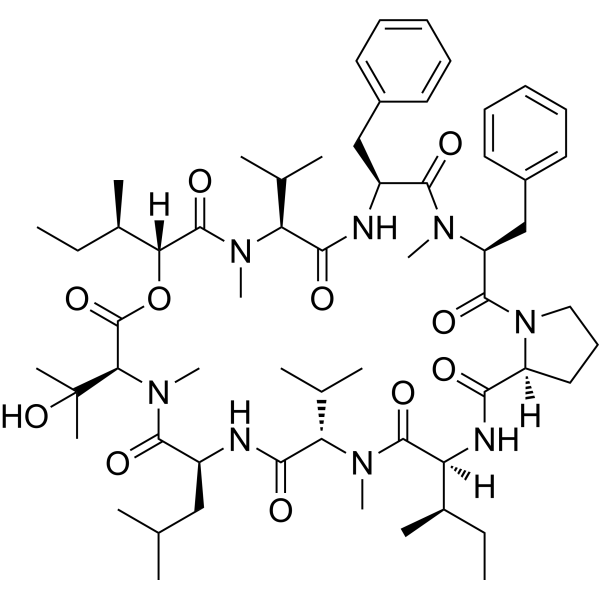
Aureobasidin A (Basifungin) is a cyclic peptide antibiotic with oral activity. Aureobasidin A is an inhibitor of inositol phosphorylated ceramide synthetase AUR1. Aureobasidin A has antifungal and antiparasitic activity.
Nos produits utilisent uniquement pour la recherche. Nous ne vendons pas aux patients.
- Pureté : 99.31%
- CAS No.: 127785-64-2
- Formule: C60H92N8O11
- Masse moléculaire:1101.42
-
Stockage:
Sealed storage, away from moisture and light.
Powder -80°C, 2 years , -20°C, 1 year* In solvent : -80°C, 6 months; -20°C, 1 month (sealed storage, away from moisture and light)

To place orders, for customer services and technical support, please contact: MedChemExpress USA
Tel: 609-228-6898 E-mail: [email protected] [email protected]


-
 Activité biologique
-
Chemical Information
-
Solvant et solubilité
- Pureté et documentation
- Références
-
 Help & FAQs


-
HY-14654
AspirinCOX Inhibitor -
HY-A0098
TunicamycinER Stress Inducer -
HY-B0015
PaclitaxelAntitumor Agent -
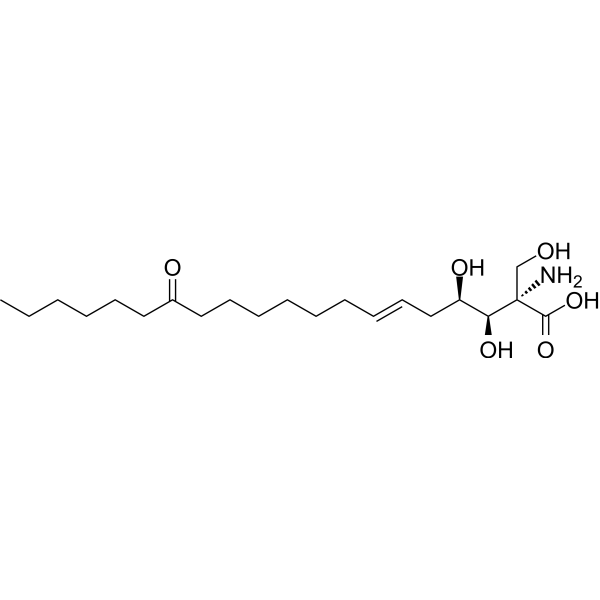
HY-N6798
MyriocinSPT Inhibitor -

HY-108841
RaleukinIL-1R Antagonist -
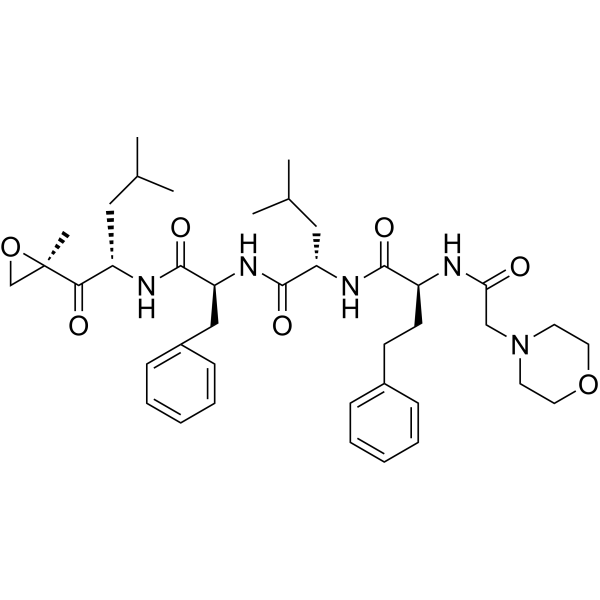
HY-10455
CarfilzomibProteasome Inhibitor -
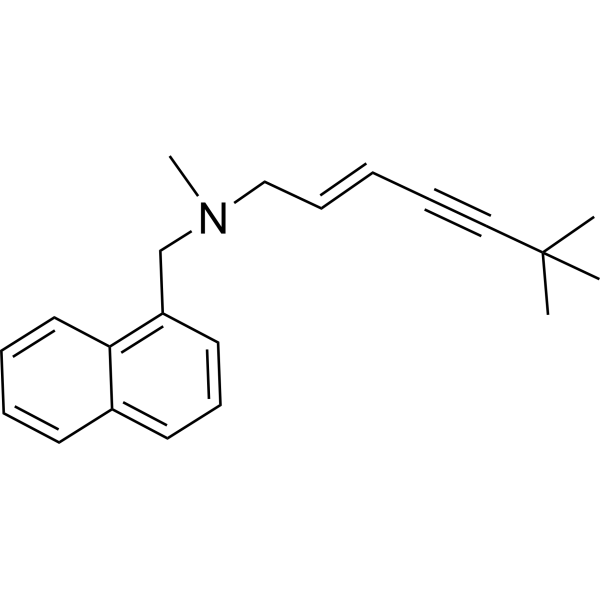
HY-17395A
TerbinafineAntimicrobial Agent -
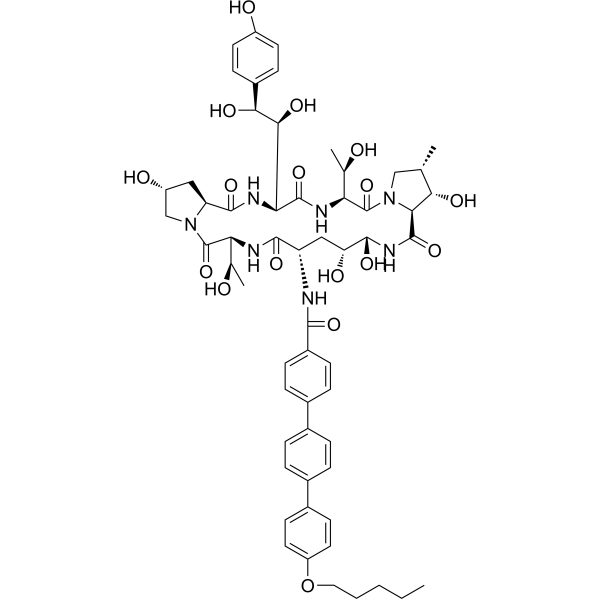
HY-13553
AnidulafunginAntifungal Agent -
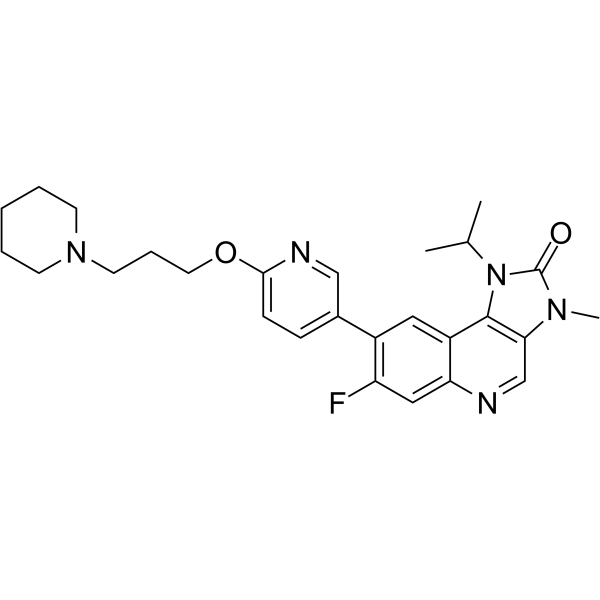
HY-109566
ElrelesertibATM Kinase Inhibitor -
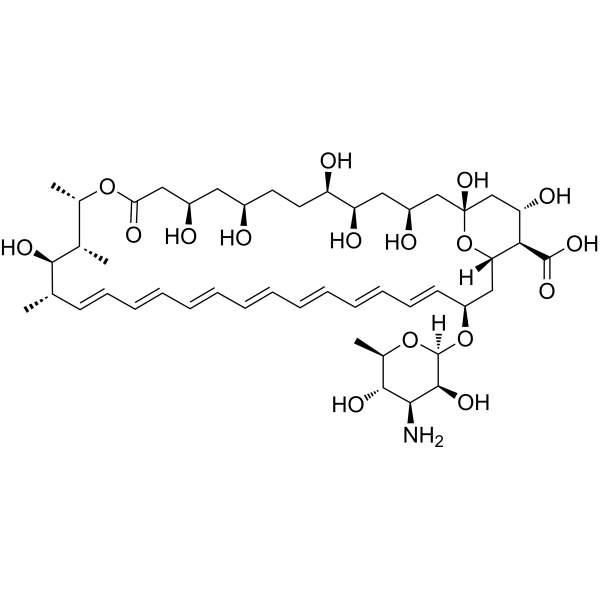
HY-B0221
Amphotericin BAntifungal Agent -
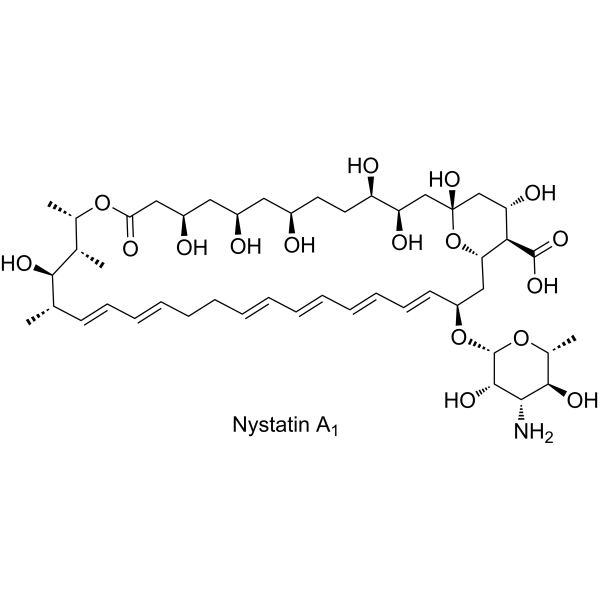
HY-17409
NystatinAntifungal Antibiotic -
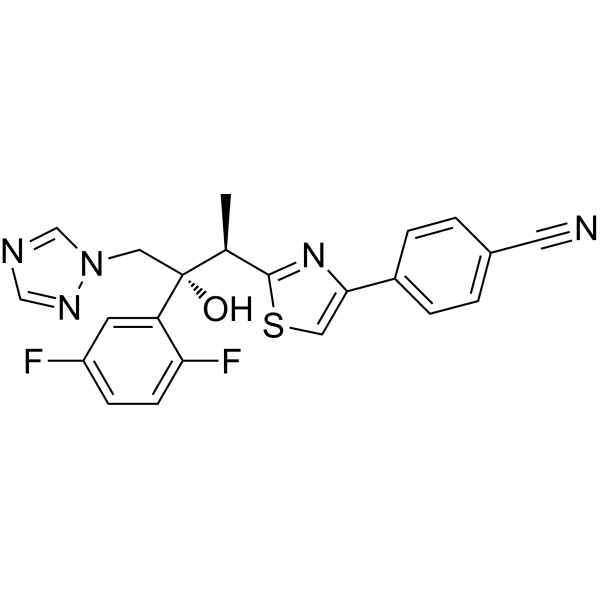
HY-14273
IsavuconazoleTriazole Antifungal
Publications Citing Use of MedChemExpress (MCE) Aureobasidin A
More Customer Validation & Images

-
Others

Voir tous les produits spécifiques à Isoform Antibiotic
MoreVoir tous les produits spécifiques à Isoform Parasite
More

Activité biologique
Description
Cellular Effect
|
Cell Line

|
Type | Value | Description | References |
|---|---|---|---|---|
| CEM/VLB100 | IC50 |
2.27 μM
Compound: Aureobasidin A
|
TP_TRANSPORTER: inhibition of Calcein-AM efflux (Calcein-AM: 0.25 uM) in CEM/VLB100 cells
TP_TRANSPORTER: inhibition of Calcein-AM efflux (Calcein-AM: 0.25 uM) in CEM/VLB100 cells
|
[PMID: 10891114] |
In Vitro
Aureobasidin A (20 ng/mL, 24 h) can completely inhibit the growth of Candida albicans SC5314 [1]
Aureobasidin A (5, 10 μg/mL, 24 h) shows an inhibitory effect on tachyzoite morphological proliferation of T. gondii[2].
MedChemExpress (MCE) has not independently confirmed the accuracy of these methods. They are for reference only. .
In Vivo


Chemical Information
-
CAS No. 127785-64-2
-
Appearance Solid
-
Masse moléculaire 1101.42
-
Formule C60H92N8O11
-
Color White to off-white
-
Synonyms
Basifungin
-
Structure Classification
-
Initial Source
Aureobasidium pullulans R106
-
Livraison
Room temperature in continental US; may vary elsewhere.
-
Stockage
Sealed storage, away from moisture and light
Powder -80°C 2 years -20°C 1 year * In solvent : -80°C, 6 months; -20°C, 1 month (sealed storage, away from moisture and light)


Publications (5)
-
Journal Impact Factor
-
Most Recent
-
J Agric Food Chem
FpLaeA Coordinates Fusarium proliferatum Pathogenesis by Orchestrating Mycotoxin Biosynthesis and Host Immune Subversion. [Abstract]2026 Aug 12;74(31):24640-24652. PMID: 42584137 -
Int J Mol Sci
Aft1 Nuclear Localization and Transcriptional Response to Iron Starvation Rely upon TORC2/Ypk1 Signaling and Sphingolipid Biosynthesis. [Abstract]2023 Jan 26;24(3):2438. PMID: 36768760
Aureobasidin A purchased from MedChemExpress. Usage Cited in: Int J Mol Sci. 2023 Jan 26;24(3):2438. [Abstract]
wt bearing pFET3-LacZ was grown in SD or SD-Fe medium with amino acids and treated or not with Myriocin or Aureobasidin A (250 ng/mL). Samples were taken at 8 h.
-
PLoS Pathog
Regulatory insight for a Zn2Cys6 transcription factor controlling effector-mediated virulence in a fungal pathogen of wheat. [Abstract]2024 Sep 23;20(9):e1012536. PMID: 39312592 -
-


Solvant et solubilité
In Vitro:
DMSO : 50 mg/mL (45.40 mM; Need ultrasonic; Hygroscopic DMSO has a significant impact on the solubility of product, please use newly opened DMSO)
Please refer to the solubility information to select the appropriate solvent. Once prepared, please aliquot and store the solution to prevent product inactivation from repeated freeze-thaw cycles.
Storage method and period of stock solution: -80°C, 6 months; -20°C, 1 month (sealed storage, away from moisture and light). When stored at -80°C, please use it within 6 months. When stored at -20°C, please use it within 1 month.
Please refer to the solubility information to select the appropriate solvent. Once prepared, please aliquot and store the solution to prevent product inactivation from repeated freeze-thaw cycles.
Storage method and period of stock solution: -80°C, 6 months; -20°C, 1 month (sealed storage, away from moisture and light). When stored at -80°C, please use it within 6 months. When stored at -20°C, please use it within 1 month.
Concentration (start) × Volume (start) = Concentration (final) × Volume (final)
In Vivo:
Select the appropriate dissolution method based on your experimental animal and administration route.
- For the following dissolution methods, please ensure to first prepare a clear stock solution using an In Vitro approach and then sequentially add co-solvents:
- To ensure reliable experimental results, the clarified stock solution can be appropriately stored based on storage conditions. As for the working solution for In Vivo experiments, it is recommended to prepare freshly and use it on the same day.
- The percentages shown for the solvents indicate their volumetric ratio in the final prepared solution. If precipitation or phase separation occurs during preparation, heat and/or sonication can be used to aid dissolution.
Add each solvent one by one: 10% DMSO 40% PEG300 5% Tween-80 45% Saline
Solubility: ≥ 2.5 mg/mL (2.27 mM); Clear solution
This protocol yields a clear solution of ≥ 2.5 mg/mL (saturation unknown).
Taking 1 mL working solution as an example, add 100 μL DMSO stock solution (25.0 mg/mL) to 400 μL PEG300, and mix evenly; then add 50 μL Tween-80 and mix evenly; then add 450 μL Saline to adjust the volume to 1 mL.
Preparation of Saline: Dissolve 0.9 g sodium chloride in ddH₂O and dilute to 100 mL to obtain a clear Saline solution.
In Vivo Dissolution Calculator
Please enter the basic information of animal experiments:
-
-
-
-
Recommended: Prepare an additional quantity of animals to account for potential losses during experiments.
Please enter your animal formula composition:
-
%DMSO +
Recommended: Keep the proportion of DMSO in working solution below 2% if your animal is weak.
-
%+
-
+%Tween-80 + +
-
%Saline +
The co-solvents required include: DMSO, . All of co-solvents are available by MedChemExpress (MCE). , Tween 80. All of co-solvents are available by MedChemExpress (MCE).
Working solution concentration: 0.22 mg/mL
Method for preparing stock solution: mg drug dissolved in μL DMSO. Stock solution concentration: mg/mL. * In solvent : -80°C, 6 months; -20°C, 1 month (sealed storage, away from moisture and light)
1. Take μL DMSO stock solution;
2. Add μL .
μL , mix evenly;
3. Then add μL Tween 80, mix evenly;
4. Then add μL
Please ensure that the stock solution in the first step is dissolved to a clear state, and add co-solvents in sequence. You can use ultrasonic heating (ultrasonic cleaner, recommended frequency 20-40 kHz), vortexing, etc. to assist dissolution.


Pureté et documentation
-
Fiche technique (285 KB)
-
SDS (252 KB)
- English - EN (252 KB)
- Français - FR (252 KB)
- Deutsch - DE (252 KB)
- Norwegian - NO (252 KB)
- Español - ES (252 KB)
- Swedish - SV (252 KB)
- Italian - IT (252 KB)
- Korean - KR (252 KB)
- Portuguese - PT (252 KB)
-
Instruction de manipulation (2659 KB)
Références
[1]. Zheng L, et al. Chromosome 1 trisomy confers resistance to aureobasidin A in Candida albicans. Front Microbiol. 2023 Mar 17;14:1128160. [Content Brief]
[2]. Alqaisi AQI, et al. The antifungal Aureobasidin A and an analogue are active against the protozoan parasite Toxoplasma gondii but do not inhibit sphingolipid biosynthesis. Parasitology. 2018 Feb;145(2):148-155. [Content Brief]
[3]. Takesako K, et al. Biological properties of aureobasidin A, a cyclic depsipeptide antifungal antibiotic. J Antibiot (Tokyo). 1993 Sep;46(9):1414-20. [Content Brief]


Complete Stock Solution Preparation Table
Please refer to the solubility information to select the appropriate solvent. Once prepared, please aliquot and store the solution to prevent product inactivation from repeated freeze-thaw cycles.
Storage method and period of stock solution: -80°C, 6 months; -20°C, 1 month (sealed storage, away from moisture and light). When stored at -80°C, please use it within 6 months. When stored at -20°C, please use it within 1 month.
| Optional Solvent | Concentration Solvent Mass | 1 mg | 5 mg | 10 mg | 25 mg |
|---|---|---|---|---|---|
| DMSO | 1 mM | 0.9079 mL | 4.5396 mL | 9.0792 mL | 22.6980 mL |
| 5 mM | 0.1816 mL | 0.9079 mL | 1.8158 mL | 4.5396 mL | |
| 10 mM | 0.0908 mL | 0.4540 mL | 0.9079 mL | 2.2698 mL | |
| 15 mM | 0.0605 mL | 0.3026 mL | 0.6053 mL | 1.5132 mL | |
| 20 mM | 0.0454 mL | 0.2270 mL | 0.4540 mL | 1.1349 mL | |
| 25 mM | 0.0363 mL | 0.1816 mL | 0.3632 mL | 0.9079 mL | |
| 30 mM | 0.0303 mL | 0.1513 mL | 0.3026 mL | 0.7566 mL | |
| 40 mM | 0.0227 mL | 0.1135 mL | 0.2270 mL | 0.5674 mL |


Aureobasidin A Related Classifications
HY-P1975 Related Classifications
 Powered by Bioz