Search Result
Results for "
aqueous media
" in MedChemExpress (MCE) Product Catalog:
8
Biochemical Assay Reagents
1
Isotope-Labeled Compounds
| Cat. No. |
Product Name |
Target |
Research Areas |
Chemical Structure |
-
- HY-D0718
-
|
Nile Blue A oxazone; Phenoxazone 9
|
Fluorescent Dye
|
Others
|
|
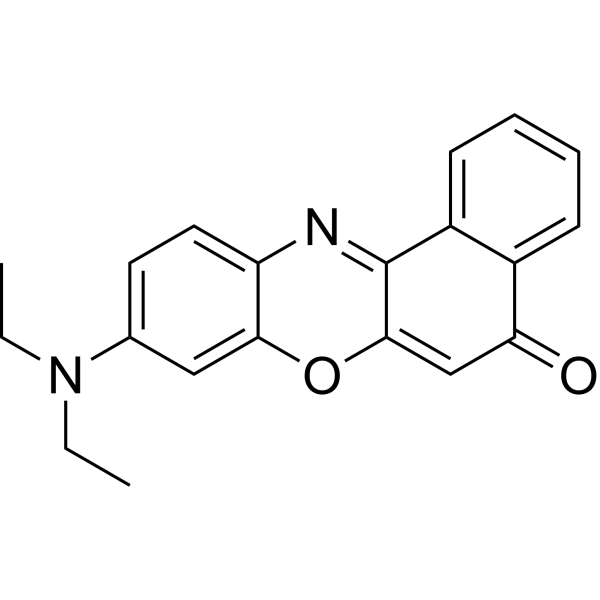
Nile red (Nile blue oxazone) is a lipophilic stain. Nile red has environment-sensitive fluorescence. Nile red is intensely fluorescent in a lipid-rich environment while it has minimal fluorescence in aqueous media. Nile red is an excellent vital stain for the detection of intracellular lipid droplets by fluorescence microscopy and flow cytof uorometry. Nile red stains intracellular lipid droplets red. The fluorescence wavelength is 559/635 nm .
|
-
-
- HY-154487
-
|
|
Biochemical Assay Reagents
|
Neurological Disease
|
|
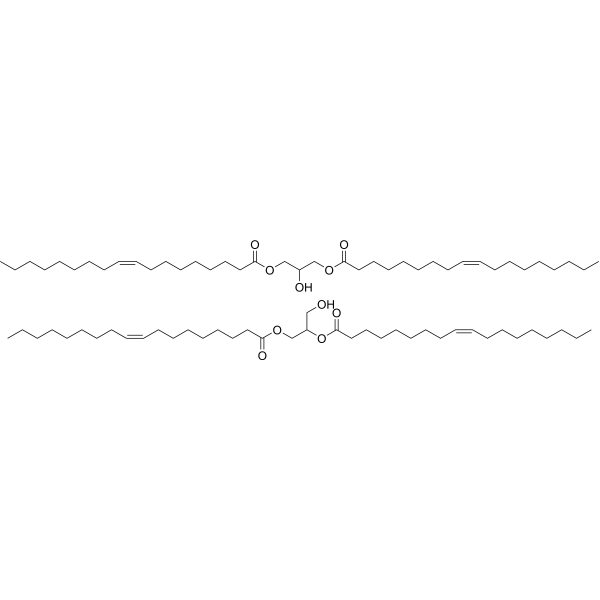
Glycerol dioleate is a lipid capable of forming Lyotropic Liquid Crystal (LLC). When formulated with phosphatidylcholine and exposed to aqueous media, glycerol dioleate constructs an inverted hexagonal (HII) phase structure with sustained-release properties. The in-situ forming gel prepared by optimizing glycerol dioleate with phosphatidylcholine and N-methyl-2-pyrrolidone enables stable release of Risperidone (HY-11018) for up to 60 days in vitro and in vivo. Glycerol dioleate causes minimal side effects in rabbits, making it an ideal carrier component for the development of antischizophrenia agents .Note: Lyotropic liquid crystals (Lyotropic Liquid Crystal, LLC) are ordered fluid phases self-assembled by amphipathic molecules (e.g., lipids, surfactants) in solvents (usually water) at specific concentrations .
|
-
-
- HY-125815
-
|
|
Fluorescent Dye
|
Others
|
|
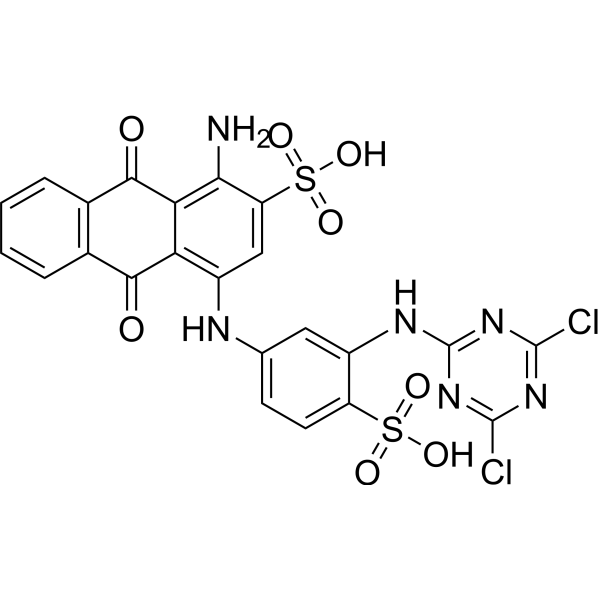
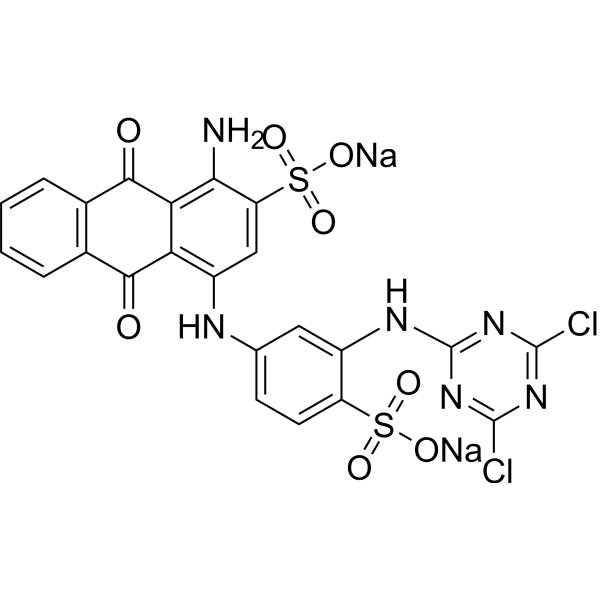
Reactive Blue 4 is an anthraquinone dye used extensively in the textile industry. Reactive Blue 4 is a single colorimetric chemosensor for sequential determination of multiple analytes with different optical responses in aqueous media .
|
-
-
- HY-Y1309
-
|
Furro ER; NSC 9586; Nako TRB
|
Environmental Pollutants
Endogenous Metabolite
|
Others
|
|
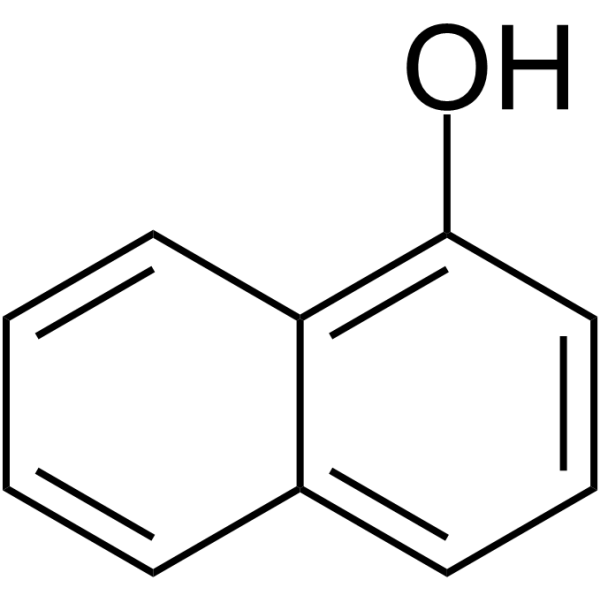
1-naphthol (Furro ER) is an excited state proton transfer (ESPT) fluorescent molecular probe. 1-naphthol can sense the hydrophobic domains in micellar aggregation and accurately sense the sol-gel transition. 1-naphthol can be used to study the thermally induced microenvironmental changes and hydration levels of Pluronic F127 (PF127) in different microenvironments in aqueous media .
|
-
-
- HY-DY1008
-
|
|
Fluorescent Dye
|
Others
|
Nile Red (solution) is a lipophilic stain. Nile red has environment-sensitive fluorescence. Nile red is intensely fluorescent in a lipid-rich environment while it has minimal fluorescence in aqueous media. Nile red is an excellent vital stain for the detection of intracellular lipid droplets by fluorescence microscopy and flow cytof uorometry. Nile red stains intracellular lipid droplets red. The fluorescence wavelength is 559/635 nm . Solvent and concentration: DMSO: 1 mM
|
-
-
- HY-W096983
-
|
Dodecyltrimethylammonium chloride,for IPC,≥99%
|
Environmental Pollutants
Biochemical Assay Reagents
|
Others
|
|
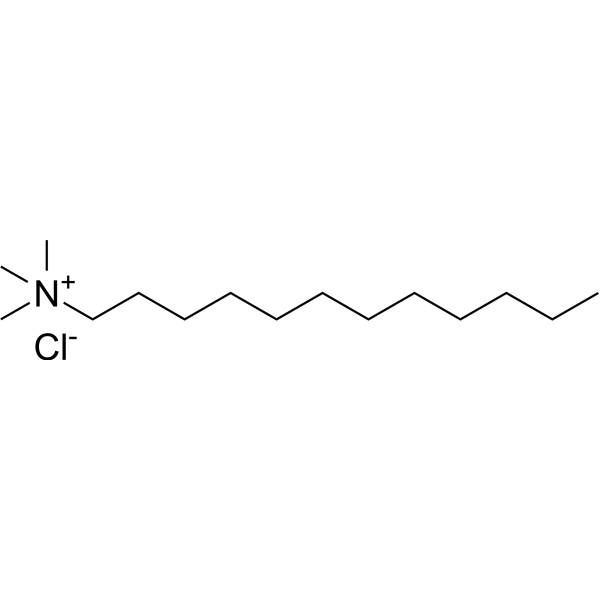
DTAC (Dodecyltrimethylammonium chloride), for IPC, ≥99% is a quaternary ammonium cationic surfactant. DTAC, for IPC, ≥99% can form micelles in aqueous media, which interact with and encapsulate Diclofenac sodium (HY-15037) molecules; the micellization process is entropy-driven at lower temperatures and enthalpy-driven at higher temperatures .
|
-
-
- HY-156311
-
|
|
ADC Linker
|
Cancer
|
|
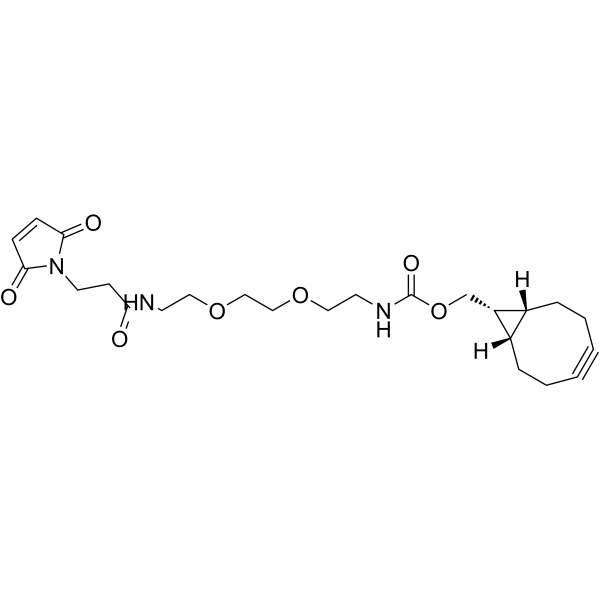
BCN-endo-PEG2-maleimide is an ADC Linker containing 4 PEG units. BCN-endo-PEG2-maleimide contains the lyophilic bidentate macrocyclic ligand endo-BCN, which can further synthesize macrocyclic complexes. In click chemistry, endo-BCN can react with molecules containing azide groups to form stable triazoles in the absence of catalysts. Its maleimide group (-Maleimide) degrades in aqueous media and has been used in drug delivery studies.
|
-
-
- HY-W1048558A
-
|
mPEG2000-COOH
|
Biochemical Assay Reagents
|
Others
|
|
mPEG2000-CM (mPEG2000-COOH) is a carboxyl-terminated monomethoxy polyethylene glycol. mPEG2000-CM bears a reactive carboxyl group (-COOH) at its structural terminal site, which can form stable amide bonds with amino groups and ester bonds with hydroxyl groups. mPEG2000-CM binds to PCA-g-PCL copolymers via electrostatic interaction to form polyion complex micelles with a hydrophilic PEG surface, which enhances the stability of micelles in aqueous media. mPEG2000-CM can be used for drug delivery .
|
-
-
- HY-W590569
-
|
|
Biochemical Assay Reagents
|
Others
|
|
Azido-PEG12-amine is a water soluble PEG compound. The azide group enables Click Chemistry. The amine group is reactive with carboxylic acids, activated NHS esters, carbonyls (ketone, aldehyde), etc. The hydrophilic PEG arm increases solubility in aqueous media.
|
-
-
- HY-134734
-
|
|
ADC Linker
|
Cancer
|
|
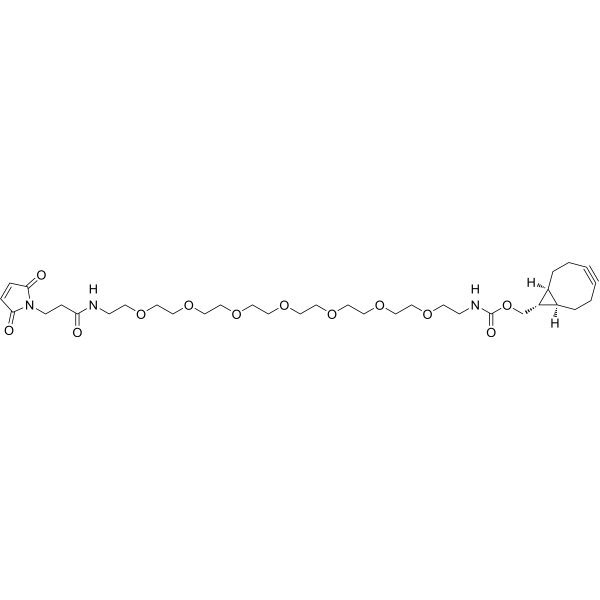
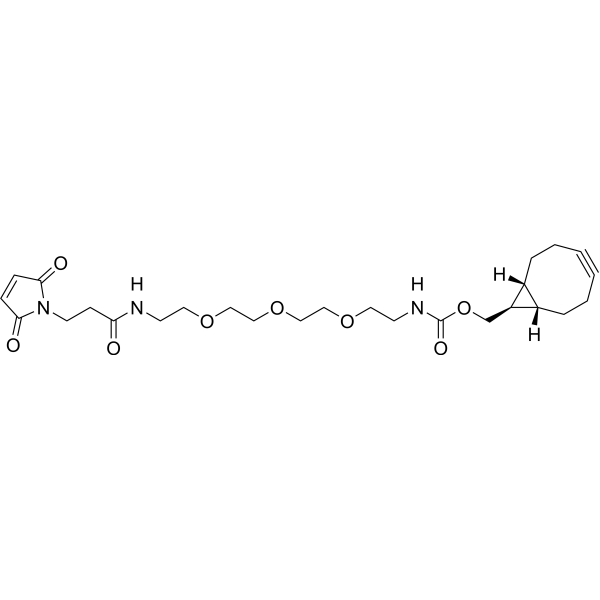
BCN-exo-PEG7-maleimide is an ADC Linker containing 7 PEG units. BCN-exo-PEG7-maleimide contains the lyophilic bidentate macrocyclic ligand BCN, which allows for further synthesis of macrocyclic complexes. In click chemistry, BCN reacts with molecules containing azide groups to form stable triazoles in the absence of catalysts. Its maleimide group (-Maleimide) degrades in aqueous media and has been used in drug delivery studies.
|
-
-
- HY-W800805
-
|
|
Liposome
|
Cancer
|
|
DOPE-Mal is a synthetic analog of naturally-occurring PE containing 18:1 fatty acids at the sn-1 and sn-2 positions with a terminal maliemide group. The maleimide group will react with a thiol group to form a covalent bond. The hydrophilic PEG spacer increases solubility in aqueous media.
|
-
-
- HY-156322
-
|
|
ADC Linker
|
Cancer
|
|
BCN-exo-PEG3-maleimide is an ADC Linker containing 3 PEG units. BCN-exo-PEG3-maleimide contains the lyophilic bidentate macrocyclic ligand BCN, which enables the further synthesis of macrocyclic complexes. In click chemistry, BCN reacts with molecules containing azide groups to form stable triazoles in the absence of catalysts. Its maleimide group (-Maleimide) degrades in aqueous media and has been used in drug delivery studies.
|
-
-
- HY-156320
-
|
|
ADC Linker
|
Cancer
|
|
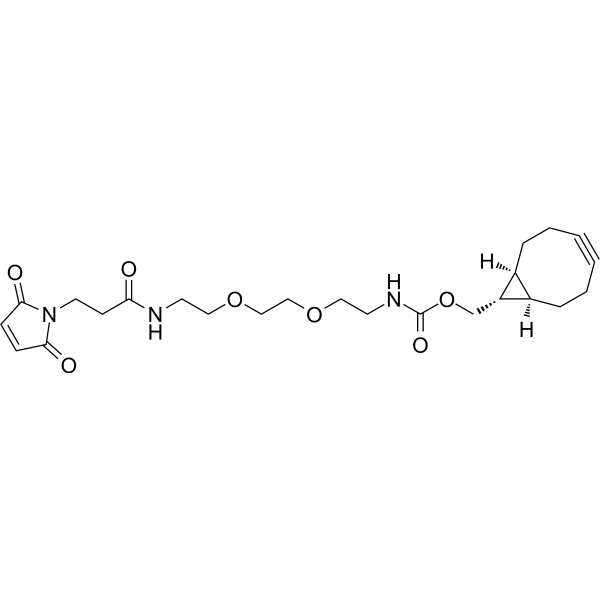
BCN-exo-PEG2-maleimide is an ADC Linker containing 2 PEG units. BCN-exo-PEG2-maleimide contains the lyophilic bidentate macrocyclic ligand BCN, which allows for further synthesis of macrocyclic complexes. In click chemistry, BCN reacts with molecules containing azide groups to form stable triazoles in the absence of catalysts. Its maleimide group (-Maleimide) degrades in aqueous media and has been used in drug delivery studies.
|
-
-
- HY-W800839
-
|
|
Biochemical Assay Reagents
|
Others
|
|
TCO-PEG4-TFP Ester is an amine-reactive labeling reagent used to modify proteins, antibodies, and other amine-containing biopolymers. A 2,3,5,6-tetrafluorophenol (TFP) is a reactive ester that displays much better stability toward hydrolysis in aqueous media resulting in more efficiency and better reproducible labeling of biopolymers. TFP ester of carboxylic acids react with primary amines at the same rate as NHS ester forming covalent amide bond that is identical to one formed by the reaction between primary amines and NHS esters or sulfo-NHS esters.
|
-
-
- HY-Y0425
-
|
|
Drug Intermediate
Biochemical Assay Reagents
|
Others
|
|
Terephthalaldehyde is a crosslinking agent. Terephthalaldehyde forms a crosslinked structure inside the gelatin matrix by forming Schiff base imines with the amino groups of gelatin, thereby constructing a three-dimensional network. Terephthalaldehyde improves the hydrophobicity of the gelatin matrix, delays water vapor penetration and enhances the liquid water resistance of gelatin films. Terephthalaldehyde can be used as a crosslinking agent to prepare crosslinked chitosan hydrogel (CAAT) via ultrasound-induced synthesis. Terephthalaldehyde helps CAAT hydrogels selectively adsorb anionic dyes from aqueous media, including multi-component systems containing cationic dyes. Terephthalaldehyde serves as a starting material for the synthesis of bis-heterocyclic compounds (including bis-thiazole and bis-triazolopyrimidine compounds) .
|
-
-
- HY-W020780C
-
|
mPEG3400-Maleimide
|
Biochemical Assay Reagents
|
Others
|
|
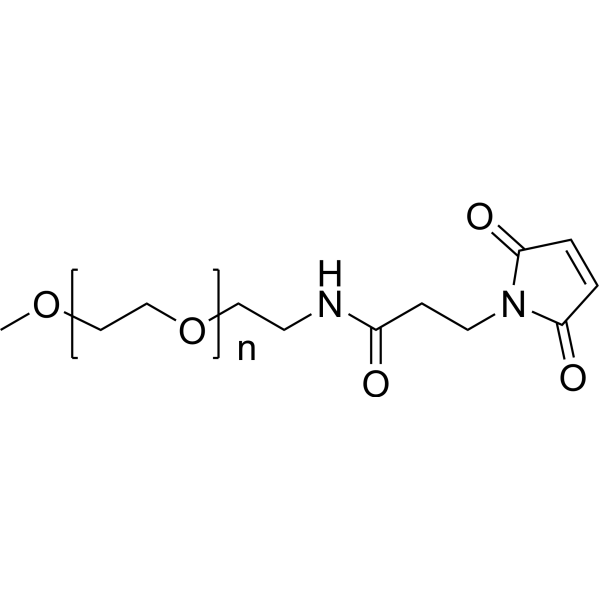
mPEG3400-Mal is a PEG derivative used for thiol pegylation of protein molecules. Its maleimide group (-Mal) degrades in aqueous media and finds application in drug delivery studies.
|
-
-
- HY-D0374
-
|
|
Fluorescent Dye
|
Others
|
|
Reactive Blue 4 sodium is an anthraquinone dye used extensively in the textile industry. Reactive Blue 4 sodium is a single colorimetric chemosensor for sequential determination of multiple analytes with different optical responses in aqueous media .
|
-
-
- HY-155901
-
|
Maleimide-NH-PEG2000-amine TFA
|
Biochemical Assay Reagents
|
Others
|
|
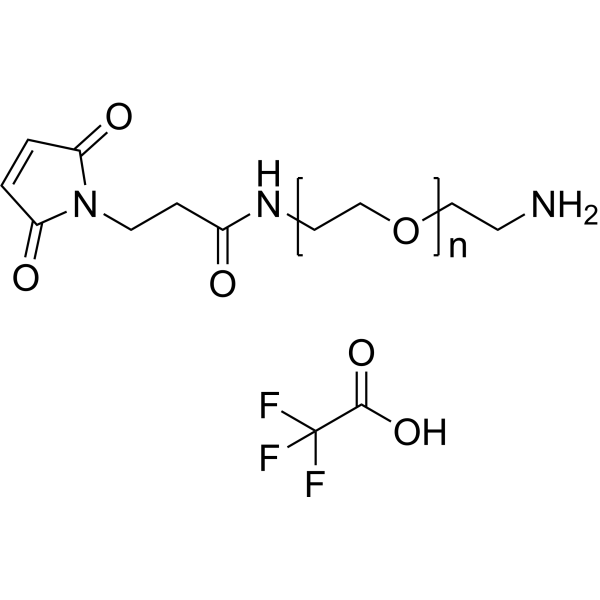
Mal-NH-PEG2000-NH2TFA is a PEG derivative that may be used for thiol PEGylation of protein molecules. Its maleimide group (-Mal) degrades in aqueous media and finds application in drug delivery studies.
|
-
-
- HY-156308
-
|
|
ADC Linker
|
Cancer
|
|
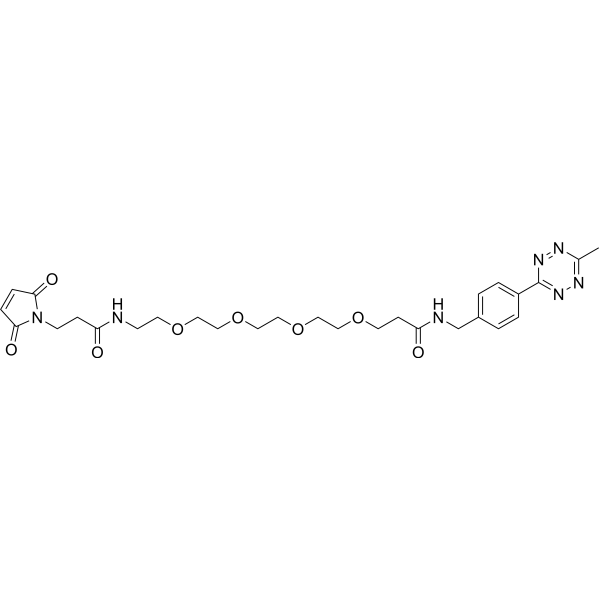
Me-Tet-PEG4-Maleimide is an ADC Linker containing 4 PEG units. Me-Tet-PEG4-Maleimide can utilize its own Tetrazine group to undergo a specific inverse electron demand Diels-Alder reaction (iEDDA) with compounds with TCO groups. Its maleimide group (-Maleimide) degrades in aqueous media and has been used in drug delivery studies.
|
-
-
- HY-W190881
-
|
|
Biochemical Assay Reagents
|
Others
|
|
N3-PEG11-CH2CH2Br is a PEG linker containing a bromine and an azide group. The hydrophilic PEG spacer increases solubility in aqueous media. The azide group can react with alkyne, BCN, DBCO via Click Chemistry to yield a stable triazole linkage. The bromine (Br) is a very good leaving group for nucleophilic substitution reactions.
|
-
-
- HY-W190842
-
|
|
Biochemical Assay Reagents
|
Others
|
|
m-PEG2-NHS ester is a PEG linker containing an NHS ester. The NHS ester of m-PEG2-NHS ester is used to label primary amines (-NH2) of proteins, amine-modified oligonucleotides and other amine-containing molecules. The hydrophilic PEG spacer effectively improves solubility in aqueous media. m-PEG2-NHS ester can be used in studies related to bioconjugation with ADC, proteins, peptides and other molecules .
|
-
-
- HY-W705140A
-
|
Hydroxymelphalan hydrochloride
|
Drug Metabolite
|
Cancer
|
|
Monohydroxy melphalan hydrochloride (Hydroxymelphalan hydrochloride) is a degradation product of Melphalan (HY-17575), obtained through the hydrolysis of Melphalan in aqueous solutions (including cell culture media and human plasma) .
|
-
-
- HY-W591402
-
|
|
ADC Linker
|
Cancer
|
|
3,4-Dibromo-Mal-PEG4-acid is a site specific ADC linker with a dibromomaleimide group and an acid group. The dibromomaleimide group allows for two points of substitution due to the two bromine atoms. The carboxylic acid can react with primary amines in the presence of EDC and HATU to form a stable amide bond. The hydrophilic PEG linker increases the water solubility of compounds in aqueous media.
|
-
-
- HY-156307
-
|
|
ADC Linker
|
Cancer
|
|
Me-Tet-PEG3-Maleimide is an ADC Linker containing 3 PEG units. Me-Tet-PEG3-Maleimide can utilize its own Tetrazine group to undergo a specific inverse electron demand Diels-Alder reaction (iEDDA) with compounds with TCO groups. Its maleimide group (-Maleimide) degrades in aqueous media and has been used in drug delivery studies.
|
-
-
- HY-156312
-
|
|
ADC Linker
|
Cancer
|
|
Me-Tet-PEG8-Maleimide is an ADC Linker containing 8 PEG units. Me-Tet-PEG8-Maleimide can utilize its own Tetrazine group to undergo a specific inverse electron demand Diels-Alder reaction (iEDDA) with compounds with TCO groups. Its maleimide group (-Maleimide) degrades in aqueous media and has been used in drug delivery studies.
|
-
-
- HY-W144703
-
|
9-Aminoheptadecane
|
Biochemical Assay Reagents
|
Others
|
|
Heptadecan-9-amine (9-Aminoheptadecane) is PEG linker containing a maleimide and TFP ester end group. Maleimide groups are reactive with thiols between pH 6.5 and 7.5. The TFP ester can react with primary amine groups and is also less susceptible to undergo hydrolysis compared to NHS ester. The hydrophilic PEG chains increase the water solubility of a compound in aqueous media. Longer PEG chains have improved water solubility relative to shorter PEG chains.
|
-
-
- HY-W020780A
-
|
mPEG350-Maleimide
|
Biochemical Assay Reagents
|
Others
|
|
mPEG350-Mal is a PEG derivative used for thiol PEGylation of protein molecules. Its maleimide group (-Mal) degrades in aqueous media and finds application in drug delivery studies.
|
-
-
- HY-W020780B
-
|
mPEG750-Maleimide
|
Biochemical Assay Reagents
|
Others
|
|
mPEG750-Mal is a PEG derivative used for thiol pegylation of protein molecules. Its maleimide group (-Mal) degrades in aqueous media and finds application in drug delivery studies.
|
-
-
- HY-W190914
-
|
|
Biochemical Assay Reagents
|
Others
|
|
TCO-PEG2-TCO is a homebifunctional reagent containing TCO moiety at both ends of the molecule. TCO group specifically and efficiently reacts with tetrazine. The hydrophilic PEG linker increases the solubility of compounds in aqueous media.
|
-
-
- HY-W878813
-
|
|
Biochemical Assay Reagents
|
Others
|
|
Tos-PEG22-Tos is a PEG linker containing two tosyl groups. The hydrophilic PEG spacer increases solubility in aqueous media. The tosyl group is a very good leaving group for nucleophilic substitution reactions.
|
-
-
- HY-W591390
-
|
|
Biochemical Assay Reagents
|
Others
|
|
6-Azidohexanoic Acid STP Ester is an amine-reactive, water-soluble labeling reagent with an azide group and a terminal 4-Sulfo-2,3,5,6-tetrafluorophenyl (STP) group. 6-Azidohexanoic Acid STP Ester is used to modify proteins, antibodies, and other amine-containing biopolymers in aqueous media. The azide group can react with alkyne, BCN, DBCO via Click Chemistry to yield a stable triazole linkage. STP esters can react with primary amines, forming covalent amide bonds, and typically display much better stability toward hydrolysis in aqueous media, resulting in more efficiency and better reproducible labeling of biopolymers.
|
-
-
- HY-W190752
-
|
|
Biochemical Assay Reagents
|
Others
|
|
m-PEG13-acid is a PEG linker containing a terminal carboxylic acid. The terminal carboxylic acid can react with primary amine groups in the presence of activators (e.g. EDC, or HATU) to form a stable amide bond. The hydrophilic PEG spacer increases solubility in aqueous media.
|
-
-
- HY-W190939
-
|
|
Biochemical Assay Reagents
|
Others
|
|
C11-PEG9-alcohol is a linker with an aliphatic carbon chain and a PEG chain. The hydrophilic PEG chain increases the water solubility of the compounds in the aqueous media. The hydroxyl group enables further derivatization or replacement with other reactive functional groups.
|
-
-
- HY-W250735
-
|
|
Biochemical Assay Reagents
|
Others
|
|
NHS-PEG4-biotinidase resistant biotin is a biotinylation reagent with a terminal NHS ester. The hydrophilic PEG spacer increases solubility in aqueous media. The NHS ester can be used to label the primary amines (-NH2) of proteins, amine-modified oligonucleotides, and other amine-containing molecules.
|
-
-
- HY-122792
-
|
|
Endogenous Metabolite
|
Cardiovascular Disease
|
|
Phenyramidol hydrochloride is an anticoagulant and analgesic with activity that increases detection sensitivity in biological samples. Phenyramidol hydrochloride can be oxidized in aqueous media by electrochemical methods to achieve its quantitative analysis. The detection of Phenyramidol hydrochloride using an amino-functionalized multi-walled carbon nanotube-modified glassy carbon electrode showed significant enhancement of the current peak .
|
-
-
- HY-W590583
-
|
|
PROTAC Linkers
|
Cancer
|
|
(S, R, S)-AHPC-PEG6-Azide is a click chemistry PROTAC linker that incorporates an E3 ligase ligand with a PEG6 arm to empower PROTAC research & discovery. The hydrophilic PEG spacer increases the solubility of a compound in aqueous media. Azide enables click chemistry with alkyne, DBCO, or BCN molecule.
|
-
-
- HY-W451433
-
|
|
Biochemical Assay Reagents
|
Others
|
|
OTs-PEG1-NHCbz is a PEG linker containing a tosyl group and benzyl (Cbz) protecting group. The hydrophilic PEG spacer increases the water solubility of the compound in aqueous media. The tosyl group is a very good leaving group for nucleophilic substitution reactions. The benzyl protecting group can be removed via hydrogenolysis to form a free amine.
|
-
-
- HY-W460133
-
|
|
Biochemical Assay Reagents
|
Others
|
|
tert-Butyl (2-(2-(2-iodoethoxy)ethoxy)ethyl)carbamate is a PEG linker containing a Boc protected amine and an iodine group. The protected amine can be deprotected under mild acidic conditions. Iodine (I) is a very good leaving group for nucleophilic substitution reactions. The hydrophilic PEG spacer increases solubility in aqueous media.
|
-
-
- HY-W540192
-
|
|
ADC Linker
|
Cancer
|
|
SCO-PEG2-Maleimide is an ADC Linker containing 3 PEG units. SCO-PEG2-Maleimide can be used as a copper-free click chemical reagent for catalyst-free click reactions. Its maleimide group (-Maleimide) degrades in aqueous media and has been used in drug delivery studies.
|
-
-
- HY-156318
-
|
|
ADC Linker
|
Cancer
|
|
SCO-PEG3-Maleimide is a cleavable ADC Linker containing 3 PEG units. SCO-PEG3-Maleimide can be used as a copper-free click chemical reagent for catalyst-free click reactions. Its maleimide group (-Maleimide) degrades in aqueous media and has been used in drug delivery studies.
|
-
-
- HY-156321
-
|
|
ADC Linker
|
Cancer
|
|
SCO-PEG7-Maleimide is a cleavable ADC Linker containing 3 PEG units. SCO-PEG7-Maleimide can be used as a copper-free click chemical reagent for catalyst-free click reactions. Its maleimide group (-Maleimide) degrades in aqueous media and has been used in drug delivery studies.
|
-
-
- HY-W572763
-
|
|
Biochemical Assay Reagents
|
Others
|
|
Tos-PEG6-acid is a PEG linker containing a tosyl group and a terminal carboxylic acid. The hydrophilic PEG spacer increases solubility in aqueous media. The tosyl group is a very good leaving group for nucleophilic substitution reactions. The terminal carboxylic acid can react with primary amine groups in the presence of activators (e.g. HATU) to form a stable amide bond.
|
-
-
- HY-W800654
-
|
|
Biochemical Assay Reagents
|
Others
|
|
Mal-PEG5-amine is a PEG linker containing a maleimide group and an amine group. The hydrophilic PEG spacer increases solubility in aqueous media. The amine group is reactive with carboxylic acids, activated NHS esters, carbonyls (ketone, aldehyde) etc. The maleimide group will react with a thiol group to form a covalent bond, enabling the connection of biomolecule with a thiol.
|
-
-
- HY-W190941
-
|
3,6,9,12,15-Pentaoxahexacosan-1-ol
|
Biochemical Assay Reagents
|
Others
|
|
C11-PEG6-alcohol (3,6,9,12,15-Pentaoxahexacosan-1-ol) is a linker with an aliphatic carbon chain and a PEG chain. The hydrophilic PEG chain increases the water solubility of the compounds in the aqueous media. The hydroxyl group enables further derivatization or replacement with other reactive functional groups.
|
-
-
- HY-W190955
-
|
|
Biochemical Assay Reagents
|
Others
|
|
N-(t-butyl ester-PEG3)-N-bis(PEG3-amine) is a PEG reagent that can easily react with activated NHS esters or carboxylic acid in the presence of EDC or HATU. The t-butyl group can be deprotected under acidic conditions. The hydrophilic PEG spacers increase the compounds water solubility in aqueous media.
|
-
-
- HY-103382R
-
|
|
Reference Standards
Fungal
|
Infection
|
|
Phenyramidol (Hydrochloride) (Standard) is the analytical standard of Phenyramidol (Hydrochloride). This product is intended for research and analytical applications. Phenyramidol hydrochloride is an anticoagulant and analgesic with activity that increases detection sensitivity in biological samples. Phenyramidol hydrochloride can be oxidized in aqueous media by electrochemical methods to achieve its quantitative analysis. The detection of Phenyramidol hydrochloride using an amino-functionalized multi-walled carbon nanotube-modified glassy carbon electrode showed significant enhancement of the current peak .
|
-
-
- HY-131699
-
|
|
Biochemical Assay Reagents
|
Others
|
|
t-Butyl ester-PEG4-CH2COOH is a PEG linker containing a t-butyl group with a terminal carboxylic acid. The terminal carboxylic acid can react with primary amine groups in the presence of activators (e.g. HATU) to form a stable amide bond. The hydrophilic PEG spacer increases solubility in aqueous media. The t-butyl group can be deprotected under acidic conditions.
|
-
-
- HY-W800670
-
|
|
Biochemical Assay Reagents
|
Others
|
|
Mal-amido-PEG5-alkyne is a PEG linker containing a maleimide group and an alkyne. The hydrophilic PEG spacer increases solubility in aqueous media. The alkyne group can react with azide-bearing compounds or biomolecules via copper catalyzed azide-alkyne Click Chemistry to yield a stable triazole linkage. The maleimide group will react with a thiol group to form a covalent bond, enabling the connection of biomolecule with a thiol.
|
-
-
- HY-W591982
-
|
|
Biochemical Assay Reagents
|
Others
|
|
t-Boc-N-amido-PEG12-acid is a PEG linker containing a terminal carboxylic acid and Boc-protected amino group. The hydrophilic PEG spacer increases solubility in aqueous media. The terminal carboxylic acid can react with primary amine groups in the presence of activators (e.g. EDC, or HATU) to form a stable amide bond. The Boc group can be deprotected under mild acidic conditions to form the free amine.
|
-
-
- HY-19698R
-
|
4-CPA (Standard); p-Chlorophenoxyacetic acid (Standard)
|
Biochemical Assay Reagents
Reference Standards
|
Others
|
|
4-Chlorophenoxyacetic acid (4-CPA) (Standard) is the analytical standard of 4-Chlorophenoxyacetic acid (4-CPA). This product is intended for research and analytical applications. 4-Chlorophenoxyacetic acid (4-CPA) is a widely used herbicide for weed control in agriculture. 4-Chlorophenoxyacetic acid can be degraded in aqueous media through an electrochemical oxidation process. The end products of 4-Chlorophenoxyacetic acid degradation are harmless, such as carbon dioxide, water, and chloride ions .
|
-
- HY-W348348
-
|
|
Biochemical Assay Reagents
|
Others
|
|
CbzNH-PEG3-CH2CH2NH2 is a PEG linker containing an amine group and a benzyl (Cbz) protecting group. The hydrophilic PEG spacer increases the water solubility of a compound in aqueous media. Amine group is reactive with carboxylic acids, activated NHS esters, carbonyls (ketone, aldehyde), etc. The benzyl protecting group can be removed via hydrogenolysis to form a free amine.
|
-
- HY-W190952
-
|
|
Biochemical Assay Reagents
|
Others
|
|
Bis-sulfone-PEG4-NHS Ester is a bis-alkylating labeling reagent that is selective for the cysteine sulfur atoms from a native disulfide. These reagents undergo bis-alkylation to conjugate both thiols derived from the two cysteine residues of a reduced native disulfide bond such as the interchain disulfide bonds of an antibody. The reaction results in covalent rebridging of the disulfide bond via a three carbon bridge leaving the protein structurally intact. The hydrophilic PEG spacer increases solubility in aqueous media.
|
-
- HY-W403327
-
|
|
Biochemical Assay Reagents
|
Others
|
|
CbzNH-PEG4-CH2COOH is a PEG linker containing an carboxylic acid (CO2H) group and a benzyl (Cbz) protecting group. The hydrophilic PEG spacer increases the water solubility of a compound in aqueous media. The terminal carboxylic acid is reactive with primary amine groups in the presence of activators (e.g. HATU) forming a stable amide bond. The benzyl protecting group can be removed via hydrogenolysis to form a free amine.
|
-
- HY-Y1309S1
-
|
Furro ER-d7; NSC 9586-d7; Nako TRB-d7
|
Isotope-Labeled Compounds
Endogenous Metabolite
|
Others
|
|
1-Naphthol-d7 (Furro ER-d7) is the deuterium labeled Naphthol (HY-Y1309). 1-Naphthol (Furro ER) is an excited state proton transfer (ESPT) fluorescent molecular probe. 1-naphthol can sense the hydrophobic domains in micellar aggregation and accurately sense the sol-gel transition. 1-naphthol can be used to study the thermally induced microenvironmental changes and hydration levels of Pluronic F127 (PF127) in different microenvironments in aqueous media .
|
-
- HY-119202
-
|
(S)-BMS-806
|
HIV
|
Infection
|
|
(S)-BMS-378806 ((S)-BMS-806) is an orally bioavailable HIV-1 inhibitor with activity against gp120-CD4 interactions. (S)-BMS-378806 exhibits micromolar inhibition of HIV-1 gp120-CD4 binding. The design and synthesis of (S)-BMS-378806 was based on a comprehensive study of protein-ligand interactions, which guided the identification and design of novel symmetrical N,N'-disubstituted aminoureas and thioureas. (S)-BMS-378806, synthesized in aqueous media using microwave irradiation, was validated for its inhibitory activity in HIV-1 gp120-CD4 capture ELISA .
|
-
- HY-W190985
-
|
|
Biochemical Assay Reagents
|
Others
|
|
AZD-PEG5-methyl ester is a PEG linker containing an AZD group and a methyl ester group which can be hydrolyzed under strong basic condition. The hydrophilic PEG spacer increases solubility in aqueous media.
|
-
- HY-W190912
-
|
|
Biochemical Assay Reagents
|
Others
|
|
AZD-PEG2-PFP is a PEG linker containing an AZD group and a PFP ester group, an activated ester that reacts with primary amines to form amide bonds. The hydrophilic PEG spacer increases solubility in aqueous media.
|
-
- HY-W800678
-
|
|
Biochemical Assay Reagents
|
Others
|
|
Bromoacetamido-PEG2-AZD is a PEG linker containing an AZD group and a bromide group which is a very good leaving group for nucleophilic substitution reactions. The hydrophilic PEG spacer increases solubility in aqueous media.
|
-
- HY-124886
-
|
N-Phenylacetylphenylalanine
|
Amino Acid Derivatives
|
Others
|
|
N-(Phenylacetyl)-L-phenylalanine (N-Phenylacetylphenylalanine) is an amino acid analog. N-(Phenylacetyl)-L-phenylalanine is produced via the enantioselective acylation of L-phenylalanine catalyzed by penicillin G acylase from Alcaligenes faecalis. N-(Phenylacetyl)-L-phenylalanine undergoes hydrolysis in aqueous media .
|
-
- HY-W591379
-
|
|
Biochemical Assay Reagents
|
Others
|
|
Amino-PEG19-amine is a PEG linker containing two amine functional groups. The hydrophilic PEG spacer increases solubility in aqueous media. The amino groups are reactive with carboxylic acids, activated NHS esters, carbonyls (ketone, aldehyde), etc.
|
-
- HY-W590575
-
|
|
Biochemical Assay Reagents
|
Others
|
|
Azido-PEG3-flouride is a PEG linker containing a fluorine atom and an azide group. The hydrophilic PEG spacer increases solubility in aqueous media. The azide group can react with alkyne, BCN, DBCO via Click Chemistry to yield a stable triazole linkage.
|
-
- HY-W800616
-
|
|
Biochemical Assay Reagents
|
Others
|
|
C11-PEG4-alcohol is a linker with an aliphatic carbon chain and a PEG chain. The hydrophilic PEG chain increases the water solubility of the compounds in the aqueous media. The hydroxyl group enables further derivatization or replacement with other reactive functional groups.
|
-
- HY-W190925
-
|
|
Biochemical Assay Reagents
|
Others
|
|
APN-C3-biotin is a heterobifunctional linker containing an APN moiety with exquisite chemoselectivity for cysteine and Biotin. The superior stability of APN-cysteine conjugates in aqueous media, human plasma, and living cells makes this new thiol-click reaction a promising methodology for applications in bioconjugation.
|
-
- HY-W800662
-
|
|
Biochemical Assay Reagents
|
Others
|
|
Bromo-PEG2-methyl ester is a PEG linker containing a bromide moiety and a methyl ester. The bromide (Br) is a very good leaving group for nucleophilic substitution reactions. The hydrophilic PEG spacer increases solubility in aqueous media. Methyl ester can be hydrolyzed under strong basic condition.
|
-
- HY-W591308
-
|
|
Biochemical Assay Reagents
|
Others
|
|
3-[2-(3-hydroxypropoxy)ethoxy]propan-1-ol is a linker consisting of two terminal hydroxyl groups. The partial PEG chain increases the water solubility of a compound in aqueous media. The hydroxyl groups enables further derivatization or replacement with other reactive functional groups.
|
-
- HY-W190910
-
|
|
Biochemical Assay Reagents
|
Others
|
|
AZD-PEG2-acid is a PEG linker containing an AZD group and a terminal carboxylic acid. The hydrophilic PEG spacer increases solubility in aqueous media. The terminal carboxylic acid can react with primary amine groups in the presence of activators (e.g. EDC, or HATU) to form a stable amide bond.
|
-
- HY-W590586
-
|
|
Biochemical Assay Reagents
|
Others
|
|
Mal-PEG4-NH-Boc is a PEG linker containing a maleimide group and a Boc protected amine group. The hydrophilic PEG spacer increases solubility in aqueous media. The protected amine can be deprotected under acidic conditions. The maleimide group will react with a thiol group to form a covalent bond.
|
-
- HY-W800803
-
|
|
Biochemical Assay Reagents
|
Others
|
|
Mal-PEG5-NH-Boc is a PEG linker containing a maleimide group and a Boc protected amine group. The hydrophilic PEG spacer increases solubility in aqueous media. The protected amine can be deprotected under acidic conditions. The maleimide group will react with a thiol group to form a covalent bond.
|
-
- HY-W153502
-
|
|
Biochemical Assay Reagents
|
Others
|
|
MeNH-PEG2-OH is a PEG linker containing a hydroxyl group with a methylamine group. The hydrophilic PEG spacer increases solubility in aqueous media. The hydroxyl group enables further derivatization or replacement with other reactive functional groups. The methylamine group is reactive with carboxylic acids, carbonyls (ketone, aldehyde) etc.
|
-
- HY-130159
-
|
|
Biochemical Assay Reagents
|
Others
|
|
Hydroxy-PEG12-t-butyl ester is a PEG linker containing a hydroxyl group with a t-butyl ester. The hydrophilic PEG spacer increases solubility in aqueous media. The hydroxyl group enables further derivatization or replacement with other reactive functional groups. The t-butyl protected carboxyl group can be deprotected under acidic conditions.
|
-
- HY-W909314
-
|
|
Biochemical Assay Reagents
|
Others
|
|
t-Butyoxycarboxy-PEG4-para-nitrophenyl carbonate is a PEG linker with a nitrophenyl group linked to a carbonate, four PEG units, and a t-butyl group that can be deprotected under acidic conditions. The PEG units enhance the solubility of the molecule in aqueous media. Nitrophenyl group is reactive towards the amino-bearing molecules.
|
-
- HY-W190808
-
|
|
Biochemical Assay Reagents
|
Others
|
|
Tos-PEG11-t-butyl ester is a PEG linker containing a t-butyl ester and a tosyl group. The hydrophilic PEG spacer increases solubility in aqueous media. The t-butyl protected carboxyl group can be deprotected under acidic conditions. The tosyl group is a very good leaving group for nucleophilic substitution reactions.
|
-
- HY-W190950
-
|
|
Biochemical Assay Reagents
|
Others
|
|
AZD-PEG5-PFP is a PEG linker containing an AZD group and a PFP ester group, an activated ester that reacts with primary amines to form amide bonds. PFP ester has been found to be more stable than other amine reactive groups because it is less likely to undergo hydrolysis. The hydrophilic PEG spacer increases solubility in aqueous media.
|
-
- HY-W800610
-
|
|
Biochemical Assay Reagents
|
Others
|
|
AZD-PEG13-PFP is a PEG linker containing an AZD group and a PFP ester group, an activated ester that reacts with primary amines to form amide bonds. PFP ester has been found to be more stable than other amine reactive groups because it is less likely to undergo hydrolysis. The hydrophilic PEG spacer increases solubility in aqueous media.
|
-
- HY-W190933
-
|
|
Biochemical Assay Reagents
|
Others
|
|
Bis-PEG6-TFP ester is a PEG linker with two terminal TFP ester moieties. TFP esters are amine reactive and are also more stable than NHS esters against hydrolysis. The PEG chain increases the water solubility properties of compounds in aqueous media. The water solubility properties of PEG chains are enhanced as the PEG chain grows.
|
-
- HY-116655A
-
|
|
Biochemical Assay Reagents
|
Others
|
|
Hydroxy-PEG1-acid sodium is a PEG linker containing a hydroxyl group with a terminal carboxylic acid (as sodium salt form). The free acid form is not stable due to the reaction of OH with PEG-COOH group to form polymer. The sodium salt form is stable for storage and shipping. The hydrophilic PEG spacer increases solubility in aqueous media. The hydroxyl group enables further derivatization or replacement with other reactive functional groups.
|
-
- HY-W190922
-
|
|
Biochemical Assay Reagents
|
Others
|
|
Mal-PEG4-amine is a PEG linker containing a maleimide group and an amine group. The hydrophilic PEG spacer increases solubility in aqueous media. The amine group is reactive with carboxylic acids, activated NHS esters, carbonyls (ketone, aldehyde) etc. The maleimide group will react with a thiol group to form a covalent bond, enabling the connection of biomolecule with a thiol.
|
-
- HY-172505
-
|
|
Biochemical Assay Reagents
|
Others
|
|
Mal-PEG12-t-butyl ester is a PEG linker containing a maleimide group and a t-butyl ester group. The hydrophilic PEG spacer increases solubility in aqueous media. The t-butyl protected carboxyl group can be deprotected under acidic conditions. The maleimide group will react with a thiol group to form a covalent bond, enabling the connection of biomolecule with a thiol.
|
-
- HY-W460275
-
|
|
Biochemical Assay Reagents
|
Others
|
|
t-Boc-N-Amido-PEG5-Tos is a PEG linker containing a tosyl group and Boc-protected amine group. The hydrophilic PEG spacer increases the water solubility of a compound in aqueous media. The tosyl group is a very good leaving group for nucleophilic substitution reactions. The Boc group can be deprotected under mild acidic conditions to form a free amine.
|
-
- HY-W800656
-
|
|
Biochemical Assay Reagents
|
Others
|
|
Fmoc-PEG4-hydroxy is a PEG linker containing an Fmoc-protected amine and a hydroxyl group. The hydrophilic PEG spacer increases solubility in aqueous media. The Fmoc group can be deprotected under basic condition to obtain the free amine which can be used for further conjugations. The hydroxyl group enables further derivatization or replacement with other reactive functional groups.
|
-
- HY-W800712
-
|
|
Biochemical Assay Reagents
|
Others
|
|
t-Boc-N-Amido-PEG11-Tos is a PEG linker containing a tosyl group and Boc-protected amine group. The hydrophilic PEG spacer increases the water solubility of a compound in aqueous media. The tosyl group is a very good leaving group for nucleophilic substitution reactions. The Boc group can be deprotected under mild acidic conditions to form a free amine.
|
-
- HY-W800750
-
|
|
Biochemical Assay Reagents
|
Others
|
|
TCO-PEG2-acid is a click chemistry linker containing a TCO (trans-cycloctene) and a terminal carboxylic acid. The terminal carboxylic acid can react with primary amine groups in the presence of activators such as EDC. TCO reagent is highly reactive with tetrazine in an inverse electron demand Diels Alder (IEDDA) reaction followed by a retro-DA reaction. The hydrophilic PEG spacer increases solubility in aqueous media.
|
-
- HY-122792R
-
|
|
Endogenous Metabolite
Reference Standards
|
Cardiovascular Disease
|
|
Phenyramidol (Hydrochloride) (Standard) is the analytical standard of Phenyramidol (Hydrochloride). This product is intended for research and analytical applications. Phenyramidol hydrochloride is an anticoagulant and analgesic with activity that increases detection sensitivity in biological samples. Phenyramidol hydrochloride can be oxidized in aqueous media by electrochemical methods to achieve its quantitative analysis. The detection of Phenyramidol hydrochloride using an amino-functionalized multi-walled carbon nanotube-modified glassy carbon electrode showed significant enhancement of the current peak .
|
-
- HY-W190928
-
|
|
Biochemical Assay Reagents
|
Others
|
|
2-(Azido-PEG2-amido)-1,3-bis-(tert-butyldimethylsilanoxy)propane is a PEG linker containing a TBDMS acid labile, alcohol protecting group. The azide group is able to participate in copper-catalyzed Click Chemistry reactions with alkynes, DBCO and BCN to generate triazole linkages. The hydrophilic PEG linker increases the solubility properties of compounds in aqueous media.
|
-
- HY-W800722
-
|
|
Biochemical Assay Reagents
|
Others
|
|
N-(PEG1-acid)-L-Lysine-amido-Mal is a PEG based linker with terminal malimide and carboxylic acid groups. The hydrophilic PEG spacer increases solubility in aqueous media. The maleimide group will react with a thiol group to form a covalent bond, enabling the connection of biomolecule with a thiol. The terminal carboxylic acid can react with primary amine groups in the presence of activators (e.g. EDC, or HATU) to form a stable amide bond.
|
-
- HY-W800813
-
|
|
Biochemical Assay Reagents
|
Others
|
|
Carboxy-Amido-PEG5-N-Boc is a PEG linker containing a terminal carboxylic acid and Boc-protected amino group. The hydrophilic PEG spacer increases solubility in aqueous media. The terminal carboxylic acid can react with primary amine groups in the presence of activators (e.g. EDC, HATU) to form a stable amide bond. The Boc group can be deprotected under mild acidic conditions to form the free amine.
|
-
- HY-W190920
-
|
|
Biochemical Assay Reagents
|
Others
|
|
t-Butoxycarbonyl-PEG2-NHS ester has a t-Boc protecting group and an NHS ester moiety. The t-butyl group can be deprotected under acidic conditions. NHS ester can react specifically and efficiently with primary amines such as the side chain of lysine residues or aminosilane-coated surfaces at neutral or slightly basic condition to form a covalent bond. The hydrophilic PEG linker increases the water solubility of the compound in aqueous media.
|
-
- HY-400361
-
|
|
Biochemical Assay Reagents
|
Others
|
|
BocNH-PEG2-CH2COONHS ester is a PEG linker containing a terminal carboxylic acid and Boc-protected amino group. The hydrophilic PEG spacer increases solubility in aqueous media. The terminal carboxylic acid can react with primary amine groups in the presence of activators (e.g. EDC, HATU) to form a stable amide bond. The Boc group can be deprotected under mild acidic conditions to form the free amine.
|
-
- HY-W800664
-
|
|
Biochemical Assay Reagents
|
Others
|
|
5-(Azido-PEG4)-pent-2-yn-1-Ol is a PEG linker containing an azide group and a terminal hydroxyl group. The hydrophilic PEG spacer increases solubility in aqueous media. The azide group can react with alkyne, BCN, DBCO via Click Chemistry to yield a stable triazole linkage. The hydroxyl group enables further derivatization or replacement with other reactive functional groups.
|
-
- HY-W190720
-
|
|
Biochemical Assay Reagents
|
Others
|
|
Fmoc-NH-PEG4-HZ-BOC is a PEG reagent containing an Fmoc-protected amine and a Boc-protected hydrazide. The Fmoc group can be deprotected under basic condition to obtain the free amine which can be used for further conjugations. The hydrophilic PEG spacer increases solubility in aqueous media. The Boc can be deprotected under mild acidic conditions to form a reactive hydrazide, which can then be coupled with various carbonyl groups.
|
-
- HY-W190753
-
|
|
Biochemical Assay Reagents
|
Others
|
|
BocNH-PEG8-CH2CH2COONHS is a PEG linker containing an NHS ester and a Boc-protected amino group. The hydrophilic PEG spacer increases the water solubility of a compound in aqueous media. The Boc group can be deprotected under mild acidic conditions to form a free amine. The NHS ester can be used to label the primary amines (-NH2) of proteins, amine-modified oligonucleotides, and other amine-containing molecules.
|
-
- HY-W800627
-
|
|
Biochemical Assay Reagents
|
Others
|
|
Bis-sulfone-PEG8-NHS Ester is a bis-alkylating labeling reagent that is selective for the cysteine sulfur atoms from a native disulfide. These reagents undergo bis-alkylation to conjugate both thiols derived from the two cysteine residues of a reduced native disulfide bond such as the interchain disulfide bonds of an antibody. The reaction results in covalent rebridging of the disulfide bond via a three carbon bridge leaving the protein structurally intact. The hydrophilic PEG spacer increases solubility in aqueous media.
|
-
- HY-W800667
-
|
|
Biochemical Assay Reagents
|
Others
|
|
Hydroxy-PEG4-acid sodium is a PEG linker containing a hydroxyl group with a terminal carboxylic acid (as sodium salt form). The free acid form is not stable due to the reaction of OH with PEG-COOH group to form polymer. The sodium salt form is stable for storage and shipping. The terminal carboxylic acid can react with primary amine groups in the presence of activators (e.g. EDC, or HATU) to form a stable amide bond. The hydrophilic PEG spacer increases solubility in aqueous media. The hydroxyl group enables further derivatization or replacement with other reactive functional groups.
|
-
- HY-W800709
-
|
|
Biochemical Assay Reagents
|
Others
|
|
N-(acid-PEG10)-N-bis(PEG10-azide) is a very popular PEG reagent containing a terminal carboxylic acid and two azide groups. The hydrophilic PEG spacer increases solubility in aqueous media. The azide groups can react with alkyne, BCN, DBCO via Click Chemistry to yield a stable triazole linkage. The terminal carboxylic acid can react with primary amine groups in the presence of activators (e.g. EDC, or HATU) to form a stable amide bond.
|
-
| Cat. No. |
Product Name |
Type |
-
- HY-D0718
-
|
Nile Blue A oxazone; Phenoxazone 9
|
Fluorescent Dyes
|
|
Nile red (Nile blue oxazone) is a lipophilic stain. Nile red has environment-sensitive fluorescence. Nile red is intensely fluorescent in a lipid-rich environment while it has minimal fluorescence in aqueous media. Nile red is an excellent vital stain for the detection of intracellular lipid droplets by fluorescence microscopy and flow cytof uorometry. Nile red stains intracellular lipid droplets red. The fluorescence wavelength is 559/635 nm .
|
-
- HY-125815
-
|
|
Fluorescent Dyes
|
|
Reactive Blue 4 is an anthraquinone dye used extensively in the textile industry. Reactive Blue 4 is a single colorimetric chemosensor for sequential determination of multiple analytes with different optical responses in aqueous media .
|
-
- HY-DY1008
-
|
|
Fluorescent Dyes
|
Nile Red (solution) is a lipophilic stain. Nile red has environment-sensitive fluorescence. Nile red is intensely fluorescent in a lipid-rich environment while it has minimal fluorescence in aqueous media. Nile red is an excellent vital stain for the detection of intracellular lipid droplets by fluorescence microscopy and flow cytof uorometry. Nile red stains intracellular lipid droplets red. The fluorescence wavelength is 559/635 nm . Solvent and concentration: DMSO: 1 mM
|
-
- HY-D0374
-
|
|
Fluorescent Dyes
|
|
Reactive Blue 4 sodium is an anthraquinone dye used extensively in the textile industry. Reactive Blue 4 sodium is a single colorimetric chemosensor for sequential determination of multiple analytes with different optical responses in aqueous media .
|
| Cat. No. |
Product Name |
Type |
-
- HY-W096983
-
|
Dodecyltrimethylammonium chloride,for IPC,≥99%
|
Biochemical Assay Reagents
|
|
DTAC (Dodecyltrimethylammonium chloride), for IPC, ≥99% is a quaternary ammonium cationic surfactant. DTAC, for IPC, ≥99% can form micelles in aqueous media, which interact with and encapsulate Diclofenac sodium (HY-15037) molecules; the micellization process is entropy-driven at lower temperatures and enthalpy-driven at higher temperatures .
|
-
- HY-W1048558A
-
|
mPEG2000-COOH
|
Biochemical Assay Reagents
|
|
mPEG2000-CM (mPEG2000-COOH) is a carboxyl-terminated monomethoxy polyethylene glycol. mPEG2000-CM bears a reactive carboxyl group (-COOH) at its structural terminal site, which can form stable amide bonds with amino groups and ester bonds with hydroxyl groups. mPEG2000-CM binds to PCA-g-PCL copolymers via electrostatic interaction to form polyion complex micelles with a hydrophilic PEG surface, which enhances the stability of micelles in aqueous media. mPEG2000-CM can be used for drug delivery .
|
-
- HY-Y0425
-
|
|
Biochemical Assay Reagents
|
|
Terephthalaldehyde is a crosslinking agent. Terephthalaldehyde forms a crosslinked structure inside the gelatin matrix by forming Schiff base imines with the amino groups of gelatin, thereby constructing a three-dimensional network. Terephthalaldehyde improves the hydrophobicity of the gelatin matrix, delays water vapor penetration and enhances the liquid water resistance of gelatin films. Terephthalaldehyde can be used as a crosslinking agent to prepare crosslinked chitosan hydrogel (CAAT) via ultrasound-induced synthesis. Terephthalaldehyde helps CAAT hydrogels selectively adsorb anionic dyes from aqueous media, including multi-component systems containing cationic dyes. Terephthalaldehyde serves as a starting material for the synthesis of bis-heterocyclic compounds (including bis-thiazole and bis-triazolopyrimidine compounds) .
|
-
- HY-W020780C
-
|
mPEG3400-Maleimide
|
Biochemical Assay Reagents
|
|
mPEG3400-Mal is a PEG derivative used for thiol pegylation of protein molecules. Its maleimide group (-Mal) degrades in aqueous media and finds application in drug delivery studies.
|
-
- HY-155901
-
|
Maleimide-NH-PEG2000-amine TFA
|
Biochemical Assay Reagents
|
|
Mal-NH-PEG2000-NH2TFA is a PEG derivative that may be used for thiol PEGylation of protein molecules. Its maleimide group (-Mal) degrades in aqueous media and finds application in drug delivery studies.
|
-
- HY-W020780A
-
|
mPEG350-Maleimide
|
Biochemical Assay Reagents
|
|
mPEG350-Mal is a PEG derivative used for thiol PEGylation of protein molecules. Its maleimide group (-Mal) degrades in aqueous media and finds application in drug delivery studies.
|
-
- HY-W020780B
-
|
mPEG750-Maleimide
|
Biochemical Assay Reagents
|
|
mPEG750-Mal is a PEG derivative used for thiol pegylation of protein molecules. Its maleimide group (-Mal) degrades in aqueous media and finds application in drug delivery studies.
|
-
- HY-19698R
-
|
4-CPA (Standard); p-Chlorophenoxyacetic acid (Standard)
|
Biochemical Assay Reagents
|
|
4-Chlorophenoxyacetic acid (4-CPA) (Standard) is the analytical standard of 4-Chlorophenoxyacetic acid (4-CPA). This product is intended for research and analytical applications. 4-Chlorophenoxyacetic acid (4-CPA) is a widely used herbicide for weed control in agriculture. 4-Chlorophenoxyacetic acid can be degraded in aqueous media through an electrochemical oxidation process. The end products of 4-Chlorophenoxyacetic acid degradation are harmless, such as carbon dioxide, water, and chloride ions .
|
| Cat. No. |
Product Name |
Category |
Target |
Chemical Structure |
-
- HY-Y1309
-
-
-
- HY-103382R
-
|
|
Alkaloids
Microorganisms
Indole Alkaloids
Source Classification
|
Reference Standards
Fungal
|
|
Phenyramidol (Hydrochloride) (Standard) is the analytical standard of Phenyramidol (Hydrochloride). This product is intended for research and analytical applications. Phenyramidol hydrochloride is an anticoagulant and analgesic with activity that increases detection sensitivity in biological samples. Phenyramidol hydrochloride can be oxidized in aqueous media by electrochemical methods to achieve its quantitative analysis. The detection of Phenyramidol hydrochloride using an amino-functionalized multi-walled carbon nanotube-modified glassy carbon electrode showed significant enhancement of the current peak .
|
-
| Cat. No. |
Product Name |
Chemical Structure |
-
- HY-Y1309S1
-
|
|
|
1-Naphthol-d7 (Furro ER-d7) is the deuterium labeled Naphthol (HY-Y1309). 1-Naphthol (Furro ER) is an excited state proton transfer (ESPT) fluorescent molecular probe. 1-naphthol can sense the hydrophobic domains in micellar aggregation and accurately sense the sol-gel transition. 1-naphthol can be used to study the thermally induced microenvironmental changes and hydration levels of Pluronic F127 (PF127) in different microenvironments in aqueous media .
|
-
| Cat. No. |
Product Name |
|
Classification |
-
- HY-156311
-
|
|
|
ADC Synthesis
BCN
|
|
BCN-endo-PEG2-maleimide is an ADC Linker containing 4 PEG units. BCN-endo-PEG2-maleimide contains the lyophilic bidentate macrocyclic ligand endo-BCN, which can further synthesize macrocyclic complexes. In click chemistry, endo-BCN can react with molecules containing azide groups to form stable triazoles in the absence of catalysts. Its maleimide group (-Maleimide) degrades in aqueous media and has been used in drug delivery studies.
|
-
- HY-W590569
-
|
|
|
Azide
|
|
Azido-PEG12-amine is a water soluble PEG compound. The azide group enables Click Chemistry. The amine group is reactive with carboxylic acids, activated NHS esters, carbonyls (ketone, aldehyde), etc. The hydrophilic PEG arm increases solubility in aqueous media.
|
-
- HY-134734
-
|
|
|
BCN
|
|
BCN-exo-PEG7-maleimide is an ADC Linker containing 7 PEG units. BCN-exo-PEG7-maleimide contains the lyophilic bidentate macrocyclic ligand BCN, which allows for further synthesis of macrocyclic complexes. In click chemistry, BCN reacts with molecules containing azide groups to form stable triazoles in the absence of catalysts. Its maleimide group (-Maleimide) degrades in aqueous media and has been used in drug delivery studies.
|
-
- HY-156322
-
|
|
|
BCN
|
|
BCN-exo-PEG3-maleimide is an ADC Linker containing 3 PEG units. BCN-exo-PEG3-maleimide contains the lyophilic bidentate macrocyclic ligand BCN, which enables the further synthesis of macrocyclic complexes. In click chemistry, BCN reacts with molecules containing azide groups to form stable triazoles in the absence of catalysts. Its maleimide group (-Maleimide) degrades in aqueous media and has been used in drug delivery studies.
|
-
- HY-156320
-
|
|
|
BCN
|
|
BCN-exo-PEG2-maleimide is an ADC Linker containing 2 PEG units. BCN-exo-PEG2-maleimide contains the lyophilic bidentate macrocyclic ligand BCN, which allows for further synthesis of macrocyclic complexes. In click chemistry, BCN reacts with molecules containing azide groups to form stable triazoles in the absence of catalysts. Its maleimide group (-Maleimide) degrades in aqueous media and has been used in drug delivery studies.
|
-
- HY-156308
-
|
|
|
ADC Synthesis
Tetrazine
|
|
Me-Tet-PEG4-Maleimide is an ADC Linker containing 4 PEG units. Me-Tet-PEG4-Maleimide can utilize its own Tetrazine group to undergo a specific inverse electron demand Diels-Alder reaction (iEDDA) with compounds with TCO groups. Its maleimide group (-Maleimide) degrades in aqueous media and has been used in drug delivery studies.
|
-
- HY-W190881
-
|
|
|
Azide
|
|
N3-PEG11-CH2CH2Br is a PEG linker containing a bromine and an azide group. The hydrophilic PEG spacer increases solubility in aqueous media. The azide group can react with alkyne, BCN, DBCO via Click Chemistry to yield a stable triazole linkage. The bromine (Br) is a very good leaving group for nucleophilic substitution reactions.
|
-
- HY-156307
-
|
|
|
ADC Synthesis
Tetrazine
|
|
Me-Tet-PEG3-Maleimide is an ADC Linker containing 3 PEG units. Me-Tet-PEG3-Maleimide can utilize its own Tetrazine group to undergo a specific inverse electron demand Diels-Alder reaction (iEDDA) with compounds with TCO groups. Its maleimide group (-Maleimide) degrades in aqueous media and has been used in drug delivery studies.
|
-
- HY-156312
-
|
|
|
Tetrazine
ADC Synthesis
|
|
Me-Tet-PEG8-Maleimide is an ADC Linker containing 8 PEG units. Me-Tet-PEG8-Maleimide can utilize its own Tetrazine group to undergo a specific inverse electron demand Diels-Alder reaction (iEDDA) with compounds with TCO groups. Its maleimide group (-Maleimide) degrades in aqueous media and has been used in drug delivery studies.
|
-
- HY-W591390
-
|
|
|
Azide
|
|
6-Azidohexanoic Acid STP Ester is an amine-reactive, water-soluble labeling reagent with an azide group and a terminal 4-Sulfo-2,3,5,6-tetrafluorophenyl (STP) group. 6-Azidohexanoic Acid STP Ester is used to modify proteins, antibodies, and other amine-containing biopolymers in aqueous media. The azide group can react with alkyne, BCN, DBCO via Click Chemistry to yield a stable triazole linkage. STP esters can react with primary amines, forming covalent amide bonds, and typically display much better stability toward hydrolysis in aqueous media, resulting in more efficiency and better reproducible labeling of biopolymers.
|
-
- HY-W590575
-
|
|
|
Azide
|
|
Azido-PEG3-flouride is a PEG linker containing a fluorine atom and an azide group. The hydrophilic PEG spacer increases solubility in aqueous media. The azide group can react with alkyne, BCN, DBCO via Click Chemistry to yield a stable triazole linkage.
|
-
- HY-W190928
-
|
|
|
Azide
|
|
2-(Azido-PEG2-amido)-1,3-bis-(tert-butyldimethylsilanoxy)propane is a PEG linker containing a TBDMS acid labile, alcohol protecting group. The azide group is able to participate in copper-catalyzed Click Chemistry reactions with alkynes, DBCO and BCN to generate triazole linkages. The hydrophilic PEG linker increases the solubility properties of compounds in aqueous media.
|
-
- HY-W800664
-
|
|
|
Azide
|
|
5-(Azido-PEG4)-pent-2-yn-1-Ol is a PEG linker containing an azide group and a terminal hydroxyl group. The hydrophilic PEG spacer increases solubility in aqueous media. The azide group can react with alkyne, BCN, DBCO via Click Chemistry to yield a stable triazole linkage. The hydroxyl group enables further derivatization or replacement with other reactive functional groups.
|
| Cat. No. |
Product Name |
|
Classification |
-
- HY-154487
-
|
|
|
Solvents
|
|
Glycerol dioleate is a lipid capable of forming Lyotropic Liquid Crystal (LLC). When formulated with phosphatidylcholine and exposed to aqueous media, glycerol dioleate constructs an inverted hexagonal (HII) phase structure with sustained-release properties. The in-situ forming gel prepared by optimizing glycerol dioleate with phosphatidylcholine and N-methyl-2-pyrrolidone enables stable release of Risperidone (HY-11018) for up to 60 days in vitro and in vivo. Glycerol dioleate causes minimal side effects in rabbits, making it an ideal carrier component for the development of antischizophrenia agents .Note: Lyotropic liquid crystals (Lyotropic Liquid Crystal, LLC) are ordered fluid phases self-assembled by amphipathic molecules (e.g., lipids, surfactants) in solvents (usually water) at specific concentrations .
|
-
- HY-W020780C
-
|
mPEG3400-Maleimide
|
|
Polymers
|
|
mPEG3400-Mal is a PEG derivative used for thiol pegylation of protein molecules. Its maleimide group (-Mal) degrades in aqueous media and finds application in drug delivery studies.
|
-
- HY-155901
-
|
Maleimide-NH-PEG2000-amine TFA
|
|
Polymers
|
|
Mal-NH-PEG2000-NH2TFA is a PEG derivative that may be used for thiol PEGylation of protein molecules. Its maleimide group (-Mal) degrades in aqueous media and finds application in drug delivery studies.
|
-
- HY-W020780A
-
|
mPEG350-Maleimide
|
|
Polymers
|
|
mPEG350-Mal is a PEG derivative used for thiol PEGylation of protein molecules. Its maleimide group (-Mal) degrades in aqueous media and finds application in drug delivery studies.
|
-
- HY-W020780B
-
|
mPEG750-Maleimide
|
|
Polymers
|
|
mPEG750-Mal is a PEG derivative used for thiol pegylation of protein molecules. Its maleimide group (-Mal) degrades in aqueous media and finds application in drug delivery studies.
|
Your information is safe with us. * Required Fields.
Inquiry Information
- Product Name:
- Cat. No.:
- Quantity:
- MCE Japan Authorized Agent:

