



Terephthalaldehyde

Based on 1 Customer Validation
Terephthalaldehyde is a crosslinking agent. Terephthalaldehyde forms a crosslinked structure inside the gelatin matrix by forming Schiff base imines with the amino groups of gelatin, thereby constructing a three-dimensional network. Terephthalaldehyde improves the hydrophobicity of the gelatin matrix, delays water vapor penetration and enhances the liquid water resistance of gelatin films. Terephthalaldehyde can be used as a crosslinking agent to prepare crosslinked chitosan hydrogel (CAAT) via ultrasound-induced synthesis. Terephthalaldehyde helps CAAT hydrogels selectively adsorb anionic dyes from aqueous media, including multi-component systems containing cationic dyes. Terephthalaldehyde serves as a starting material for the synthesis of bis-heterocyclic compounds (including bis-thiazole and bis-triazolopyrimidine compounds).
For research use only. We do not sell to patients.
- Purity : 99.91%
- CAS No.: 623-27-8
- Formula: C8H6O2
- Molecular Weight:134.13
-
Storage:
4°C, stored under nitrogen
* In solvent : -80°C, 6 months; -20°C, 1 month (stored under nitrogen)


To place orders, for customer services and technical support, please contact: MedChemExpress USA
Tel: 609-228-6898 E-mail: [email protected] [email protected]


-
 Biological Activity
-
Chemical Information
-
Solvent & Solubility
- Protocols
- Purity & Documentation
- References
-
 Help & FAQs


-
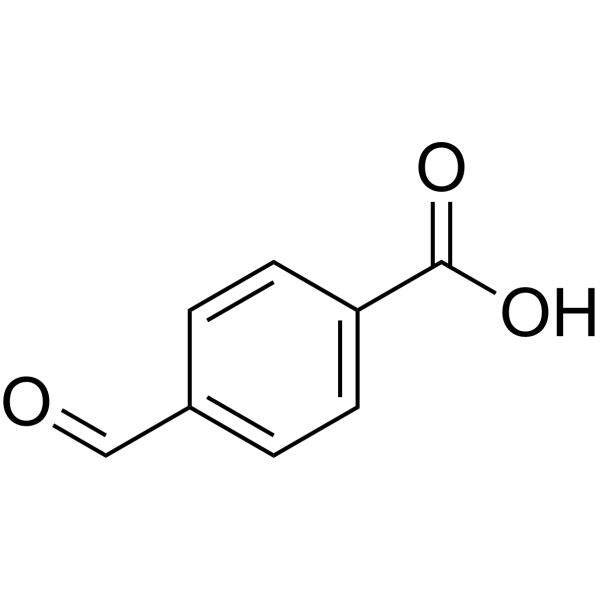
HY-W017446
4-Formylbenzoic acidBiochemical Reagent -
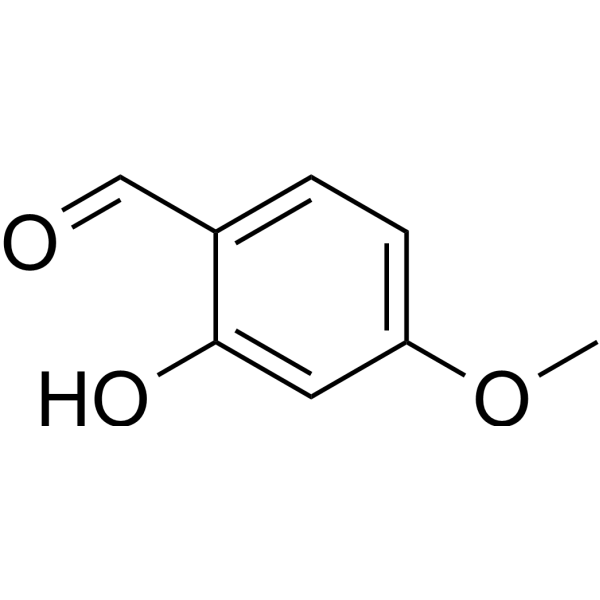
HY-N0445
2-Hydroxy-4-methoxybenzaldehydeTyrosinase Inhibitor -
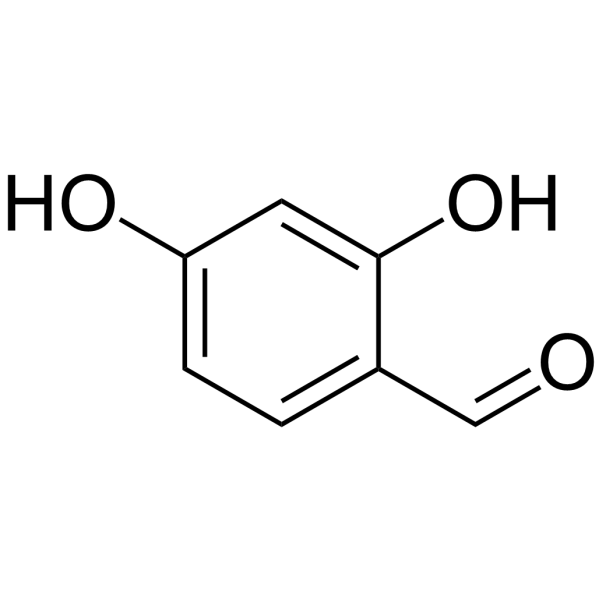
HY-W007539
2,4-DihydroxybenzaldehydeDrug Intermediate -
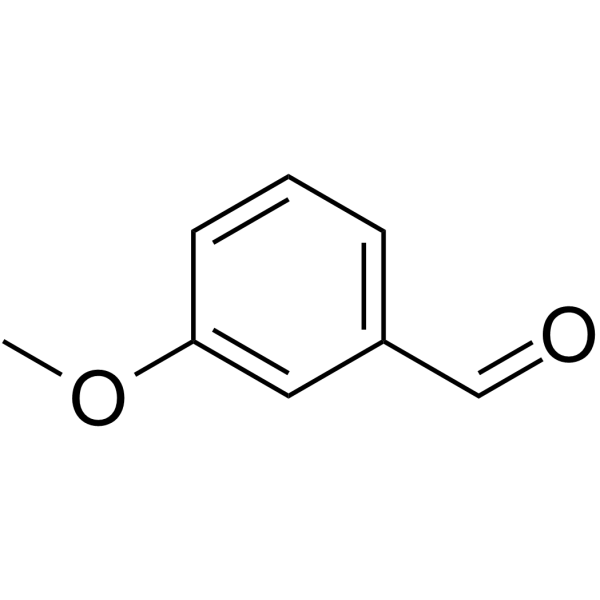
HY-W007346
m-AnisaldehydeAromatic Aldehyde -
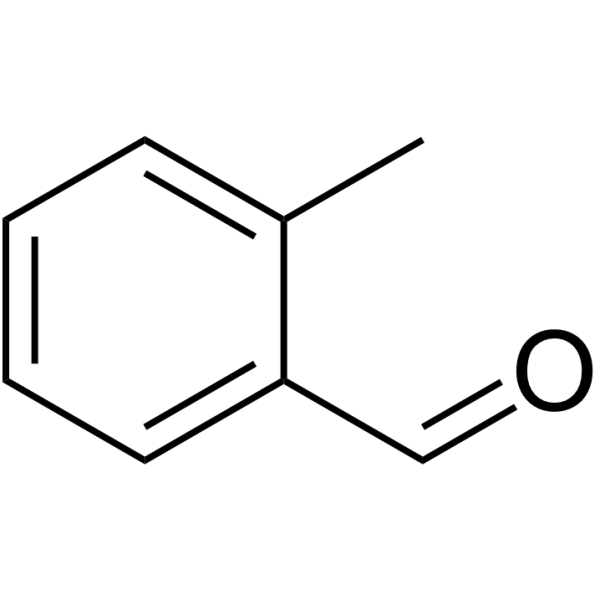
HY-Y0442
2-MethylbenzaldehydeAcaricide -
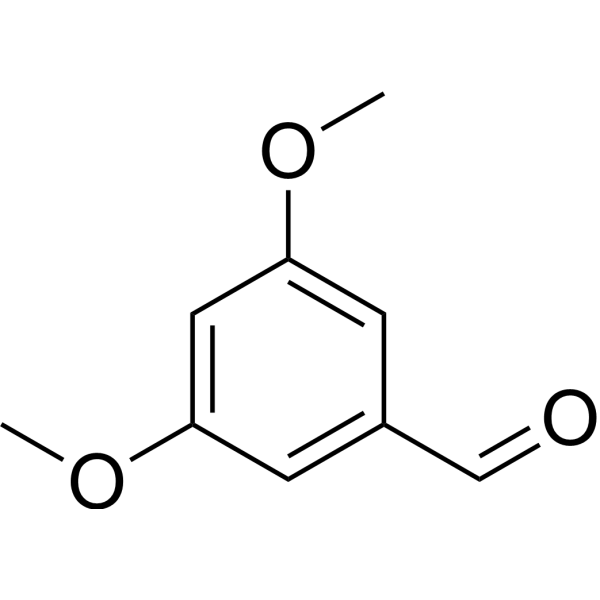
HY-W007626
3,5-DimethoxybenzaldehydeAntifungal Agent -
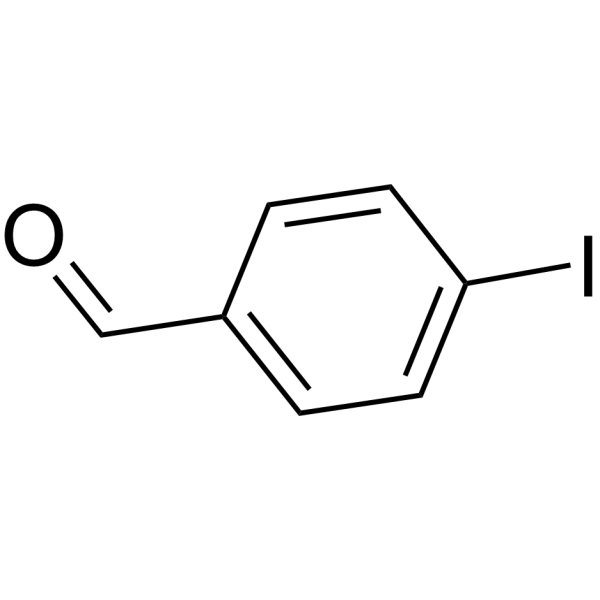
HY-W002179
4-IodobenzaldehydeSynthetic intermediate -

HY-W007346R
m-Anisaldehyde (Standard)Reference Standard -

HY-W007539R
2,4-Dihydroxybenzaldehyde (Standard)Drug Intermediate


Biological Activity
Description
In Vitro
Terephthalaldehyde (0.005-0.025 g/g gelatin) consistently induces chemical cross-linking of porcine skin gelatin solutions at 60 °C, with a 100% sol-gel transition rate and average gel formation time of 25 min at 0.005 g TPA/g gelatin, while cross-linking is inconsistent or absent at lower temperatures[1].
Terephthalaldehyde (0.025 mol L-1; 25-30 min stirring, 40 min ultrasonication at 40 °C, 2-3 days setting) crosslinks chitosan-acrylic acid to form the CAAT hydrogel, which has a homogeneous porous amorphous structure, high thermal stability, extreme hydrophilicity with 3287% maximum swelling at pH 10, and follows Fickian swelling kinetics[2].
MedChemExpress (MCE) has not independently confirmed the accuracy of these methods. They are for reference only.


Chemical Information
-
CAS No. 623-27-8
-
Appearance Solid
-
Molecular Weight 134.13
-
Formula C8H6O2
-
Color Off-white to light yellow
-
SMILES
O=CC1=CC=C(C=O)C=C1
-
Shipping
Room temperature in continental US; may vary elsewhere.
-
Storage
4°C, stored under nitrogen
* In solvent : -80°C, 6 months; -20°C, 1 month (stored under nitrogen)


Solvent & Solubility
In Vitro:
DMSO : 50 mg/mL (372.77 mM; Need ultrasonic; Hygroscopic DMSO has a significant impact on the solubility of product, please use newly opened DMSO)
Ethanol : 40 mg/mL (298.22 mM; Need ultrasonic)
Please refer to the solubility information to select the appropriate solvent. Once prepared, please aliquot and store the solution to prevent product inactivation from repeated freeze-thaw cycles.
Storage method and period of stock solution: -80°C, 6 months; -20°C, 1 month (stored under nitrogen). When stored at -80°C, please use it within 6 months. When stored at -20°C, please use it within 1 month.
Please refer to the solubility information to select the appropriate solvent. Once prepared, please aliquot and store the solution to prevent product inactivation from repeated freeze-thaw cycles.
Storage method and period of stock solution: -80°C, 6 months; -20°C, 1 month (stored under nitrogen). When stored at -80°C, please use it within 6 months. When stored at -20°C, please use it within 1 month.
Concentration (start) × Volume (start) = Concentration (final) × Volume (final)
In Vivo:
Select the appropriate dissolution method based on your experimental animal and administration route.
- For the following dissolution methods, please ensure to first prepare a clear stock solution using an In Vitro approach and then sequentially add co-solvents:
- To ensure reliable experimental results, the clarified stock solution can be appropriately stored based on storage conditions. As for the working solution for In Vivo experiments, it is recommended to prepare freshly and use it on the same day.
- The percentages shown for the solvents indicate their volumetric ratio in the final prepared solution. If precipitation or phase separation occurs during preparation, heat and/or sonication can be used to aid dissolution.
Add each solvent one by one: 10% DMSO 40% PEG300 5% Tween-80 45% Saline
Solubility: ≥ 5 mg/mL (37.28 mM); Clear solution
This protocol yields a clear solution of ≥ 5 mg/mL (saturation unknown).
Taking 1 mL working solution as an example, add 100 μL DMSO stock solution (50.0 mg/mL) to 400 μL PEG300, and mix evenly; then add 50 μL Tween-80 and mix evenly; then add 450 μL Saline to adjust the volume to 1 mL.
Preparation of Saline: Dissolve 0.9 g sodium chloride in ddH₂O and dilute to 100 mL to obtain a clear Saline solution.
Add each solvent one by one: 10% EtOH 40% PEG300 5% Tween-80 45% Saline
Solubility: ≥ 4 mg/mL (29.82 mM); Clear solution
This protocol yields a clear solution of ≥ 4 mg/mL (saturation unknown).
Taking 1 mL working solution as an example, add 100 μL EtOH stock solution (40.0 mg/mL) to 400 μL PEG300, and mix evenly; then add 50 μL Tween-80 and mix evenly; then add 450 μL Saline to adjust the volume to 1 mL.
Preparation of Saline: Dissolve 0.9 g sodium chloride in ddH₂O and dilute to 100 mL to obtain a clear Saline solution.
Add each solvent one by one: 10% EtOH 90% (20% SBE-β-CD in Saline)
Solubility: ≥ 4 mg/mL (29.82 mM); Clear solution
This protocol yields a clear solution of ≥ 4 mg/mL (saturation unknown).
Taking 1 mL working solution as an example, add 100 μL EtOH stock solution (40.0 mg/mL) to 900 μL 20% SBE-β-CD in Saline, and mix evenly.
Preparation of 20% SBE-β-CD in Saline (4°C, storage for one week): 2 g SBE-β-CD powder is dissolved in 10 mL Saline, completely dissolve until clear.
Add each solvent one by one: 10% EtOH 90% Corn Oil
Solubility: ≥ 4 mg/mL (29.82 mM); Clear solution
This protocol yields a clear solution of ≥ 4 mg/mL (saturation unknown). If the continuous dosing period exceeds half a month, please choose this protocol carefully.
Taking 1 mL working solution as an example, add 100 μL EtOH stock solution (40.0 mg/mL) to 900 μL Corn oil, and mix evenly.
In Vivo Dissolution Calculator
Please enter the basic information of animal experiments:
-
-
-
-
Recommended: Prepare an additional quantity of animals to account for potential losses during experiments.
Please enter your animal formula composition:
-
%DMSO +
Recommended: Keep the proportion of DMSO in working solution below 2% if your animal is weak.
-
%+
-
+%Tween-80 + +
-
%Saline +
The co-solvents required include: DMSO, . All of co-solvents are available by MedChemExpress (MCE). , Tween 80. All of co-solvents are available by MedChemExpress (MCE).
Working solution concentration: 0.22 mg/mL
Method for preparing stock solution: mg drug dissolved in μL DMSO. Stock solution concentration: mg/mL. * In solvent : -80°C, 6 months; -20°C, 1 month (stored under nitrogen)
1. Take μL DMSO stock solution;
2. Add μL .
μL , mix evenly;
3. Then add μL Tween 80, mix evenly;
4. Then add μL
Please ensure that the stock solution in the first step is dissolved to a clear state, and add co-solvents in sequence. You can use ultrasonic heating (ultrasonic cleaner, recommended frequency 20-40 kHz), vortexing, etc. to assist dissolution.


Purity & Documentation
-
Data Sheet (274 KB)
-
SDS (394 KB)
- English - EN (394 KB)
- Français - FR (394 KB)
- Deutsch - DE (394 KB)
- Norwegian - NO (394 KB)
- Español - ES (394 KB)
- Swedish - SV (394 KB)
- Italian - IT (394 KB)
- Korean - KR (394 KB)
- Portuguese - PT (394 KB)
-
Handling Instructions (2659 KB)
References


Complete Stock Solution Preparation Table
Please refer to the solubility information to select the appropriate solvent. Once prepared, please aliquot and store the solution to prevent product inactivation from repeated freeze-thaw cycles.
Storage method and period of stock solution: -80°C, 6 months; -20°C, 1 month (stored under nitrogen). When stored at -80°C, please use it within 6 months. When stored at -20°C, please use it within 1 month.
| Optional Solvent | Concentration Solvent Mass | 1 mg | 5 mg | 10 mg | 25 mg |
|---|---|---|---|---|---|
| Ethanol / DMSO | 1 mM | 7.4555 mL | 37.2773 mL | 74.5545 mL | 186.3863 mL |
| 5 mM | 1.4911 mL | 7.4555 mL | 14.9109 mL | 37.2773 mL | |
| 10 mM | 0.7455 mL | 3.7277 mL | 7.4555 mL | 18.6386 mL | |
| 15 mM | 0.4970 mL | 2.4852 mL | 4.9703 mL | 12.4258 mL | |
| 20 mM | 0.3728 mL | 1.8639 mL | 3.7277 mL | 9.3193 mL | |
| 25 mM | 0.2982 mL | 1.4911 mL | 2.9822 mL | 7.4555 mL | |
| 30 mM | 0.2485 mL | 1.2426 mL | 2.4852 mL | 6.2129 mL | |
| 40 mM | 0.1864 mL | 0.9319 mL | 1.8639 mL | 4.6597 mL | |
| 50 mM | 0.1491 mL | 0.7455 mL | 1.4911 mL | 3.7277 mL | |
| 60 mM | 0.1243 mL | 0.6213 mL | 1.2426 mL | 3.1064 mL | |
| 80 mM | 0.0932 mL | 0.4660 mL | 0.9319 mL | 2.3298 mL | |
| 100 mM | 0.0746 mL | 0.3728 mL | 0.7455 mL | 1.8639 mL |


Terephthalaldehyde Related Classifications
HY-Y0425 Related Classifications
 Powered by Bioz
Keywords