



623-27-8

Chemical Structure
Terephthalaldehyde
- CAS 番号: 623-27-8
- Formula:C8H6O2
- Molecular Weight:134.13
IUPAC Name: terephthalaldehyde
InChIKey: KUCOHFSKRZZVRO-UHFFFAOYSA-N
SMILES: O=CC1=CC=C(C=O)C=C1
Biological Activity: Terephthalaldehyde is a crosslinking agent. Terephthalaldehyde forms a crosslinked structure inside the gelatin matrix by forming Schiff base imines with the amino groups of gelatin, thereby constructing a three-dimensional network. Terephthalaldehyde improves the hydrophobicity of the gelatin matrix, delays water vapor penetration and enhances the liquid water resistance of gelatin films. Terephthalaldehyde can be used as a crosslinking agent to prepare crosslinked chitosan hydrogel (CAAT) via ultrasound-induced synthesis. Terephthalaldehyde helps CAAT hydrogels selectively adsorb anionic dyes from aqueous media, including multi-component systems containing cationic dyes. Terephthalaldehyde serves as a starting material for the synthesis of bis-heterocyclic compounds (including bis-thiazole and bis-triazolopyrimidine compounds)[1][2][3].
| 製品番号 | 製品名 | 純度 | 製品説明 | Pricing | |||||||||||||||||||
|---|---|---|---|---|---|---|---|---|---|---|---|---|---|---|---|---|---|---|---|---|---|---|---|
|
|
Terephthalaldehyde | 99.91% | Terephthalaldehyde is a crosslinking agent. Terephthalaldehyde forms a crosslinked structure inside the gelatin matrix by forming Schiff base imines with the amino groups of gelatin, thereby constructing a three-dimensional network. Terephthalaldehyde improves the hydrophobicity of the gelatin matrix, delays water vapor penetration and enhances the liquid water resistance of gelatin films. Terephthalaldehyde can be used as a crosslinking agent to prepare crosslinked chitosan hydrogel (CAAT) via ultrasound-induced synthesis. Terephthalaldehyde helps CAAT hydrogels selectively adsorb anionic dyes from aqueous media, including multi-component systems containing cationic dyes. Terephthalaldehyde serves as a starting material for the synthesis of bis-heterocyclic compounds (including bis-thiazole and bis-triazolopyrimidine compounds). | ||||||||||||||||||||
|
loading...
/
|
|||||||||||||||||||||||
-
Similarity Score 0.85
 HY-W012669Phthalaldehyde
-
Similarity Score 0.83
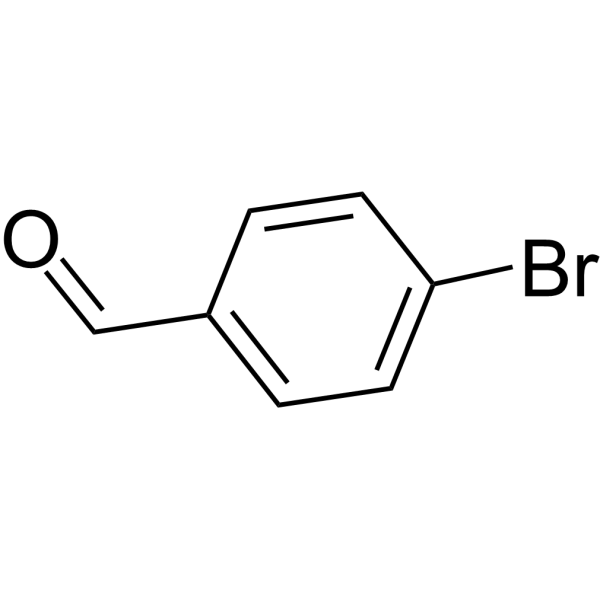 HY-W0011384-Bromobenzaldehyde
-
Similarity Score 0.83
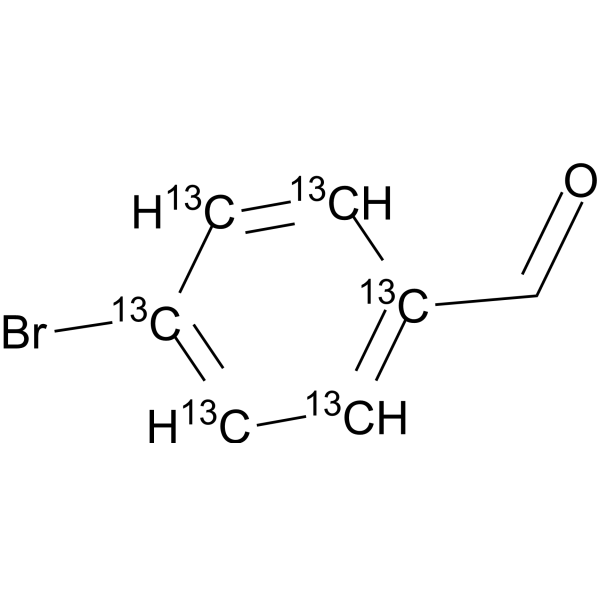 HY-W001138S4-Bromobenzaldehyde-13C6
-
Similarity Score 0.83
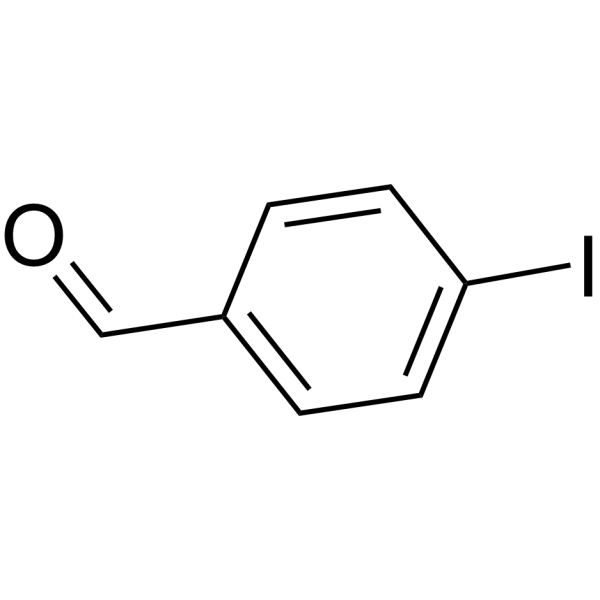 HY-W0021794-Iodobenzaldehyde
-
Similarity Score 0.83
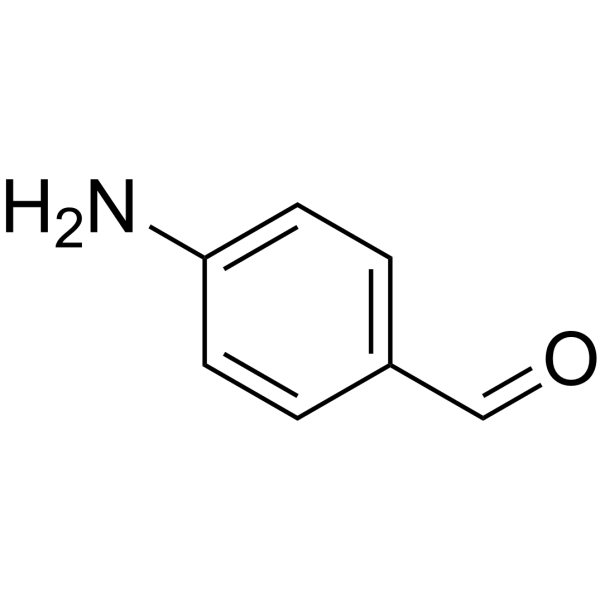 HY-W0768364-Aminobenzaldehyde
-
Similarity Score 0.83
 HY-W747264P-Hydroxybenzaldehyde-13C6
-
Similarity Score 0.83
 HY-Y01974-Fluorobenzaldehyde
-
Similarity Score 0.83
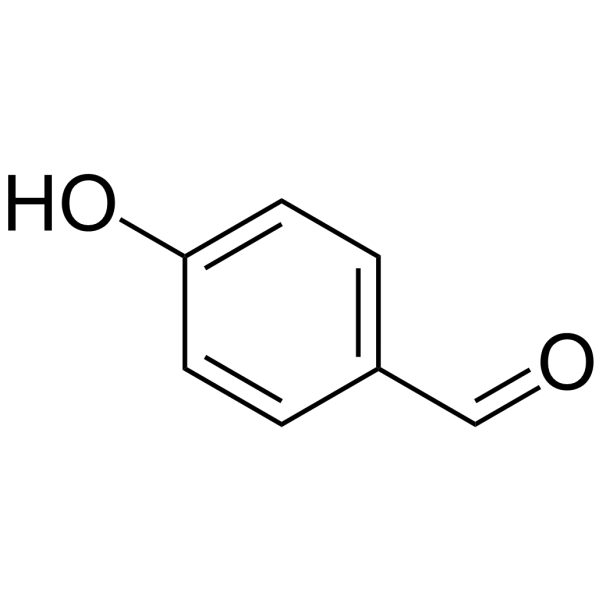 HY-Y0313p-Hydroxybenzaldehyde
-
Similarity Score 0.83
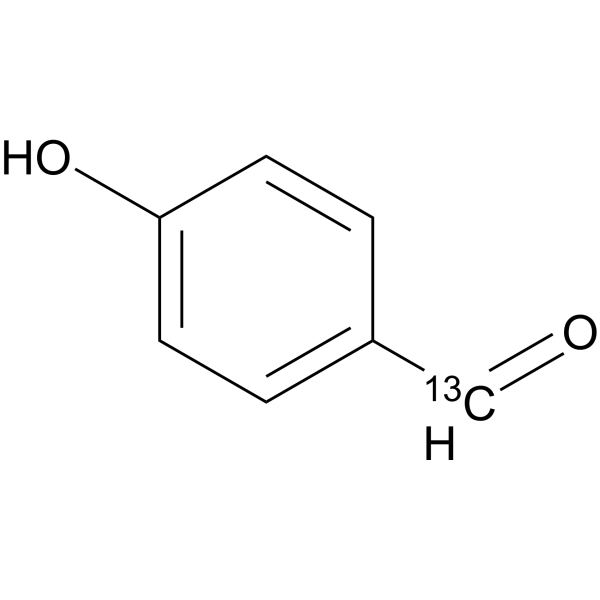 HY-Y0313S1p-Hydroxybenzaldehyde-13C
-

Explore the MedChemAI to find more analogs


References
- [1]. Biscarat J, et al. Effect of chemical cross-linking on gelatin membrane solubility with a non-toxic and non-volatile agent: terephthalaldehyde. Int J Biol Macromol. 2015;74:5-11. [Content Brief]
- [2]. Garg M, et al. Terephthalaldehyde as a good crosslinking agent in crosslinked chitosan hydrogel for the selective removal of anionic dyes[J]. New Journal of Chemistry, 2021, 45(11): 4938-4949.
- [3]. Gomha S M, et al. Terephthalaldehyde: An Effecient Key Precursor for Novel Synthesis of Some Interesting Bis‐thiazoles and Bis‐triazolopyrimidinones[J]. Journal of Heterocyclic Chemistry, 2018, 55(3): 750-755.



