



Nile Red (solution)

Based on 1 Customer Validation
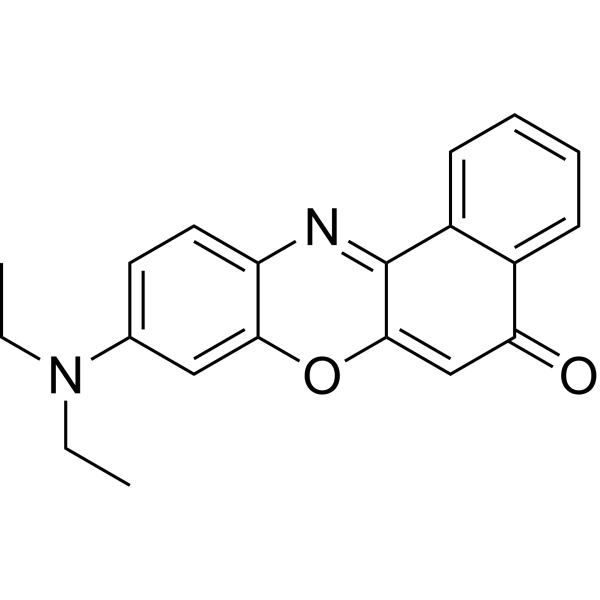
Nile Red (solution) is a lipophilic stain. Nile red has environment-sensitive fluorescence. Nile red is intensely fluorescent in a lipid-rich environment while it has minimal fluorescence in aqueous media. Nile red is an excellent vital stain for the detection of intracellular lipid droplets by fluorescence microscopy and flow cytof uorometry. Nile red stains intracellular lipid droplets red. The fluorescence wavelength is 559/635 nm.
Solvent and concentration: DMSO: 1 mM
Nos produits utilisent uniquement pour la recherche. Nous ne vendons pas aux patients.
- CAS No.: 7385-67-3
- Formule: C20H18N2O2
- Masse moléculaire:318.38
-
Stockage:
Please store the product under the recommended conditions in the Certificate of Analysis.


To place orders, for customer services and technical support, please contact: MedChemExpress USA
Tel: 609-228-6898 E-mail: [email protected] [email protected]


-
 Activité biologique
-
Chemical Information
- Protocole
- Pureté et documentation
- Références
-
 Help & FAQs


-
HY-D0718
Nile RedHydrophobic Fluorescent Stain -
HY-D0236
Congo RedAzo Dye -
HY-66019
FITCFluorochrome -
HY-D1028
DiD perchlorateDye -
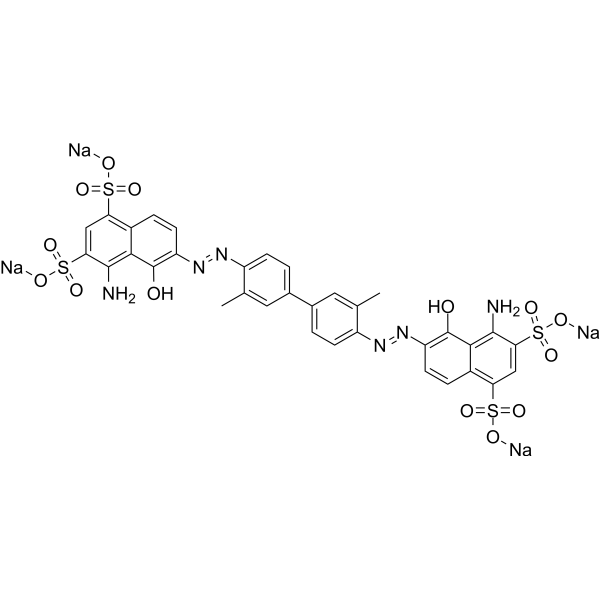
HY-B1102
Evans BlueL-glutamate Uptake Inhibitor -
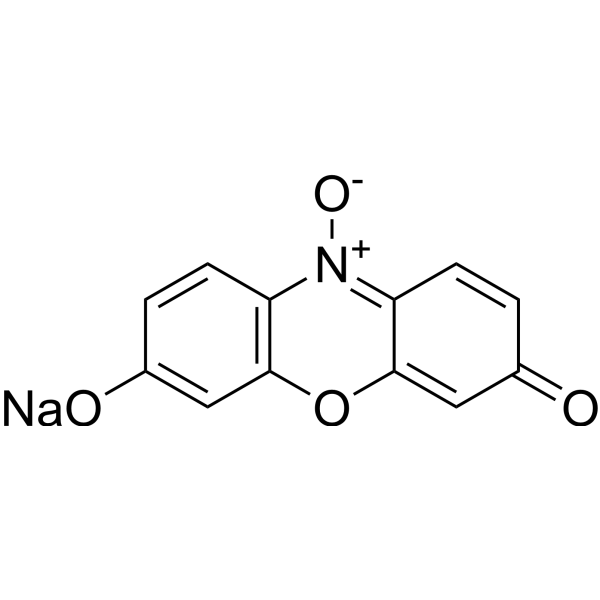
HY-111391
Resazurin sodiumBacterial Inhibitor -
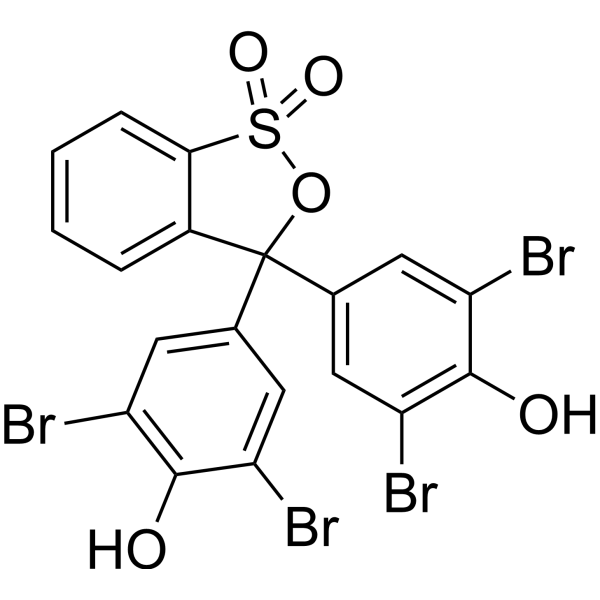
HY-B1571
Bromophenol bluepH Indicator -
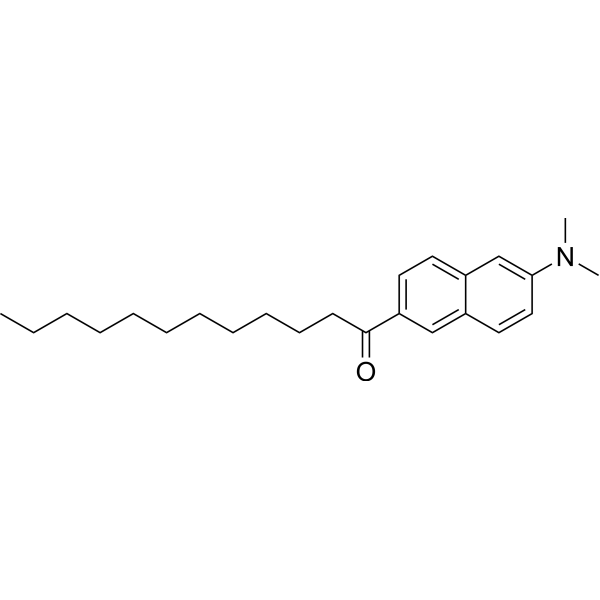
HY-D0080
LaurdanFluorescent Probe -
HY-D0815
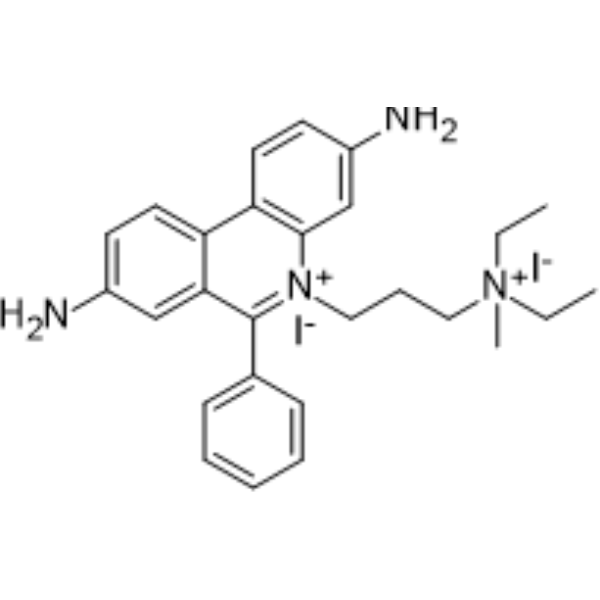
Propidium IodideFluorochrome -
HY-126793
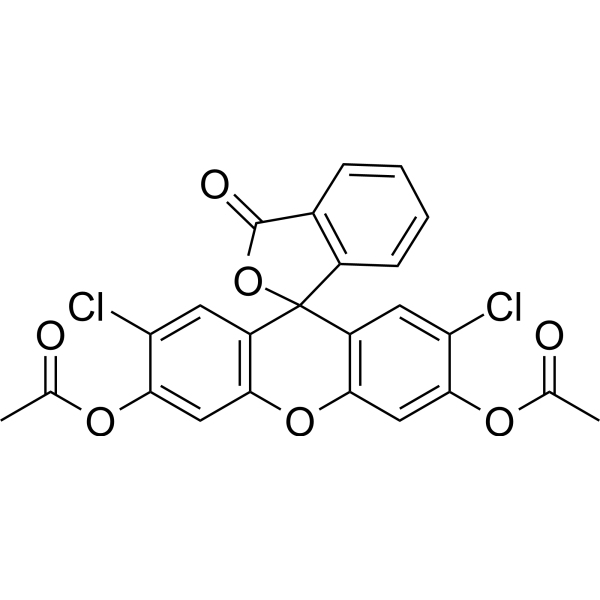
2′,7′-Dichlorofluorescein diacetateFluorescent Probe -
HY-15924
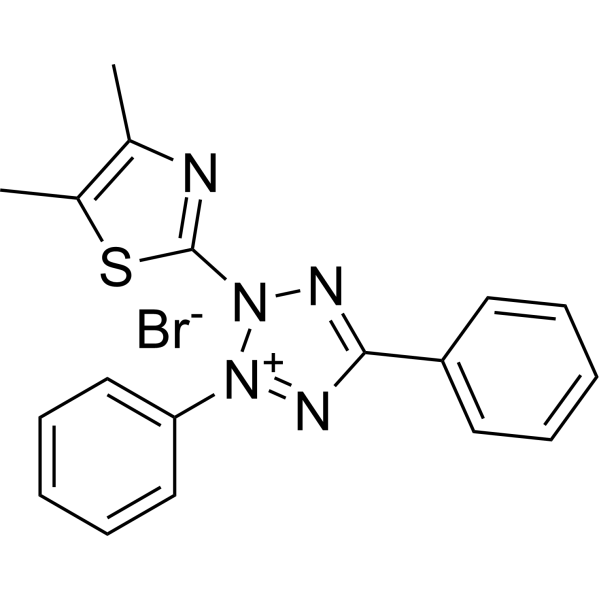
Thiazolyl BlueCytotoxicity Detection Reagent -
HY-D1048
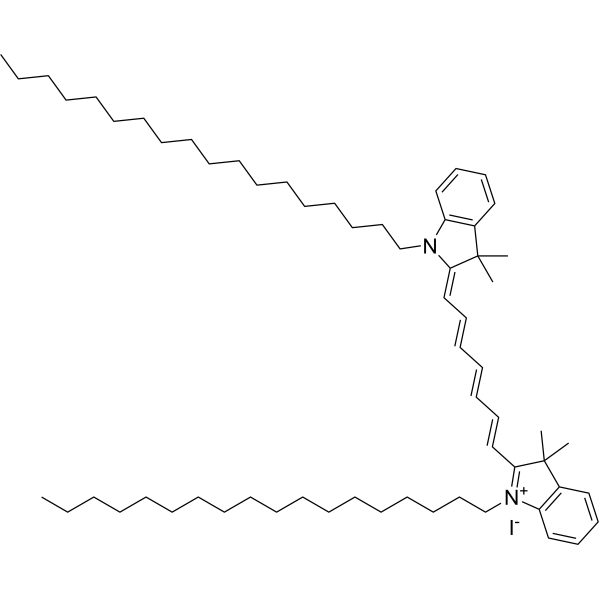
DiRMembrane Dye


Activité biologique
Description
Solvent and concentration: DMSO: 1 mM
Cellular Effect
|
Cell Line

|
Type | Value | Description | References |
|---|---|---|---|---|
| L6 | IC50 |
65.9 μM
Compound: 7
|
Cytotoxicity against rat L6 cells
Cytotoxicity against rat L6 cells
|
[PMID: 24900219] |
In Vitro
Guide (The following is our recommended solution. This solution is merely a guideline and should be modified according to your specific needs.)
1. Preparation of working solution
Dilute the stored solution with preheated serum-free cell culture medium or PBS to a final concentration of 200-1000 nM.
Note: Please adjust the concentration of Nile Red working solution according to the actual situation, and prepare it as needed.
2. Cell staining
2.1 Suspension cells: Centrifuge to collect cells, add PBS for two washes, each for 5 minutes.
Adherent cells: Discard the culture medium, add trypsin to digest the cells. Centrifuge and discard the supernatant, then add PBS for two washes, each for 5 minutes.
2.2 Add 1 mL of Nile Red working solution, incubate at room temperature for 5-10 minutes.
2.3 Centrifuge at 400 g for 3-4 minutes at 4℃, discard the supernatant.
2.4 Add PBS for two washes of the cells, each for 5 minutes.
2.5 Resuspend the cells in 1 mL of serum-free medium or PBS, and observe using a fluorescence microscope.
MedChemExpress (MCE) has not independently confirmed the accuracy of these methods. They are for reference only.
In Vivo
MedChemExpress (MCE) has not independently confirmed the accuracy of these methods. They are for reference only.


Chemical Information
-
CAS No. 7385-67-3
-
Appearance Liquid (Density: 1.2 g/cm3)
-
Masse moléculaire 318.38
-
Formule C20H18N2O2
-
Color Orange to red
-
SMILES
O=C1C2=CC=CC=C2C3=NC4=CC=C(N(CC)CC)C=C4OC3=C1
-
Livraison
Room temperature in continental US; may vary elsewhere.
-
Stockage
Please store the product under the recommended conditions in the Certificate of Analysis.


Pureté et documentation
-
Fiche technique (273 KB)
-
SDS (251 KB)
- English - EN (251 KB)
- Français - FR (251 KB)
- Deutsch - DE (251 KB)
- Norwegian - NO (251 KB)
- Español - ES (251 KB)
- Swedish - SV (251 KB)
- Italian - IT (251 KB)
- Korean - KR (251 KB)
- Portuguese - PT (251 KB)
-
Instruction de manipulation (2659 KB)
Références
[1]. Gibrán S Alemán-Nava, et al. How to use Nile Red, a selective fluorescent stain for microalgal neutral lipids. J Microbiol Methods. 2016 Sep;128:74-79. [Content Brief]
[2]. Wilber Escorcia, et al. Quantification of Lipid Abundance and Evaluation of Lipid Distribution in Caenorhabditis elegans by Nile Red and Oil Red O Staining. J Vis Exp. 2018 Mar 5;(133):57352. [Content Brief]
[3]. Elizabeth C Pino, et al. Biochemical and high throughput microscopic assessment of fat mass in Caenorhabditis elegans. J Vis Exp. 2013 Mar 30;(73):50180. [Content Brief]
[4]. Greenspan P, et al. Nile red: a selective fluorescent stain for intracellular lipid droplets. J Cell Biol. 1985 Mar;100(3):965-73. [Content Brief]

Calculators
Concentration (start) × Volume (start) = Concentration (final) × Volume (final)


Nile Red (solution) Related Classifications
HY-DY1008 Related Classifications
 Powered by Bioz