1. Search Result
Search Result
Results for "

dopamine metabolism

" in MedChemExpress (MCE) Product Catalog:

29

Inhibitors & Agonists

1

Fluorescent Dyes

1

Biochemical Assay Reagents

2

Peptides

2

Natural
Products

1

Isotope-Labeled Compounds

1

GMP Molecules

Art. -Nr. Produktname Target Forschungsgebiete Chemical Structure
  • HY-13409
    SB 242084
    Maximum Cited Publications
    6 Publications Verification

    5-HT Receptor Neurological Disease Metabolic Disease
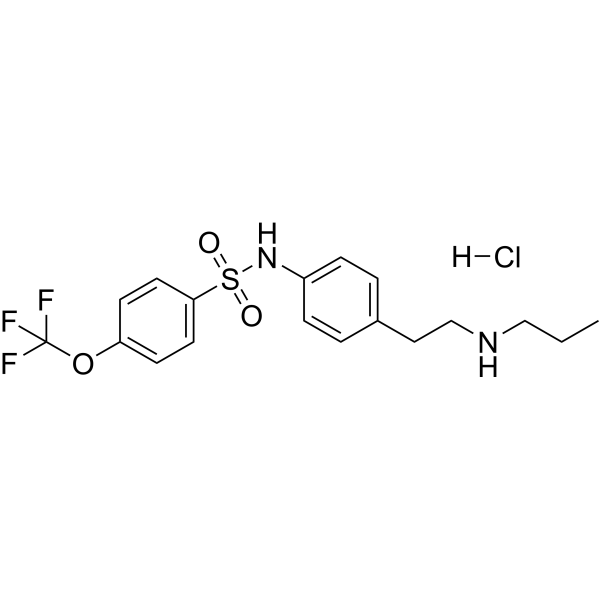
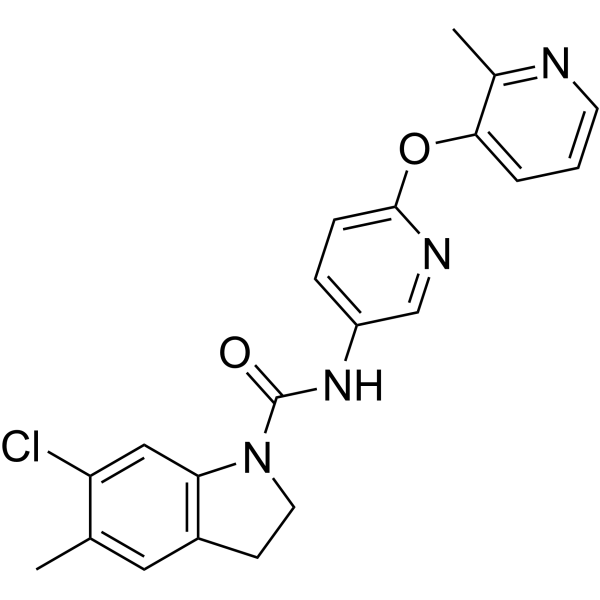
    SB 242084 is a selective, competitive and high-affinity (pKi=9.0) 5-HT2C receptor antagonist (crosses the blood-brain barrier). SB 242084 increases basal activity of dopaminergic neurons in the ventral tegmental area (VTA) of the midbrain and dopamine release in the vomeronasal nucleus. SB 242084 also increases mitochondrial gene expression and oxidative metabolism via 5-HT2A receptor. SB 242084 has good research potential in the negative symptoms of anxiety, depression and schizophrenia, as well as in acute organ damage .
    SB 242084
  • HY-107413

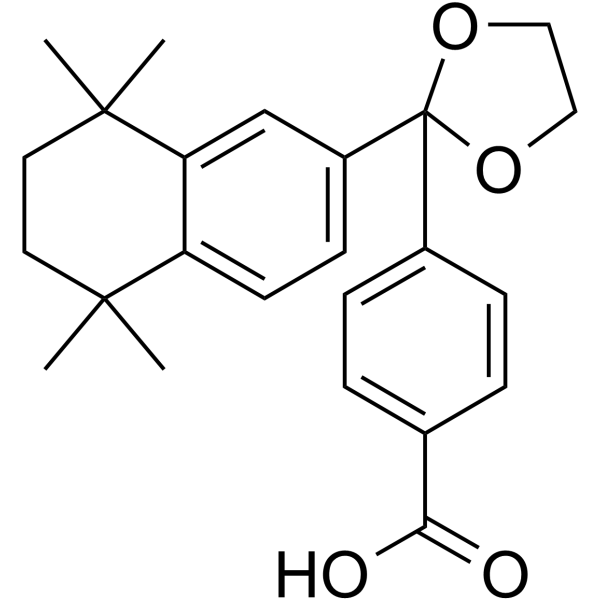
    BMS-649

    RAR/RXR Tyrosine Hydroxylase Cancer
    SR11237 (BMS-649) GMP is SR11237 (HY-107413) produced by using GMP guidelines. GMP small molecules works appropriately as an auxiliary reagent for cell therapy manufacture. SR11237 is a RXR activator and lipid metabolism regulator that promotes the differentiation of induced neural stem cells into dopaminergic (TH-positive) neurons. SR11237 induces transcriptional regulation of lipogenic genes and cholesterol transporters, increases glycosaminoglycan release, and elevates total cellular triglyceride levels. SR11237 promotes heterodimerization of RXR with Nurr1, thereby enhancing tyrosine hydroxylase expression and facilitating dopamine release. SR11237 produces a synergistic effect when used in combination with bFGF/EGF. SR11237 is mainly used in studies related to osteoarthritis and Parkinson's disease .
    SR11237
  • HY-B1311
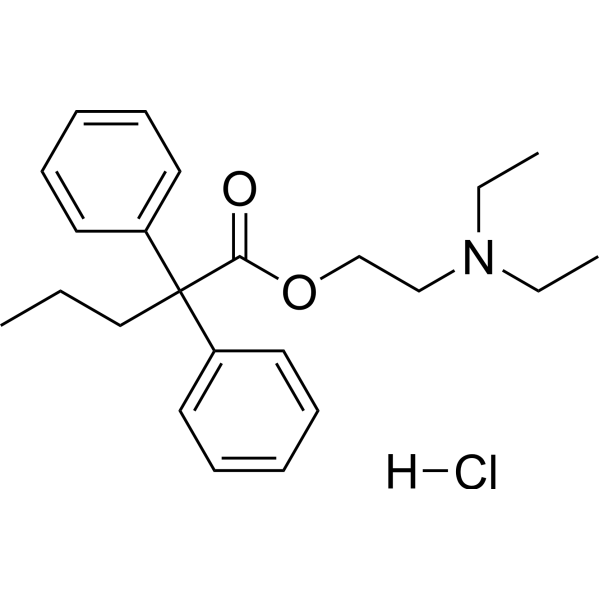
    Proadifen hydrochloride
    1 Publications Verification

    SKF-525A; U-5446; RP-5171

    Cytochrome P450 Monoamine Oxidase Bcl-2 Family Survivin PARP Neurological Disease Inflammation/Immunology Cancer
    Proadifen (SKF-525A) hydrochloride is a non-competitive Cytochrome P450 inhibitor with an IC50 value of 19 μM. Proadifen hydrochloride reduces monoamine oxidase A (MAO-A) activity and reverses the antidepressantlike behavioral effect of Imipramine (HY-B1490A) and Desipramine (HY-B1272A) in rats. Proadifen hydrochloride also reduces N, N-dimethyltryptamine (DMT) metabolism in liver microsomes and inhibits N-demethylationand Acridone (HY-W007771) formation. Proadifen hydrochloride augments Lipopolysaccharide (LPS) (HY-D1056)-induced fever and exacerbates Prostaglandin E2 (PGE2) (HY-101952) levels in the rat. Proadifen hydrochloride is promising for research of metabolism-related deseases, ovarian carcinoma, inflammation and dopamine neurons-related deseases .
    Proadifen hydrochloride
  • HY-Z0283
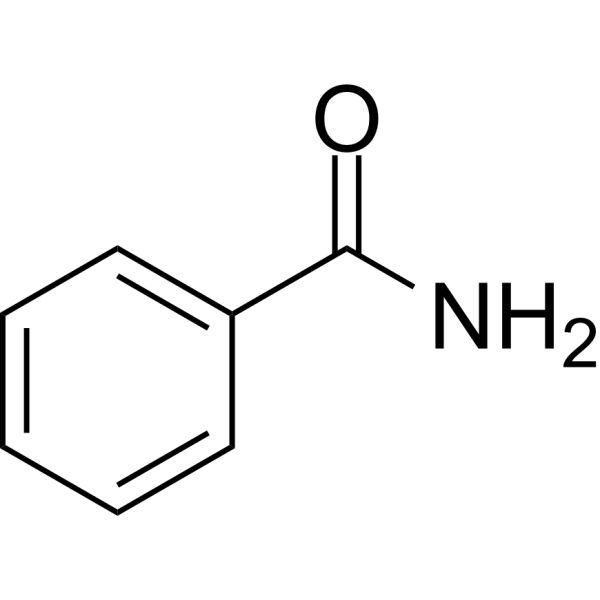
    Benzamide
    1 Publications Verification

    Benzenecarboxamide; Phenylamide

    Endogenous Metabolite PARP Others
    Benzamide (Benzenecarboxamide) is a potent poly(ADP-ribose) polymerase (PARP) inhibitor. Benzamide has protective activity against both glutamate- and methamphetamine (METH)-induced neurotoxicity in vitro. Benzamide can attenuate the METH-induced dopamine depletions and exhibits neuroprotective activity in mice, also has no acute effect on striatal dopamine metabolism and does not reduce body temperature .
    Benzamide
  • HY-13409A
    SB 242084 dihydrochloride
    Maximum Cited Publications
    6 Publications Verification

    5-HT Receptor Neurological Disease Metabolic Disease
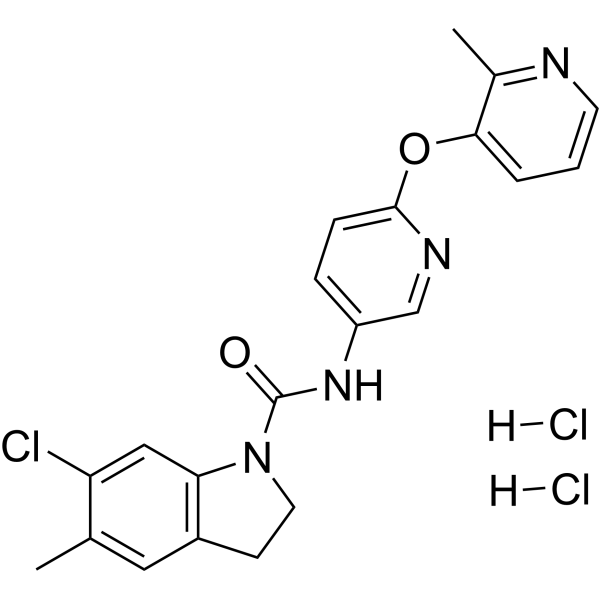
    SB 242084 dihydrochloride is a selective, competitive and high-affinity (pKi=9.0) 5-HT2C receptor antagonist (crosses the blood-brain barrier). SB 242084 dihydrochloride increases basal activity of dopaminergic neurons in the ventral tegmental area (VTA) of the midbrain and dopamine release in the vomeronasal nucleus. SB 242084 dihydrochloride also increases mitochondrial gene expression and oxidative metabolism via 5-HT2A receptor. SB 242084 dihydrochloride has good research potential in the negative symptoms of anxiety, depression and schizophrenia, as well as in acute organ damage .
    SB 242084 dihydrochloride
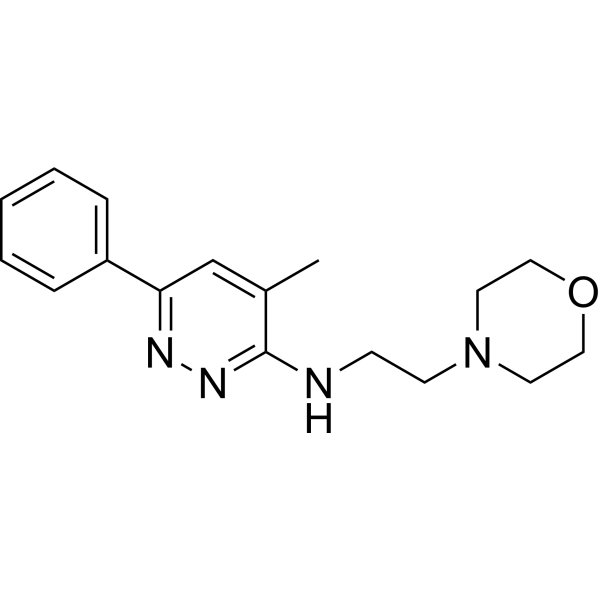
  • HY-B0884A

    Monoamine Oxidase Cholinesterase (ChE) Neurological Disease
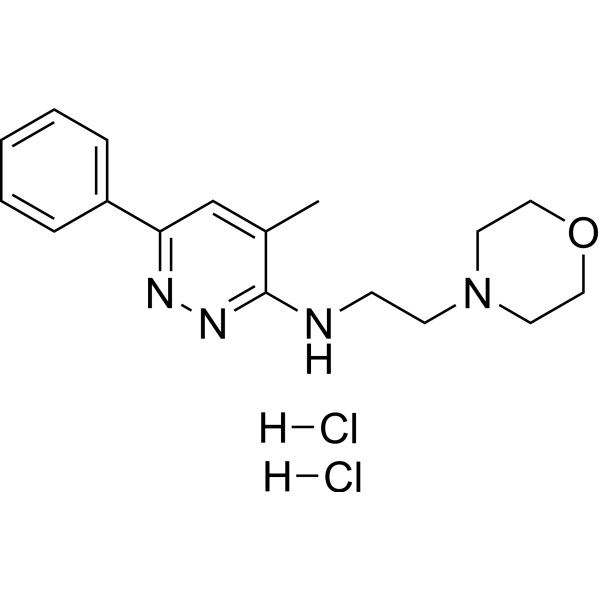
    Minaprine dihydrochloride is a brain-penetrant monoamine oxidase inhibitor. Minaprine dihydrochloride also weakly inhibits acetylcholinesterase (AChE) activity. Minaprine dihydrochloride reduces intraneuronal dopamine metabolism, lowers striatal homovanillic acid and dihydroxyphenylacetic acid levels, and raises striatal 3-methoxytyramine and 5-hydroxytryptamine levels. Minaprine dihydrochloride exhibits convulsant, antidepressant properties .
    Minaprine dihydrochloride
  • HY-G0002

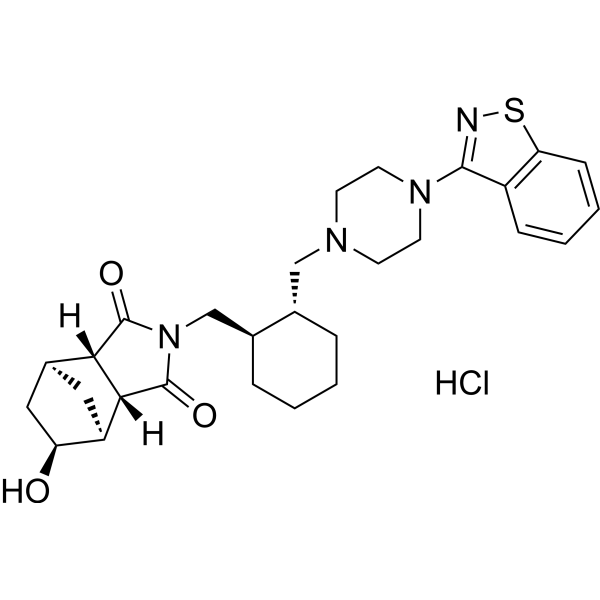
    Drug Metabolite Dopamine Receptor 5-HT Receptor Neurological Disease
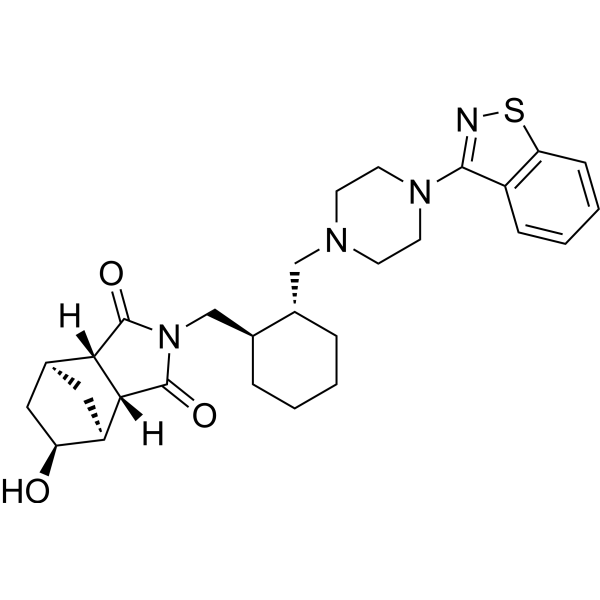
    Lurasidone metabolite 14326 is a minor active metabolite of Lurasidone (HY-B0032A) generated via metabolism by CYP3A4. Lurasidone metabolite 14326 shares similar receptor-binding properties with Lurasidone, acting as an antagonist of the dopamine D2 receptor (dopamine D2 receptor), an antagonist of the serotonin 5-HT2A and 5-HT7 receptors (5-HT2A and 5-HT7 receptor), and a partial agonist of the serotonin 5-HT1A receptor. Lurasidone metabolite 14326 can be used in the research of schizophrenia and bipolar depression .
    Lurasidone metabolite 14326
  • HY-P3801

    DiMe-C7

    Neurokinin Receptor Neurological Disease Metabolic Disease
    [Glp5,(Me)Phe8,Sar9] Substance P (5-11) (DiMe-C7) is a Substance P (HY-P0201) analogue that has approximately the same effects as Substance P (HY-P0201) on neurokinin 1 receptor (NK1R) in rat brain, but with a much longer duration of action. [Glp5,(Me)Phe8,Sar9] Substance P (5-11) selectively activates dopamine metabolism in the mesencephalon and midbrain cortex of the rat brain. [Glp5,(Me)Phe8,Sar9] Substance P (5-11) also increases motor activity and induces recovery of addictive agent-seeking behavior in rats .
    [Glp5,(Me)Phe8,Sar9] Substance P (5-11)
  • HY-101102

    Dopamine Receptor Neurological Disease
    7-Hydroxy-DPAT hydrobromide is a selective D3 dopamine receptor agonist, exhibiting significant pharmacological activity in modulating locomotor behavior and dopamine metabolism within the brain.
    7-Hydroxy-DPAT hydrobromide
  • HY-B0884

    Monoamine Oxidase Cholinesterase (ChE) Neurological Disease
    Minaprine is a brain-penetrant monoamine oxidase inhibitor. Minaprine also weakly inhibits acetylcholinesterase (AChE) activity. Minaprine reduces intraneuronal dopamine metabolism, lowers striatal homovanillic acid and dihydroxyphenylacetic acid levels, and raises striatal 3-methoxytyramine and 5-hydroxytryptamine levels. Minaprine exhibits convulsant, antidepressant properties .
    Minaprine
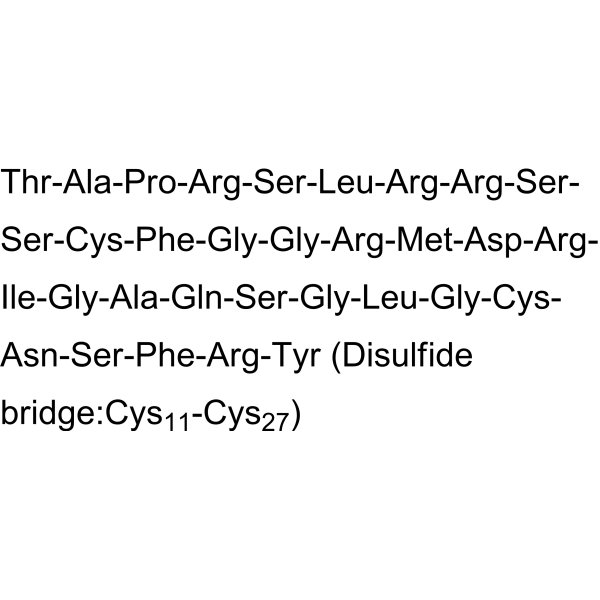
  • HY-P2687

    Urodilatin (human)

    Natriuretic Peptide Receptor (NPR) Cardiovascular Disease
    Ularitide (Urodilatin), natriuretic peptide, is a vasodilator. Ularitide binds to and activates renal receptors. Ularitide also regulates renal dopamine metabolism Ularitide can be used in the research of heart failure .
    Ularitide
  • HY-134015

    7-OH-DPAT

    Dopamine Receptor Neurological Disease
    7-Hydroxy-DPAT (7-OH-DPAT) is a selective D3 dopamine receptor agonist. 7-Hydroxy-DPAT exhibits significant pharmacological activity in modulating locomotor behavior and dopamine metabolism within the brain. 7-Hydroxy-DPAT can be used for the research of neurological disease .
    7-Hydroxy-DPAT
  • HY-W711852

    Benzenecarboxamide-d5; Phenylamide-d5

    Isotope-Labeled Compounds PARP Endogenous Metabolite Others
    Benzamide-d5 (Benzenecarboxamide-d5) is deuterium labeled Benzamide. Benzamide (Benzenecarboxamide) is a potent poly(ADP-ribose) polymerase (PARP) inhibitor. Benzamide has protective activity against both glutamate- and methamphetamine (METH)-induced neurotoxicity in vitro. Benzamide can attenuate the METH-induced dopamine depletions and exhibits neuroprotective activity in mice, also has no acute effect on striatal dopamine metabolism and does not reduce body temperature .
    Benzamide-d5
  • HY-103406

    Dopamine Receptor CCR Neurological Disease Metabolic Disease
    PNU-177864 is a potent, selective, orally active dopamine D3 receptor antagonist. PNU-177864 induces phospholipid metabolism in vivo and has anti-schizophrenia activity .
    PNU-177864
  • HY-103406A

    Dopamine Receptor CCR Neurological Disease
    PNU-177864 is a potent, selective, orally active dopamine D3 receptor antagonist. PNU-177864 induces phospholipid metabolism in vivo and has anti-schizophrenia activity .
    PNU-177864 hydrochloride
  • HY-118997

    Dopamine Receptor Neurological Disease
    PD-89211 is a selective dopamine D4 receptor antagonist with a Ki value of 3.7 nM. PD-89211 reverses Quinpirole (HY-B1752A)-induced [3H]thymidine uptake in CHOpro5 cells (IC50 = 2.1 nM). PD-89211 regulates dopamine/norepinephrine metabolism in the hippocampus and can be used for research on central nervous system disorders such as schizophrenia .
    PD-89211
  • HY-Z0283R

    Benzenecarboxamide (Standard); Phenylamide (Standard)

    Reference Standards Endogenous Metabolite PARP Others
    Benzamide (Standard) is the analytical standard of Benzamide. This product is intended for research and analytical applications. Benzamide (Benzenecarboxamide) is a potent poly(ADP-ribose) polymerase (PARP) inhibitor. Benzamide has protective activity against both glutamate- and methamphetamine (METH)-induced neurotoxicity in vitro. Benzamide can attenuate the METH-induced dopamine depletions and exhibits neuroprotective activity in mice, also has no acute effect on striatal dopamine metabolism and does not reduce body temperature .
    Benzamide (Standard)
  • HY-100822A

    (-)-HA 966

    iGluR Neurological Disease
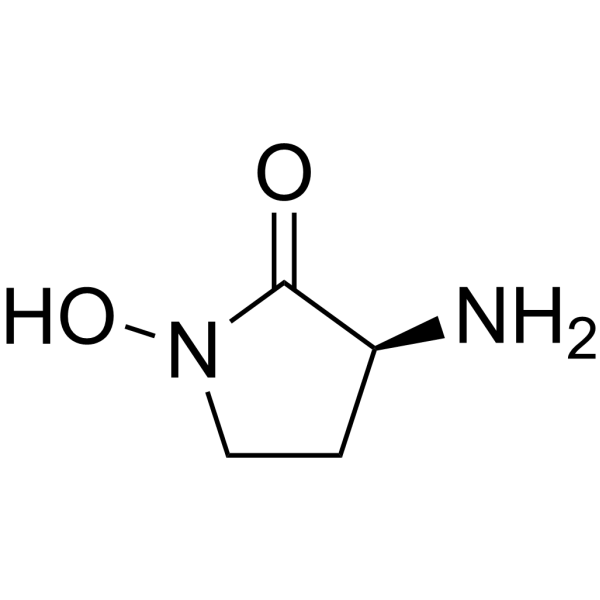
    (S)-(-)-HA 966 ((-)-HA 966), a γ-Hydroxybutyrate-like agent, is weakly active as an NMDA-receptor antagonist. (S)-(-)-HA 966 possesses muscle relaxant action and prevents enhanced mesocorticolimbic dopamine metabolism and behavioral correlates of restraint stress, conditioned fear .
    (S)-(-)-HA 966
  • HY-19186

    CI 1007

    Dopamine Receptor Neurological Disease
    PD-143188 (CI 1007) is a selective agonist targeting dopamine (DA) receptors, with Ki values of 25.5 nM and 16.6 nM for human D2 and D3 receptors, respectively and lower affinity for D4.2 receptors (Ki=90.9 nM). PD-143188 inhibits DA release, synthesis and metabolism, while reducing cellular cyclic AMP levels, exerting antipsychotic activity. PD-143188 is promising for research of psychopharmacology .
    PD-143188
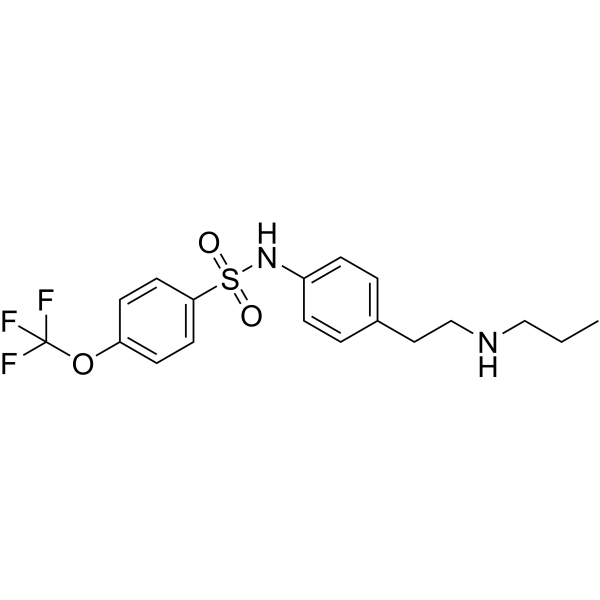
  • HY-16731

    EVT 302; RG1577; RO4602522

    Monoamine Oxidase Reactive Oxygen Species (ROS) Neurological Disease
    Sembragiline (EVT 302) is a potent, selective and reversible monoamine oxidase B (MAO-B) inhibitor. Sembragiline reduces the metabolism of dopamine and other amine neurotransmitters by inhibiting the activity of the MAO-B enzyme, thereby potentially increasing the concentration of these neurotransmitters in the brain. Inhibition of the MAO-B enzyme also reduces the formation of toxic reactive oxygen species (ROS) that play a role in the pathological process of AD. Sembragiline has good oral activity and blood-brain barrier permeability. Sembragiline can be used in studies of AD, especially in patients with AD who show increased MAO-B activity .
    Sembragiline
  • HY-B1311R

    SKF-525A (Standard); U-5446 (Standard); RP-5171 (Standard)

    Reference Standards Cytochrome P450 Monoamine Oxidase Bcl-2 Family Survivin PARP Neurological Disease Inflammation/Immunology Cancer
    Proadifen (hydrochloride) (Standard) is the analytical standard of Proadifen (hydrochloride). This product is intended for research and analytical applications. Proadifen (SKF-525A) hydrochloride is a non-competitive Cytochrome P450 inhibitor with an IC50 value of 19 μM. Proadifen hydrochloride reduces monoamine oxidase A (MAO-A) activity and reverses the antidepressantlike behavioral effect of Imipramine (HY-B1490A) and Desipramine (HY-B1272A) in rats. Proadifen hydrochloride also reduces N, N-dimethyltryptamine (DMT) metabolism in liver microsomes and inhibits N-demethylationand Acridone (HY-W007771) formation. Proadifen hydrochloride augments Lipopolysaccharide (LPS) (HY-D1056)-induced fever and exacerbates Prostaglandin E2 (PGE2) (HY-101952) levels in the rat. Proadifen hydrochloride is promising for research of metabolism-related deseases, ovarian carcinoma, inflammation and dopamine neurons-related deseases [4] .
    Proadifen hydrochloride (Standard)
  • HY-13409B

    5-HT Receptor Neurological Disease Metabolic Disease
    SB 242084 monohydrochloride is a selective, competitive and high-affinity (pKi=9.0) 5-HT2C receptor antagonist (crosses the blood-brain barrier). SB 242084 monohydrochloride increases basal activity of dopaminergic neurons in the ventral tegmental area (VTA) of the midbrain and dopamine release in the vomeronasal nucleus. SB 242084 also increases mitochondrial gene expression and oxidative metabolism via 5-HT2A receptor. SB 242084 monohydrochloride has good research potential in the negative symptoms of anxiety, depression and schizophrenia, as well as in acute organ damage .
    SB 242084 monohydrochloride
  • HY-13409AR

    5-HT Receptor Neurological Disease Metabolic Disease
    SB 242084 (dihydrochloride) (Standard) is the analytical standard of SB 242084 (dihydrochloride). This product is intended for research and analytical applications. SB 242084 dihydrochloride is a selective, competitive and high-affinity (pKi=9.0) 5-HT2C receptor antagonist (crosses the blood-brain barrier). SB 242084 dihydrochloride increases basal activity of dopaminergic neurons in the ventral tegmental area (VTA) of the midbrain and dopamine release in the vomeronasal nucleus. SB 242084 dihydrochloride also increases mitochondrial gene expression and oxidative metabolism via 5-HT2A receptor. SB 242084 dihydrochloride has good research potential in the negative symptoms of anxiety, depression and schizophrenia, as well as in acute organ damage .
    SB 242084 dihydrochloride (Standard)
  • HY-13409R

    5-HT Receptor Neurological Disease Metabolic Disease
    SB 242084 (Standard) is the analytical standard of SB 242084. This product is intended for research and analytical applications. SB 242084 is a selective, competitive and high-affinity (pKi=9.0) 5-HT2C receptor antagonist (crosses the blood-brain barrier). SB 242084 increases basal activity of dopaminergic neurons in the ventral tegmental area (VTA) of the midbrain and dopamine release in the vomeronasal nucleus. SB 242084 also increases mitochondrial gene expression and oxidative metabolism via 5-HT2A receptor. SB 242084 has good research potential in the negative symptoms of anxiety, depression and schizophrenia, as well as in acute organ damage .
    SB 242084 (Standard)
  • HY-107081

    Dopamine Receptor UGT Neurological Disease
    Berupipam hemifumarate is a selective antagonist of the dopamine D1 receptor (dopamine D1 receptor). Berupipam hemifumarate is a substrate of UDP-glucuronosyltransferase (UGT) and has a high affinity for UGT enzymes but a relatively low conversion rate. The glucuronidation rate of Berupipam hemifumarate varies among different species and genders. Berupipam hemifumarate can be used for the study of psychotic disorders .
    Berupipam hemifumarate
  • HY-B0884AR

    Reference Standards Monoamine Oxidase Cholinesterase (ChE) Neurological Disease
    Minaprine dihydrochloride (Standard) is the analytical standard of Minaprine dihydrochloride (HY-B0884A). This product is intended for research and analytical applications. Minaprine dihydrochloride is a brain-penetrant monoamine oxidase inhibitor. Minaprine dihydrochloride also weakly inhibits acetylcholinesterase (AChE) activity. Minaprine dihydrochloride reduces intraneuronal dopamine metabolism, lowers striatal homovanillic acid and dihydroxyphenylacetic acid levels, and raises striatal 3-methoxytyramine and 5-hydroxytryptamine levels. Minaprine dihydrochloride exhibits convulsant, antidepressant properties .
    Minaprine dihydrochloride (Standard)
  • HY-115418

    U-68553B

    Dopamine Receptor Neurological Disease
    Alentemol (hydrobromide) is a dopamine antagonist and dihydrophenalene analog with dimethylamino substitution and an orthophenolic hydroxy group relative to the amino nitrogen. Alentemol (hydrobromide) does not impair escape response at a dose that completely suppresses conditioned avoidance in rats .
    Alentemol hydrobromide
  • HY-107413R

    BMS-649 (Standard)

    Reference Standards RAR/RXR Tyrosine Hydroxylase Neurological Disease Inflammation/Immunology
    SR11237 (Standard) is the analytical standard of SR11237 (HY-107413). This product is intended for research and analytical applications. SR11237 is a RXR activator and lipid metabolism regulator that promotes the differentiation of induced neural stem cells into dopaminergic (TH-positive) neurons. SR11237 induces transcriptional regulation of lipogenic genes and cholesterol transporters, increases glycosaminoglycan release, and elevates total cellular triglyceride levels. SR11237 promotes heterodimerization of RXR with Nurr1, thereby enhancing tyrosine hydroxylase expression and facilitating dopamine release. SR11237 produces a synergistic effect when used in combination with bFGF/EGF. SR11237 is mainly used in studies related to osteoarthritis and Parkinson's disease .
    SR11237 (Standard)
  • HY-107413G

    RAR/RXR Tyrosine Hydroxylase Neurological Disease Inflammation/Immunology
    SR11237 GMP is SR11237 (HY-107413) produced by using GMP guidelines. GMP small molecules works appropriately as an auxiliary reagent for cell therapy manufacture. SR11237 is a RXR activator and lipid metabolism regulator that promotes the differentiation of induced neural stem cells into dopaminergic (TH-positive) neurons. SR11237 induces transcriptional regulation of lipogenic genes and cholesterol transporters, increases glycosaminoglycan release, and elevates total cellular triglyceride levels. SR11237 promotes heterodimerization of RXR with Nurr1, thereby enhancing tyrosine hydroxylase expression and facilitating dopamine release. SR11237 produces a synergistic effect when used in combination with bFGF/EGF. SR11237 is mainly used in studies related to osteoarthritis and Parkinson's disease .
    SR11237

Online-Anfrage

Your information is safe with us. * Required Fields.

Anrede


Country or Region *

Name des Antragstellers *


Name der Organisation *

Department *


E-Mail-Addresse *


Produktname *

Art. -Nr.


Requested quantity *

Telefonnummer *


Bemerkungen

Online-Anfrage

Inquiry Information

Produktname:
Art. -Nr.:
Menge:
MCE Japan Authorized Agent: