



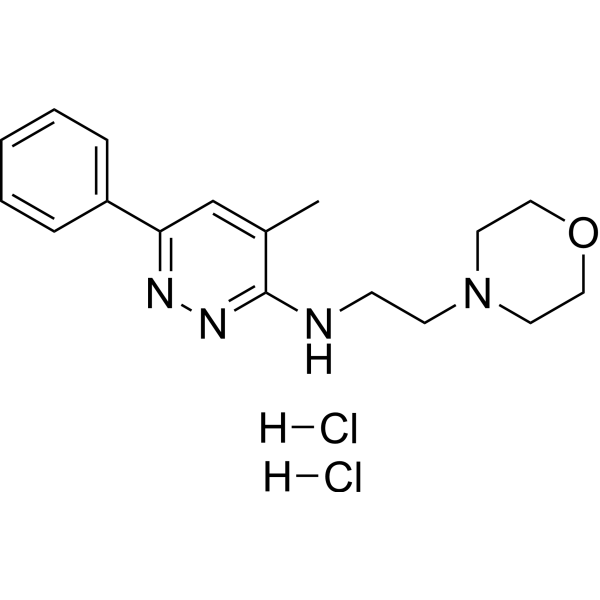
Minaprine dihydrochloride

Based on 1 Customer Validation
Minaprine dihydrochloride is a brain-penetrant monoamine oxidase inhibitor. Minaprine dihydrochloride also weakly inhibits acetylcholinesterase (AChE) activity. Minaprine dihydrochloride reduces intraneuronal dopamine metabolism, lowers striatal homovanillic acid and dihydroxyphenylacetic acid levels, and raises striatal 3-methoxytyramine and 5-hydroxytryptamine levels. Minaprine dihydrochloride exhibits convulsant, antidepressant properties.
For research use only. We do not sell to patients.
- Purity : 99.90%
- CAS No.: 25953-17-7
- Formula: C17H24Cl2N4O
- Molecular Weight:371.30
-
Storage:
4°C, sealed storage, away from moisture
* In solvent : -80°C, 6 months; -20°C, 1 month (sealed storage, away from moisture)

To place orders, for customer services and technical support, please contact: MedChemExpress USA
Tel: 609-228-6898 E-mail: [email protected] [email protected]


-
 Biological Activity
-
Chemical Information
-
Solvent & Solubility
- Purity & Documentation
- References
-
 Help & FAQs


-
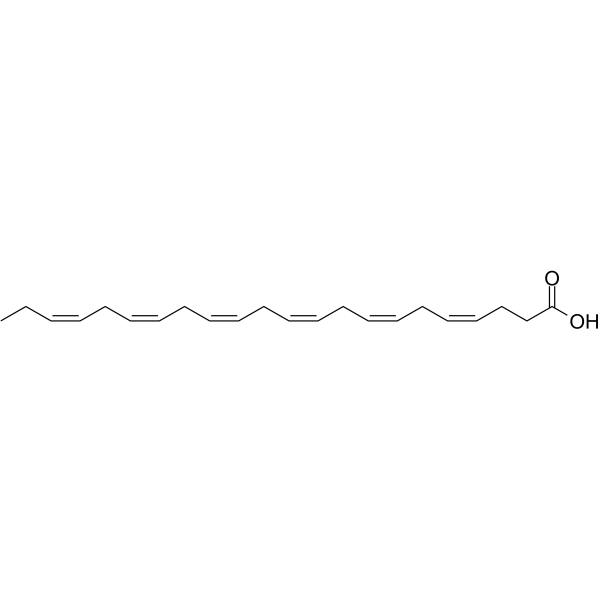
HY-B2167
Docosahexaenoic acidomega-3 Fatty Acid -
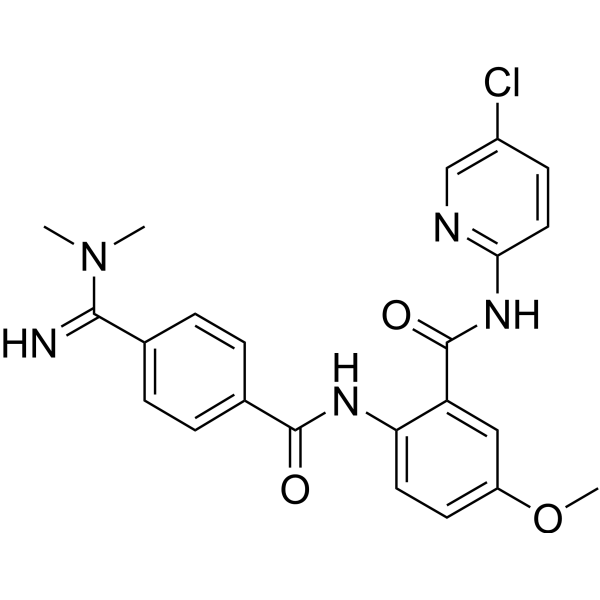
HY-10268
BetrixabanFactor Xa Inhibitor -
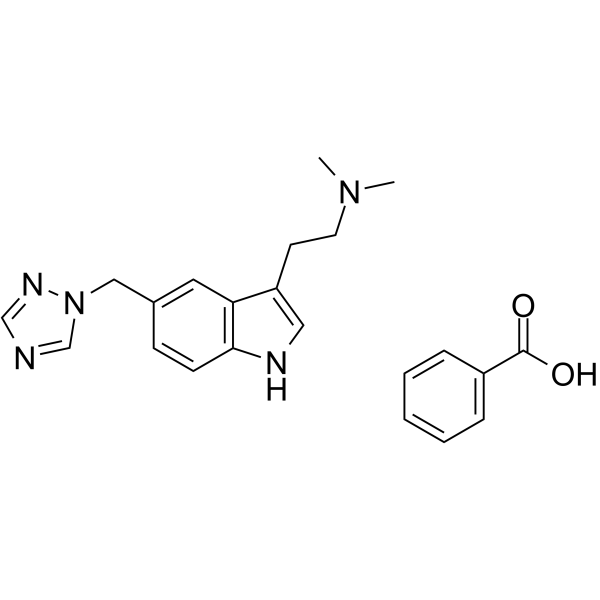
HY-B0206
Rizatriptan benzoate5-HT1 Agonist -
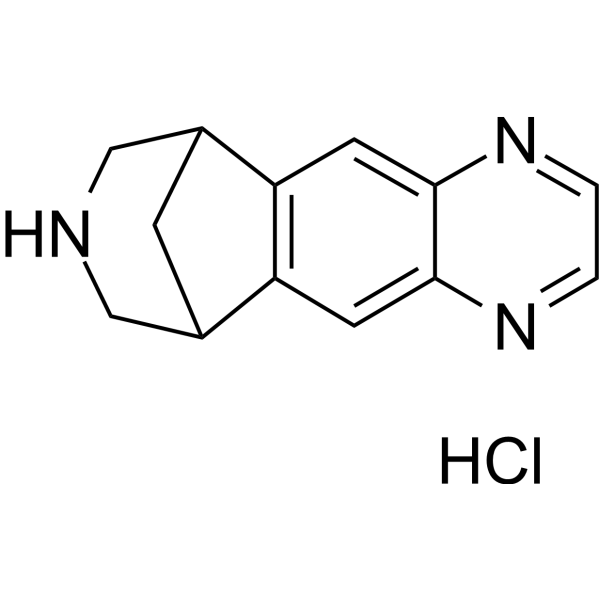
HY-10020
Varenicline Hydrochlorideα4β2 nAChR Agonist -
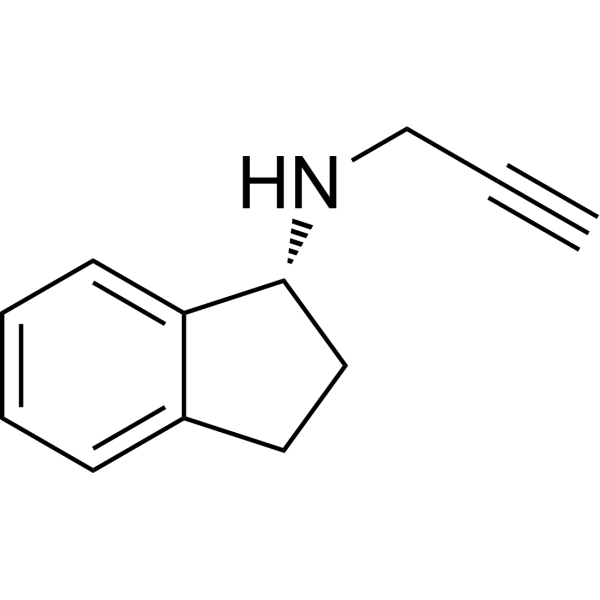
HY-14605A
RasagilineMAO Inhibitor -
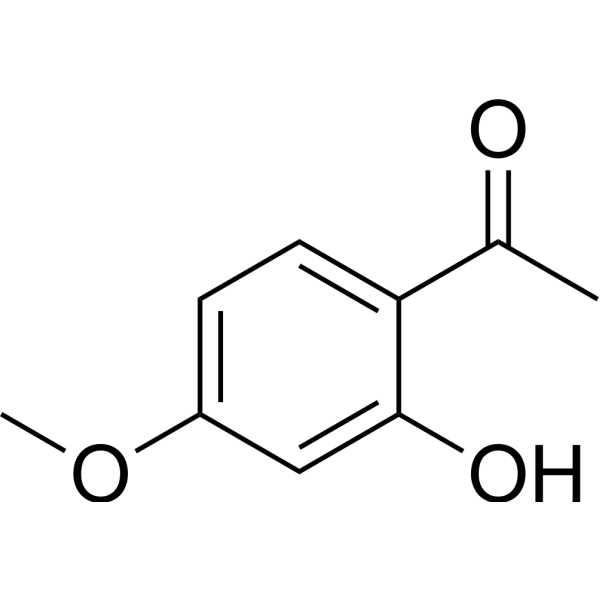
HY-N0159
PaeonolAutophagy Inducer -
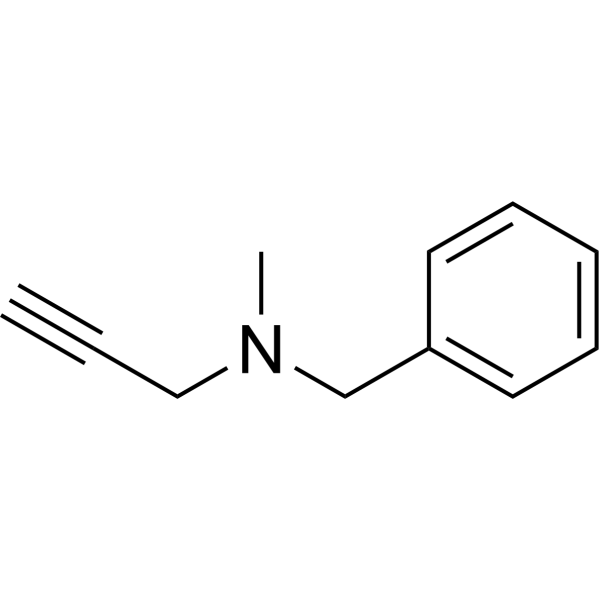
HY-A0091A
PargylineMonoamine Oxidase Inhibitor -
HY-B1018A
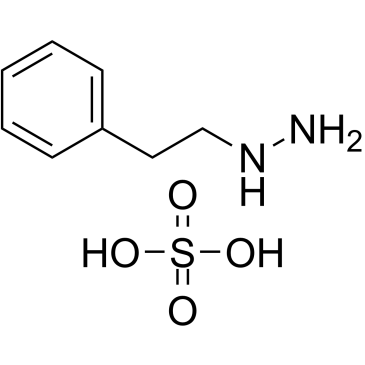
Phenelzine sulfateMAO Inhibitor -
HY-70057
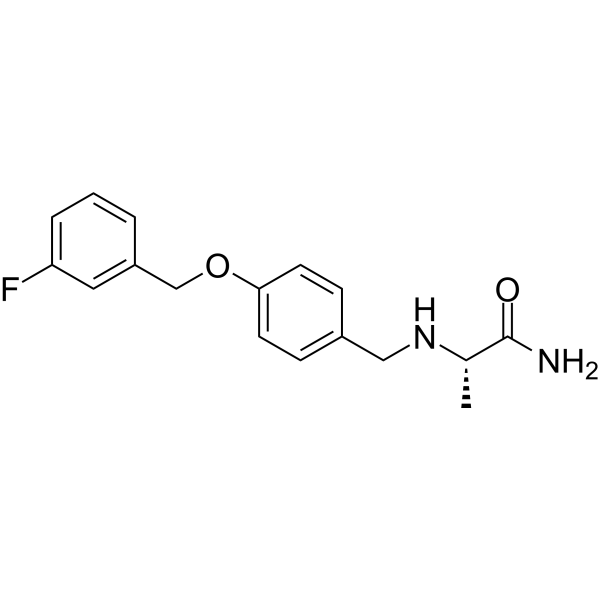
SafinamideMAO-B Inhibitor -
HY-14197A
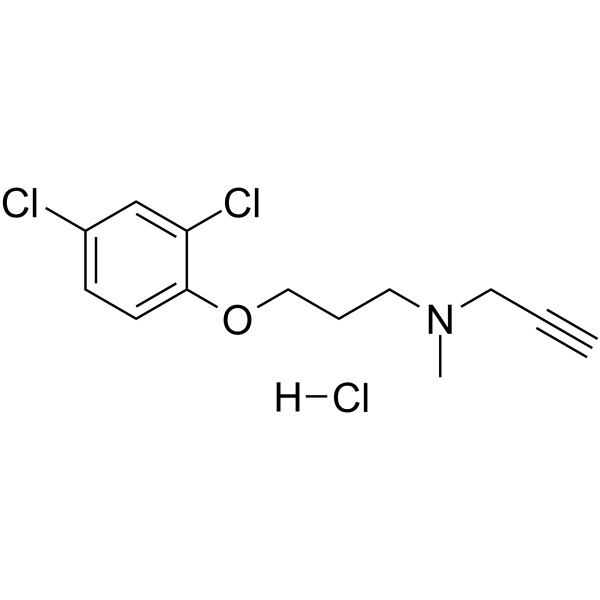
Clorgyline hydrochlorideMAO-A Inhibitor -
HY-B0534
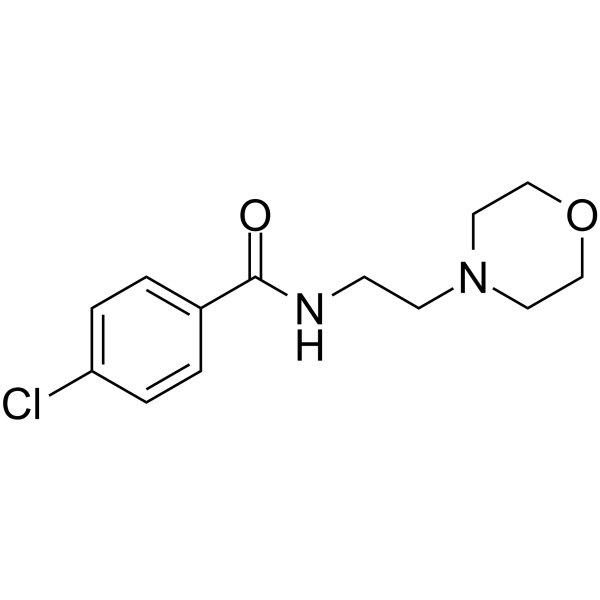
MoclobemideMAOI Antidepressant -
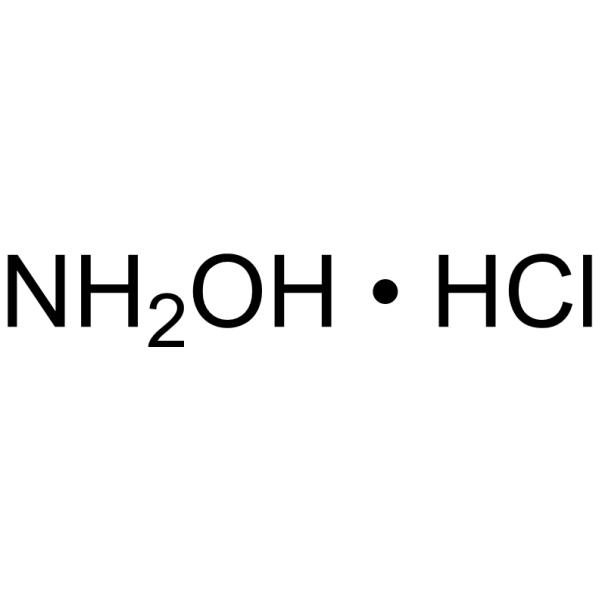
HY-Y0882
Hydroxylamine hydrochlorideMAO Inhibitor


Biological Activity
Description
IC50 & Target
[1]|
AChE |
In Vitro
Minaprine (5×10⁻⁴ M) dihydrochloride does not interact with dopaminergic receptors in rat striatal membranes, as it fails to displace [3H]spiperone binding[1].
Minaprine (40-160 μM) dihydrochloride does not alter choline acetyltransferase activity in rat striatal or hippocampal tissue preparations in vitro[2].
Minaprine (40-160 μM) dihydrochloride inhibits acetylcholinesterase activity in rat striatal and hippocampal tissue preparations in vitro[2].
Minaprine dihydrochloride weakly displaces (3H) dexetimide from specific muscarinic receptors in rat striatal homogenates in vitro, with an IC50 of 2×10⁻⁴ M[2].
MedChemExpress (MCE) has not independently confirmed the accuracy of these methods. They are for reference only. .
In Vivo
Minaprine (7.5-30 mg/kg; i.p.; single dose or once daily for 10 consecutive days) dihydrochloride dose-dependently increases acetylcholine levels in multiple rat brain regions[2].
MedChemExpress (MCE) has not independently confirmed the accuracy of these methods. They are for reference only.
-
Animal Model:CD-COBS (male, 225-250 g)[1]
-
Dosage:2.5, 5, 10, 15, 30 mg/kg
-
Administration:i.p.; single dose
-
Result:Reduced striatal DOPAC to 403 ± 32 ng/g wet tissue (P < 0.01 vs control) and increased 3-MT to 19.1 ± 1.2 ng/g wet tissue at 2.5 mg/kg, 30 minutes post-administration.
Reduced striatal DOPAC to 364 ± 11 ng/g wet tissue (P < 0.01 vs control) and increased 3-MT to 24.5 ± 3.5 ng/g wet tissue (P < 0.05 vs control) at 5 mg/kg, 30 minutes post-administration.
Reduced striatal HVA to 355 ± 37 ng/g wet tissue (P < 0.05 vs control) and DOPAC to 294 ± 12 ng/g wet tissue (P < 0.01 vs control), and increased 3-MT to 35 ± 2.5 ng/g wet tissue (P < 0.01 vs control) at 10 mg/kg, 30 minutes post-administration.
Reduced striatal HVA to 321 ± 34 ng/g wet tissue (P < 0.01 vs control) and DOPAC to 239 ± 25 ng/g wet tissue (P < 0.01 vs control), and increased 3-MT to 43.6 ± 2.8 ng/g wet tissue (P < 0.01 vs control) at 15 mg/kg, 30 minutes post-administration.
Reduced striatal HVA to 312 ± 16 ng/g wet tissue (P < 0.01 vs control) and DOPAC to 241 ± 12 ng/g wet tissue (P < 0.01 vs control), and increased 3-MT to 56.6 ± 2.3 ng/g wet tissue (P < 0.01 vs control) at 30 mg/kg, 30 minutes post-administration.
Reduced striatal HVA to 283 ± 13 ng/g wet tissue (P < 0.05 vs control) and DOPAC to 471 ± 13 ng/g wet tissue (P < 0.01 vs control), and increased 3-MT to 66 ± 5 ng/g wet tissue (P < 0.01 vs control) at 15 mg/kg, 15 minutes post-administration.
Reduced striatal HVA to 190 ± 26 ng/g wet tissue (P < 0.01 vs control) and DOPAC to 288 ± 14 ng/g wet tissue (P < 0.01 vs control), and increased 3-MT to 86 ± 8 ng/g wet tissue (P < 0.01 vs control) at 15 mg/kg, 30 minutes post-administration.
Reduced striatal HVA to 222 ± 28 ng/g wet tissue (P < 0.01 vs control) and DOPAC to 339 ± 57 ng/g wet tissue (P < 0.01 vs control), and increased 3-MT to 73 ± 14 ng/g wet tissue (P < 0.01 vs control) at 15 mg/kg, 60 minutes post-administration.
Reduced striatal HVA to 231 ± 24 ng/g wet tissue (P < 0.01 vs control) and DOPAC to 488 ± 21 ng/g wet tissue (P < 0.01 vs control), and increased 3-MT to 41 ± 3 ng/g wet tissue (P < 0.01 vs control) at 15 mg/kg, 90 minutes post-administration.
Reduced striatal HVA to 247 ± 27 ng/g wet tissue (P < 0.01 vs control) and DOPAC to 442 ± 31 ng/g wet tissue (P < 0.01 vs control) at 15 mg/kg, 120 minutes post-administration; 3-MT was not significantly different from control.
Did not alter pargyline-induced changes in striatal HVA, DOPAC, or 3-MT levels when administered 5 minutes after Pargyline (HY-A0091A) (100 mg/kg i.p.) at 15 mg/kg.
Did not significantly alter striatal DA concentrations at any dose or time point tested.


Chemical Information
-
CAS No. 25953-17-7
-
Appearance Solid
-
Molecular Weight 371.30
-
Formula C17H24Cl2N4O
-
Color White to off-white
-
SMILES
[H]Cl.CC1=CC(C2=CC=CC=C2)=NN=C1NCCN3CCOCC3.[H]Cl
-
Shipping
Room temperature in continental US; may vary elsewhere.
-
Storage
4°C, sealed storage, away from moisture
* In solvent : -80°C, 6 months; -20°C, 1 month (sealed storage, away from moisture)


Solvent & Solubility
In Vitro:
DMSO : ≥ 100 mg/mL (269.32 mM; Hygroscopic DMSO has a significant impact on the solubility of product, please use newly opened DMSO)
H2O : 100 mg/mL (269.32 mM; Need ultrasonic)
* "≥" means soluble, but saturation unknown.
Please refer to the solubility information to select the appropriate solvent. Once prepared, please aliquot and store the solution to prevent product inactivation from repeated freeze-thaw cycles.
Storage method and period of stock solution: -80°C, 6 months; -20°C, 1 month (sealed storage, away from moisture). When stored at -80°C, please use it within 6 months. When stored at -20°C, please use it within 1 month.
* Note: If you choose water as the stock solution, please dilute it to the working solution, then filter and sterilize it with a 0.22 μm filter before use.
Please refer to the solubility information to select the appropriate solvent. Once prepared, please aliquot and store the solution to prevent product inactivation from repeated freeze-thaw cycles.
Storage method and period of stock solution: -80°C, 6 months; -20°C, 1 month (sealed storage, away from moisture). When stored at -80°C, please use it within 6 months. When stored at -20°C, please use it within 1 month.
* Note: If you choose water as the stock solution, please dilute it to the working solution, then filter and sterilize it with a 0.22 μm filter before use.
Concentration (start) × Volume (start) = Concentration (final) × Volume (final)
In Vivo:
Select the appropriate dissolution method based on your experimental animal and administration route.
- For the following dissolution methods, please ensure to first prepare a clear stock solution using an In Vitro approach and then sequentially add co-solvents:
- To ensure reliable experimental results, the clarified stock solution can be appropriately stored based on storage conditions. As for the working solution for In Vivo experiments, it is recommended to prepare freshly and use it on the same day.
- The percentages shown for the solvents indicate their volumetric ratio in the final prepared solution. If precipitation or phase separation occurs during preparation, heat and/or sonication can be used to aid dissolution.
Add each solvent one by one: 10% DMSO 40% PEG300 5% Tween-80 45% Saline
Solubility: ≥ 2.5 mg/mL (6.73 mM); Clear solution
This protocol yields a clear solution of ≥ 2.5 mg/mL (saturation unknown).
Taking 1 mL working solution as an example, add 100 μL DMSO stock solution (25.0 mg/mL) to 400 μL PEG300, and mix evenly; then add 50 μL Tween-80 and mix evenly; then add 450 μL Saline to adjust the volume to 1 mL.
Preparation of Saline: Dissolve 0.9 g sodium chloride in ddH₂O and dilute to 100 mL to obtain a clear Saline solution.
Add each solvent one by one: 10% DMSO 90% (20% SBE-β-CD in Saline)
Solubility: ≥ 2.5 mg/mL (6.73 mM); Clear solution
This protocol yields a clear solution of ≥ 2.5 mg/mL (saturation unknown).
Taking 1 mL working solution as an example, add 100 μL DMSO stock solution (25.0 mg/mL) to 900 μL 20% SBE-β-CD in Saline, and mix evenly.
Preparation of 20% SBE-β-CD in Saline (4°C, storage for one week): 2 g SBE-β-CD powder is dissolved in 10 mL Saline, completely dissolve until clear.
For the following dissolution methods, please prepare the working solution directly:
It is recommended to prepare fresh solutions and use them promptly within a short period of time.
The percentages shown for the solvents indicate their volumetric ratio in the final prepared solution. If precipitation or phase separation occurs during preparation, heat and/or sonication can be used to aid dissolution.
Add each solvent one by one: PBS
Solubility: 100 mg/mL (269.32 mM); Clear solution; Need ultrasonic
In Vivo Dissolution Calculator
Please enter the basic information of animal experiments:
-
-
-
-
Recommended: Prepare an additional quantity of animals to account for potential losses during experiments.
Working solution concentration: 0.22 mg/mL
This product has good water solubility, please refer to the measured solubility data in water/PBS/Saline for details.


Purity & Documentation
-
Data Sheet (277 KB)
-
SDS (393 KB)
- English - EN (393 KB)
- Français - FR (393 KB)
- Deutsch - DE (393 KB)
- Norwegian - NO (393 KB)
- Español - ES (393 KB)
- Swedish - SV (393 KB)
- Italian - IT (393 KB)
- Korean - KR (393 KB)
- Portuguese - PT (393 KB)
-
Handling Instructions (2659 KB)
References
[1]. Ferretti P, et al. Biochemical effects of minaprine on striatal dopaminergic neurons in rats. J Pharm Pharmacol. 1984;36(1):48-50. [Content Brief]
[2]. Garattini S, et al. Neurochemical effects of minaprine, a novel psychotropic drug, on the central cholinergic system of the rat. Psychopharmacology (Berl). 1984;82(3):210-214. [Content Brief]


Complete Stock Solution Preparation Table
Please refer to the solubility information to select the appropriate solvent. Once prepared, please aliquot and store the solution to prevent product inactivation from repeated freeze-thaw cycles.
Storage method and period of stock solution: -80°C, 6 months; -20°C, 1 month (sealed storage, away from moisture). When stored at -80°C, please use it within 6 months. When stored at -20°C, please use it within 1 month.
| Optional Solvent | Concentration Solvent Mass | 1 mg | 5 mg | 10 mg | 25 mg |
|---|---|---|---|---|---|
| DMSO / H2O | 1 mM | 2.6932 mL | 13.4662 mL | 26.9324 mL | 67.3310 mL |
| 5 mM | 0.5386 mL | 2.6932 mL | 5.3865 mL | 13.4662 mL | |
| 10 mM | 0.2693 mL | 1.3466 mL | 2.6932 mL | 6.7331 mL | |
| 15 mM | 0.1795 mL | 0.8977 mL | 1.7955 mL | 4.4887 mL | |
| 20 mM | 0.1347 mL | 0.6733 mL | 1.3466 mL | 3.3666 mL | |
| 25 mM | 0.1077 mL | 0.5386 mL | 1.0773 mL | 2.6932 mL | |
| 30 mM | 0.0898 mL | 0.4489 mL | 0.8977 mL | 2.2444 mL | |
| 40 mM | 0.0673 mL | 0.3367 mL | 0.6733 mL | 1.6833 mL | |
| 50 mM | 0.0539 mL | 0.2693 mL | 0.5386 mL | 1.3466 mL | |
| 60 mM | 0.0449 mL | 0.2244 mL | 0.4489 mL | 1.1222 mL | |
| 80 mM | 0.0337 mL | 0.1683 mL | 0.3367 mL | 0.8416 mL | |
| 100 mM | 0.0269 mL | 0.1347 mL | 0.2693 mL | 0.6733 mL |
* Note: If you choose water as the stock solution, please dilute it to the working solution, then filter and sterilize it with a 0.22 μm filter before use.


Minaprine dihydrochloride Related Classifications
HY-B0884A Related Classifications
 Powered by Bioz