



Minaprine
Minaprine is a brain-penetrant monoamine oxidase inhibitor. Minaprine also weakly inhibits acetylcholinesterase (AChE) activity. Minaprine reduces intraneuronal dopamine metabolism, lowers striatal homovanillic acid and dihydroxyphenylacetic acid levels, and raises striatal 3-methoxytyramine and 5-hydroxytryptamine levels. Minaprine exhibits convulsant, antidepressant properties.
For research use only. We do not sell to patients.
- CAS No.: 25905-77-5
- Formula: C17H22N4O
- Molecular Weight:298.38
-
Storage:
Please store the product under the recommended conditions in the Certificate of Analysis.

To place orders, for customer services and technical support, please contact: MedChemExpress USA
Tel: 609-228-6898 E-mail: [email protected] [email protected]


-
 Biological Activity
-
Chemical Information
-
Solvent & Solubility
- Purity & Documentation
- References
-
 Help & FAQs


-
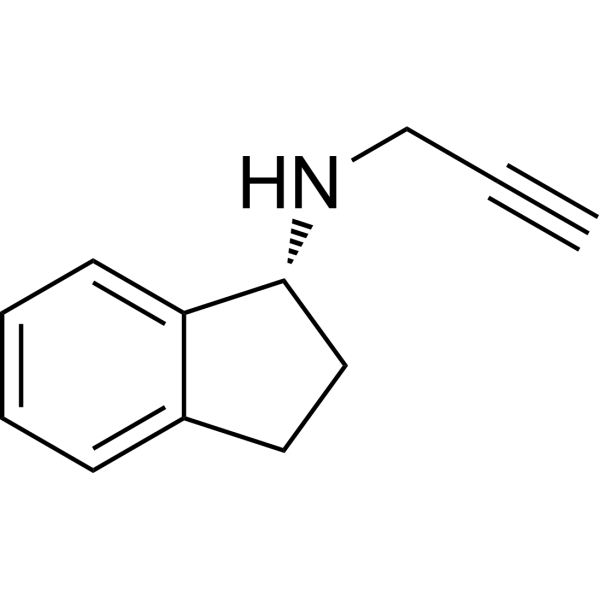
HY-14605A
RasagilineMAO Inhibitor -
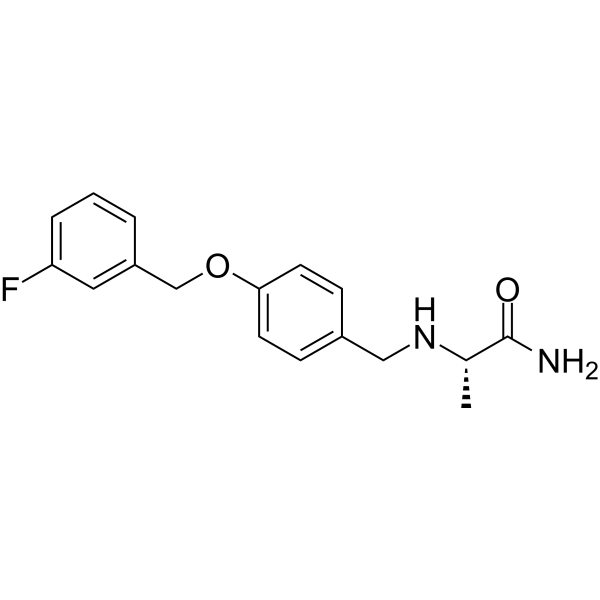
HY-70057
SafinamideMAO-B Inhibitor -
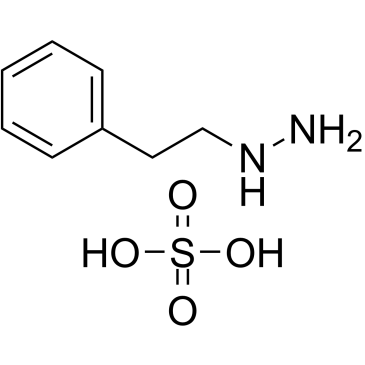
HY-B1018A
Phenelzine sulfateMAO Inhibitor -
HY-101392
HarmaneMAO Inhibitor -
HY-A0091
Pargyline hydrochlorideMonoamine Oxidase Inhibitor -
HY-A0091A
PargylineMonoamine Oxidase Inhibitor -
HY-22385
SalsolidineMAO A Inhibitor -
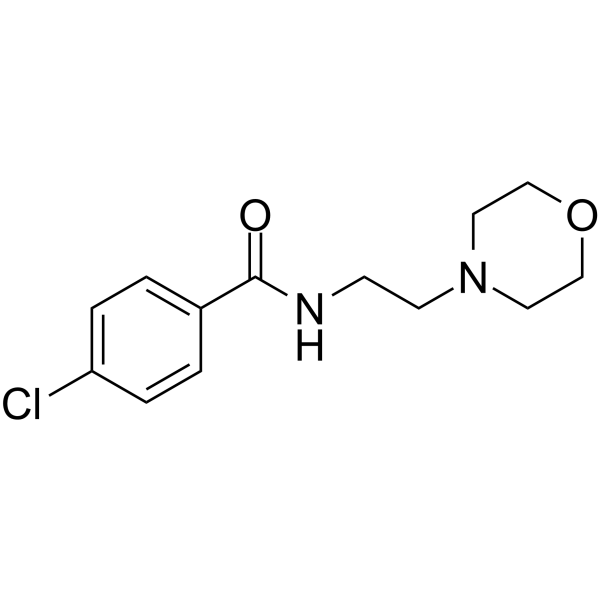
HY-B0534
MoclobemideMAOI Antidepressant -
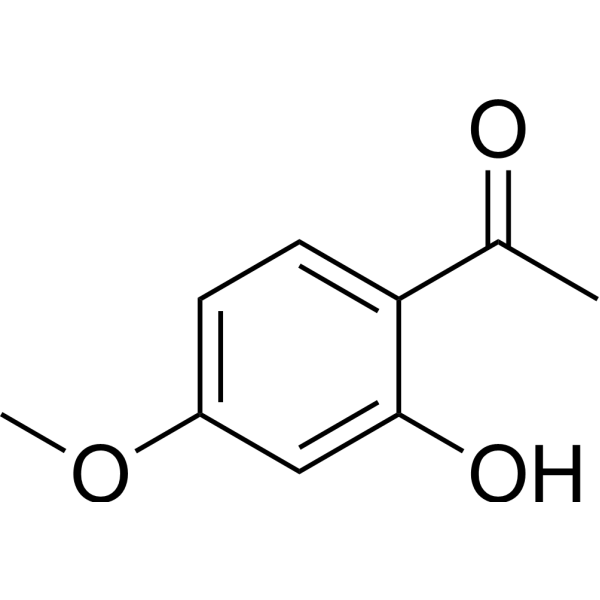
HY-N0159
PaeonolAutophagy Inducer -
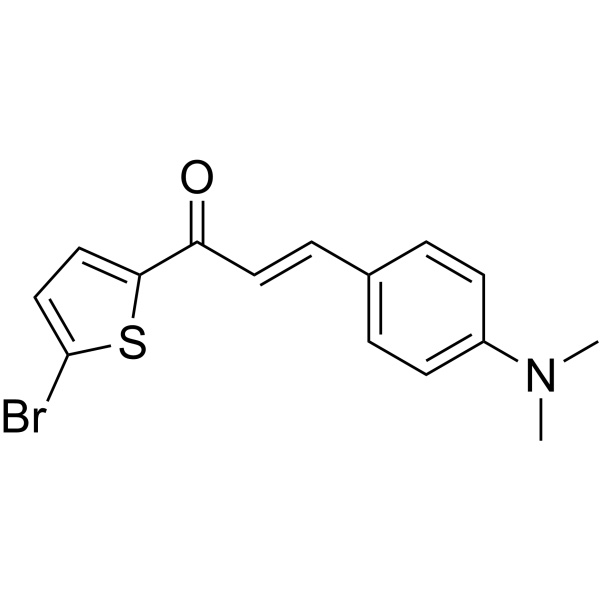
HY-100975
TB5hMAO-B Inhibitor -
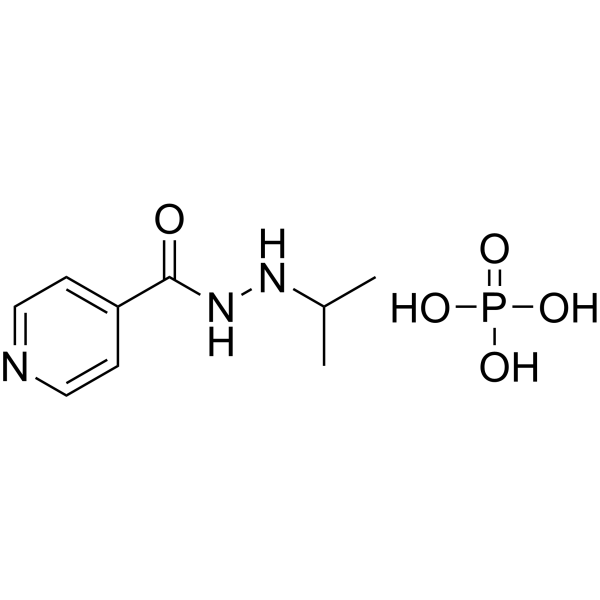
HY-B0886
Iproniazid phosphateMAO Inhibitor -
HY-17447A
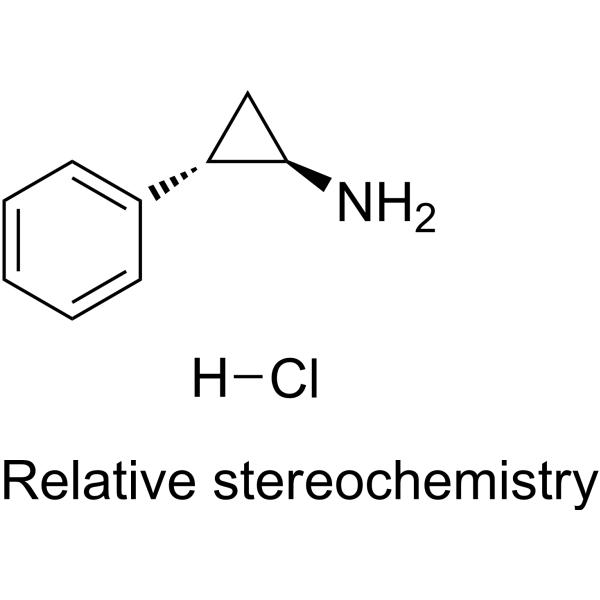
Tranylcypromine hydrochlorideLSD1/MAO Inhibitor


Biological Activity
Description
IC50 & Target
[1]|
AChE |
In Vitro
Minaprine (5×10⁻⁴ M) does not interact with dopaminergic receptors in rat striatal membranes, as it fails to displace [3H]spiperone binding[1].
Minaprine (40-160 μM) does not alter choline acetyltransferase activity in rat striatal or hippocampal tissue preparations in vitro[2].
Minaprine (40-160 μM) inhibits acetylcholinesterase activity in rat striatal and hippocampal tissue preparations in vitro[2].
Minaprine weakly displaces (3H) dexetimide from specific muscarinic receptors in rat striatal homogenates in vitro, with an IC50 of 2×10⁻⁴ M[2].
MedChemExpress (MCE) has not independently confirmed the accuracy of these methods. They are for reference only.
In Vivo
Minaprine (7.5-30 mg/kg; i.p.; single dose or once daily for 10 consecutive days) dose-dependently increases acetylcholine levels in multiple rat brain regions[2].
MedChemExpress (MCE) has not independently confirmed the accuracy of these methods. They are for reference only.
-
Animal Model:CD-COBS (male, 225-250 g)[1]
-
Dosage:2.5, 5, 10, 15, 30 mg/kg
-
Administration:i.p.; single dose
-
Result:Reduced striatal DOPAC to 403 ± 32 ng/g wet tissue (P < 0.01 vs control) and increased 3-MT to 19.1 ± 1.2 ng/g wet tissue at 2.5 mg/kg, 30 minutes post-administration.
Reduced striatal DOPAC to 364 ± 11 ng/g wet tissue (P < 0.01 vs control) and increased 3-MT to 24.5 ± 3.5 ng/g wet tissue (P < 0.05 vs control) at 5 mg/kg, 30 minutes post-administration.
Reduced striatal HVA to 355 ± 37 ng/g wet tissue (P < 0.05 vs control) and DOPAC to 294 ± 12 ng/g wet tissue (P < 0.01 vs control), and increased 3-MT to 35 ± 2.5 ng/g wet tissue (P < 0.01 vs control) at 10 mg/kg, 30 minutes post-administration.
Reduced striatal HVA to 321 ± 34 ng/g wet tissue (P < 0.01 vs control) and DOPAC to 239 ± 25 ng/g wet tissue (P < 0.01 vs control), and increased 3-MT to 43.6 ± 2.8 ng/g wet tissue (P < 0.01 vs control) at 15 mg/kg, 30 minutes post-administration.
Reduced striatal HVA to 312 ± 16 ng/g wet tissue (P < 0.01 vs control) and DOPAC to 241 ± 12 ng/g wet tissue (P < 0.01 vs control), and increased 3-MT to 56.6 ± 2.3 ng/g wet tissue (P < 0.01 vs control) at 30 mg/kg, 30 minutes post-administration.
Reduced striatal HVA to 283 ± 13 ng/g wet tissue (P < 0.05 vs control) and DOPAC to 471 ± 13 ng/g wet tissue (P < 0.01 vs control), and increased 3-MT to 66 ± 5 ng/g wet tissue (P < 0.01 vs control) at 15 mg/kg, 15 minutes post-administration.
Reduced striatal HVA to 190 ± 26 ng/g wet tissue (P < 0.01 vs control) and DOPAC to 288 ± 14 ng/g wet tissue (P < 0.01 vs control), and increased 3-MT to 86 ± 8 ng/g wet tissue (P < 0.01 vs control) at 15 mg/kg, 30 minutes post-administration.
Reduced striatal HVA to 222 ± 28 ng/g wet tissue (P < 0.01 vs control) and DOPAC to 339 ± 57 ng/g wet tissue (P < 0.01 vs control), and increased 3-MT to 73 ± 14 ng/g wet tissue (P < 0.01 vs control) at 15 mg/kg, 60 minutes post-administration.
Reduced striatal HVA to 231 ± 24 ng/g wet tissue (P < 0.01 vs control) and DOPAC to 488 ± 21 ng/g wet tissue (P < 0.01 vs control), and increased 3-MT to 41 ± 3 ng/g wet tissue (P < 0.01 vs control) at 15 mg/kg, 90 minutes post-administration.
Reduced striatal HVA to 247 ± 27 ng/g wet tissue (P < 0.01 vs control) and DOPAC to 442 ± 31 ng/g wet tissue (P < 0.01 vs control) at 15 mg/kg, 120 minutes post-administration; 3-MT was not significantly different from control.
Did not alter pargyline-induced changes in striatal HVA, DOPAC, or 3-MT levels when administered 5 minutes after Pargyline (HY-A0091A) (100 mg/kg i.p.) at 15 mg/kg.
Did not significantly alter striatal DA concentrations at any dose or time point tested.
-
Animal Model:CD-COBS (female, 200-300 g)[2]
-
Dosage:7.5 mg/kg; 15 mg/kg; 30 mg/kg; 15 mg/kg (daily for 10 days) followed by 30 mg/kg (challenge dose)
-
Administration:i.p.; single dose or once daily for 10 consecutive days
-
Result:Showed no significant change in striatal acetylcholine or choline levels at 7.5 mg/kg.
Produced a 17% increase in striatal acetylcholine levels; showed no change in choline levels at 15 mg/kg.
Produced a 59% increase in striatal acetylcholine levels, which persisted for at least 2 h; decreased striatal choline levels by 20% (significant only at 30 min post-administration) at 30 mg/kg.
Increased acetylcholine levels by 35% in the hippocampus, 14% in the midbrain-hindbrain, and 37% in the forebrain (excluding striatum and hippocampus), without altering choline levels in these regions at 30 mg/kg.
Caused an 18% inhibition of striatal acetylcholinesterase activity at 5 min post-administration (corresponding to peak brain drug levels), which resolved by 30 min at 30 mg/kg.
Showed no change in choline acetyltransferase activity after in vivo administration of 30 mg/kg.
Produced an increase in striatal acetylcholine comparable to that seen in drug-naive rats (no tolerance) after 10 days of daily 15 mg/kg treatment followed by a 30 mg/kg challenge dose.


Chemical Information
-
CAS No. 25905-77-5
-
Molecular Weight 298.38
-
Formula C17H22N4O
-
SMILES
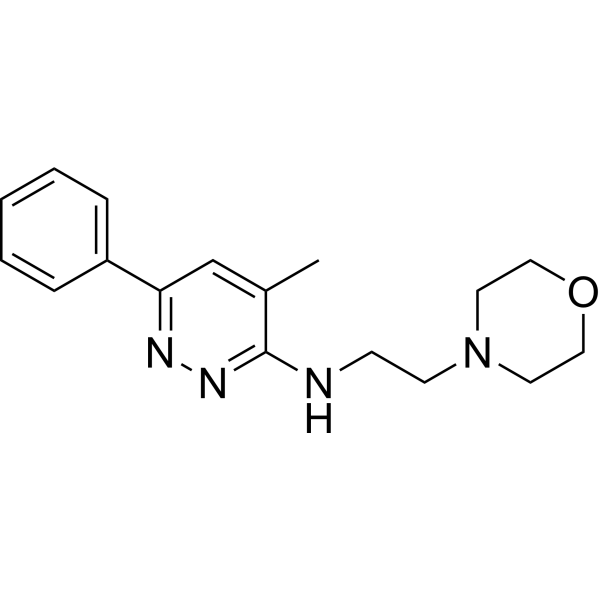
CC1=CC(C2=CC=CC=C2)=NN=C1NCCN3CCOCC3
-
Shipping
Room temperature in continental US; may vary elsewhere.
-
Storage
Please store the product under the recommended conditions in the Certificate of Analysis.


Solvent & Solubility
In Vitro:
DMSO : ≥ 35 mg/mL (117.30 mM; Hygroscopic DMSO has a significant impact on the solubility of product, please use newly opened DMSO)
* "≥" means soluble, but saturation unknown.
Concentration (start) × Volume (start) = Concentration (final) × Volume (final)


Purity & Documentation
References
[1]. Ferretti P, et al. Biochemical effects of minaprine on striatal dopaminergic neurons in rats. J Pharm Pharmacol. 1984;36(1):48-50. [Content Brief]
[2]. Garattini S, et al. Neurochemical effects of minaprine, a novel psychotropic drug, on the central cholinergic system of the rat. Psychopharmacology (Berl). 1984;82(3):210-214. [Content Brief]


Complete Stock Solution Preparation Table
| Optional Solvent | Concentration Solvent Mass | 1 mg | 5 mg | 10 mg | 25 mg |
|---|---|---|---|---|---|
| DMSO | 1 mM | 3.3514 mL | 16.7572 mL | 33.5143 mL | 83.7858 mL |
| 5 mM | 0.6703 mL | 3.3514 mL | 6.7029 mL | 16.7572 mL | |
| 10 mM | 0.3351 mL | 1.6757 mL | 3.3514 mL | 8.3786 mL | |
| 15 mM | 0.2234 mL | 1.1171 mL | 2.2343 mL | 5.5857 mL | |
| 20 mM | 0.1676 mL | 0.8379 mL | 1.6757 mL | 4.1893 mL | |
| 25 mM | 0.1341 mL | 0.6703 mL | 1.3406 mL | 3.3514 mL | |
| 30 mM | 0.1117 mL | 0.5586 mL | 1.1171 mL | 2.7929 mL | |
| 40 mM | 0.0838 mL | 0.4189 mL | 0.8379 mL | 2.0946 mL | |
| 50 mM | 0.0670 mL | 0.3351 mL | 0.6703 mL | 1.6757 mL | |
| 60 mM | 0.0559 mL | 0.2793 mL | 0.5586 mL | 1.3964 mL | |
| 80 mM | 0.0419 mL | 0.2095 mL | 0.4189 mL | 1.0473 mL | |
| 100 mM | 0.0335 mL | 0.1676 mL | 0.3351 mL | 0.8379 mL |


Minaprine Related Classifications
HY-B0884 Related Classifications
 Powered by Bioz