



Pargyline hydrochloride
Based on 4 publication(s) in Google Scholar
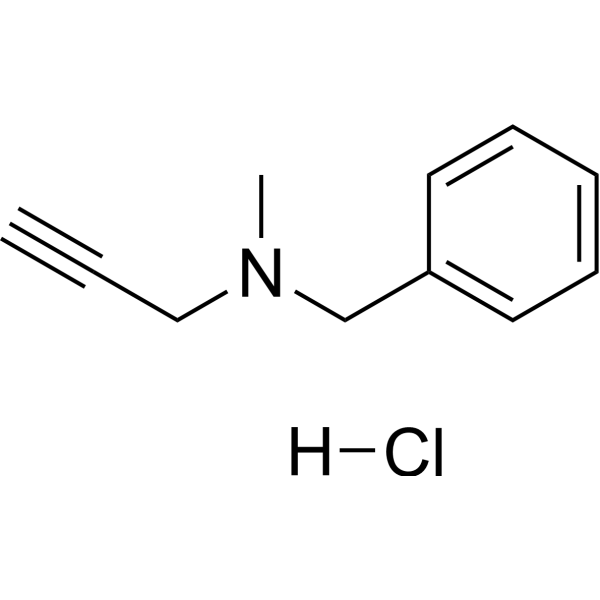
Pargyline hydrochloride is an irreversible monoamine oxidase (MAO) inhibitor with Kis of 13 μM and 0.5 μM for MAO-A and MAO-B, respectively. Pargyline hydrochloride has antihypertensive and anticancer activities. Pargyline (hydrochloride) is a click chemistry reagent, it contains an Alkyne group and can undergo copper-catalyzed azide-alkyne cycloaddition (CuAAc) with molecules containing Azide groups.
Nur für Forschungszwecke. Wir verkaufen nicht an Patienten.
- Reinheit : 99.91%
- CAS. Nr.: 306-07-0
- Formel: C11H14ClN
- Molecular Weight:195.69
-
Speicherung:
4°C, sealed storage, away from moisture
* In solvent : -80°C, 6 months; -20°C, 1 month (sealed storage, away from moisture)

To place orders, for customer services and technical support, please contact: MedChemExpress USA
Tel: 609-228-6898 E-mail: [email protected] [email protected]


-
 Biologische Aktivität
-
Chemical Information
-
Lösungsmittel & Löslichkeit
- Protokoll
- Reinheit & Dokumentation
- Verweise
-
 Help & FAQs


-
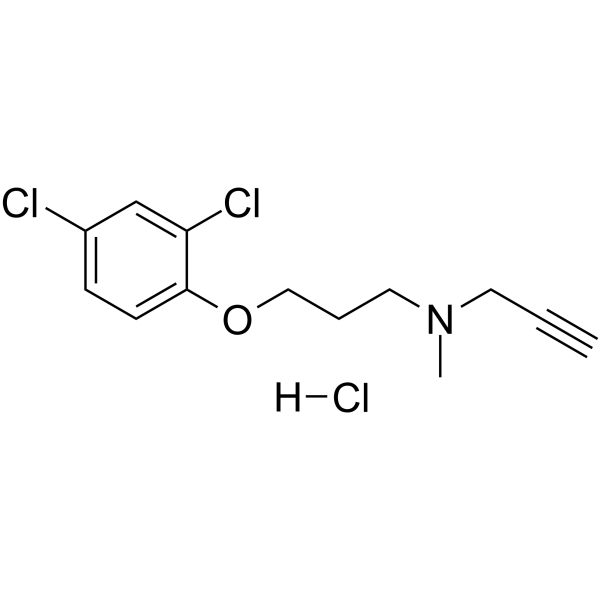
HY-14197A
Clorgyline hydrochlorideMAO-A Inhibitor -
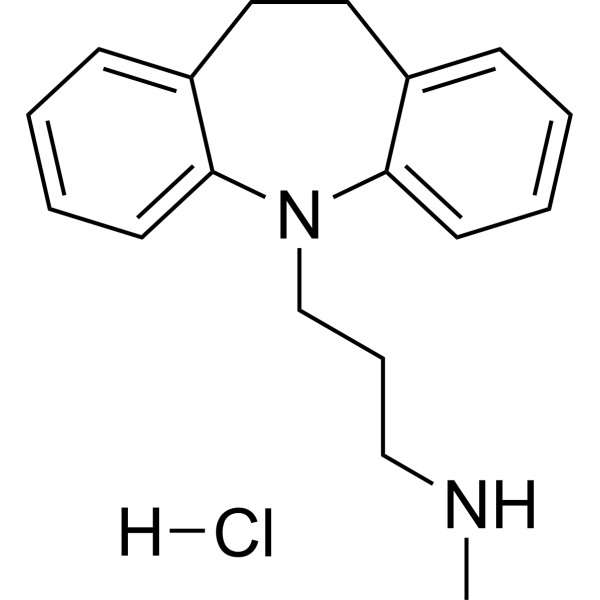
HY-B1272
Desipramine hydrochlorideSerotonin Transporter Inhibitor -
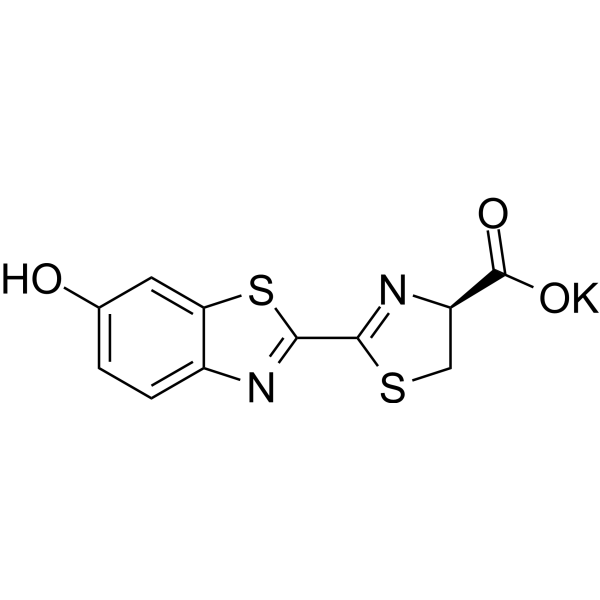
HY-12591B
D-Luciferin potassiumSubstrate for Luciferase -
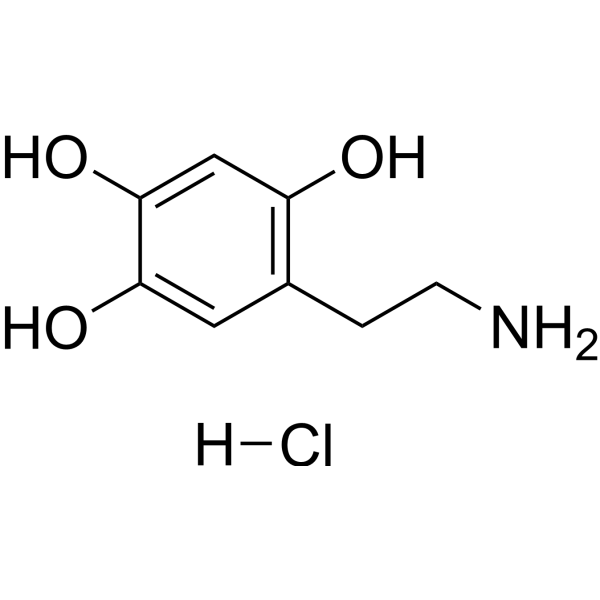
HY-B1081
Oxidopamine hydrochlorideNeurotoxin -
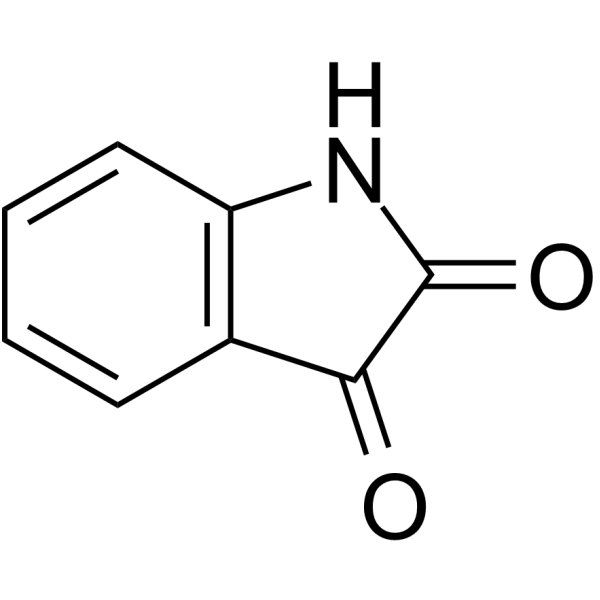
HY-Y0265
Isatin -
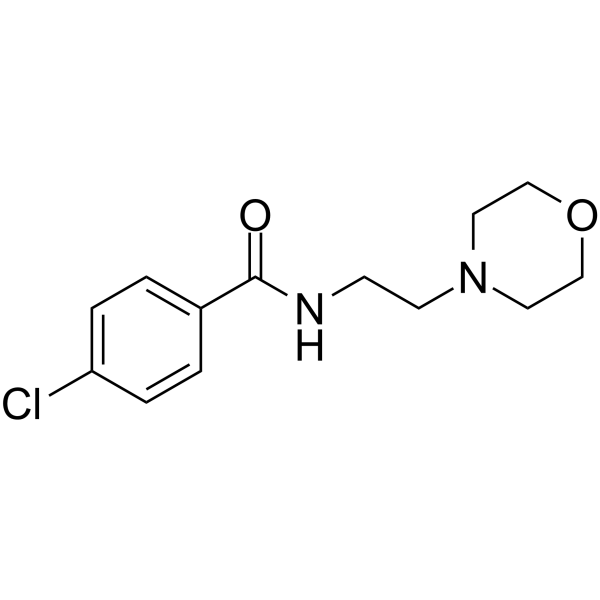
HY-B0534
MoclobemideMAOI Antidepressant -
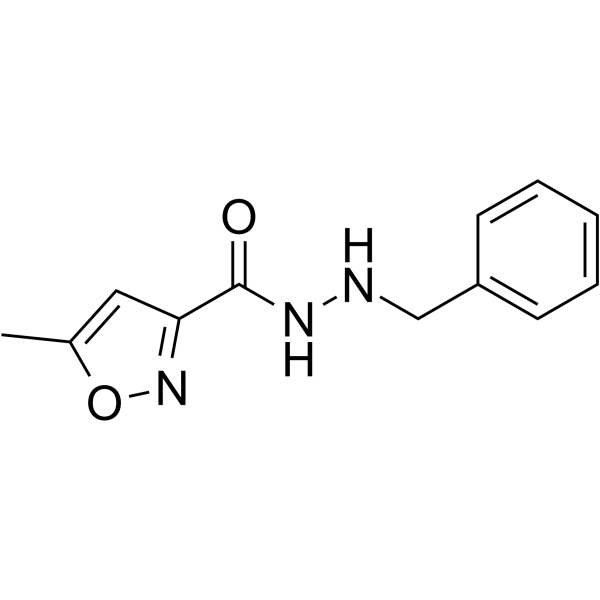
HY-13929
IsocarboxazidMonoamine Oxidase Inhibitor -
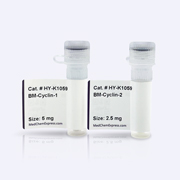
HY-K1059
BM-Cyclin -
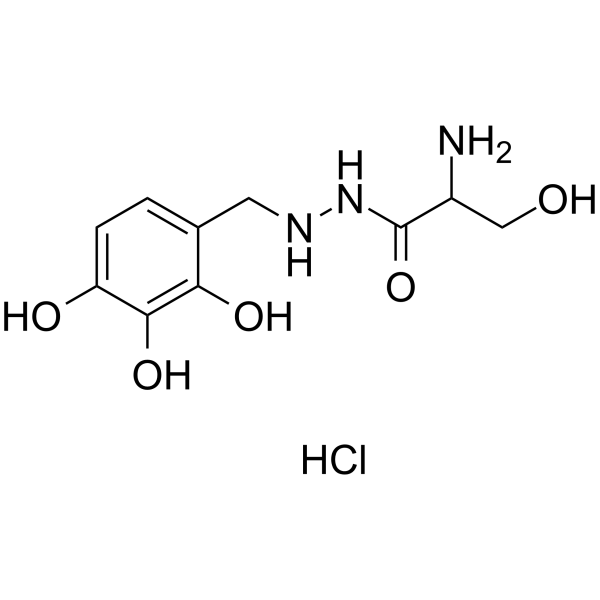
HY-B0404A
Benserazide hydrochlorideAADC/PKM2 Inhibitor -
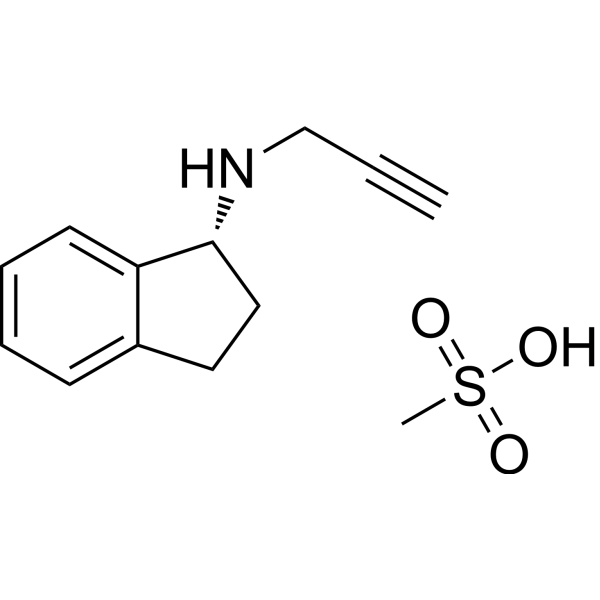
HY-14605
Rasagiline mesylateMAO Inhibitor -
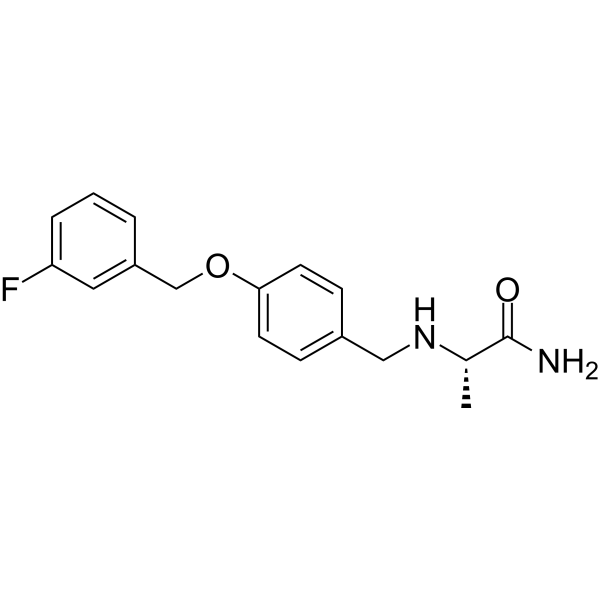
HY-70057
SafinamideMAO-B Inhibitor -

HY-A0091R
Pargyline hydrochloride (Standard)Monoamine Oxidase Inhibitor
Publications Citing Use of MedChemExpress (MCE) Pargyline hydrochloride
More

Biologische Aktivität
Beschreibung
IC50 & Target
[2]|
MAO-B 0.5 μM (Ki) |
MAO-A 13 μM (Ki) |
In Vitro
Pargyline (0.5-2 mM; 24-120 hours; LNCaP-LN3 cells) treatment inhibits the proliferation of prostate cancer cells in a time- and dose-dependent manner[2].
Pargyline (0.5-2 mM; 24-48 hours; LNCaP-LN3 cells) treatment decreases S phase and increases the G1 phase in the cells in a dose-dependent manner[2].
Pargyline (0.5 mM; 24 hours; LNCaP-LN3 cells) treatment increases the apoptotic cells[2].
Pargyline (2 mM; 48 hours; LNCaP-LN3 cells) treatment induces an increase of cytochrome c and a decrease of caspase-3 in the cells, but does not lead to a change of BCL-2 expression[2].
MedChemExpress (MCE) has not independently confirmed the accuracy of these methods. They are for reference only. Further protocols information, click here.
-
Cell Line:LNCaP-LN3 cells
-
Concentration:0.5 mM, 1 mM, 1.5 mM or 2 mM
-
Incubation Time:24 hours, 48 hours, 72 hours, 96 hours or 120 hours
-
Result:Inhibited the proliferation of prostate cancer cells in a time- and dose-dependent manner.
-
Cell Line:LNCaP-LN3 cells
-
Concentration:0.5 mM, 2 mM
-
Incubation Time:24 hours, 48 hours
-
Result:The S phase ratio of the cells was decreased, while their G1 phase ratio was increased.
-
Cell Line:LNCaP-LN3 cells
-
Concentration:0.5 mM
-
Incubation Time:24 hours
-
Result:Increased the apoptotic cells.
-
Cell Line:LNCaP-LN3 cells
-
Concentration:2 mM
-
Incubation Time:48 hours
-
Result:Induced an increase of cytochrome c and a decrease of caspase-3.
In Vivo
A low dose of Pargyline (200 μg; icv) injected directly into the brain lowered arterial pressure. The hypotensive action of Pargylline in SHR appears to be the consequence of Norepinephrine accumulating at an inhibitory α-adrenoceptor in brain[3].
MedChemExpress (MCE) has not independently confirmed the accuracy of these methods. They are for reference only.


Chemical Information
-
CAS. Nr. 306-07-0
-
Appearance Solid
-
Molecular Weight 195.69
-
Formel C11H14ClN
-
Color White to off-white
-
SMILES
C#CCN(C)CC1=CC=CC=C1.[H]Cl
-
Versand
Room temperature in continental US; may vary elsewhere.
-
Speicherung
4°C, sealed storage, away from moisture
* In solvent : -80°C, 6 months; -20°C, 1 month (sealed storage, away from moisture)


Publications (4)
-
Journal Impact Factor
-
Most Recent
-
Neural Regen Res
Glucagon-like peptide-1/glucose-dependent insulinotropic polypeptide dual receptor agonist DA-CH5 is superior to exendin-4 in protecting neurons in the 6-hydroxydopamine rat Parkinson model. [Abstract]2021 Aug;16(8):1660-1670. PMID: 33433498 -
J Parkinson Dis
The Novel Dual GLP-1/GIP Receptor Agonist DA-CH5 Is Superior to Single GLP-1 Receptor Agonists in the MPTP Model of Parkinson's Disease. [Abstract]2020;10(2):523-542. PMID: 31958096 -
Front Endocrinol
The novel GLP-1/GIP dual receptor agonist DA5-CH is superior to tirzepatide and exendin-4 in the 6-OHDA Parkinson rat model. [Abstract]2026 May 5:17:1825379. PMID: 42165019 -
Parkinsons Dis
DA5-CH and Semaglutide Protect against Neurodegeneration and Reduce α-Synuclein Levels in the 6-OHDA Parkinson's Disease Rat Model. [Abstract]2022 Nov 14:2022:1428817. PMID: 36419409


Lösungsmittel & Löslichkeit
In Vitro:
DMSO : 125 mg/mL (638.77 mM; Need ultrasonic; Hygroscopic DMSO has a significant impact on the solubility of product, please use newly opened DMSO)
H2O : 100 mg/mL (511.01 mM; Need ultrasonic)
Please refer to the solubility information to select the appropriate solvent. Once prepared, please aliquot and store the solution to prevent product inactivation from repeated freeze-thaw cycles.
Storage method and period of stock solution: -80°C, 6 months; -20°C, 1 month (sealed storage, away from moisture). When stored at -80°C, please use it within 6 months. When stored at -20°C, please use it within 1 month.
* Note: If you choose water as the stock solution, please dilute it to the working solution, then filter and sterilize it with a 0.22 μm filter before use.
Please refer to the solubility information to select the appropriate solvent. Once prepared, please aliquot and store the solution to prevent product inactivation from repeated freeze-thaw cycles.
Storage method and period of stock solution: -80°C, 6 months; -20°C, 1 month (sealed storage, away from moisture). When stored at -80°C, please use it within 6 months. When stored at -20°C, please use it within 1 month.
* Note: If you choose water as the stock solution, please dilute it to the working solution, then filter and sterilize it with a 0.22 μm filter before use.
Konzentration (Stammlösung) × Volumen (Stammlösung) = Konzentration (Ziellösung) × Volumen (Ziellösung)
In Vivo:
Select the appropriate dissolution method based on your experimental animal and administration route.
- For the following dissolution methods, please ensure to first prepare a clear stock solution using an In Vitro approach and then sequentially add co-solvents:
- To ensure reliable experimental results, the clarified stock solution can be appropriately stored based on storage conditions. As for the working solution for In Vivo experiments, it is recommended to prepare freshly and use it on the same day.
- The percentages shown for the solvents indicate their volumetric ratio in the final prepared solution. If precipitation or phase separation occurs during preparation, heat and/or sonication can be used to aid dissolution.
Add each solvent one by one: 10% DMSO 90% (20% SBE-β-CD in Saline)
Solubility: ≥ 5 mg/mL (25.55 mM); Clear solution
This protocol yields a clear solution of ≥ 5 mg/mL (saturation unknown).
Taking 1 mL working solution as an example, add 100 μL DMSO stock solution (50.0 mg/mL) to 900 μL 20% SBE-β-CD in Saline, and mix evenly.
Preparation of 20% SBE-β-CD in Saline (4°C, storage for one week): 2 g SBE-β-CD powder is dissolved in 10 mL Saline, completely dissolve until clear.
Add each solvent one by one: 10% DMSO 40% PEG300 5% Tween-80 45% Saline
Solubility: ≥ 2.08 mg/mL (10.63 mM); Clear solution
This protocol yields a clear solution of ≥ 2.08 mg/mL (saturation unknown).
Taking 1 mL working solution as an example, add 100 μL DMSO stock solution (20.8 mg/mL) to 400 μL PEG300, and mix evenly; then add 50 μL Tween-80 and mix evenly; then add 450 μL Saline to adjust the volume to 1 mL.
Preparation of Saline: Dissolve 0.9 g sodium chloride in ddH₂O and dilute to 100 mL to obtain a clear Saline solution.
For the following dissolution methods, please prepare the working solution directly:
It is recommended to prepare fresh solutions and use them promptly within a short period of time.
The percentages shown for the solvents indicate their volumetric ratio in the final prepared solution. If precipitation or phase separation occurs during preparation, heat and/or sonication can be used to aid dissolution.
Add each solvent one by one: PBS
Solubility: 25 mg/mL (127.75 mM); Clear solution; Need ultrasonic and warming
In Vivo Dissolution Calculator
Please enter the basic information of animal experiments:
-
-
-
-
Recommended: Prepare an additional quantity of animals to account for potential losses during experiments.
Working solution concentration: 0.22 mg/mL
This product has good water solubility, please refer to the measured solubility data in water/PBS/Saline for details.

Protokoll
-
EdU Incorporation Assay (Click Chemistry-Based DNA Synthesis Measurement)
The EdU incorporation assay measures DNA synthesis by adding the thymidine analog 5-ethynyl-2′-deoxyuridine to cells or tissues, where it is incorporated into newly synthesized DNA during S phase. Incorporated EdU is detected by copper-catalyzed azide-alkyne cycloaddition, in which a fluorescent azide covalently reacts with the ethynyl group on EdU, allowing S-phase cells to be detected by fluorescence microscopy, flow cytometry, or high-content imaging. EdU detection does not require DNA denaturation or anti-BrdU antibody access, which preserves sample structure and improves compatibility with immunostaining and multiparameter cytometry compared with BrdU-based detection. EdU can be cytotoxic in a cell-type- and exposure-dependent manner, so pulse duration, concentration, and continuous-labeling designs should be validated for each cell type.


Reinheit & Dokumentation
-
Data Sheet (278 KB)
-
SDS (480 KB)
- English - EN (480 KB)
- Français - FR (480 KB)
- Deutsch - DE (480 KB)
- Norwegian - NO (480 KB)
- Español - ES (480 KB)
- Swedish - SV (480 KB)
- Italian - IT (480 KB)
- Korean - KR (480 KB)
- Portuguese - PT (480 KB)
-
Handling Instructions (2659 KB)
Verweise
[1]. C J Fowler, et al. The nature of the inhibition of rat liver monoamine oxidase types A and B by the acetylenic inhibitors clorgyline, l-deprenyl and pargyline. Biochem Pharmacol. 1982 Nov 15;31(22):3555-61. [Content Brief]
[2]. Hyung Tae Lee, et al. Effects of the monoamine oxidase inhibitors pargyline and tranylcypromine on cellular proliferation in human prostate cancer cells. Oncol Rep. 2013 Oct;30(4):1587-92. [Content Brief]
[3]. Fuentes JA, et al. Central mediation of the antihypertensive effect of pargyline in spontaneously hypertensive rats. Eur J Pharmacol. 1979 Jul 15;57(1):21-7. [Content Brief]


Complete Stock Solution Preparation Table
Please refer to the solubility information to select the appropriate solvent. Once prepared, please aliquot and store the solution to prevent product inactivation from repeated freeze-thaw cycles.
Storage method and period of stock solution: -80°C, 6 months; -20°C, 1 month (sealed storage, away from moisture). When stored at -80°C, please use it within 6 months. When stored at -20°C, please use it within 1 month.
| Optional Solvent | Concentration Solvent Mass | 1 mg | 5 mg | 10 mg | 25 mg |
|---|---|---|---|---|---|
| H2O / DMSO | 1 mM | 5.1101 mL | 25.5506 mL | 51.1012 mL | 127.7531 mL |
| 5 mM | 1.0220 mL | 5.1101 mL | 10.2202 mL | 25.5506 mL | |
| 10 mM | 0.5110 mL | 2.5551 mL | 5.1101 mL | 12.7753 mL | |
| 15 mM | 0.3407 mL | 1.7034 mL | 3.4067 mL | 8.5169 mL | |
| 20 mM | 0.2555 mL | 1.2775 mL | 2.5551 mL | 6.3877 mL | |
| 25 mM | 0.2044 mL | 1.0220 mL | 2.0440 mL | 5.1101 mL | |
| 30 mM | 0.1703 mL | 0.8517 mL | 1.7034 mL | 4.2584 mL | |
| 40 mM | 0.1278 mL | 0.6388 mL | 1.2775 mL | 3.1938 mL | |
| 50 mM | 0.1022 mL | 0.5110 mL | 1.0220 mL | 2.5551 mL | |
| 60 mM | 0.0852 mL | 0.4258 mL | 0.8517 mL | 2.1292 mL | |
| 80 mM | 0.0639 mL | 0.3194 mL | 0.6388 mL | 1.5969 mL | |
| 100 mM | 0.0511 mL | 0.2555 mL | 0.5110 mL | 1.2775 mL |
* Note: If you choose water as the stock solution, please dilute it to the working solution, then filter and sterilize it with a 0.22 μm filter before use.


Pargyline hydrochloride Related Classifications
HY-A0091 Related Classifications
 Powered by Bioz