



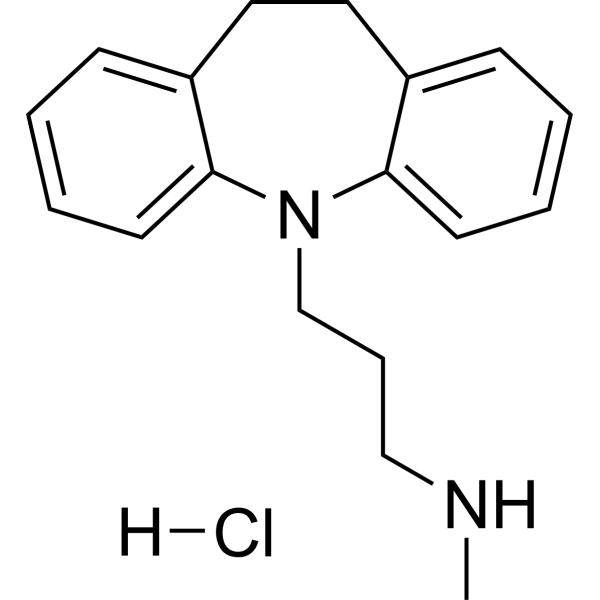
Desipramine hydrochloride
Based on 18 publication(s) in Google Scholar
Desipramine hydrochloride is a first-generation tricyclic antidepressant. Desipramine hydrochloride selectively binds to norepinephrine transporter and blocks neuronal norepinephrine reuptake. Desipramine hydrochloride activates MAPK signaling via ERK1/2, JNK, and p38, represses NF-κB and AP-1 activity, and induces apoptosis via ROS elevation, mitochondrial membrane potential reduction, and intracellular calcium increase. Desipramine hydrochloride also shows anyi-inflammatory activity, inhibiting TNF-α production. Desipramine hydrochloride can be used for the research of hepatocellular cancer, inflammation, and neurological diseases.
For research use only. We do not sell to patients.
- Purity : 99.76%
- CAS No.: 58-28-6
- Formula: C18H23ClN2
- Molecular Weight:302.84
-
Storage:
4°C, sealed storage, away from moisture
* In solvent : -80°C, 1 year; -20°C, 6 months (sealed storage, away from moisture)

To place orders, for customer services and technical support, please contact: MedChemExpress USA
Tel: 609-228-6898 E-mail: [email protected] [email protected]


-
 Biological Activity
-
Chemical Information
-
Solvent & Solubility
- Purity & Documentation
- References
-
 Help & FAQs


-
HY-B0166
L-Ascorbic acid -
HY-B1081
Oxidopamine hydrochloride -
HY-B0527A
Amitriptyline hydrochloride -
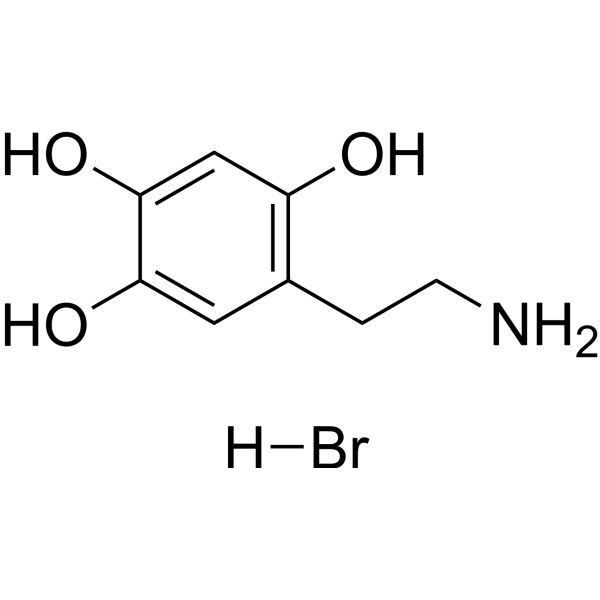
HY-B1081A
Oxidopamine hydrobromide -
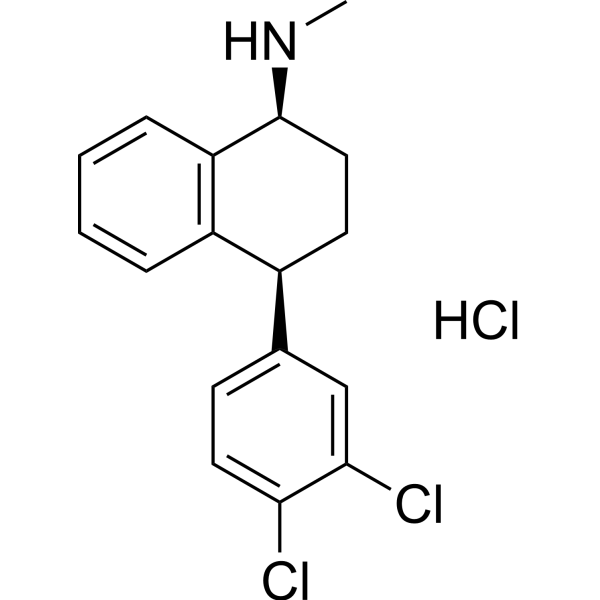
HY-B0176A
Sertraline hydrochloride -
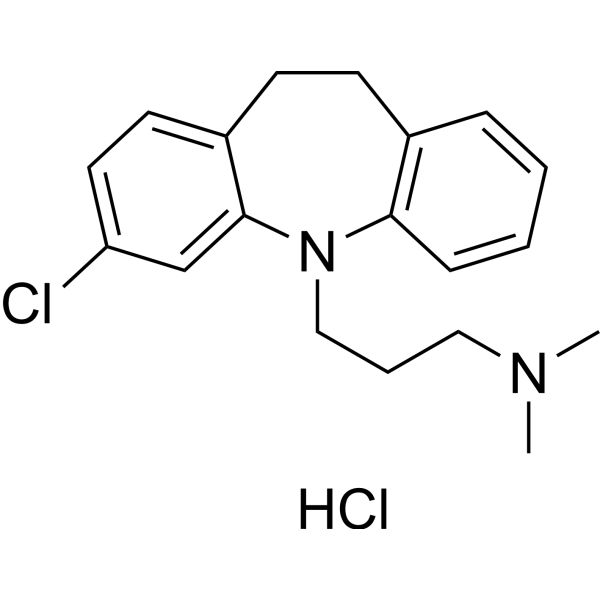
HY-B0457
Clomipramine hydrochloride -
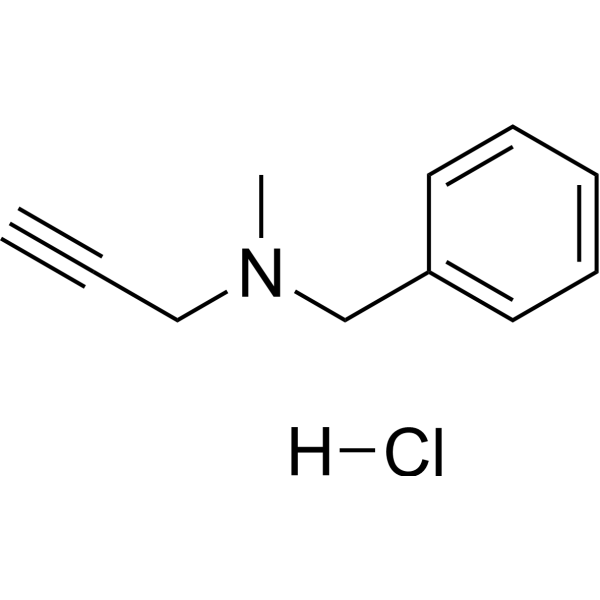
HY-A0091
Pargyline hydrochloride -
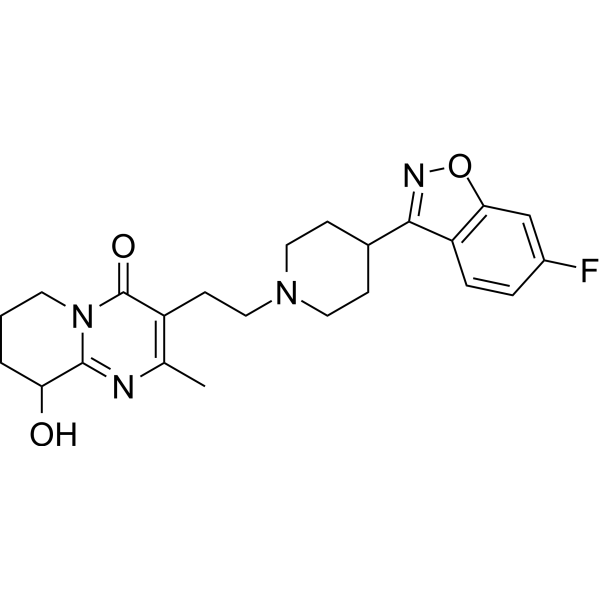
HY-A0019
Paliperidone -
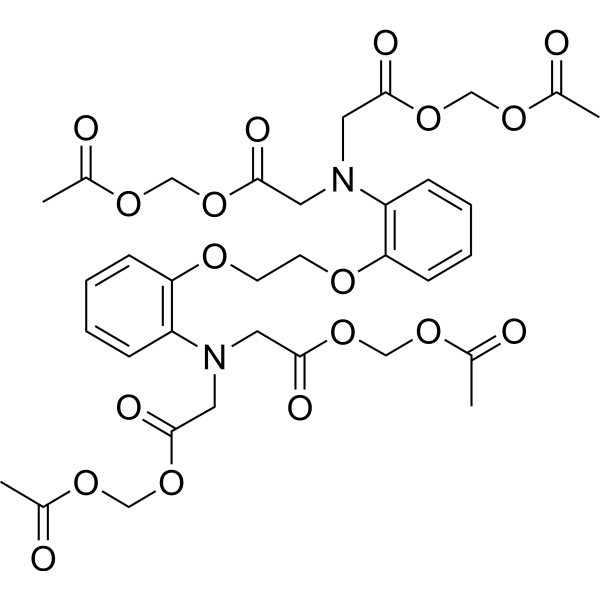
HY-100545
BAPTA-AM -
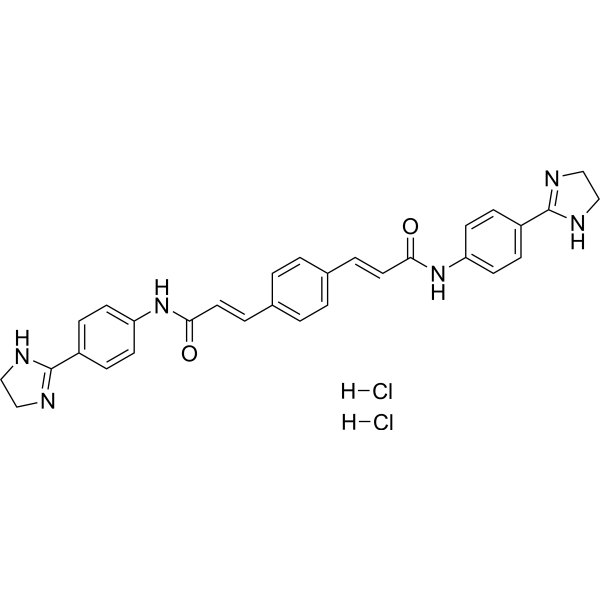
HY-19363
GW4869 -
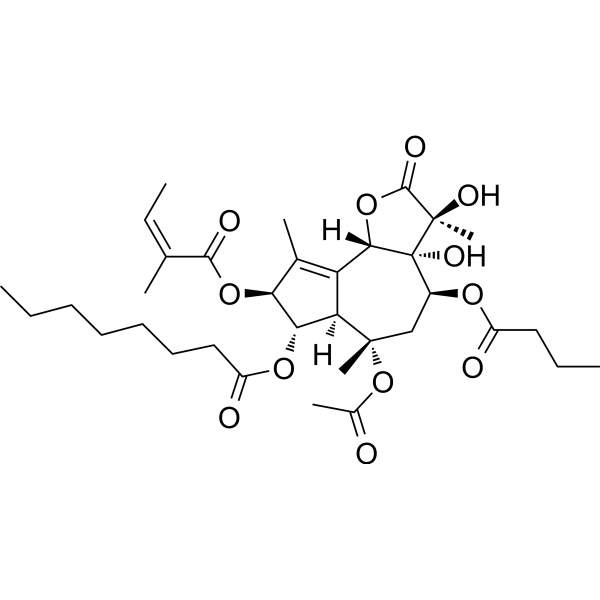
HY-13433
Thapsigargin -
HY-15760
Necrostatin-1
Publications Citing Use of MedChemExpress (MCE) Desipramine hydrochloride
More- Cell. 2025 Nov 26;188(24):6861-6872.e14. [Abstract]
- Acta Pharm Sin B. 2026 Jan 27.
- Neural Regen Res. 2021 Aug;16(8):1660-1670. [Abstract]
- Br J Pharmacol. 2024 Dec;181(23):4874-4889. [Abstract]
- J Med Chem. 2026 Feb 10. [Abstract]
- Pharmaceutics. 2022 Jul 22;14(8):1523. [Abstract]
- J Parkinson Dis. 2020;10(2):523-542. [Abstract]
- Front Endocrinol. 2026 May 5:17:1825379. [Abstract]
- Glia. 2022 Nov;70(11):2093-2107. [Abstract]
- Inflammation. 2021 Aug;44(4):1592-1606. [Abstract]
- Biochim Biophys Acta Mol Basis Dis. 2023 Mar 28;1869(5):166700. [Abstract]
- Neuropharmacology. 2026 Nov 1:298:111009. [Abstract]
- Neurotoxicology. 2022 Dec:93:173-185. [Abstract]
- Drug Metab Dispos. 2026 Jul 14;54(8):100365.
- Neuroscience. 2024 Mar 26:542:11-20. [Abstract]
- Parkinsons Dis. 2022 Nov 14:2022:1428817. [Abstract]
- Sci Total Environ. 2024 May 1:923:171405. [Abstract]
- Research Square Print. 2023 Feb 23.
 Customer Validation & Images

-
Cell Proliferation/Viability Assay
-
WB
-
Cell Imaging/Staining
-
Bio/Physico-chemical Assay
-
Bio/Physico-chemical Assay
All Adrenergic Receptor Isoforms
MoreAll AP-1 Isoforms
More

Biological Activity
Description
IC50 & Target
[1]|
ERK1 |
ERK2 |
Cellular Effect
|
Cell Line

|
Type | Value | Description | References |
|---|---|---|---|---|
| HEK293 | IC50 |
0.0063 μM
Compound: Desipramine
|
Inhibition of the Norepinephrine transporter (NET, SLC6A2) as assessed by GPCR-mediated changes in cell morphology using the impedance-based transporter activity through receptor activation (TRACT) assay in HEK-293 JumpIN-SLC6A2 cells (PubChem AID: 174586
Inhibition of the Norepinephrine transporter (NET, SLC6A2) as assessed by GPCR-mediated changes in cell morphology using the impedance-based transporter activity through receptor activation (TRACT) assay in HEK-293 JumpIN-SLC6A2 cells (PubChem AID: 174586
|
[PMID: 34112854] |
In Vitro
Desipramine hydrochloride (3-500 µM; 24 h) reduces the viability of human hepatoma Hep3B cells in a dose-dependent manner[1].
Desipramine hydrochloride (10-500 µM; 24 h) induces cytotoxicity in human hepatoma Hep3B cells in a dose-dependent manner, as measured by increased LDH release[1].
Desipramine hydrochloride (3-100 µM; 24 h) increases intracellular ROS production in human hepatoma Hep3B cells in a dose-dependent manner[1].
Desipramine hydrochloride (3-100 µM µM; 24 h) has its induced cell death in human hepatoma Hep3B cells abolished by the ROS scavenger NAC (HY-B0215) at concentrations up to 30 µM, and partially reduced at 100 µM after 24 h[1].
Desipramine hydrochloride (3-100 µM; 24 h) reduces mitochondrial membrane potential in human hepatoma Hep3B cells in vitro in a dose-dependent manner[1].
Desipramine hydrochloride (100 µM; 1-8 h) activates ERK1/2, JNK, and p38 MAPK signaling in human hepatoma Hep3B cells-[1].
Desipramine hydrochloride (3-100 µM; 24 h) has its induced cell death in human hepatoma Hep3B cells abolished by inhibition of ERK1/2, p38, or JNK MAPK signaling[1].
Desipramine hydrochloride (30-500 µM) increases intracellular calcium levels in human hepatoma Hep3B cells in a concentration-dependent manner, with increases occurring via both extracellular calcium influx and intracellular calcium release[1].
Desipramine hydrochloride potently binds to the rat norepinephrine transporter with a Ki of 6.2 nM, showing 25-fold selectivity over the rat serotonin transporter (Ki = 158 nM) [3].
Desipramine hydrochloride (1 h) binds to the rat α2D-adrenoceptor with a Ki of 3.4 μM[3].
Desipramine hydrochloride potently binds to the human norepinephrine transporter with a Ki of 0.63 nM, has lower affinity for the human serotonin transporter (Ki = 22 nM), and lacks affinity for the human dopamine transporter (Ki >10,000 nM)[3].
Desipramine hydrochloride (0.01-10 μM; 20 h) dose-dependently inhibits LPS (HY-D1056)-induced TNF-α release from primary human monocytes[4].
Desipramine hydrochloride (10 μM) reduces TNF-α-induced RANTES release and RANTES mRNA accumulation in A549 human lung epithelial cells[4].
Desipramine hydrochloride (10 μM) represses TNF-α-induced NF-κB activity in A549 human lung epithelial cells[4].
Desipramine hydrochloride (10 μM) reduces TPA (HY-18739)-induced AP-1 activity in A549 human lung epithelial cells[4].
MedChemExpress (MCE) has not independently confirmed the accuracy of these methods. They are for reference only.
-
Cell Line:human hepatoma Hep3B cells
-
Concentration:1 µM, 3 µM, 10 µM, 30 µM, 100 µM, 300 µM, 500 µM
-
Incubation Time:24 h
-
Result:Did not affect cell viability at 1 µM.
Reduced cell viability to 90.2% of control at 3 µM.
Reduced cell viability to 87.4% of control at 10 µM.
Reduced cell viability to 69.1% of control at 30 µM.
Reduced cell viability to 45.9% of control at 100 µM.
Reduced cell viability to 36.1% of control at 300 µM.
Reduced cell viability to 27.8% of control at 500 µM.
Caused statistically significant viability reductions at concentrations ≥3 µM compared to control.
-
Cell Line:human hepatoma Hep3B cells
-
Concentration:100 µM
-
Incubation Time:1 h, 2 h, 4 h, 8 h
-
Result:Increased phosphorylation of ERK1/2 to 185.2% of control at 1 h, 151.5% of control at 2 h, and 138.5% of control at 4 h.
Increased phosphorylation of p38 to 135.1% of control at 1 h and 116.4% of control at 2 h.
Increased phosphorylation of JNK to 118.9% of control at 1 h and 113.9% of control at 2 h.
Maintained unchanged total levels of ERK1/2, JNK, and p38 across all time points.
Caused statistically significant increases in MAPK phosphorylation at the specified time points compared to control.
In Vivo
Desipramine (10 mg/kg; i.p.; daily; 8 days, 30 minutes pre-Ovalbumin nebulization) hydrochloride reduces lung inflammation by decreasing macrophage and lymphocyte counts in Ovalbumin (HY-W250978)-sensitized rats but does not attenuate bronchial hyperresponsiveness[4].
MedChemExpress (MCE) has not independently confirmed the accuracy of these methods. They are for reference only.
-
Animal Model:LPS-induced BALB/c mice (5-week-old, 17-21 g)[4]
-
Dosage:5, 10, 20 mg/kg
-
Administration:i.p.; single dose (preventive, 30 minutes pre-LPS)
-
Result:Significantly inhibited LPS-induced serum TNF-α production.
Increased mouse survival rate to 70% with preventive 20 mg/kg treatment (vs 10% in saline controls).
-
Animal Model:Ovalbumin-sensitized Brown Norway rats (10-week-old)[4]
-
Dosage:10 mg/kg
-
Administration:i.p.; daily; 8 days (30 minutes pre-ovalbumin nebulization)
-
Result:Did not reduce bronchial hyperresponsiveness to metacholine (measured by enhanced pause, Penh).
Reduced total number of inflammatory cells in bronchoalveolar lavages.
Decreased macrophage count by 52% compared to saline-treated sensitized rats.
Decreased lymphocyte count by 21% compared to saline-treated sensitized rats.
Did not reduce neutrophil or eosinophil counts compared to saline-treated sensitized rats.
Clinical Trial
| NCT Number | Sponsor | Condition | Start Date |
Phase
|
|---|---|---|---|---|
| NCT01329991 | Plexxikon| | 2011-05 | PHASE1 |


Chemical Information
-
CAS No. 58-28-6
-
Appearance Solid
-
Molecular Weight 302.84
-
Formula C18H23ClN2
-
Color White to off-white
-
SMILES
CNCCCN1C2=CC=CC=C2CCC3=CC=CC=C31.Cl
-
Shipping
Room temperature in continental US; may vary elsewhere.
-
Storage
4°C, sealed storage, away from moisture
* In solvent : -80°C, 1 year; -20°C, 6 months (sealed storage, away from moisture)


Publications (18)
-
Journal Impact Factor
-
Most Recent
-
Cell
2025 Nov 26;188(24):6861-6872.e14. PMID: 41138730 -
-
Neural Regen Res
Glucagon-like peptide-1/glucose-dependent insulinotropic polypeptide dual receptor agonist DA-CH5 is superior to exendin-4 in protecting neurons in the 6-hydroxydopamine rat Parkinson model. [Abstract]2021 Aug;16(8):1660-1670. PMID: 33433498 -
Br J Pharmacol
Serotonergic transmission plays differentiated roles in the rapid and sustained antidepressant-like effects of ketamine. [Abstract]2024 Dec;181(23):4874-4889. PMID: 39238235 -
J Med Chem
Bioisostere-Driven Discovery of SePP: A Selenium-Containing Polypharmacological Agent Relevant to Fragile X Syndrome. [Abstract]2026 Feb 10. PMID: 41666325 -
Pharmaceutics
Laminin Receptor-Mediated Nanoparticle Uptake by Tumor Cells: Interplay of Epigallocatechin Gallate and Magnetic Force at Nano-Bio Interface. [Abstract]2022 Jul 22;14(8):1523. PMID: 35893779
Desipramine hydrochloride purchased from MedChemExpress. Usage Cited in: Pharmaceutics. 2022 Jul 22;14(8):1523. [Abstract]
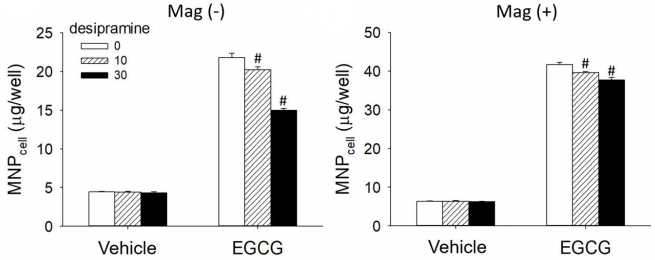
Figure shows that 10 and 30 μM of Desipramine hydrochloride attenuated EGCG-induced enhancement of MNPcell by 8.9% and 39.3% in the Mag− group, respectively. In the Mag+ group, MNPcell was enhanced up to 6.6-fold by EGCG compared with the control group, which was minorly attenuated by 5.7% and 11.2% by Desipramine hydrochloride at 10 and 30 μM, respectively.
-
J Parkinson Dis
The Novel Dual GLP-1/GIP Receptor Agonist DA-CH5 Is Superior to Single GLP-1 Receptor Agonists in the MPTP Model of Parkinson's Disease. [Abstract]2020;10(2):523-542. PMID: 31958096 -
Front Endocrinol
The novel GLP-1/GIP dual receptor agonist DA5-CH is superior to tirzepatide and exendin-4 in the 6-OHDA Parkinson rat model. [Abstract]2026 May 5:17:1825379. PMID: 42165019 -
Glia
Potassium channel Kir 4.1 regulates oligodendrocyte differentiation via intracellular pH regulation. [Abstract]2022 Nov;70(11):2093-2107. PMID: 35775976 -
Inflammation
Acid Sphingomyelinase and Acid β-Glucosidase 1 Exert Opposite Effects on Interleukin-1β-Induced Interleukin 6 Production in Rheumatoid Arthritis Fibroblast-Like Synoviocytes. [Abstract]2021 Aug;44(4):1592-1606. PMID: 33665756 -
Biochim Biophys Acta Mol Basis Dis
Involvement of Kir4.1 in pain insensitivity of the BTBR mouse model of autism spectrum disorder. [Abstract]2023 Mar 28;1869(5):166700. PMID: 36990129 -
Neuropharmacology
Antidepressant-like activity of JZ-1201 in male rodents: a novel selective 5-HT/NE reuptake inhibitor and 5-HT1A receptor partial agonist. [Abstract]2026 Nov 1:298:111009. PMID: 42107524 -
Neurotoxicology
Ropivacaine-induced seizures evoked pain sensitization in rats: Participation of 5-HT/5-HT3R. [Abstract]2022 Dec:93:173-185. PMID: 36209936 -
-
Neuroscience
Acute Administration of Lactate Exerts Antidepressant-like Effect Through cAMP-dependent Protein Synthesis. [Abstract]2024 Mar 26:542:11-20. PMID: 38336096 -
Parkinsons Dis
DA5-CH and Semaglutide Protect against Neurodegeneration and Reduce α-Synuclein Levels in the 6-OHDA Parkinson's Disease Rat Model. [Abstract]2022 Nov 14:2022:1428817. PMID: 36419409 -
Sci Total Environ
Cadmium exacerbates liver injury by remodeling ceramide metabolism: Multiomics and laboratory evidence. [Abstract]2024 May 1:923:171405. PMID: 38432385
Desipramine hydrochloride purchased from MedChemExpress. Usage Cited in: Sci Total Environ. 2024 May 1:923:171405. [Abstract]
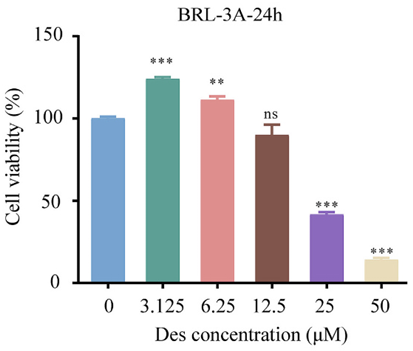
Desipramine hydrochloride (Des; 0-50 μM; 24 h). Cell viability of BRL-3A cells after Des intervention was detected by CCK-8. Other groups were compared with 0 μM group.
Desipramine hydrochloride purchased from MedChemExpress. Usage Cited in: Sci Total Environ. 2024 May 1:923:171405. [Abstract]
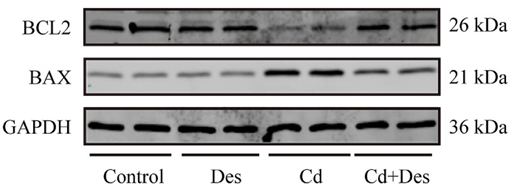
Desipramine hydrochloride (Des; 12.5 μM; 24 h). The expression levels of apoptosis-related proteins in BRL-3A cells were detected by western blotting.
Desipramine hydrochloride purchased from MedChemExpress. Usage Cited in: Sci Total Environ. 2024 May 1:923:171405. [Abstract]
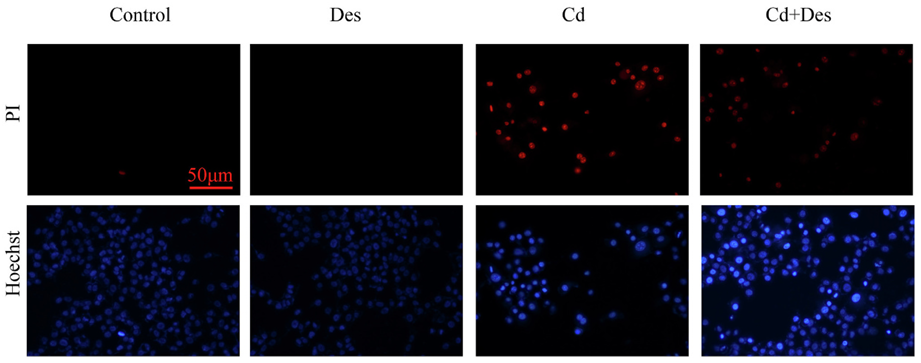
Desipramine hydrochloride (Des; 12.5 μM; 24 h). Hoechst/PI double staining: Hoechst/PI was used to double stain and observe them under fluorescence microscope (200×). Hoechst 33342 can stain the nucleus with blue fluorescence. PI can stain necrotic cells with red fluorescence.
Desipramine hydrochloride purchased from MedChemExpress. Usage Cited in: Sci Total Environ. 2024 May 1:923:171405. [Abstract]
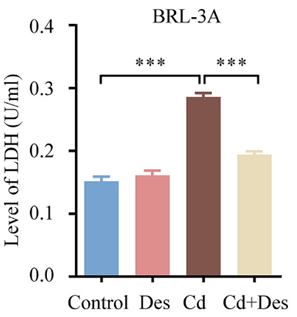
Desipramine hydrochloride (Des; 12.5 μM; 24 h). The level of LDH in cell culture medium after 12.5 μM Des intervention and/or 20 μM Cadmium exposure for 24 h.
-


Solvent & Solubility
In Vitro:
DMSO : ≥ 100 mg/mL (330.21 mM; Hygroscopic DMSO has a significant impact on the solubility of product, please use newly opened DMSO)
H2O : 100 mg/mL (330.21 mM; Need ultrasonic)
* "≥" means soluble, but saturation unknown.
Please refer to the solubility information to select the appropriate solvent. Once prepared, please aliquot and store the solution to prevent product inactivation from repeated freeze-thaw cycles.
Storage method and period of stock solution: -80°C, 1 year; -20°C, 6 months (sealed storage, away from moisture). When stored at -80°C, please use it within 1 year. When stored at -20°C, please use it within 6 months.
* Note: If you choose water as the stock solution, please dilute it to the working solution, then filter and sterilize it with a 0.22 μm filter before use.
Please refer to the solubility information to select the appropriate solvent. Once prepared, please aliquot and store the solution to prevent product inactivation from repeated freeze-thaw cycles.
Storage method and period of stock solution: -80°C, 1 year; -20°C, 6 months (sealed storage, away from moisture). When stored at -80°C, please use it within 1 year. When stored at -20°C, please use it within 6 months.
* Note: If you choose water as the stock solution, please dilute it to the working solution, then filter and sterilize it with a 0.22 μm filter before use.
Concentration (start) × Volume (start) = Concentration (final) × Volume (final)
In Vivo:
Select the appropriate dissolution method based on your experimental animal and administration route.
- For the following dissolution methods, please ensure to first prepare a clear stock solution using an In Vitro approach and then sequentially add co-solvents:
- To ensure reliable experimental results, the clarified stock solution can be appropriately stored based on storage conditions. As for the working solution for In Vivo experiments, it is recommended to prepare freshly and use it on the same day.
- The percentages shown for the solvents indicate their volumetric ratio in the final prepared solution. If precipitation or phase separation occurs during preparation, heat and/or sonication can be used to aid dissolution.
Add each solvent one by one: 10% DMSO 40% PEG300 5% Tween-80 45% Saline
Solubility: ≥ 2.5 mg/mL (8.26 mM); Clear solution
This protocol yields a clear solution of ≥ 2.5 mg/mL (saturation unknown).
Taking 1 mL working solution as an example, add 100 μL DMSO stock solution (25.0 mg/mL) to 400 μL PEG300, and mix evenly; then add 50 μL Tween-80 and mix evenly; then add 450 μL Saline to adjust the volume to 1 mL.
Preparation of Saline: Dissolve 0.9 g sodium chloride in ddH₂O and dilute to 100 mL to obtain a clear Saline solution.
Add each solvent one by one: 10% DMSO 90% (20% SBE-β-CD in Saline)
Solubility: ≥ 2.5 mg/mL (8.26 mM); Clear solution
This protocol yields a clear solution of ≥ 2.5 mg/mL (saturation unknown).
Taking 1 mL working solution as an example, add 100 μL DMSO stock solution (25.0 mg/mL) to 900 μL 20% SBE-β-CD in Saline, and mix evenly.
Preparation of 20% SBE-β-CD in Saline (4°C, storage for one week): 2 g SBE-β-CD powder is dissolved in 10 mL Saline, completely dissolve until clear.
For the following dissolution methods, please prepare the working solution directly:
It is recommended to prepare fresh solutions and use them promptly within a short period of time.
The percentages shown for the solvents indicate their volumetric ratio in the final prepared solution. If precipitation or phase separation occurs during preparation, heat and/or sonication can be used to aid dissolution.
Add each solvent one by one: PBS
Solubility: 1 mg/mL (3.30 mM); Clear solution; Need ultrasonic and warming and heat to 60°C
In Vivo Dissolution Calculator
Please enter the basic information of animal experiments:
-
-
-
-
Recommended: Prepare an additional quantity of animals to account for potential losses during experiments.
Working solution concentration: 0.22 mg/mL
This product has good water solubility, please refer to the measured solubility data in water/PBS/Saline for details.


Purity & Documentation
-
Data Sheet (290 KB)
-
SDS (419 KB)
- English - EN (419 KB)
- Français - FR (419 KB)
- Deutsch - DE (419 KB)
- Norwegian - NO (419 KB)
- Español - ES (419 KB)
- Swedish - SV (419 KB)
- Italian - IT (419 KB)
- Korean - KR (419 KB)
- Portuguese - PT (419 KB)
-
Handling Instructions (2659 KB)
References
[1]. Yang DK, et al. Desipramine induces apoptosis in hepatocellular carcinoma cells. Oncol Rep. 2017;38(2):1029-1034. [Content Brief]
[2]. Kishore-Kumar R, et al. Desipramine relieves postherpetic neuralgia. Clin Pharmacol Ther. 1990;47(3):305-312. [Content Brief]
[3]. Deupree JD, et al. Pharmacological properties of the active metabolites of the antidepressants desipramine and citalopram. Eur J Pharmacol. 2007;576(1-3):55-60. [Content Brief]
[4]. Roumestan C, et al. Anti-inflammatory properties of desipramine and fluoxetine. Respir Res. 2007;8(1):35. Published 2007 May 3. [Content Brief]


Complete Stock Solution Preparation Table
Please refer to the solubility information to select the appropriate solvent. Once prepared, please aliquot and store the solution to prevent product inactivation from repeated freeze-thaw cycles.
Storage method and period of stock solution: -80°C, 1 year; -20°C, 6 months (sealed storage, away from moisture). When stored at -80°C, please use it within 1 year. When stored at -20°C, please use it within 6 months.
| Optional Solvent | Concentration Solvent Mass | 1 mg | 5 mg | 10 mg | 25 mg |
|---|---|---|---|---|---|
| DMSO / H2O | 1 mM | 3.3021 mL | 16.5104 mL | 33.0207 mL | 82.5518 mL |
| 5 mM | 0.6604 mL | 3.3021 mL | 6.6041 mL | 16.5104 mL | |
| 10 mM | 0.3302 mL | 1.6510 mL | 3.3021 mL | 8.2552 mL | |
| 15 mM | 0.2201 mL | 1.1007 mL | 2.2014 mL | 5.5035 mL | |
| 20 mM | 0.1651 mL | 0.8255 mL | 1.6510 mL | 4.1276 mL | |
| 25 mM | 0.1321 mL | 0.6604 mL | 1.3208 mL | 3.3021 mL | |
| 30 mM | 0.1101 mL | 0.5503 mL | 1.1007 mL | 2.7517 mL | |
| 40 mM | 0.0826 mL | 0.4128 mL | 0.8255 mL | 2.0638 mL | |
| 50 mM | 0.0660 mL | 0.3302 mL | 0.6604 mL | 1.6510 mL | |
| 60 mM | 0.0550 mL | 0.2752 mL | 0.5503 mL | 1.3759 mL | |
| 80 mM | 0.0413 mL | 0.2064 mL | 0.4128 mL | 1.0319 mL | |
| 100 mM | 0.0330 mL | 0.1651 mL | 0.3302 mL | 0.8255 mL |
* Note: If you choose water as the stock solution, please dilute it to the working solution, then filter and sterilize it with a 0.22 μm filter before use.


Desipramine hydrochloride Related Classifications
HY-B1272 Related Classifications
 Powered by Bioz