



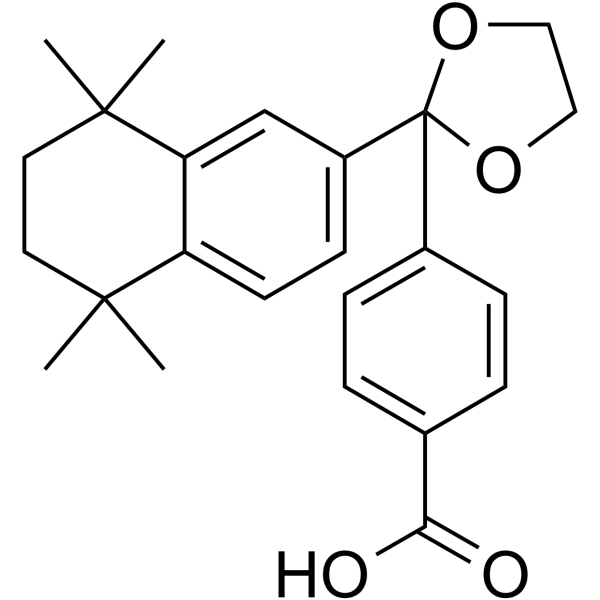
SR11237 GMP is SR11237 (HY-107413) produced by using GMP guidelines. GMP small molecules works appropriately as an auxiliary reagent for cell therapy manufacture. SR11237 is a RXR activator and lipid metabolism regulator that promotes the differentiation of induced neural stem cells into dopaminergic (TH-positive) neurons. SR11237 induces transcriptional regulation of lipogenic genes and cholesterol transporters, increases glycosaminoglycan release, and elevates total cellular triglyceride levels. SR11237 promotes heterodimerization of RXR with Nurr1, thereby enhancing tyrosine hydroxylase expression and facilitating dopamine release. SR11237 produces a synergistic effect when used in combination with bFGF/EGF. SR11237 is mainly used in studies related to osteoarthritis and Parkinson's disease.
연구목적의 판매만을 진행합니다. 환자를 대상으로 한 판매는 하지 않습니다.
- CAS No.: 146670-40-8
- 화학식: C24H28O4
- 분자량:380.48
-
보관:
Please store the product under the recommended conditions in the Certificate of Analysis.


To place orders, for customer services and technical support, please contact: MedChemExpress USA
Tel: 609-228-6898 E-mail: [email protected] [email protected]


-
 Biological Activity
-
Chemical Information
- Protocol
- 순도&문서
- References
-
 Help & FAQs


-
HY-107413
SR11237RXR Activator -
HY-14171
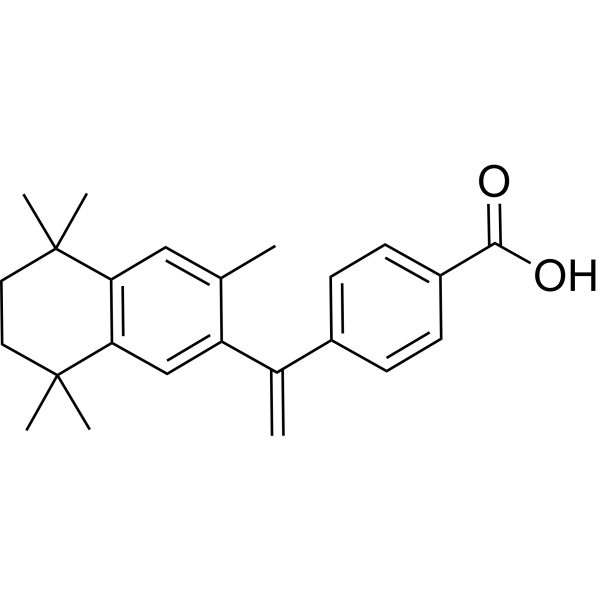
BexaroteneRXR Agonist -
HY-100532
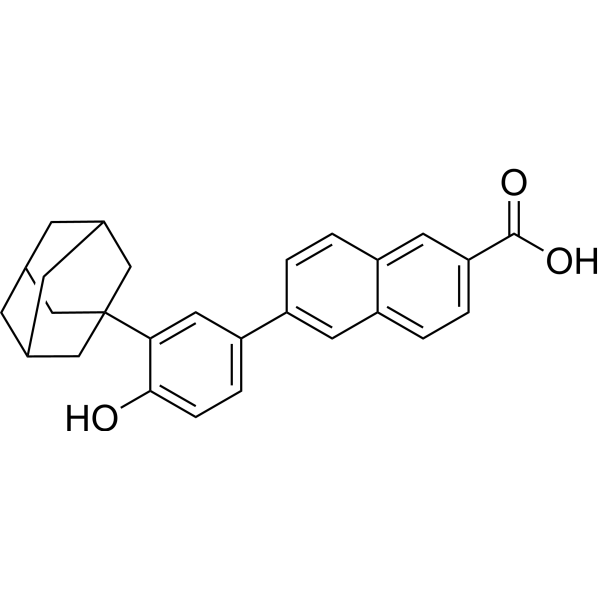
CD437RARγ Agonist -
HY-108521
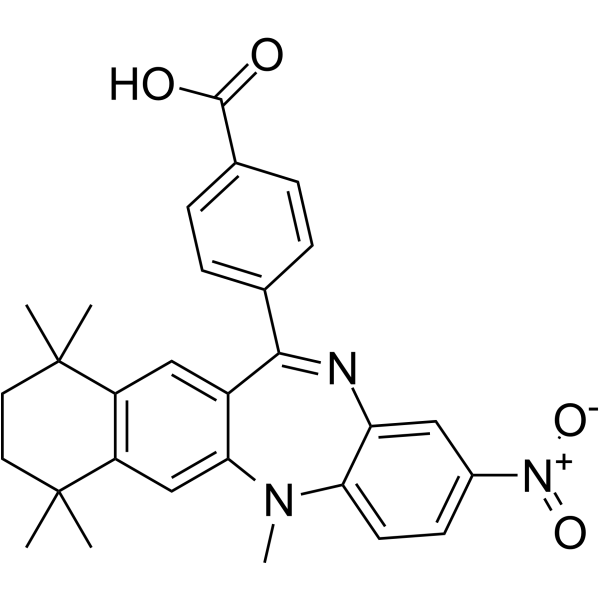
HX531RXR Antagonist -

HY-107413R
SR11237 (Standard)Reference Standard -
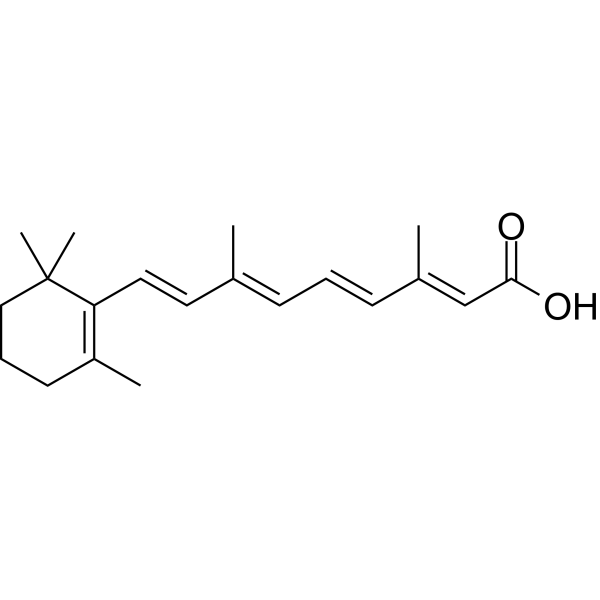
HY-14649
Retinoic acidRAR Agonist -
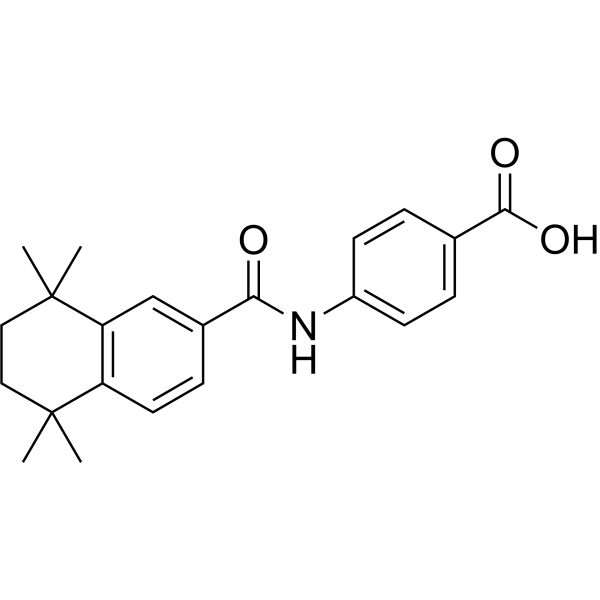
HY-10475
AM580RARα Agonist -
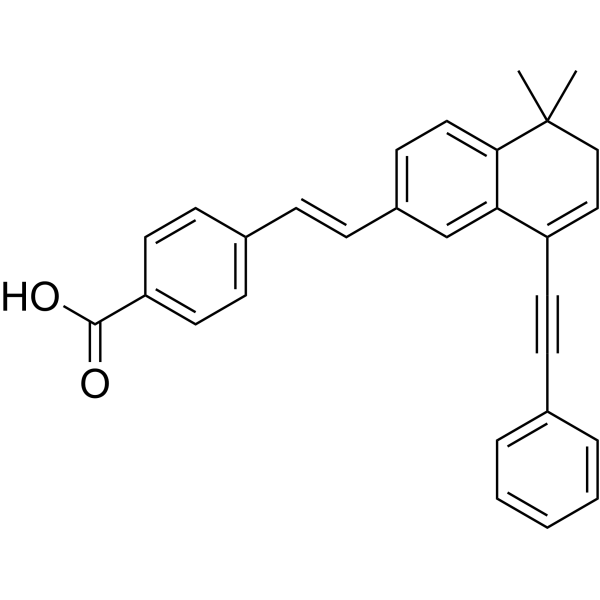
HY-108529
BMS493Inverse RAR Inhibitor -
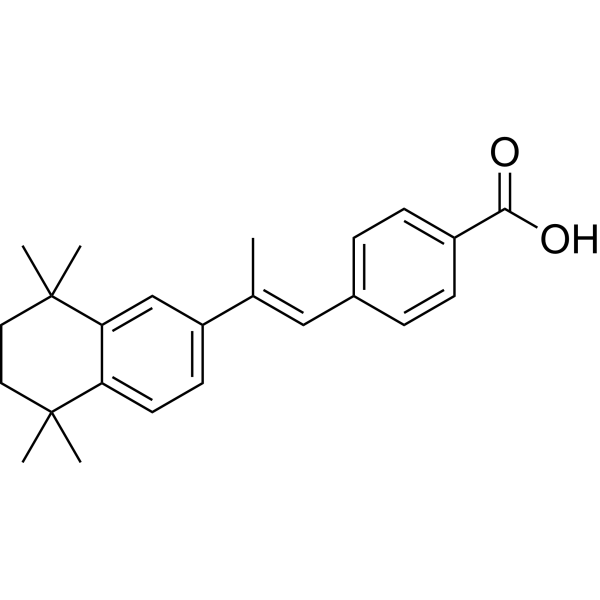
HY-15682
TTNPBApoptosis Inducer -
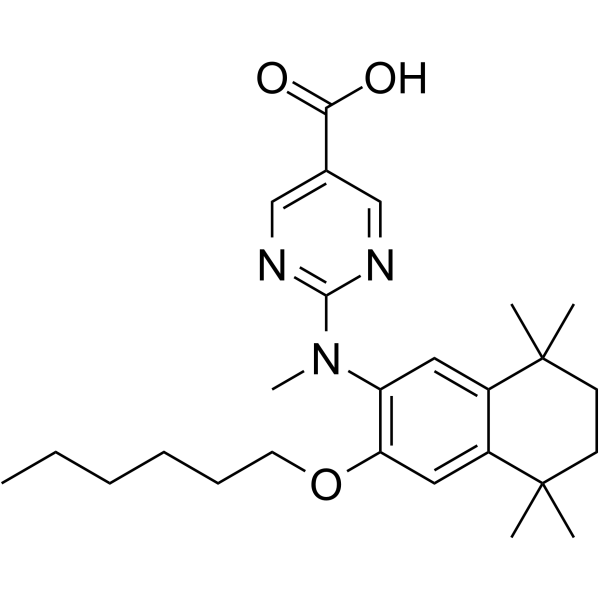
HY-108522
PA452RXR Antagonist -
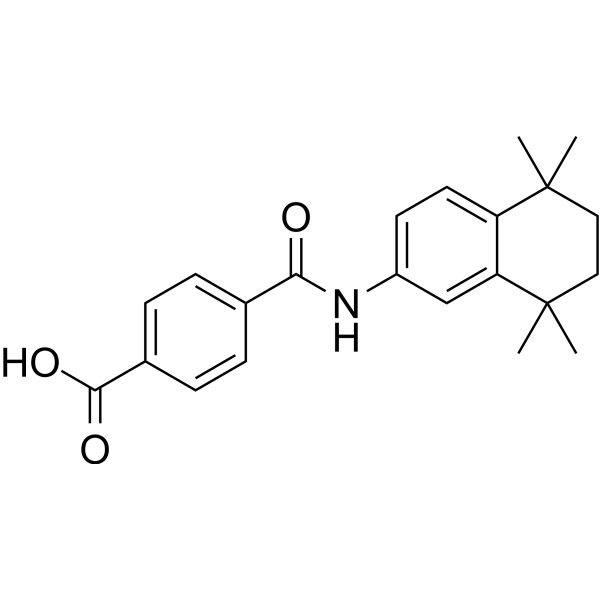
HY-14652
TamibaroteneApoptosis Inducer -
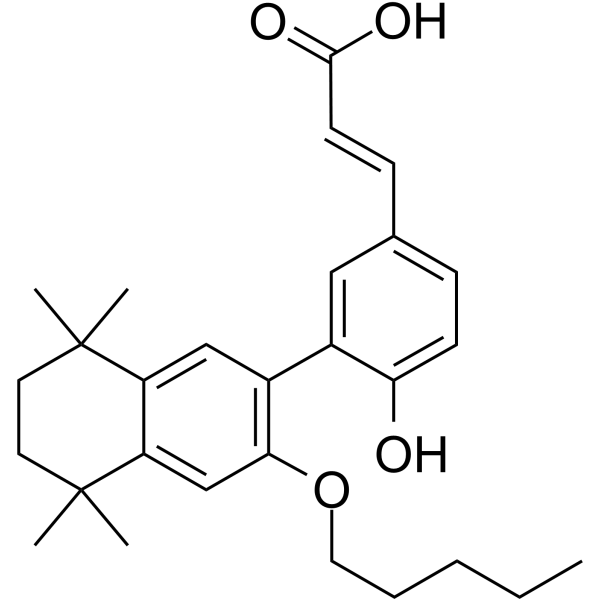
HY-107500
UVI 3003RXR Inhibitor


Biological Activity
제품 설명
Cellular Effect
|
Cell Line

|
Type | Value | Description | References |
|---|---|---|---|---|
| Sf9 | IC50 |
12.6 μM
Compound: 13a
|
Inhibition of microsomal fraction of human CYP26B1 expressed in Sf9 cells using 9-cis-RA as substrate preincubated for 5 mins followed by NADPH addition measured after 5 mins by HPLC analysis in presence of rat P450 reductase
Inhibition of microsomal fraction of human CYP26B1 expressed in Sf9 cells using 9-cis-RA as substrate preincubated for 5 mins followed by NADPH addition measured after 5 mins by HPLC analysis in presence of rat P450 reductase
|
[PMID: 26918322] |
| Sf9 | IC50 |
7.8 μM
Compound: 13a
|
Inhibition of microsomal fraction of human CYP26A1 expressed in Sf9 cells using 9-cis-RA as substrate preincubated for 5 mins followed by NADPH addition measured after 1 min by HPLC analysis in presence of rat P450 reductase
Inhibition of microsomal fraction of human CYP26A1 expressed in Sf9 cells using 9-cis-RA as substrate preincubated for 5 mins followed by NADPH addition measured after 1 min by HPLC analysis in presence of rat P450 reductase
|
[PMID: 26918322] |
In Vitro
SR11237 GMP (1 μM; 7 d) promotes the induced differentiation of Nurr1-overexpressing C17.2-c42 neural stem cells co-cultured with primary ventral mesencephalic cells from E16 rats into dopaminergic (TH-positive) neurons, with up to 60% of C17.2-c42 cells exhibiting a dopaminergic phenotype[1].
Combination treatment with SR11237 GMP (1 μM) and bFGF enhances dopamine release from dopamine neurons derived from Nurr1-overexpressing C17.2-c42 neural stem cells co-cultured with type 1 astrocytes from the ventral midbrain of P1 rats[1].
SR11237 GMP (10 μM; 7 d) promotes adipogenic differentiation of human bone marrow mesenchymal stem cells by upregulating the expression of key adipogenic genes including FABP4, LPL, CEBPB and PPARG, as well as increasing lipid accumulation[3].
SR11237 GMP (10 μM; 7 d) retains its adipogenic stimulatory effect in RARβ-knockdown human bone marrow mesenchymal stem cells, indicating that its adipogenic activity is independent of RARβ[3].
SR11237 GMP (10 μM; 7 d) inhibits adipogenic differentiation of human liposarcoma SW872 cells by downregulating the expression of FABP4 and PPARG, whereas it exerts a pro-adipogenic effect in hBMSCs[3].
The inhibitory effect of SR11237 GMP (10 μM; 7 d) on adipogenic differentiation of human liposarcoma SW872 cells is partially mediated by RARβ, as knockdown of RARβ attenuates this inhibitory effect[3].
MedChemExpress (MCE) has not independently confirmed the accuracy of these methods. They are for reference only.
-
Cell Line:Nurr1-overexpressing C17.2-c42 neural stem cells co-cultured with E16 rat VM primary cells
-
Concentration:1 μM
-
Incubation Time:7 days
-
Result:Increased the induction of dopaminergic (TH-positive) neurons from Nurr1-overexpressing C17.2-c42 neural stem cells co-cultured with E16 rat VM primary cells, with up to 60% of C17.2-c42 cells adopting a dopaminergic phenotype after 7 days of incubation.
-
Cell Line:Human bone marrow mesenchymal stem cells (hBMSCs)
-
Concentration:10 µM
-
Incubation Time:7 days
-
Result:Significantly increased lipid accumulation (quantified by OD 540 nm) compared to the control group.
Significantly promoted the mRNA expression of adipogenic genes FABP4, LPL, CEBPB, and PPARG.
Increased protein levels of FABP4, PPARγ, and C/EBPβ.
Elicited a 5.303-fold change in RARβ mRNA expression vs. control, with minor increases in RARA and RARG expression.
-
Cell Line:Human bone marrow mesenchymal stem cells (hBMSCs) (RARβ-knockdown and control shRNA)
-
Concentration:10 µM
-
Incubation Time:7 days
-
Result:Maintained a stimulatory effect on lipid accumulation in RARβ-knockdown hBMSCs, though the magnitude was lower than in control shRNA cells.
Promoted mRNA expression of FABP4, PPARG, and CEBPB in both control and RARβ-knockdown cells, with reduced levels in the knockdown group.
Did not significantly alter SMAD3, SMAD4, WNT2B, or CTNNB1 mRNA expression in RARβ-knockdown cells compared to control shRNA cells treated with SR11237.
In Vivo
MedChemExpress (MCE) has not independently confirmed the accuracy of these methods. They are for reference only.


Chemical Information
-
CAS No. 146670-40-8
-
분자량 380.48
-
화학식 C24H28O4
-
SMILES
CC1(C2=CC(C3(C4=CC=C(C(O)=O)C=C4)OCCO3)=CC=C2C(C)(C)CC1)C
-
선적
Room temperature in continental US; may vary elsewhere.
-
보관
Please store the product under the recommended conditions in the Certificate of Analysis.


순도&문서
References
[1]. Wagner J, et al. Induction of a midbrain dopaminergic phenotype in Nurr1-overexpressing neural stem cells by type 1 astrocytes. Nat Biotechnol. 1999;17(7):653-659. [Content Brief]
[3]. Cao J, et al. Retinoids Regulate Adipogenesis Involving the TGFβ/SMAD and Wnt/β-Catenin Pathways in Human Bone Marrow Mesenchymal Stem Cells. Int J Mol Sci. 2017;18(4):842. Published 2017 Apr 15. [Content Brief]
[4]. Lenhard JM, et al. The RXR agonist LG100268 causes hepatomegaly, improves glycaemic control and decreases cardiovascular risk and cachexia in diabetic mice suffering from pancreatic beta-cell dysfunction. Diabetologia. 1999;42(5):545-554. [Content Brief]
[5]. Dupuis H, et al. Exposure to the RXR Agonist SR11237 in Early Life Causes Disturbed Skeletal Morphogenesis in a Rat Model. Int J Mol Sci. 2019;20(20):5198. Published 2019 Oct 20. [Content Brief]

Calculators
Concentration (start) × Volume (start) = Concentration (final) × Volume (final)


SR11237 (GMP) Related Classifications
HY-107413G Related Classifications
 Powered by Bioz