1. Search Result
Search Result
Results for "

ergosterol+biosynthesis

" in MedChemExpress (MCE) Product Catalog:

35

Inhibitors & Agonists

3

Natural
Products

4

Isotope-Labeled Compounds

Cat. No. Product Name Target Research Areas Chemical Structure
  • HY-76200
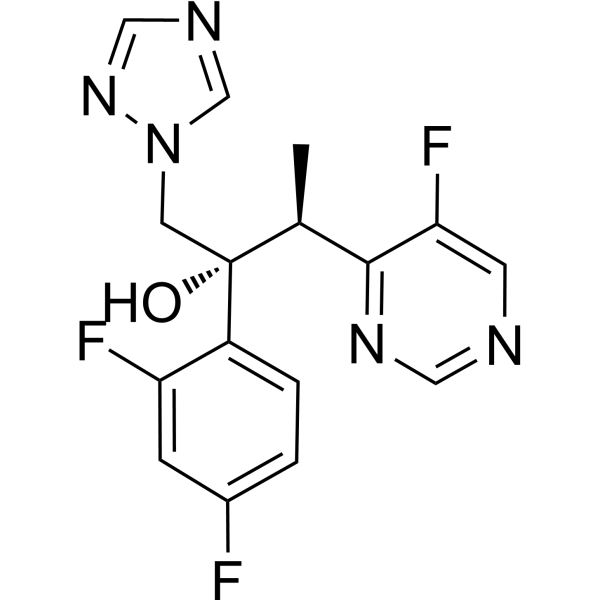
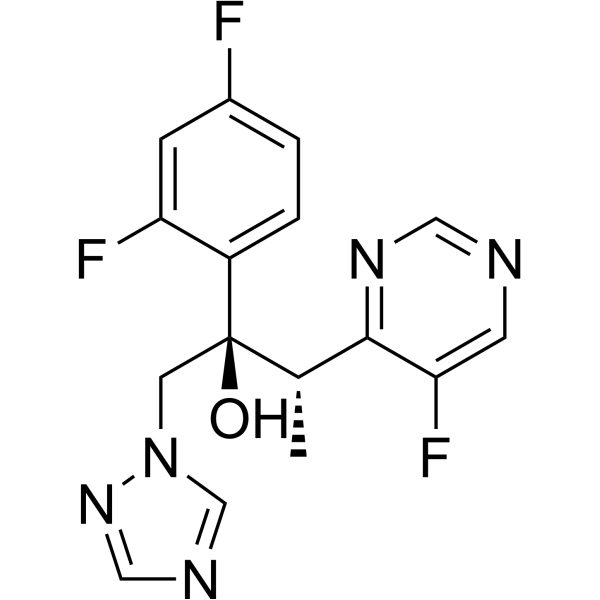
    Voriconazole
    Maximum Cited Publications
    11 Publications Verification

    UK-109496

    Fungal Bacterial Infection Neurological Disease Cancer
    Voriconazole (UK-109496) is a second-generation, broad-spectrum triazole antifungal agent that inhibits fungal ergosterol biosynthesis. Voriconazole exerts its antifungal activity by inhibition of 14-α-lanosterol demethylation, which is mediated by fungal cytochrome P450 enzymes. Voriconazole can penetrate the blood brain barrier (BBB) .
    Voriconazole
  • HY-14273
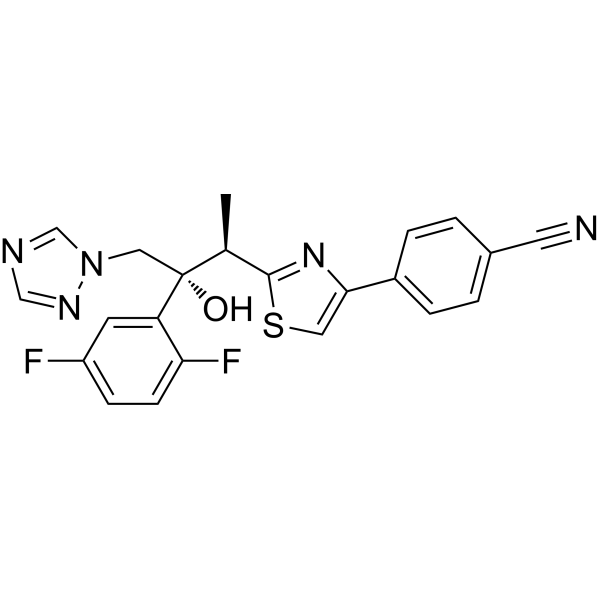
    Isavuconazole
    5 Publications Verification

    BAL-4815; RO-0094815

    Fungal Cytochrome P450 Antibiotic Infection Cancer
    Isavuconazole (BAL-4815) is a triazole proagent with antifungal activity against yeasts, molds, and dimorphic fungi. Isavuconazole inhibits ergosterol biosynthesis and results in the disruption of fungal membrane structure and function. Isavuconazole is a moderate inhibitor of CYP3A4.
    Isavuconazole
  • HY-B0238
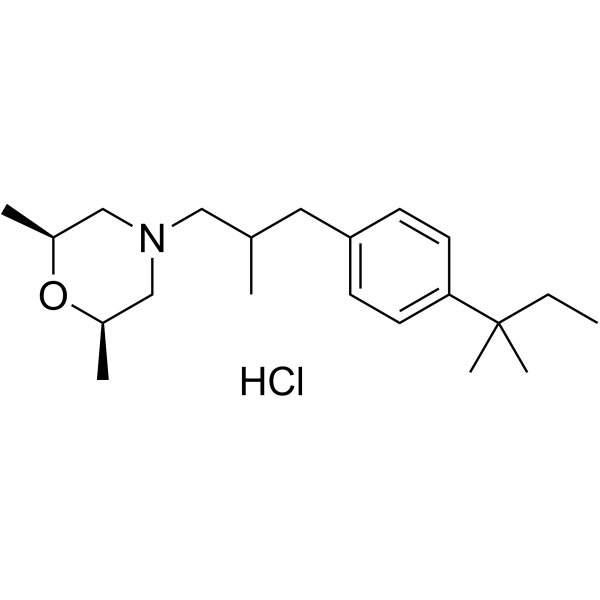
    Amorolfine hydrochloride
    1 Publications Verification

    Ro 14-4767/002

    Fungal Antibiotic Infection
    Amorolfine (Ro 14-4767/002) hydrochloride is a potent anti-fungal agent. Amorolfine hydrochloride inhibits ergosterol biosynthesis. Amorolfine hydrochloride has the potential for the research of Neoscytalidium dimidiatum onychomycosis .
    Amorolfine hydrochloride
  • HY-119847

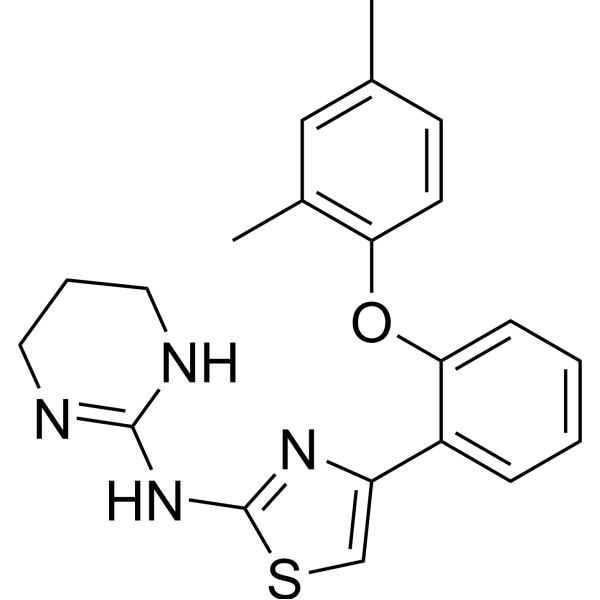
    BAY-W-6341

    Fungal Infection
    Abafungin (BAY-W-6341) is a broad-spectrum fungicidal arylguanidine compound and a selective inhibitor of sterol-C-24-methyltransferase. Abafungin blocks the transmethylation reaction at the C-24 position of the sterol side chain during the ergosterol biosynthesis pathway. Abafungin directly disrupts fungal cell membrane integrity, and diminishes fungal viability independent of the fungal growth state. Abafungin can be applied to the research of fungal infections, particularly dermatomycoses .
    Abafungin
  • HY-119683
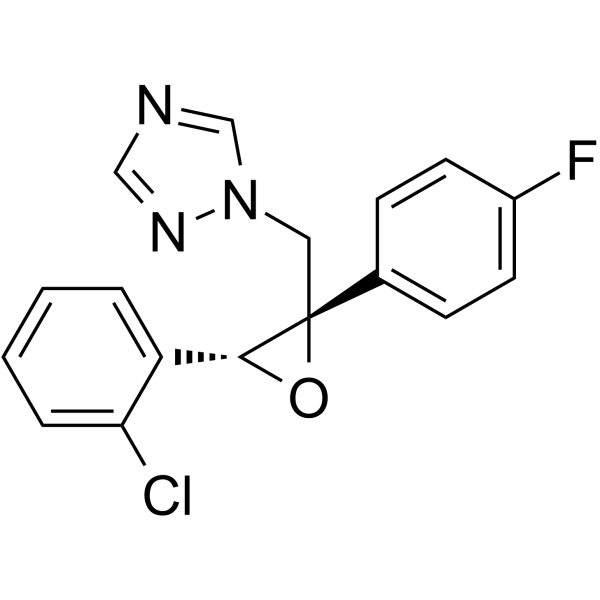
    Epoxiconazole
    1 Publications Verification

    Environmental Pollutants Apoptosis Fungal Infection
    Epoxiconazole, a fungicide, is a demethylation inhibitor of the Ergosterol biosynthesis pathway. Epoxiconazole exhibits strong inhibitory effects on both carbendazim-resistant and phenamacril-resistant isolates, and can be used for controlling many crop diseases .
    Epoxiconazole
  • HY-14282
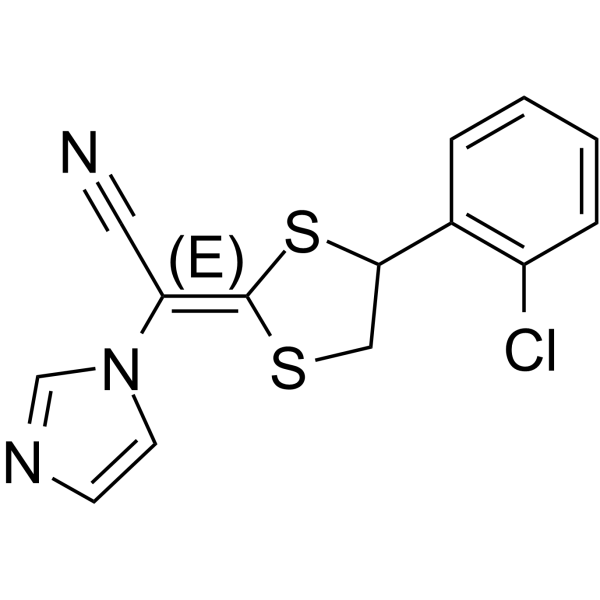
    Lanoconazole
    1 Publications Verification

    Fungal Infection Inflammation/Immunology
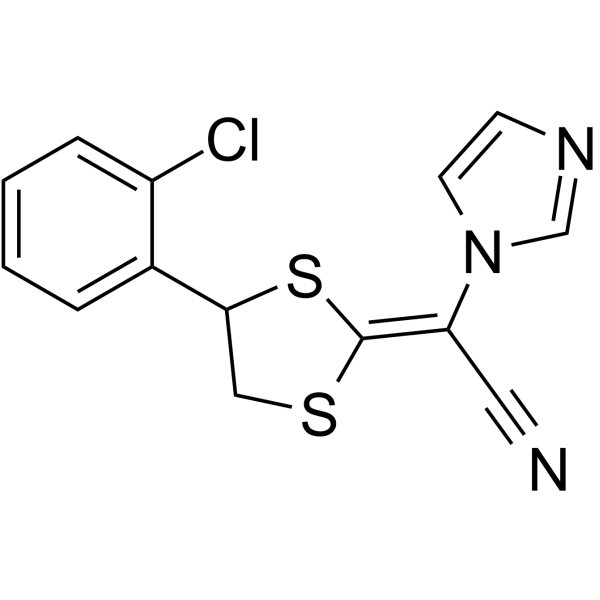
    Lanoconazole is a potent and orally active imidazole antifungal agent, shows a broad spectrum of activity against fungi?in vitro?and?in vivo . Lanoconazole interferes with ergosterol biosynthesis by inhibiting sterol 14-alpha demethylase and blocking fungal membrane ergosterol biosynthesis. Lanoconazole can be used for the investigation of dermatophytosis and onychomycosis .
    Lanoconazole
  • HY-76200S
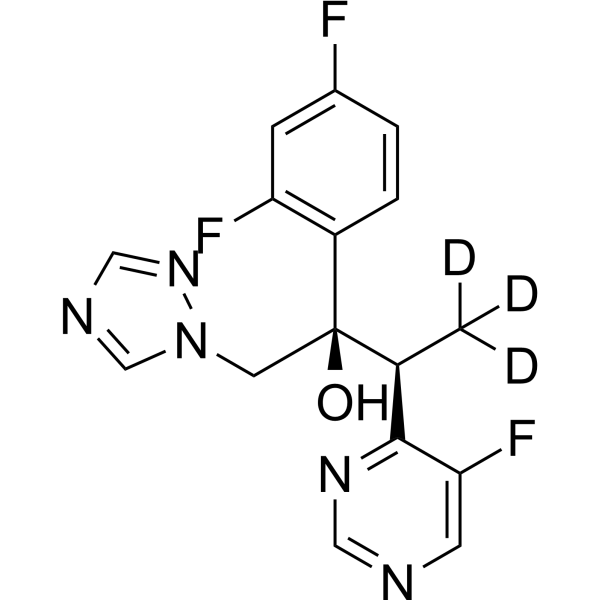
    Voriconazole-d3
    2 Publications Verification

    UK-109496-d3

    Fungal Infection
    Voriconazole-d3 is the deuterium labeled Voriconazole. Voriconazole (UK-109496) is a second-generation, broad-spectrum triazole antifungal agent that inhibits fungal ergosterol biosynthesis. Voriconazole exerts its antifungal activity by inhibition of 14-α-lanosterol demethylation, which is mediated by fungal cytochrome P450 enzymes .
    Voriconazole-d3
  • HY-B0238R

    Ro 14-4767/002 (Standard)

    Reference Standards Fungal Antibiotic Infection
    Amorolfine (hydrochloride) (Standard) is the analytical standard of Amorolfine (hydrochloride). This product is intended for research and analytical applications. Amorolfine (Ro 14-4767/002) hydrochloride is a potent anti-fungal agent. Amorolfine hydrochloride inhibits ergosterol biosynthesis. Amorolfine hydrochloride has the potential for the research of Neoscytalidium dimidiatum onychomycosis .
    Amorolfine hydrochloride (Standard)
  • HY-14273R

    BAL-4815 (Standard); RO-0094815 (Standard)

    Reference Standards Fungal Cytochrome P450 Antibiotic Infection
    Isavuconazole (Standard) is the analytical standard of Isavuconazole. This product is intended for research and analytical applications. Isavuconazole (BAL-4815) is a triazole proagent with antifungal activity against yeasts, molds, and dimorphic fungi. Isavuconazole inhibits ergosterol biosynthesis and results in the disruption of fungal membrane structure and function. Isavuconazole is a moderate inhibitor of CYP3A4.
    Isavuconazole (Standard)
  • HY-76200R

    UK-109496 (Standard)

    Reference Standards Fungal Bacterial Infection Cancer
    Voriconazole (Standard) is the analytical standard of Voriconazole. This product is intended for research and analytical applications. Voriconazole (UK-109496) is a second-generation, broad-spectrum triazole antifungal agent that inhibits fungal ergosterol biosynthesis. Voriconazole exerts its antifungal activity by inhibition of 14-α-lanosterol demethylation, which is mediated by fungal cytochrome P450 enzymes .
    Voriconazole (Standard)
  • HY-W020777

    Environmental Pollutants Fungal Infection
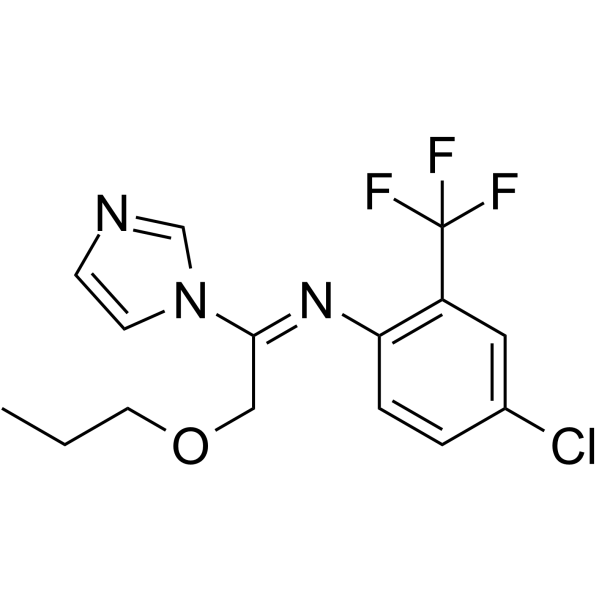
    Triflumizole is one of imidazole fungicides that works by inhibiting ergosterol biosynthesis, and is widely used for the control of powdery mildew and scabs on various fruits and crops .
    Triflumizole
  • HY-14282A

    Fungal Infection Inflammation/Immunology
    (Z)-Lanoconazole is the Z configuration of Lanoconazole. Lanoconazole is a potent and orally active imidazole antifungal agent, shows a broad spectrum of activity against fungi in vitro and in vivo . Lanoconazole interferes with ergosterol biosynthesis by inhibiting sterol 14-alpha demethylase and blocking fungal membrane ergosterol biosynthesis. Lanoconazole can be used for the investigation of dermatophytosis and onychomycosis .
    (Z)-Lanoconazole
  • HY-114518

    KP363

    Fungal Infection
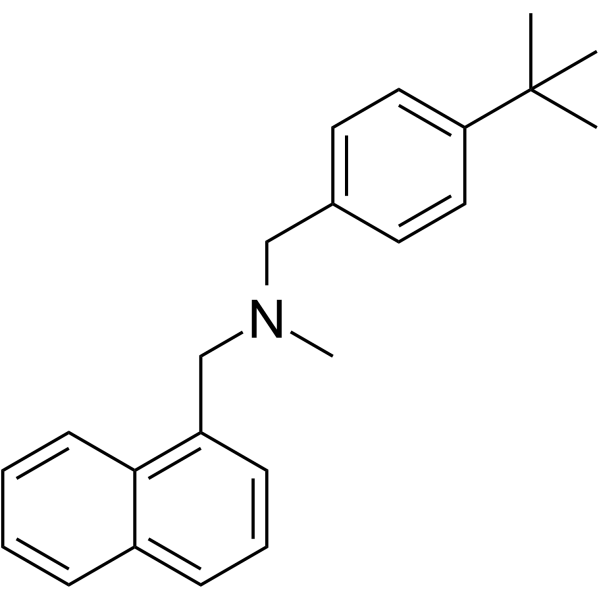
    Butenafine (KP363) is a potent and broad spectrum benzylamine antifungal agent . Butenafine inhibits fungal ergosterol biosynthesis at the point of squalene epoxidation, leading to a deficiency of the fungal cell membranes. Butenafine is effective against dermatophytes infections, such as  tinea pedis,  tinea cruris, tinea versicolor .
    Butenafine
  • HY-W706180

    Isotope-Labeled Compounds Fungal Infection
    (±)-Triadimefon-d4 is deuterium labeled Triadimefon. Triadimefon is a triazole fungicide used to control powdery mildew, rusts, and other fungal pests on grains, fruit and vegetable crops, turf, shrubs, and trees. Triadimefon inhibits lanosterol 14α-demethylase, interfering with oxidative demethylation reactions in the ergosterol biosynthesis pathway of fungi, and also blocks gibberellin biosynthesis .
    (±)-Triadimefon-d4
  • HY-W414596

    Fungal Infection
    Metconazole is a 14α-demethylation inhibitor (DMI) fungicide. Metconazole inhibits fungal ergosterol biosynthesis, inhibits mycelial growth and conidial germ tube elongation. Metconazole reduces antioxidant enzyme activities. Metconazole reduces occurrence of Fusarium crown rot in wheat .
    Metconazole
  • HY-76200B

    UK-109496 camphorsulfonate

    Fungal Bacterial Infection Cancer
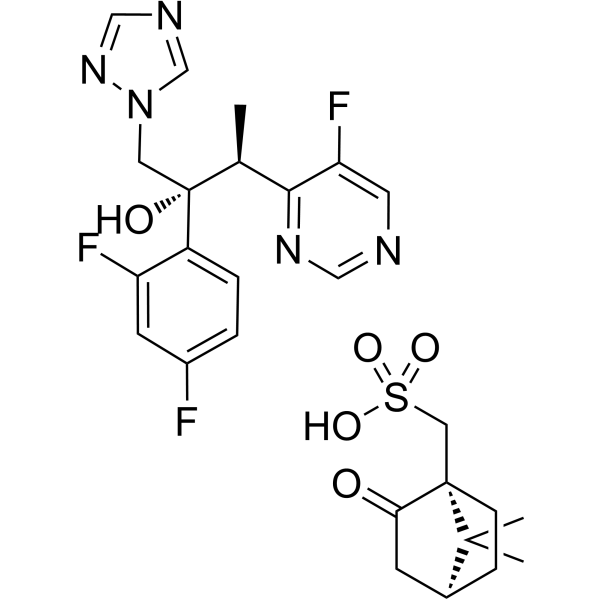
    Voriconazole (UK-109496) camphorsulfonate is a second-generation, broad-spectrum triazole antifungal agent that inhibits fungal ergosterol biosynthesis. Voriconazole camphorsulfonate exerts its antifungal activity by inhibition of 14-α-lanosterol demethylation, which is mediated by fungal cytochrome P450 enzymes .
    Voriconazole camphorsulfonate
  • HY-14282R

    Reference Standards Fungal Infection Inflammation/Immunology
    Lanoconazole (Standard) is the analytical standard of Lanoconazole. This product is intended for research and analytical applications. Lanoconazole is a potent and orally active imidazole antifungal agent, shows a broad spectrum of activity against fungi in vitro and in vivo . Lanoconazole interferes with ergosterol biosynthesis by inhibiting sterol 14-alpha demethylase and blocking fungal membrane ergosterol biosynthesis. Lanoconazole can be used for the investigation of dermatophytosis and onychomycosis .
    Lanoconazole (Standard)
  • HY-121169

    Ro 14-4767; Ro 14-4767/000

    Fungal Infection
    Amorolfine (Ro 14-4767) is an antifungal agent. Amorolfine ameliorates the onychomycosis through inhibition of ergosterol biosynthesis. Amorolfine inhibits Candida albicans with a MIC of 0.404 µg/mL .
    Amorolfine
  • HY-155711

    Fungal Infection
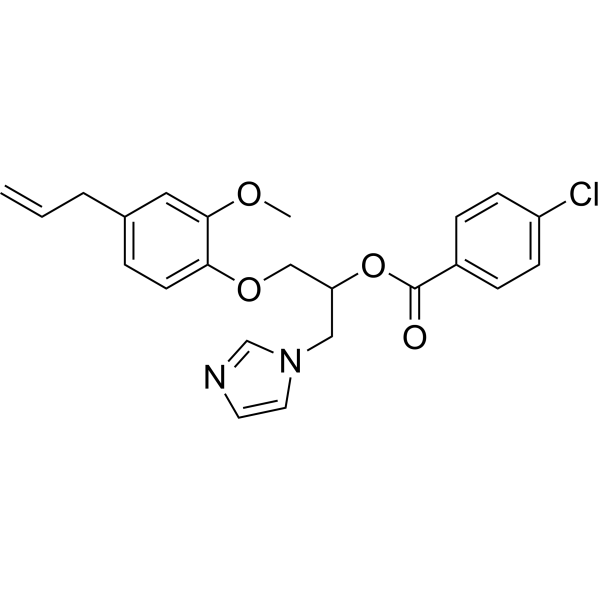
    Antifungal agent 69 (compound 13) is a eugenol-imidazole against Candida albicans (MIC: 4.6 μM) with no relevant cytotoxicity. Antifungal agent 69 alters the fungal ergosterol biosynthesis and shows antifungal activity .
    Antifungal agent 69
  • HY-W020777R

    Reference Standards Fungal Infection
    Triflumizole (Standard) is the analytical standard of Triflumizole. This product is intended for research and analytical applications. Triflumizole is one of imidazole fungicides that works by inhibiting ergosterol biosynthesis, and is widely used for the control of powdery mildew and scabs on various fruits and crops .
    Triflumizole (Standard)
  • HY-163297

    Fungal Infection
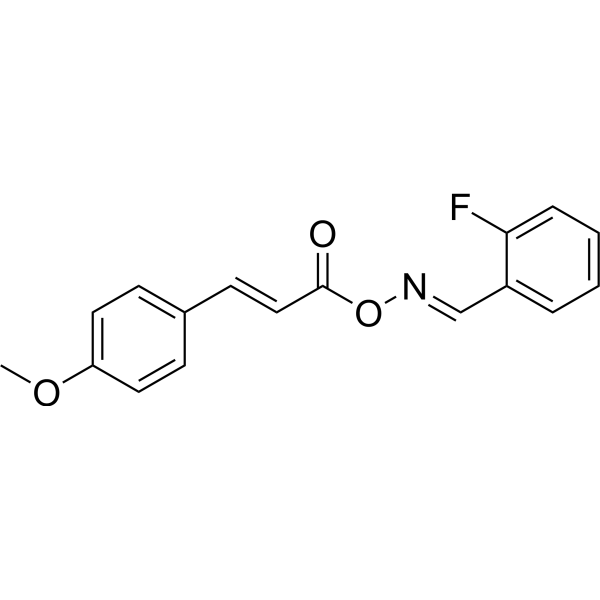
    Antifungal agent 90 (Compound 7n) is an antifungal agent that inhibits ergosterol biosynthesis. Antifungal agent 90 showed excellent antifungal activity against Valsa mali and Botrytis cinerea with EC50 values respectively. 4.26 and 1.41 μg/mL .
    Antifungal agent 90
  • HY-119683R

    Reference Standards Fungal Apoptosis Infection
    Epoxiconazole (Standard) is the analytical standard of Epoxiconazole. This product is intended for research and analytical applications. Epoxiconazole, a fungicide, is a demethylation inhibitor of the Ergosterol biosynthesis pathway. Epoxiconazole exhibits strong inhibitory effects on both carbendazim-resistant and phenamacril-resistant isolates, and can be used for controlling many crop diseases .
    Epoxiconazole (Standard)
  • HY-119683S1

    Isotope-Labeled Compounds Fungal Apoptosis Infection
    Epoxiconazole-d4 is the deuterium labeled Epoxiconazole (HY-119683). Epoxiconazole, a fungicide, is a demethylation inhibitor of the Ergosterol biosynthesis pathway. Epoxiconazole exhibits strong inhibitory effects on both carbendazim-resistant and phenamacril-resistant isolates, and can be used for controlling many crop diseases .
    Epoxiconazole-d4
  • HY-117089R

    Reference Standards Fungal Infection
    Tetraconazole (Standard) is the analytical standard of Tetraconazole. This product is intended for research and analytical applications. Tetraconazole, a chiral triazole fungicide, is widely used for the prevention of plant disease in wheat fields . Tetraconazole alters the methionine and ergosterol biosynthesis pathways in Saccharomyces yeasts promoting changes on volatile derived compounds .
    Tetraconazole (Standard)
  • HY-155710

    Fungal Infection
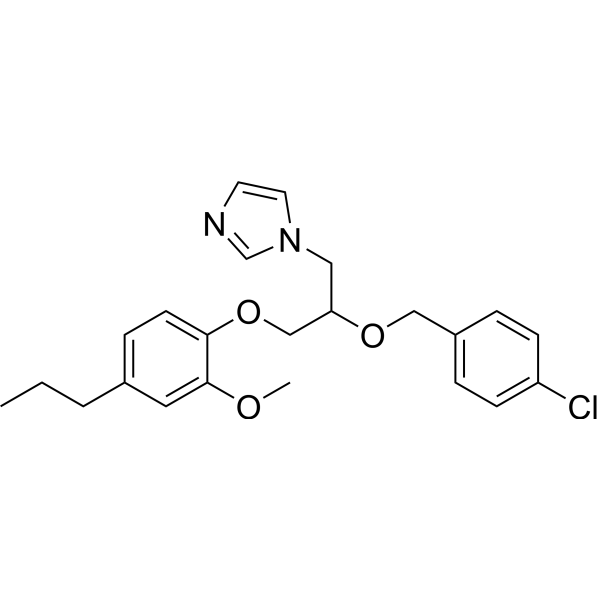
    Antifungal agent 68 (compound 10) is an antifungal agent against Candida and Cryptococcus gattii. Antifungal agent 68 inhibits fungal ergosterol biosynthesis, possibly by targeting lanosterol 14α-demethylase (CYP51). There is an interaction between the imidazole ring of antifungal agent 68 and the heme group of CYP51 .
    Antifungal agent 68
  • HY-176413

    Fungal Infection
    SDH-IN-27 (Compound Q18) is a succinate dehydrogenase inhibitor (SDHI) (IC50: 9.7 mg/L). SDH-IN-27 induces mycelial morphology changes and lipid peroxidation, and exhibits antifungal activity against C. camelliae (EC50: 6.0 mg/L). SDH-IN-27 is an ergosterol biosynthesis inhibitor (EBI) that binds to the active site of CYP51, ultimately leading to cell death of pathogenic fungi .
    SDH-IN-27
  • HY-114518S2

    KP363-d4

    Fungal Isotope-Labeled Compounds Infection
    Butenafine-d4 (KP363-d4) is the deuterium labeled Butenafine (HY-114518). Butenafine (KP363) is a potent and broad spectrum benzylamine antifungal agent . Butenafine inhibits fungal ergosterol biosynthesis at the point of squalene epoxidation, leading to a deficiency of the fungal cell membranes. Butenafine is effective against dermatophytes infections, such as ?tinea pedis, ?tinea cruris, tinea versicolor .
    Butenafine-d4
  • HY-155545

    Fungal Infection
    Antifungal agent 60 (compound 16) is an inhibitor of ergosterol biosynthesis with broad-spectrum antifungal activity. Antifungal agent 60 inhibits 7 human pathogenic fungal species, 2 fluconazole-resistant C. albicans isolates and 2 multi-drug resistant Candida auris isolates. Antifungal agent 60 is a click chemistry reagent, it contains an Alkyne group and can undergo copper-catalyzed azide-alkyne cycloaddition (CuAAc) with molecules containing Azide groups.
    Antifungal agent 60
  • HY-176210

    Fungal Cytochrome P450 Infection
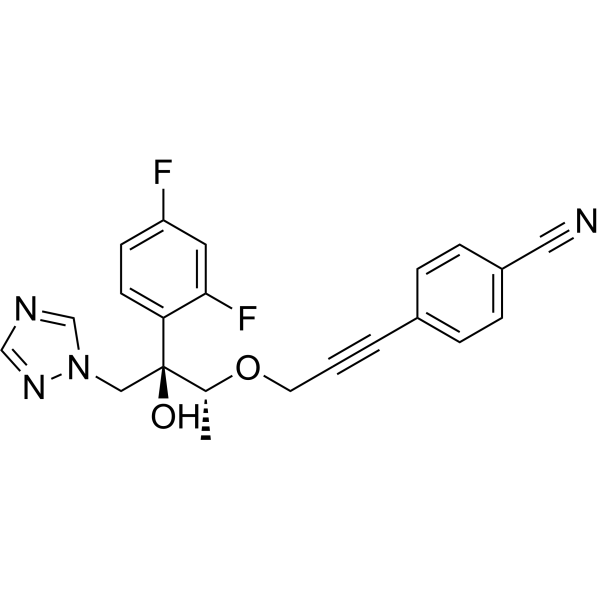
    CYP51-IN-24 (Compound 22) is a Sterol 14α-Demethylase (CYP51) inhibitor. CYP51-IN-24 exhibits potent inhibitory activity against wild-type and drug-resistant fungi. CYP51-IN-24 inhibits ergosterol biosynthesis by binding to the fungal CYP51 enzyme. CYP51-IN-24 can be used in research and drug development against drug-resistant fungal infections .
    CYP51-IN-24
  • HY-W712766

    Fungal Infection
    Dodemorph is a fungicide. Dodemorph exerts antifungal effects by inhibiting ergosterol biosynthesis. Dodemorph can be used in studies related to fungal mildew in rose cultivation .
    Dodemorph
  • HY-W748786

    Fungal Infection
    Fenpyrazamine is an antifungal agent. Fenpyrazamine possesses antifungal, preventative, systemic, and lesion-inhibiting activities, as well as a long-lasting effect. Fenpyrazamine targets 3-keto reductase in the ergosterol biosynthesis pathway. Fenpyrazamine is effective against gray mold, stem rot, and brown rot .
    Fenpyrazamine
  • HY-N19799

    Fungal Infection
    Diorcinol D is a natural product with antifungal activity. Diorcinol D inhibits CYP51 expression, reduces Cdr1 expression, blocks efflux pump activity, and impedes ergosterol biosynthesis. It inhibits planktonic and biofilm growth of Candida albicans. Diorcinol D is applicable to research related to fungal infections .
    Diorcinol D
  • HY-W281071

    Fungal Infection
    Antifungal agent 150 is an antifungal agent with activity against phytopathogenic fungi and in planta lesion suppression. Antifungal agent 150 inhibits ergosterol biosynthesis via targeted enzyme interaction. Antifungal agent 150 can be used for the research of plant diseases caused by Rhizoctonia solani, including banded leaf and sheath blight of maize .
    Antifungal agent 150
  • HY-183333

    Fungal Infection
    CHNQD-02204 is a potent and selective antifungal agent with in vitro activity against Candida albicans, with a MIC of 0.025 μg/mL. CHNQD-02204 inhibits ergosterol biosynthesis, disrupts the membrane integrity and biofilm formation of Candida albicans, and suppresses the morphological transition of Candida albicans from yeast to hyphal form. CHNQD-02204 can be used in studies related to candidal infections .
    CHNQD-02204
  • HY-179518

    Fungal PKA Ras Infection
    Antifungal agent 140 (compound 5p) is a potent antifungal agent with broad-spectrum antifungal activity. Antifungal agent 140 exerts a dual mechanism by targeting the Ras/cAMP/PKA pathway to inhibit hyphal formation and the ergosterol biosynthesis pathway. Antifungal agent 140 enhances survival, reduces fungal load in the kidneys, and strengthens host immune responses in a murine model of systemic candidiasis. Antifungal agent 140 can be used for research of resistant fungal infections .
    Antifungal agent 140

Inquiry Online

Your information is safe with us. * Required Fields.

Salutation


Country or Region *

Applicant Name *


Organization Name *

Department *


Email Address *


Product Name *

Cat. No.


Requested quantity *

Phone Number *


Remarks

Inquiry Online

Inquiry Information

Product Name:
Cat. No.:
Quantity:
MCE Japan Authorized Agent: