



Epoxiconazole
Based on 1 publication(s) in Google Scholar
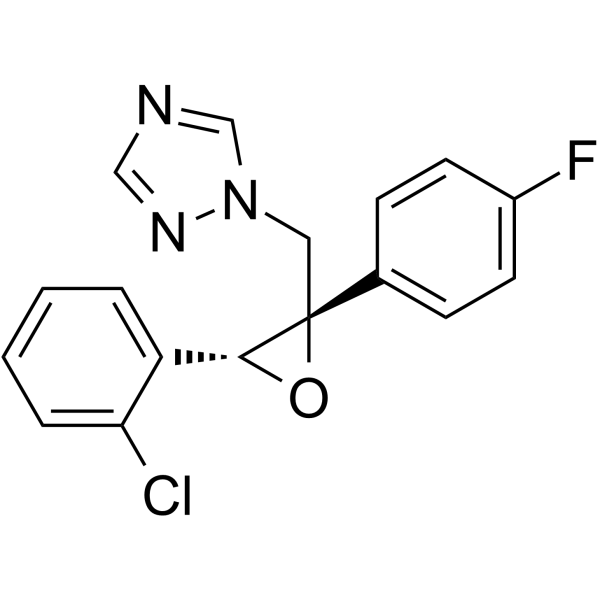
Epoxiconazole, a fungicide, is a demethylation inhibitor of the Ergosterol biosynthesis pathway. Epoxiconazole exhibits strong inhibitory effects on both carbendazim-resistant and phenamacril-resistant isolates, and can be used for controlling many crop diseases.
Para uso exclusivo en investigación. No vendemos a pacientes.
- Pureza : 98.95%
- No. CAS: 133855-98-8
- Fòrmula: C17H13ClFN3O
- Peso molecular:329.76
-
Almacenamiento:Powder -20°C, 3 years , 4°C, 2 years ; In solvent -80°C, 6 months , -20°C, 1 month

To place orders, for customer services and technical support, please contact: MedChemExpress USA
Tel: 609-228-6898 E-mail: [email protected] [email protected]


-
 Actividad biológica
-
Chemical Information
-
Solvente y solubilidad
- Pureza y Documentación
- Referencias
-
 Help & FAQs


-
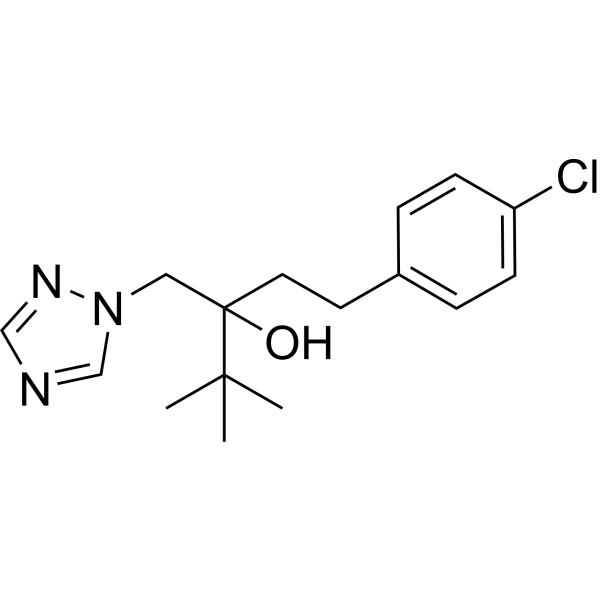
HY-B0852
TebuconazoleCytochrome P450 Inhibitor -
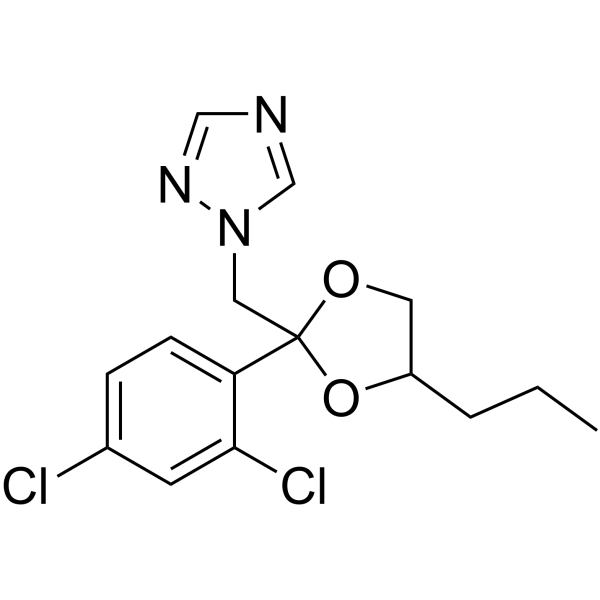
HY-B0847
PropiconazoleFungicide -
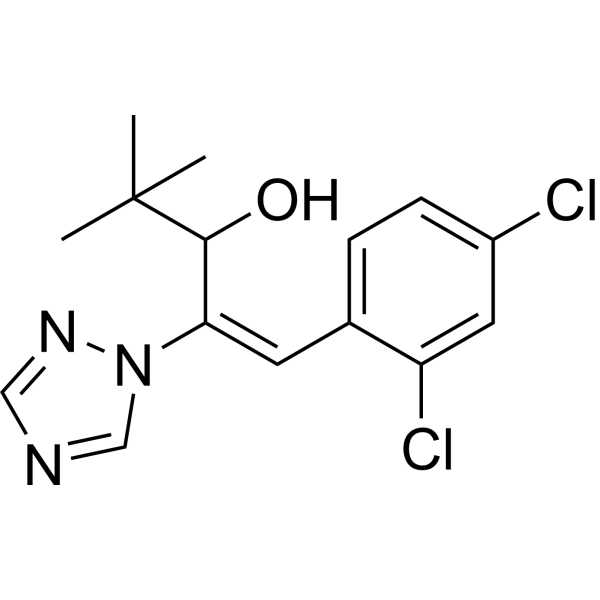
HY-B1948
DiniconazoleFungicide -

HY-119683R
Epoxiconazole (Standard)Fungicide Agent -

HY-B0847R
Propiconazole (Standard)Fungicide -
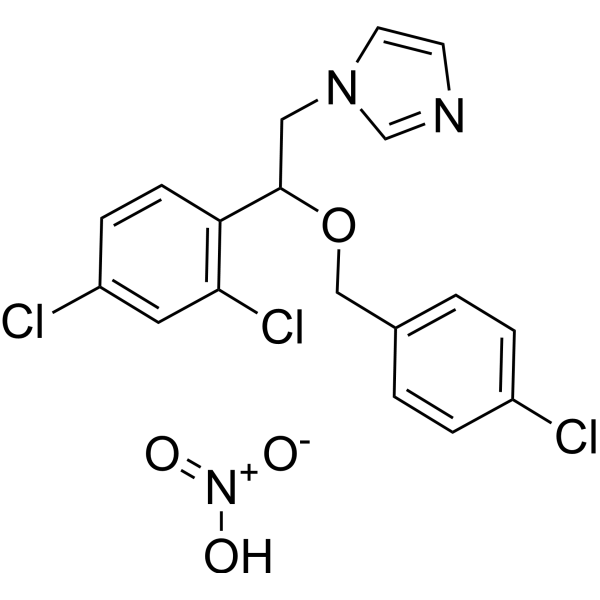
HY-B0453
Econazole nitrateAntifungal Agent -

HY-B0453R
Econazole nitrate (Standard)Antifungal Agent
Publications Citing Use of MedChemExpress (MCE) Epoxiconazole
More

Actividad biológica
Descripciòn
In Vitro
Epoxiconazole (150-300 g a.i./ha) inhibits mycelial growth and spore germination of wheat fusarium, increases the deoxynivalenol production and Tri5 gene expression[1].
Epoxiconazole (50 μM, 24 h) inhibits the cell viability of rat F98 glioma cell, causes cell morphological changes, apoptosis induction, cell cycle arrest (at G2/M phase), reactive oxygen species (ROS) generation, lipid peroxidation, DNA damage and cytoskeletal damage[2].
MedChemExpress (MCE) has not independently confirmed the accuracy of these methods. They are for reference only.
In Vivo
MedChemExpress (MCE) has not independently confirmed the accuracy of these methods. They are for reference only.
-
Animal Model:ICR mouse models[3]
-
Dosage:0.08 mg/kg
-
Administration:po, once daily for 6 weeks
-
Result:Decreased intestinal mucosal width and villus length.
Increased intestinal inflammatory cell infiltration, and serum DAO level.


Chemical Information
-
No. CAS 133855-98-8
-
Appearance Solid
-
Peso molecular 329.76
-
Fòrmula C17H13ClFN3O
-
Color White to off-white
-
SMILES
FC1=CC=C(C=C1)[C@]2(O[C@@H]2C3=CC=CC=C3Cl)CN4N=CN=C4
-
Envío
Room temperature in continental US; may vary elsewhere.
-
Almacenamiento
Powder -20°C 3 years 4°C 2 years In solvent -80°C 6 months -20°C 1 month


Publications (1)
-
Journal Impact Factor
-
Most Recent
-
J Exp Bot
Transcriptomic and functional analyses reveal a complex unexplored landscape of Botrytis cinerea colonization in rose. [Abstract]2025 Oct 9;76(16):4654-4668. PMID: 40380888


Solvente y solubilidad
In Vitro:
DMSO : 100 mg/mL (303.25 mM; Need ultrasonic; Hygroscopic DMSO has a significant impact on the solubility of product, please use newly opened DMSO)
Please refer to the solubility information to select the appropriate solvent. Once prepared, please aliquot and store the solution to prevent product inactivation from repeated freeze-thaw cycles.
Storage method and period of stock solution: -80°C, 6 months; -20°C, 1 month. When stored at -80°C, please use it within 6 months. When stored at -20°C, please use it within 1 month.
Please refer to the solubility information to select the appropriate solvent. Once prepared, please aliquot and store the solution to prevent product inactivation from repeated freeze-thaw cycles.
Storage method and period of stock solution: -80°C, 6 months; -20°C, 1 month. When stored at -80°C, please use it within 6 months. When stored at -20°C, please use it within 1 month.
Concentration (start) × Volume (start) = Concentration (final) × Volume (final)
In Vivo:
Select the appropriate dissolution method based on your experimental animal and administration route.
- For the following dissolution methods, please ensure to first prepare a clear stock solution using an In Vitro approach and then sequentially add co-solvents:
- To ensure reliable experimental results, the clarified stock solution can be appropriately stored based on storage conditions. As for the working solution for In Vivo experiments, it is recommended to prepare freshly and use it on the same day.
- The percentages shown for the solvents indicate their volumetric ratio in the final prepared solution. If precipitation or phase separation occurs during preparation, heat and/or sonication can be used to aid dissolution.
Add each solvent one by one: 10% DMSO 90% (20% SBE-β-CD in Saline)
Solubility: ≥ 2.5 mg/mL (7.58 mM); Clear solution
This protocol yields a clear solution of ≥ 2.5 mg/mL (saturation unknown).
Taking 1 mL working solution as an example, add 100 μL DMSO stock solution (25.0 mg/mL) to 900 μL 20% SBE-β-CD in Saline, and mix evenly.
Preparation of 20% SBE-β-CD in Saline (4°C, storage for one week): 2 g SBE-β-CD powder is dissolved in 10 mL Saline, completely dissolve until clear.
For the following dissolution methods, please prepare the working solution directly:
It is recommended to prepare fresh solutions and use them promptly within a short period of time.
The percentages shown for the solvents indicate their volumetric ratio in the final prepared solution. If precipitation or phase separation occurs during preparation, heat and/or sonication can be used to aid dissolution.
Add each solvent one by one: 50% PEG300 50% Saline
Solubility: 25 mg/mL (75.81 mM); Suspended solution; Need ultrasonic
In Vivo Dissolution Calculator
Please enter the basic information of animal experiments:
-
-
-
-
Recommended: Prepare an additional quantity of animals to account for potential losses during experiments.
Please enter your animal formula composition:
-
%DMSO +
Recommended: Keep the proportion of DMSO in working solution below 2% if your animal is weak.
-
%+
-
+%Tween-80 + +
-
%Saline +
The co-solvents required include: DMSO, . All of co-solvents are available by MedChemExpress (MCE). , Tween 80. All of co-solvents are available by MedChemExpress (MCE).
Working solution concentration: 0.22 mg/mL
Method for preparing stock solution: mg drug dissolved in μL DMSO. Stock solution concentration: mg/mL.
1. Take μL DMSO stock solution;
2. Add μL .
μL , mix evenly;
3. Then add μL Tween 80, mix evenly;
4. Then add μL
Please ensure that the stock solution in the first step is dissolved to a clear state, and add co-solvents in sequence. You can use ultrasonic heating (ultrasonic cleaner, recommended frequency 20-40 kHz), vortexing, etc. to assist dissolution.


Pureza y Documentación
-
Ficha de datos (281 KB)
-
SDS (622 KB)
- English - EN (622 KB)
- Français - FR (622 KB)
- Deutsch - DE (622 KB)
- Norwegian - NO (622 KB)
- Español - ES (622 KB)
- Swedish - SV (622 KB)
- Italian - IT (622 KB)
- Korean - KR (622 KB)
- Portuguese - PT (622 KB)
-
Instrucciones de manejo (2659 KB)
Referencias
[1]. Yabing Duan, et al. Impact of Epoxiconazole on Fusarium Head Blight Control, Grain Yield and Deoxynivalenol Accumulation in Wheat. Pestic Biochem Physiol. 2018 Nov;152:138-147. [Content Brief]
[2]. Hamdi H, et al., Neuroprotective effects of Myricetin on Epoxiconazole-induced toxicity in F98 cells. Free Radic Biol Med. 2021 Feb 20;164:154-163. [Content Brief]
[3]. Sun W, et al., Combined ingestion of polystyrene microplastics and epoxiconazole increases health risk to mice: Based on their synergistic bioaccumulation in vivo. Environ Int. 2022 Aug;166:107391. [Content Brief]


Complete Stock Solution Preparation Table
Please refer to the solubility information to select the appropriate solvent. Once prepared, please aliquot and store the solution to prevent product inactivation from repeated freeze-thaw cycles.
Storage method and period of stock solution: -80°C, 6 months; -20°C, 1 month. When stored at -80°C, please use it within 6 months. When stored at -20°C, please use it within 1 month.
| Optional Solvent | Concentration Solvent Mass | 1 mg | 5 mg | 10 mg | 25 mg |
|---|---|---|---|---|---|
| DMSO | 1 mM | 3.0325 mL | 15.1625 mL | 30.3251 mL | 75.8127 mL |
| 5 mM | 0.6065 mL | 3.0325 mL | 6.0650 mL | 15.1625 mL | |
| 10 mM | 0.3033 mL | 1.5163 mL | 3.0325 mL | 7.5813 mL | |
| 15 mM | 0.2022 mL | 1.0108 mL | 2.0217 mL | 5.0542 mL | |
| 20 mM | 0.1516 mL | 0.7581 mL | 1.5163 mL | 3.7906 mL | |
| 25 mM | 0.1213 mL | 0.6065 mL | 1.2130 mL | 3.0325 mL | |
| 30 mM | 0.1011 mL | 0.5054 mL | 1.0108 mL | 2.5271 mL | |
| 40 mM | 0.0758 mL | 0.3791 mL | 0.7581 mL | 1.8953 mL | |
| 50 mM | 0.0607 mL | 0.3033 mL | 0.6065 mL | 1.5163 mL | |
| 60 mM | 0.0505 mL | 0.2527 mL | 0.5054 mL | 1.2635 mL | |
| 80 mM | 0.0379 mL | 0.1895 mL | 0.3791 mL | 0.9477 mL | |
| 100 mM | 0.0303 mL | 0.1516 mL | 0.3033 mL | 0.7581 mL |


Epoxiconazole Related Classifications
HY-119683 Related Classifications
 Powered by Bioz