



Amorolfine hydrochloride (Standard)

Based on 1 Customer Validation
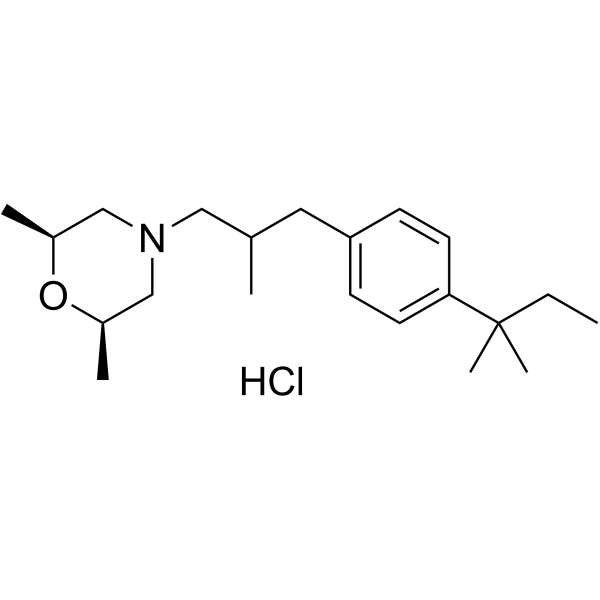
Amorolfine (hydrochloride) (Standard) is the analytical standard of Amorolfine (hydrochloride). This product is intended for research and analytical applications. Amorolfine (Ro 14-4767/002) hydrochloride is a potent anti-fungal agent. Amorolfine hydrochloride inhibits ergosterol biosynthesis. Amorolfine hydrochloride has the potential for the research of Neoscytalidium dimidiatum onychomycosis.
For research use only. We do not sell to patients.
- Purity : 99.62%
- CAS No.: 78613-38-4
- Formula: C₂₁H₃₆ClNO
- Molecular Weight:353.97
-
Storage:
Please store the product under the recommended conditions in the Certificate of Analysis.


To place orders, for customer services and technical support, please contact: MedChemExpress USA
Tel: 609-228-6898 E-mail: [email protected] [email protected]


-
 Product Information
-
Chemical Information
- Purity & Documentation
-
 Help & FAQs


-
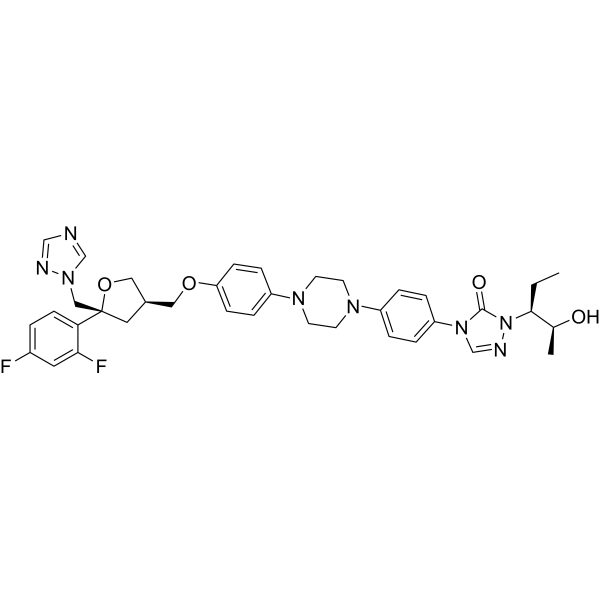
HY-17373
PosaconazoleAnti-fungal Agent -
HY-B0238
Amorolfine hydrochlorideAnti-fungal Agent -
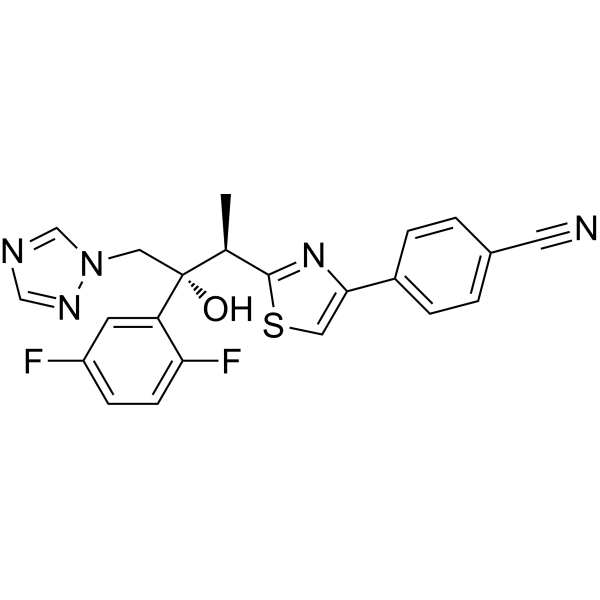
HY-14273
IsavuconazoleTriazole Antifungal -

HY-14273R
Isavuconazole (Standard)Triazole Antifungal -
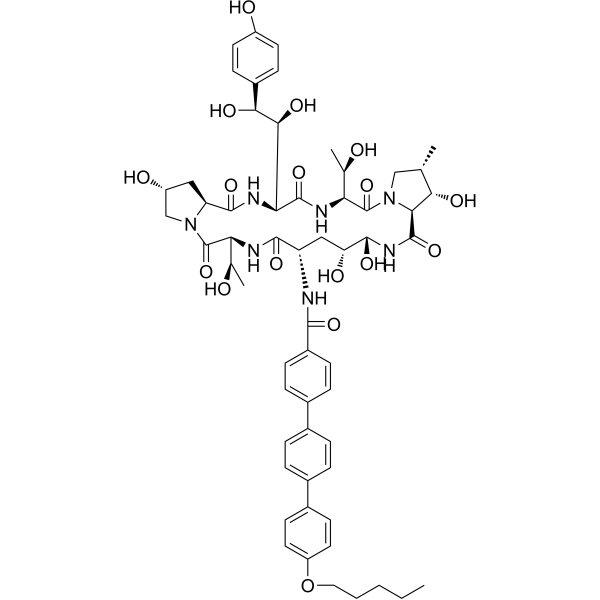
HY-13553
AnidulafunginAntifungal Agent -
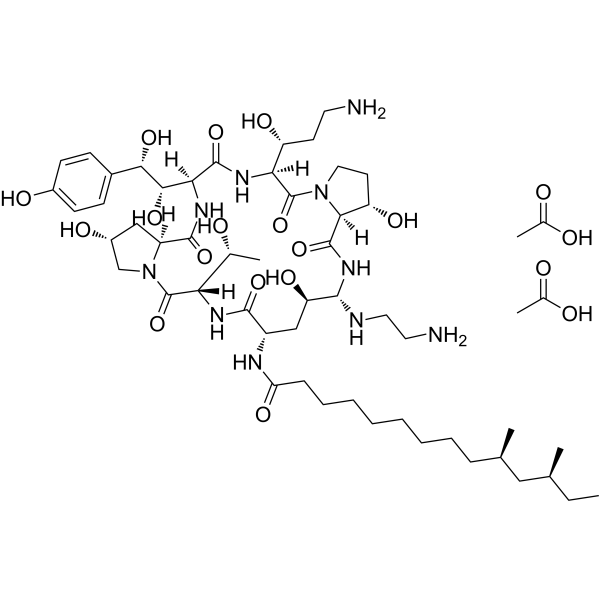
HY-17006
Caspofungin diacetateAntifungal Agent -
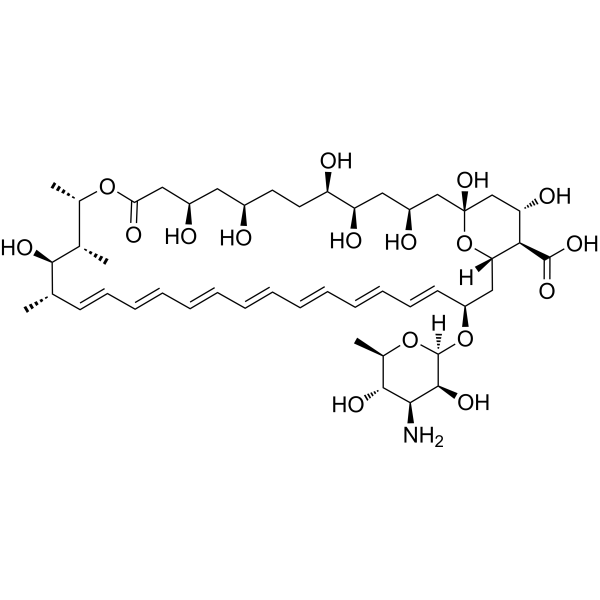
HY-B0221
Amphotericin BAntifungal Agent -
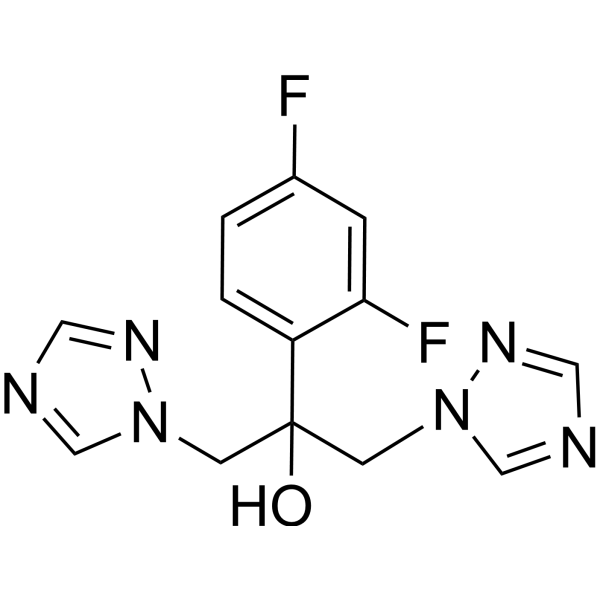
HY-B0101
FluconazoleAntifungal Agent -
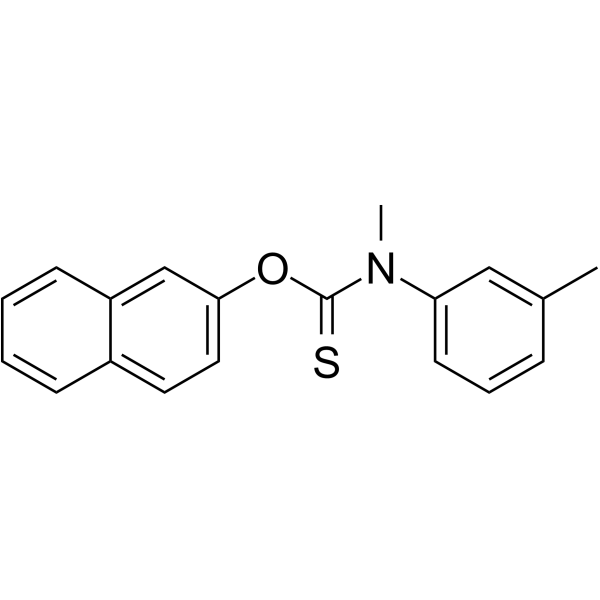
HY-B0370
TolnaftateFungal Inhibitor -
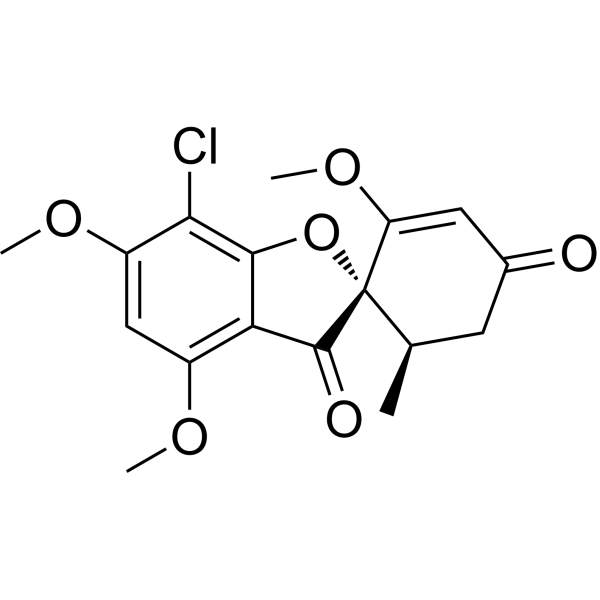
HY-17583
GriseofulvinAntifungal Antibiotic -

HY-14283R
Luliconazole (Standard)Imidazole Antibiotic -
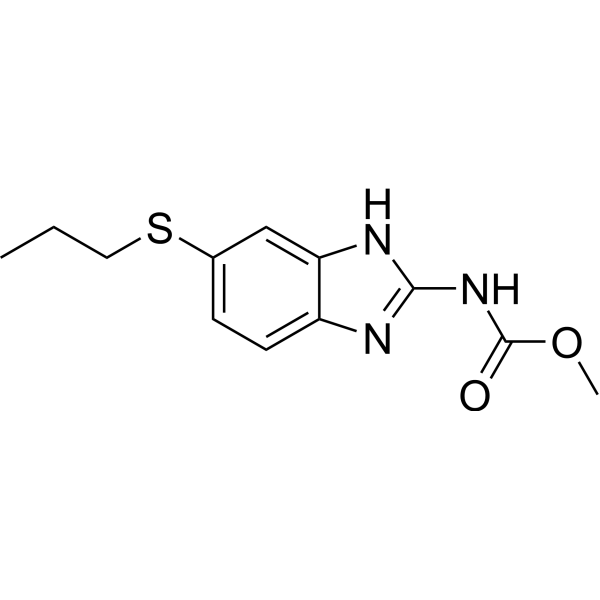
HY-B0223
AlbendazoleParasiticide


Product Information
Information
Application
The compound is the grade of analytical standard, which is the reference standard supplied assay. It is commonly used in qualitative, quantitative and methodological research experiments in HPLC, GC and MS.


Chemical Information
-
CAS No. 78613-38-4
-
Appearance Solid
-
Molecular Weight 353.97
-
Formula C₂₁H₃₆ClNO
-
Color White to off-white
-
SMILES
C[C@@H]1O[C@H](C)CN(CC(C)CC2=CC=C(C(C)(C)CC)C=C2)C1.Cl
-
Synonyms
Ro 14-4767/002 (Standard)
-
Shipping
Room temperature in continental US; may vary elsewhere.
-
Storage
Please store the product under the recommended conditions in the Certificate of Analysis.


Purity & Documentation
-
SDS (252 KB)
- English - EN (252 KB)
- Français - FR (252 KB)
- Deutsch - DE (252 KB)
- Norwegian - NO (252 KB)
- Español - ES (252 KB)
- Swedish - SV (252 KB)
- Italian - IT (252 KB)
- Korean - KR (252 KB)
- Portuguese - PT (252 KB)
-
Handling Instructions (2659 KB)
References
[1]. Haria M, et al. Amorolfine. A review of its pharmacological properties and therapeutic potential in the treatment of onychomycosis and other superficial fungal infections. Drugs. 1995 Jan;49(1):103-20. [Content Brief]
[2]. Bunyaratavej S, et al. Efficacy of 5% amorolfine nail lacquer in Neoscytalidium dimidiatum onychomycosis. J Dermatolog Treat. 2016 Aug;27(4):359-63. [Content Brief]

Calculators
Concentration (start) × Volume (start) = Concentration (final) × Volume (final)


Amorolfine hydrochloride (Standard) Related Classifications
HY-B0238R Related Classifications
 Powered by Bioz