



Amorolfine hydrochloride
Based on 1 publication(s) in Google Scholar
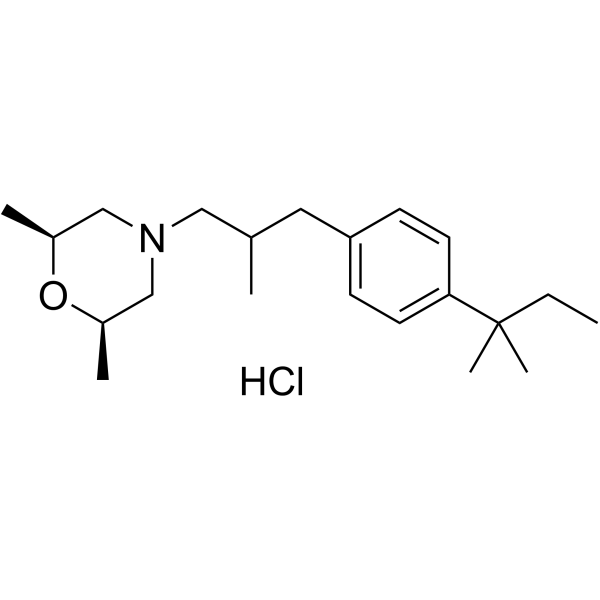
Amorolfine (Ro 14-4767/002) hydrochloride is a potent anti-fungal agent. Amorolfine hydrochloride inhibits ergosterol biosynthesis. Amorolfine hydrochloride has the potential for the research of Neoscytalidium dimidiatum onychomycosis.
For research use only. We do not sell to patients.
- Purity : 99.84%
- CAS No.: 78613-38-4
- Formula: C21H36ClNO
- Molecular Weight:353.97
-
Storage:
4°C, sealed storage, away from moisture
* In solvent : -80°C, 6 months; -20°C, 1 month (sealed storage, away from moisture)

To place orders, for customer services and technical support, please contact: MedChemExpress USA
Tel: 609-228-6898 E-mail: [email protected] [email protected]


-
 Biological Activity
-
Chemical Information
-
Solvent & Solubility
- Purity & Documentation
- References
-
 Help & FAQs


-
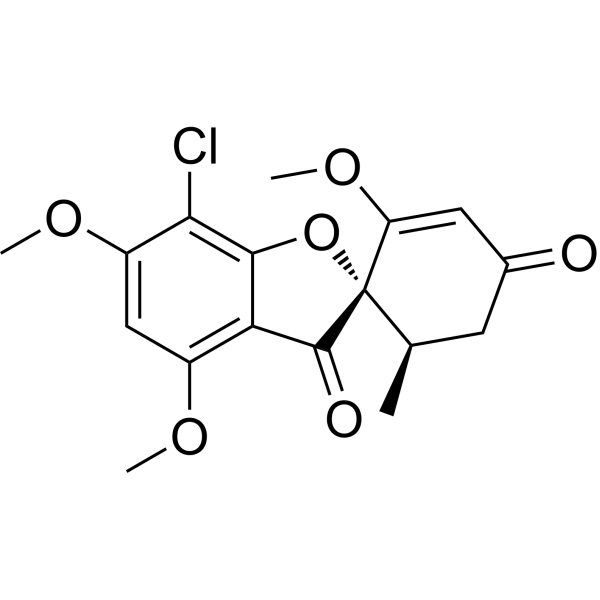
HY-17583
GriseofulvinAntifungal Antibiotic -
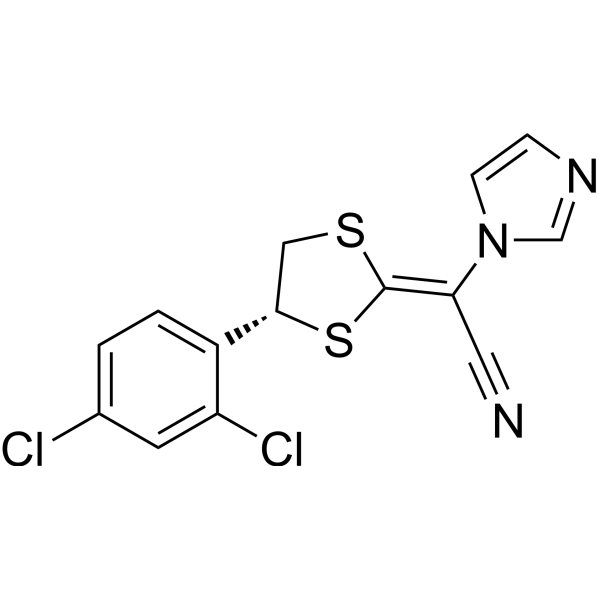
HY-14283
LuliconazoleImidazole Antibiotic -
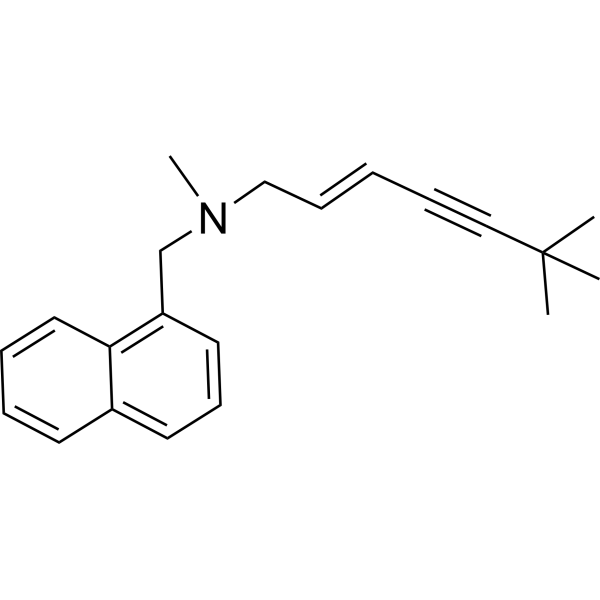
HY-17395A
TerbinafineAntimicrobial Agent -
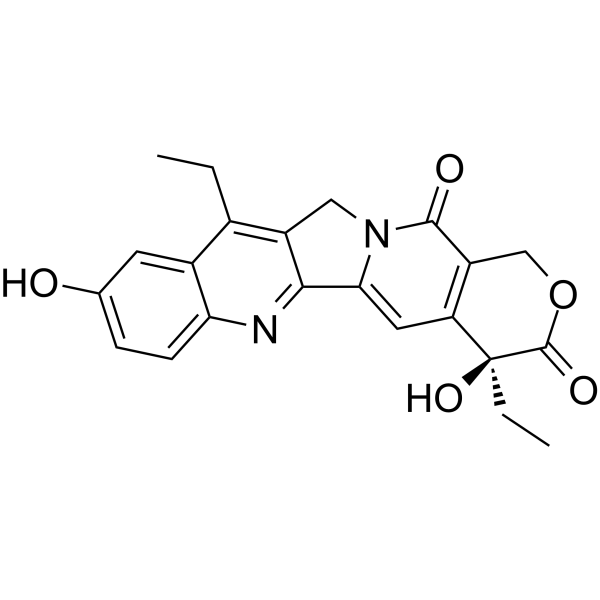
HY-13704
SN-38Topoisomerase I Inhibitor -
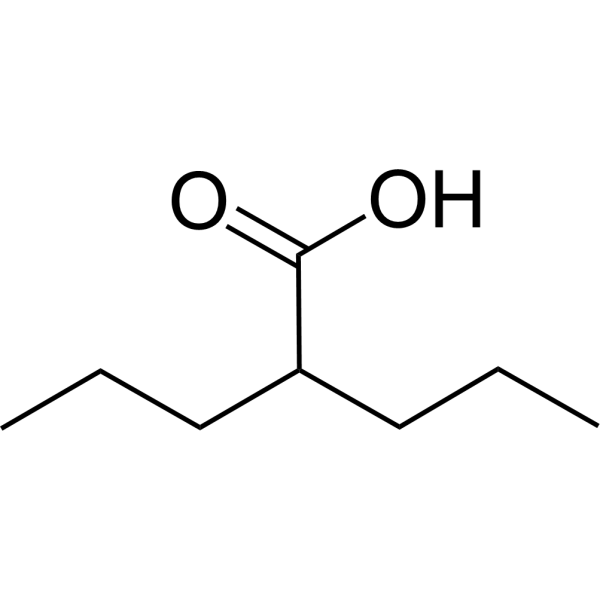
HY-10585
Valproic acidHDAC Inhibitor -
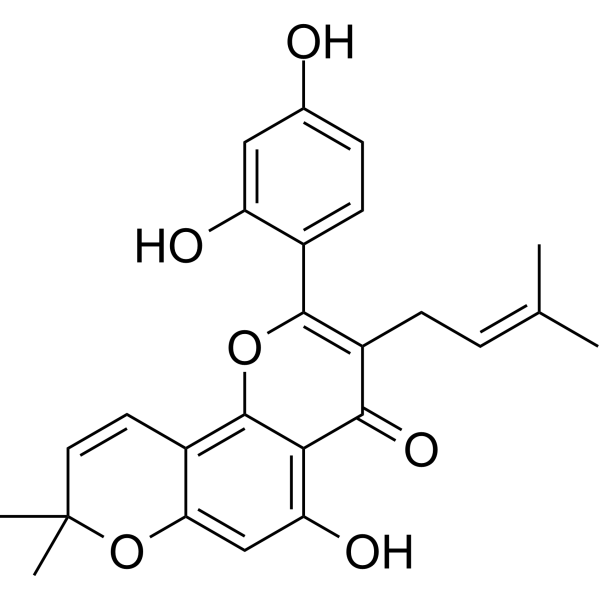
HY-N0622
MorusinBacterial Inhibitor -
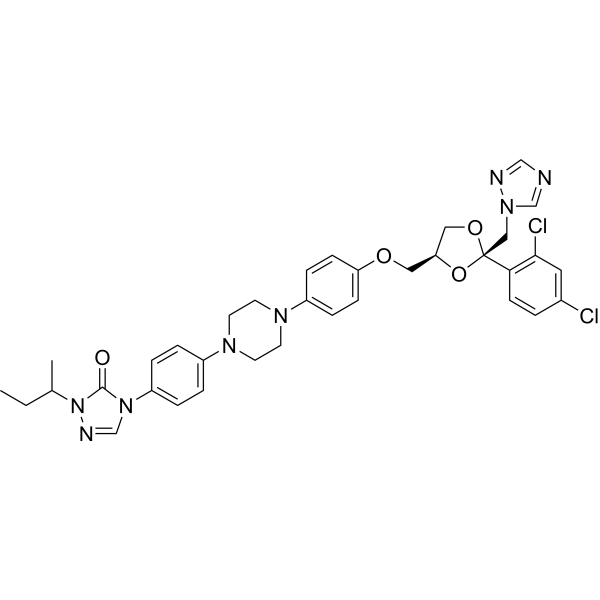
HY-17514
ItraconazoleAntifungal Agent -

HY-B0238R
Amorolfine hydrochloride (Standard)Anti-fungal Agent -
HY-B0450A
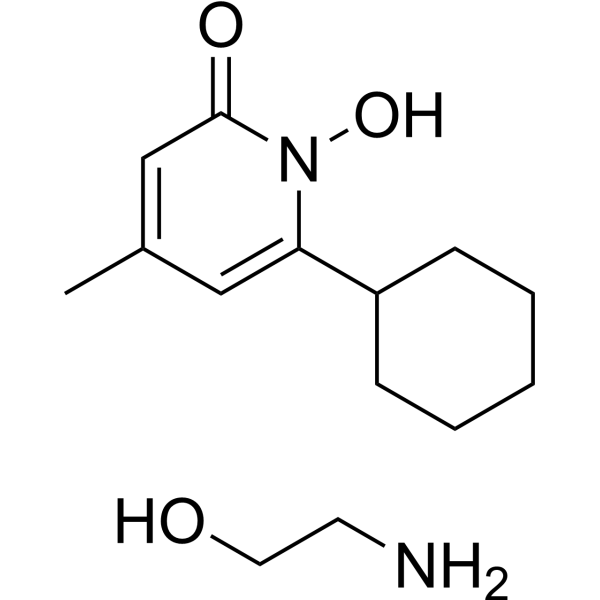
Ciclopirox olamineBacterial Inhibitor -
HY-10980
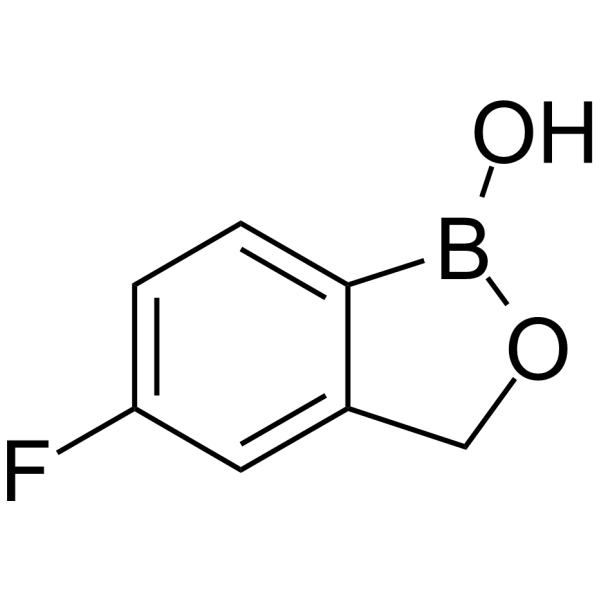
TavaboroleAnti-fungal Agent -
HY-14273
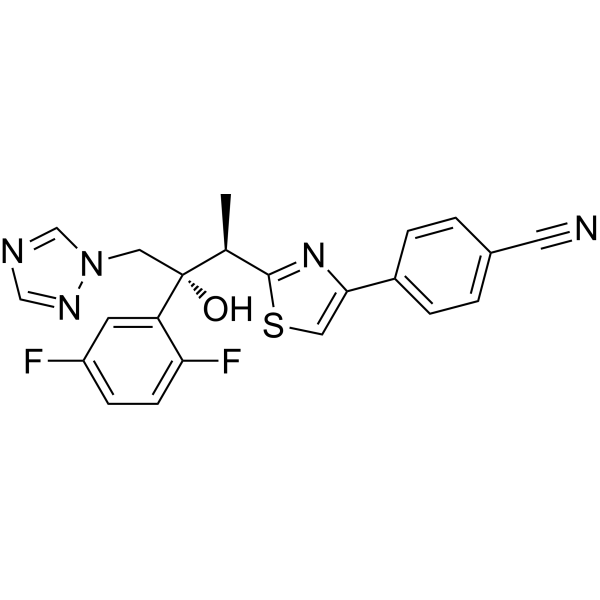
IsavuconazoleTriazole Antifungal -

HY-14273R
Isavuconazole (Standard)Triazole Antifungal
Publications Citing Use of MedChemExpress (MCE) Amorolfine hydrochloride
MoreAll Antibiotic Isoforms
More

Biological Activity
Description
In Vitro
Amorolfine hydrochloride acts primarily by inhibiting ergosterol biosynthesis, a component of fungal cell membrane, and possesses both fungistatic and fungicidal activity[1].
Amorolfine hydrochloride (0-128 mg/l) (2-7 days) shows anti-fungal activity for Dermatophyte fungi, Filamentous fungi, Pathogenic yeasts, Dimorphic fungi, Dematiaceous fungi[1].
Amorolfine hydrochloride shows anti-fungal activity with 90% killing corresponding concentrations of 3, 3, 10 and 100 mg/L for Trichophyton mentagrophytes, C. albicans, Histoplasma capsulatum, Cryptococcus neoformans, respectively[1].
MedChemExpress (MCE) has not independently confirmed the accuracy of these methods. They are for reference only. .
In Vivo
MedChemExpress (MCE) has not independently confirmed the accuracy of these methods. They are for reference only.
-
Animal Model:Rats (vaginal candidiasis)[1]
-
Dosage:0.01%-1%
-
Administration:Intravaginal application; twice daily for 3 days
-
Result:Produced a dose dependent log reduction in cell count; a concentration of 1 % cleared the vagina of C. albicans completely.
Clinical Trial
| NCT Number | Sponsor | Condition | Start Date |
Phase

|
|---|---|---|---|---|
| NCT01329991 | Plexxikon| | 2011-05 | PHASE1 |


Chemical Information
-
CAS No. 78613-38-4
-
Appearance Solid
-
Molecular Weight 353.97
-
Formula C21H36ClNO
-
Color White to off-white
-
SMILES
C[C@@H]1O[C@H](C)CN(CC(C)CC2=CC=C(C(C)(C)CC)C=C2)C1.Cl
-
Synonyms
Ro 14-4767/002
-
Shipping
Room temperature in continental US; may vary elsewhere.
-
Storage
4°C, sealed storage, away from moisture
* In solvent : -80°C, 6 months; -20°C, 1 month (sealed storage, away from moisture)


Publications (1)
-
Journal Impact Factor
-
Most Recent


Solvent & Solubility
In Vitro:
DMSO : 12.5 mg/mL (35.31 mM; Need ultrasonic; Hygroscopic DMSO has a significant impact on the solubility of product, please use newly opened DMSO)
H2O : 3.33 mg/mL (9.41 mM; Need ultrasonic)
Please refer to the solubility information to select the appropriate solvent. Once prepared, please aliquot and store the solution to prevent product inactivation from repeated freeze-thaw cycles.
Storage method and period of stock solution: -80°C, 6 months; -20°C, 1 month (sealed storage, away from moisture). When stored at -80°C, please use it within 6 months. When stored at -20°C, please use it within 1 month.
* Note: If you choose water as the stock solution, please dilute it to the working solution, then filter and sterilize it with a 0.22 μm filter before use.
Please refer to the solubility information to select the appropriate solvent. Once prepared, please aliquot and store the solution to prevent product inactivation from repeated freeze-thaw cycles.
Storage method and period of stock solution: -80°C, 6 months; -20°C, 1 month (sealed storage, away from moisture). When stored at -80°C, please use it within 6 months. When stored at -20°C, please use it within 1 month.
* Note: If you choose water as the stock solution, please dilute it to the working solution, then filter and sterilize it with a 0.22 μm filter before use.
Concentration (start) × Volume (start) = Concentration (final) × Volume (final)
In Vivo:
Select the appropriate dissolution method based on your experimental animal and administration route.
- For the following dissolution methods, please ensure to first prepare a clear stock solution using an In Vitro approach and then sequentially add co-solvents:
- To ensure reliable experimental results, the clarified stock solution can be appropriately stored based on storage conditions. As for the working solution for In Vivo experiments, it is recommended to prepare freshly and use it on the same day.
- The percentages shown for the solvents indicate their volumetric ratio in the final prepared solution. If precipitation or phase separation occurs during preparation, heat and/or sonication can be used to aid dissolution.
Add each solvent one by one: 10% DMSO 40% PEG300 5% Tween-80 45% Saline
Solubility: ≥ 1.25 mg/mL (3.53 mM); Clear solution
This protocol yields a clear solution of ≥ 1.25 mg/mL (saturation unknown).
Taking 1 mL working solution as an example, add 100 μL DMSO stock solution (12.5 mg/mL) to 400 μL PEG300, and mix evenly; then add 50 μL Tween-80 and mix evenly; then add 450 μL Saline to adjust the volume to 1 mL.
Preparation of Saline: Dissolve 0.9 g sodium chloride in ddH₂O and dilute to 100 mL to obtain a clear Saline solution.
Add each solvent one by one: 10% DMSO 90% (20% SBE-β-CD in Saline)
Solubility: ≥ 1.25 mg/mL (3.53 mM); Clear solution
This protocol yields a clear solution of ≥ 1.25 mg/mL (saturation unknown).
Taking 1 mL working solution as an example, add 100 μL DMSO stock solution (12.5 mg/mL) to 900 μL 20% SBE-β-CD in Saline, and mix evenly.
Preparation of 20% SBE-β-CD in Saline (4°C, storage for one week): 2 g SBE-β-CD powder is dissolved in 10 mL Saline, completely dissolve until clear.
In Vivo Dissolution Calculator
Please enter the basic information of animal experiments:
-
-
-
-
Recommended: Prepare an additional quantity of animals to account for potential losses during experiments.
Please enter your animal formula composition:
-
%DMSO +
Recommended: Keep the proportion of DMSO in working solution below 2% if your animal is weak.
-
%+
-
+%Tween-80 + +
-
%Saline +
The co-solvents required include: DMSO, . All of co-solvents are available by MedChemExpress (MCE). , Tween 80. All of co-solvents are available by MedChemExpress (MCE).
Working solution concentration: 0.22 mg/mL
Method for preparing stock solution: mg drug dissolved in μL DMSO. Stock solution concentration: mg/mL. * In solvent : -80°C, 6 months; -20°C, 1 month (sealed storage, away from moisture)
1. Take μL DMSO stock solution;
2. Add μL .
μL , mix evenly;
3. Then add μL Tween 80, mix evenly;
4. Then add μL
Please ensure that the stock solution in the first step is dissolved to a clear state, and add co-solvents in sequence. You can use ultrasonic heating (ultrasonic cleaner, recommended frequency 20-40 kHz), vortexing, etc. to assist dissolution.


Purity & Documentation
-
Data Sheet (271 KB)
-
SDS (597 KB)
- English - EN (597 KB)
- Français - FR (597 KB)
- Deutsch - DE (597 KB)
- Norwegian - NO (597 KB)
- Español - ES (597 KB)
- Swedish - SV (597 KB)
- Italian - IT (597 KB)
- Korean - KR (597 KB)
- Portuguese - PT (597 KB)
-
Handling Instructions (2659 KB)
References
[1]. Haria M, et al. Amorolfine. A review of its pharmacological properties and therapeutic potential in the treatment of onychomycosis and other superficial fungal infections. Drugs. 1995 Jan;49(1):103-20. [Content Brief]
[2]. Bunyaratavej S, et al. Efficacy of 5% amorolfine nail lacquer in Neoscytalidium dimidiatum onychomycosis. J Dermatolog Treat. 2016 Aug;27(4):359-63. [Content Brief]


Complete Stock Solution Preparation Table
Please refer to the solubility information to select the appropriate solvent. Once prepared, please aliquot and store the solution to prevent product inactivation from repeated freeze-thaw cycles.
Storage method and period of stock solution: -80°C, 6 months; -20°C, 1 month (sealed storage, away from moisture). When stored at -80°C, please use it within 6 months. When stored at -20°C, please use it within 1 month.
| Optional Solvent | Concentration Solvent Mass | 1 mg | 5 mg | 10 mg | 25 mg |
|---|---|---|---|---|---|
| H2O / DMSO | 1 mM | 2.8251 mL | 14.1255 mL | 28.2510 mL | 70.6275 mL |
| 5 mM | 0.5650 mL | 2.8251 mL | 5.6502 mL | 14.1255 mL | |
| DMSO | 10 mM | 0.2825 mL | 1.4125 mL | 2.8251 mL | 7.0627 mL |
| 15 mM | 0.1883 mL | 0.9417 mL | 1.8834 mL | 4.7085 mL | |
| 20 mM | 0.1413 mL | 0.7063 mL | 1.4125 mL | 3.5314 mL | |
| 25 mM | 0.1130 mL | 0.5650 mL | 1.1300 mL | 2.8251 mL | |
| 30 mM | 0.0942 mL | 0.4708 mL | 0.9417 mL | 2.3542 mL |
* Note: If you choose water as the stock solution, please dilute it to the working solution, then filter and sterilize it with a 0.22 μm filter before use.


Amorolfine hydrochloride Related Classifications
HY-B0238 Related Classifications
 Powered by Bioz