Search Result
Results for "
fibrinolytic
" in MedChemExpress (MCE) Product Catalog:
4
Biochemical Assay Reagents
4
Isotope-Labeled Compounds
| Cat. No. |
Product Name |
Target |
Research Areas |
Chemical Structure |
-
- HY-P2373
-
|
|
PAI-1
|
Cardiovascular Disease
|
|
Kinase, Natto fermentation is a potent fibrinolytic enzyme. Kinase, Natto fermentation can break down blood clots by directly hydrolyzing fibrin and plasmin substrate. Kinase, Natto fermentation can be used for the research of cardiovascular diseases .
|
-
-
- HY-B0715
-
|
BL-191; PTX; Oxpentifylline
|
Phosphodiesterase (PDE)
Autophagy
HIV
|
Cardiovascular Disease
Cancer
|
|
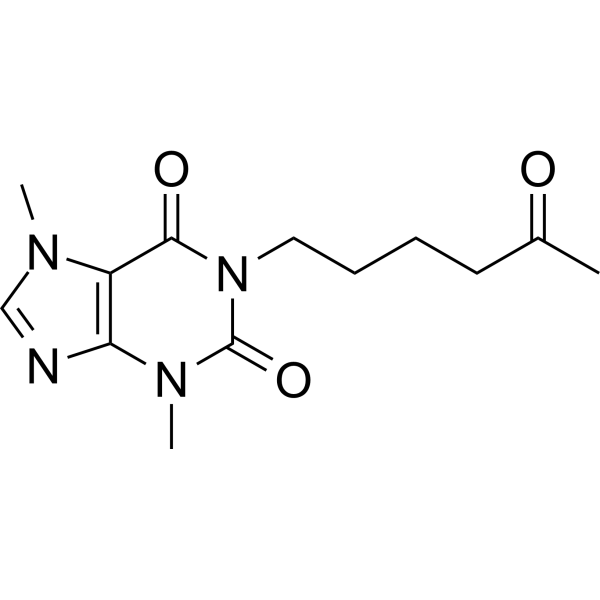
Pentoxifylline (BL-191), a haemorheological agent, is an orally active non-selective phosphodiesterase (PDE) inhibitor, with immune modulation, anti-inflammatory, hemorheological, anti-fibrinolytic and anti-proliferation effects. Pentoxifylline can be used for the research of peripheral vascular disease, cerebrovascular disease and a number of other conditions involving a defective regional microcirculation .
|
-
-
- HY-17566
-
|
|
Antibiotic
Bacterial
|
Infection
Neurological Disease
Metabolic Disease
|
|
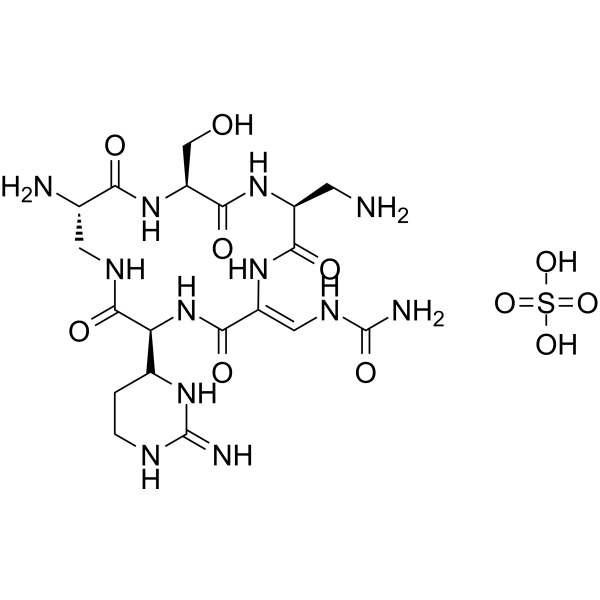
Capreomycin sulfate is a macrocyclic peptide antibiotic that inhibits phenylalanine synthesis in mycobacterial ribosomal translation. Capreomycin sulfate has anti-amyloidogenic and pro-fibrinolytic activities, reducing amyloid-induced cytotoxicity by inhibiting the occurrence of amyloid fibrillation. Capreomycin sulfate can be used in the study of multidrug-resistant tuberculosis, type 2 diabetes, Alzheimer's disease and Parkinson's disease .
|
-
-
- HY-P2970
-
|
|
Apoptosis
PARP
Caspase
Bcl-2 Family
Bacterial
Interleukin Related
|
Infection
Inflammation/Immunology
Cancer
|
|
Stem bromelain (EC 3.4.22.32) is a cysteine protease and antibacterial agent. Stem bromelain can be isolated from the stem of the pineapple (Ananas comosus). Stem bromelain induces dose-dependent secretion of IL-12p70, and IL-6, induces Apoptosis, causes cleavage of full-length PARP protein, Caspase 3, and Caspase 9, increases Bax, and decreases Bcl-2. Stem bromelain possesses various fibrinolytic, antiedema, antithrombotic, and anti-inflammatory activities. Stem bromelain also exhibits in vivo antitumor and antileukemic activities, as well as antimetastatic effects. Stem bromelain has antimycobacterial activity. Stem bromelain provides protection against lead poisoning .
|
-

-
- HY-129611
-
|
|
Apoptosis
|
Inflammation/Immunology
Cancer
|
|
Bromelain is an anti-inflammatory agent derived from pineapple stem that acts through down-regulation of plasma kininogen, inhibition of Prostaglandin E2 expression, degradation of advanced glycation end product receptors and regulation of angiogenic biomarkers as well as antioxidant action upstream in the COX-pathway . Bromelain exhibits various fibrinolytic, antiedematous, antithrombotic, and anti-inflammatory activities. Bromelain also possesses some anticancerous activities and promotes apoptotic cell death .
|
-

-
- HY-131409
-
|
D-Val-Leu-Lys-p-itoailide dihydrochloride; D-VLK-pNA dihydrochloride; S 2251 dihydrochloride
|
Fluorescent Dye
|
Others
|
|
D-Val-Leu-Lys-pNA (D-Val-Leu-Lys-p-nitroanilide) dihydrochloride is a chromogenic peptide substrate that serves as a characteristic substrate for plasmin and plasminogen. D-Val-Leu-Lys-pNA dihydrochloride acts as a sensitive substrate for the DFE27 serine protease derived from Bacillus subtilis DC27. Catalyzed by plasmin, D-Val-Leu-Lys-pNA dihydrochloride binds and hydrolyzes to release p-nitroaniline (pNA), which can be detected colorimetrically at 405 nm as a measure of fibrinolytic activity .
|
-

-
- HY-B1399
-
|
o-Cresotic acid; Hydroxytoluic acid
|
Endogenous Metabolite
|
Cardiovascular Disease
|
|
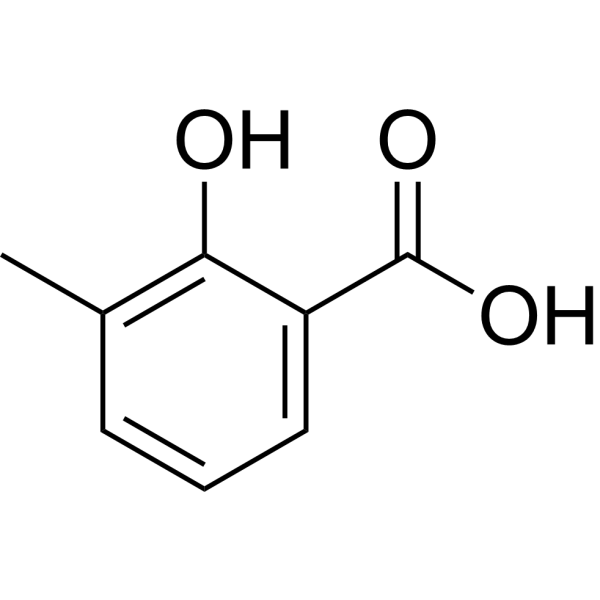
3-Methylsalicylic acid (o-Cresotic acid) is a derivative of salicylic acid. 3-Methylsalicylic acid exhibits significant fibrinolytic activity in human plasma by activating the fibrinolytic system. 3-Methylsalicylic acid can be used as an intermediate for the synthesis of other compounds. 3-Methylsalicylic acid inhibits the feeding of midges .
|
-
-
- HY-155909A
-
|
mPEG1000-SC; mPEG1000-Succinimidyl ester
|
Biochemical Assay Reagents
|
Others
|
|
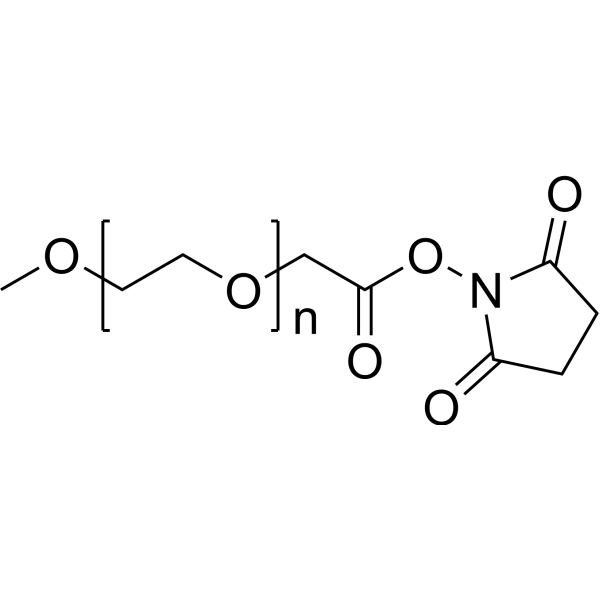
m-PEG1000-NHS ester can be used to modify active molecules and improve their antigenicity, immunogenicity, and help prepare injection preparations. The modification of serine protease lumbrokinase (LK) by m-PEG-NHS ester does not affect its strong fibrinolytic and thrombolytic activities, and has good application prospects.
|
-
-
- HY-155909C
-
|
mPEG350-SC; mPEG350-Succinimidyl ester
|
Biochemical Assay Reagents
|
Others
|
|
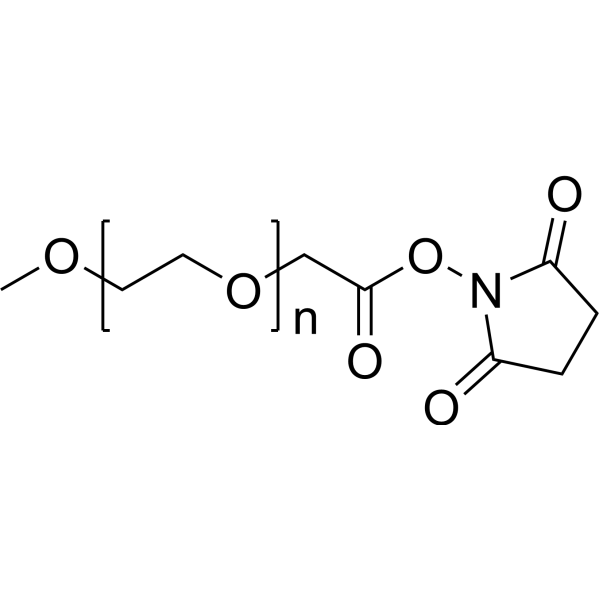
m-PEG350-NHS ester can be used to modify active molecules and improve their antigenicity, immunogenicity, and help prepare injection preparations. The modification of serine protease lumbrokinase (LK) by m-PEG-NHS ester does not affect its strong fibrinolytic and thrombolytic activities, and has good application prospects.
|
-
-
- HY-122052
-
|
|
Thrombin
|
Metabolic Disease
|
|
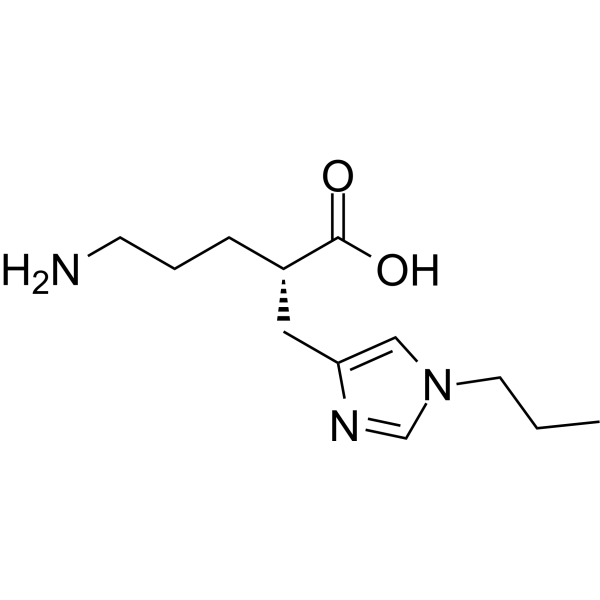
UK‑396082 is a potent thrombin activated fibrinolytic inhibitor (TAFI) inhibitor. UK‑396082 increases plasmin activity and induces a parallel decrease in ECM levels. UK‑396082 can be used in research of chronic kidney disease (CKD) .
|
-
-
- HY-B0715S2
-
|
BL-191-d5; PTX-d5; Oxpentifylline-d5
|
Phosphodiesterase (PDE)
Autophagy
HIV
|
Cardiovascular Disease
Cancer
|
|
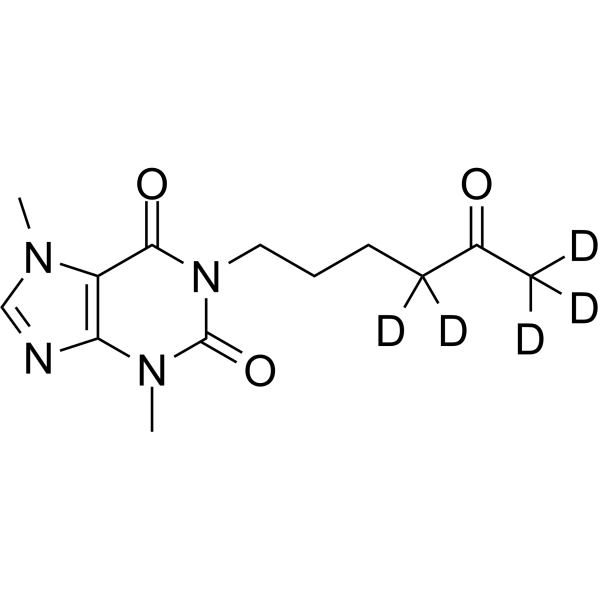
Pentoxifylline-d5 is the deuterium labeled Pentoxifylline. Pentoxifylline (BL-191), a haemorheological agent, is an orally active non-selective phosphodiesterase (PDE) inhibitor, with immune modulation, anti-inflammatory, hemorheological, anti-fibrinolytic and anti-proliferation effects. Pentoxifylline can be used for the research of peripheral vascular disease, cerebrovascular disease and a number of other conditions involving a defective regional microcirculation .
|
-
-
- HY-155909
-
|
mPEG3400-SC; mPEG3400-Succinimidyl ester
|
Biochemical Assay Reagents
|
Others
|
|
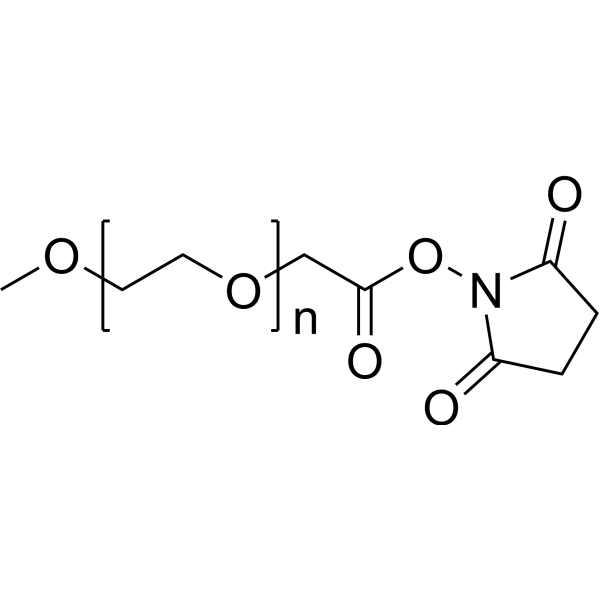
m-PEG3400-NHS ester can be used to modify active molecules and improve their antigenicity, immunogenicity, and help prepare injection preparations. The modification of serine protease lumbrokinase (LK) by m-PEG-NHS ester does not affect its strong fibrinolytic and thrombolytic activities, and has good application prospects.
|
-
-
- HY-155909B
-
|
mPEG550-SC; mPEG550-Succinimidyl ester
|
Biochemical Assay Reagents
|
Others
|
|
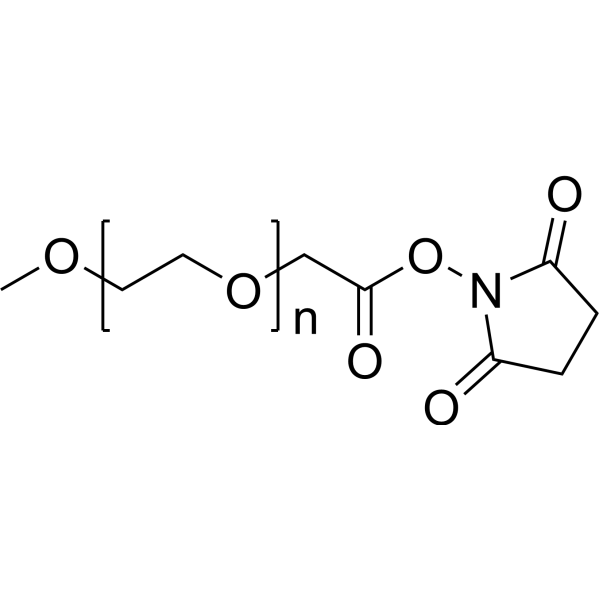
m-PEG550-NHS ester can be used to modify active molecules and improve their antigenicity, immunogenicity, and help prepare injection preparations. The modification of serine protease lumbrokinase (LK) by m-PEG-NHS ester does not affect its strong fibrinolytic and thrombolytic activities, and has good application prospects.
|
-
-
- HY-B0715S
-
|
BL-191-d6; PTX-d6; Oxpentifylline-d6
|
Phosphodiesterase (PDE)
Autophagy
HIV
|
Cardiovascular Disease
Cancer
|
|
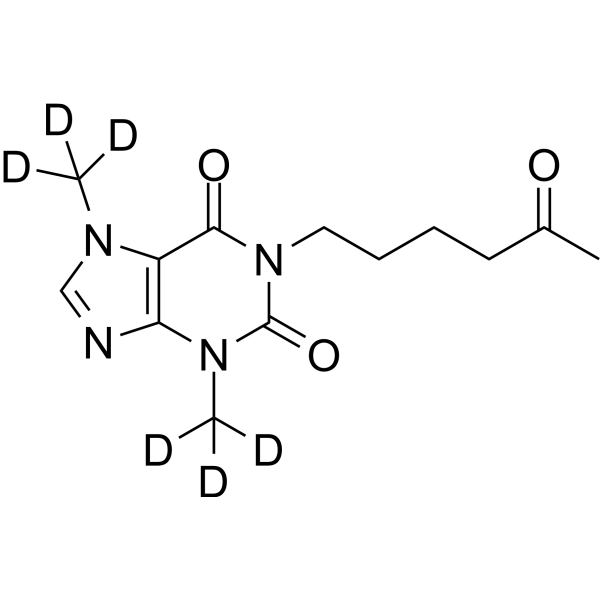
Pentoxifylline-d6 is the deuterium labeled Pentoxifylline. Pentoxifylline (BL-191), a haemorheological agent, is an orally active non-selective phosphodiesterase (PDE) inhibitor, with immune modulation, anti-inflammatory, hemorheological, anti-fibrinolytic and anti-proliferation effects. Pentoxifylline can be used for the research of peripheral vascular disease, cerebrovascular disease and a number of other conditions involving a defective regional microcirculation .
|
-
-
- HY-B0715R
-
|
BL-191 (Standard); PTX (Standard); Oxpentifylline (Standard)
|
HIV
Autophagy
Phosphodiesterase (PDE)
Reference Standards
|
Cardiovascular Disease
Cancer
|
|
Pentoxifylline (Standard) is the analytical standard of Pentoxifylline. This product is intended for research and analytical applications. Pentoxifylline (BL-191), a haemorheological agent, is an orally active non-selective phosphodiesterase (PDE) inhibitor, with immune modulation, anti-inflammatory, hemorheological, anti-fibrinolytic and anti-proliferation effects. Pentoxifylline can be used for the research of peripheral vascular disease, cerebrovascular disease and a number of other conditions involving a defective regional microcirculation .
|
-

-
- HY-N14452
-
|
|
Others
|
Others
|
|
Plactin A is a cyclic pentapeptide physiologically active substance and promotes the dissolution of fibrinolytic proteins .
|
-

-
- HY-N14455
-
|
|
Others
|
Others
|
|
Plactin D is a cyclic pentapeptide physiologically active substance and promotes the dissolution of fibrinolytic proteins .
|
-

-
- HY-B1399R
-
|
o-Cresotic acid (Standard); Hydroxytoluic acid (Standard)
|
Endogenous Metabolite
Reference Standards
|
Cardiovascular Disease
|
|
3-Methylsalicylic acid (Standard) is the analytical standard of 3-Methylsalicylic acid. This product is intended for research and analytical applications. 3-Methylsalicylic acid (o-Cresotic acid) is a derivative of salicylic acid. 3-Methylsalicylic acid exhibits significant fibrinolytic activity in human plasma by activating the fibrinolytic system. 3-Methylsalicylic acid can be used as an intermediate for the synthesis of other compounds. 3-Methylsalicylic acid inhibits the feeding of midges.
|
-

-
- HY-172536
-
|
mPEG30000-SC; mPEG30000-Succinimidyl ester
|
Biochemical Assay Reagents
|
Others
|
|
m-PEG30000-NHS ester (mPEG30000-SC) can be used to modify active molecules and improve their antigenicity, immunogenicity, and help prepare injection preparations. The modification of serine protease lumbrokinase (LK) by m-PEG-NHS ester does not affect its strong fibrinolytic and thrombolytic activities, and has good application prospects .
|
-

-
- HY-W743984
-
|
|
Isotope-Labeled Compounds
Thrombin
|
Cardiovascular Disease
|
|
Melagatran-d11 is the deuterium labeled Melagatran (HY-129056). Melagatran is a direct and orally active inhibitor of thrombin, without interacting with any other enzymes in the coagulation cascade or fibrinolytic enzymes aside from thrombin. Melagatran does not require endogenous co-factors for its antithrombin effect and may help to alleviate some of the damaging effects of endotoxemia . Melagatran has the potential to provide a rational approach in the prevention of arterial occlusion .
|
-

-
- HY-168378
-
|
S-2251
|
Fluorescent Dye
|
Others
|
|
D-Val-Leu-Lys-pNA (S-2251) is a chromogenic peptide substrate that serves as a characteristic substrate for plasmin and plasminogen. D-Val-Leu-Lys-pNA acts as a sensitive substrate for the DFE27 serine protease derived from Bacillus subtilis DC27. Catalyzed by plasmin, D-Val-Leu-Lys-pNA binds and hydrolyzes to release p-nitroaniline (pNA), which can be detected colorimetrically at 405 nm as a measure of fibrinolytic activity .
|
-

-
- HY-B0715S3
-
|
BL-191-d3; PTX-d3; Oxpentifylline-d3
|
Isotope-Labeled Compounds
Autophagy
Phosphodiesterase (PDE)
HIV
|
Cardiovascular Disease
Cancer
|
|
Pentoxifylline-d3 (BL-191-d3) is deuterium labeled Pentoxifylline. Pentoxifylline (BL-191), a haemorheological agent, is an orally active non-selective phosphodiesterase (PDE) inhibitor, with immune modulation, anti-inflammatory, hemorheological, anti-fibrinolytic and anti-proliferation effects. Pentoxifylline can be used for the research of peripheral vascular disease, cerebrovascular disease and a number of other conditions involving a defective regional microcirculation .
|
-

-
- HY-113769
-
|
|
PAI-1
|
Cardiovascular Disease
|
|
WB 3559 A is a fibrinolytic plasminogen activator. WB 3559 A accelerates the conversion of plasminogen to plasmin and directly degrades fibrin in thrombi. WB 3559 A is promising for research of acute thrombotic diseases (e.g., myocardial infarction, pulmonary embolism) .
|
-

-
- HY-N14454
-
|
|
Others
|
Others
|
|
Plactin C is a cyclic pentapeptide physiologically active substance and promotes the dissolution of fibrinolytic proteins .
|
-

-
- HY-N14453
-
|
|
Others
|
Others
|
|
Plactin B is a cyclic pentapeptide physiologically active substance and promotes the dissolution of fibrinolytic proteins .
|
-

-
- HY-N14448
-
-

-
- HY-114150B
-
|
|
PAI-1
|
Others
|
|
D-Val-Leu-Arg-pNA hydrochloride is a substrate for glandular kinin-releasing enzymes. D-Val-Leu-Arg-pNA hydrochloride can be used to determine the activities of plasminogen activator and plasmin. D-Val-Leu-Arg-pNA hydrochloride is also used to study the fibrinolytic activity of various organisms, such as bacteria and worms .
|
-

-
- HY-P2824A
-
|
|
Endogenous Metabolite
|
Metabolic Disease
|
|
Streptokinase, Streptococcus hemolyticus (EC 3.4.99.0) is an enzyme secreted by several species of streptococci that can bind and activate human plasminogen. Streptokinase belongs to a group of medications known as fibrinolytics, and complexes of streptokinase with human plasminogen can hydrolytically activate other unbound plasminogen by activating through bond cleavage to produce plasmin.
|
-

-
- HY-105363
-
|
|
Others
|
Cardiovascular Disease
|
|
RGH-1962 is an orally active antithrombotic agent. RGH-1962 prevents endotoxin-induced decreases in fibrinogen level and platelet count, reduces the level of fibrin degradation products and inhibits the endotoxin-induced enhancement of fibrinolytic activity in a rabbit model of endotoxin-induced disseminated intravascular coagulation. RGH-1962 can be used for the study of thrombotic diseases .
|
-

-
- HY-105364
-
|
GYKI 39521 hydriodide
|
Others
|
Cardiovascular Disease
|
|
RGH-1875 (GYKI 39521) hydriodide is the hydriodide of RGH-1875. RGH-1875 is an orally active antithrombotic agent. RGH-1875 prevents endotoxin-induced decreases in fibrinogen level and platelet count, reduces the level of fibrin degradation products and inhibits the endotoxin-induced enhancement of fibrinolytic activity in a rabbit model of endotoxin-induced disseminated intravascular coagulation. RGH-1875 can be used for the study of thrombotic diseases .
|
-

-
- HY-168378A
-
|
S-2251 acetate
|
Fluorescent Dye
|
Others
|
|
D-Val-Leu-Lys-pNA acetate (S-2251 acetate) is a chromogenic peptide substrate that serves as a characteristic substrate for plasmin and plasminogen. D-Val-Leu-Lys-pNA acetate acts as a sensitive substrate for the DFE27 serine protease derived from Bacillus subtilis DC27. Catalyzed by plasmin, D-Val-Leu-Lys-pNA acetate binds and hydrolyzes to release p-nitroaniline (pNA), which can be detected colorimetrically at 405 nm as a measure of fibrinolytic activity .
|
-

| Cat. No. |
Product Name |
Type |
-
- HY-131409
-
|
D-Val-Leu-Lys-p-itoailide dihydrochloride; D-VLK-pNA dihydrochloride; S 2251 dihydrochloride
|
Fluorescent Dyes
|
|
D-Val-Leu-Lys-pNA (D-Val-Leu-Lys-p-nitroanilide) dihydrochloride is a chromogenic peptide substrate that serves as a characteristic substrate for plasmin and plasminogen. D-Val-Leu-Lys-pNA dihydrochloride acts as a sensitive substrate for the DFE27 serine protease derived from Bacillus subtilis DC27. Catalyzed by plasmin, D-Val-Leu-Lys-pNA dihydrochloride binds and hydrolyzes to release p-nitroaniline (pNA), which can be detected colorimetrically at 405 nm as a measure of fibrinolytic activity .
|
| Cat. No. |
Product Name |
Type |
-
- HY-155909A
-
|
mPEG1000-SC; mPEG1000-Succinimidyl ester
|
Biochemical Assay Reagents
|
|
m-PEG1000-NHS ester can be used to modify active molecules and improve their antigenicity, immunogenicity, and help prepare injection preparations. The modification of serine protease lumbrokinase (LK) by m-PEG-NHS ester does not affect its strong fibrinolytic and thrombolytic activities, and has good application prospects.
|
-
- HY-155909C
-
|
mPEG350-SC; mPEG350-Succinimidyl ester
|
Biochemical Assay Reagents
|
|
m-PEG350-NHS ester can be used to modify active molecules and improve their antigenicity, immunogenicity, and help prepare injection preparations. The modification of serine protease lumbrokinase (LK) by m-PEG-NHS ester does not affect its strong fibrinolytic and thrombolytic activities, and has good application prospects.
|
-
- HY-155909
-
|
mPEG3400-SC; mPEG3400-Succinimidyl ester
|
Biochemical Assay Reagents
|
|
m-PEG3400-NHS ester can be used to modify active molecules and improve their antigenicity, immunogenicity, and help prepare injection preparations. The modification of serine protease lumbrokinase (LK) by m-PEG-NHS ester does not affect its strong fibrinolytic and thrombolytic activities, and has good application prospects.
|
-
- HY-155909B
-
|
mPEG550-SC; mPEG550-Succinimidyl ester
|
Biochemical Assay Reagents
|
|
m-PEG550-NHS ester can be used to modify active molecules and improve their antigenicity, immunogenicity, and help prepare injection preparations. The modification of serine protease lumbrokinase (LK) by m-PEG-NHS ester does not affect its strong fibrinolytic and thrombolytic activities, and has good application prospects.
|
| Cat. No. |
Product Name |
Target |
Research Area |
-
- HY-131409
-
|
D-Val-Leu-Lys-p-itoailide dihydrochloride; D-VLK-pNA dihydrochloride; S 2251 dihydrochloride
|
Fluorescent Dye
|
Others
|
|
D-Val-Leu-Lys-pNA (D-Val-Leu-Lys-p-nitroanilide) dihydrochloride is a chromogenic peptide substrate that serves as a characteristic substrate for plasmin and plasminogen. D-Val-Leu-Lys-pNA dihydrochloride acts as a sensitive substrate for the DFE27 serine protease derived from Bacillus subtilis DC27. Catalyzed by plasmin, D-Val-Leu-Lys-pNA dihydrochloride binds and hydrolyzes to release p-nitroaniline (pNA), which can be detected colorimetrically at 405 nm as a measure of fibrinolytic activity .
|
-
- HY-168378A
-
|
S-2251 acetate
|
Fluorescent Dye
|
Others
|
|
D-Val-Leu-Lys-pNA acetate (S-2251 acetate) is a chromogenic peptide substrate that serves as a characteristic substrate for plasmin and plasminogen. D-Val-Leu-Lys-pNA acetate acts as a sensitive substrate for the DFE27 serine protease derived from Bacillus subtilis DC27. Catalyzed by plasmin, D-Val-Leu-Lys-pNA acetate binds and hydrolyzes to release p-nitroaniline (pNA), which can be detected colorimetrically at 405 nm as a measure of fibrinolytic activity .
|
| Cat. No. |
Product Name |
Category |
Target |
Chemical Structure |
-
- HY-B0715
-
|
BL-191; PTX; Oxpentifylline
|
Classification of Application Fields
Disease Research Fields
Cancer
|
Phosphodiesterase (PDE)
Autophagy
HIV
|
|
Pentoxifylline (BL-191), a haemorheological agent, is an orally active non-selective phosphodiesterase (PDE) inhibitor, with immune modulation, anti-inflammatory, hemorheological, anti-fibrinolytic and anti-proliferation effects. Pentoxifylline can be used for the research of peripheral vascular disease, cerebrovascular disease and a number of other conditions involving a defective regional microcirculation .
|
-
-
- HY-17566
-
-
-
- HY-P2970
-
|
|
Ananas comosus(L.) Merr.
Structural Classification
Natural Products
Classification of Application Fields
Bromeliaceae
Plants
Inflammation/Immunology
Disease Research Fields
Cancer
|
Apoptosis
PARP
Caspase
Bcl-2 Family
Bacterial
Interleukin Related
|
|
Stem bromelain (EC 3.4.22.32) is a cysteine protease and antibacterial agent. Stem bromelain can be isolated from the stem of the pineapple (Ananas comosus). Stem bromelain induces dose-dependent secretion of IL-12p70, and IL-6, induces Apoptosis, causes cleavage of full-length PARP protein, Caspase 3, and Caspase 9, increases Bax, and decreases Bcl-2. Stem bromelain possesses various fibrinolytic, antiedema, antithrombotic, and anti-inflammatory activities. Stem bromelain also exhibits in vivo antitumor and antileukemic activities, as well as antimetastatic effects. Stem bromelain has antimycobacterial activity. Stem bromelain provides protection against lead poisoning .
|
-
-
- HY-B1399
-
-
-
- HY-N14452
-
-
-
- HY-N14455
-
-
-
- HY-B1399R
-
-
-
- HY-N14454
-
-
-
- HY-N14453
-
-
-
- HY-N14448
-
-
| Cat. No. |
Product Name |
Chemical Structure |
-
- HY-B0715S2
-
|
|
|
Pentoxifylline-d5 is the deuterium labeled Pentoxifylline. Pentoxifylline (BL-191), a haemorheological agent, is an orally active non-selective phosphodiesterase (PDE) inhibitor, with immune modulation, anti-inflammatory, hemorheological, anti-fibrinolytic and anti-proliferation effects. Pentoxifylline can be used for the research of peripheral vascular disease, cerebrovascular disease and a number of other conditions involving a defective regional microcirculation .
|
-
-
- HY-B0715S
-
|
|
|
Pentoxifylline-d6 is the deuterium labeled Pentoxifylline. Pentoxifylline (BL-191), a haemorheological agent, is an orally active non-selective phosphodiesterase (PDE) inhibitor, with immune modulation, anti-inflammatory, hemorheological, anti-fibrinolytic and anti-proliferation effects. Pentoxifylline can be used for the research of peripheral vascular disease, cerebrovascular disease and a number of other conditions involving a defective regional microcirculation .
|
-
-
- HY-W743984
-
|
|
|
Melagatran-d11 is the deuterium labeled Melagatran (HY-129056). Melagatran is a direct and orally active inhibitor of thrombin, without interacting with any other enzymes in the coagulation cascade or fibrinolytic enzymes aside from thrombin. Melagatran does not require endogenous co-factors for its antithrombin effect and may help to alleviate some of the damaging effects of endotoxemia . Melagatran has the potential to provide a rational approach in the prevention of arterial occlusion .
|
-
-
- HY-B0715S3
-
|
|
|
Pentoxifylline-d3 (BL-191-d3) is deuterium labeled Pentoxifylline. Pentoxifylline (BL-191), a haemorheological agent, is an orally active non-selective phosphodiesterase (PDE) inhibitor, with immune modulation, anti-inflammatory, hemorheological, anti-fibrinolytic and anti-proliferation effects. Pentoxifylline can be used for the research of peripheral vascular disease, cerebrovascular disease and a number of other conditions involving a defective regional microcirculation .
|
-
| Cat. No. |
Product Name |
|
Classification |
-
- HY-155909A
-
|
mPEG1000-SC; mPEG1000-Succinimidyl ester
|
|
Polymers
|
|
m-PEG1000-NHS ester can be used to modify active molecules and improve their antigenicity, immunogenicity, and help prepare injection preparations. The modification of serine protease lumbrokinase (LK) by m-PEG-NHS ester does not affect its strong fibrinolytic and thrombolytic activities, and has good application prospects.
|
-
- HY-155909C
-
|
mPEG350-SC; mPEG350-Succinimidyl ester
|
|
Polymers
|
|
m-PEG350-NHS ester can be used to modify active molecules and improve their antigenicity, immunogenicity, and help prepare injection preparations. The modification of serine protease lumbrokinase (LK) by m-PEG-NHS ester does not affect its strong fibrinolytic and thrombolytic activities, and has good application prospects.
|
-
- HY-155909
-
|
mPEG3400-SC; mPEG3400-Succinimidyl ester
|
|
Polymers
|
|
m-PEG3400-NHS ester can be used to modify active molecules and improve their antigenicity, immunogenicity, and help prepare injection preparations. The modification of serine protease lumbrokinase (LK) by m-PEG-NHS ester does not affect its strong fibrinolytic and thrombolytic activities, and has good application prospects.
|
-
- HY-155909B
-
|
mPEG550-SC; mPEG550-Succinimidyl ester
|
|
Polymers
|
|
m-PEG550-NHS ester can be used to modify active molecules and improve their antigenicity, immunogenicity, and help prepare injection preparations. The modification of serine protease lumbrokinase (LK) by m-PEG-NHS ester does not affect its strong fibrinolytic and thrombolytic activities, and has good application prospects.
|
Your information is safe with us. * Required Fields.
Inquiry Information
- Product Name:
- Cat. No.:
- Quantity:
- MCE Japan Authorized Agent:








