
1. Search Result
Search Result
Pathways Recommended: Stem Cell/Wnt Cell Cycle/DNA Damage
Results for "

foam cell formation

" in MedChemExpress (MCE) Product Catalog:

17

Inhibitors & Agonists

2

Peptides

2

Inhibitory Antibodies

3

Natural
Products

1

Isotope-Labeled Compounds

Cat. No. Product Name Target Research Areas Chemical Structure
  • HY-P99646
    Golocdacimab
    2 Publications Verification

    MEDI6570

    LOX-1 Metabolic Disease Inflammation/Immunology
    Gocdacimab (MEDI6570) is a fully human IgG1 monoclonal antibody inhibitor targeting the lectin-like oxidized low-density lipoprotein receptor LOX-1. By binding to LOX-1 and blocking its function, gocdacimab effectively reduces the level of free soluble LOX-1, thereby inhibiting key pathological processes such as lipid accumulation, foam cell formation, and vascular wall inflammation. Gocdacimab can interfere with atherosclerosis-related mechanisms, and it is used for research on atherosclerosis, and type 2 diabetes mellitus .
    Golocdacimab
  • HY-N8290

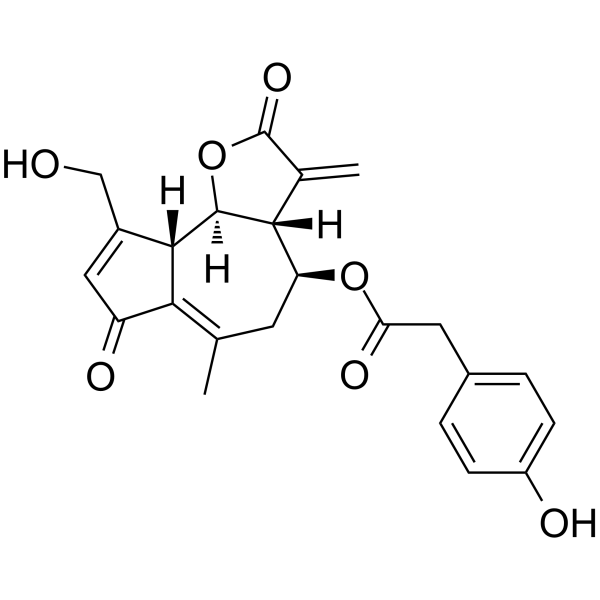
    Lactucopicrin

    LOX-1 NF-κB Cholinesterase (ChE) Parasite Infection Cardiovascular Disease Neurological Disease Inflammation/Immunology
    Lactupicrin (Lactucopicrin) exhibits analgesic, sedative, antimalarial activities and atheroprotective effect. Lactupicrin inhibits acetylcholinesterase (AChE) with an IC50 of 150.3 μM. Lactupicrin is an orally active characteristic bitter sesquiterpene lactone .
    Lactupicrin
  • HY-W015600

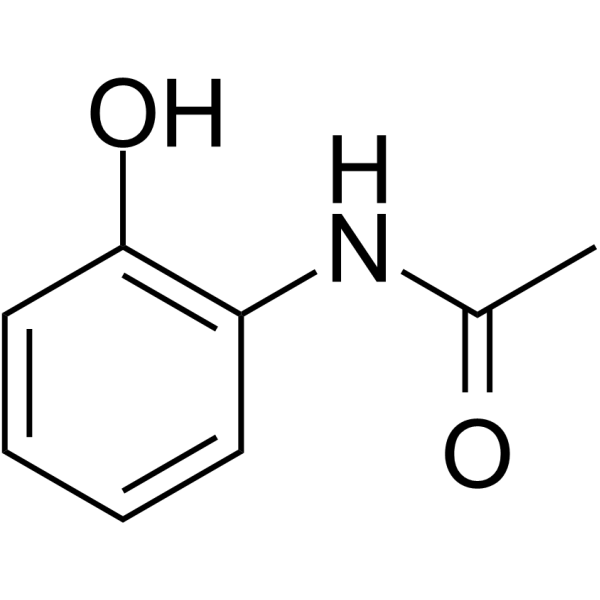
    Orthocetamol

    Ferroptosis Glutathione Peroxidase Reactive Oxygen Species (ROS) LDLR Cardiovascular Disease Inflammation/Immunology
    2-Acetamidophenol (Orthocetamol) is a regulator that targets ferroptosis and glutathione metabolic pathways, is the ortho-regioisomer of Paracetamol (HY-66005). 2-Acetamidophenol has anti-atherosclerotic activity, and inhibiting total cholesterol (TC) and triglyceride (TG) in a zebrafish hyperlipidemia model with IC50s for 30 μM and 40 μM, respectively. 2-Acetamidophenol upregulates the expression of glutathione synthesis-related genes (such as GCLC, GCLM, GSS) and iron ion transport genes (such as FPN1, FTH), reduces the accumulation of intracellular reactive oxygen species (ROS) and ferrous ions (Fe 2+), and enhances the activity of glutathione peroxidase GPX4, thereby inhibiting macrophage phagocytosis of oxidized low-density lipoprotein (ox-LDL) and foam cell formation .
    2-Acetamidophenol
  • HY-107635
    TMN355
    1 Publications Verification

    Cyclophilin Cardiovascular Disease
    TMN355 is a potent chemical cyclophilin A inhibitor and reduces foam cell formation and cytokine secretion. TMN355 is used for atherosclerosis .
    TMN355
  • HY-B0655
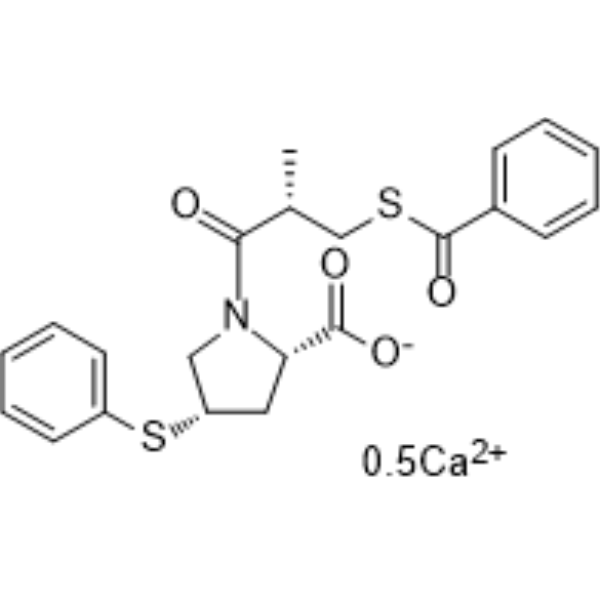
    Zofenopril calcium
    1 Publications Verification

    SQ26991

    Angiotensin-converting Enzyme (ACE) Reactive Oxygen Species (ROS) Cardiovascular Disease
    Zofenopril Calcium (SQ26991) is an orally active angiotensin-converting enzyme (ACE) inhibitor with antioxidant activity and cardioprotective effects. Zofenopril Calcium reduces ROS production and GSH consumption and helps inhibit foam cell formation, thus slowing the progression of atherosclerosis. Zofenopril Calcium prevents cardiac damage caused by chronic Doxorubicin (HY-15142A) .
    Zofenopril calcium
  • HY-173230

    ATP-binding cassette (ABC) transporters LXR Cardiovascular Disease
    ABCA1 inducer 2 is a non-lipotropic ABCA1 inducer. ABCA1 inducer 2 upregulates the expression of ABCA1 by targeting the LXR pathway. ABCA1 inducer 2 can reduce ox-LDL-induced lipid accumulation and thus inhibit foam cell formation. ABCA1 inducer 2 has anti-atherosclerotic potential .
    ABCA1 inducer 2
  • HY-W040055
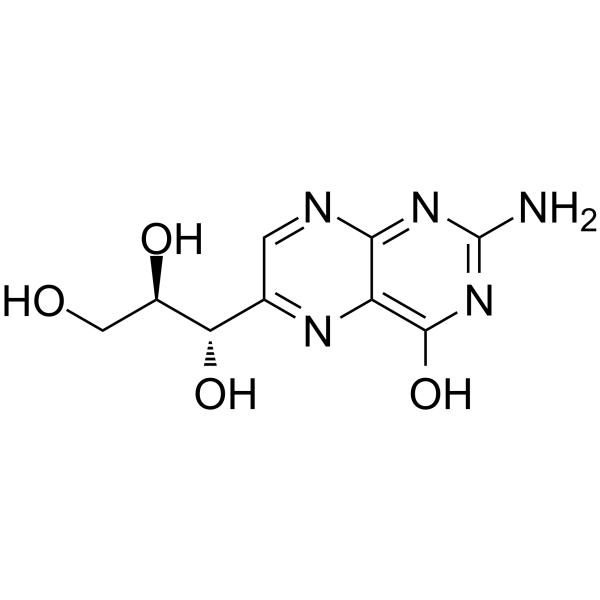
    Neopterin
    1 Publications Verification

    D-(+)-Neopterin; D-erythro-Neopterin

    NF-κB PPAR ERK Raf Src Cardiovascular Disease Inflammation/Immunology
    Neopterin is an immune system activator metabolized by GTP and can be produced by activated macrophages. Neopterin has the potential to resist vascular inflammation and atherosclerosis. Neopterin inhibits the phosphorylation of NF-κB and promotes the expression of PPAR-γ, thereby suppressing the inflammatory response of vascular endothelial cells, reducing the formation of macrophage foam cells, and regulating the migration and proliferation of vascular smooth muscle cells. Neopterin can be used in research fields such as cardiovascular diseases (such as atherosclerosis), inflammation-related diseases and tumor immunomonitoring .
    Neopterin
  • HY-120078

    Phospholipase
    AZD2716 is a selective sPLA2 (secretory phospholipase A2) inhibitor. AZD2716 significantly reduces the production of pro-inflammatory lipids by inhibiting sPLA2-IIa (IC50 = 10 nM), sPLA2-V (IC50 = 40 nM), and sPLA2-X (IC50 = 400 nM), thereby decreasing macrophage activation and foam cell formation. AZD2716 is promising for studying mechanisms related to atherosclerosis and inflammatory diseases associated with sPLA2 .
    AZD2716
  • HY-W015600R

    Orthocetamol (Standard)

    Reference Standards Ferroptosis Glutathione Peroxidase Reactive Oxygen Species (ROS) LDLR Cardiovascular Disease Inflammation/Immunology
    2-Acetamidophenol (Standard) is the analytical standard of 2-Acetamidophenol. This product is intended for research and analytical applications. 2-Acetamidophenol (Orthocetamol) is a regulator that targets ferroptosis and glutathione metabolic pathways, is the ortho-regioisomer of Paracetamol (HY-66005). 2-Acetamidophenol has anti-atherosclerotic activity, and inhibiting total cholesterol (TC) and triglyceride (TG) in a zebrafish hyperlipidemia model with IC50s for 30 μM and 40 μM, respectively. 2-Acetamidophenol upregulates the expression of glutathione synthesis-related genes (such as GCLC, GCLM, GSS) and iron ion transport genes (such as FPN1, FTH), reduces the accumulation of intracellular reactive oxygen species (ROS) and ferrous ions (Fe 2+), and enhances the activity of glutathione peroxidase GPX4, thereby inhibiting macrophage phagocytosis of oxidized low-density lipoprotein (ox-LDL) and foam cell formation .
    2-Acetamidophenol (Standard)
  • HY-P2624A

    PAK Metabolic Disease
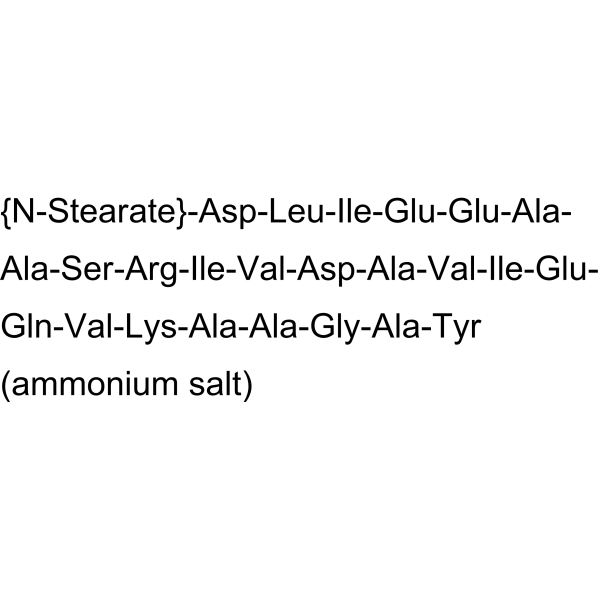
    st-Ht31 ammonium is a membrane-permeable peptide inhibitor of?protein kinase A (PKA) anchoring. st-Ht31 ammonium induces robust cholesterol/phospholipid efflux. st-Ht31 ammonium completely reverses foam cell formation and restores the metabolic health of macrophage .
    st-Ht31 ammonium
  • HY-W015600S

    Orthocetamol-d3

    Isotope-Labeled Compounds Ferroptosis Glutathione Peroxidase Reactive Oxygen Species (ROS) LDLR Cardiovascular Disease Inflammation/Immunology
    2-Acetamidophenol-d3 (Orthocetamol-d3) is the deuterium labeled 2-Acetamidophenol (HY-W015600). 2-Acetamidophenol (Orthocetamol) is a regulator that targets ferroptosis and glutathione metabolic pathways, is the ortho-regioisomer of Paracetamol (HY-66005). 2-Acetamidophenol has anti-atherosclerotic activity, and inhibiting total cholesterol (TC) and triglyceride (TG) in a zebrafish hyperlipidemia model with IC50s for 30 μM and 40 μM, respectively. 2-Acetamidophenol upregulates the expression of glutathione synthesis-related genes (such as GCLC, GCLM, GSS) and iron ion transport genes (such as FPN1, FTH), reduces the accumulation of intracellular reactive oxygen species (ROS) and ferrous ions (Fe2+), and enhances the activity of glutathione peroxidase GPX4, thereby inhibiting macrophage phagocytosis of oxidized low-density lipoprotein (ox-LDL) and foam cell formation .
    2-Acetamidophenol-d3
  • HY-P2624

    PAK Metabolic Disease
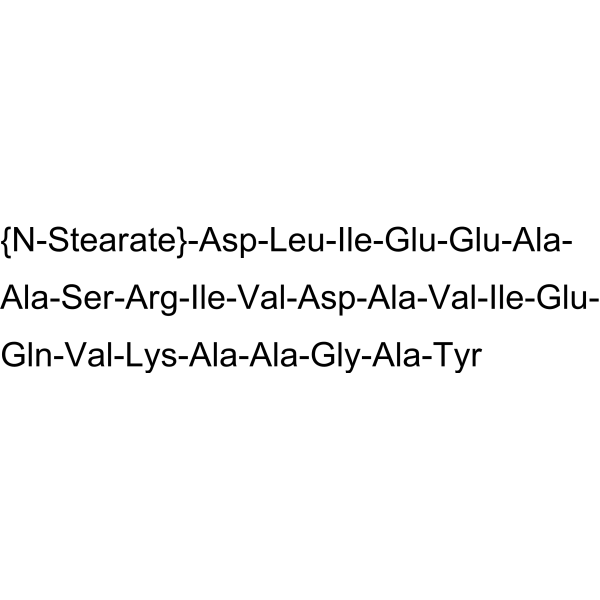
    st-Ht31 is a membrane-permeable peptide inhibitor of protein kinase A (PKA) anchoring. st-Ht31 induces robust cholesterol/phospholipid efflux. st-Ht31 completely reverses foam cell formation and restores the metabolic health of macrophage .
    st-Ht31
  • HY-W791754

    NF-κB Cardiovascular Disease
    Paeonolsilate (sodium) can inhibit ox-LDL-induced macrophage foam cell formation and inflammation in atherosclerosis. Paeonolsilate (sodium) inhibits NF-κB activation and oxidative stress response induced by ox-LDL. Paeonolsilate (sodium) can be studied in anti-atherosclerosis research .
    Paeonolsilate sodium
  • HY-107635R

    Cyclophilin Reference Standards Cardiovascular Disease
    TMN355 (Standard) is the analytical standard of TMN355 (HY-107635). This product is intended for research and analytical applications. TMN355 is a potent chemical cyclophilin A inhibitor and reduces foam cell formation and cytoKine secretion. TMN355 is used for atherosclerosis .
    TMN355 (Standard)
  • HY-181509

    Reactive Oxygen Species (ROS) Interleukin Related ATP-binding cassette (ABC) transporters Inflammation/Immunology
    TNF-α/IL-1β/IL-6-IN-1 is an anti-inflammatory agent. TNF-α/IL-1β/IL-6-IN-1 exerts anti-inflammatory effects by downregulating the expression of pro-inflammatory cytokines such as TNF-α, IL-1β and IL-6, and inhibiting the production of ROS. TNF-α/IL-1β/IL-6-IN-1 upregulates ABCG1 to promote cholesterol efflux. TNF-α/IL-1β/IL-6-IN-1 can be used in the research of inflammatory and lipid metabolic diseases such as atherosclerosis .
    TNF-α/IL-1β/IL-6-IN-1
  • HY-N18066

    Drug Derivative Acyltransferase NF-κB PPAR Fatty Acid Synthase (FASN) Keap1-Nrf2 Cardiovascular Disease Metabolic Disease Inflammation/Immunology
    Esculeogenin A is the sapogenol of tomato saponin Esculeoside A (HY-N18067). Esculeogenin A is an orally active hepatoprotective, hypolipidemic, and antioxidant agent. Esculeogenin A regulates molecular targets like PPARα, SREBP1, Nrf2, NF-κB, ACAT1/ACAT2 to promote hepatic fatty acid oxidation, suppress de novo lipogenesis, enhance antioxidant defense, and inhibit inflammation. Esculeogenin A improves liver function, alleviates hyperlipidemia, and inhibits hepatic steatosis and foam cell formation, preventing nonalcoholic fatty liver disease in high-fat-diet-fed rats and reducing atherosclerotic lesions in apoE-deficient mice. Esculeogenin A can be used for the research of nonalcoholic fatty liver disease, atherosclerosis, and hyperlipidemia .
    Esculeogenin A
  • HY-P991947

    AFS98; TG3003

    c-Fms Inflammation/Immunology
    ELB041 (AFS98) is a rat monoclonal anti-murine c-fms antibody (IgG2a). AFS98 inhibits M-CSF–dependent colony formation and cell growth by blocking the binding of M-CSF to its receptor. AFS98 prevents development of fatty streaks in ApoE-deficient mice. ELB041 can be used for the research of atherosclerosis .
    ELB041

Inquiry Online

Your information is safe with us. * Required Fields.

Salutation


Country or Region *

Applicant Name *


Organization Name *

Department *


Email Address *


Product Name *

Cat. No.


Requested quantity *

Phone Number *


Remarks

Inquiry Online

Inquiry Information

Product Name:
Cat. No.:
Quantity:
MCE Japan Authorized Agent:

