Search Result
Results for "
glioblastoma mouse models
" in MedChemExpress (MCE) Product Catalog:
1
Biochemical Assay Reagents
1
Isotope-Labeled Compounds
| Cat. No. |
Product Name |
Target |
Research Areas |
Chemical Structure |
-
- HY-N0421
-
|
Cinobufagine
|
Apoptosis
|
Neurological Disease
Cancer
|
|
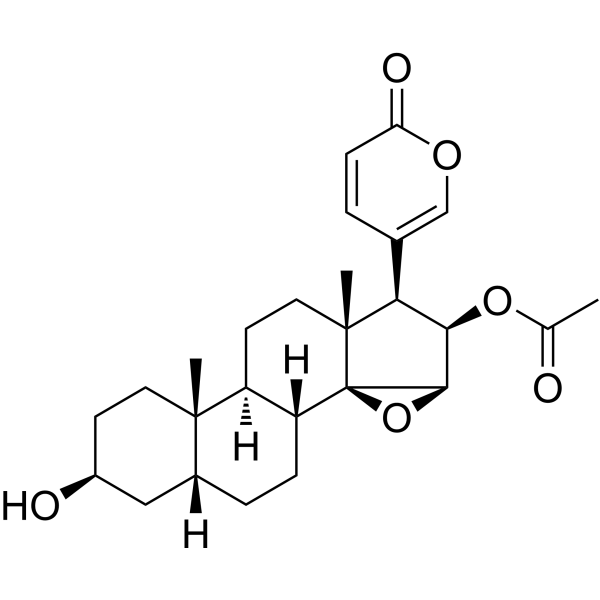
Cinobufagin is an anticancer agent that can be secreted by the Asiatic toad Bufo gargarizans. Cinobufagin induces the cell cycle arrests in the G1 phase or G2/M phase, leading to apoptosis in cancer cells. Cinobufagin inhibits tumor growth in melanoma and glioblastoma multiforme xenograft mouse models .
|
-
-
- HY-P99948
-
|
AMG-596
|
EGFR
CD3
|
Neurological Disease
Cancer
|
|
Etevritamab (AMG-596) is a bispecific T-cell engager that targets EGFRvIII and CD3. Etevritamab simultaneously binds CD3 on T cells and EGFRvIII on glioblastoma multiforme cells, thereby forming a bridge structure. Etevritamab triggers T-cell activation, proliferation, secretion of cytotoxic substances, and tumor cell lysis. Etevritamab extends overall survival and induces tumor regression in mouse models of glioblastoma multiforme. Etevritamab can be used for research related to glioblastoma .
|
-
-
- HY-13661
-
|
UCN-01; KRX-0601
|
PKC
CDK
Apoptosis
Cadherin
|
Neurological Disease
Cancer
|
|
7-Hydroxystaurosporine (UCN-01), a derivative of Staurosporine (HY-15141), is a selective protein kinase C (PKC) inhibitor with antitumor activity. 7-hydroxystaurosporine induces apoptosis and inhibits cell proliferation in colon carcinoma and leukemia cells, suppresses invasion and migration in glioblastoma cells. 7-Hydroxystaurosporine exhibits efficacy in breast cancer xenograft mouse models. 7-Hydroxystaurosporine can be used for colon carcinoma, breast cancer, glioblastoma and leukemia research .
|
-
-
- HY-148775A
-
|
|
Biochemical Assay Reagents
|
Infection
Neurological Disease
Cancer
|
|
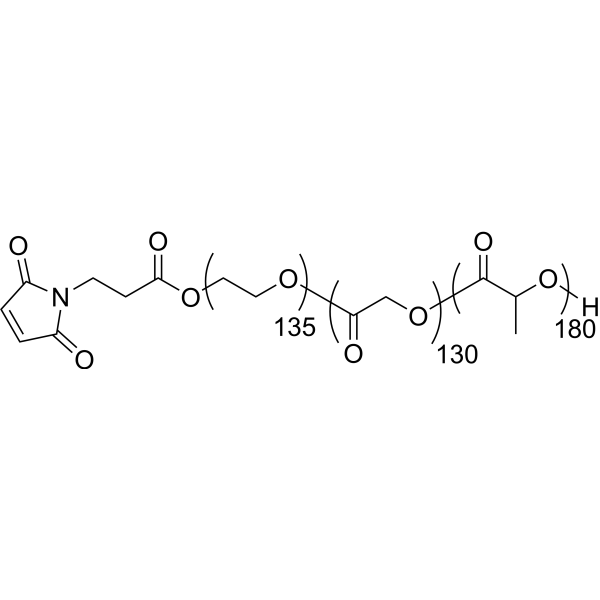
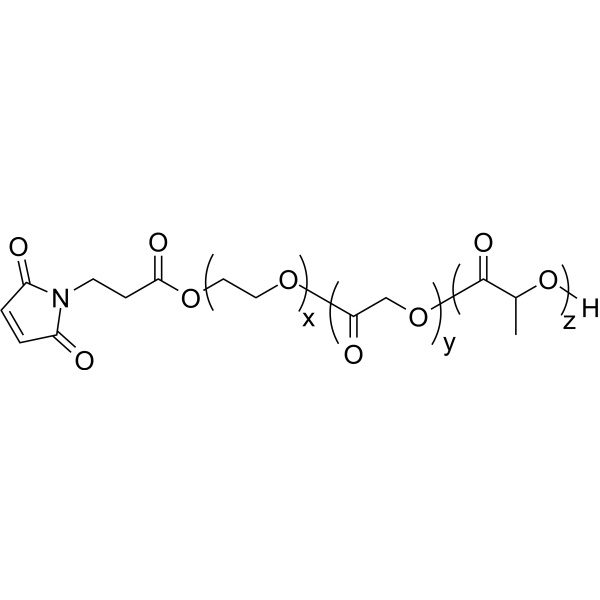
MPEG-PLGA (21500-26500) is a biodegradable amphipathic polymeric nanocarrier of poly (lactic-co-glycolic acid)-block-poly (ethylene glycol) (PLGA-PEG-Mal) that allows covalent modification of functional molecules. MPEG-PLGA (21500-26500) modified with Angiopep-2 can cross the blood-brain barrier and exhibits targeting selectivity for glioblastoma cells. MPEG-PLGA (21500-26500) can capture tumor-derived protein antigens, and exerts immunomodulatory effects when conjugated with anti-OX40 antibody; when used in combination with A2-CL/Dbait nanoparticles and radiotherapy, it prolongs survival time and reduces tumor volume in glioblastoma mouse models. MPEG-PLGA (21500-26500) can be used for studies related to bacterial wound infections and glioblastoma .
|
-
-
- HY-13440
-
AMG 511
5 Publications Verification
|
PI3K
|
Cancer
|
|
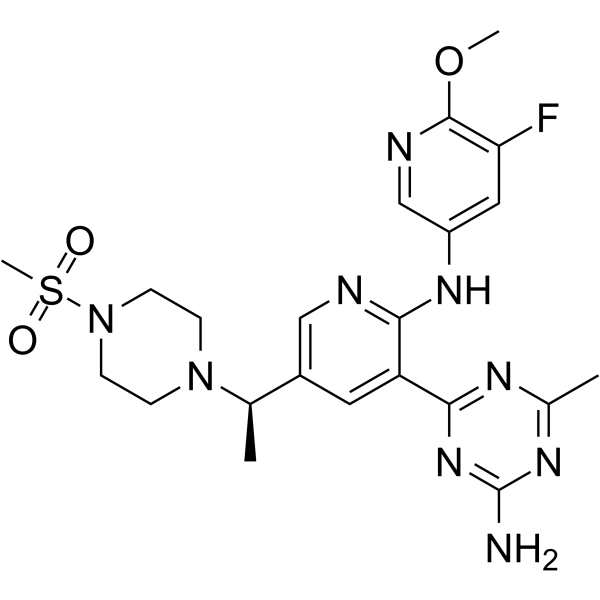
AMG 511 is a potent and orally available pan inhibitor of class I PI3Ks, with Kis of 4 nM, 6 nM, 2 nM and 1 nM for PI3Kα, β, δ and γ, respectively. AMG 511 significantly suppresses PI3K signaling that is indicated by p-Akt (Ser473) decrease. AMG 511 exhibits anti-tumor activity in mouse glioblastoma xenograft model .
|
-
-
- HY-175802
-
|
HYBI-084
|
WDR5
Potassium Channel
|
Inflammation/Immunology
Cancer
|
|
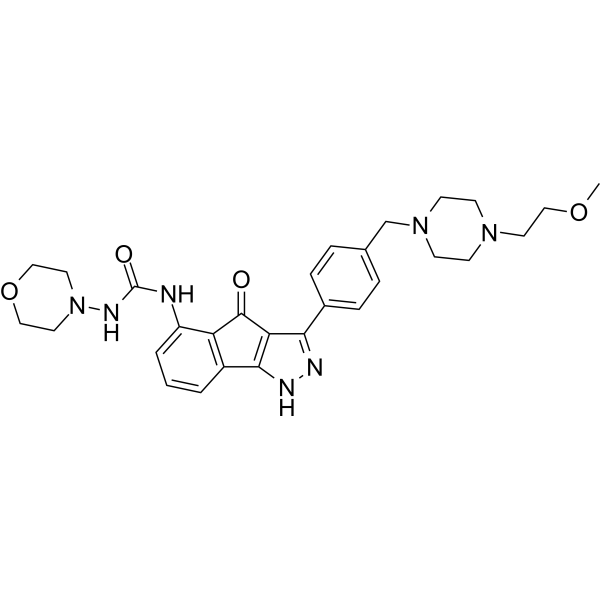
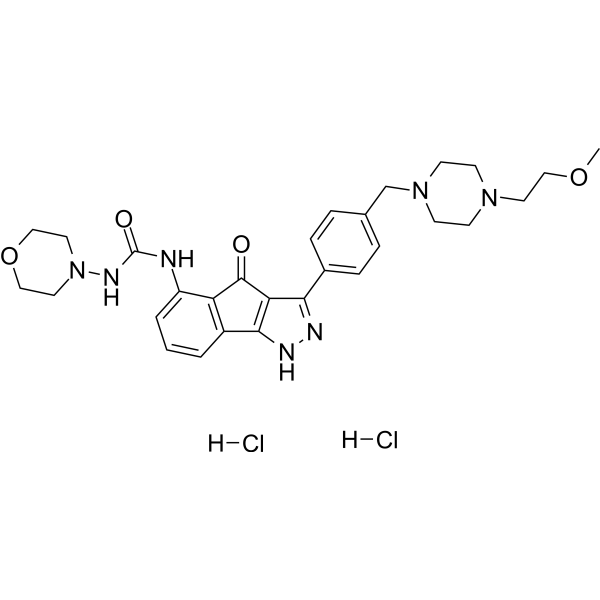
HBI-2375 (HYBI-084) is a brain-penetrant WDR5 inhibitor with an IC50 of 4.48 nM. HBI-2375 binds to the WINR5 and disrupts MLL1-WDR5 protein-protein interactions. HBI-2375 inhibits cancer cells proliferation and shows anti-tumor activity in AML mouse models, and increases tumor CD8 + cytotoxic T lymphocyte infiltration. HBI-2375 inhibits hERG with an IC50 of 17 µM .
|
-
-
- HY-159768A
-
|
|
Radionuclide-Drug Conjugates (RDCs)
FAP
|
Neurological Disease
Cancer
|
|
DOTAGA.Glu.(FAPi) 2 is a FAPI homodimer in which a central glutamic acid (Glu) linker connects FAPI and a chelator. Radiolabeled with gallium- 68, lutetium- 177 or terbium- 161, DOTAGA.Glu.(FAPi) 2 is applicable to FAP-positive cancer PET imaging studies. DOTAGA.Glu.(FAPi) 2 is suitable for research related to prostate adenocarcinoma and recurrent glioblastoma multiforme .
|
-
-
- HY-P10427
-
|
|
CXCR
Dengue Virus
|
Neurological Disease
Inflammation/Immunology
Cancer
|
|
DV1 is a CXCR4 inhibitor with anti-proteolytic properties that specifically blocks the binding of SDF-1α to its receptor. DV1 inhibits the migration of breast cancer cells and enables the targeted delivery of avidin-PLGA nanoparticles to CXCR4-expressing cancer cells. DV1 not only effectively suppresses the progression of metastatic breast cancer in mouse models, but also preferentially accumulates in brain tumor tissues rather than normal brain tissues, showing potential for inhibiting intracranial tumor metastasis. As a humoral immune stimulant, DV1 induces the production of specific IgG, neutralizing antibodies and cellular immune responses, thereby providing the host with protection against lethal challenges. DV1 has been applied to studies on CXCR4-expressing cancers, glioblastoma, dengue fever and other related diseases .
|
-
-
- HY-176537
-
|
|
Microtubule/Tubulin
|
Cancer
|
|
RGN6024 is a brain-penetrant, orally active and reversible small molecule tubulin destabilizer. RGN6024 inhibits microtubule polymerization both in biochemical and cellular assays, binds to the colchicine binding pocket of β-tubulin (SPR: Kd = 6.7 μM; tryptophan assay: Kd = 7.4 μM), and triggers G2/M arrest in glioblastoma (GB) cells. RGN6024 retains activity in βIII-tubulin overexpressing cells. RGN6024 inhibits tumor growth in a GB xenograft mouse model. RGN6024 can be used for the study of glioblastoma (GB) .
|
-
-
- HY-148775B
-
|
|
Biochemical Assay Reagents
|
Infection
Neurological Disease
Cancer
|
|
PLGA-PEG-MAL (20KDA-5.0KDA, LA:GA RATIO 40:60) is a biodegradable amphipathic polymeric nanocarrier of poly (lactic-co-glycolic acid)-block-poly (ethylene glycol) (PLGA-PEG-Mal) that allows covalent modification of functional molecules. PLGA-PEG-MAL (20KDA-5.0KDA, LA:GA RATIO 40:60) modified with Angiopep-2 can cross the blood-brain barrier and exhibits targeting selectivity for glioblastoma cells. PLGA-PEG-MAL (20KDA-5.0KDA, LA:GA RATIO 40:60) can capture tumor-derived protein antigens, and exerts immunomodulatory effects when conjugated with anti-OX40 antibody; when used in combination with A2-CL/Dbait nanoparticles and radiotherapy, it prolongs survival time and reduces tumor volume in glioblastoma mouse models. PLGA-PEG-MAL (20KDA-5.0KDA, LA:GA RATIO 40:60) can be used for studies related to bacterial wound infections and glioblastoma .
|
-
-
- HY-P10323
-
|
Tumstatin (74-98), human
|
Integrin
FAK
mTOR
Apoptosis
|
Cancer
|
|
T7 Peptide is a protein synthesis inhibitor and anti-angiogenic agent, with a Kd of 10 nM for human transferrin receptor. T7 Peptide inhibits the phosphorylation of focal adhesion kinase, the activation of phosphatidylinositol 3-kinase and Akt, the kinase activity of mTOR, as well as the phosphorylation of 4E-BP1 in endothelial cells. T7 Peptide induces G0/G1 cell cycle arrest, apoptosis and protective autophagy in hepatocellular carcinoma cells, and suppresses tumor growth in mouse models. T7 Peptide is applicable to research related to cancer, glioblastoma, hepatocellular carcinoma and glioma .
|
-
-
- HY-P10323A
-
|
Tumstatin (74-98), human TFA
|
Integrin
FAK
mTOR
Apoptosis
|
Cancer
|
|
T7 Peptide TFA is a protein synthesis inhibitor and anti-angiogenic agent, with a Kd of 10 nM for human transferrin receptor. T7 Peptide TFA inhibits the phosphorylation of focal adhesion kinase, the activation of phosphatidylinositol 3-kinase and Akt, the kinase activity of mTOR, as well as the phosphorylation of 4E-BP1 in endothelial cells. T7 Peptide TFA induces G0/G1 cell cycle arrest, apoptosis and protective autophagy in hepatocellular carcinoma cells, and suppresses tumor growth in mouse models. T7 Peptide TFA is applicable to research related to cancer, glioblastoma, hepatocellular carcinoma and glioma .
|
-
-
- HY-170405
-
|
|
PROTACs
mTOR
|
Cancer
|
|
YB-3-17 is a bifunctional molecule, that inhibits mTOR (IC50=0.22 nM) or degrades G1 to S phase transition 1 gene (GSPT1, DC50=5 nM) in a PROTAC mechanism. YB-3-17 exhibits antiproliferative activity in multi glioblastoma cell lines with IC50 of nanomolare levels. YB-3-17 exhibits antitumor efficacy in mouse models .
|
-
-
- HY-P10427A
-
|
|
CXCR
Dengue Virus
|
Infection
|
|
DV1 TFA is a CXCR4 inhibitor with anti-proteolytic properties that specifically blocks the binding of SDF-1α to its receptor. DV1 TFA inhibits the migration of breast cancer cells and enables the targeted delivery of avidin-PLGA nanoparticles to CXCR4-expressing cancer cells. DV1 TFA not only effectively suppresses the progression of metastatic breast cancer in mouse models, but also preferentially accumulates in brain tumor tissues rather than normal brain tissues, showing potential for inhibiting intracranial tumor metastasis. As a humoral immune stimulant, DV1 TFA induces the production of specific IgG, neutralizing antibodies and cellular immune responses, thereby providing the host with protection against lethal challenges. DV1 TFA has been applied to studies on CXCR4-expressing cancers, glioblastoma, dengue fever and other related diseases .
|
-
-
- HY-148775
-
|
|
Biochemical Assay Reagents
|
Infection
Neurological Disease
Cancer
|
|
PLGA-PEG-MAL (60kDa-3.4kDa, LA:GA ratio 75:25) is a biodegradable amphipathic polymeric nanocarrier of poly (lactic-co-glycolic acid)-block-poly (ethylene glycol) (PLGA-PEG-Mal) that allows covalent modification of functional molecules. PLGA-PEG-MAL (60kDa-3.4kDa, LA:GA ratio 75:25) modified with Angiopep-2 can cross the blood-brain barrier and exhibits targeting selectivity for glioblastoma cells. PLGA-PEG-MAL (60kDa-3.4kDa, LA:GA ratio 75:25) can capture tumor-derived protein antigens, and exerts immunomodulatory effects when conjugated with anti-OX40 antibody; when used in combination with A2-CL/Dbait nanoparticles and radiotherapy, it prolongs survival time and reduces tumor volume in glioblastoma mouse models. PLGA-PEG-MAL (60kDa-3.4kDa, LA:GA ratio 75:25) can be used for studies related to bacterial wound infections and glioblastoma .
|
-
-
- HY-174212
-
|
|
Apoptosis
|
Cancer
|
|
MXC-017 is a blood-brain barrier (BBB)-penetrant apoptosis inducer that directly targets Vimentin (VIM). MXC-017 prevents radiation-induced glioma stem cell (GSC) formation, while promoting G0/G1 cell cycle arrest and apoptosis. MXC-017 exhibits minimal off-target effects and shows no significant cytotoxicity. MXC-017 significantly prolongs median survival when used in combination with radiation therapy in glioblastoma (GBM) mouse models.
|
-
-
- HY-N0421R
-
|
Cinobufagine (Standard)
|
Reference Standards
Apoptosis
|
Neurological Disease
Cancer
|
|
Cinobufagin (Standard) is the analytical standard of Cinobufagin. This product is intended for research and analytical applications. Cinobufagin is an anticancer agent that can be secreted by the Asiatic toad Bufo gargarizans. Cinobufagin induces the cell cycle arrests in the G1 phase or G2/M phase, leading to apoptosis in cancer cells. Cinobufagin inhibits tumor growth in melanoma and glioblastoma multiforme xenograft mouse models .
|
-
-
- HY-W747797
-
|
|
Isotope-Labeled Compounds
Apoptosis
|
Cancer
|
|
Cinobufagine-d3 is the deuterium labeled Cinobufagin (HY-N0421). Cinobufagin is an anticancer agent that can be secreted by the Asiatic toad Bufo gargarizans. Cinobufagin induces the cell cycle arrests in the G1 phase or G2/M phase, leading to apoptosis in cancer cells. Cinobufagin inhibits tumor growth in melanoma and glioblastoma multiforme xenograft mouse models .
|
-
-
- HY-155532
-
|
|
Apoptosis
|
Cancer
|
|
10m/ZS44 is a blood-brain barrier-permeable Glioblastoma (GBM) inhibitor. 10m/ZS44 significantly inhibits GBM tumor growth in a mouse xenograft model. 10m/ZS44 also activates the SIRT1/p53-mediated apoptosis pathway, thereby inhibiting the proliferation of U251 cells .
|
-
-
- HY-117991
-
|
|
VEGFR
|
Cancer
|
|
DW10075 is a highly selective and orally active VEGFR inhibitor targeting the VEGF/VEGFR pathway. DW10075 selectively inhibits VEGFR-1, VEGFR-2, and VEGFR-3, but has no effect on FGFR and PDGFR. DW10075 inhibits VEGF-induced HUVEC proliferation, migration, and tube formation. And DW10075 inhibits angiogenesis in both the rat aortic ring model and the chick chorionic membrane model. DW10075 also exhibits antiproliferative activity against human cancer cell lines, with IC50s of 2.2 μM and 22.2 μM against U87-MG human glioblastoma cells and A375 melanoma cells, respectively. In the nude mouse U87-MG xenograft tumor model, DW10075 (po) significantly inhibits tumor growth and reduces the expression of CD31 and Ki67 in tumor tissues.
|
-
-
- HY-N4189
-
|
|
PI3K
Akt
p38 MAPK
STAT
Apoptosis
|
Cancer
|
Isocucurbitacin B is a natural terpenoid compound found in Pedicellus Melo. Isocucurbitacin B can inhibit the PI3K/AKT, MAPK, and STAT3 signaling pathways and downregulate CAV1 expression. Isocucurbitacin B can inhbit cancer cell proliferation, migration and invision. Isocucurbitacin B can induce apoptosis and cause G2/M phase arrest. Isocucurbitacin B can decrease intracellular cholesterol and PH levels and increase intracellular calcium levels. Isocucurbitacin B can be used for the research of cancer, such as glioma [1][2].
|
-
-
- HY-P991970
-
|
|
EGFR
|
Cancer
|
|
REGN3124 is a fully human antibody with binding to EGFRvIII. REGN3124 forms REGN3124-PBD via conjugation to pyrrolobenzodiazepine linker-payload SG-3249. REGN3124 can be used for the research of glioblastoma multiforme .
|
-
-
- HY-10459A
-
|
VS-6062 mesylate
|
FAK
Pyk2
|
Neurological Disease
Cancer
|
|
PF-562271 mesylate (VS-6062 mesylate) is an orally active, ATP-competitive, reversible FAK/Pyk2 inhibitor, with an IC50 of 1.5 nM for FAK and 13 nM for Pyk2. PF-562271 mesylate induces tumor regression, and inhibits tumor growth, invasion and metastasis. PF-562271 mesylate exerts no effect on tumor necrosis, angiogenesis or apoptosis in an orthotopic mouse model of pancreatic ductal adenocarcinoma. When combined with Sunitinib (HY-10255A), PF-562271 mesylate reduces tumor vascularization, decreases serum alpha-fetoprotein levels and improves cachexia. PF-562271 mesylate can be used in research related to prostate cancer, breast cancer, pancreatic cancer, colon cancer, glioblastoma, lung cancer, pancreatic ductal adenocarcinoma and hepatocellular carcinoma .
|
-
-
- HY-183284
-
|
|
FAK
ERK
Apoptosis
|
Neurological Disease
Cancer
|
|
GZD-552 is a potent orally active FAK inhibitor with a human FAK IC50 of 5.8 nM. GZD-552 suppresses FAK phosphorylation activation and downstream ERK signaling. GZD-552 induces apoptosis and G2/M cell cycle arrest, and exhibits antiproliferative activities in glioblastoma multiforme cells. GZD-552 exhibits antitumor efficacy in mice xenograft model. GZD-552 can be used for the research of glioblastoma multiforme .
|
-
-
- HY-P11756
-
|
|
ASCT
|
Cancer
|
|
P-LPK is a dodecapeptide that specifically targets SLC1A5, which is highly expressed on the membrane of colorectal cancer cells, with a Kd value of 1.19 μM. P-LPK has no intrinsic cell proliferation regulatory activity. Gallium-68-labeled P-LPK selectively accumulates at colorectal cancer tumor sites in xenograft mouse models. P-LPK can serve as a targeted carrier to deliver Camptothecin (HY-16560) to colorectal cancer cells, forming the conjugate P-LPK-CPT. P-LPK can be used in the research of colorectal cancer .
|
-
| Cat. No. |
Product Name |
Type |
-
- HY-148775
-
|
|
Biochemical Assay Reagents
|
|
PLGA-PEG-MAL (60kDa-3.4kDa, LA:GA ratio 75:25) is a biodegradable amphipathic polymeric nanocarrier of poly (lactic-co-glycolic acid)-block-poly (ethylene glycol) (PLGA-PEG-Mal) that allows covalent modification of functional molecules. PLGA-PEG-MAL (60kDa-3.4kDa, LA:GA ratio 75:25) modified with Angiopep-2 can cross the blood-brain barrier and exhibits targeting selectivity for glioblastoma cells. PLGA-PEG-MAL (60kDa-3.4kDa, LA:GA ratio 75:25) can capture tumor-derived protein antigens, and exerts immunomodulatory effects when conjugated with anti-OX40 antibody; when used in combination with A2-CL/Dbait nanoparticles and radiotherapy, it prolongs survival time and reduces tumor volume in glioblastoma mouse models. PLGA-PEG-MAL (60kDa-3.4kDa, LA:GA ratio 75:25) can be used for studies related to bacterial wound infections and glioblastoma .
|
| Cat. No. |
Product Name |
Target |
Research Area |
-
- HY-P10427
-
|
|
CXCR
Dengue Virus
|
Neurological Disease
Inflammation/Immunology
Cancer
|
|
DV1 is a CXCR4 inhibitor with anti-proteolytic properties that specifically blocks the binding of SDF-1α to its receptor. DV1 inhibits the migration of breast cancer cells and enables the targeted delivery of avidin-PLGA nanoparticles to CXCR4-expressing cancer cells. DV1 not only effectively suppresses the progression of metastatic breast cancer in mouse models, but also preferentially accumulates in brain tumor tissues rather than normal brain tissues, showing potential for inhibiting intracranial tumor metastasis. As a humoral immune stimulant, DV1 induces the production of specific IgG, neutralizing antibodies and cellular immune responses, thereby providing the host with protection against lethal challenges. DV1 has been applied to studies on CXCR4-expressing cancers, glioblastoma, dengue fever and other related diseases .
|
-
- HY-P10323
-
|
Tumstatin (74-98), human
|
Integrin
FAK
mTOR
Apoptosis
|
Cancer
|
|
T7 Peptide is a protein synthesis inhibitor and anti-angiogenic agent, with a Kd of 10 nM for human transferrin receptor. T7 Peptide inhibits the phosphorylation of focal adhesion kinase, the activation of phosphatidylinositol 3-kinase and Akt, the kinase activity of mTOR, as well as the phosphorylation of 4E-BP1 in endothelial cells. T7 Peptide induces G0/G1 cell cycle arrest, apoptosis and protective autophagy in hepatocellular carcinoma cells, and suppresses tumor growth in mouse models. T7 Peptide is applicable to research related to cancer, glioblastoma, hepatocellular carcinoma and glioma .
|
-
- HY-P10323A
-
|
Tumstatin (74-98), human TFA
|
Integrin
FAK
mTOR
Apoptosis
|
Cancer
|
|
T7 Peptide TFA is a protein synthesis inhibitor and anti-angiogenic agent, with a Kd of 10 nM for human transferrin receptor. T7 Peptide TFA inhibits the phosphorylation of focal adhesion kinase, the activation of phosphatidylinositol 3-kinase and Akt, the kinase activity of mTOR, as well as the phosphorylation of 4E-BP1 in endothelial cells. T7 Peptide TFA induces G0/G1 cell cycle arrest, apoptosis and protective autophagy in hepatocellular carcinoma cells, and suppresses tumor growth in mouse models. T7 Peptide TFA is applicable to research related to cancer, glioblastoma, hepatocellular carcinoma and glioma .
|
-
- HY-P10427A
-
|
|
CXCR
Dengue Virus
|
Infection
|
|
DV1 TFA is a CXCR4 inhibitor with anti-proteolytic properties that specifically blocks the binding of SDF-1α to its receptor. DV1 TFA inhibits the migration of breast cancer cells and enables the targeted delivery of avidin-PLGA nanoparticles to CXCR4-expressing cancer cells. DV1 TFA not only effectively suppresses the progression of metastatic breast cancer in mouse models, but also preferentially accumulates in brain tumor tissues rather than normal brain tissues, showing potential for inhibiting intracranial tumor metastasis. As a humoral immune stimulant, DV1 TFA induces the production of specific IgG, neutralizing antibodies and cellular immune responses, thereby providing the host with protection against lethal challenges. DV1 TFA has been applied to studies on CXCR4-expressing cancers, glioblastoma, dengue fever and other related diseases .
|
-
- HY-P11756
-
|
|
ASCT
|
Cancer
|
|
P-LPK is a dodecapeptide that specifically targets SLC1A5, which is highly expressed on the membrane of colorectal cancer cells, with a Kd value of 1.19 μM. P-LPK has no intrinsic cell proliferation regulatory activity. Gallium-68-labeled P-LPK selectively accumulates at colorectal cancer tumor sites in xenograft mouse models. P-LPK can serve as a targeted carrier to deliver Camptothecin (HY-16560) to colorectal cancer cells, forming the conjugate P-LPK-CPT. P-LPK can be used in the research of colorectal cancer .
|
| Cat. No. |
Product Name |
Target |
Research Area |
Image |
-
- HY-P99948
-
|
AMG-596
|
EGFR
CD3
|
Neurological Disease
Cancer
|
|
Etevritamab (AMG-596) is a bispecific T-cell engager that targets EGFRvIII and CD3. Etevritamab simultaneously binds CD3 on T cells and EGFRvIII on glioblastoma multiforme cells, thereby forming a bridge structure. Etevritamab triggers T-cell activation, proliferation, secretion of cytotoxic substances, and tumor cell lysis. Etevritamab extends overall survival and induces tumor regression in mouse models of glioblastoma multiforme. Etevritamab can be used for research related to glioblastoma .
|
-
(5)
-
- HY-P991970
-
|
|
EGFR
|
Cancer
|
|
REGN3124 is a fully human antibody with binding to EGFRvIII. REGN3124 forms REGN3124-PBD via conjugation to pyrrolobenzodiazepine linker-payload SG-3249. REGN3124 can be used for the research of glioblastoma multiforme .
|
-
(5)
| Cat. No. |
Product Name |
Category |
Target |
Chemical Structure |
-
- HY-N0421
-
-
-
- HY-N0421R
-
|
Cinobufagine (Standard)
|
Structural Classification
Animals
Source Classification
Steroids
|
Reference Standards
Apoptosis
|
|
Cinobufagin (Standard) is the analytical standard of Cinobufagin. This product is intended for research and analytical applications. Cinobufagin is an anticancer agent that can be secreted by the Asiatic toad Bufo gargarizans. Cinobufagin induces the cell cycle arrests in the G1 phase or G2/M phase, leading to apoptosis in cancer cells. Cinobufagin inhibits tumor growth in melanoma and glioblastoma multiforme xenograft mouse models .
|
-
-
- HY-N4189
-
-
| Cat. No. |
Product Name |
Chemical Structure |
-
- HY-W747797
-
|
|
|
Cinobufagine-d3 is the deuterium labeled Cinobufagin (HY-N0421). Cinobufagin is an anticancer agent that can be secreted by the Asiatic toad Bufo gargarizans. Cinobufagin induces the cell cycle arrests in the G1 phase or G2/M phase, leading to apoptosis in cancer cells. Cinobufagin inhibits tumor growth in melanoma and glioblastoma multiforme xenograft mouse models .
|
-
| Cat. No. |
Product Name |
|
Classification |
-
- HY-148775
-
|
|
|
Polymers
|
|
PLGA-PEG-MAL (60kDa-3.4kDa, LA:GA ratio 75:25) is a biodegradable amphipathic polymeric nanocarrier of poly (lactic-co-glycolic acid)-block-poly (ethylene glycol) (PLGA-PEG-Mal) that allows covalent modification of functional molecules. PLGA-PEG-MAL (60kDa-3.4kDa, LA:GA ratio 75:25) modified with Angiopep-2 can cross the blood-brain barrier and exhibits targeting selectivity for glioblastoma cells. PLGA-PEG-MAL (60kDa-3.4kDa, LA:GA ratio 75:25) can capture tumor-derived protein antigens, and exerts immunomodulatory effects when conjugated with anti-OX40 antibody; when used in combination with A2-CL/Dbait nanoparticles and radiotherapy, it prolongs survival time and reduces tumor volume in glioblastoma mouse models. PLGA-PEG-MAL (60kDa-3.4kDa, LA:GA ratio 75:25) can be used for studies related to bacterial wound infections and glioblastoma .
|
Your information is safe with us. * Required Fields.
Inquiry Information
- Product Name:
- Cat. No.:
- Quantity:
- MCE Japan Authorized Agent:

